×

South Africa🇿🇦 | best landmarksWhere to Find the 3 Best landmarks in South Africa

Landmarks in South Africa split into three kinds, and they behave very differently for a backpacker. Cape Town’s mountain, harbor and coastline sights are compact, walkable or Uber-able, and busy year-round, so book timed tickets ahead. The Garden Route and Eastern Cape are mostly natural features and small-town heritage sites: cheap, uncrowded, but hard to reach without a car or the Baz Bus. Gauteng and KwaZulu-Natal hold the history landmarks (Apartheid, Mandela and Zulu sites), which are the most meaningful in the country and worth real time, though several sit in areas where a guided tour beats wandering alone. Skip the souvenir-heavy waterfront strips, since they cost more than they give. Back the national parks and cultural sites, where entry runs roughly R100 to R600 (US$6 to 33) and the experience is the real thing. Independent travel works well here if you plan transport first.

By Johan Kruseman 🇳🇱 | Updated October 23, 2026
Explore the best national parks in South Africa

Why go?Understanding Their Importance

South Africa suits landmark-hunting because three very different layers sit in one country: an ancient geological and fossil record, a colonial and Apartheid past, and living African cultures. Few countries give you the cradle of humankind sites, a mountain-edged city and the prisons and townships that shaped a nation’s modern politics, all within one currency and one road network. The infrastructure is a real advantage. Roads are good, national parks and heritage sites run on clear, published fees, and English is widely spoken, so independent visits work without a tour operator.

The weak point is distance and transport. Landmarks are spread across a country about twice the size of Texas, public transport is thin outside the main cities, and the minibus taxi network, while cheap, is hard … read more 👉
South Africa suits landmark-hunting because three very different layers sit in one country: an ancient geological and fossil record, a colonial and Apartheid past, and living African cultures. Few countries give you the cradle of humankind sites, a mountain-edged city and the prisons and townships that shaped a nation’s modern politics, all within one currency and one road network. The infrastructure is a real advantage. Roads are good, national parks and heritage sites run on clear, published fees, and English is widely spoken, so independent visits work without a tour operator.

The weak point is distance and transport. Landmarks are spread across a country about twice the size of Texas, public transport is thin outside the main cities, and the minibus taxi network, while cheap, is hard for newcomers to read. Without a car or the Baz Bus hop-on, hop-off backpacker route, many sites are slow or impractical to reach. Budget extra for rental cars, shared transfers or rideshares.

Travelers should also know that history sites carry weight. Apartheid-era landmarks are sober, often emotional, and best visited with local guides who lived or studied the history. They are not photo stops. The exchange rate is also a big help: the rand makes entry fees, guides and meals cheap by Western standards, which means the best experiences (guided township walks, park access, heritage tours) are affordable. What is not worth your time are generic waterfront malls and staged cultural villages, where the experience is thin and the pricing is aimed at tour buses. Put your hours into the national parks, the Cape peninsula, and the heritage sites run by communities or museums.
Behind the Scenes of Selection
The list of best unique sites in South Africa is created based on history or culture, wow factor, atmosphere, quirks, and memorability. If you feel a unique site is missing in this list, please let us know.

When to go?Best Time to Visit South Africa for landmarks

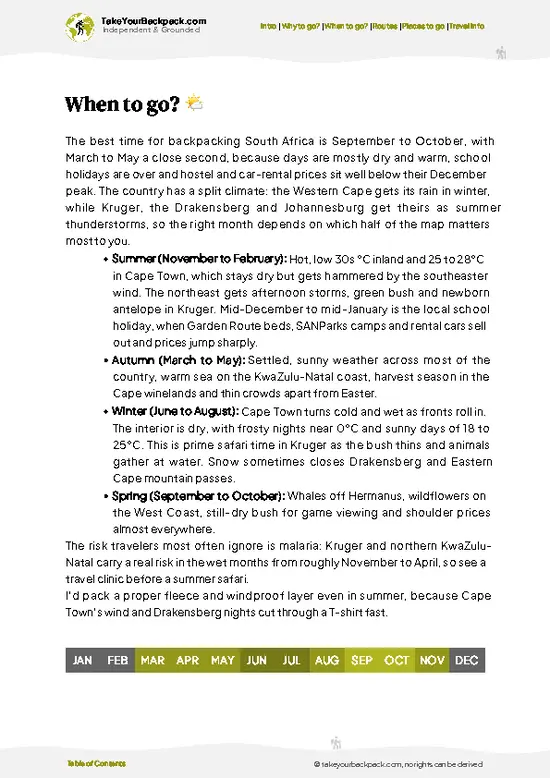
Best months and weather: The best months for South African landmarks are March to May and September to November, when days are mild (18 to 26°C in most regions), skies are clear, and crowds and prices are lower than in summer. Outside these windows, the country splits in two. The Western Cape has dry summers (November to March) with highs of 25 to 30°C and strong southeaster winds that can close cable cars and exposed trails for days. Winter there (June to August) is wetter, 7 to 18°C, with rain mostly between May and August.

Summer rain and inland regions: Gauteng, KwaZulu-Natal and the northern parks flip the pattern. Summer brings afternoon thunderstorms and heat of 28 to 35°C on the Highveld and coast, plus high humidity in Durban. Winter is dry, sunny and cool: cold mornings near 0 to … read more 👉
Best months and weather: The best months for South African landmarks are March to May and September to November, when days are mild (18 to 26°C in most regions), skies are clear, and crowds and prices are lower than in summer. Outside these windows, the country splits in two. The Western Cape has dry summers (November to March) with highs of 25 to 30°C and strong southeaster winds that can close cable cars and exposed trails for days. Winter there (June to August) is wetter, 7 to 18°C, with rain mostly between May and August.

Summer rain and inland regions: Gauteng, KwaZulu-Natal and the northern parks flip the pattern. Summer brings afternoon thunderstorms and heat of 28 to 35°C on the Highveld and coast, plus high humidity in Durban. Winter is dry, sunny and cool: cold mornings near 0 to 5°C inland, with warm days around 20°C. For wildlife landmarks, winter is better because animals gather at water and the bush is thin.

Peak seasons and prices: The December to early January holidays are the one period worth planning around. Accommodation in Cape Town and along the Garden Route rises by 30 to 100 percent, and popular sites sell out of timed tickets. Easter and the July school holidays also bring local crowds. Avoid peak summer on the Garden Route unless you book months ahead. Shoulder months give you the same open sites at much better rates. Few landmarks close seasonally, but mountain and coastal ones close during high winds or storms, so keep a flexible day in your schedule rather than locking in fixed dates.

unique site hoppingPlanning Your Route Efficiently

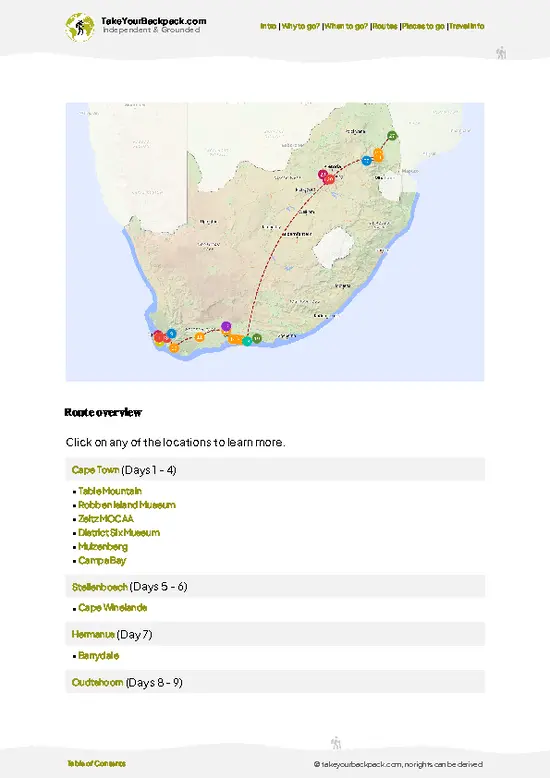
How many days to plan: A trip combining several South African landmarks needs 14 to 21 days, and anything under 10 days forces you to choose one region. The country clusters into three zones. The Western Cape (Cape Town, the Peninsula, the Winelands and the Garden Route) takes 6 to 9 days. Gauteng (Johannesburg and Pretoria) takes 3 to 4 days. KwaZulu-Natal (Durban, Drakensberg and battlefields) takes 4 to 6 days.

Direction and transport: A sensible route runs Johannesburg, then Durban or the Drakensberg, then flies to Cape Town, and finishes with the Garden Route overland, or reverses the order. Flights between Johannesburg and Cape Town take about 2 hours and often cost US$50 to 120 booked ahead. Overland, the same distance is a 15 to 18 hour drive, which is not worth the time. Cape Town … read more 👉
How many days to plan: A trip combining several South African landmarks needs 14 to 21 days, and anything under 10 days forces you to choose one region. The country clusters into three zones. The Western Cape (Cape Town, the Peninsula, the Winelands and the Garden Route) takes 6 to 9 days. Gauteng (Johannesburg and Pretoria) takes 3 to 4 days. KwaZulu-Natal (Durban, Drakensberg and battlefields) takes 4 to 6 days.

Direction and transport: A sensible route runs Johannesburg, then Durban or the Drakensberg, then flies to Cape Town, and finishes with the Garden Route overland, or reverses the order. Flights between Johannesburg and Cape Town take about 2 hours and often cost US$50 to 120 booked ahead. Overland, the same distance is a 15 to 18 hour drive, which is not worth the time. Cape Town to Port Elizabeth along the Garden Route is about 750 km, 8 to 9 hours of pure driving, so break it into stops.

Plan 1 to 2 days per city landmark cluster and a half day for each individual site. National parks need at least 2 nights. Johannesburg to Durban is about 6 to 7 hours by road or a 1.5 hour flight.

Planning mistakes: The most common error is trying to do the whole country in two weeks, which turns the trip into airport transfers. Choose two regions and do them properly. Another is relying on public transport between rural sites: the Baz Bus covers the coastal backpacker corridor but not parks or inland towns, so rent a car for those stretches or join a shared tour. Travelers also underestimate distances on maps. Assume 80 km per hour average on regional roads, and never drive at night in rural areas. Finally, booking Cape Town sites without checking weather loses days. Keep one buffer day for wind closures.

The ListThe Best landmarks of South Africa

1 Cango Caves

Adventure Tour, Devil’s Chimney squeeze, Van Zyl’s Hall, Swartberg foothills

Squeeze through tight rock passages on the Adventure Tour, after a first look at the huge, dimly lit chamber of Van Zyl’s Hall.

2 Sani Pass

Gravel hairpins, Lesotho border posts, 2,874-meter pub, Basotho village stop

Climb a basalt escarpment by four-wheel drive, cross into Lesotho, and warm up with a drink at the summit pub.

3 Vredefort Dome

Shatter cones, eroded crater ring, Parys, Vaal River paddling

Walk private farmland to find shocked granite and read an ancient impact in low ridges, then paddle the river near Parys.

Loading the map 🌍

Expert viewTips and Advice from Travelers

How many landmarks to visit: Aim for 8 to 12 landmarks over a two to three week trip, not 20. South African sites are far apart, many need half a day including transport, and the history landmarks take emotional energy. Past about one major site per day, quality drops and costs climb through taxis and fuel. Count only those you will spend more than two hours at.

Prioritizing by travel style: Budget travelers should put most of their time into national parks and natural landmarks, which give the most for entry fees of R100 to R600 (US$6 to 33), and add two or three history sites. If you care about politics and culture, reverse that: Apartheid and heritage sites deserve a guide and a full morning each. Skip staged cultural villages, gambling-and-mall waterfront precincts and sunset cruises … read more 👉
How many landmarks to visit: Aim for 8 to 12 landmarks over a two to three week trip, not 20. South African sites are far apart, many need half a day including transport, and the history landmarks take emotional energy. Past about one major site per day, quality drops and costs climb through taxis and fuel. Count only those you will spend more than two hours at.

Prioritizing by travel style: Budget travelers should put most of their time into national parks and natural landmarks, which give the most for entry fees of R100 to R600 (US$6 to 33), and add two or three history sites. If you care about politics and culture, reverse that: Apartheid and heritage sites deserve a guide and a full morning each. Skip staged cultural villages, gambling-and-mall waterfront precincts and sunset cruises that cost R500 to R900 (US$27 to 50) for what you can see from shore.

What it costs: A backpacker budget runs about R700 to R1,300 (US$38 to 70) a day including a dorm bed (R250 to R450), food (R150 to R300), and one paid sight. Add entry and guide costs: museums R80 to R250, guided township or heritage tours R400 to R900, cable car and mountain ticket R250 to R500 return, and park day fees up to R600 for international visitors. Rideshare within cities costs R60 to R200 a trip, and a rental car runs R350 to R600 a day plus fuel. Without a car, shared tours to remote sites cost R900 to R1,800 a day, so price that against renting.

Costs and delays that catch travelers out: Timed-entry sites sell out in summer and holidays. Book online 3 to 7 days ahead and you avoid long queues and turned-away trips. Wind closes cable cars and exposed trails, often with no refund timeline. Buy flexible tickets and keep a spare day. Park gates close at set times, usually around 5:30 to 6:30 pm, and late arrivals are fined or locked out, so plan for early starts. Carry cash and a card, because some rural gates only take one.

Safety and cultural considerations: Safety is manageable if you follow local rules. In cities, use rideshare after dark rather than walking, and keep phones and cameras out of sight in car parks and on trails. Never leave valuables in a parked car at trailheads, where break-ins are common, and hire a licensed guard where one is offered. On remote roads, avoid driving after dark because of livestock, potholes and limited help. Hike popular mountain trails in groups and tell someone your plan.

On culture, treat history and township sites with respect. Ask before photographing people, pay local guides directly, and avoid turning poverty into spectacle. Dress modestly at religious and memorial sites. Tipping 10 percent is normal for guides and 10 to 15 percent at restaurants. Budget it in, because it is part of the real cost.

✈️ The backpacker research shortcutSouth Africa Travel Guide

An offline-friendly backpacking guide with optimized travel routes, ranked highlights, transport advice, and the best areas to stay.
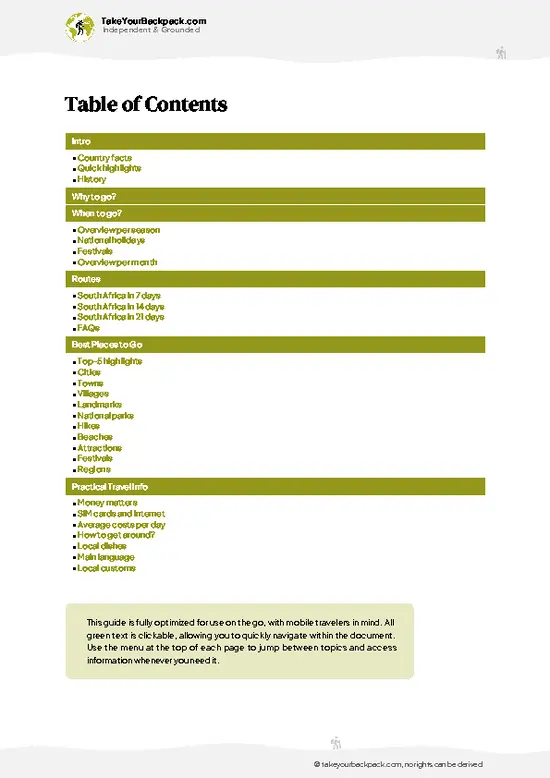
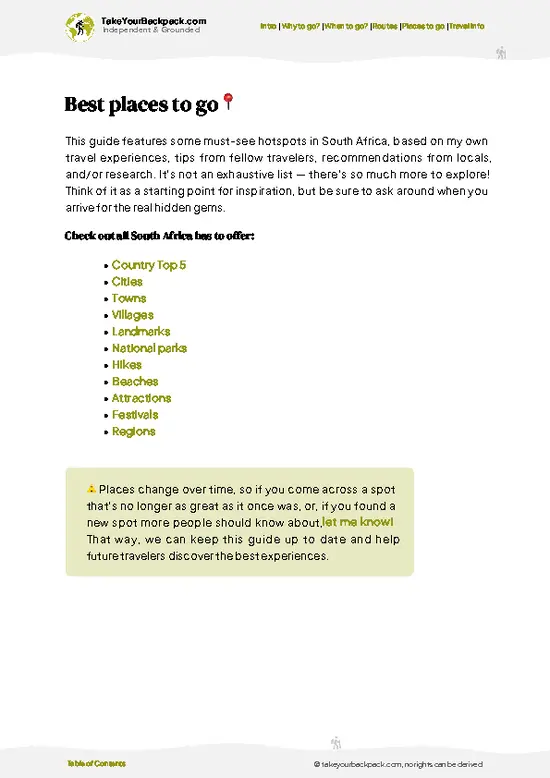
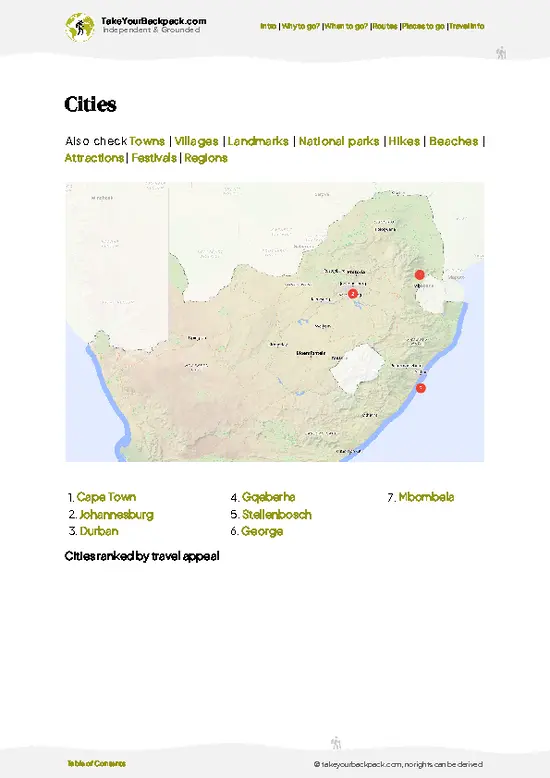
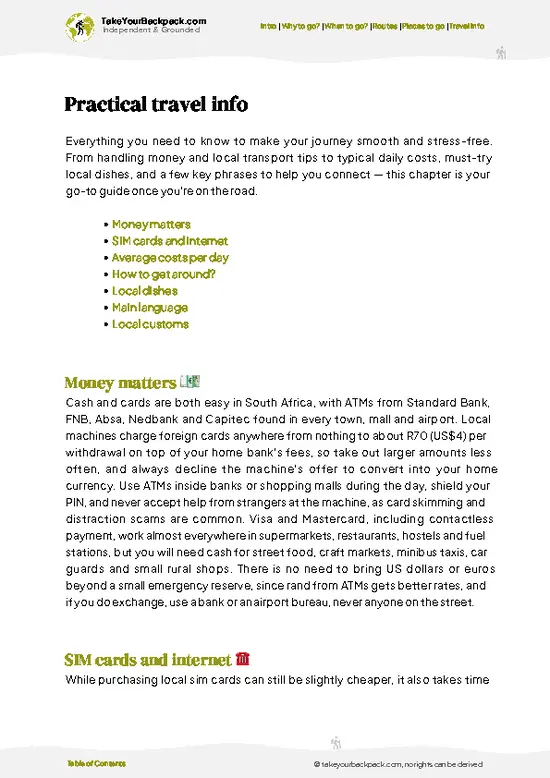
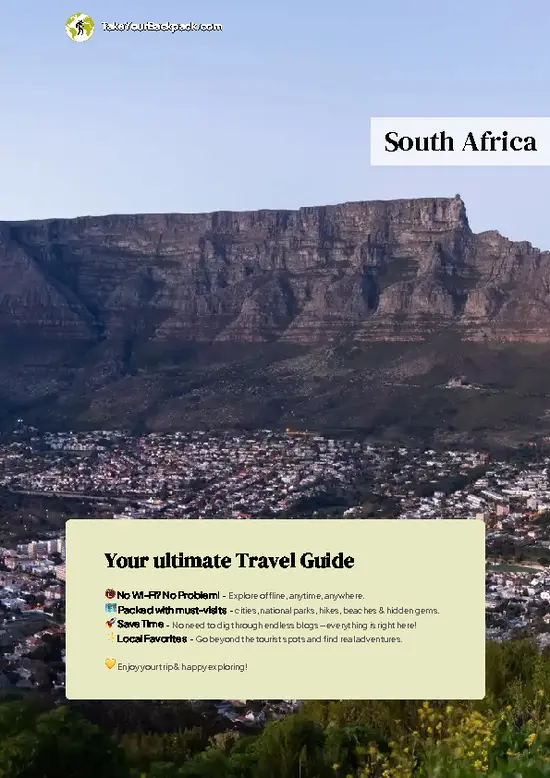
example page 0 from our offline Travel Guide for South Africa
example page 1 from our offline Travel Guide for South Africa
example page 2 from our offline Travel Guide for South Africa
example page 3 from our offline Travel Guide for South Africa
example page 4 from our offline Travel Guide for South Africa
example page 5 from our offline Travel Guide for South Africa
example page 6 from our offline Travel Guide for South Africa
example page 7 from our offline Travel Guide for South Africa
The digital guide (457 pages) contains:
✅ 125 highlights, ranked by travel appeal
✅ Optimized 7, 14 & 21-day travel routes
✅ Cities, national parks, landmarks, beaches
✅ How to get around
✅ Offline-friendly for travel without Wi-Fi
👉 Click to see all 30+ guide features

📅 Plan smarter in minutes, not weeks
✅ Month by month travel advice
✅ Festivals & national holidays
✅ Budget expectations

🗺️ Go to the right places, skip the overrated ones
✅ Honest pros & cons of destinations
✅ Top hikes, parks & viewpoints
✅ Lesser-known places most travelers miss
✅ Clear “worth it vs skip it” guidance

🛏️ Travel smoothly without rookie mistakes
✅ Best areas to stay
✅ Transport systems explained simply
✅ Common scams & safety advice
✅ SIM cards, money & practical tips

🌍 Understand the country, not just visit it
✅ Culture & traditions
✅ 52 Essential phrases & customs
✅ Festivals worth planning around
✅ Traveler-friendly historical context
✅ Insights that make places more meaningful

📱 Built for real travel conditions
✅ Fully downloadable PDF
✅ Works completely offline
✅ Optimized for phone use
✅ Useful in remote areas & buses
✅ Everything in one place
Stop searching, start planning
Get instant access to your full guide. 30‑day money-back guarantee.
+ Add another guide for just

By proceeding you agree to our terms.
Sent to your inbox immediately after payment • 100% Secure Checkout
Best Backpacking Travel Advisor 2025 tourism awardBest Backpacking
Travel Advisor
2025
What others say about Take Your Backpack Guides:
⭐⭐⭐⭐⭐
Fantastic, amazing amount of information!
⭐⭐⭐⭐⭐
My goodness this is amazing, it's what I've been looking for hats off too you!
⭐⭐⭐⭐⭐
I think this is absolutely BRILLIANT
⭐⭐⭐⭐
Very complete and informative. It's still missing places, but I gotta to commend you
⭐⭐⭐⭐⭐
This is truly amazing, thank you, can't wait to explore it with my kids!
⭐⭐⭐⭐⭐
Awesome resource, thank you!
⭐⭐⭐⭐⭐
This is amazing! Can't wait to explore the ones I haven't seen
⭐⭐⭐⭐
I love this! Well done, great idea.
⭐⭐⭐⭐⭐
Thanks for taking the time to make this gem!
⭐⭐⭐⭐⭐
This might be the best website I've ever seen.
⭐⭐⭐⭐⭐
Congratulations, and thank you so much for your work; it's incredibly valuable.
⭐⭐⭐⭐
In all seriousness I think you did a great job pointing out the important spots
⭐⭐⭐⭐⭐
10/10 very good
⭐⭐⭐⭐⭐
As someone who's only just starting to visit regularly this is awesome, thank you.
⭐⭐⭐⭐
Thank you very much! I'm going to visit my dad, it's going to be very useful!
⭐⭐⭐⭐⭐
This is really cool! We'll be travelling for the first time and this definitely come in handy.
⭐⭐⭐⭐⭐
You are now our minister of culture, congratulations 👨‍💼
⭐⭐⭐⭐⭐
Just wanted to tell you that this is a pearl! Going to follow your recommendations.
⭐⭐⭐⭐⭐
This is so cool. I'll definitely be using the resource for my travels soon.
⭐⭐⭐⭐⭐
This is very impressive! Good work.
⭐⭐⭐⭐⭐
This is an amazing and informative site. Very well done!

🛏️ Where to stay?Best Stay Options in South Africa

South Africa has a dense hostel network, with dorm beds typically running R250 to 450 (about US$14 to 25) and private doubles from roughly R700 to 1,200 (US$38 to 65), especially in Cape Town and along the Garden Route in towns like Knysna and Wilderness. In Cape Town, the City Bowl around Long Street puts you near Table Mountain trailheads and the loudest bars but gets sketchy after dark, while Sea Point trades nightlife for a seafront promenade and calmer streets with easy minibus taxi links into town. In Johannesburg, leafy Melville is the safer, low-key pick with a strip of student bars, whereas Maboneng has the street art and weekend buzz but sits in an area where you should take an e-hailing … read more 👉
South Africa has a dense hostel network, with dorm beds typically running R250 to 450 (about US$14 to 25) and private doubles from roughly R700 to 1,200 (US$38 to 65), especially in Cape Town and along the Garden Route in towns like Knysna and Wilderness. In Cape Town, the City Bowl around Long Street puts you near Table Mountain trailheads and the loudest bars but gets sketchy after dark, while Sea Point trades nightlife for a seafront promenade and calmer streets with easy minibus taxi links into town. In Johannesburg, leafy Melville is the safer, low-key pick with a strip of student bars, whereas Maboneng has the street art and weekend buzz but sits in an area where you should take an e-hailing ride at night, and in Durban the Morningside area around Florida Road offers restaurants and relative quiet a short drive from the beachfront.

If you enjoy meeting fellow travelers, consider choosing hostels with high ratings for atmosphere. On the other hand, if you prefer having your own space, a hotel might be a better option.

South AfricaWhere to Go Next

👋 Meet the founderWho’s Behind Take Your Backpack?

Johan, backpacker and founder of TakeYourBackpackHi, I’m Johan (Netherlands 🇳🇱), the creator of TakeYourBackpack. Over the past 3 decades, I’ve backpacked through 90+ countries across six continents, gaining extensive experience with independent travel, long-term trips, and overland routes.

This site is built on a combination of firsthand travel experience and carefully curated insights from other backpackers. Many guides are based on places I’ve personally visited, while others bring together tips, observations, and practical advice shared by trusted travelers I’ve met along the way.

The goal is to provide realistic, experience-driven guidance — not generic itineraries — so you can explore destinations with better context, clearer expectations, and more confidence.