×

Taiwan🇹🇼 | best townsWhere to Find the 10 Best towns in Taiwan

Towns in Taiwan are shaped by an island with a mountainous spine and a crowded western plain, so the experience splits by coast. The west coast has old trading and railway towns, packed with night markets, temples and cheap food, and they are easy to reach by high-speed rail and local trains. The east coast and the central mountains are quieter, slower and costlier per transfer because trains and buses run less often. Hot-spring and tea towns in the hills fill up on weekends, while the offshore islands swing with the seasons. For backpacking or independent travel, ease of access usually matters more than distance on the map.

By Johan Kruseman 🇳🇱 | Updated October 18, 2026
Explore the best villages in Taiwan

Why go?Understanding Their Importance

Taiwan suits town travel because density and infrastructure overlap. About 23 million people live on an island roughly 394 km long, and the west is linked by a high-speed rail line, conventional trains, and frequent buses. Even small towns usually have a convenience store open around the clock, clean public toilets and mobile coverage, which lowers the effort of independent travel.

The character of towns comes from layered history: Indigenous communities, Hokkien and Hakka settlement, Dutch and Spanish outposts, Qing-era trade, and fifty years of Japanese rule that left rail stations, wooden buildings and hot-spring culture. That is why one island offers temple-and-market streets in the west, Hakka tea and tobacco-farm landscapes in the north and south, and Indigenous cultures in the east … read more 👉
Taiwan suits town travel because density and infrastructure overlap. About 23 million people live on an island roughly 394 km long, and the west is linked by a high-speed rail line, conventional trains, and frequent buses. Even small towns usually have a convenience store open around the clock, clean public toilets and mobile coverage, which lowers the effort of independent travel.

The character of towns comes from layered history: Indigenous communities, Hokkien and Hakka settlement, Dutch and Spanish outposts, Qing-era trade, and fifty years of Japanese rule that left rail stations, wooden buildings and hot-spring culture. That is why one island offers temple-and-market streets in the west, Hakka tea and tobacco-farm landscapes in the north and south, and Indigenous cultures in the east and the mountains.

Before choosing Taiwan, know that the Central Mountain Range blocks easy east-west movement, so the east is reached by a few rail lines or long bus rides. Taiwan also sits on a typhoon and earthquake belt, which affects schedules. Signs often include English in cities but less in small towns, so a translation app helps. Towns are compact and walkable, but many are not scenic in a postcard way. Their appeal is food, temples, local rhythm and the hills behind them.
Our Approach to Ranking
The list of best towns in Taiwan is created based on charm, local culture, atmosphere, hidden gems, and visitor appeal. If you feel a town is missing in this list, please let us know.

When to go?Timing Your Visit for the Best Experience

Best months: October to November and March to April are the best months for towns in Taiwan, because temperatures sit around 18 to 28°C and rain is lighter than in summer. Autumn is the driest period for the north and east is less certain, so check forecasts. Spring is pleasant but brings drizzle and plum rain around May.
Seasons and regional differences: Summer, June to September, is hot and humid, with 30 to 35°C in the lowlands. It is also typhoon season, when trains and buses to the east can be suspended for a day or two, and mountain roads may close after heavy rain. The south stays warm in winter, around 18 to 25°C, so December to February is good in Kaohsiung and Tainan, while the north and hills are cooler and wetter, 10 to 18°C, with the northeast especially damp.
Crowds and prices: … read more 👉
Best months: October to November and March to April are the best months for towns in Taiwan, because temperatures sit around 18 to 28°C and rain is lighter than in summer. Autumn is the driest period for the north and east is less certain, so check forecasts. Spring is pleasant but brings drizzle and plum rain around May.
Seasons and regional differences: Summer, June to September, is hot and humid, with 30 to 35°C in the lowlands. It is also typhoon season, when trains and buses to the east can be suspended for a day or two, and mountain roads may close after heavy rain. The south stays warm in winter, around 18 to 25°C, so December to February is good in Kaohsiung and Tainan, while the north and hills are cooler and wetter, 10 to 18°C, with the northeast especially damp.
Crowds and prices: The Lunar New Year period in late January or February is the main peak. Trains sell out days ahead, and hotels in popular hot-spring and hill areas can cost 30 to 100 percent more. Summer holidays and weekends also raise prices in resort-style towns. Weekdays in the shoulder seasons are usually cheapest and calmest. Some temples hold festivals in spring and the lunar seventh month, which add color and crowds.

town hoppingPlanning Your Route Efficiently

Trip length and direction: A trip combining several towns in Taiwan needs 7 to 14 days, because transit takes longer than the map suggests. The most efficient shape is a loop of the west coast and then the east, or the reverse, using Taipei and Kaohsiung as main hubs. Go north to south on the high-speed rail, which takes about 1.5 to 2 hours between them, then take the Taiwan Railways line up the east coast, or fly or train back.
Time per stop: Most towns need one night, or two if they have a hot spring, hiking or a market you want to see at both lunch and evening. Allow 1 to 3 hours between neighboring western towns and 2 to 4 hours between the west and the east, with some east coast legs by slower trains or buses.
Planning mistakes: The common mistake is cramming one town per day, which leaves … read more 👉
Trip length and direction: A trip combining several towns in Taiwan needs 7 to 14 days, because transit takes longer than the map suggests. The most efficient shape is a loop of the west coast and then the east, or the reverse, using Taipei and Kaohsiung as main hubs. Go north to south on the high-speed rail, which takes about 1.5 to 2 hours between them, then take the Taiwan Railways line up the east coast, or fly or train back.
Time per stop: Most towns need one night, or two if they have a hot spring, hiking or a market you want to see at both lunch and evening. Allow 1 to 3 hours between neighboring western towns and 2 to 4 hours between the west and the east, with some east coast legs by slower trains or buses.
Planning mistakes: The common mistake is cramming one town per day, which leaves bags and stations as the main sights. Choose a single region at a time, then jump by rail. Another is ignoring the east coast bottleneck: Puyuma and Taroko Express seats sell out, so reserve early, especially on weekends and holidays. A third is relying on buses with only a few departures daily; check the last service before you commit. Leave buffer days in typhoon months.

The ListTop towns of Taiwan

1 Jiufen

Steep alleys, teahouses, hillside views

Wander narrow stairways lined with lanterns, sample street snacks, and look out over misty coastline from a former gold mining town.

2 Alishan

Cedar forests, sunrise lookout, mountain railway

Ride a historic train through dense woods, wake early for sunrise above cloud seas, and walk among ancient trees in cool air.

3 Hengchun

Old city walls, southern beaches, night market

Walk preserved ramparts, reach Kenting’s beaches in minutes, and sample seafood at a market popular with locals and travelers.

4 Wulai

Riverside baths, Atayal heritage, forested gorge

Soak in mineral-rich waters, watch steam rise along the river, and encounter indigenous influences in local food and handicrafts.

5 Pingxi

Lantern festivals, old railway, hillside hamlets

Release sky lanterns, walk along tracks through lush hills, and visit small villages where time moves at a slower pace.

6 Xitou

Bamboo forest, nature trails, experimental forest

Hike shaded paths, spot rare plants, and breathe cool air in a research forest popular with walkers and birdwatchers.

taiwan-city-xitou
© Google |

7 Puli

Paper workshops, central market, Buddhist monastery

Tour artisan studios, browse a lively market, and explore a sprawling monastery that draws pilgrims and travelers alike.

taiwan-city-puli
© Google |

8 Meinong

Hakka culture, oil-paper umbrellas, tobacco barns

See handmade umbrellas, visit traditional Hakka homes, and explore a countryside shaped by agriculture and craftwork.

9 Nanzhuang

Hakka snacks, old street, mountain streams

Taste local pastries, walk a preserved street, and cool off by clear streams in a valley town with a mixed ethnic heritage.

10 Sanyi

Woodcarving shops, old rail tunnel, rural hills

Discover intricate woodwork, walk through a disused tunnel, and explore quiet lanes surrounded by low mountains and tea fields.

11 Yingge

Ceramics district, pottery studios, kiln museums

Browse galleries and workshops, try your hand at pottery, and learn about Taiwan’s ceramic traditions in a compact town.

12 Daxi

Baroque facades, tofu shops, riverside park

Stroll along ornate old streets, taste specialty tofu, and relax by the river where locals gather in the evenings.

13 Ruifang

Mining relics, gateway town, market street

Use Ruifang as a base for exploring the northeast coast, with easy access to old mining sites and bustling local markets.

14 Sanxia

Old street, indigo dye workshops, temple woodcarving

Step into a preserved district known for traditional crafts, where artisans and historic architecture offer a glimpse of Taiwan’s past.

15 Jiji

Railway station, cycling routes, rural scenery

Pedal through rice paddies, visit a restored wooden station, and enjoy a relaxed pace in a small town surrounded by farmland.

16 Donggang

Seafood harbor, bluefin tuna, temple festivals

Sample fresh catches at the port, time your visit for the King Boat Festival, and watch fishing boats unload at dawn.

17 Guanziling

Mud hot springs, hillside inns, fire-water cave

Bathe in mineral-rich mud pools, stay in rustic lodges, and see a rare natural flame burning above a hot spring cave.

18 Beigang

Mazu temple, pilgrimage site, peanut candy

Observe religious processions, sample local sweets, and experience the rhythms of a town centered on one of Taiwan’s busiest temples.

19 Fengbin

Pacific cliffs, Amis villages, whale watching

Travel along dramatic coastal roads, visit indigenous communities, and join boat tours searching for dolphins and whales offshore.

20 Shuili

Old train line, riverside market, suspension bridge

Cross a long footbridge, browse a riverside market, and ride a heritage railway into the hills from this small transport hub.

21 Wujie

Rice paddies, traditional homestays, Luodong Night Market

Stay in rural guesthouses, cycle through flat fields, and access one of Taiwan’s best night markets just a short ride away.

Think you know Taiwan?

Prove you’re a true local — uncover 11 lesser-known towns in Taiwan that locals tend to keep to themselves.
Loading the map 🌍

Expert viewExpert Commentary on towns

How many towns: Three to five towns are enough for a 7 to 10 day trip, because each stop costs half a day in packing, transfers and check-in. Taiwan is fast to cross, but a faster pace turns it into a blur of stations. More than six means you will skip the local mornings, tea houses and markets that make towns worth the visit. With 14 days or more, six to eight works if some are one-night stops.
Which kind to prioritize: Choose by travel style. For food and street life, pick west-coast market and temple towns, which are cheap and easy. For hiking, hot springs and cooler air, choose hill and mountain towns, but expect weekend crowds and higher prices. For Indigenous culture and quiet, choose the east, where transport takes planning but crowds thin. Offshore islands suit summer, not winter, when … read more 👉
How many towns: Three to five towns are enough for a 7 to 10 day trip, because each stop costs half a day in packing, transfers and check-in. Taiwan is fast to cross, but a faster pace turns it into a blur of stations. More than six means you will skip the local mornings, tea houses and markets that make towns worth the visit. With 14 days or more, six to eight works if some are one-night stops.
Which kind to prioritize: Choose by travel style. For food and street life, pick west-coast market and temple towns, which are cheap and easy. For hiking, hot springs and cooler air, choose hill and mountain towns, but expect weekend crowds and higher prices. For Indigenous culture and quiet, choose the east, where transport takes planning but crowds thin. Offshore islands suit summer, not winter, when winds can cancel ferries and flights. A mix of two kinds beats one kind five times.
Budget: A backpacker can manage on roughly US$35 to 60 a day, about NT$1,100 to 1,900. Dorm beds cost NT$500 to 900, private rooms NT$1,200 to 2,500, and street meals NT$60 to 150. Hot springs can be a public bath for NT$100 to 300 or a private room for NT$600 to 1,500 per hour. Temples are usually free and small museums NT$50 to 150. Local buses cost NT$15 to 100 per ride, while the high-speed rail between big cities costs NT$1,000 to 1,500. A EasyCard works on most local transit and in convenience stores, so you avoid fumbling for coins. Scooter rentals run NT$400 to 800 a day but need a valid license; Taiwan accepts an International Driving Permit plus your home license for many nationalities, so check before you ride.
Safety and etiquette: Taiwan has low violent crime, and towns are safe to walk at night. The real risks are traffic and weather. Scooters often ignore pedestrian space, so look both ways at crossings even on green. Typhoons and earthquakes are routine events; follow the Central Weather Administration and your hotel. In temples, dress modestly, do not touch offerings, and keep your voice low during rituals. Do not point your feet at altars. Many shops are cash-based, so carry NT$1,000 to 2,000 in small notes, especially in markets. Queueing is expected, spitting and littering are fined, and trash separation is strict, so look for the recycling bins before dropping anything.

✈️ The backpacker research shortcutTaiwan Travel Guide

An offline-friendly backpacking guide with optimized travel routes, ranked highlights, transport advice, and the best areas to stay.
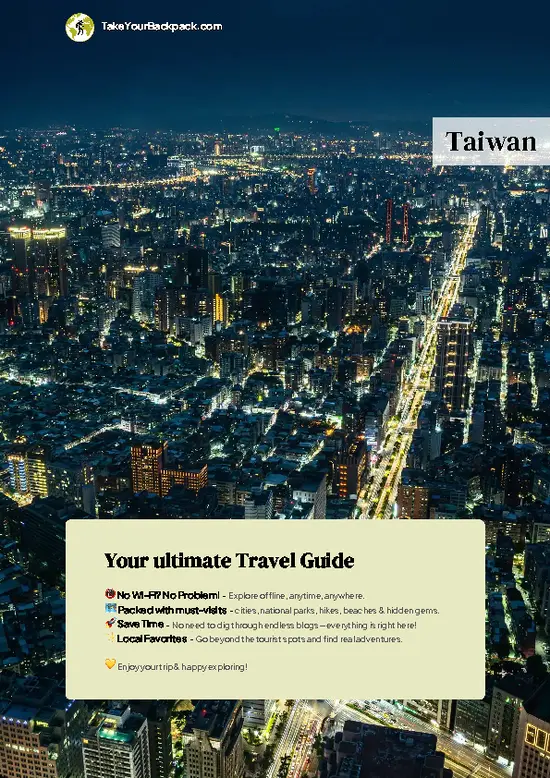
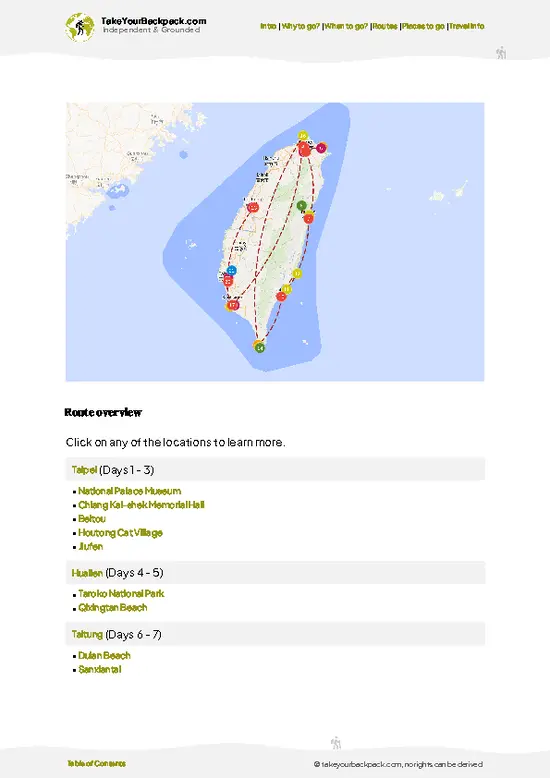
example page 0 from our offline Travel Guide for Taiwan
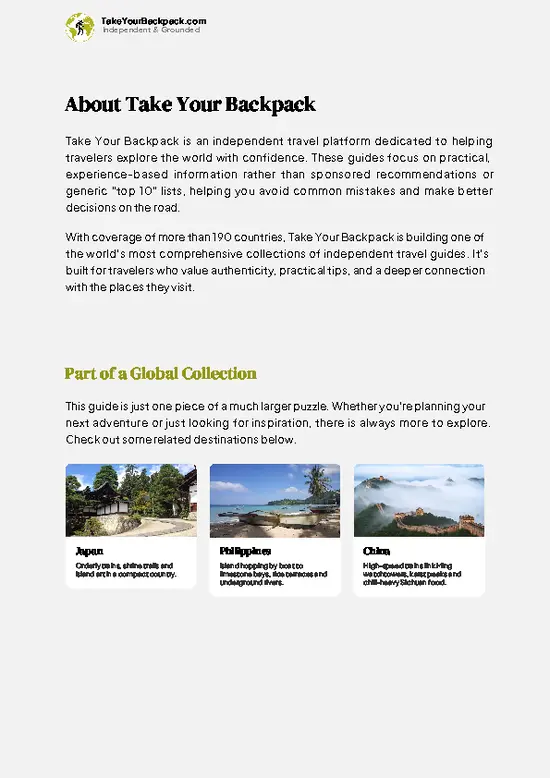
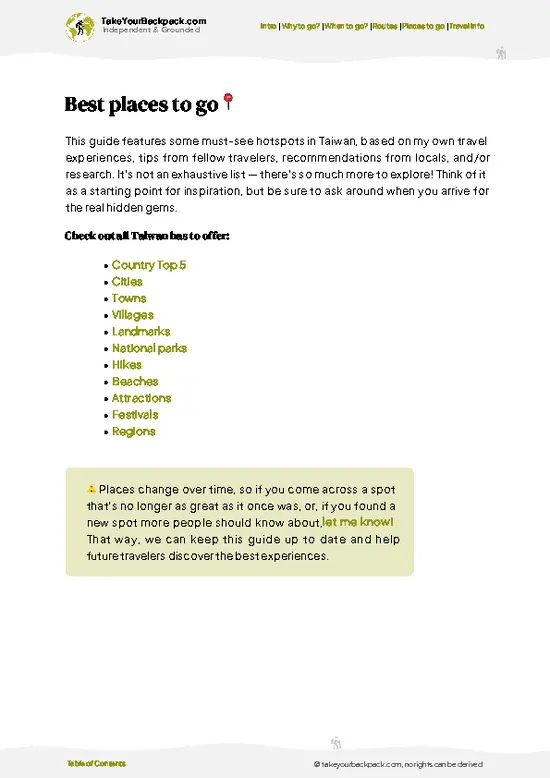
example page 1 from our offline Travel Guide for Taiwan
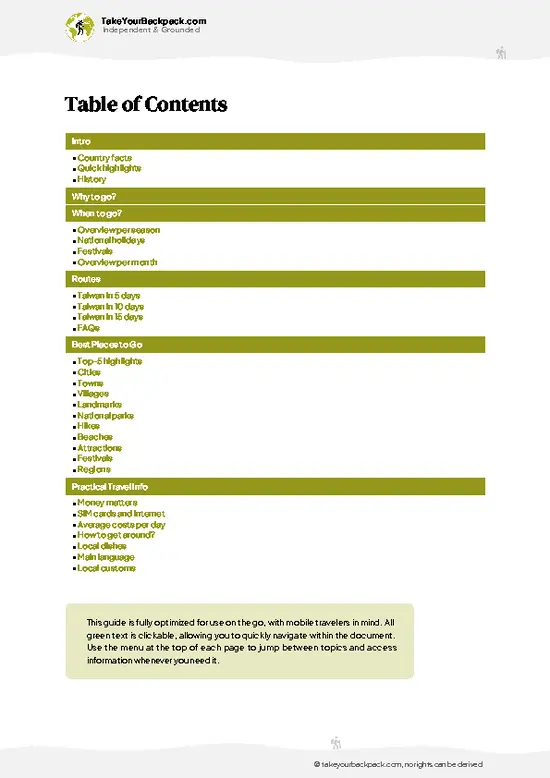
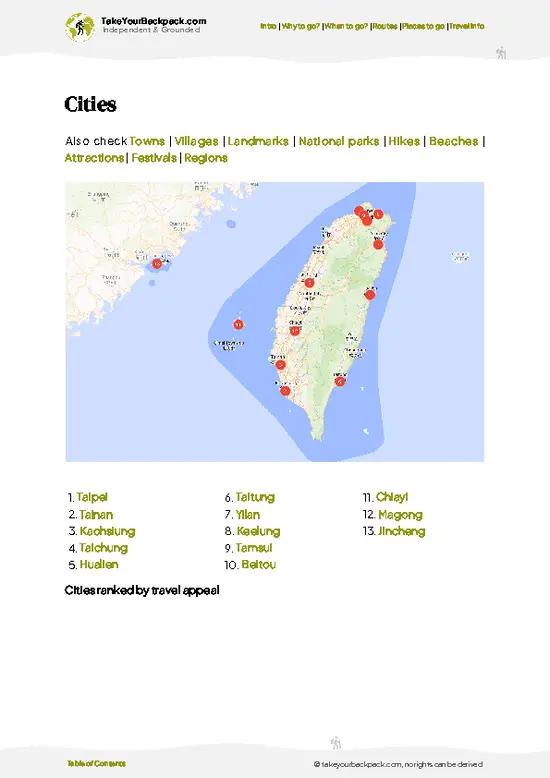
example page 2 from our offline Travel Guide for Taiwan
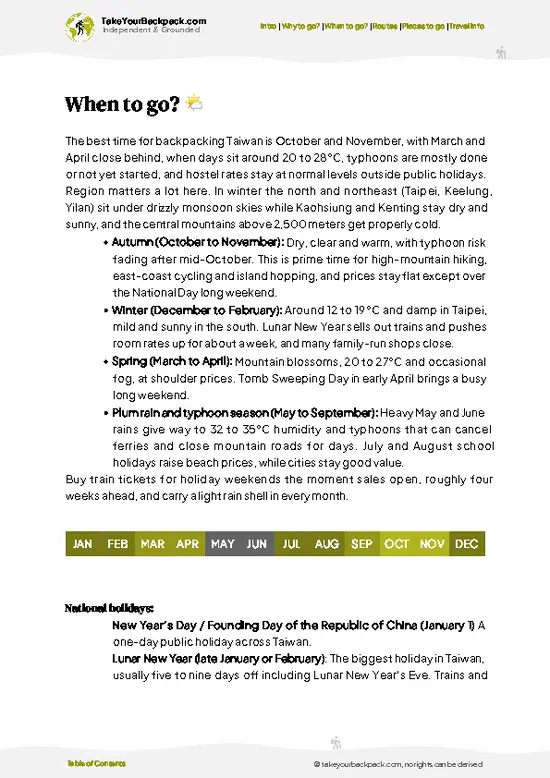
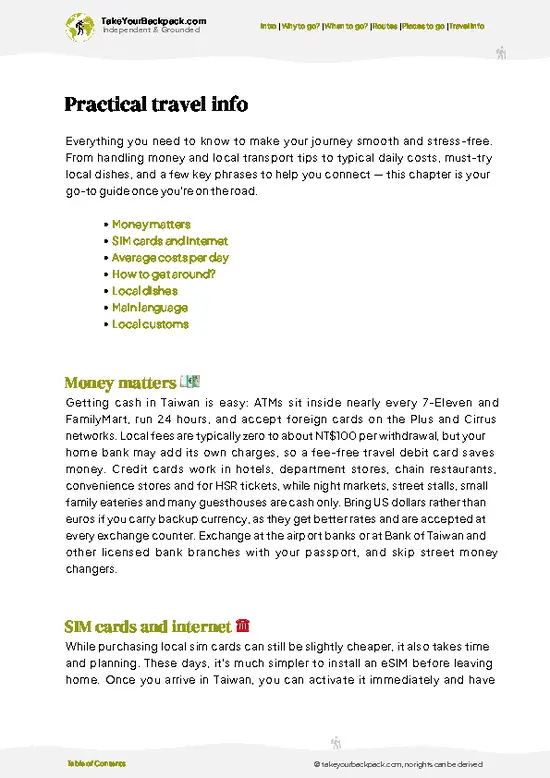
example page 3 from our offline Travel Guide for Taiwan
example page 4 from our offline Travel Guide for Taiwan
example page 5 from our offline Travel Guide for Taiwan
example page 6 from our offline Travel Guide for Taiwan
example page 7 from our offline Travel Guide for Taiwan
The digital guide (425 pages) contains:
✅ 121 highlights, ranked by travel appeal
✅ Optimized 5, 10 & 15-day travel routes
✅ Cities, national parks, landmarks, beaches
✅ How to get around
✅ Offline-friendly for travel without Wi-Fi
👉 Click to see all 30+ guide features

📅 Plan smarter in minutes, not weeks
✅ Month by month travel advice
✅ Festivals & national holidays
✅ Budget expectations

🗺️ Go to the right places, skip the overrated ones
✅ Honest pros & cons of destinations
✅ Top hikes, parks & viewpoints
✅ Lesser-known places most travelers miss
✅ Clear “worth it vs skip it” guidance

🛏️ Travel smoothly without rookie mistakes
✅ Best areas to stay
✅ Transport systems explained simply
✅ Common scams & safety advice
✅ SIM cards, money & practical tips

🌍 Understand the country, not just visit it
✅ Culture & traditions
✅ 52 Essential phrases & customs
✅ Festivals worth planning around
✅ Traveler-friendly historical context
✅ Insights that make places more meaningful

📱 Built for real travel conditions
✅ Fully downloadable PDF
✅ Works completely offline
✅ Optimized for phone use
✅ Useful in remote areas & buses
✅ Everything in one place
Stop searching, start planning
Get instant access to your full guide. 30‑day money-back guarantee.
+ Add another guide for just

By proceeding you agree to our terms.
Sent to your inbox immediately after payment • 100% Secure Checkout
Best Backpacking Travel Advisor 2025 tourism awardBest Backpacking
Travel Advisor
2025
What others say about Take Your Backpack Guides:
⭐⭐⭐⭐⭐
Fantastic, amazing amount of information!
⭐⭐⭐⭐⭐
My goodness this is amazing, it's what I've been looking for hats off too you!
⭐⭐⭐⭐⭐
I think this is absolutely BRILLIANT
⭐⭐⭐⭐
Very complete and informative. It's still missing places, but I gotta to commend you
⭐⭐⭐⭐⭐
This is truly amazing, thank you, can't wait to explore it with my kids!
⭐⭐⭐⭐⭐
Awesome resource, thank you!
⭐⭐⭐⭐⭐
This is amazing! Can't wait to explore the ones I haven't seen
⭐⭐⭐⭐
I love this! Well done, great idea.
⭐⭐⭐⭐⭐
Thanks for taking the time to make this gem!
⭐⭐⭐⭐⭐
This might be the best website I've ever seen.
⭐⭐⭐⭐⭐
Congratulations, and thank you so much for your work; it's incredibly valuable.
⭐⭐⭐⭐
In all seriousness I think you did a great job pointing out the important spots
⭐⭐⭐⭐⭐
10/10 very good
⭐⭐⭐⭐⭐
As someone who's only just starting to visit regularly this is awesome, thank you.
⭐⭐⭐⭐
Thank you very much! I'm going to visit my dad, it's going to be very useful!
⭐⭐⭐⭐⭐
This is really cool! We'll be travelling for the first time and this definitely come in handy.
⭐⭐⭐⭐⭐
You are now our minister of culture, congratulations 👨‍💼
⭐⭐⭐⭐⭐
Just wanted to tell you that this is a pearl! Going to follow your recommendations.
⭐⭐⭐⭐⭐
This is so cool. I'll definitely be using the resource for my travels soon.
⭐⭐⭐⭐⭐
This is very impressive! Good work.
⭐⭐⭐⭐⭐
This is an amazing and informative site. Very well done!

🛏️ Where to stay?Where to Base Yourself

Taiwan has a dense, clean and very safe hostel scene, with dorm beds typically NT$500 to 900 (US$16 to 28) and simple private rooms from about NT$1,200 (US$38). In Taipei, Ximending has the most beds and the liveliest late-night streets but gets loud and crowded on weekends, while the Taipei Main Station area is the most convenient for airport and high-speed rail transfers, and Zhongshan is quieter with good cafés and easy MRT access. Outside the capital, the old center of Tainan puts you within walking distance of temples and snack streets, Kaohsiung hostels around Yancheng and the Formosa Boulevard MRT give you harbor-side nightlife and cheaper rates, and Hualien rooms near the train station … read more 👉
Taiwan has a dense, clean and very safe hostel scene, with dorm beds typically NT$500 to 900 (US$16 to 28) and simple private rooms from about NT$1,200 (US$38). In Taipei, Ximending has the most beds and the liveliest late-night streets but gets loud and crowded on weekends, while the Taipei Main Station area is the most convenient for airport and high-speed rail transfers, and Zhongshan is quieter with good cafés and easy MRT access. Outside the capital, the old center of Tainan puts you within walking distance of temples and snack streets, Kaohsiung hostels around Yancheng and the Formosa Boulevard MRT give you harbor-side nightlife and cheaper rates, and Hualien rooms near the train station work best as a quiet, early-to-bed base for Taroko Gorge.

If you enjoy meeting fellow travelers, consider choosing hostels with high ratings for atmosphere. On the other hand, if you prefer having your own space, a hotel might be a better option.

TaiwanExpand Your Journey

👋 Meet the founderWho’s Behind Take Your Backpack?

Johan, backpacker and founder of TakeYourBackpackHi, I’m Johan (Netherlands 🇳🇱), the creator of TakeYourBackpack. Over the past 3 decades, I’ve backpacked through 90+ countries across six continents, gaining extensive experience with independent travel, long-term trips, and overland routes.

This site is built on a combination of firsthand travel experience and carefully curated insights from other backpackers. Many guides are based on places I’ve personally visited, while others bring together tips, observations, and practical advice shared by trusted travelers I’ve met along the way.

The goal is to provide realistic, experience-driven guidance — not generic itineraries — so you can explore destinations with better context, clearer expectations, and more confidence.