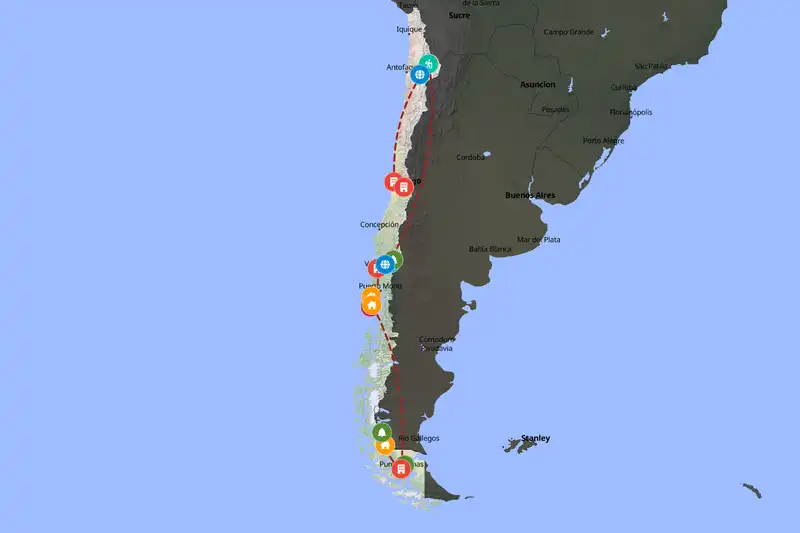
Short version: yes, Chile is one of the easiest countries in South America to backpack independently, especially if you’re used to doing things on your own.
Chile is long, organized, and relatively safe by regional standards. Spanish helps a lot, but you can get by with basic phrases plus offline translation apps in most backpacker routes. People are generally helpful, buses are straightforward, and there’s a clear hostel network in all the usual stops: San Pedro de Atacama, La Serena, Valparaíso, Santiago, Pucón, Puerto Varas, Puerto Natales, Punta Arenas.
What makes it easy:
- Clear long‑distance bus system with online booking and predictable schedules.
- Good infrastructure: ATMs in most towns, decent roads, reliable Wi‑Fi in cities and bigger villages.
- Strong hiking culture: marked trails in major parks, ranger stations, and established trekking circuits like Torres del Paine.
- Lots of tours you can join last‑minute if you don’t want to DIY every activity.
What makes it tricky:
- Distances are huge. You need to plan your route so you’re not spending half your trip on buses.
- Patagonia weather is chaotic; you need backup days and proper gear.
- Chile is not ultra‑cheap. It’s more like Eastern Europe prices than classic “South America on $20/day.” Cooking in hostels, using overnight buses, and skipping expensive tours keeps it manageable.
If you’ve backpacked anywhere else in Latin America, Chile will feel very doable. If it’s your first big trip, it’s still a solid starter country as long as you respect the distances and budget a bit more than you would for, say, Bolivia.
For a budget backpacker, the sweet spot is 3–4 weeks, but you can do a solid trip in 10–14 days if you focus.
Rough timing guidelines:
- 7–10 days: Pick ONE region and do it well.
- North: Atacama Desert (base in San Pedro de Atacama) plus maybe a day or two in Santiago.
- Center: Santiago, Valparaíso, and a quick Andes escape (Cajón del Maipo or a wine valley if that interests you).
- South: Lakes District (Pucón + Puerto Varas) or a fast‑track Torres del Paine highlights trip.
- 2 weeks: Two regions without rushing.
- Example 1 (classic first trip): Santiago → Valparaíso → Pucón → Puerto Varas.
- Example 2 (desert + city + quick south): Santiago → Atacama → back to Santiago → Pucón.
- 3–4 weeks: North + center + Patagonia on a backpacker budget.
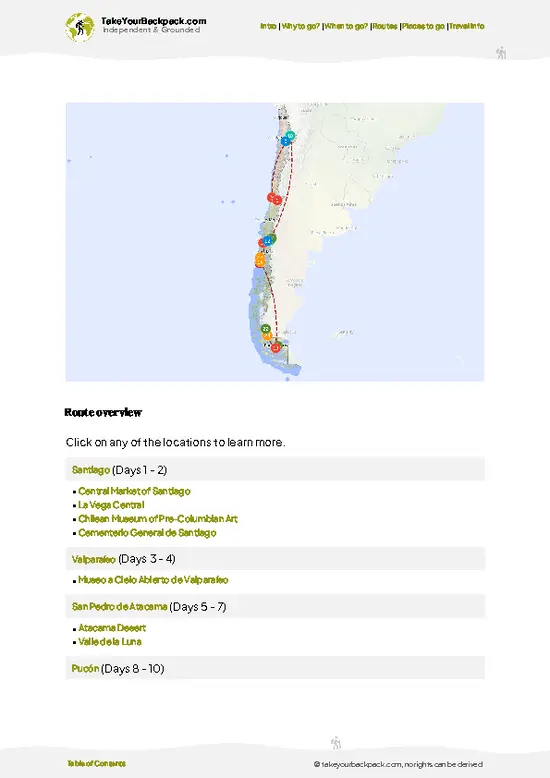
- Example loop: Santiago → Valparaíso → La Serena/Elqui Valley → Atacama → fly south to Punta Arenas/Puerto Natales → Torres del Paine → Lakes District (Puerto Varas/Pucón) → back to Santiago.
Key time traps:
- Overland distances: Santiago to Atacama or to Patagonia by bus eats 20–30 hours. Use at least one internal flight if you’re under 3 weeks.
- Torres del Paine treks: W trek needs 4–5 days plus 2 buffer days for logistics and weather. The full O circuit needs 7–9 days.
If you’re on a long Pan‑American style trip, you can easily spend 5–6 weeks working your way from Atacama down through the Lakes District into Patagonia without getting bored. If you’re on a tight vacation, commit to fewer regions and cut transit time with flights.
Yes, you can absolutely get around Chile without a car, and most backpackers do.
Your main tools:
- Long‑distance buses: The backbone of budget travel in Chile. Multiple classes (semi‑cama, cama, sometimes premium). Book online or at terminals. Overnight buses save you hostel nights on long hauls like Santiago–Pucón or Santiago–San Pedro de Atacama.
- Regional buses and colectivos: Short‑hop buses and shared taxis connect smaller towns, suburbs, and villages. They’re cheap and frequent on popular routes.
- Domestic flights: Key for crossing big chunks of the country if you’re short on time. Typical backpacker hops: Santiago ↔ Calama (Atacama), Santiago ↔ Puerto Montt (Lakes District), Santiago ↔ Punta Arenas (Patagonia).
- Metro and city buses: Santiago has a solid metro and bus network. Valparaíso has funiculars and local buses that crawl up and down the hills.
- Hitchhiking: Common in Patagonia, especially on the Carretera Austral and around Puerto Natales. It’s widely done by backpackers, but you still need patience, a bit of Spanish, and a backup plan.
Where a car helps but isn’t essential:
- Carretera Austral: Buses exist but are infrequent; hitchhiking and ride‑shares fill the gaps. A car gives you freedom, but you can still do it with time and flexibility.
- Lakes District: Buses reach main towns and some trailheads, but a car makes it easier to hit multiple lakes and hot springs in a short window.
If you’re on a tight budget, stick to buses and the occasional flight. If you’re long on time and short on cash, you can lean more on buses and hitchhiking, especially in the south.
For a budget backpacker, the must‑visits are the places that give you big landscapes and strong character without forcing you into luxury prices.
Top picks:
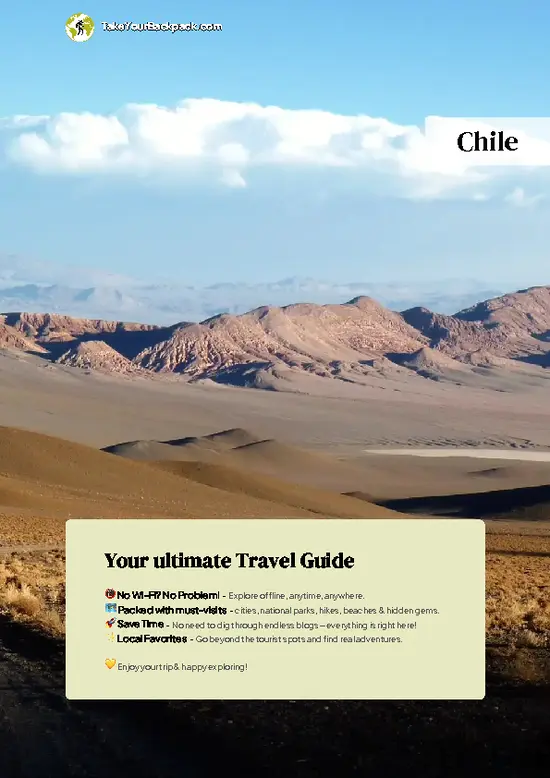
- Atacama Desert (San Pedro de Atacama): Otherworldly desert, salt flats, geysers, and star‑gazing. You can keep costs down by choosing a couple of key tours (Valle de la Luna, geysers, maybe a lagoon day) and skipping the full tour buffet. Renting a bike for nearby valleys saves money.
- Santiago: Not the most dramatic city on earth, but it’s your main hub and worth 1–2 days. Good food markets, viewpoints like Cerro San Cristóbal, and cheap walking tours that explain the country’s recent history.
- Valparaíso: Street art, steep hills, creaky funiculars, and a scruffy port vibe. It’s a great place to stay in a hostel, meet other travelers, and wander. One or two nights is usually enough.
- Lakes District (Pucón and/or Puerto Varas): Volcanos, lakes, hot springs, and accessible hiking. Pucón is more adventure‑sports focused (volcano climbs, rafting), while Puerto Varas has a calmer lakeside feel with easy day trips to waterfalls and national parks. Both work well for budget travelers who like cooking in hostels and doing DIY hikes.
- Patagonia – Torres del Paine area: If you can swing it, this is the big one. The W trek is pricey but doable on a backpacker budget if you book campsites early, carry your own food, and use buses instead of private transfers. Even if you don’t trek, a day trip to the park from Puerto Natales is worth the effort.
- Carretera Austral (if you have time): For slow travelers, this road through rural Patagonia is a dream: glaciers, forests, tiny towns, and a lot of hitchhiking and camping. It’s not a quick hit, but if you’re on a long trip, it’s one of the most rewarding stretches of Chile.
If you only have 10–14 days and want a strong mix, a very efficient combo is: Santiago → Valparaíso → Pucón or Puerto Varas → Torres del Paine (short version) or Atacama instead of Patagonia.
If you’re short on time or cash, you need to be ruthless. Chile is long, and trying to do everything means you mostly see bus interiors.
Things many backpackers skip or shorten:
- Easter Island (Rapa Nui): Culturally fascinating but very expensive and time‑consuming. Flights are pricey, and once you’re there, food and lodging cost more than the mainland. Worth it if it’s a lifelong dream, but not ideal for a tight budget or a 2‑week trip.
- Too many wine regions: If you’re on a budget, pick one wine day trip (from Santiago or Valparaíso) or skip wine altogether. Tastings and tours add up fast, and you can drink decent supermarket wine in your hostel kitchen for a fraction of the price.
- Extra big cities: Beyond Santiago and maybe a quick stop in Valparaíso or Concepción if it’s on your route, most Chilean cities are more about everyday life than must‑see sights. If time is tight, prioritize nature over urban wandering.
- Over‑touring Atacama: You don’t need every single tour. Pick 2–3 that give you variety (for example: Valle de la Luna, a geyser trip, and one lagoon day) and skip the rest. Use a bike or walking to explore nearby areas instead of paying for overlapping tours.
- Rushing both Atacama AND deep Patagonia in under 2 weeks: Technically possible with flights, but you’ll spend a lot of money and feel like you’re speed‑running the country. If you’re short on time, choose north (Atacama + center) OR south (Lakes + Patagonia), not both.
- Long detours to secondary beach towns: Chile’s Pacific coast is interesting, but if you’ve seen beaches elsewhere in Latin America, many of the smaller resort towns won’t add much compared to the deserts, lakes, and mountains.
If you’re on a 10–14 day backpacking trip, a smart skip list is: Easter Island, the Carretera Austral, most wine tourism, and any extra cities beyond your main transit hubs. Focus your energy and money on one or two regions where you can actually slow down and hike, cook, and hang out.