×
Denmark🇩🇰 | 10 days itinerary

Backpacking Denmark: A 10-Day Guide

By Johan Kruseman 🇳🇱 | Updated May 8, 2026
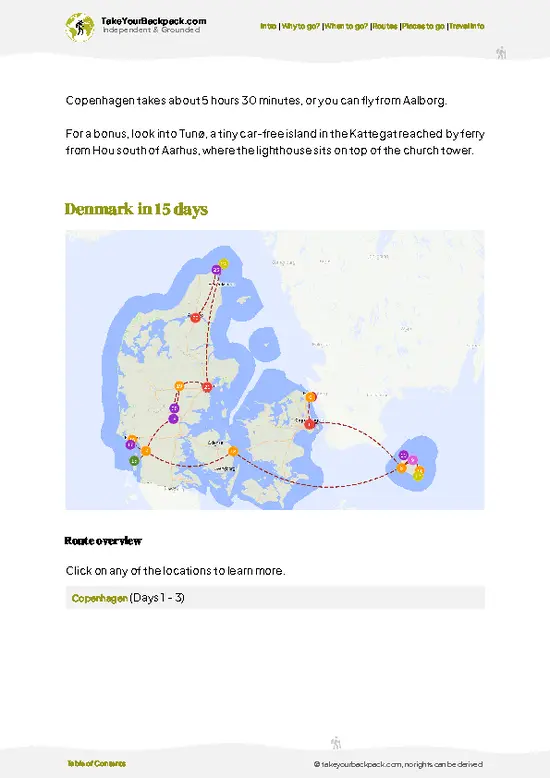
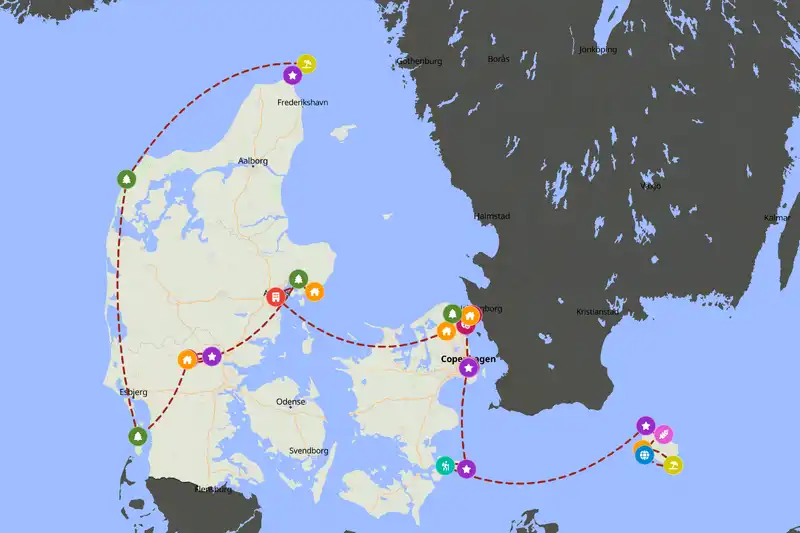
This 10-day route is for travelers who want a balanced Denmark sampler: big-city culture, Viking history, coastal art, and a taste of Jutland, using trains and buses with only a couple of medium travel days. The pace is steady but not rushed, giving you time to linger in museums, stroll old streets, and still catch sunsets by the sea instead of living out of your daypack on platforms.

Days 1-3: Copenhagen Deep Dive & Coastal Day Trips

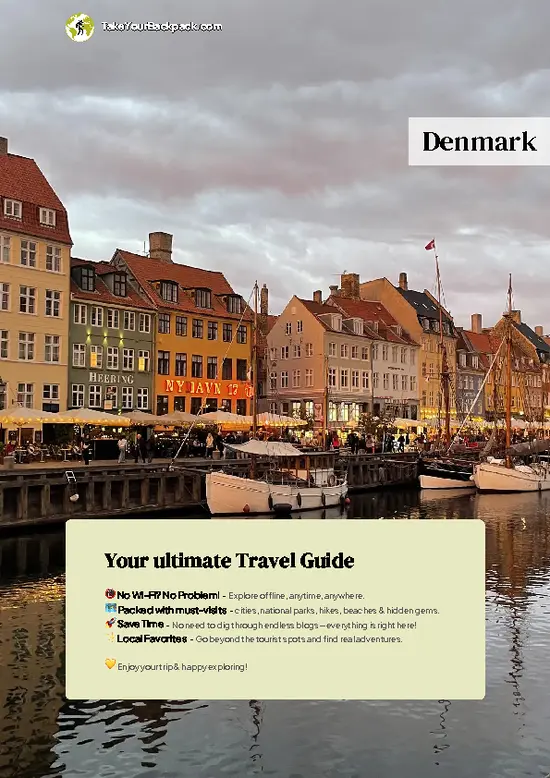
Start with three nights in Copenhagen so you can actually settle in and peel back a few layers instead of just sprinting between landmarks. Use your first full day for the essentials: wander Nyhavn Canal District, ride the rides or just soak up the atmosphere at Tivoli Gardens, and pick either Rosenborg Castle or the National Museum of Denmark depending on whether you’re more into royal glitter or big-picture history. On day two, head north along the coast to the Louisiana Museum of Modern Art for a full day of art and sea air, then swing back via Helsingørread more 👉
This 10-day route is for travelers who want a balanced Denmark sampler: big-city culture, Viking history, coastal art, and a taste of Jutland, using trains and buses with only a couple of medium travel days. The pace is steady but not rushed, giving you time to linger in museums, stroll old streets, and still catch sunsets by the sea instead of living out of your daypack on platforms.

Days 1-3: Copenhagen Deep Dive & Coastal Day Trips

Start with three nights in Copenhagen so you can actually settle in and peel back a few layers instead of just sprinting between landmarks. Use your first full day for the essentials: wander Nyhavn Canal District, ride the rides or just soak up the atmosphere at Tivoli Gardens, and pick either Rosenborg Castle or the National Museum of Denmark depending on whether you’re more into royal glitter or big-picture history. On day two, head north along the coast to the Louisiana Museum of Modern Art for a full day of art and sea air, then swing back via Helsingør to explore Kronborg Castle, the fortress that anchors the narrow strait and gives you that moody, Shakespearean castle-on-the-sea feeling before you return to Copenhagen for the night. Keep day three lighter: explore Christiansborg Palace for its mix of royal rooms and political power, then finish with a relaxed afternoon at Amager Strand, where you can walk the promenade or take a dip with the city skyline behind you.

Days 4-6: Aarhus, Art, and Old Denmark

On day four, take the train across to Aarhus, Denmark’s second city, which feels younger and more compact but still has serious cultural weight. Give yourself a full day at ARoS Aarhus Art Museum, where the rainbow rooftop walkway and bold exhibitions make it one of the most engaging art spaces in the country, then spend the evening in the Latin Quarter’s cafés and bars. The next day, step back in time at Den Gamle By, an open-air museum that lets you literally walk through different eras of Danish urban life, from cobbled streets to mid-century interiors, which makes the country’s social history feel surprisingly tangible. Use your sixth day as a flex day in Aarhus: you can wander the harbor, hit another museum, or take a short bus ride into Mols Bjerge National Park for rolling hills and coastal views if you’re craving a nature break, then return to the city for the night so you’re not constantly changing beds.

Days 7-8: Jutland’s Viking Heart and UNESCO Stones

On day seven, travel by train to the Jutland town of Vejle, which makes a handy base for exploring inland history without spending all day on buses. From here, take a side trip to the Jelling Stones, where the runestones, church, and burial mounds mark the shift from Viking paganism to Christianity and give you one of the clearest physical anchors to Denmark’s early story. Spend the evening back in Vejle, walking along the waterfront or grabbing a relaxed dinner, then use day eight as a slower day to explore the town itself or take a short hop to nearby countryside, keeping the pace gentle before your final leg west.

Days 9-10: West Coast Tides and Old Ribe

On day nine, head out to the North Sea coast and base yourself in Ribe, Denmark’s oldest town, where crooked streets and old houses make the history feel close without needing a museum ticket. From Ribe, spend a big chunk of the day in National Park Vadehavet, the Wadden Sea area where tides, mudflats, and birdlife dominate the landscape and you suddenly understand how much the sea has shaped this country. On your final day, linger in Ribe’s lanes, climb the church tower if you want a last wide view, and then make your way back toward your departure city, carrying a mental map that now stretches from royal palaces to tidal flats.

My standout memory from this route is standing by the Jelling Stones after a day of modern art in Aarhus, feeling that wild jump from rainbow rooftops to Viking runes in just a couple of train rides.
Loading the map 🌍
film
0
0
0a
Copenhagen
Pixabay
film
1
1
1a
Nyhavn Canal District
film
2
2
2a
Tivoli Gardens
film
3
3
3a
Rosenborg Castle
film
4
4
4a
National Museum of Denmark
film
5
5
5a
Louisiana Museum of Modern Art
film
6
6
6a
Amager Strand
film
7
7
7a
Aarhus
Jan
film
8
8
8a
Den Gamle By
film
9
9
9a
Mols Bjerge
Ans Hendriks
film
10
10
10a
Vejle
film
11
11
11a
Ribe
film
12
12
12a
Vadehavet
Carsten Bunzeck

🛏️ Where to stay?Itinerary Summary

✈️ The backpacker research shortcutDenmark Travel Guide

An offline-friendly backpacking guide with optimized travel routes, ranked highlights, transport advice, and the best areas to stay.
example page 0 from our offline Travel Guide for Denmarkexample page 1 from our offline Travel Guide for Denmarkexample page 2 from our offline Travel Guide for Denmarkexample page 3 from our offline Travel Guide for Denmarkexample page 4 from our offline Travel Guide for Denmarkexample page 5 from our offline Travel Guide for Denmark
The digital guide (330 pages) contains:
106 highlights, ranked by travel appeal
Optimized 5, 10 & 15-day travel routes
Best neighborhoods to stay
How to get around
Offline-friendly for travel without Wi-Fi
👉 See all 30+ guide features

📅 Plan smarter in minutes, not weeks
Month by month travel advice
Festivals & national holidays
Budget expectations

🗺️ Go to the right places, skip the overrated ones
Honest pros & cons of destinations
Top hikes, parks & viewpoints
Lesser-known places most travelers miss
Clear “worth it vs skip it” guidance

🛏️ Travel smoothly without rookie mistakes
Best areas to stay
Transport systems explained simply
Common scams & safety advice
SIM cards, money & practical tips

🌍 Understand the country, not just visit it
Culture & traditions
52 Essential phrases & customs
Festivals worth planning around
Traveler-friendly historical context
Insights that make places more meaningful

📱 Built for real travel conditions
Fully downloadable PDF
Works completely offline
Optimized for phone use
Useful in remote areas & buses
Everything in one place
Save weeks of stressful planning
Get instant access to the full guide directly. 30-day money-back guarantee.


Sent to your inbox immediately after payment • 100% Secure Checkout
Best Backpacking Travel Advisor 2025 tourism awardBest Backpacking
Travel Advisor
2025
What others say about Take Your Backpack Guides:
⭐⭐⭐⭐⭐
Fantastic, amazing amount of information!
⭐⭐⭐⭐⭐
My goodness this is amazing, it's what I've been looking for hats off too you!
⭐⭐⭐⭐⭐
I think this is absolutely BRILLIANT
⭐⭐⭐⭐
Very complete and informative. It's still missing places, but I gotta to commend you
⭐⭐⭐⭐⭐
This is truly amazing, thank you, can't wait to explore it with my kids!
⭐⭐⭐⭐⭐
Awesome resource, thank you!
⭐⭐⭐⭐⭐
This is amazing! Can't wait to explore the ones I haven't seen
⭐⭐⭐⭐
I love this! Well done, great idea.
⭐⭐⭐⭐⭐
Thanks for taking the time to make this gem!
⭐⭐⭐⭐⭐
This might be the best website I've ever seen.
⭐⭐⭐⭐⭐
Congratulations, and thank you so much for your work; it's incredibly valuable.
⭐⭐⭐⭐
In all seriousness I think you did a great job pointing out the important spots
⭐⭐⭐⭐⭐
10/10 very good
⭐⭐⭐⭐⭐
As someone who's only just starting to visit regularly this is awesome, thank you.
⭐⭐⭐⭐
Thank you very much! I'm going to visit my dad, it's going to be very useful!
⭐⭐⭐⭐⭐
This is really cool! We'll be travelling for the first time and this definitely come in handy.
⭐⭐⭐⭐⭐
You are now our minister of culture, congratulations 👨‍💼
⭐⭐⭐⭐⭐
Just wanted to tell you that this is a pearl! Going to follow your recommendations.
⭐⭐⭐⭐⭐
This is so cool. I'll definitely be using the resource for my travels soon.
⭐⭐⭐⭐⭐
This is very impressive! Good work.
⭐⭐⭐⭐⭐
This is an amazing and informative site. Very well done!

🧭 RouteChoose Your Itinerary

Travel Denmark your way — from a quick highlights trip to a slow-paced adventure.

🙋 FAQFrequently Asked Questions

Yes, Denmark is very easy to backpack independently, even for a first big trip. English is widely spoken, trains run on time, and the country is compact enough that you are rarely more than a few hours from your next stop. For budget travelers, the main challenge is cost, not logistics, so planning around food and accommodation prices matters more than navigation.

Hostels are common in cities and bigger towns, and many are clean, social, and safe, though not always cheap. To keep costs down, it helps to book dorm beds early, especially in Copenhagen, Aarhus, and during summer. In smaller places, budget hotels, guesthouses, and camping sites often beat city hostel prices, so staying slightly outside the center can save a lot.

Wild camping is technically restricted, but Denmark has a brilliant network of primitive shelters and simple campsites (often in forests or near the coast) where you can stay very cheaply or free. These usually have a fire ring, basic toilet, and sometimes water. They are perfect if you are carrying a tent or hammock and want to cut accommodation costs while still staying legal.

Navigation is straightforward: bike paths are everywhere, walking routes are well marked, and public transport information is clear. You rarely need to prebook trains for domestic routes, but long-distance buses and ferries are worth booking ahead on busy weekends. Safety-wise, Denmark is one of the easier countries to relax in: petty theft happens but is not rampant, and walking around at night in most areas feels comfortable if you use normal city awareness.

For solo backpackers, the social scene is concentrated in hostels, bars, and university cities like Copenhagen, Aarhus, and Odense. If you want more connection, choose hostels with kitchens and common rooms and cook your own meals there; that is where budget travelers naturally meet. Overall, if you can handle the prices, Denmark is one of the least stressful countries to travel independently.
For a first-time backpacking trip focused on value, 7–10 days is a sweet spot for Denmark. That gives you time for Copenhagen plus 2–3 other regions without rushing, and you can keep transport costs under control. If you only have 4–5 days, you can still get a solid taste by focusing on Copenhagen and one extra base like Aarhus or Odense.

With 3–4 days: stay mostly in Copenhagen. Do one day exploring the city on foot and bike, one day for castles and coastal towns (like Helsingør and Hillerød), and one flexible day for museums or a quick trip to Malmö in Sweden if you want a second country stamp without extra planning.

With 7–10 days: build a simple loop. Spend 3 days in Copenhagen, 2–3 days in Aarhus or Odense, and 2–3 days on an island or coastal area like Funen (Fyn), Bornholm, or the North Jutland coast. This length lets you slow down, cook your own meals, and use weekly transport passes or regional tickets more efficiently.

With 2 weeks or more: you can start treating Denmark as a relaxed, slow-travel country. Add smaller islands (like Ærø or Samsø), more hiking and cycling days, and time in smaller towns where accommodation is cheaper. This is where the shelter network and camping really shine, because you can string together short hiking or biking stages and keep daily costs low.

If you are doing a longer Scandinavia or Europe trip, Denmark works well as a 5–7 day segment between Germany and Sweden or Norway. In that case, prioritize a tight route instead of trying to see every island. Denmark rewards depth over breadth; spending an extra day in one coastal town often feels better than racing across the whole country.
You can absolutely get around Denmark without a car, and for backpackers it is usually the smarter move. Trains, buses, and ferries cover almost everywhere you are likely to go, and bikes fill in the gaps. A car only really helps if you are traveling as a group with lots of camping gear or want to hit very remote corners on a tight schedule.

Trains are the backbone: fast, frequent, and reliable between major cities like Copenhagen, Odense, Aarhus, and Aalborg. They are not cheap, but you can reduce costs by traveling off-peak, using regional tickets, and looking for advance discounts on longer routes. For short hops, local trains and S-trains around Copenhagen are easy to use and usually do not require reservations.

Buses connect smaller towns, rural areas, and some islands. They are slower but often cheaper than trains and can be a good way to reach trailheads, beaches, and smaller villages. Schedules can thin out in the evenings and on weekends, so it is worth checking times before you commit to a long hike or late dinner.

Ferries are part of normal life in Denmark, not just tourist extras. They link islands like Bornholm, Ærø, Samsø, and many smaller spots. As a foot passenger, you usually pay a reasonable fare and avoid the high cost of bringing a car. Booking ahead is smart in peak summer, but outside holidays you can often just show up.

Cycling is where Denmark really shines. Dedicated bike lanes, clear signage, and flat terrain make it easy to ride between towns or just use a bike as your main city transport. In Copenhagen and other cities, bike rentals and bike-share schemes are common and cheaper than daily transit tickets if you ride a lot. Many trains allow bikes for a small extra fee, so you can combine rail and cycling to reach cheaper accommodation or quieter beaches.

For budget travelers, the best strategy is to base yourself in a city or town with good connections and then use day trips by train, bus, or bike. This cuts down on constant check-ins and lets you buy multi-day or regional passes that lower your per-day transport cost.
For backpackers and budget travelers, the must-visits in Denmark are the places that combine character, easy logistics, and options to keep costs under control.

Copenhagen: It is expensive but worth at least 2–3 days. Wander different neighborhoods instead of just ticking off sights. Explore Nørrebro and Vesterbro for street life, cheap eats, and bars; walk along the lakes; visit Christiania for its alternative vibe; and use the harborfront for free swimming in summer. Many of the best experiences are free: walking Nyhavn at sunrise or late evening, biking across the bridges, and hanging out in parks.

Aarhus: Denmark’s second city has a younger, more relaxed feel and is often cheaper than Copenhagen. The Latin Quarter, the harbor area, and the forest and beach just south of town give you a mix of city and nature without long travel days. It is a great base for a few days if you want culture, nightlife, and easy day trips.

Odense and Funen (Fyn): Odense is compact, walkable, and tied to Hans Christian Andersen, but the real win for backpackers is using it as a base to explore Funen. The island has rolling countryside, small towns, and coastal paths that are perfect for cycling and camping. You get a softer, slower Denmark here, with lower prices than Copenhagen.

Bornholm: If you have a bit more time and want something special, Bornholm is the island to aim for. It has cliffs, sandy beaches, forest trails, and small fishing villages, all very bike- and hike-friendly. Getting there takes longer and costs more than a simple train ride, but once you are on the island you can camp, use shelters, and explore mostly under your own power.

North and West Jutland coast: For people who like big skies, dunes, and wind, the west coast and the far north around Skagen feel different from the rest of Denmark. You can walk long beaches, visit lighthouses, and stay in smaller towns where self-catering and camping are easy. This area is especially good if you are combining Denmark with Norway or Germany and want a quieter stretch.

If your time is short, a strong, simple route is: Copenhagen (city and castles) + Aarhus or Odense (second city and culture) + one coastal or island area (Funen, Bornholm, or the west coast) for nature and camping.
If you are short on time or money, skip anything that eats hours of transport for only a small payoff or that duplicates experiences you already have in your route.

You can skip: trying to see too many islands. Denmark has a lot of them, and while each is pleasant, many feel similar if you are not staying long. Pick one island area that fits your route and budget (for example, Funen for easy access, Bornholm for drama, or a small island like Ærø if you love quiet villages) and ignore the rest this trip.

You can skip: long detours just for a single castle or manor house if you are not a hardcore history fan. Denmark has several famous castles, but if you visit Kronborg (Helsingør) and maybe Frederiksborg (Hillerød) as a day trip from Copenhagen, you have already seen some of the best. Chasing more distant estates can burn a whole day and a lot of ticket and transport money.

You can skip: expensive, heavily packaged attractions that duplicate free or cheaper experiences. Canal tours in Copenhagen, for example, are nice but not essential if you are already walking and biking along the harbor and lakes. High-priced fine dining is world-class but not necessary to understand Danish food; you can get a sense of local flavors through bakeries, street food markets, and supermarket picnics.

You can skip: deep rural interiors of Jutland if you are not camping or cycling. The countryside is peaceful but not dramatically different from what you will see from the train or bus windows. If you are tight on days, focus on cities plus coast instead of spending hours reaching small inland towns.

You can skip: trying to do Copenhagen as a series of paid attractions. Many museums are excellent, but entrance fees add up fast. If your budget is tight, choose one or two that really match your interests and spend the rest of your time exploring neighborhoods, parks, and waterfronts, which cost nothing and give you a stronger feel for daily life.

Overall, cut breadth before depth. It is better to really enjoy Copenhagen and one or two regions than to race across the whole country collecting place names and train tickets.

🇩🇰 DenmarkExplore Denmark

Ready to build a truly unique trip? Predefined routes are perfect for first-time visitors, but there is so much more to discover. Whether you are chasing a city trip, pristine national parks, local food scenes, or quiet beaches, pick a category to design your own path.