×

Ecuador🇪🇨 | best festivalsBest 12 festivals in Ecuador

Ecuador throws its festivals in the Andes, and the calendar rewards anyone who keeps moving. Highland towns pack streets with masked dancers, brass bands and processions that run for days, and entry to nearly all of it is free. The northern and central Sierra brings Indigenous harvest and solstice ceremonies in small towns, where beds are cheap and crowds stay local. Colonial Quito and Cuenca stage larger parades, with more visitors and higher prices. The coast trades ceremony for beach parties, and the Amazon offers community gatherings that need guides. For backpacking or independent travel, the highlands are easiest: frequent buses link festival towns in 1 to 3 hours.

By Johan Kruseman 🇳🇱 | Updated October 20, 2026
Explore the best cities in Ecuador

Why go?What Makes Them Special

Ecuador packs an unusual amount of culture into a small country. The Andes run down its middle, and the Indigenous Kichwa calendar of solstices and harvests still shapes village life. Spanish colonial Catholicism layered saints’ days, Holy Week and Corpus Christi on top, so many celebrations blend both traditions in a single street procession. The result is a country where festivals are community events, not shows staged for visitors.

Geography helps you. Ecuador is roughly the size of Colorado, and the main highland corridor from Quito to Cuenca is served by buses that leave every hour or so. You can reach several very different regional celebrations without a single flight. The country uses the US dollar, so prices are easy to read, and entry to street festivals is almost always free.

Know … read more 👉
Ecuador packs an unusual amount of culture into a small country. The Andes run down its middle, and the Indigenous Kichwa calendar of solstices and harvests still shapes village life. Spanish colonial Catholicism layered saints’ days, Holy Week and Corpus Christi on top, so many celebrations blend both traditions in a single street procession. The result is a country where festivals are community events, not shows staged for visitors.

Geography helps you. Ecuador is roughly the size of Colorado, and the main highland corridor from Quito to Cuenca is served by buses that leave every hour or so. You can reach several very different regional celebrations without a single flight. The country uses the US dollar, so prices are easy to read, and entry to street festivals is almost always free.

Know the limits before you commit. Dates for many celebrations move with the Catholic calendar or follow local decisions, so confirm them with the municipal tourism office a few weeks ahead. Nearly everything runs on Ecuadorian holiday weekends, when lodging in small towns fills up and prices climb. Altitude matters too: Quito sits at 2,850 meters, and highland towns are often higher, so give yourself a day or two to adjust before dancing all night. Come curious and flexible, and the country delivers.
Why These Made the Cut
The list of best festivals in Ecuador is created based on energy, traditions, crowd experience, activities, and overall excitement. If you feel a festival is missing in this list, please let us know.

When to go?Optimal Periods for Travel

Best Months for Festivals in Ecuador: June to September and December to February are the best months for festivals in Ecuador, because the highland dry season (June to September) brings clear days and the Christmas and Carnival seasons pack the calendar with processions. Quito and the central Sierra stay mild year-round, with daytime highs of 18 to 22°C and nights dropping to 6 to 10°C. Pack layers, because afternoons can swing from sun to cold rain in an hour.Shoulder Seasons and Wet Months: October to May is the wetter period in the Andes, with the heaviest rain from February to April, often arriving as afternoon downpours. Mornings are usually dry, so plan outdoor events early and keep a rain jacket handy. Rain rarely stops a parade, but it turns cobbled streets slick and muddy village … read more 👉
Best Months for Festivals in Ecuador: June to September and December to February are the best months for festivals in Ecuador, because the highland dry season (June to September) brings clear days and the Christmas and Carnival seasons pack the calendar with processions. Quito and the central Sierra stay mild year-round, with daytime highs of 18 to 22°C and nights dropping to 6 to 10°C. Pack layers, because afternoons can swing from sun to cold rain in an hour.Shoulder Seasons and Wet Months: October to May is the wetter period in the Andes, with the heaviest rain from February to April, often arriving as afternoon downpours. Mornings are usually dry, so plan outdoor events early and keep a rain jacket handy. Rain rarely stops a parade, but it turns cobbled streets slick and muddy village fields. November is a quieter, cooler shoulder month, with fewer foreign visitors and lower lodging rates.Coast and Amazon: The coast is hot and humid from December to May, with highs of 28 to 32°C and heavy rain. June to November is drier, cooler and often overcast. The Amazon is wet all year, with roughly 3,000 mm of rain annually, so bring waterproof gear whatever the month.Peak Periods and Prices: Carnival, Holy Week, early November and the Christmas to New Year stretch are national holiday periods. Domestic travel surges, and hostel and hotel rates in festival towns typically rise 20 to 50 percent. Book beds two to four weeks ahead, and buy bus tickets a day early.

festival hoppingOptimizing Your Multi-Stop Itinerary

How Long a Multi-Festival Trip Takes: A trip combining several festivals in Ecuador needs 10 to 21 days, and 14 gives you room to breathe. Travel north to south through the Andean corridor, starting in Quito and finishing in Cuenca. From Cuenca, a 3.5 to 4 hour bus or shuttle reaches Guayaquil, which has the best flight connections to leave the country.Which Regions Cluster Together: The northern and central highlands bundle easily. Otavalo is 2 to 2.5 hours from Quito, Latacunga about 2 hours, Ambato roughly 2.5 to 3 hours, and Baños 3.5 to 4 hours. Cuenca sits 8 to 10 hours south of Quito by day or night bus, so treat it as a separate chapter and break the ride at Riobamba, around 4 hours from the capital. Add the coast only with 4 or more spare days, since Quito to Guayaquil takes about … read more 👉
How Long a Multi-Festival Trip Takes: A trip combining several festivals in Ecuador needs 10 to 21 days, and 14 gives you room to breathe. Travel north to south through the Andean corridor, starting in Quito and finishing in Cuenca. From Cuenca, a 3.5 to 4 hour bus or shuttle reaches Guayaquil, which has the best flight connections to leave the country.Which Regions Cluster Together: The northern and central highlands bundle easily. Otavalo is 2 to 2.5 hours from Quito, Latacunga about 2 hours, Ambato roughly 2.5 to 3 hours, and Baños 3.5 to 4 hours. Cuenca sits 8 to 10 hours south of Quito by day or night bus, so treat it as a separate chapter and break the ride at Riobamba, around 4 hours from the capital. Add the coast only with 4 or more spare days, since Quito to Guayaquil takes about 8 hours and the climate shift is abrupt.Time Per Stop: Allow 2 to 4 days per base. That gives you one day to adjust to altitude and settle in, one for the celebration, and one to recover or visit a nearby market or village.Planning Mistakes: Travelers often stack three towns in three days, then spend half the trip on buses. Choose two or three bases and make day trips from them. Another error is booking an overnight bus that arrives on festival morning, exhausted and bedless. Travel the day before. Finally, many travelers skip booking lodging near fixed dates. Reserve a refundable bed early, and leave one free day as a buffer.

The ListHighly Recommended festivals of Ecuador

1 Carnaval de Guaranda

Water and foam fights, Guaranda copleros, Ambato floats, canelazo nights

Pack a dry bag and pick a highland city, from Guaranda’s song-filled plaza to Ambato’s parade, where buckets, foam and flour hit everyone.

2 Fiesta de la Mama Negra

Mama Negra rider, Ángel de la Estrella, Latacunga horsemen, milk spray

Catch a black-faced rider on horseback spraying milk, with rhyming speeches, masked comparsas and brass bands filling Latacunga’s streets.

3 Festival de la Fruta y de las Flores

Fruit and flower floats, mora samples, Ambato markets, harvest blessing

Line the Ambato parade route as floats built from real fruit and blooms roll past, then taste highland produce at the central market.

4 Inti Raymi

Cayambe solstice, zapateo stomping, community feasts, night courtyards

Follow drums through Cayambe as Kichwa groups stomp zapateo across the cobbles, then seek out fire-lit dances in nearby communities.

5 Pase del Niño Viajero

Christmas Eve parade, Niño images, animal-laden floats, Calle Bolívar

Walk beside Cuenca’s all-day procession of heirloom Child Jesus figures, ribboned horses and trucks of fruit, bread and guinea pigs.

6 Yamor Festival

Seven-corn yamor drink, Otavalo queen coronation, Plaza de Ponchos, September

Sample a warm drink brewed from seven corns, then see Otavalo’s parade, queen’s coronation and the Saturday textile market at its busiest.

7 Corpus Christi de Pujilí

Mirrored danzante headdresses, Pujilí plaza, priostes’ meals, clay market

Watch ritual dancers in feathered, mirror-covered headdresses move to flute and drum around Pujilí’s plaza, then browse the town’s pottery at the Sunday market.

8 Día de los Difuntos

Colada morada, bread dolls, graveside meals, Kichwa rites

Share the warm purple drink and bread dolls of November 2, and watch families tend graves in Quito and Cuenca cemeteries.

9 Fiesta de la Chonta

Palm-fruit harvest, river baths, chicha de chonta, Shuar drumming

Join a three-day Shuar harvest in Yacuambi, where dawn river baths, boiled chonta fruit, shared chicha, drum circles and spear and blowgun contests unfold in a small community.

10 Diablada Pillareña

Horned devil masks, Píllaro plaza, brass comparsas, January 1 to 6

Follow whirling dancers in huge horned masks through Píllaro’s streets, with brass bands, market hornado and a crowd that is mostly local.

11 Fiesta de San Francisco

Animal blessing, Franciscan friars, October 4, Plaza de San Francisco

Watch Franciscan friars bless dogs, cats and birds on Quito’s Old Town plaza, then step into the baroque church for the feast day Mass.

12 Fiesta de San Sebastián

San Sebastián plaza, fireworks towers, neighborhood bands, Cuenca west side

Walk to Cuenca’s west-side plaza for marching bands, roast pork and a spinning castillo flaring against the church facade.

Loading the map 🌍

Expert viewTips and Advice from Travelers

How Many Festivals to Visit: I advise two or three festivals on a trip of two to three weeks. One is thin, because dates slip and a single missed bus can erase your whole plan. Four or more turns the trip into a chase, with every day spent on buses and no time to wander. Two or three leaves room for the local markets, the long lunches and the odd night when you simply sleep.Which Kind to Prioritize: For the most culture per dollar, pick small highland town celebrations. They are cheaper, less crowded and feel more like community gatherings. They suit travelers who like to wander and talk with locals. The big city parades in Quito and Cuenca suit first-timers who want comfort, easy transport and plenty of beds, but cost more and draw more visitors. Coastal parties fit those who prefer beaches … read more 👉
How Many Festivals to Visit: I advise two or three festivals on a trip of two to three weeks. One is thin, because dates slip and a single missed bus can erase your whole plan. Four or more turns the trip into a chase, with every day spent on buses and no time to wander. Two or three leaves room for the local markets, the long lunches and the odd night when you simply sleep.Which Kind to Prioritize: For the most culture per dollar, pick small highland town celebrations. They are cheaper, less crowded and feel more like community gatherings. They suit travelers who like to wander and talk with locals. The big city parades in Quito and Cuenca suit first-timers who want comfort, easy transport and plenty of beds, but cost more and draw more visitors. Coastal parties fit those who prefer beaches and nightlife over ritual. Amazon community gatherings usually require a guide and extra days, which makes them the priciest per hour, so skip them unless that region is already on your plan.What It Costs: Plan on US$30 to 50 a day for a backpacker in festival season. That covers a hostel dorm or simple room (US$10 to 25, higher on holiday weekends), meals (US$3 to 6 for a set lunch, US$8 to 12 for a street-food crawl), and local transport. Buses cost about US$1 to 2 per hour of travel. Street events are free, while grandstand seats at the big parades run roughly US$5 to 25. A local guide, useful for ritual events, costs US$20 to 40 for a half day. Budget about US$40 to 80 per festival visit including a night of lodging, food and transport. The best value is a small town with free entry, lodging at weekday rates and a bus ride under two hours.Safety and Cultural Rules: Crowds attract pickpockets, so carry a cheap phone, one card and a small amount of cash in a front pocket. Leave your passport at the hostel and carry a photocopy. Carnival-season water, foam and flour fights get rough, so protect your camera and wear clothes you can ruin. Alcohol flows heavily at street celebrations, and Ecuadorian friends will offer you drinks. Pace yourself, because altitude amplifies the effect. Wear layers, since highland nights are cold.

Many events are religious and Indigenous rituals, not shows. Ask before photographing people in costume or ceremonial dress, never touch masks or sacred objects, and stay out of the dancers’ path. Some communities charge a small photography fee or ban cameras altogether. Use ride-hailing apps or hotel-arranged taxis after dark, and plan to be back in your lodging by midnight in unfamiliar towns.

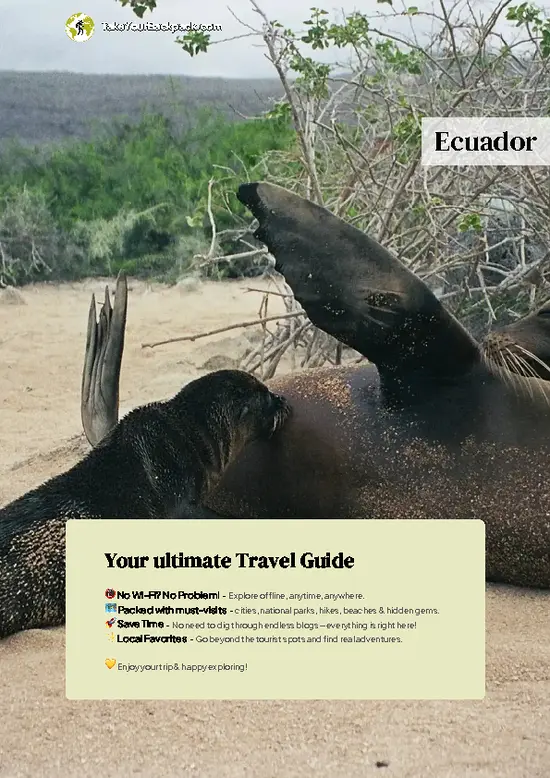
✈️ The backpacker research shortcutEcuador Travel Guide

An offline-friendly backpacking guide with optimized travel routes, ranked highlights, transport advice, and the best areas to stay.
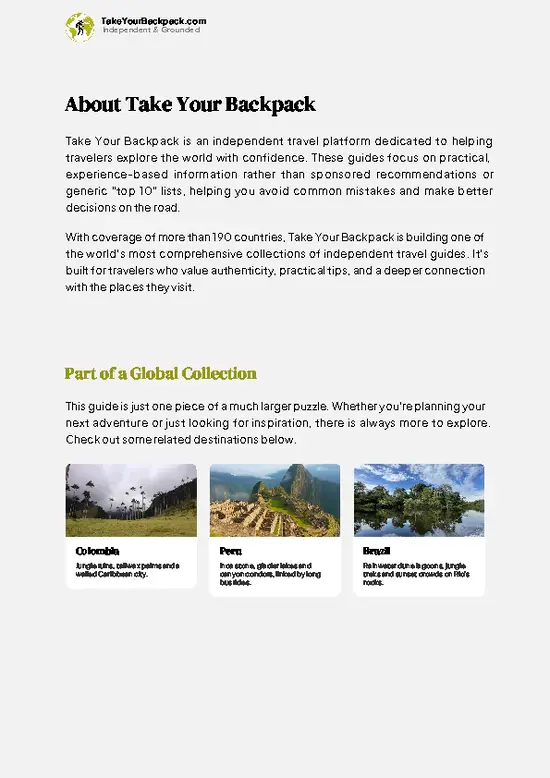
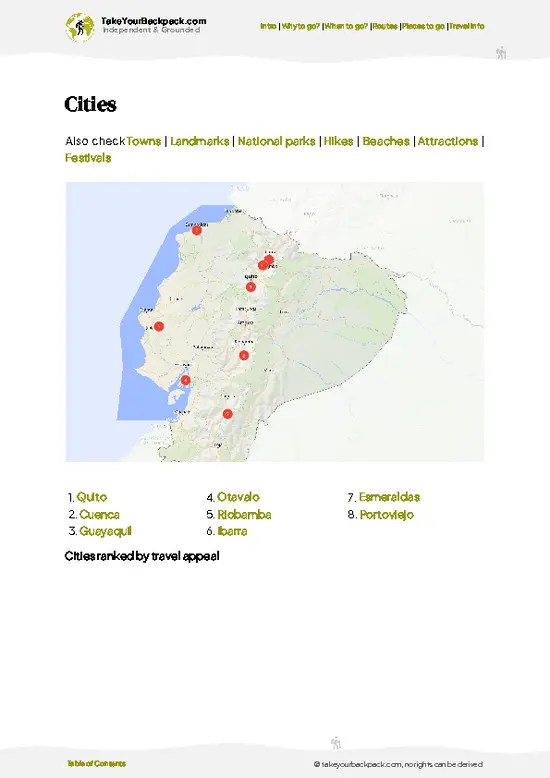
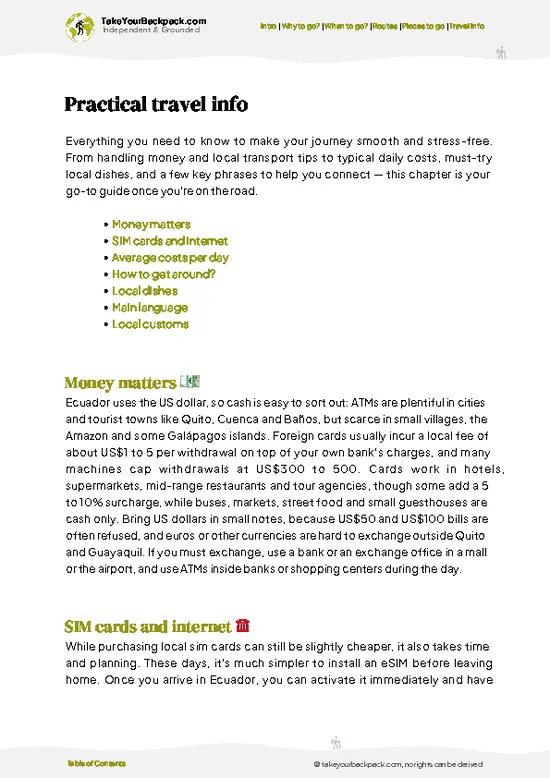
example page 0 from our offline Travel Guide for Ecuador
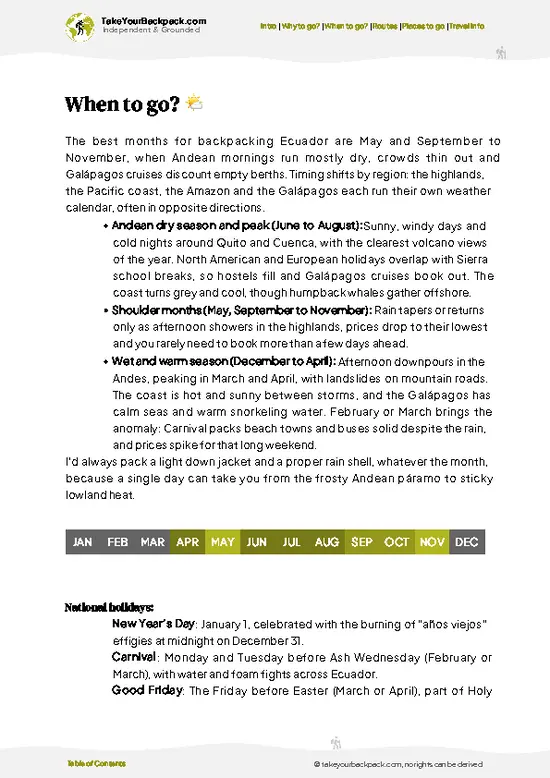
example page 1 from our offline Travel Guide for Ecuador
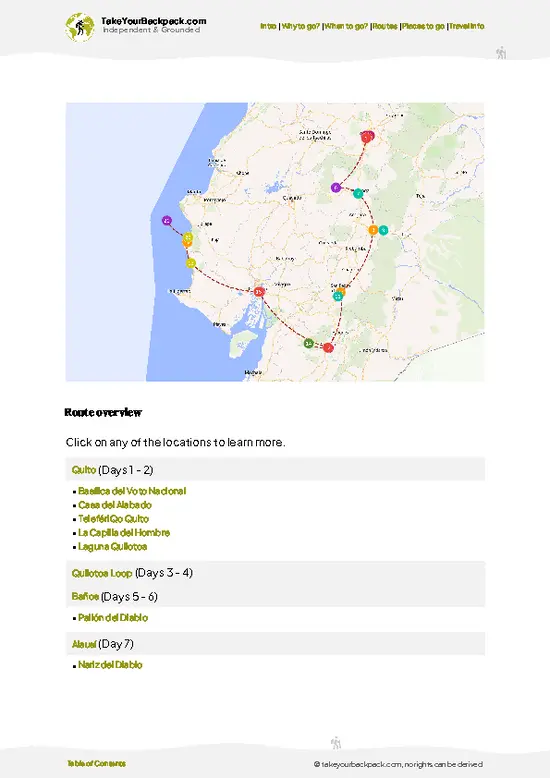
example page 2 from our offline Travel Guide for Ecuador
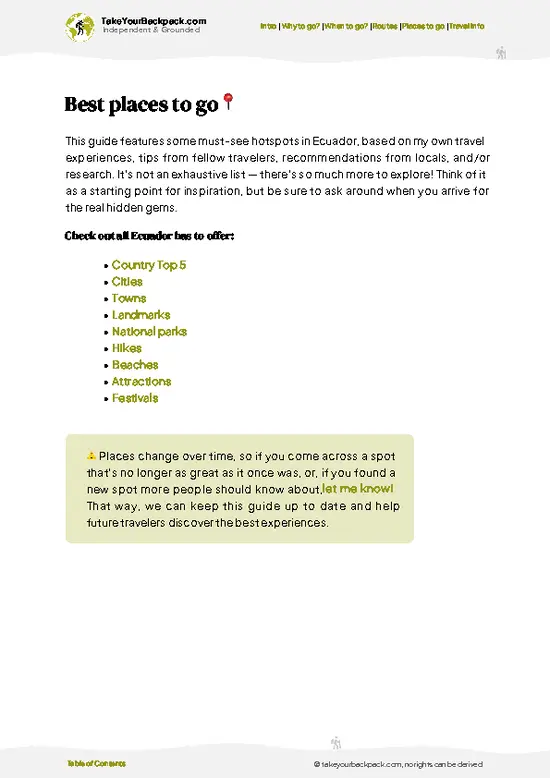
example page 3 from our offline Travel Guide for Ecuador
example page 4 from our offline Travel Guide for Ecuador
example page 5 from our offline Travel Guide for Ecuador
example page 6 from our offline Travel Guide for Ecuador
example page 7 from our offline Travel Guide for Ecuador
The digital guide (274 pages) contains:
✅ 87 highlights, ranked by travel appeal
✅ Optimized 5, 10 & 15-day travel routes
✅ Cities, national parks, landmarks, beaches
✅ How to get around
✅ Offline-friendly for travel without Wi-Fi
👉 Click to see all 30+ guide features

📅 Plan smarter in minutes, not weeks
✅ Month by month travel advice
✅ Festivals & national holidays
✅ Budget expectations

🗺️ Go to the right places, skip the overrated ones
✅ Honest pros & cons of destinations
✅ Top hikes, parks & viewpoints
✅ Lesser-known places most travelers miss
✅ Clear “worth it vs skip it” guidance

🛏️ Travel smoothly without rookie mistakes
✅ Best areas to stay
✅ Transport systems explained simply
✅ Common scams & safety advice
✅ SIM cards, money & practical tips

🌍 Understand the country, not just visit it
✅ Culture & traditions
✅ 52 Essential phrases & customs
✅ Festivals worth planning around
✅ Traveler-friendly historical context
✅ Insights that make places more meaningful

📱 Built for real travel conditions
✅ Fully downloadable PDF
✅ Works completely offline
✅ Optimized for phone use
✅ Useful in remote areas & buses
✅ Everything in one place
Stop searching, start planning
Get instant access to your full guide. 30‑day money-back guarantee.
+ Add another guide for just

By proceeding you agree to our terms.
Sent to your inbox immediately after payment • 100% Secure Checkout
Best Backpacking Travel Advisor 2025 tourism awardBest Backpacking
Travel Advisor
2025
What others say about Take Your Backpack Guides:
⭐⭐⭐⭐⭐
Fantastic, amazing amount of information!
⭐⭐⭐⭐⭐
My goodness this is amazing, it's what I've been looking for hats off too you!
⭐⭐⭐⭐⭐
I think this is absolutely BRILLIANT
⭐⭐⭐⭐
Very complete and informative. It's still missing places, but I gotta to commend you
⭐⭐⭐⭐⭐
This is truly amazing, thank you, can't wait to explore it with my kids!
⭐⭐⭐⭐⭐
Awesome resource, thank you!
⭐⭐⭐⭐⭐
This is amazing! Can't wait to explore the ones I haven't seen
⭐⭐⭐⭐
I love this! Well done, great idea.
⭐⭐⭐⭐⭐
Thanks for taking the time to make this gem!
⭐⭐⭐⭐⭐
This might be the best website I've ever seen.
⭐⭐⭐⭐⭐
Congratulations, and thank you so much for your work; it's incredibly valuable.
⭐⭐⭐⭐
In all seriousness I think you did a great job pointing out the important spots
⭐⭐⭐⭐⭐
10/10 very good
⭐⭐⭐⭐⭐
As someone who's only just starting to visit regularly this is awesome, thank you.
⭐⭐⭐⭐
Thank you very much! I'm going to visit my dad, it's going to be very useful!
⭐⭐⭐⭐⭐
This is really cool! We'll be travelling for the first time and this definitely come in handy.
⭐⭐⭐⭐⭐
You are now our minister of culture, congratulations 👨‍💼
⭐⭐⭐⭐⭐
Just wanted to tell you that this is a pearl! Going to follow your recommendations.
⭐⭐⭐⭐⭐
This is so cool. I'll definitely be using the resource for my travels soon.
⭐⭐⭐⭐⭐
This is very impressive! Good work.
⭐⭐⭐⭐⭐
This is an amazing and informative site. Very well done!

🛏️ Where to stay?Where to Stay: Ecuador Edition

Ecuador has plenty of hostels and guesthouses, with dorm beds typically running US$8 to 15 a night and private rooms from about US$20 to 35. In Quito, La Mariscal packs in the most hostels, bars and tour agencies but gets rowdy and sketchy after dark, the Centro Histórico puts you steps from the colonial churches and plazas yet empties out at night, and La Floresta trades nightlife for leafy, safer streets and good cafés. Beyond the capital, Baños clusters its cheap beds near the bus terminal and thermal baths, Cuenca has quiet, walkable options around its old center, and Montañita offers beachside dorms where the parties run until sunrise and sleep comes second.

If you enjoy meeting fellow travelers, … read more 👉
Ecuador has plenty of hostels and guesthouses, with dorm beds typically running US$8 to 15 a night and private rooms from about US$20 to 35. In Quito, La Mariscal packs in the most hostels, bars and tour agencies but gets rowdy and sketchy after dark, the Centro Histórico puts you steps from the colonial churches and plazas yet empties out at night, and La Floresta trades nightlife for leafy, safer streets and good cafés. Beyond the capital, Baños clusters its cheap beds near the bus terminal and thermal baths, Cuenca has quiet, walkable options around its old center, and Montañita offers beachside dorms where the parties run until sunrise and sleep comes second.

If you enjoy meeting fellow travelers, consider choosing hostels with high ratings for atmosphere. On the other hand, if you prefer having your own space, a hotel might be a better option.

EcuadorExplore Beyond This Category

👋 Meet the founderWho’s Behind Take Your Backpack?

Johan, backpacker and founder of TakeYourBackpackHi, I’m Johan (Netherlands 🇳🇱), the creator of TakeYourBackpack. Over the past 3 decades, I’ve backpacked through 90+ countries across six continents, gaining extensive experience with independent travel, long-term trips, and overland routes.

This site is built on a combination of firsthand travel experience and carefully curated insights from other backpackers. Many guides are based on places I’ve personally visited, while others bring together tips, observations, and practical advice shared by trusted travelers I’ve met along the way.

The goal is to provide realistic, experience-driven guidance — not generic itineraries — so you can explore destinations with better context, clearer expectations, and more confidence.