×

El Salvador🇸🇻 | best townsTop-Rated 10 towns in El Salvador

Towns in El Salvador sit close together in a country about the size of Massachusetts, yet each cluster has its own temperature and pace. In the western highlands, the air smells of wood smoke and roasting coffee, cobbled streets climb between flower-draped walls, and nights drop cool. The Pacific coast is salt, diesel, grilled fish and surf wax, with heat that presses on your shoulders by 9 a.m. The north is pine and slow, with few crowds. The east is dusty and cheap. For backpacking, the western towns are easiest to reach by chicken bus, while the coast costs more and the east takes patience.

By Johan Kruseman 🇳🇱 | Updated October 9, 2026
Explore the best villages in El Salvador

Why go?Key Factors That Shape the Experience

El Salvador is small, volcanic and dense with towns, and that shapes everything about visiting them. A chain of volcanoes runs across the country, and the high ground around them holds coffee country, where towns grew around plantations and Spanish colonial grids. Nahua-Pipil heritage survives in food, crafts and place names, and the 1980 to 1992 civil war left marks that are still visible in the north and east, where memorials and community museums tell the story plainly. Because the country is only about 270 kilometers long, a town can be reached from the capital in two to three hours, and the chicken buses (old US school buses painted in loud colors, crowded and loud with music) reach almost everywhere for under US$1 to 2 a ride. Travelers should know that the country uses the US dollar, … read more 👉
El Salvador is small, volcanic and dense with towns, and that shapes everything about visiting them. A chain of volcanoes runs across the country, and the high ground around them holds coffee country, where towns grew around plantations and Spanish colonial grids. Nahua-Pipil heritage survives in food, crafts and place names, and the 1980 to 1992 civil war left marks that are still visible in the north and east, where memorials and community museums tell the story plainly. Because the country is only about 270 kilometers long, a town can be reached from the capital in two to three hours, and the chicken buses (old US school buses painted in loud colors, crowded and loud with music) reach almost everywhere for under US$1 to 2 a ride. Travelers should know that the country uses the US dollar, so there is no exchange hassle. Security has improved sharply under the state of exception, with visible police and soldiers on streets and checkpoints on roads. Mornings are the best time for moving around, since afternoon storms and fading light narrow your options. Infrastructure is uneven: roads are good on main routes, rough on rural ones, and many small towns have only a handful of guesthouses. English is limited outside tourist spots, so basic Spanish goes a long way.
Evaluating the Top Choices
The list of best towns in El Salvador is created based on charm, local culture, atmosphere, hidden gems, and visitor appeal. If you feel a town is missing in this list, please let us know.

When to go?Optimal Periods for Travel

Best Months and Seasons: The best months for towns in El Salvador are November to February, when the dry season brings clear blue skies, daytime highs around 28 to 32°C and cool, dry mornings in the highlands. The coast stays hot year-round at 30 to 35°C, but this window has the least humidity and no afternoon downpours. The air in the western mountains can drop to 12 to 16°C at night, so a light jacket matters.Shoulder and Rainy Season: March to April stays dry but gets hotter, with dust, haze and the smell of burning cane fields in the lowlands. The rainy season runs May to October, with most rain falling between 1 and 6 p.m. in heavy bursts that turn cobbled streets slick and unpaved roads to mud. Mornings are often bright, so plan walks and travel early. September and October are the wettest, … read more 👉
Best Months and Seasons: The best months for towns in El Salvador are November to February, when the dry season brings clear blue skies, daytime highs around 28 to 32°C and cool, dry mornings in the highlands. The coast stays hot year-round at 30 to 35°C, but this window has the least humidity and no afternoon downpours. The air in the western mountains can drop to 12 to 16°C at night, so a light jacket matters.Shoulder and Rainy Season: March to April stays dry but gets hotter, with dust, haze and the smell of burning cane fields in the lowlands. The rainy season runs May to October, with most rain falling between 1 and 6 p.m. in heavy bursts that turn cobbled streets slick and unpaved roads to mud. Mornings are often bright, so plan walks and travel early. September and October are the wettest, with landslides occasionally closing rural roads. Prices drop 10 to 30 percent then, and towns feel emptier.Peak Periods: Crowds and prices rise in Semana Santa (the week before Easter), early August during the Fiestas Agostinas, and around Christmas and New Year. Salvadorans travel in large numbers then, so book rooms ahead and expect packed buses. Weekends bring day-trippers to the highlands and coast, while weekdays are quieter and cheaper.

town hoppingTips for Visiting Multiple Destinations

How Many Days and Which Direction: A trip combining several towns in El Salvador needs 7 to 10 days, which allows two nights per stop without feeling rushed. The country divides into western highlands, the Pacific coast, the north and the east, with San Salvador as the transport hub where most long routes pass through. A good direction is west to east: start in the cool western mountains, drop to the coast, then end in the north or east so you finish away from the capital's traffic.Time per Stop and Travel Times: Plan 2 to 3 nights per base, using it for day trips by local bus or shared pickup. Travel between regions usually takes 2 to 4 hours: the capital to the western highlands about 1.5 to 2.5 hours, to the coast 45 minutes to 1.5 hours, and to the north or east 2.5 to 4 hours. Chicken … read more 👉
How Many Days and Which Direction: A trip combining several towns in El Salvador needs 7 to 10 days, which allows two nights per stop without feeling rushed. The country divides into western highlands, the Pacific coast, the north and the east, with San Salvador as the transport hub where most long routes pass through. A good direction is west to east: start in the cool western mountains, drop to the coast, then end in the north or east so you finish away from the capital's traffic.Time per Stop and Travel Times: Plan 2 to 3 nights per base, using it for day trips by local bus or shared pickup. Travel between regions usually takes 2 to 4 hours: the capital to the western highlands about 1.5 to 2.5 hours, to the coast 45 minutes to 1.5 hours, and to the north or east 2.5 to 4 hours. Chicken buses cost US$0.50 to 2, while shuttles run US$15 to 30 a seat.Planning Mistakes to Avoid: The most common mistake is trying to cover every region in a week. Roads wind, buses stop constantly and a 100-kilometer journey can swallow half a day. Instead, pick two regions and go deeper. Another is traveling in the afternoon, when heat, rain and fading light slow everything. Leave by 8 or 9 a.m. Finally, avoid arriving in a small town after dark, because the last buses often leave by 5 or 6 p.m. Time each connection through San Salvador to avoid rush hour.

The ListMust-Visit towns in El Salvador

1 Suchitoto

cobblestone streets, lake views, colonial plaza

Stroll through quiet lanes overlooking a broad reservoir, visit art spaces, and relax in a central square lined with historic buildings.

el-salvador-city-suchitoto
© Google | Manuel Henriquez

2 Concepción de Ataco

coffee farms, mosaic walls, cool climate

Tour working coffee plantations, admire intricate mosaics on every corner, and enjoy crisp air in a town perched above the plains.

3 Juayúa

food festival, mountain air, mural alleys

Sample local specialties at weekend food stalls, wander painted streets, and hike to nearby waterfalls surrounded by cool highland scenery.

4 El Zonte

surf break, black sand, laid-back hostels

Catch consistent waves, unwind at simple beach stays, and meet travelers drawn by the relaxed pace and Bitcoin-friendly businesses.

5 La Palma

folk art, pine forests, artisan workshops

Browse colorful handicrafts in a town shaped by artists, then walk forested trails and meet craftspeople in their studios.

el-salvador-city-la-palma
© Google |

6 Alegría

crater lake, flower gardens, hillside views

Walk to a turquoise volcanic lagoon, explore lush gardens, and take in panoramic vistas from the edge of a small mountain town.

el-salvador-city-alegria
© Google |

7 Nahuizalco

night market, indigenous crafts, woven baskets

Experience a lively evening market, shop for traditional basketry, and observe Nahua cultural influences in daily life and design.

8 Perquín

war museum, cloud forest, rural trails

Learn about civil war history at a local museum, then trek through misty forests and remote villages in the northern highlands.

el-salvador-city-perquin
© Google |

9 Chalchuapa

Maya ruins, colonial church, local markets

Tour ancient archaeological sites, step inside a centuries-old church, and browse bustling markets for regional produce and snacks.

el-salvador-city-chalchuapa
© Google |

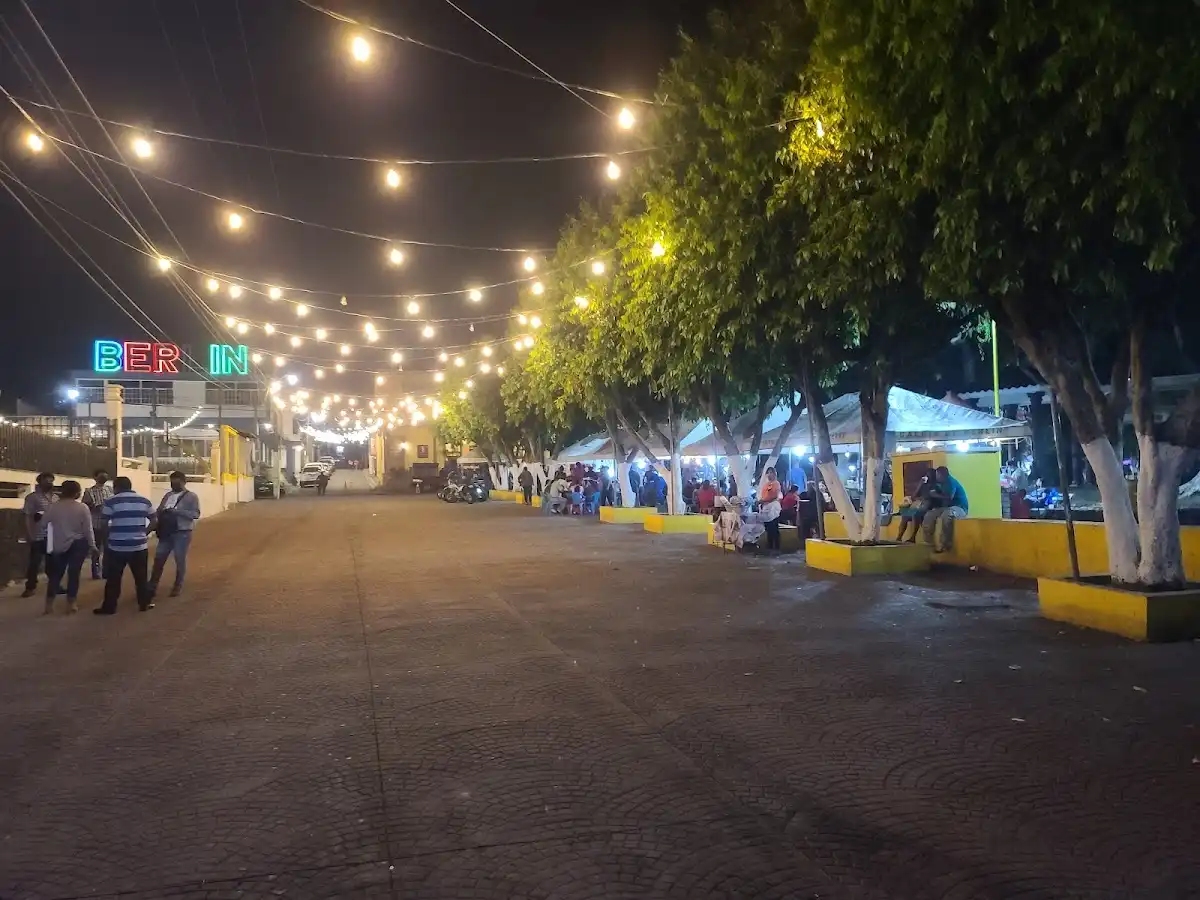
10 Berlín

windy ridges, coffee cooperatives, panoramic lookout

Visit community-run coffee projects, feel the constant breeze on hilltops, and gaze over patchwork valleys from scenic viewpoints.

el-salvador-city-berlin
© Google |

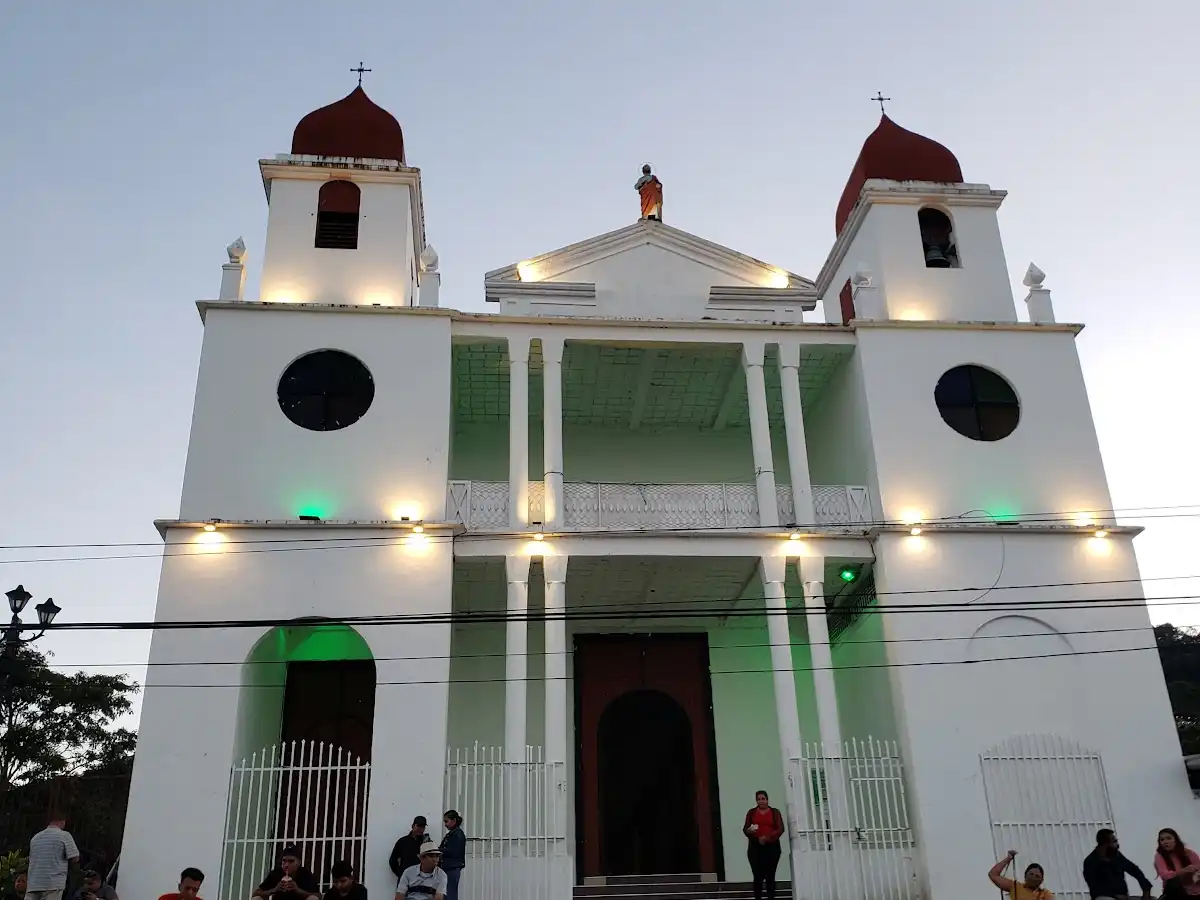
11 Metapán

limestone hills, cheese shops, stone church

Sample regional cheeses, explore limestone outcrops, and visit a sturdy stone church that anchors this northern gateway town.

12 Cojutepeque

hilltop lookout, sausage stalls, local festivals

Climb to a breezy viewpoint, try spicy chorizo from roadside vendors, and time your visit for lively processions and celebrations.

13 San Vicente

volcano backdrop, central park, local eateries

Dine at simple restaurants near the main square, watch daily life unfold, and spot the looming volcano from almost anywhere in town.

el-salvador-city-san-vicente
© Google |

14 Jiquilisco

mangrove estuary, fishing boats, wildlife tours

Paddle through mangrove channels, join boat trips to spot birds and turtles, and see daily life shaped by the bay’s rhythms.

15 San Francisco Gotera

regional hub, bus connections, daily commerce

Navigate a practical town with frequent transport links, shop for essentials, and use it as a base for exploring Morazán’s countryside.

16 Sensuntepeque

market town, rolling hills, traditional sweets

Browse a busy market for regional candies, wander hilly streets, and observe rural commerce in a town off the main tourist trail.

17 San Sebastián

loom weaving, textile shops, quiet plaza

Watch artisans work traditional looms, browse for handwoven fabrics, and rest in a peaceful square surrounded by small workshops.

Think you know El Salvador?

Prove you’re a true local — uncover 7 lesser-known towns in El Salvador that locals tend to keep to themselves.
Loading the map 🌍

Expert viewPro Tips for Exploring the Best

How Many Towns to Visit: I advise four to five towns on a trip of one to two weeks. That gives you two or three nights each, enough time for the dawn light on cobbled streets, the first smell of grilled pupusas at dusk and the pace of a market morning. Fewer than four and you miss the country's range, while more than six turns into a blur of bus stations.Choosing the Kind of Town: Pick by travel style. Highland towns suit food lovers and hikers: cool air, coffee farms, waterfalls and weekend food festivals. Coastal towns suit surfers and beach people, with warm water, sunsets and a louder social scene. Northern and eastern towns suit history and culture travelers, with war museums, rural quiet and almost no other foreigners. A first-timer should lean highland and coast, and a veteran should … read more 👉
How Many Towns to Visit: I advise four to five towns on a trip of one to two weeks. That gives you two or three nights each, enough time for the dawn light on cobbled streets, the first smell of grilled pupusas at dusk and the pace of a market morning. Fewer than four and you miss the country's range, while more than six turns into a blur of bus stations.Choosing the Kind of Town: Pick by travel style. Highland towns suit food lovers and hikers: cool air, coffee farms, waterfalls and weekend food festivals. Coastal towns suit surfers and beach people, with warm water, sunsets and a louder social scene. Northern and eastern towns suit history and culture travelers, with war museums, rural quiet and almost no other foreigners. A first-timer should lean highland and coast, and a veteran should add one northern or eastern stop for the contrast.What It Costs: A backpacker spends about US$25 to 40 a day. Dorm beds run US$8 to 15 and private rooms US$20 to 45, with higher prices on the coast. Pupusas cost US$0.50 to 1.25 each, and a sit-down meal runs US$4 to 8. Local buses cost US$0.35 to 2, and short tuk-tuk rides US$1 to 3. Per visit, budget US$1 to 10 for entry to a nature site or museum, US$20 to 40 for a guided hike or coffee tour, and US$30 to 60 for a surf lesson or day tour. Carry small bills and coins, since vendors often cannot change US$20.Safety and Local Etiquette: Security has improved a great deal, and soldiers and police are visible in most towns. Carry your passport or a clear photocopy for checkpoints, and expect to be stopped and searched at times. Stay calm and polite, and you will be waved on. Avoid walking after dark, keep phones tucked away on buses, and take a taxi or arranged ride at night. Ask before photographing people, especially at markets and in rural areas, and avoid discussing politics or gangs. A greeting of buenos días when entering a shop or bus gets a warm response. Dress modestly in small towns and churches, bring a rain jacket from May to October, and carry cash, since many guesthouses and food stalls do not take cards.

✈️ The backpacker research shortcutEl Salvador Travel Guide

An offline-friendly backpacking guide with optimized travel routes, ranked highlights, transport advice, and the best areas to stay.
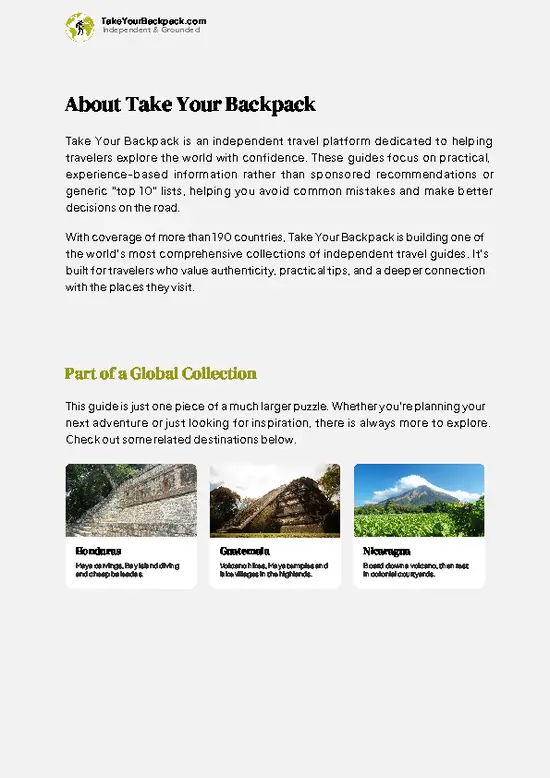
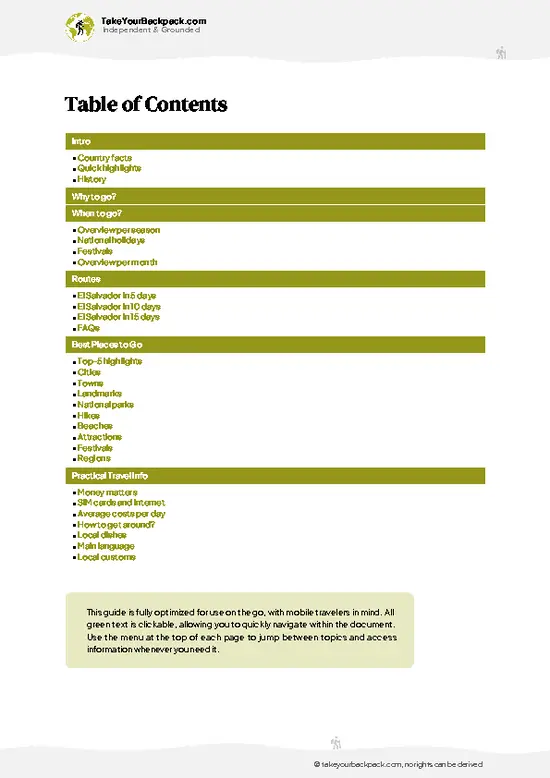
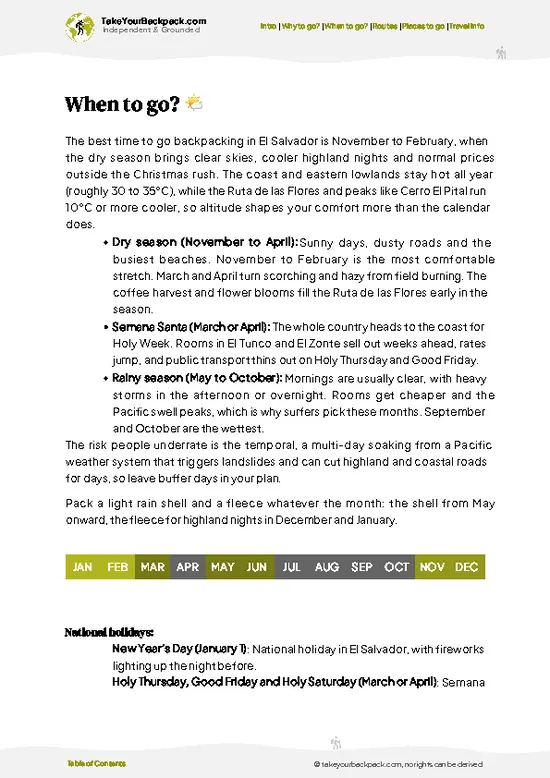
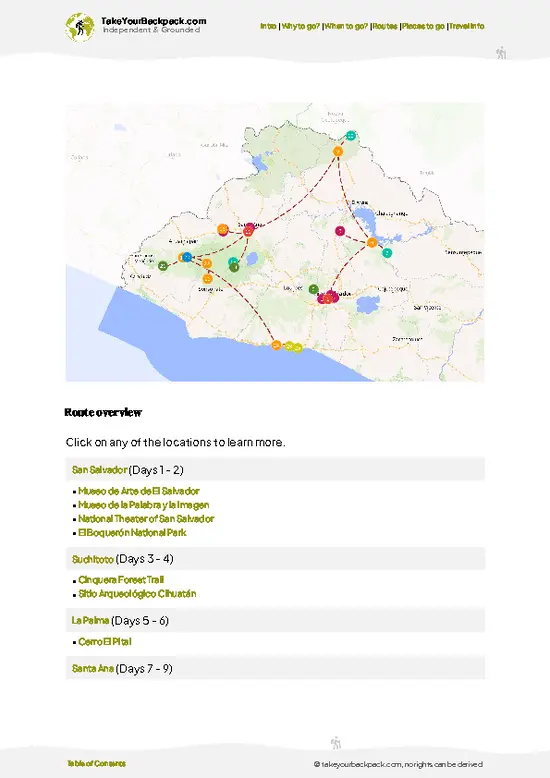
example page 0 from our offline Travel Guide for El Salvador
example page 1 from our offline Travel Guide for El Salvador
example page 2 from our offline Travel Guide for El Salvador
example page 3 from our offline Travel Guide for El Salvador
example page 4 from our offline Travel Guide for El Salvador
example page 5 from our offline Travel Guide for El Salvador
example page 6 from our offline Travel Guide for El Salvador
example page 7 from our offline Travel Guide for El Salvador
The digital guide (294 pages) contains:
✅ 77 highlights, ranked by travel appeal
✅ Optimized 5, 10 & 15-day travel routes
✅ Cities, national parks, landmarks, beaches
✅ How to get around
✅ Offline-friendly for travel without Wi-Fi
👉 Click to see all 30+ guide features

📅 Plan smarter in minutes, not weeks
✅ Month by month travel advice
✅ Festivals & national holidays
✅ Budget expectations

🗺️ Go to the right places, skip the overrated ones
✅ Honest pros & cons of destinations
✅ Top hikes, parks & viewpoints
✅ Lesser-known places most travelers miss
✅ Clear “worth it vs skip it” guidance

🛏️ Travel smoothly without rookie mistakes
✅ Best areas to stay
✅ Transport systems explained simply
✅ Common scams & safety advice
✅ SIM cards, money & practical tips

🌍 Understand the country, not just visit it
✅ Culture & traditions
✅ 52 Essential phrases & customs
✅ Festivals worth planning around
✅ Traveler-friendly historical context
✅ Insights that make places more meaningful

📱 Built for real travel conditions
✅ Fully downloadable PDF
✅ Works completely offline
✅ Optimized for phone use
✅ Useful in remote areas & buses
✅ Everything in one place
Save weeks of stressful planning
Get instant access to your full guide. 30‑day money-back guarantee.
+ Add another guide for just

By proceeding you agree to our terms.
Sent to your inbox immediately after payment • 100% Secure Checkout
Best Backpacking Travel Advisor 2025 tourism awardBest Backpacking
Travel Advisor
2025
What others say about Take Your Backpack Guides:
⭐⭐⭐⭐⭐
Fantastic, amazing amount of information!
⭐⭐⭐⭐⭐
My goodness this is amazing, it's what I've been looking for hats off too you!
⭐⭐⭐⭐⭐
I think this is absolutely BRILLIANT
⭐⭐⭐⭐
Very complete and informative. It's still missing places, but I gotta to commend you
⭐⭐⭐⭐⭐
This is truly amazing, thank you, can't wait to explore it with my kids!
⭐⭐⭐⭐⭐
Awesome resource, thank you!
⭐⭐⭐⭐⭐
This is amazing! Can't wait to explore the ones I haven't seen
⭐⭐⭐⭐
I love this! Well done, great idea.
⭐⭐⭐⭐⭐
Thanks for taking the time to make this gem!
⭐⭐⭐⭐⭐
This might be the best website I've ever seen.
⭐⭐⭐⭐⭐
Congratulations, and thank you so much for your work; it's incredibly valuable.
⭐⭐⭐⭐
In all seriousness I think you did a great job pointing out the important spots
⭐⭐⭐⭐⭐
10/10 very good
⭐⭐⭐⭐⭐
As someone who's only just starting to visit regularly this is awesome, thank you.
⭐⭐⭐⭐
Thank you very much! I'm going to visit my dad, it's going to be very useful!
⭐⭐⭐⭐⭐
This is really cool! We'll be travelling for the first time and this definitely come in handy.
⭐⭐⭐⭐⭐
You are now our minister of culture, congratulations 👨‍💼
⭐⭐⭐⭐⭐
Just wanted to tell you that this is a pearl! Going to follow your recommendations.
⭐⭐⭐⭐⭐
This is so cool. I'll definitely be using the resource for my travels soon.
⭐⭐⭐⭐⭐
This is very impressive! Good work.
⭐⭐⭐⭐⭐
This is an amazing and informative site. Very well done!

🛏️ Where to stay?Top Places to Consider Staying

El Salvador has a solid spread of hostels and budget guesthouses, with dorm beds typically US$10 to 18 and private rooms US$25 to 45. Surf towns El Tunco and El Zonte hold the most options, with El Tunco offering beach bars and late nights while El Zonte is calmer and better for longer surf stays. In San Salvador, the Colonia Escalón, San Benito and Flor Blanca areas are the safest, handy for restaurants and nightlife but a ride away from the historic center, while Santa Ana’s center and Juayúa on the Ruta de las Flores are quiet, cheap bases close to volcanoes and coffee farms.

If you enjoy meeting fellow travelers, consider choosing hostels with high ratings for atmosphere. On the other hand, … read more 👉
El Salvador has a solid spread of hostels and budget guesthouses, with dorm beds typically US$10 to 18 and private rooms US$25 to 45. Surf towns El Tunco and El Zonte hold the most options, with El Tunco offering beach bars and late nights while El Zonte is calmer and better for longer surf stays. In San Salvador, the Colonia Escalón, San Benito and Flor Blanca areas are the safest, handy for restaurants and nightlife but a ride away from the historic center, while Santa Ana’s center and Juayúa on the Ruta de las Flores are quiet, cheap bases close to volcanoes and coffee farms.

If you enjoy meeting fellow travelers, consider choosing hostels with high ratings for atmosphere. On the other hand, if you prefer having your own space, a hotel might be a better option.

El SalvadorMore Places Across El Salvador

👋 Meet the founderWho’s Behind Take Your Backpack?

Johan, backpacker and founder of TakeYourBackpackHi, I’m Johan (Netherlands 🇳🇱), the creator of TakeYourBackpack. Over the past 3 decades, I’ve backpacked through 90+ countries across six continents, gaining extensive experience with independent travel, long-term trips, and overland routes.

This site is built on a combination of firsthand travel experience and carefully curated insights from other backpackers. Many guides are based on places I’ve personally visited, while others bring together tips, observations, and practical advice shared by trusted travelers I’ve met along the way.

The goal is to provide realistic, experience-driven guidance — not generic itineraries — so you can explore destinations with better context, clearer expectations, and more confidence.