Finland is very easy to backpack independently, even for a first big trip, as long as you respect how expensive it can get and how spread out things are. English is widely spoken, signage is clear, and people are helpful but not pushy, so you can navigate without drama. The main challenge for a budget traveler is cost: food, beds, and transport add up fast, so you need to lean on supermarkets, hostel kitchens, and free nature. Wild camping is legal under Everyman’s Right (with basic rules: don’t disturb, don’t destroy, keep distance from homes), which is a huge win for backpackers who are comfortable with a tent. Cities are compact and walkable, and most towns have at least one affordable supermarket and some kind of budget accommodation or campground. Winters are dark and cold, which makes independent travel more gear‑heavy and less forgiving; summer and early autumn are much easier for first‑timers. If you’re used to chaotic countries, Finland will feel calm and predictable: trains run on time, buses show up, and hiking trails are well marked. If you’re used to ultra‑cheap backpacking, you just need to mentally switch from “do everything” to “pick a few regions and go deep, using nature and self‑catering to keep costs down.”
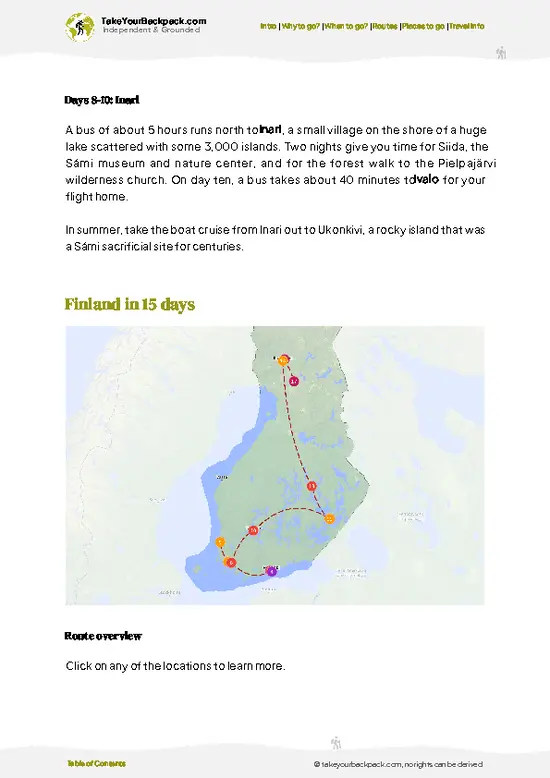
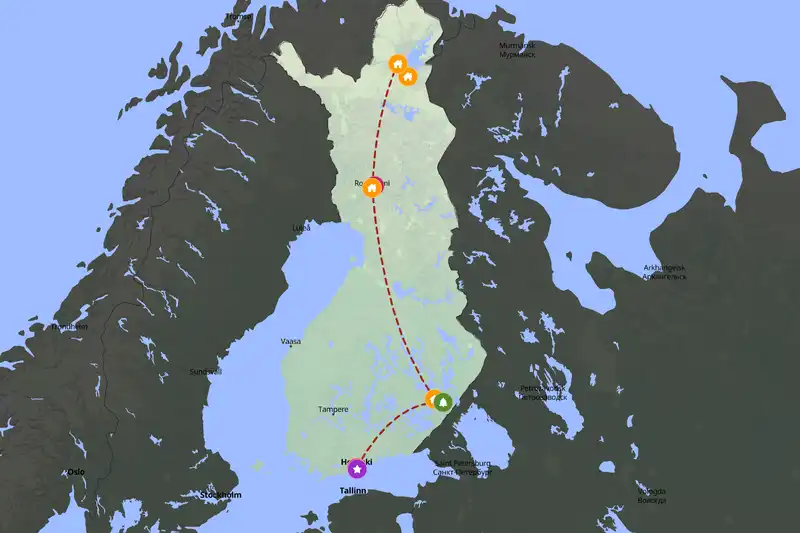
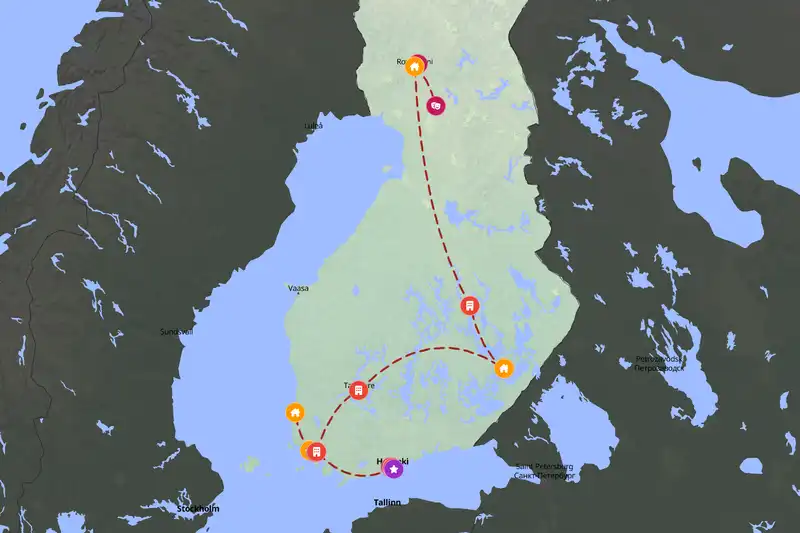
For a tight budget trip, 7–10 days is enough to get a real feel for Finland without torching your wallet, as long as you focus on 1–2 regions instead of zigzagging across the whole country. With 7 days, a strong plan is: 3–4 days in Helsinki + day trips (Suomenlinna sea fortress, Nuuksio or Sipoonkorpi National Park) and 3–4 days in either the Lakeland region (Tampere, Lahti, or Savonlinna area) or a quick hop to Turku and the Archipelago. With 10–14 days, you can add a second region: for example, Helsinki + Turku/Archipelago + a taste of Lapland (Rovaniemi or one national park like Oulanka or Urho Kekkonen). If you want a slower, nature‑heavy trip with multi‑day hikes and wild camping, 2–3 weeks lets you do a long trail in Lapland or the east, plus a few city days to recover. Anything under 5 days forces you to stick almost entirely to Helsinki and maybe one nearby town or park; that can still be worth it, but you’ll spend a higher share of your budget on city prices. For most backpackers, 10 days is the sweet spot: enough time to see both urban Finland and proper wilderness without paying for too many long‑distance journeys.
You can absolutely get around Finland without a car, and for most backpackers it’s the smarter move. The rail network covers the main spine of the country: Helsinki–Tampere–Jyväskylä–Kuopio–Oulu–Rovaniemi, plus branches to Turku and some eastern towns. Trains are comfortable, reliable, and bookable online; if you plan a lot of long hops, rail passes or advance tickets can save serious money. Long‑distance buses fill in the gaps where trains don’t go, especially to smaller towns and some trailheads; they’re slower but often cheaper and reach more rural areas. In cities, you can walk most places and use local buses, trams, and metro (Helsinki) with simple ticket systems and contactless payment. For national parks, some have seasonal shuttle buses from nearby towns, while others require a combo of train/bus and a bit of road walking or hitchhiking; Lapland in particular often has decent bus links to popular hiking areas in summer and winter seasons. Hitchhiking is possible but not as common as in some countries, so you shouldn’t rely on it as your only plan. If you’re chasing very remote cabins or off‑season access, a car helps, but for a classic backpacking route—Helsinki, one or two cities, plus a national park or Lapland hub—public transport and your feet are enough.
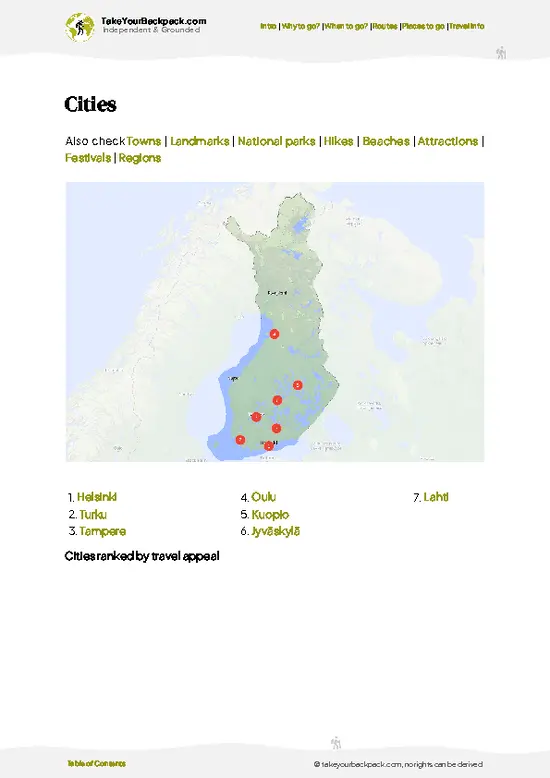
For a budget‑minded backpacker, the must‑visit places in Finland are the ones that combine character with free or cheap nature access. Helsinki is essential for at least 2–3 days: walkable neighborhoods (Kallio, Punavuori), public saunas, waterfront paths, and the ferry to Suomenlinna sea fortress, where you can wander for hours with just the ferry ticket cost. Nuuksio or Sipoonkorpi National Park near Helsinki are musts if you want a quick hit of forest, lakes, and easy trails without paying for long‑distance travel. Turku is worth it if you like history and riverside life; from there, the Turku Archipelago offers cycling, camping, and island‑hopping that can be done on a budget if you self‑cater and camp. Tampere is a great backpacker city: industrial‑cool, lakes on both sides, cheapish public saunas, and easy access to nearby nature. If you can stretch to Lapland, pick one base instead of bouncing around: Rovaniemi for easier logistics and Santa‑themed stuff, or a national park like Oulanka (Karhunkierros trail), Pallas–Yllästunturi, or Urho Kekkonen for proper multi‑day hiking and wild camping. In summer, the Lakeland region (around Savonlinna, Kuopio, or smaller lake towns) is fantastic if you like paddling, swimming, and camping by the water. The common thread: cities that double as cheap nature gateways, and wilderness areas where Everyman’s Right lets you sleep outside for free.
If you’re short on time or money, skip anything that forces long, expensive detours for a single sight or a quick photo. You can skip trying to “do all of Lapland” in a few days; pick one area instead of bouncing between Rovaniemi, Levi, Saariselkä, and Inari, because each transfer eats both cash and time. Skip ultra‑remote villages that require multiple bus changes unless you’re dedicating several days there; the experience rarely justifies the transport cost for a rushed visit. In Helsinki, you can skip pricey organized tours and focus on walking, free viewpoints, markets, and public saunas instead of high‑end spa experiences. If you’re not deeply into museums, you can limit yourself to one or two key ones rather than buying multiple city passes. For winter trips on a budget, skip heavily packaged Northern Lights tours and consider doing DIY aurora hunting from a dark area near your accommodation; the sky is free, the tours are not. You can also skip trying to see both the Archipelago and deep Lakeland on a short itinerary; choose one water‑and‑forest region and enjoy it properly. Overall, skip breadth and chase depth: fewer regions, more time in each, and avoid any attraction that mainly costs money without adding either strong nature time or a clear sense of Finnish daily life.