×

Finland🇫🇮 | best national parksDiscover the 10 Best national parks Across Finland

Finland’s national parks are free to enter, open around the clock, and run by Metsähallitus (Parks & Wildlife Finland). You get resin-sharp pine, black-water bogs, and the squeak of dry snow underfoot in winter. Expect marked trails, laavu lean-to shelters and firewood stacked beside dry toilets, with no gates or tickets. Lapland in the north means vast fells, reindeer and few people, but long distances and higher costs. The southern and coastal parks sit close to Helsinki, with easy buses and more day visitors. The lake district in the east sits between the two. For independent travel, that range lets you pick between remote wilderness and an easy weekend.

By Johan Kruseman 🇳🇱 | Updated October 19, 2026
Explore the best hikes in Finland

Why go?Understanding Their Importance

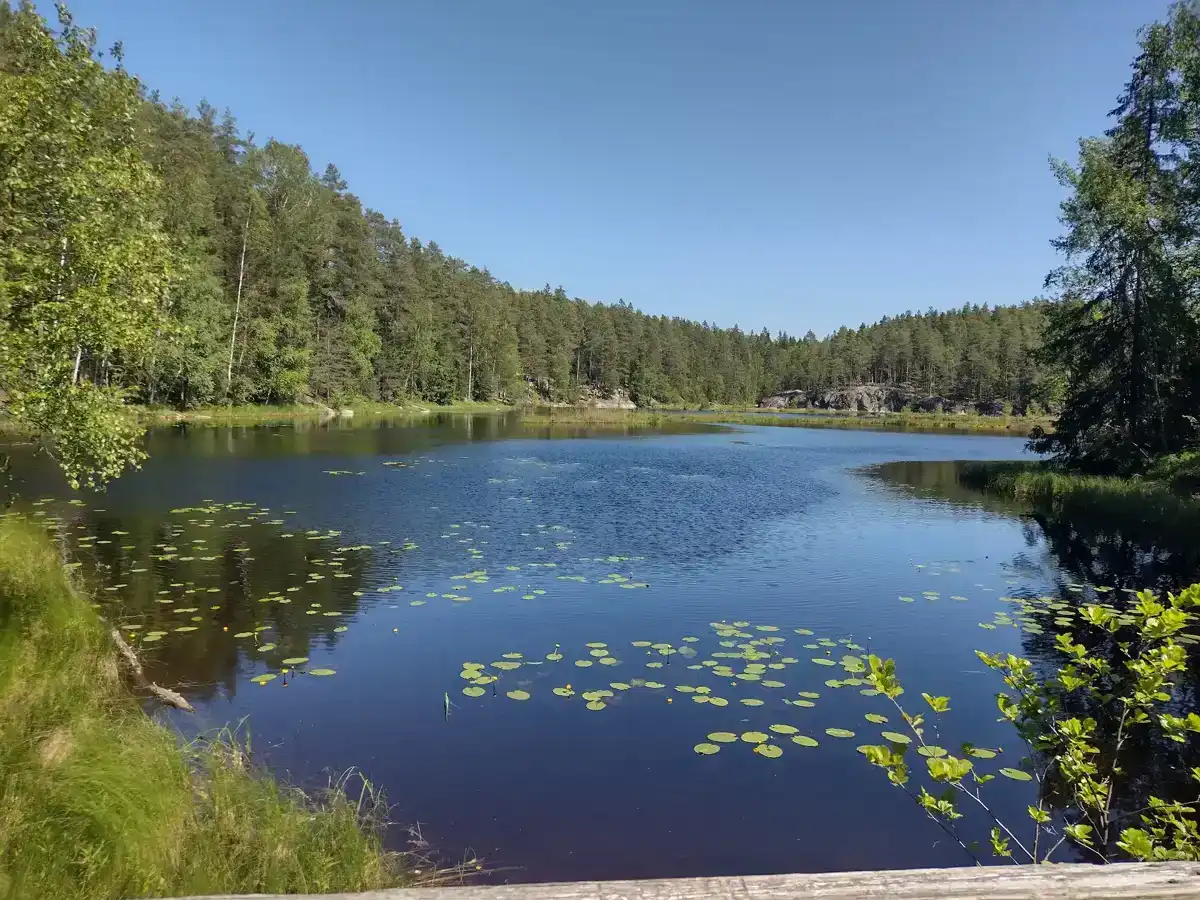
Finland suits national parks because of everyone’s rights (jokamiehenoikeus), the old law that lets anyone walk, ski, pick berries and camp for a night or two on most land. Parks here are not the only places to roam, so they exist to protect exceptional landscapes and give them structure: waymarked paths, bridges over the wettest bog, wood-fired saunas and free shelters. The country is flat, forested and about 10 percent lake, so the scenery is subtle. Think pine ridges, eskers, bogs and glassy water, with sound limited to wind, a distant woodpecker or loons at dusk. Dramatic peaks are rare and mostly confined to the far north.

Before choosing Finland, know that seasons rule everything. Summer brings near-constant light in the north, plus mosquitoes thick enough to taste. Winter brings snow … read more 👉
Finland suits national parks because of everyone’s rights (jokamiehenoikeus), the old law that lets anyone walk, ski, pick berries and camp for a night or two on most land. Parks here are not the only places to roam, so they exist to protect exceptional landscapes and give them structure: waymarked paths, bridges over the wettest bog, wood-fired saunas and free shelters. The country is flat, forested and about 10 percent lake, so the scenery is subtle. Think pine ridges, eskers, bogs and glassy water, with sound limited to wind, a distant woodpecker or loons at dusk. Dramatic peaks are rare and mostly confined to the far north.

Before choosing Finland, know that seasons rule everything. Summer brings near-constant light in the north, plus mosquitoes thick enough to taste. Winter brings snow squeaking at minus 20°C, short blue days and aurora, but also closed services. Distances are long and public transport thins out fast beyond the cities. Huts are basic and unstaffed, so you carry food and cook for yourself. In return, you get clean water from most lakes, silence and strong safety standards, plus an easy-to-use system that makes remote travel simple.
Why These Made the Cut
The list of best national parks in Finland is created based on landscapes, wildlife, adventure opportunities, facilities, and overall experience. If you feel a national park is missing in this list, please let us know.

When to go?Optimal Periods for Travel

Best months and seasons: The best months for national parks in Finland are June to September, when trails are snow-free, huts and boardwalks are open and daylight stretches past 18 hours in the south and turns into midnight sun in Lapland. Daytime temperatures run about 15 to 24°C, with cool nights and rain on roughly one day in three.

Shoulder seasons and mosquitoes: Late June to July is peak season, busier in the south and lake district but still quiet by European standards. In Lapland, mosquitoes peak from late June through July, and a head net helps more than any spray. The ruska season, from about late August to late September in Lapland and mid-September to early October in the south, brings crisp air, red and gold bogs and few people. It also brings frost at night and dark by early … read more 👉
Best months and seasons: The best months for national parks in Finland are June to September, when trails are snow-free, huts and boardwalks are open and daylight stretches past 18 hours in the south and turns into midnight sun in Lapland. Daytime temperatures run about 15 to 24°C, with cool nights and rain on roughly one day in three.

Shoulder seasons and mosquitoes: Late June to July is peak season, busier in the south and lake district but still quiet by European standards. In Lapland, mosquitoes peak from late June through July, and a head net helps more than any spray. The ruska season, from about late August to late September in Lapland and mid-September to early October in the south, brings crisp air, red and gold bogs and few people. It also brings frost at night and dark by early evening. May and early October can mean mud, ice and shuttered services.

Winter: From December to March, expect minus 5 to minus 30°C, mostly in the north, and deep powder for skiing or snowshoeing. Southern parks see thinner snow and slush. Daylight in Lapland shrinks to a few hours around the solstice. Accommodation near northern parks rises sharply around Christmas and February school holidays, sometimes doubling, while summer prices are steadier.

national park hoppingSuggested Travel Strategies

How many days to plan: A trip combining several national parks in Finland needs 7 to 14 days, because distances are long and each stop deserves a proper walk. Give each park 1 to 3 days, and one extra day for every long transfer.

Regions that cluster well: Group parks by region rather than hopping across the map. The south coast and Helsinki area link easily by train and bus, with 1 to 2 hours between stops. The Lakeland (Kuopio, Savonlinna, Joensuu) sits 4 to 6 hours from the capital. The north is reached via Rovaniemi or Kuusamo, with trains from Helsinki taking 8 to 12 hours, or flights around 1.5 hours. A sensible direction is south to north in summer, saving the longest wilderness for when your legs and kit are sorted. In winter, fly north first.

Common planning mistakes: The biggest … read more 👉
How many days to plan: A trip combining several national parks in Finland needs 7 to 14 days, because distances are long and each stop deserves a proper walk. Give each park 1 to 3 days, and one extra day for every long transfer.

Regions that cluster well: Group parks by region rather than hopping across the map. The south coast and Helsinki area link easily by train and bus, with 1 to 2 hours between stops. The Lakeland (Kuopio, Savonlinna, Joensuu) sits 4 to 6 hours from the capital. The north is reached via Rovaniemi or Kuusamo, with trains from Helsinki taking 8 to 12 hours, or flights around 1.5 hours. A sensible direction is south to north in summer, saving the longest wilderness for when your legs and kit are sorted. In winter, fly north first.

Common planning mistakes: The biggest is trying to cover Lapland and the south in one week, which means more hours on buses than in forest. Another is relying on public transport to reach trailheads. Many sit 10 to 50 kilometers from the nearest bus stop, and services thin out on weekends, so book local taxis or rent a car for the last stretch. Travelers also overpack the first days. Build in a buffer day for rain, closed rivers or a late bus, and you will still arrive with the smell of wet spruce and campfire smoke, not a missed connection.

The ListMust-Visit national parks in Finland

1 Urho Kekkonen National Park

vast wilderness, tunturi hills, Sámi culture

Venture into expansive northern wilds, hiking across rolling fells and encountering traces of Sámi traditions in the heart of Lapland.

finland-national-park-urho-kekkonen-national-park
© Google | Suvi Romppanen

2 Lemmenjoki National Park

wilderness river, gold panning, reindeer herding

Travel deep into Lapland’s largest wilderness, following rivers by boat or trail and glimpsing traces of Sámi and gold rush history.

finland-national-park-lemmenjoki-national-park
© Google | Jukka Brusila

3 Pallas-Yllästunturi National Park

open fell tops, arctic heath, clean air

Traverse treeless highlands and rolling tundra, breathing some of the world’s purest air and watching the landscape shift with the seasons.

Finland - Pallas-Yllästunturi

4 Koli National Park

summit views, quartzite cliffs, cultural landscapes

Climb to panoramic lookouts over Lake Pielinen, where ancient hills and meadows inspired generations of Finnish artists.

finland-national-park-koli-national-park
© Google | Tom Kaspersson

5 Oulanka National Park

rapids, hanging bridges, karhunkierros trail

Trek along dramatic river valleys, cross suspension bridges, and witness roaring rapids on one of Finland’s most famous hiking routes.

6 Archipelago National Park

island labyrinth, coastal meadows, ferry routes

Navigate a maze of thousands of islands, experiencing shifting seascapes, traditional fishing villages, and rare coastal flora.

7 Nuuksio National Park

forest lakes, urban proximity, flying squirrels

Escape city life with easy access to quiet lakes, dense woods, and the chance to spot rare flying squirrels near Helsinki.

finland-national-park-nuuksio-national-park
© Google | Adrian Hrubco

8 Hossa National Park

crystal lakes, rock paintings, pine barrens

Paddle clear waterways, discover prehistoric rock art, and hike through dry pine forests shaped by centuries of shifting sands.

9 Repovesi National Park

rocky cliffs, suspension bridge, forest lakes

Cross dramatic bridges, paddle between forested shores, and scramble up rocky outcrops for sweeping views of southern Finland’s wild side.

10 Pyhä-Luosto National Park

ancient fells, amethyst mine, pine forests

Hike through rugged ridges and old-growth woods, discovering panoramic views and the only amethyst mine in Europe open to visitors.

finland-national-park-pyha-luosto-national-park
© Google |

11 Punkaharju Ridge

narrow ridge, lake vistas, pine stands

Cycle or walk along a slender land bridge between lakes, surrounded by tall pines and classic Finnish scenery.

12 Ekenäs Archipelago National Park

outer skerries, sheltered bays, marine wildlife

Sail or kayak through a mosaic of rocky islets, encountering seals, seabirds, and tranquil waters far from the mainland.

13 Seitseminen National Park

old-growth forest, peat bogs, heritage farm

Wander through ancient spruce stands and open mires, visiting a traditional farmstead that preserves rural Finnish history.

14 Kurjenrahka National Park

peatland expanses, ancient spruce, crane nesting

Experience vast open mires and silent forests, with opportunities to spot cranes and other wetland birds in spring and autumn.

15 Isojärvi National Park

lake labyrinth, beaver trails, rocky peninsulas

Paddle or hike along twisting shorelines, following beaver activity and exploring quiet forests dotted with glacial boulders.

finland-national-park-isojarvi-national-park
© Google |

16 Hiidenportti National Park

deep gorge, spruce forest, mossy cliffs

Descend into a dramatic canyon surrounded by old-growth forest, where moss-draped rocks and quiet streams define the landscape.

17 Torronsuo National Park

raised bog, wooden duckboards, open mires

Walk across Finland’s deepest bog on boardwalks, observing wide horizons, rare birds, and the subtle colors of open wetlands.

18 Tiilikkajärvi National Park

sandy beaches, clear lakes, esker ridges

Swim in pristine lakes, wander along sandy shores, and traverse narrow ridges shaped by the last Ice Age.

Think you know Finland?

Prove you’re a true local — uncover 8 lesser-known national parks in Finland that locals tend to keep to themselves.
Loading the map 🌍

Expert viewExpert Commentary on national parks

How many parks to visit: Three or four national parks is the number I advise for a trip of one to two weeks, because Finland’s parks are large, far apart and slow to cross on foot. A single day hike here often means 15 to 20 km of boardwalk, spongy peat and roots, and the long summer light tempts you into walking longer than you planned. Fewer parks with a proper overnight in each beats a checklist.
Choosing between the kinds: Finland’s parks fall into a few broad types, and the smart move is to pick by travel style. The northern fell parks suit multi-day trekkers: open ground above the tree line, reindeer bells in the distance, water cold enough to ache. The eastern forest and lake parks suit paddlers and anyone who wants resin-scented silence and a real chance of wildlife. The southern and … read more 👉
How many parks to visit: Three or four national parks is the number I advise for a trip of one to two weeks, because Finland’s parks are large, far apart and slow to cross on foot. A single day hike here often means 15 to 20 km of boardwalk, spongy peat and roots, and the long summer light tempts you into walking longer than you planned. Fewer parks with a proper overnight in each beats a checklist.
Choosing between the kinds: Finland’s parks fall into a few broad types, and the smart move is to pick by travel style. The northern fell parks suit multi-day trekkers: open ground above the tree line, reindeer bells in the distance, water cold enough to ache. The eastern forest and lake parks suit paddlers and anyone who wants resin-scented silence and a real chance of wildlife. The southern and coastal parks suit short trips and first-timers, since they are reachable by train and bus from Helsinki and the trails are shorter and gentler. If you only have time for one kind, choose by season: fells in late summer and autumn, lakes in midsummer, coast in spring and shoulder months.
What it costs: Entry to every national park is free, which is why costs come from everything around the park instead. Budget US$55 to 90 (about €50 to 85) a day for independent travel: supermarket food runs €15 to 25, and a bed in a hostel or a spot at a basic campground is €15 to 35. Open wilderness huts are free, and reservable huts usually cost about €10 to 20 per person. Transport is the swing factor. Regional buses to park gateways cost €15 to 50 a leg, and a rental car runs €50 to 90 a day plus fuel. Guided day trips and canoe or kayak rentals run roughly €60 to 150. Experienced travelers shop in a town supermarket before heading in, since park-edge shops are small and pricey, and they carry a card instead of cash because Finland barely uses notes.
Safety and local etiquette: Finland is safe, but the hazards are specific. Mosquitoes and blackflies in Lapland peak from late June to early August and can ruin a camp, so pack a head net and a tent with fine mesh. Ticks carry Lyme disease and, in parts of the south and archipelago, tick-borne encephalitis, so check your skin after every walk. Brown bears live in the east and north but are shy. Make noise on forest trails and never approach one. Weather swings fast on the fells, where summer can drop to 3 to 5°C with rain, and mobile coverage fades in remote areas, so carry a paper map.
Rules that surprise visitors: Everyman’s right lets anyone walk, ski and pick berries almost anywhere, but inside parks it is narrower. Camping is usually restricted to marked sites, and fires are allowed only in designated fire pits with the wood provided. Those wood stores exist because the previous hiker refilled them, so split a few logs before you leave a hut. Take all rubbish out with you. Quiet is also an unwritten rule: Finns value silence in the woods, and loud music at a shared hut will cost you goodwill fast.

✈️ The backpacker research shortcutFinland Travel Guide

An offline-friendly backpacking guide with optimized travel routes, ranked highlights, transport advice, and the best areas to stay.
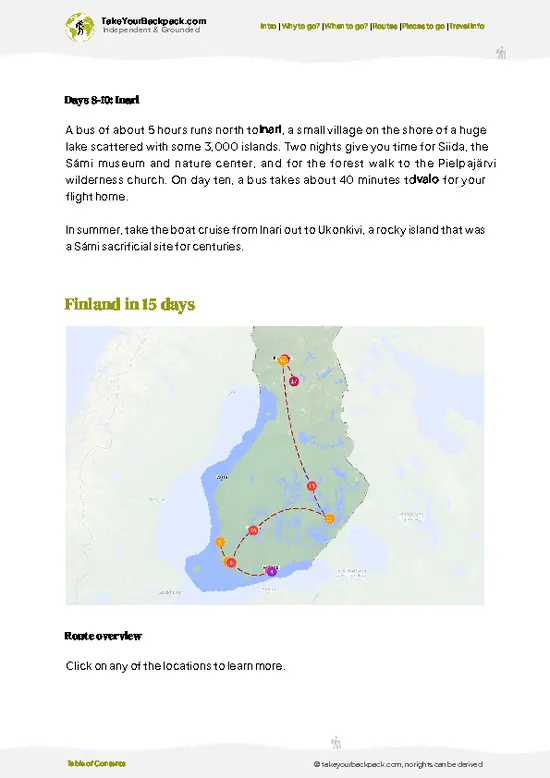
example page 0 from our offline Travel Guide for Finland
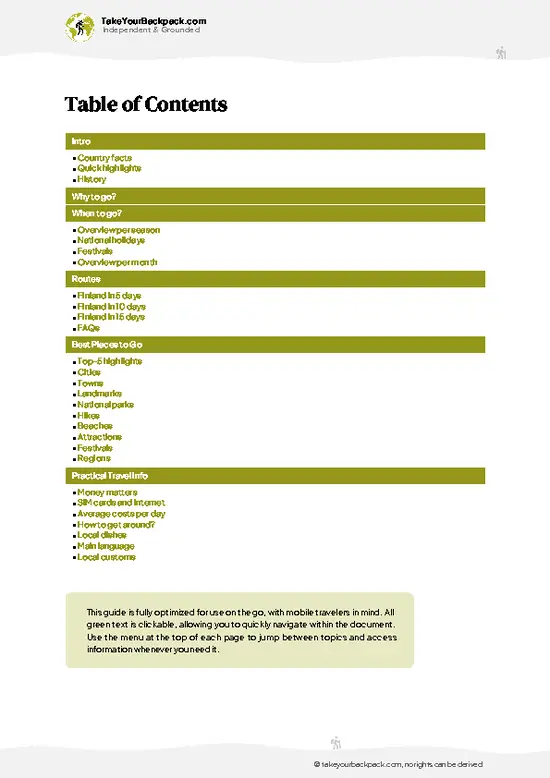
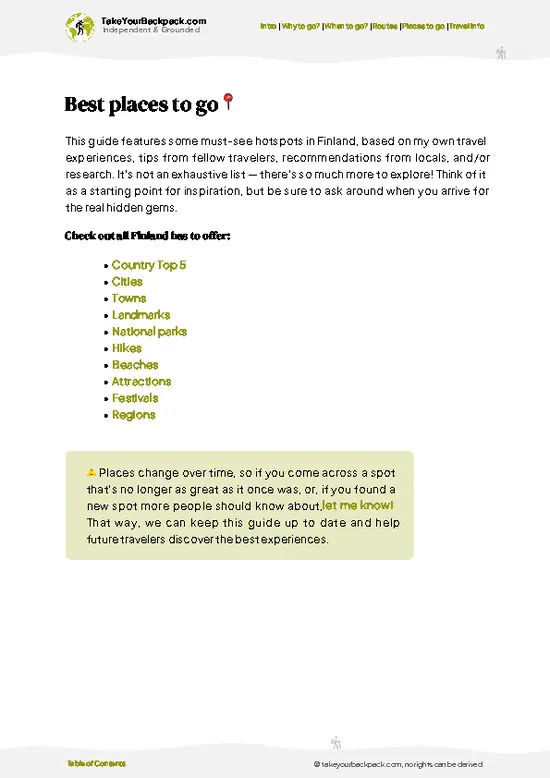
example page 1 from our offline Travel Guide for Finland
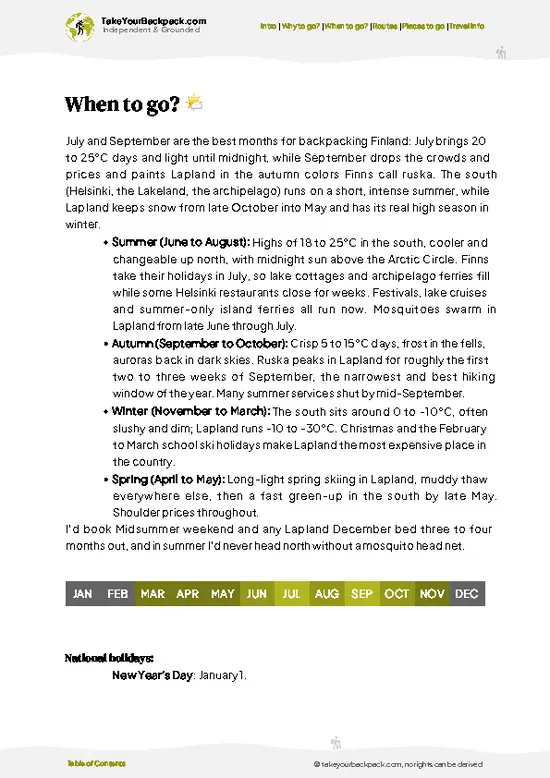
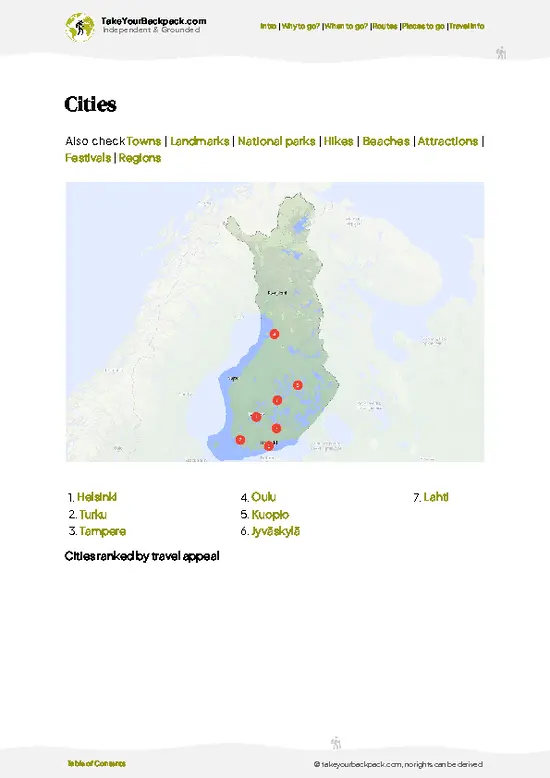
example page 2 from our offline Travel Guide for Finland
example page 3 from our offline Travel Guide for Finland
example page 4 from our offline Travel Guide for Finland
example page 5 from our offline Travel Guide for Finland
example page 6 from our offline Travel Guide for Finland
example page 7 from our offline Travel Guide for Finland
The digital guide (341 pages) contains:
✅ 87 highlights, ranked by travel appeal
✅ Optimized 5, 10 & 15-day travel routes
✅ Cities, national parks, landmarks, beaches
✅ How to get around
✅ Offline-friendly for travel without Wi-Fi
👉 Click to see all 30+ guide features

📅 Plan smarter in minutes, not weeks
✅ Month by month travel advice
✅ Festivals & national holidays
✅ Budget expectations

🗺️ Go to the right places, skip the overrated ones
✅ Honest pros & cons of destinations
✅ Top hikes, parks & viewpoints
✅ Lesser-known places most travelers miss
✅ Clear “worth it vs skip it” guidance

🛏️ Travel smoothly without rookie mistakes
✅ Best areas to stay
✅ Transport systems explained simply
✅ Common scams & safety advice
✅ SIM cards, money & practical tips

🌍 Understand the country, not just visit it
✅ Culture & traditions
✅ 52 Essential phrases & customs
✅ Festivals worth planning around
✅ Traveler-friendly historical context
✅ Insights that make places more meaningful

📱 Built for real travel conditions
✅ Fully downloadable PDF
✅ Works completely offline
✅ Optimized for phone use
✅ Useful in remote areas & buses
✅ Everything in one place
Stop searching, start planning
Get instant access to your full guide. 30‑day money-back guarantee.
+ Add another guide for just

By proceeding you agree to our terms.
Sent to your inbox immediately after payment • 100% Secure Checkout
Best Backpacking Travel Advisor 2025 tourism awardBest Backpacking
Travel Advisor
2025
What others say about Take Your Backpack Guides:
⭐⭐⭐⭐⭐
Fantastic, amazing amount of information!
⭐⭐⭐⭐⭐
My goodness this is amazing, it's what I've been looking for hats off too you!
⭐⭐⭐⭐⭐
I think this is absolutely BRILLIANT
⭐⭐⭐⭐
Very complete and informative. It's still missing places, but I gotta to commend you
⭐⭐⭐⭐⭐
This is truly amazing, thank you, can't wait to explore it with my kids!
⭐⭐⭐⭐⭐
Awesome resource, thank you!
⭐⭐⭐⭐⭐
This is amazing! Can't wait to explore the ones I haven't seen
⭐⭐⭐⭐
I love this! Well done, great idea.
⭐⭐⭐⭐⭐
Thanks for taking the time to make this gem!
⭐⭐⭐⭐⭐
This might be the best website I've ever seen.
⭐⭐⭐⭐⭐
Congratulations, and thank you so much for your work; it's incredibly valuable.
⭐⭐⭐⭐
In all seriousness I think you did a great job pointing out the important spots
⭐⭐⭐⭐⭐
10/10 very good
⭐⭐⭐⭐⭐
As someone who's only just starting to visit regularly this is awesome, thank you.
⭐⭐⭐⭐
Thank you very much! I'm going to visit my dad, it's going to be very useful!
⭐⭐⭐⭐⭐
This is really cool! We'll be travelling for the first time and this definitely come in handy.
⭐⭐⭐⭐⭐
You are now our minister of culture, congratulations 👨‍💼
⭐⭐⭐⭐⭐
Just wanted to tell you that this is a pearl! Going to follow your recommendations.
⭐⭐⭐⭐⭐
This is so cool. I'll definitely be using the resource for my travels soon.
⭐⭐⭐⭐⭐
This is very impressive! Good work.
⭐⭐⭐⭐⭐
This is an amazing and informative site. Very well done!

🛏️ Where to stay?Top Places to Consider Staying

Finland has a solid hostel network, with dorm beds typically €30 to €45 a night in Helsinki and less in smaller cities, plus summer-only hostels set up in student housing from June to August. In Helsinki, Kamppi and the streets around the Central Station put you within walking distance of the main sights and the airport train but cost the most, Kallio is cheaper and has the city’s liveliest bar scene with louder weekend nights, and Punavuori is quieter, with design shops and cafés about 15 minutes’ walk from the center. Outside the capital, the central districts of Turku, Tampere and Rovaniemi hold most budget beds, all of them safe, though Rovaniemi books out and gets pricey around Christmas. … read more 👉
Finland has a solid hostel network, with dorm beds typically €30 to €45 a night in Helsinki and less in smaller cities, plus summer-only hostels set up in student housing from June to August. In Helsinki, Kamppi and the streets around the Central Station put you within walking distance of the main sights and the airport train but cost the most, Kallio is cheaper and has the city’s liveliest bar scene with louder weekend nights, and Punavuori is quieter, with design shops and cafés about 15 minutes’ walk from the center. Outside the capital, the central districts of Turku, Tampere and Rovaniemi hold most budget beds, all of them safe, though Rovaniemi books out and gets pricey around Christmas.

If you enjoy meeting fellow travelers, consider choosing hostels with high ratings for atmosphere. On the other hand, if you prefer having your own space, a hotel might be a better option.

FinlandMore Places Across Finland

👋 Meet the founderWho’s Behind Take Your Backpack?

Johan, backpacker and founder of TakeYourBackpackHi, I’m Johan (Netherlands 🇳🇱), the creator of TakeYourBackpack. Over the past 3 decades, I’ve backpacked through 90+ countries across six continents, gaining extensive experience with independent travel, long-term trips, and overland routes.

This site is built on a combination of firsthand travel experience and carefully curated insights from other backpackers. Many guides are based on places I’ve personally visited, while others bring together tips, observations, and practical advice shared by trusted travelers I’ve met along the way.

The goal is to provide realistic, experience-driven guidance — not generic itineraries — so you can explore destinations with better context, clearer expectations, and more confidence.