×

France🇫🇷 | best beachesThe 9 Top beaches in France

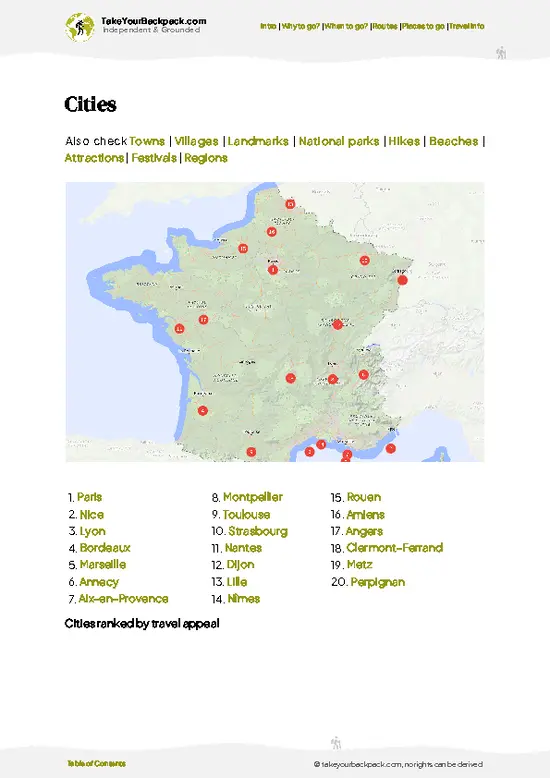
France has roughly 5,500 kilometers of coastline across four very different seas, and the beach you get depends entirely on which stretch you pick. The Mediterranean coast (Riviera, Languedoc, Corsica) gives warm, clear water but the highest prices and the heaviest summer crowds. The Atlantic coast, from the Basque Country up through the Landes and Gironde, offers huge sandy surf beaches, big tides and strong currents, with more space and lower costs. Brittany and Normandy deliver dramatic tidal flats, cold water and cool air, so they suit walkers more than swimmers. Skip the Riviera pebble strips in August if you are watching your budget, because you will pay for a patch of stones. For backpackers and independent travelers, the Atlantic coast and Corsica are the best value for sand and space, and public transport reaches most Mediterranean towns easily. Pick by water temperature, wave size and crowd tolerance, not by postcard fame.

By Johan Kruseman 🇳🇱 | Updated October 18, 2026
Explore the best attractions in France

Why go?What Makes Them Special

France works for beaches because of its geography and its infrastructure, not because of one famous coastline. Four distinct maritime zones sit inside one country: the warm, nearly tideless Mediterranean, the surf-driven Atlantic, the tide-dominated English Channel and the rocky, granite-edged Brittany shore. That means one country can serve a sunbather, a surfer and a coastal hiker, though not in the same week without a lot of driving.

The cultural side matters too. The French take paid holiday seriously, and the coast has been shaped by that since the 1930s. Beaches are well managed, with lifeguard posts in summer, marked swim zones, public showers and a dense network of campsites. Cleanliness and water quality are generally high and tested regularly, with blue flag status awarded to many … read more 👉
France works for beaches because of its geography and its infrastructure, not because of one famous coastline. Four distinct maritime zones sit inside one country: the warm, nearly tideless Mediterranean, the surf-driven Atlantic, the tide-dominated English Channel and the rocky, granite-edged Brittany shore. That means one country can serve a sunbather, a surfer and a coastal hiker, though not in the same week without a lot of driving.

The cultural side matters too. The French take paid holiday seriously, and the coast has been shaped by that since the 1930s. Beaches are well managed, with lifeguard posts in summer, marked swim zones, public showers and a dense network of campsites. Cleanliness and water quality are generally high and tested regularly, with blue flag status awarded to many beaches. The trade-off is commercialization. Private beach clubs with rented loungers take over large parts of the Riviera, and free public sections can be small and packed.

Before choosing France, accept three facts. First, it is not a tropical destination. Water on the Atlantic and Channel coasts rarely feels warm, even in summer, and the Channel is cold enough to be a short dip. Second, July and August compress the entire French holiday into a few weeks, so coastal prices and traffic spike hard. Third, tides and currents are real hazards on the Atlantic side, and the sea changes the beach itself within hours. Do not choose Brittany or Normandy if swimming in warm water is the goal. Do choose France if you want variety, reliable facilities and an easy base for combining coast with food and small towns.
Evaluating the Top Choices
The list of best beaches in France is created based on beauty, vibe, water quality, activities, and surrounding scenery. If you feel a beach is missing in this list, please let us know.

When to go?Optimal Periods for Travel

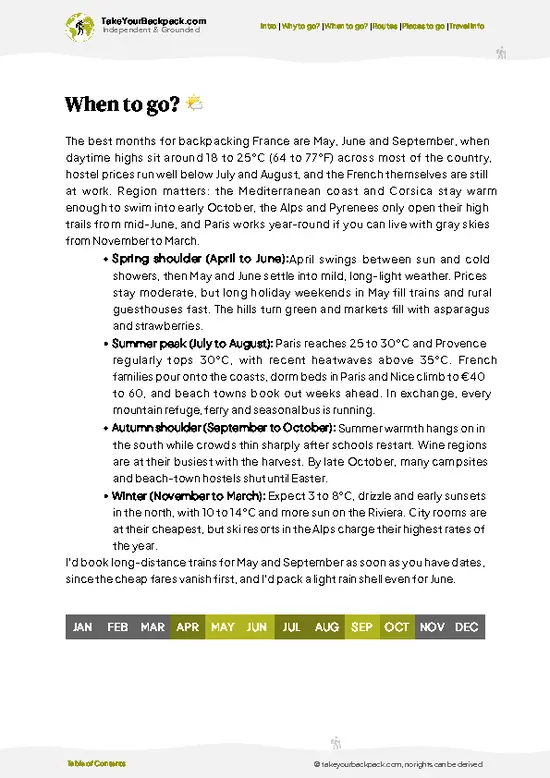
Best months for beaches: The best months for beaches in France are June and September, when air temperatures sit around 22 to 28°C on the Mediterranean and Atlantic coasts, the sea is warm enough to swim in, and the summer crowds have not arrived or have left. July and August are hotter (28 to 33°C on the Riviera, with sea temperatures near 22 to 25°C) but bring the biggest crowds of the year.

Shoulder seasons and peak weeks: May and early October work on the Mediterranean, with air at 18 to 24°C, but the sea stays cool, around 16 to 20°C, so it suits walking and sunbathing more than long swims. Many beach clubs and some seasonal restaurants open only from around May to September, so outside those months expect reduced services. On the Atlantic coast, September is often the best month, with … read more 👉
Best months for beaches: The best months for beaches in France are June and September, when air temperatures sit around 22 to 28°C on the Mediterranean and Atlantic coasts, the sea is warm enough to swim in, and the summer crowds have not arrived or have left. July and August are hotter (28 to 33°C on the Riviera, with sea temperatures near 22 to 25°C) but bring the biggest crowds of the year.

Shoulder seasons and peak weeks: May and early October work on the Mediterranean, with air at 18 to 24°C, but the sea stays cool, around 16 to 20°C, so it suits walking and sunbathing more than long swims. Many beach clubs and some seasonal restaurants open only from around May to September, so outside those months expect reduced services. On the Atlantic coast, September is often the best month, with warm water left from summer, lighter crowds and good surf conditions. Surf season runs from September through October for the most consistent swell.

Peak weeks run from mid-July to the end of August, and the August 15 holiday weekend is the busiest of all. Accommodation prices on the Riviera and in Corsica can run 50 to 100 percent higher than in June or September, and campsites near the best beaches often book out months ahead. If you can travel outside those weeks, do.

Regional differences: Brittany and Normandy are cooler and less predictable. Air temperatures reach 18 to 23°C in July and August, the sea rarely passes 18°C, and rain can arrive on any day. These coasts are worth visiting from June to September for walks and tidal landscapes, but do not plan them as a swimming trip. Winter beach visits make sense only on the Mediterranean for walking, where days of 10 to 14°C are common and sun is frequent. Everywhere else, most beach infrastructure is closed from November to March.

beach hoppingOptimizing Your Multi-Stop Itinerary

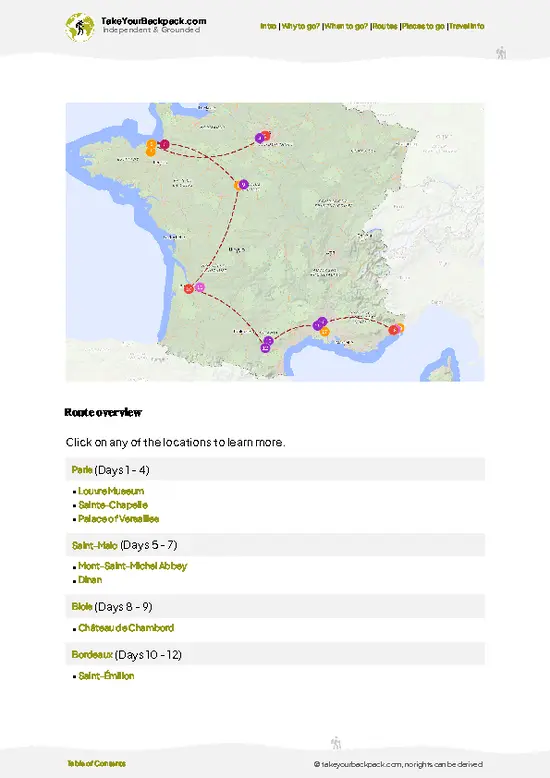
How many days to allow: A trip combining several beaches in France needs 10 to 14 days, because the main coasts are far apart and the transit between them eats whole days. Trying to cover the Mediterranean, Atlantic and Channel coasts in a week means spending more time on trains than on sand.

Which regions group well: Pair coasts that are close, not famous ones that are far apart. The Mediterranean cluster (Provence, the Riviera, Languedoc) links easily by TER and regional trains, with Marseille and Nice as the main hubs, and it takes 2 to 4 hours between most points. Corsica needs a ferry or flight from Marseille, Nice or Toulon, so treat it as a separate trip. The Atlantic cluster runs from Bordeaux down through the Landes to Biarritz and the Basque coast, with Bordeaux and Bayonne as hubs. … read more 👉
How many days to allow: A trip combining several beaches in France needs 10 to 14 days, because the main coasts are far apart and the transit between them eats whole days. Trying to cover the Mediterranean, Atlantic and Channel coasts in a week means spending more time on trains than on sand.

Which regions group well: Pair coasts that are close, not famous ones that are far apart. The Mediterranean cluster (Provence, the Riviera, Languedoc) links easily by TER and regional trains, with Marseille and Nice as the main hubs, and it takes 2 to 4 hours between most points. Corsica needs a ferry or flight from Marseille, Nice or Toulon, so treat it as a separate trip. The Atlantic cluster runs from Bordeaux down through the Landes to Biarritz and the Basque coast, with Bordeaux and Bayonne as hubs. Brittany and Normandy fit together via Rennes, Caen and Paris, but they sit far from the south.

A sensible direction is to enter through Paris or Bordeaux and work toward the warmer south late in the trip, so the sunniest stretch comes last. Moving between the Atlantic and Mediterranean coasts takes about 4 to 6 hours by train via Bordeaux and Toulouse, and Paris to Nice is roughly 5.5 to 6 hours by TGV. Between Paris and Brittany or Normandy, count 1.5 to 4 hours.

Time per stop and common mistakes: Allow 2 to 4 nights per region. One night per stop wastes the day on packing and trains. The biggest planning error is trying to do the Riviera, Atlantic coast and Brittany in one loop, which leaves little real beach time. Another is skipping reservations in July and August, when popular trains and coastal hostels sell out. Instead, choose two coastlines at most, book the intercity leg early and use regional trains or buses for short hops. Do not rely on trains for small Atlantic or Brittany beaches. Many are poorly served, and a rental car or bike makes those stretches far easier.

The ListMust-Visit beaches in France

1 Palombaggia

white sand, umbrella pines, turquoise shallows

Relax under scattered trees on fine sand, with shallow water ideal for wading and distant views of rocky islets.

2 Plage du Sillon

long tidal flats, fortified walls, kite surfers

Walk for miles along shifting sands, with the old city’s ramparts behind you and wind-driven sports filling the open space.

france-beach-plage-du-sillon
© Google |

3 Étretat Beach

chalk cliffs, natural arches, pebble shore

Sit below dramatic white cliffs, then climb for panoramic views of sea-carved arches and the English Channel horizon.

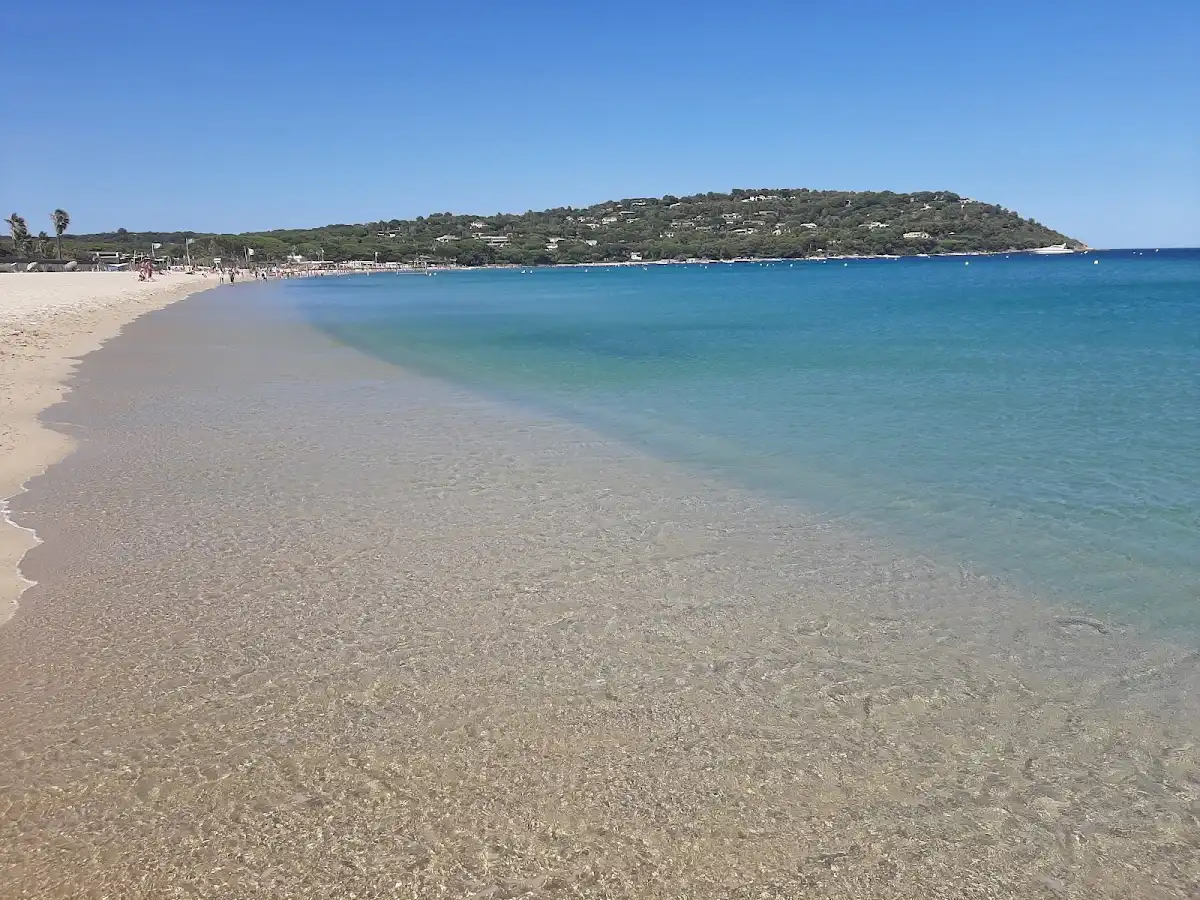
4 Plage de Pampelonne

long sandy bay, beach clubs, pine groves

Spend the day between open sand and shaded areas, with easy access to casual cafés and more exclusive venues along the shore.

france-beach-plage-de-pampelonne
© Google |

5 Paloma Beach

pebble shore, pine shade, Cap Ferrat views

Swim in clear water framed by forested headlands, with a quiet atmosphere and occasional glimpses of anchored yachts offshore.

france-beach-paloma-beach
© Google | Besnik Avdiaj

6 Plage de la Croisette

city beach, palm-lined boulevard, festival venue

Relax on a central stretch of sand, with easy access to shops and the annual film festival’s main events just across the street.

7 Plage de Deauville

striped parasols, wooden boardwalk, Belle Époque villas

Stroll past iconic beach huts and historic mansions, with a long boardwalk offering easy access to the calm Channel shore.

france-beach-plage-de-deauville
© Google |

8 Grande Plage de Biarritz

wide sandy stretch, Atlantic surf, promenade

Join locals and visitors on a broad expanse of sand, with steady waves for surfers and a lively walkway for evening strolls.

9 Plage de Nice

pebble beach, azure water, city backdrop

Swim just steps from urban life, where smooth stones meet clear sea and the Promenade des Anglais runs parallel to the coast.

Loading the map 🌍

Expert viewTips and Advice from Travelers

How many beaches to visit: Plan on four to six beach days in a single trip, spread across two coastlines at most. That is enough to feel the difference between regions without turning the trip into a transit exercise. More than that and you spend most of your time moving, not swimming. Beach number seven is rarely better than beach number three, and the sea in France is variable enough that you need slack days for weather.

Which kind to prioritize: If you want warm swimming, go to the Mediterranean, but pick towns outside the Riviera core. The pebble beaches around Nice are not worth the premium prices in high season. If you want space and surf, the Atlantic coast is the best value in the country, with long sand, lower costs and a relaxed backpacker feel. If you want walking and dramatic … read more 👉
How many beaches to visit: Plan on four to six beach days in a single trip, spread across two coastlines at most. That is enough to feel the difference between regions without turning the trip into a transit exercise. More than that and you spend most of your time moving, not swimming. Beach number seven is rarely better than beach number three, and the sea in France is variable enough that you need slack days for weather.

Which kind to prioritize: If you want warm swimming, go to the Mediterranean, but pick towns outside the Riviera core. The pebble beaches around Nice are not worth the premium prices in high season. If you want space and surf, the Atlantic coast is the best value in the country, with long sand, lower costs and a relaxed backpacker feel. If you want walking and dramatic landscapes, Brittany and Normandy are the right choice, but only if you accept cold water. Skip the Channel coast if a warm swim is your priority. For a first trip, I would choose the Atlantic coast plus one Mediterranean stop.

What it costs: Public beaches are free. Expect US$50 to 90 a day (about €45 to 85) on the Atlantic coast and in Brittany, covering a hostel dorm or campsite at €20 to 45 a night, food from markets and bakeries at €15 to 25, and local transport. On the Riviera and in Corsica in July and August, budget US$80 to 140 a day (about €75 to 130), because dorm beds can pass €45 to 70 a night. Camping is the cheapest option, from roughly €15 to 35 for a tent pitch. Sunbed rentals at private beach clubs cost around €20 to 40 per person per day, so skip them and bring a towel. Parking near popular beaches in summer can run €5 to 20 for the day, and some resort towns charge more. Surf lessons cost about €40 to 70 for a group session, and board rental runs €15 to 30 a day. Local buses to beaches are usually €1.50 to 3 per ride.

Safety on the water: Currents and tides cause most serious incidents. On the Atlantic coast, rip currents are strong even on calm-looking days, so swim only in the flagged zone between the lifeguard posts. Green means safe, orange means dangerous but supervised, and red means swimming is prohibited. Lifeguards generally work only from early or mid-June to early September, so out of season you swim alone. In Brittany and Normandy, tides can move fast across flat sand, and people get cut off. Check the tide table before any long walk or shell collecting. Jellyfish appear on the Mediterranean in summer, and weever fish can sting in shallow sand on the Atlantic coast.

Beach etiquette and theft: Topless sunbathing is common and accepted on most French beaches, while full nudity belongs only on designated naturist beaches, so do not strip off elsewhere. Men are usually expected to wear fitted swim briefs or trunks in public pools, though the beach is more relaxed. Bring a small dry bag, because theft from unattended bags is a real problem near the Riviera and in busy car parks. Never leave valuables in a parked car, as break-ins at beach parking lots are common in summer. Rules against fires, camping on the sand and glass on the beach are enforced, with fines that can reach €135 or more. Dogs are banned on many beaches in high season, so check signs before you bring one.

✈️ The backpacker research shortcutFrance Travel Guide

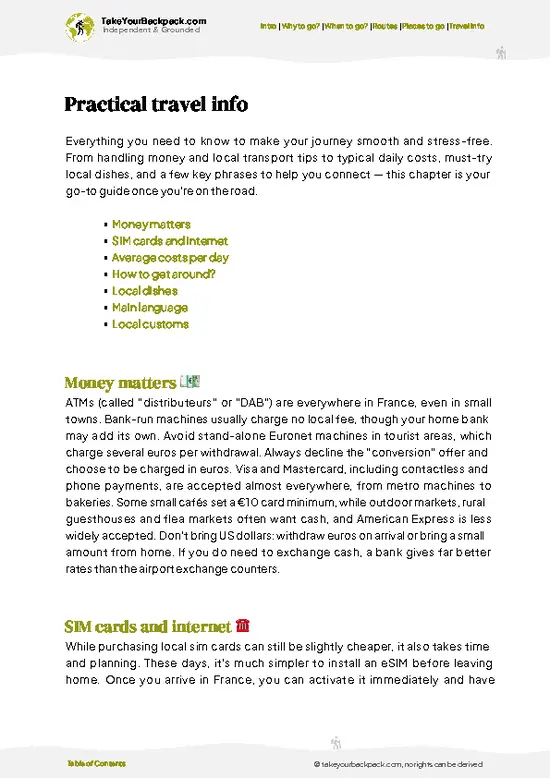
An offline-friendly backpacking guide with optimized travel routes, ranked highlights, transport advice, and the best areas to stay.
example page 0 from our offline Travel Guide for France
example page 1 from our offline Travel Guide for France
example page 2 from our offline Travel Guide for France
example page 3 from our offline Travel Guide for France
example page 4 from our offline Travel Guide for France
example page 5 from our offline Travel Guide for France
example page 6 from our offline Travel Guide for France
example page 7 from our offline Travel Guide for France
The digital guide (501 pages) contains:
✅ 135 highlights, ranked by travel appeal
✅ Optimized 7, 14 & 21-day travel routes
✅ Cities, national parks, landmarks, beaches
✅ How to get around
✅ Offline-friendly for travel without Wi-Fi
👉 Click to see all 30+ guide features

📅 Plan smarter in minutes, not weeks
✅ Month by month travel advice
✅ Festivals & national holidays
✅ Budget expectations

🗺️ Go to the right places, skip the overrated ones
✅ Honest pros & cons of destinations
✅ Top hikes, parks & viewpoints
✅ Lesser-known places most travelers miss
✅ Clear “worth it vs skip it” guidance

🛏️ Travel smoothly without rookie mistakes
✅ Best areas to stay
✅ Transport systems explained simply
✅ Common scams & safety advice
✅ SIM cards, money & practical tips

🌍 Understand the country, not just visit it
✅ Culture & traditions
✅ 52 Essential phrases & customs
✅ Festivals worth planning around
✅ Traveler-friendly historical context
✅ Insights that make places more meaningful

📱 Built for real travel conditions
✅ Fully downloadable PDF
✅ Works completely offline
✅ Optimized for phone use
✅ Useful in remote areas & buses
✅ Everything in one place
Stop searching, start planning
Get instant access to your full guide. 30‑day money-back guarantee.
+ Add another guide for just

By proceeding you agree to our terms.
Sent to your inbox immediately after payment • 100% Secure Checkout
Best Backpacking Travel Advisor 2025 tourism awardBest Backpacking
Travel Advisor
2025
What others say about Take Your Backpack Guides:
⭐⭐⭐⭐⭐
Fantastic, amazing amount of information!
⭐⭐⭐⭐⭐
My goodness this is amazing, it's what I've been looking for hats off too you!
⭐⭐⭐⭐⭐
I think this is absolutely BRILLIANT
⭐⭐⭐⭐
Very complete and informative. It's still missing places, but I gotta to commend you
⭐⭐⭐⭐⭐
This is truly amazing, thank you, can't wait to explore it with my kids!
⭐⭐⭐⭐⭐
Awesome resource, thank you!
⭐⭐⭐⭐⭐
This is amazing! Can't wait to explore the ones I haven't seen
⭐⭐⭐⭐
I love this! Well done, great idea.
⭐⭐⭐⭐⭐
Thanks for taking the time to make this gem!
⭐⭐⭐⭐⭐
This might be the best website I've ever seen.
⭐⭐⭐⭐⭐
Congratulations, and thank you so much for your work; it's incredibly valuable.
⭐⭐⭐⭐
In all seriousness I think you did a great job pointing out the important spots
⭐⭐⭐⭐⭐
10/10 very good
⭐⭐⭐⭐⭐
As someone who's only just starting to visit regularly this is awesome, thank you.
⭐⭐⭐⭐
Thank you very much! I'm going to visit my dad, it's going to be very useful!
⭐⭐⭐⭐⭐
This is really cool! We'll be travelling for the first time and this definitely come in handy.
⭐⭐⭐⭐⭐
You are now our minister of culture, congratulations 👨‍💼
⭐⭐⭐⭐⭐
Just wanted to tell you that this is a pearl! Going to follow your recommendations.
⭐⭐⭐⭐⭐
This is so cool. I'll definitely be using the resource for my travels soon.
⭐⭐⭐⭐⭐
This is very impressive! Good work.
⭐⭐⭐⭐⭐
This is an amazing and informative site. Very well done!

🛏️ Where to stay?Where to Stay: France Edition

France has plenty of hostels and budget rooms, with dorm beds running roughly €30 to 55 in Paris and €20 to 40 in most other cities. In Paris, the Canal Saint-Martin area and Belleville in the northeast hold the densest cluster of large hostels, with cheap bars and good metro links but a scruffy edge after dark, while Montmartre puts you near Sacré-Cœur and the Pigalle nightlife at the cost of steep hills and pickpockets around the main stations. Elsewhere, look at Vieux Lyon in Lyon for cobbled-lane atmosphere and walkable sights, the Vieux-Port and Cours Julien in Marseille for late nights (stay alert around the station), and the Old Town of Nice for beach access, though its narrow streets … read more 👉
France has plenty of hostels and budget rooms, with dorm beds running roughly €30 to 55 in Paris and €20 to 40 in most other cities. In Paris, the Canal Saint-Martin area and Belleville in the northeast hold the densest cluster of large hostels, with cheap bars and good metro links but a scruffy edge after dark, while Montmartre puts you near Sacré-Cœur and the Pigalle nightlife at the cost of steep hills and pickpockets around the main stations. Elsewhere, look at Vieux Lyon in Lyon for cobbled-lane atmosphere and walkable sights, the Vieux-Port and Cours Julien in Marseille for late nights (stay alert around the station), and the Old Town of Nice for beach access, though its narrow streets stay noisy until late in summer.

If you enjoy meeting fellow travelers, consider choosing hostels with high ratings for atmosphere. On the other hand, if you prefer having your own space, a hotel might be a better option.

FranceExplore Beyond This Category

👋 Meet the founderWho’s Behind Take Your Backpack?

Johan, backpacker and founder of TakeYourBackpackHi, I’m Johan (Netherlands 🇳🇱), the creator of TakeYourBackpack. Over the past 3 decades, I’ve backpacked through 90+ countries across six continents, gaining extensive experience with independent travel, long-term trips, and overland routes.

This site is built on a combination of firsthand travel experience and carefully curated insights from other backpackers. Many guides are based on places I’ve personally visited, while others bring together tips, observations, and practical advice shared by trusted travelers I’ve met along the way.

The goal is to provide realistic, experience-driven guidance — not generic itineraries — so you can explore destinations with better context, clearer expectations, and more confidence.