×

Iceland🇮🇸 | best villagesDiscover the 10 Best villages Across Iceland

In Iceland, villages are more than just dots on a map; they embody the spirit of the land. Each region offers a distinct experience shaped by its geography and culture. The Westfjords boast remote fishing communities, where the scent of the sea mingles with the crisp mountain air. In contrast, the South Coast features lively hubs like Vík, where black sand beaches meet dramatic cliffs.

Choosing the right village can significantly impact your backpacking journey. Consider the season: winter brings cozy atmospheres and the chance to see the Northern Lights, while summer offers vibrant festivals and lush landscapes. Your choice affects not just the vibe and budget, but also your safety and ease of travel. Embrace the unique character of each village for a deeper cultural immersion.

By Johan Kruseman 🇳🇱 | Updated September 5, 2026
Explore the best landmarks in Iceland

Why go?Understanding Their Importance

The villages of Iceland stand apart from those in other countries due to their deep-rooted connection to the land and the elements. Here, traditional practices are not mere relics; they are woven into daily life. The harsh climate shapes everything, from the architecture—think turf houses designed to withstand fierce winds—to the culinary traditions that emphasize local ingredients like lamb and fish.

Accessibility can be a challenge. Many villages are remote, nestled between mountains and fjords, making them less accessible during winter months. This isolation fosters a sense of community and authenticity, but it also means that travelers must plan carefully. The trade-off is significant: longer travel times often yield richer experiences. The journey becomes part of the adventure, allowing … read more 👉
The villages of Iceland stand apart from those in other countries due to their deep-rooted connection to the land and the elements. Here, traditional practices are not mere relics; they are woven into daily life. The harsh climate shapes everything, from the architecture—think turf houses designed to withstand fierce winds—to the culinary traditions that emphasize local ingredients like lamb and fish.

Accessibility can be a challenge. Many villages are remote, nestled between mountains and fjords, making them less accessible during winter months. This isolation fosters a sense of community and authenticity, but it also means that travelers must plan carefully. The trade-off is significant: longer travel times often yield richer experiences. The journey becomes part of the adventure, allowing for deeper exploration of Iceland’s stunning landscapes and cultural heritage.

The infrastructure in these rural areas is evolving but can be limited. Roads may be unpaved, and services sparse, yet this adds to the charm. Visitors can immerse themselves in the local rhythm, experiencing the quiet beauty of the countryside, where the Northern Lights dance overhead in winter and wildflowers bloom in summer.

In Iceland, the villages are not just destinations; they are living expressions of a culture shaped by nature. Understanding these nuances transforms a trip from a checklist of sights into a meaningful exploration of a unique way of life.
Our Approach to Ranking
The list of best villages in Iceland is created based on authenticity, scenic beauty, community spirit, traditions, and overall character. If you feel a village is missing in this list, please let us know.

When to go?Optimal Periods for Travel

Seasonality plays a crucial role in experiencing the villages of Iceland. Each season brings its own character, transforming the landscape and the rhythm of rural life.

Winter blankets the villages in snow, creating a serene, quiet atmosphere. However, harsh weather can limit accessibility. Roads may be impassable, and daylight is scarce. The beauty of the northern lights is a draw, but travelers should be prepared for cold and isolation.

Spring awakens the land. Melting snow reveals vibrant greenery, and the air fills with the scent of fresh earth. This is a time of renewal, with farmers preparing for the growing season. Crowds are lighter, making it a peaceful time to explore.

Summer is the peak season. Long days bring bustling activity. Villages come alive with festivals celebrating … read more 👉
Seasonality plays a crucial role in experiencing the villages of Iceland. Each season brings its own character, transforming the landscape and the rhythm of rural life.

Winter blankets the villages in snow, creating a serene, quiet atmosphere. However, harsh weather can limit accessibility. Roads may be impassable, and daylight is scarce. The beauty of the northern lights is a draw, but travelers should be prepared for cold and isolation.

Spring awakens the land. Melting snow reveals vibrant greenery, and the air fills with the scent of fresh earth. This is a time of renewal, with farmers preparing for the growing season. Crowds are lighter, making it a peaceful time to explore.

Summer is the peak season. Long days bring bustling activity. Villages come alive with festivals celebrating local culture and agriculture. However, this is also when prices soar, and popular spots can feel overcrowded.

Autumn offers a unique charm. The landscape transforms with fiery colors, and the harvest season brings fresh produce. While crowds thin out, weather can be unpredictable, with sudden changes.

Travelers should weigh these seasonal nuances carefully. Each season offers distinct experiences, but accessibility and costs fluctuate significantly. Planning around these factors can enhance the journey through Iceland’s villages.

village hoppingHow to Combine villages Into One Trip

Traveling through Iceland’s villages requires a thoughtful approach to routing. Start by clustering regions. The South Coast offers a string of charming spots like Vík and Hella, while the Westfjords provide a more remote experience with villages like Ísafjörður. This regional focus helps minimize travel time and maximizes immersion in local culture.

Consider the direction of travel. Moving clockwise around the Ring Road allows for a natural flow, but don’t rush. Each village deserves time to breathe. Aim for at least two hours in smaller villages to soak in the atmosphere, sample local cuisine, and chat with residents.

Common mistakes include over-scheduling and underestimating travel times. Iceland’s roads can be winding and weather-dependent, which can slow progress. Prioritize depth read more 👉
Traveling through Iceland’s villages requires a thoughtful approach to routing. Start by clustering regions. The South Coast offers a string of charming spots like Vík and Hella, while the Westfjords provide a more remote experience with villages like Ísafjörður. This regional focus helps minimize travel time and maximizes immersion in local culture.

Consider the direction of travel. Moving clockwise around the Ring Road allows for a natural flow, but don’t rush. Each village deserves time to breathe. Aim for at least two hours in smaller villages to soak in the atmosphere, sample local cuisine, and chat with residents.

Common mistakes include over-scheduling and underestimating travel times. Iceland’s roads can be winding and weather-dependent, which can slow progress. Prioritize depth over speed; a few meaningful experiences in each village will be more rewarding than a hurried checklist.

Trade-offs are inevitable. Budget travelers might opt for shared transport, while those seeking comfort may prefer rental cars. Flexibility is key; be prepared to adjust plans based on weather or local events. The real magic lies in the unexpected moments—like stumbling upon a local festival or a hidden waterfall—so leave room for spontaneity.

Ultimately, the journey through Iceland’s villages is about savoring the unique character of each place, not just ticking boxes on a map.

The ListThe Best villages of Iceland

1 Seyðisfjörður

wooden houses, ferry port, art scene

Wander streets lined with painted homes and galleries, then hike to waterfalls or catch the ferry linking Iceland to mainland Europe.

2 Vik

black sand beach, basalt columns, sea stacks

Stand at the edge of Reynisfjara’s volcanic shore, watching Atlantic waves crash beneath dramatic cliffs and iconic rock formations.

iceland-city-vik
© Google | Francisco Aguilar

3 Höfn

lobster cuisine, glacier backdrop, fishing port

Dine on langoustine after a day spent photographing Vatnajökull’s icy tongues and watching trawlers return with the evening catch.

4 Stykkishólmur

harbor islands, seafood market, lighthouse views

Catch ferries to Breiðafjörður’s islets, sample fresh catch at the dock, and climb for panoramic vistas over a maze of skerries.

iceland-city-stykkisholmur
© Google |

5 Borgarfjörður Eystri

elf legends, coastal hikes, puffin cliffs

Follow winding trails past colorful houses and dramatic sea cliffs, encountering folklore and seabird colonies unique to Iceland’s east.

iceland-city-borgarfjordur-eystri v1
© Google |

6 Siglufjörður

herring museum, mountain tunnels, fjord setting

Trace the legacy of the herring boom, explore tunnels carved through steep slopes, and linger by the water in a remote northern inlet.

7 Djúpivogur

harbor views, granite sculptures, slow travel ethos

Absorb the quiet rhythm of a coastal village where art installations, birdlife, and fjord scenery create a contemplative stop on the Ring Road.

iceland-city-djupivogur
© Google | Manuel Nogales

8 Hveragerði

hot springs, greenhouse farming, geothermal park

Sample produce grown with volcanic heat, stroll steamy trails, and soak in naturally warm rivers just outside the capital region.

9 Flúðir

hot spring pools, greenhouse tomatoes, rural valley

Soak in naturally heated pools, taste locally grown produce, and use this quiet spot as a launch point for Golden Circle sights.

iceland-city-fludir v1
© Google |

10 Hella

horse farms, riverside camping, agricultural center

Settle among fields and stables, using this low-key town as a practical base for exploring Iceland’s southern interior and rural life.

iceland-city-hella
© Google |
Loading the map 🌍

Expert viewInsights from Locals and Experts

Accessibility
Iceland’s villages are often a bit off the beaten path, and that’s part of their charm. Expect winding roads that can be challenging, especially in winter. The weather can change on a dime, so always check conditions before heading out. Renting a 4x4 is a smart move if you want to explore more remote areas. Public transport exists, but it’s limited; don’t rely on it for spontaneous adventures. Aim to visit about three to five villages on a trip. This allows you to soak in the local culture without feeling rushed.

Seasonal Variation
Timing is everything in Iceland. Summer brings nearly 24 hours of daylight, making it perfect for long hikes and exploring. However, this is also peak tourist season, so expect crowds in popular spots. Winter, on the other hand, offers a different … read more 👉
Accessibility
Iceland’s villages are often a bit off the beaten path, and that’s part of their charm. Expect winding roads that can be challenging, especially in winter. The weather can change on a dime, so always check conditions before heading out. Renting a 4x4 is a smart move if you want to explore more remote areas. Public transport exists, but it’s limited; don’t rely on it for spontaneous adventures. Aim to visit about three to five villages on a trip. This allows you to soak in the local culture without feeling rushed.

Seasonal Variation
Timing is everything in Iceland. Summer brings nearly 24 hours of daylight, making it perfect for long hikes and exploring. However, this is also peak tourist season, so expect crowds in popular spots. Winter, on the other hand, offers a different kind of magic. The villages transform under a blanket of snow, and the Northern Lights dance overhead. But be prepared for shorter days and potential road closures. Each season has its own vibe, so choose based on what experience you seek.

Authenticity
The real magic of Icelandic villages lies in their authenticity. You won’t find cookie-cutter tourist shops here. Instead, look for local artisans and family-run eateries. Try the traditional lamb soup or fresh fish caught that day. Engage with locals; they often have stories that reveal the soul of the place. However, be mindful of cultural norms. Icelanders value their privacy, so while they’re friendly, don’t expect to be invited into their homes unless you’ve built a rapport.

Pacing Between Rural Stops
Traveling between villages can take longer than you think. The landscapes are breathtaking, but the roads can be slow, especially in rural areas. Plan for at least an hour or two between stops, allowing time to pull over and take in the scenery. This isn’t just about getting from point A to B; it’s about the journey itself. Each stretch of road offers unique views—think sweeping valleys, rugged coastlines, and dramatic cliffs.

Safety & Cultural Considerations
Safety is paramount. Always respect nature; the terrain can be unforgiving. Stay on marked paths and be cautious near cliffs and geothermal areas. Also, be aware of the cultural significance of certain sites. Some areas are sacred to locals, so tread lightly and ask before taking photos. Understanding these nuances enhances your experience and shows respect for the land and its people.

Trade-offs
While it’s tempting to pack in as many villages as possible, consider the trade-off between quantity and quality. Rushing through can lead to a superficial experience. Instead, focus on a few key villages where you can truly immerse yourself. This approach allows for spontaneous detours—maybe a hot spring you didn’t plan for or a local festival.

In summary, the best way to experience Iceland’s villages is to embrace the journey. Allow yourself to be present, savor the local flavors, and connect with the landscape and its people. The effort you put in will yield a richer, more rewarding experience.

✈️ The backpacker research shortcutIceland Travel Guide

An offline-friendly backpacking guide with optimized travel routes, ranked highlights, transport advice, and the best areas to stay.
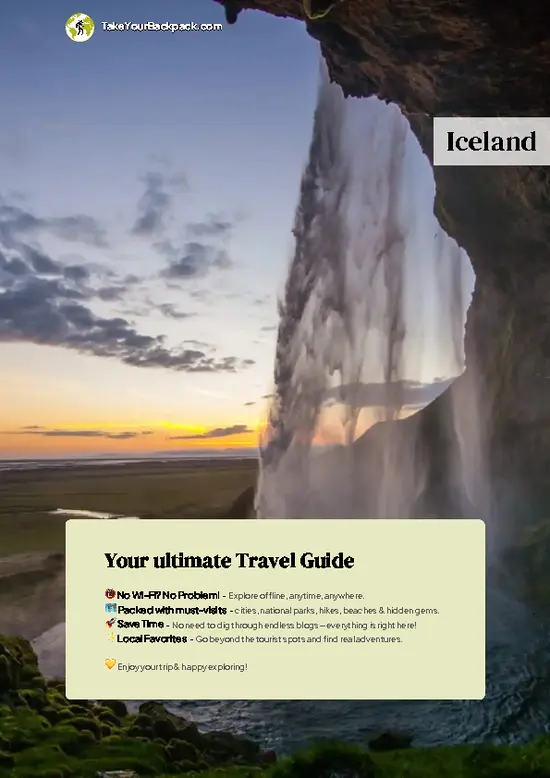
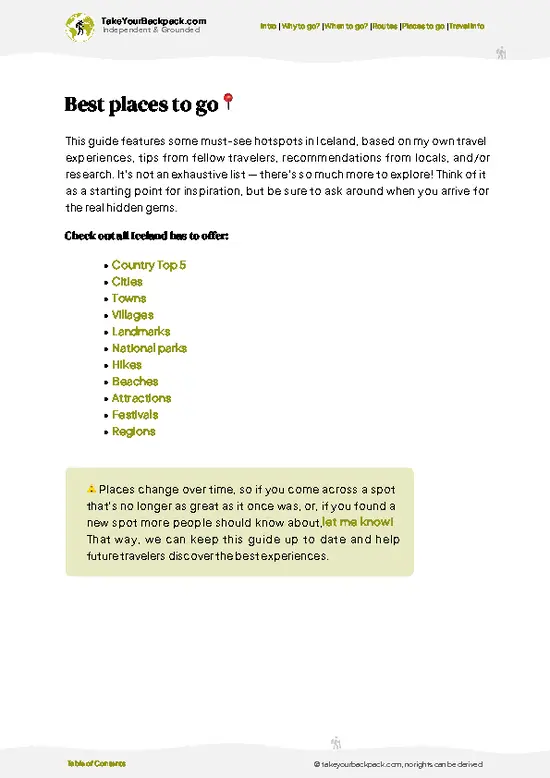
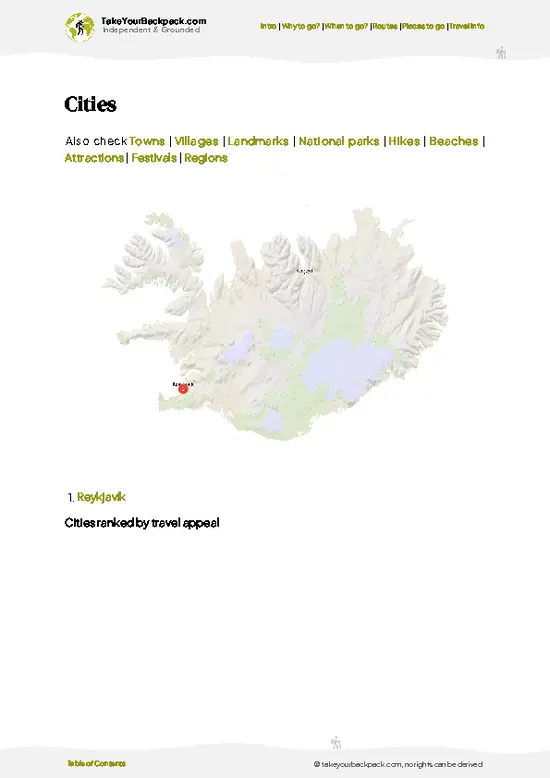
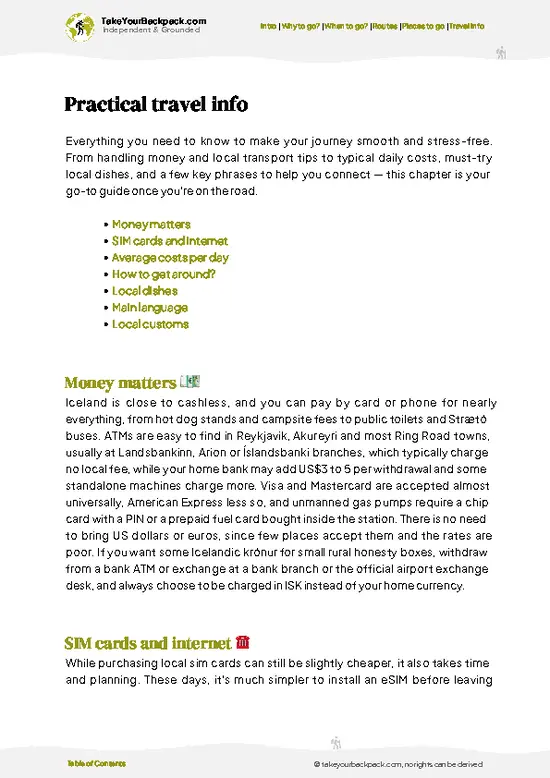
example page 0 from our offline Travel Guide for Iceland
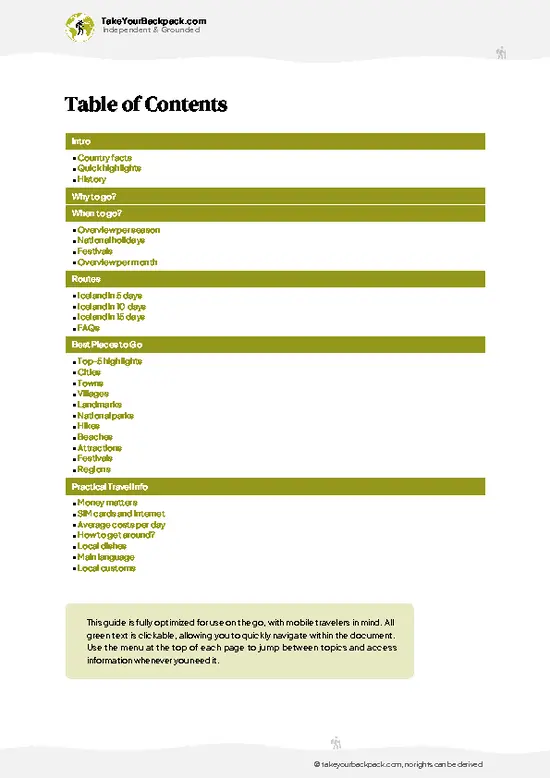
example page 1 from our offline Travel Guide for Iceland
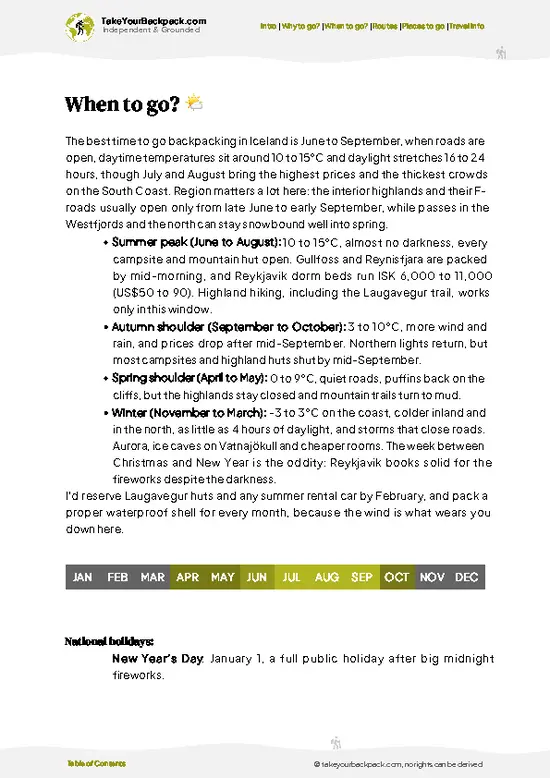
example page 2 from our offline Travel Guide for Iceland
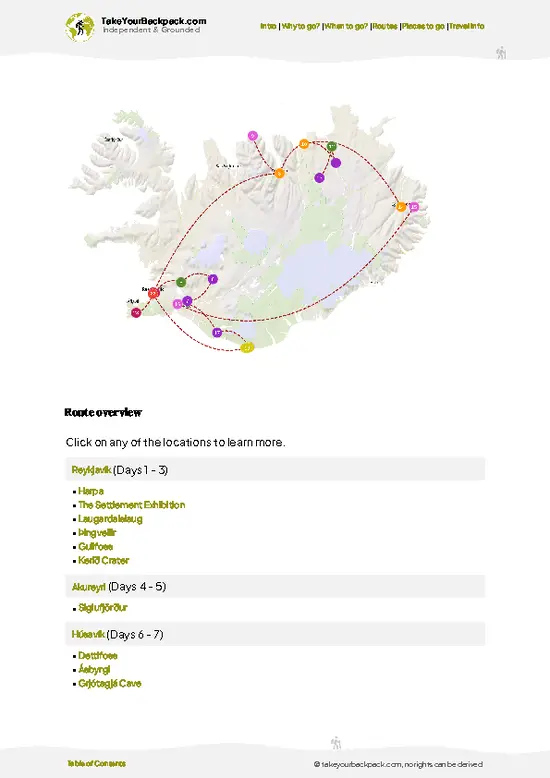
example page 3 from our offline Travel Guide for Iceland
example page 4 from our offline Travel Guide for Iceland
example page 5 from our offline Travel Guide for Iceland
example page 6 from our offline Travel Guide for Iceland
example page 7 from our offline Travel Guide for Iceland
The digital guide (240 pages) contains:
62 highlights, ranked by travel appeal
Optimized 5, 10 & 15-day travel routes
Cities, national parks, landmarks, beaches
How to get around
Offline-friendly for travel without Wi-Fi
👉 Click to see all 30+ guide features

📅 Plan smarter in minutes, not weeks
Month by month travel advice
Festivals & national holidays
Budget expectations

🗺️ Go to the right places, skip the overrated ones
Honest pros & cons of destinations
Top hikes, parks & viewpoints
Lesser-known places most travelers miss
Clear “worth it vs skip it” guidance

🛏️ Travel smoothly without rookie mistakes
Best areas to stay
Transport systems explained simply
Common scams & safety advice
SIM cards, money & practical tips

🌍 Understand the country, not just visit it
Culture & traditions
52 Essential phrases & customs
Festivals worth planning around
Traveler-friendly historical context
Insights that make places more meaningful

📱 Built for real travel conditions
Fully downloadable PDF
Works completely offline
Optimized for phone use
Useful in remote areas & buses
Everything in one place
Save weeks of stressful planning
Get instant access to your full guide. 30‑day money-back guarantee.
+ Add another guide for just US$7.80

By proceeding you agree to our terms.
Sent to your inbox immediately after payment • 100% Secure Checkout
Best Backpacking Travel Advisor 2025 tourism awardBest Backpacking
Travel Advisor
2025
What others say about Take Your Backpack Guides:
⭐⭐⭐⭐⭐
Fantastic, amazing amount of information!
⭐⭐⭐⭐⭐
My goodness this is amazing, it's what I've been looking for hats off too you!
⭐⭐⭐⭐⭐
I think this is absolutely BRILLIANT
⭐⭐⭐⭐
Very complete and informative. It's still missing places, but I gotta to commend you
⭐⭐⭐⭐⭐
This is truly amazing, thank you, can't wait to explore it with my kids!
⭐⭐⭐⭐⭐
Awesome resource, thank you!
⭐⭐⭐⭐⭐
This is amazing! Can't wait to explore the ones I haven't seen
⭐⭐⭐⭐
I love this! Well done, great idea.
⭐⭐⭐⭐⭐
Thanks for taking the time to make this gem!
⭐⭐⭐⭐⭐
This might be the best website I've ever seen.
⭐⭐⭐⭐⭐
Congratulations, and thank you so much for your work; it's incredibly valuable.
⭐⭐⭐⭐
In all seriousness I think you did a great job pointing out the important spots
⭐⭐⭐⭐⭐
10/10 very good
⭐⭐⭐⭐⭐
As someone who's only just starting to visit regularly this is awesome, thank you.
⭐⭐⭐⭐
Thank you very much! I'm going to visit my dad, it's going to be very useful!
⭐⭐⭐⭐⭐
This is really cool! We'll be travelling for the first time and this definitely come in handy.
⭐⭐⭐⭐⭐
You are now our minister of culture, congratulations 👨‍💼
⭐⭐⭐⭐⭐
Just wanted to tell you that this is a pearl! Going to follow your recommendations.
⭐⭐⭐⭐⭐
This is so cool. I'll definitely be using the resource for my travels soon.
⭐⭐⭐⭐⭐
This is very impressive! Good work.
⭐⭐⭐⭐⭐
This is an amazing and informative site. Very well done!

🛏️ Where to stay?Best Stay Options in Iceland

Yes — hostels and budget beds are widely available across Iceland, but they cluster in Reykjavík and in tourist towns along the Ring Road such as Akureyri, Vík and Höfn, with far fewer options in remote highlands.
In Reykjavík, Downtown/Laugavegur/Old Harbour has the most choices and best access to attractions and nightlife but is pricier and can be noisy at night; Grandi/Vesturbær is quieter and near coastal walks but has fewer dorm beds; airport towns near Keflavík are budget-friendly for arrivals yet add about a 40–60 minute transfer to central Reykjavík; Akureyri centre is compact, safe and a practical northern base with a small hostel scene; South Coast towns place you right by major sights … read more 👉
Yes — hostels and budget beds are widely available across Iceland, but they cluster in Reykjavík and in tourist towns along the Ring Road such as Akureyri, Vík and Höfn, with far fewer options in remote highlands.
In Reykjavík, Downtown/Laugavegur/Old Harbour has the most choices and best access to attractions and nightlife but is pricier and can be noisy at night; Grandi/Vesturbær is quieter and near coastal walks but has fewer dorm beds; airport towns near Keflavík are budget-friendly for arrivals yet add about a 40–60 minute transfer to central Reykjavík; Akureyri centre is compact, safe and a practical northern base with a small hostel scene; South Coast towns place you right by major sights and cut driving time, but services are limited, prices rise in high season and nights are very quiet.

If you enjoy meeting fellow travelers, consider choosing hostels with high ratings for atmosphere. On the other hand, if you prefer having your own space, a hotel might be a better option.

IcelandWhere to Go Next

👋 Meet the founderWho’s Behind Take Your Backpack?

Johan, backpacker and founder of TakeYourBackpackHi, I’m Johan (Netherlands 🇳🇱), the creator of TakeYourBackpack. Over the past decade, I’ve backpacked through 80+ countries across six continents, gaining extensive experience with independent travel, long-term trips, and overland routes.

This site is built on a combination of firsthand travel experience and carefully curated insights from other backpackers. Many guides are based on places I’ve personally visited, while others bring together tips, observations, and practical advice shared by trusted travelers I’ve met along the way.

The goal is to provide realistic, experience-driven guidance — not generic itineraries — so you can explore destinations with better context, clearer expectations, and more confidence.

Get full Iceland guide •
Instant download • 62 highlights • Full Offline guide