Yes, India is easy to backpack independently once you get used to the intensity. Trains, hostels and ride-hailing apps make solo travel manageable even on a first trip.
Hostel chains like Zostel and goSTOPS operate in most backpacker hubs, with dorm beds at ₹400 to 900 (US$5 to 11). Book trains on IRCTC as early as you can, at least 3 to 4 weeks ahead from November to March, and use Uber or Ola in the big cities to avoid haggling. The easiest first circuit is
Delhi,
Agra and
Jaipur, where each leg takes 2 to 5 hours. A daily budget of ₹1,300 to 3,000 (US$15 to 35) covers a dorm bed, food and transport. Expect touts outside Delhi and Agra stations, and use prepaid auto booths.
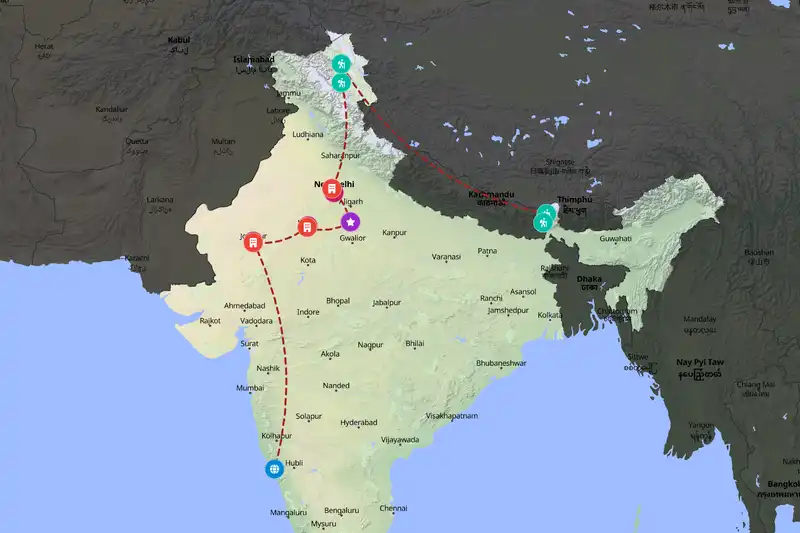
Three to four weeks is ideal for a first backpacking trip to India, and two weeks is the minimum for doing one region well. Distances are big, and overnight journeys take time.
In 14 days you can cover
Delhi,
Agra and Rajasthan as far as
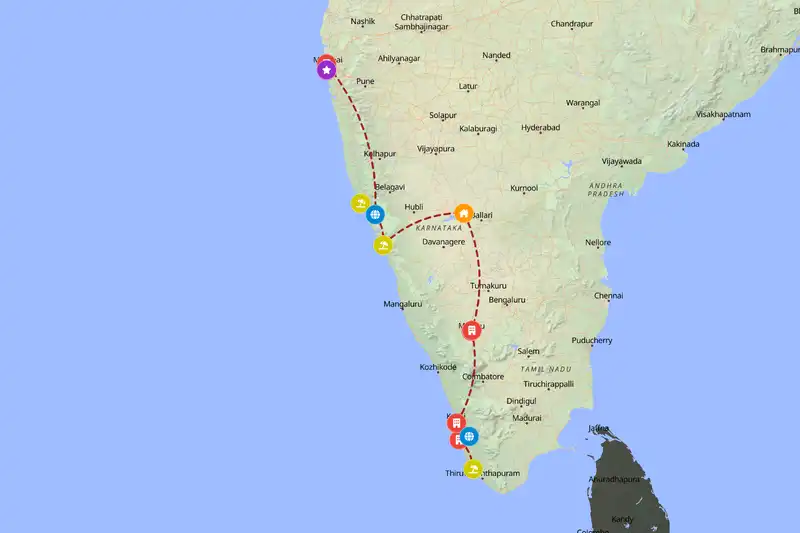
Udaipur. With 21 days, you can travel the south from
Mumbai through
Hampi to the
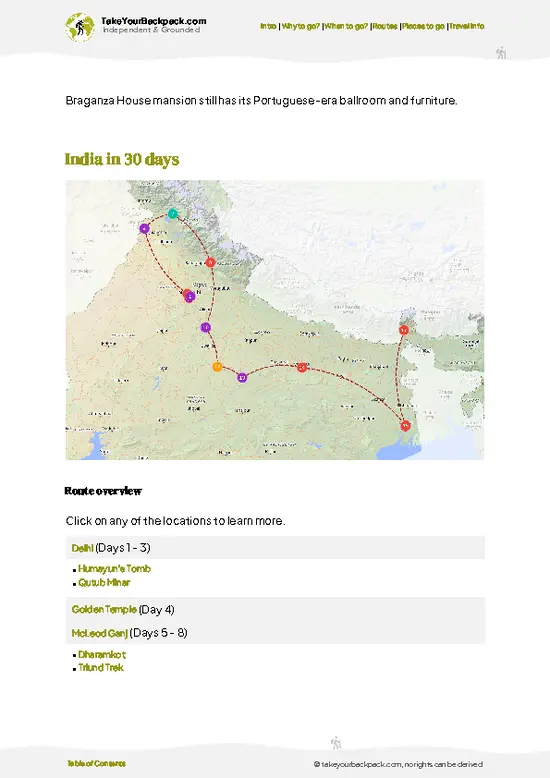
Kerala Backwaters. A month lets you go from
Amritsar to
Darjeeling via
Varanasi. For pacing, Delhi to Varanasi is 10 to 14 hours by overnight train and Mumbai to Goa 8 to 12 hours, so plan at least 2 to 3 nights per stop to make up for each long ride.
Yes, you can easily get around India without a car. Trains, intercity buses and cheap domestic flights connect every major backpacker stop.
An overnight sleeper-class berth for 10 to 15 hours costs about ₹300 to 800 (US$4 to 10), while AC three-tier runs ₹1,000 to 2,000 (US$12 to 24). The Gatimaan Express does
Delhi to
Agra in about 1 hour 40 minutes. In Himachal and Karnataka, state and private sleeper buses fill the gaps, and booked a few weeks out, domestic flights cost ₹3,000 to 7,000 (US$35 to 85). The one exception is Rajasthan, where a car with driver for ₹3,000 to 4,500 (US$35 to 55) a day makes sense for stops like Fatehpur Sikri.
India’s essential stops for a first trip are the
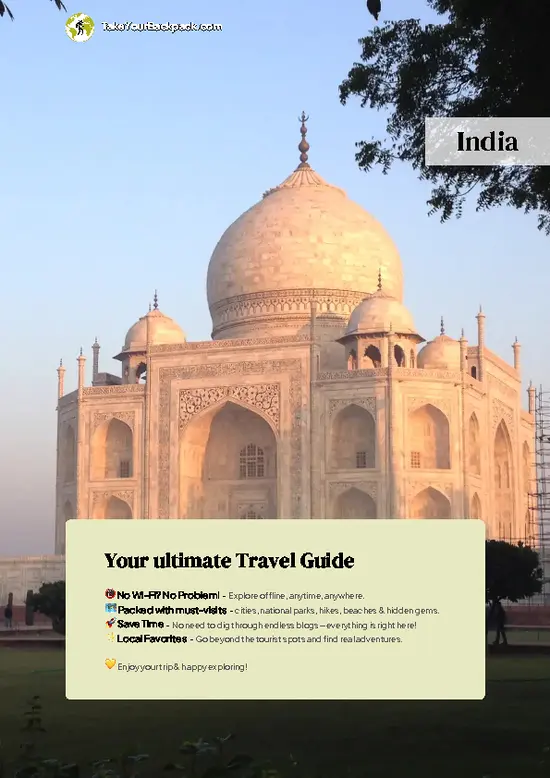
Taj Mahal, the ghats of
Varanasi, the forts of Rajasthan and the
Kerala Backwaters. Together they show the range of the country, from Mughal marble to tropical canals.
Foreigners pay about ₹1,100 (US$13) for the Taj Mahal, plus ₹200 for the inner mausoleum. Spend at least 3 nights in Varanasi. In Rajasthan,
Amer Fort,
Mehrangarh Fort and
Jaisalmer Fort are 5 to 6 hours apart.
Hampi deserves 3 days for the ruins and boulders, and the
Golden Temple in Amritsar, 6 hours from Delhi by train, feeds visitors for free. Add
McLeod Ganj or
Rishikesh for the Himalayan foothills.
If you’re short on time in India, skip the big-city monuments that duplicate better sights and the places that need long detours. Your days are better spent on fewer stops with more depth.
In Delhi, the
Lotus Temple and
Akshardham Temple can wait if you’re heading to Agra and Varanasi.
Juhu Beach in Mumbai is crowded and not good for swimming. Choose
McLeod Ganj over
Shimla if you only have time for one hill town. The
Statue of Unity is a long trip from Vadodara for a single sight. Remote treks like the
Chadar Trek need 8 to 9 days plus acclimatization, so leave them for a dedicated trip.
Yes, our itinerary-planner does exactly that. Set your trip length in days, give your interests and travel style, optionally give start- and end location and/or some mandatory stops you would like to include and the itinerary planner creates your personalized routes for India in seconds. Try it out!
Try the itinerary plannerv2.webp)


 Best Backpacking