×

Morocco🇲🇦 | best beachesTop-Rated 7 beaches in Morocco

Morocco has two coastlines that behave like different countries. The Atlantic side (Essaouira, Taghazout, Dakhla, Sidi Ifni) is windy, surf-driven and cool in the water, with long open sand and a laid-back hostel scene. The Mediterranean side (Martil, Saidia, the Rif coast near Chefchaouen) has warm, calm water, but summer brings packed Moroccan families and inflated prices. Resort-style stretches near Agadir are easy and cheap, yet add little character. For backpacking and independent travel, the Atlantic south wins on value, buses and atmosphere. Skip the big city beaches of Casablanca and Rabat for swimming.

By Johan Kruseman 🇳🇱 | Updated October 23, 2026
Explore the best attractions in Morocco

Why go?Why These beach Stand Out

Morocco is a country with beaches, not a beach country, and that distinction should shape your plan. The coast runs for roughly 3,500 kilometers across two seas, but the Atlantic dominates. The cold Canary Current keeps water at about 16 to 20°C even in summer, so swimming is refreshing rather than tropical. The same current feeds constant trade winds that make the country one of Africa’s best for surfing, kitesurfing and windsurfing, and they also make sunbathing on many beaches a matter of windbreaks and sweaters.

Culture matters too. Morocco is a Muslim country, and most locals swim in shorts and T-shirts or full clothing. Tourist-heavy beaches tolerate bikinis, but quieter local stretches do not, and topless sunbathing is not accepted anywhere. Public beaches have little infrastructure … read more 👉
Morocco is a country with beaches, not a beach country, and that distinction should shape your plan. The coast runs for roughly 3,500 kilometers across two seas, but the Atlantic dominates. The cold Canary Current keeps water at about 16 to 20°C even in summer, so swimming is refreshing rather than tropical. The same current feeds constant trade winds that make the country one of Africa’s best for surfing, kitesurfing and windsurfing, and they also make sunbathing on many beaches a matter of windbreaks and sweaters.

Culture matters too. Morocco is a Muslim country, and most locals swim in shorts and T-shirts or full clothing. Tourist-heavy beaches tolerate bikinis, but quieter local stretches do not, and topless sunbathing is not accepted anywhere. Public beaches have little infrastructure outside resort towns: few bins, patchy showers, and rental umbrellas run by informal operators.

On the plus side, access is cheap. Coastal towns connect by CTM and Supratours buses, accommodation is inexpensive, and most beaches are free. Choose Morocco for surf, wind sports, fresh seafood and a coast combined with real towns. Choose elsewhere for turquoise lagoons and warm, glassy water.
How the List Was Created
The list of best beaches in Morocco is created based on beauty, vibe, water quality, activities, and surrounding scenery. If you feel a beach is missing in this list, please let us know.

When to go?Timing Your Visit for the Best Experience

Best months for the beach: The best months for beaches in Morocco are June to September on the Mediterranean and May to October on the Atlantic, when air temperatures reach 25 to 32°C and rain is almost absent. Atlantic water stays cold, around 17 to 21°C, and the southern coast near Agadir and Dakhla is warmer and calmer than the north.
Shoulder seasons: April to May and October to early November are the smart picks for backpackers. Days of 22 to 27°C suit walking, surfing and sunbathing, rooms are 20 to 40 percent cheaper than in summer, and the beaches are mostly empty. Surf quality is best from October to March on the Atlantic, with bigger swells, though wetsuits are necessary.
Summer peak and winter: July and August are the crowded months on the northern coasts, especially Martil, Saidia … read more 👉
Best months for the beach: The best months for beaches in Morocco are June to September on the Mediterranean and May to October on the Atlantic, when air temperatures reach 25 to 32°C and rain is almost absent. Atlantic water stays cold, around 17 to 21°C, and the southern coast near Agadir and Dakhla is warmer and calmer than the north.
Shoulder seasons: April to May and October to early November are the smart picks for backpackers. Days of 22 to 27°C suit walking, surfing and sunbathing, rooms are 20 to 40 percent cheaper than in summer, and the beaches are mostly empty. Surf quality is best from October to March on the Atlantic, with bigger swells, though wetsuits are necessary.
Summer peak and winter: July and August are the crowded months on the northern coasts, especially Martil, Saidia and the Rif, where Moroccan families and returning diaspora fill every room and prices can double. Book ahead or avoid them. Atlantic towns like Essaouira can be windy and overcast in summer, with fog and highs of 24 to 26°C, so do not expect Mediterranean heat there.
Winter: December to February brings 15 to 20°C on the coast, with rain mostly from November to March (Tangier and the north see the most). Winter works for surf and quiet towns, not for swimming, except in the far south, where days can still hit 22 to 25°C.

beach hoppingTips for Visiting Multiple Destinations

How long you need: A trip combining several beaches in Morocco needs 10 to 14 days, and 7 days is the minimum if you stay on one coast. Trying to cover both seas plus the desert in under a week means spending most of it on buses.
Grouping and direction: The Atlantic coast clusters naturally from north to south: Casablanca or Marrakech as the entry point, then Essaouira, then Agadir and Taghazout, and on toward Sidi Ifni. Travel south, because buses, hostels and surf conditions are easier as you go, and Agadir’s airport is a convenient exit. Treat the Mediterranean as a separate trip, linked to Tangier, Tetouan and Chefchaouen, and do not join it to the Atlantic south in one go.
Time and transfers: Plan 2 to 4 nights per stop. One night rarely justifies the packing. Typical bus times are Marrakech … read more 👉
How long you need: A trip combining several beaches in Morocco needs 10 to 14 days, and 7 days is the minimum if you stay on one coast. Trying to cover both seas plus the desert in under a week means spending most of it on buses.
Grouping and direction: The Atlantic coast clusters naturally from north to south: Casablanca or Marrakech as the entry point, then Essaouira, then Agadir and Taghazout, and on toward Sidi Ifni. Travel south, because buses, hostels and surf conditions are easier as you go, and Agadir’s airport is a convenient exit. Treat the Mediterranean as a separate trip, linked to Tangier, Tetouan and Chefchaouen, and do not join it to the Atlantic south in one go.
Time and transfers: Plan 2 to 4 nights per stop. One night rarely justifies the packing. Typical bus times are Marrakech to Essaouira 3 to 3.5 hours, Essaouira to Agadir 3 to 4 hours, Agadir to Sidi Ifni about 3 hours, and Casablanca to Tangier roughly 4 hours by train. Dakhla is a 22 to 24 hour journey from Agadir, so fly if you want it.
Planning mistakes: The common errors are underestimating distances, building in midday transfers during summer heat, and booking Dakhla into a short trip. Pick one coastal stretch and fly to the far south instead.

The ListTop beaches of Morocco

1 Essaouira Beach

Kitesurf bay, Mogador island views, port fish stalls, low-tide walk to Diabat

Watch colored kites over a wide windy bay, then follow the hard low-tide sand south toward Diabat before eating grilled sardines at the port.

morocco-beach-essaouira-beach
© Google |

2 Plage de El Argoub

Flat lagoon kitesurfing, afternoon wind, flamingo flats, white dune sandbank

Ride steady afternoon wind across knee-deep lagoon water, then cross by boat to a pale sandbank where flamingos feed on the tidal flats.

western-sahara-beach-plage-de-el-argoub
© Google |

3 Legzira Beach

Red sandstone arches, striped cliffs, tidal flats, overnight camping

Time your visit to low tide to walk through the rust-red arches, then stay overnight on the cliffs for charcoal fish and a quiet, star-filled night.

4 Taghazout Beach

Beginner surf break, Anchor Point, fishing harbor, rooftop yoga

Book a morning lesson on the village break, watch confident surfers at Anchor Point, then trade wave reports over harbor sardines and rooftop sunsets.

morocco-beach-taghazout-beach
© Google |

5 Asilah Beach

Portuguese ramparts, medina murals, harbor sardines, southern sand

Walk from the whitewashed medina walls onto a flat town beach, then head south for cleaner, emptier sand and grilled fish by the boats.

6 Saidia Beach

Calm gentle shoreline, marina evenings, Moulouya wetland, old-town grills

Swim in sheltered water off a fine-sand strip, stroll the marina at dusk, and find cheaper grilled fish in the streets behind the resort.

morocco-beach-saidia-beach
© Google |

7 Plage de Foum El Oued

River-mouth lagoon, flamingos, far-south promenade, grilled fish stalls

Scan the Saquia el Hamra lagoon at the river mouth for waders and flamingos, then join families on the seafront walk at dusk.

Loading the map 🌍

Expert viewPro Tips for Exploring the Best

How many beaches to visit: Aim for three to five beach stops in a trip of 10 to 14 days. That gives each place 2 to 4 nights, enough to adjust to the wind, rent a board or just walk the shoreline, without spending your holiday in buses. More than five turns the trip into a transit exercise, and Moroccan beaches reward staying put more than ticking off.
Choosing the kind that suits you: For surfers and kiters, prioritize the Atlantic south, where the wind and swell are reliable and surf camps and schools are plentiful. For budget travelers who want a social scene, pick a surf village with hostels and communal rooftop dinners. For swimmers who want warmer, calmer water, go to the Mediterranean coast, but only outside July and August. For culture-first travelers, choose a walled port town and … read more 👉
How many beaches to visit: Aim for three to five beach stops in a trip of 10 to 14 days. That gives each place 2 to 4 nights, enough to adjust to the wind, rent a board or just walk the shoreline, without spending your holiday in buses. More than five turns the trip into a transit exercise, and Moroccan beaches reward staying put more than ticking off.
Choosing the kind that suits you: For surfers and kiters, prioritize the Atlantic south, where the wind and swell are reliable and surf camps and schools are plentiful. For budget travelers who want a social scene, pick a surf village with hostels and communal rooftop dinners. For swimmers who want warmer, calmer water, go to the Mediterranean coast, but only outside July and August. For culture-first travelers, choose a walled port town and treat the beach as a morning walk and a late-afternoon sunbathe. Skip the big city beaches near Casablanca for swimming. They are mostly private clubs, crowded, and not particularly clean.
What it costs: Budget US$25 to 45 a day (roughly 250 to 450 MAD) in Atlantic surf villages: dorm beds 80 to 150 MAD, a seafood meal or tagine 50 to 100 MAD, and local buses 50 to 150 MAD per leg. Most beaches are free. Expect to pay 20 to 50 MAD for a sunbed and umbrella at developed stretches, 250 to 400 MAD for a surf lesson with a board and wetsuit, and 100 to 200 MAD for board rental. Camel rides and quad tours are heavily marked up, so bargain or skip them. In July and August on the Mediterranean, lodging can double, pushing a day to US$50 to 80.
Safety and etiquette: The biggest physical risk is the sea. Atlantic beaches have strong rip currents, cold water and big shore-break, and lifeguards are rare outside resorts and busy city strands, so check conditions locally and avoid swimming alone. Sun and wind burn quickly. Many beaches are also used for informal parking, so lock valuables and keep nothing visible in a car.

Culturally, dress modestly when you leave the sand. Swimwear is fine on tourist beaches, but cover up in town and on quieter local beaches, where women often swim clothed and staring is common. Topless sunbathing and public drinking are not accepted. Ask before photographing locals, especially women and families. Hawkers, horse and camel handlers, and henna sellers can be persistent. A calm “la, shukran” with a smile is usually enough. Agree prices before any service starts, including parking attendants, who expect a few dirhams.

In Ramadan, beaches are quieter, and eating or drinking openly in daylight is discouraged away from tourist cafes. Go for the specifics that make Morocco worth it: wind-polished Atlantic sand, grilled sardines from harbor stalls for a few dollars, and a coast where a surf lesson and a medina walk fit into the same day.

✈️ The backpacker research shortcutMorocco Travel Guide

An offline-friendly backpacking guide with optimized travel routes, ranked highlights, transport advice, and the best areas to stay.
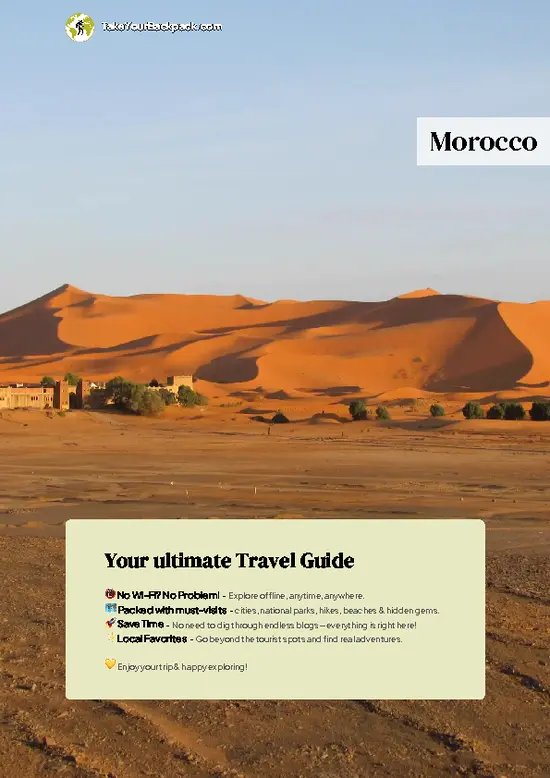
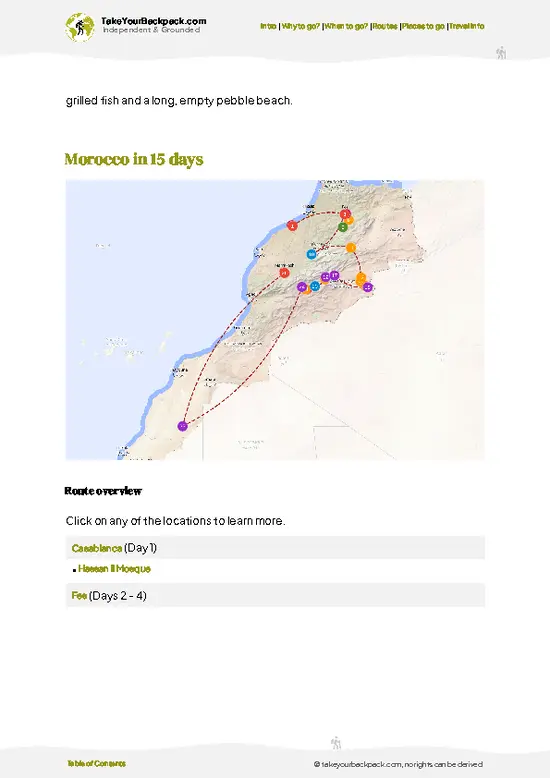
example page 0 from our offline Travel Guide for Morocco
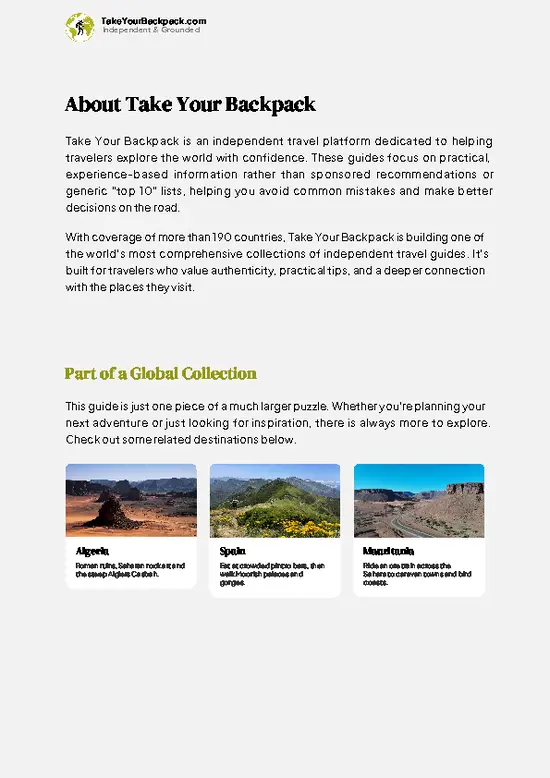
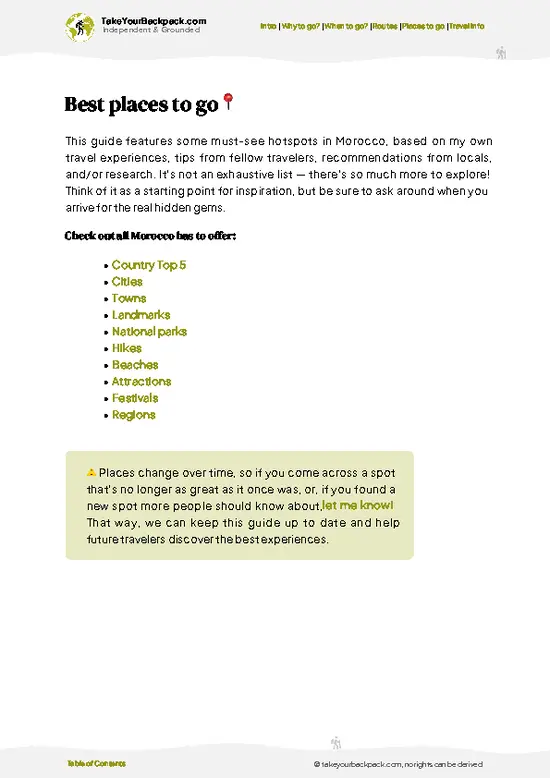
example page 1 from our offline Travel Guide for Morocco
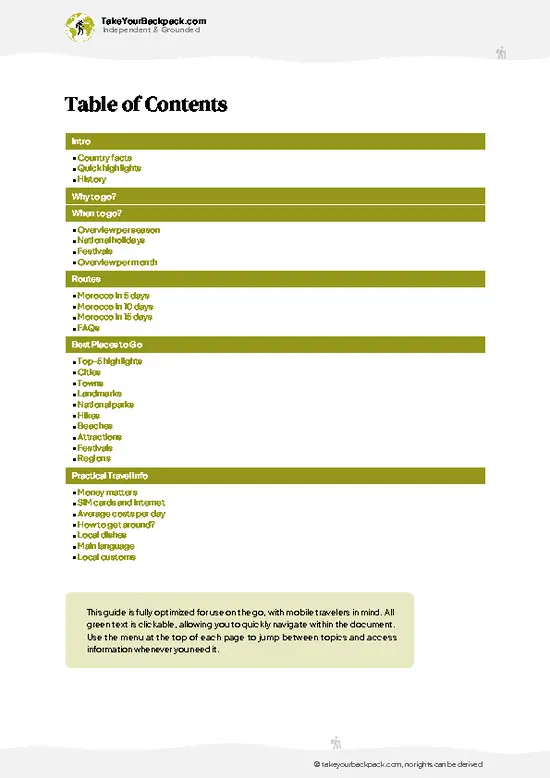
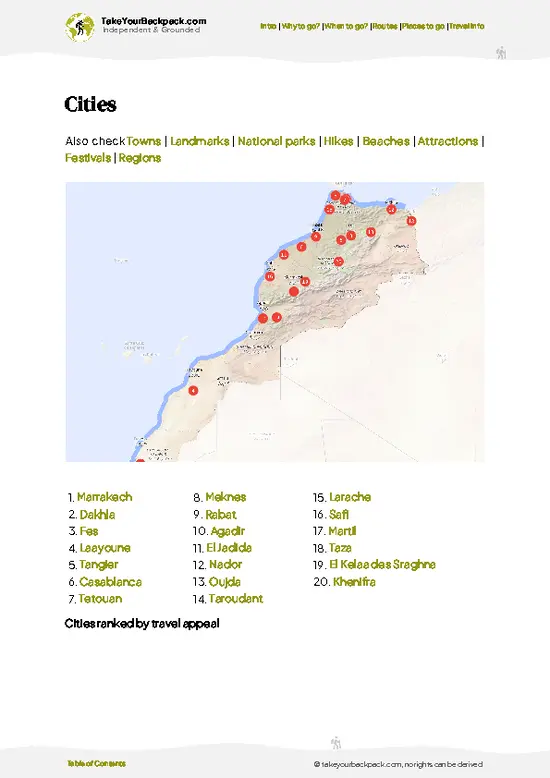
example page 2 from our offline Travel Guide for Morocco
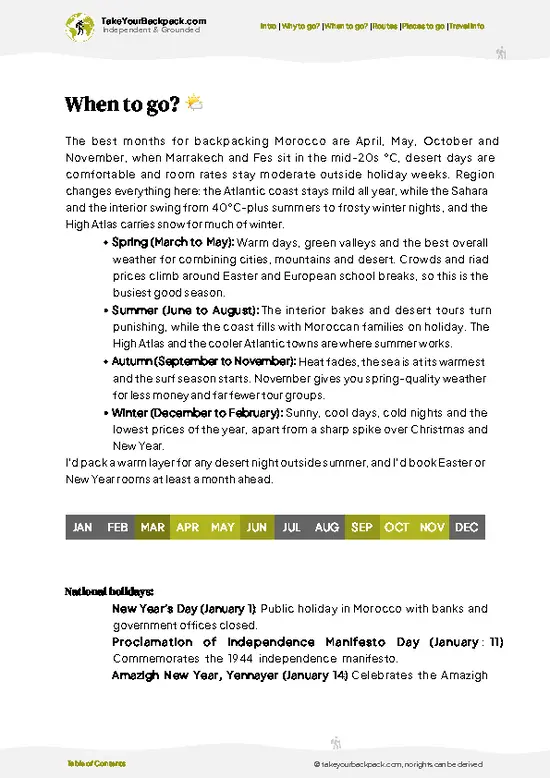
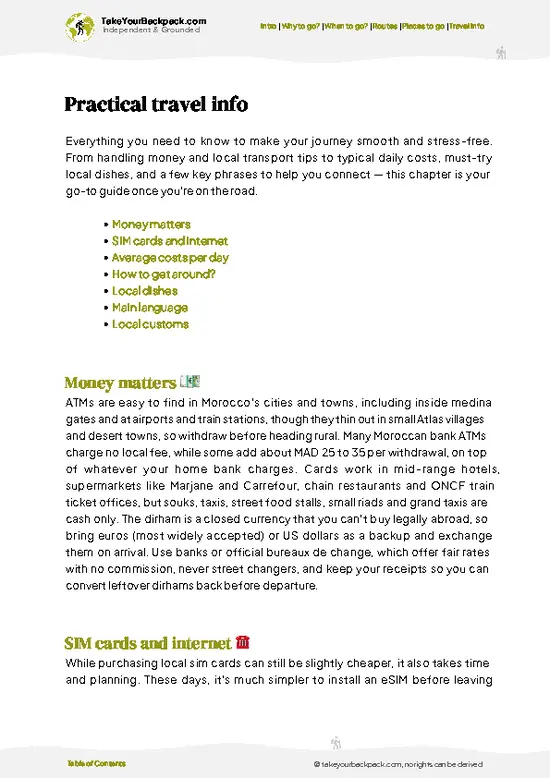
example page 3 from our offline Travel Guide for Morocco
example page 4 from our offline Travel Guide for Morocco
example page 5 from our offline Travel Guide for Morocco
example page 6 from our offline Travel Guide for Morocco
example page 7 from our offline Travel Guide for Morocco
The digital guide (424 pages) contains:
✅ 112 highlights, ranked by travel appeal
✅ Optimized 5, 10 & 15-day travel routes
✅ Cities, national parks, landmarks, beaches
✅ How to get around
✅ Offline-friendly for travel without Wi-Fi
👉 Click to see all 30+ guide features

📅 Plan smarter in minutes, not weeks
✅ Month by month travel advice
✅ Festivals & national holidays
✅ Budget expectations

🗺️ Go to the right places, skip the overrated ones
✅ Honest pros & cons of destinations
✅ Top hikes, parks & viewpoints
✅ Lesser-known places most travelers miss
✅ Clear “worth it vs skip it” guidance

🛏️ Travel smoothly without rookie mistakes
✅ Best areas to stay
✅ Transport systems explained simply
✅ Common scams & safety advice
✅ SIM cards, money & practical tips

🌍 Understand the country, not just visit it
✅ Culture & traditions
✅ 52 Essential phrases & customs
✅ Festivals worth planning around
✅ Traveler-friendly historical context
✅ Insights that make places more meaningful

📱 Built for real travel conditions
✅ Fully downloadable PDF
✅ Works completely offline
✅ Optimized for phone use
✅ Useful in remote areas & buses
✅ Everything in one place
Stop searching, start planning
Get instant access to your full guide. 30‑day money-back guarantee.
+ Add another guide for just

By proceeding you agree to our terms.
Sent to your inbox immediately after payment • 100% Secure Checkout
Best Backpacking Travel Advisor 2025 tourism awardBest Backpacking
Travel Advisor
2025
What others say about Take Your Backpack Guides:
⭐⭐⭐⭐⭐
Fantastic, amazing amount of information!
⭐⭐⭐⭐⭐
My goodness this is amazing, it's what I've been looking for hats off too you!
⭐⭐⭐⭐⭐
I think this is absolutely BRILLIANT
⭐⭐⭐⭐
Very complete and informative. It's still missing places, but I gotta to commend you
⭐⭐⭐⭐⭐
This is truly amazing, thank you, can't wait to explore it with my kids!
⭐⭐⭐⭐⭐
Awesome resource, thank you!
⭐⭐⭐⭐⭐
This is amazing! Can't wait to explore the ones I haven't seen
⭐⭐⭐⭐
I love this! Well done, great idea.
⭐⭐⭐⭐⭐
Thanks for taking the time to make this gem!
⭐⭐⭐⭐⭐
This might be the best website I've ever seen.
⭐⭐⭐⭐⭐
Congratulations, and thank you so much for your work; it's incredibly valuable.
⭐⭐⭐⭐
In all seriousness I think you did a great job pointing out the important spots
⭐⭐⭐⭐⭐
10/10 very good
⭐⭐⭐⭐⭐
As someone who's only just starting to visit regularly this is awesome, thank you.
⭐⭐⭐⭐
Thank you very much! I'm going to visit my dad, it's going to be very useful!
⭐⭐⭐⭐⭐
This is really cool! We'll be travelling for the first time and this definitely come in handy.
⭐⭐⭐⭐⭐
You are now our minister of culture, congratulations 👨‍💼
⭐⭐⭐⭐⭐
Just wanted to tell you that this is a pearl! Going to follow your recommendations.
⭐⭐⭐⭐⭐
This is so cool. I'll definitely be using the resource for my travels soon.
⭐⭐⭐⭐⭐
This is very impressive! Good work.
⭐⭐⭐⭐⭐
This is an amazing and informative site. Very well done!

🛏️ Where to stay?Where to Base Yourself

Morocco has plenty of hostels and budget guesthouses, most set in converted riads with dorms around a tiled courtyard and a rooftop terrace where breakfast is usually included. In Marrakech, the Medina near Jemaa el-Fnaa keeps you walking distance from the souks and food stalls but comes with motorbike noise, touts and confusing alleys after dark, while Gueliz is calmer and has most of the city’s bars, at the cost of a 20 to 30 minute walk to the old town. In Fes, staying inside Fes el-Bali puts the tanneries and medersas on your doorstep (the lanes go quiet and dim at night, so note your route), whereas the medinas of Chefchaouen and Essaouira are smaller, safer-feeling and easy to find your … read more 👉
Morocco has plenty of hostels and budget guesthouses, most set in converted riads with dorms around a tiled courtyard and a rooftop terrace where breakfast is usually included. In Marrakech, the Medina near Jemaa el-Fnaa keeps you walking distance from the souks and food stalls but comes with motorbike noise, touts and confusing alleys after dark, while Gueliz is calmer and has most of the city’s bars, at the cost of a 20 to 30 minute walk to the old town. In Fes, staying inside Fes el-Bali puts the tanneries and medersas on your doorstep (the lanes go quiet and dim at night, so note your route), whereas the medinas of Chefchaouen and Essaouira are smaller, safer-feeling and easy to find your way around, and Taghazout near Agadir is packed with surf hostels that suit a social crowd more than sightseers.

If you enjoy meeting fellow travelers, consider choosing hostels with high ratings for atmosphere. On the other hand, if you prefer having your own space, a hotel might be a better option.

MoroccoExpand Your Journey

👋 Meet the founderWho’s Behind Take Your Backpack?

Johan, backpacker and founder of TakeYourBackpackHi, I’m Johan (Netherlands 🇳🇱), the creator of TakeYourBackpack. Over the past 3 decades, I’ve backpacked through 90+ countries across six continents, gaining extensive experience with independent travel, long-term trips, and overland routes.

This site is built on a combination of firsthand travel experience and carefully curated insights from other backpackers. Many guides are based on places I’ve personally visited, while others bring together tips, observations, and practical advice shared by trusted travelers I’ve met along the way.

The goal is to provide realistic, experience-driven guidance — not generic itineraries — so you can explore destinations with better context, clearer expectations, and more confidence.