×

Norway🇳🇴 | best festivalsDiscover the 12 Best festivals Across Norway

Norway’s festivals run on long light and short seasons. In summer the sun barely drops, so open-air stages in Oslo, Bergen and Trondheim hum past midnight with the smell of grilled sausage, wet wool and fjord salt. Cities offer easy trains, hostels and big crowds. Small coastal and Arctic towns offer fewer people, ferries that run on their own schedule, and prices that sting, with a beer often costing US$10 to 14. For backpacking or independent travel, the north suits those who want quiet and space, while the south suits anyone who wants to roll off a train straight into a crowd. Pick by region first, then by taste.

By Johan Kruseman 🇳🇱 | Updated October 18, 2026
Explore the best regions in Norway

Why go?Why Travelers Love These Spots

Norway suits festivals because daylight and landscape shape everything. From May to August the light stretches so far that events happen outdoors on fjord shores, in old mining towns and on island harbors, and the air smells of cold water and pine. Strong public funding, a dense network of volunteers and a habit of friluftsliv, outdoor life, mean even small towns stage polished events with good sound and clean grounds. Rain jackets are part of the dress code, not an excuse to cancel.

The hard parts are just as concrete. Costs are among the highest in Europe: day tickets often run NOK 700 to 1,500 (about US$65 to 140), and alcohol is sold at high prices and mostly in licensed areas, so bringing your own drink is not an option. Distances are long, with mountains and fjords stretching travel … read more 👉
Norway suits festivals because daylight and landscape shape everything. From May to August the light stretches so far that events happen outdoors on fjord shores, in old mining towns and on island harbors, and the air smells of cold water and pine. Strong public funding, a dense network of volunteers and a habit of friluftsliv, outdoor life, mean even small towns stage polished events with good sound and clean grounds. Rain jackets are part of the dress code, not an excuse to cancel.

The hard parts are just as concrete. Costs are among the highest in Europe: day tickets often run NOK 700 to 1,500 (about US$65 to 140), and alcohol is sold at high prices and mostly in licensed areas, so bringing your own drink is not an option. Distances are long, with mountains and fjords stretching travel between regions to many hours, and ferries and regional buses thin out sharply outside summer. Accommodation near popular events books out months ahead, and hostels fill first. Many events run on tight local calendars, so dates matter more than in countries with year-round programming. Pack layers, a waterproof shell and a flexible budget, and Norway pays you back with clean air, orderly crowds and settings no other country can copy.
How the List Was Created
The list of best festivals in Norway is created based on energy, traditions, crowd experience, activities, and overall excitement. If you feel a festival is missing in this list, please let us know.

When to go?When to Plan Your Trip

Best months and light: The best months for festivals in Norway are June to August, when daytime highs of 15 to 25°C and near-constant daylight let outdoor stages run late. In the far north above the Arctic Circle, the midnight sun lasts roughly from late May to late July, so a 1 a.m. set happens in flat gold light.
Shoulder seasons: May and September are cooler, at 5 to 15°C, with fewer visitors and accommodation often 15 to 30 percent cheaper than in July. May brings long evenings but still-cold nights; September brings crisp air, early dusk and a thinner program. Western Norway, around Bergen, is the wettest region, with rain on 200 or more days a year and heavy showers even in summer. Eastern Norway around Oslo is much drier, and the sheltered interior valleys are drier still.
Winter and … read more 👉
Best months and light: The best months for festivals in Norway are June to August, when daytime highs of 15 to 25°C and near-constant daylight let outdoor stages run late. In the far north above the Arctic Circle, the midnight sun lasts roughly from late May to late July, so a 1 a.m. set happens in flat gold light.
Shoulder seasons: May and September are cooler, at 5 to 15°C, with fewer visitors and accommodation often 15 to 30 percent cheaper than in July. May brings long evenings but still-cold nights; September brings crisp air, early dusk and a thinner program. Western Norway, around Bergen, is the wettest region, with rain on 200 or more days a year and heavy showers even in summer. Eastern Norway around Oslo is much drier, and the sheltered interior valleys are drier still.
Winter and peak pressure: From November to March, temperatures in Oslo hover around -10 to 2°C, and in the Arctic north can drop below -15°C, with only a few hours of weak daylight in December and January and none in the polar night. Indoor and snow-based events do run, but ferries and buses thin, and some mountain roads close. Late June to mid-July is peak: it overlaps the Norwegian summer holiday, so beds in popular towns book out months ahead and prices climb. Book early, or choose the shoulder weeks.

festival hoppingSuggested Travel Strategies

How long and in which direction: A trip linking several festivals in Norway needs 10 to 16 days, because the distances are large and the connections are slow. Group by region: Oslo and the southeast sit within easy reach of each other by train, while Bergen and the western fjords form a separate cluster. Trondheim and the north form a third. Travel south to north as the summer builds, so you finish where the midnight sun keeps the evenings open, and the cooler shoulder weeks fall at the start.
Time per stop and transfers: Allow 2 to 4 days per stop to cover the event, recover and see the surrounding country. Oslo to Bergen by train takes about 6.5 to 7 hours over the Hardangervidda plateau, and Oslo to Trondheim about 6.5 to 7 hours. Flights to Tromsø or Bodø from Oslo take roughly 1.5 to 2 … read more 👉
How long and in which direction: A trip linking several festivals in Norway needs 10 to 16 days, because the distances are large and the connections are slow. Group by region: Oslo and the southeast sit within easy reach of each other by train, while Bergen and the western fjords form a separate cluster. Trondheim and the north form a third. Travel south to north as the summer builds, so you finish where the midnight sun keeps the evenings open, and the cooler shoulder weeks fall at the start.
Time per stop and transfers: Allow 2 to 4 days per stop to cover the event, recover and see the surrounding country. Oslo to Bergen by train takes about 6.5 to 7 hours over the Hardangervidda plateau, and Oslo to Trondheim about 6.5 to 7 hours. Flights to Tromsø or Bodø from Oslo take roughly 1.5 to 2 hours. Coastal ferries and regional buses fill the gaps, and they run less often than city transit.
Common mistakes: The usual error is cramming too many dates into a few days and treating Norway like a small country. It is long, and a trip that looks short on a map can take 10 hours by road. Leave a buffer day after each long transfer, book ferries and trains early for summer, and keep a rain layer in your daypack for the wet west.

The ListTop festivals of Norway

1 Bergen International Festival

Historic venues, performing arts, fjord city

Watch global artists present music, dance, and theater in Bergen’s concert halls and open-air spaces each spring.

2 Øya Festival

Urban park, eco focus, indie and electronic acts

Join crowds in Oslo’s city center for a festival that blends sustainability with a diverse lineup and green surroundings.

3 Tromsø International Film Festival

Arctic screenings, open-air cinema, global films

Watch films from around the world in a northern city, with some screenings held outdoors despite the deep winter cold.

4 Oslo Jazz Festival

Citywide stages, jazz legends, intimate clubs

Catch live jazz in Oslo’s concert halls and bars, with a program spanning classic styles and contemporary improvisation.

5 Gladmat Festival

Harborfront, Norwegian seafood, food stalls

Sample regional dishes and fresh catches at Scandinavia’s largest food festival, set along Stavanger’s bustling waterfront.

6 Riddu Riđđu Festival

Indigenous focus, coastal village, Arctic summer

Engage with Sámi and circumpolar cultures through music, workshops, and art in a small community by the sea.

7 Rørosmartnan

Mountain town, horse-drawn arrivals, traditional market

Browse crafts and local goods in a snowy mining town, where centuries-old customs shape the annual winter market.

8 Inferno Metal Festival

Extreme metal, Oslo venues, international fans

Immerse yourself in Norway’s metal scene with intense performances and a global crowd in the heart of the capital.

9 Trondheim Chamber Music Festival

Historic churches, chamber ensembles, student performers

Hear classical music in Trondheim’s old stone buildings, where established musicians and young talent share the stage.

10 Nordlysfestivalen

Winter concerts, northern lights, classical and jazz

Attend performances in Tromsø during polar nights, where music and the aurora borealis create a unique winter atmosphere.

11 Varangerfestivalen

Arctic coast, Sámi influences, jazz and world music

Experience concerts in remote northern Norway, where indigenous culture and international artists meet in a stark, coastal landscape.

12 Midnattsrocken

Open-air, midnight sun, lakeside stage

Listen to rock and pop acts under a sunlit night sky, surrounded by wilderness and water in Norway’s far north.

Loading the map 🌍

Expert viewExpert Commentary on festivals

How many to visit: I advise two or three festivals in one trip, no more. Norway is expensive and spread out, so each additional event adds a long transfer and several nights of pricey beds. Two events give you contrast, say one urban and one in a small town, while leaving days for hiking and fjord time, which are the real reason many travelers come. Four or more turns a trip into a string of ticket queues and travel days.
Which kind to prioritize: If you travel on a tight budget, choose free or low-cost city events and street programs, which cost far less than ticketed weekend festivals. Music lovers should spend on one big ticketed event, where a multi-day pass runs NOK 2,000 to 3,500 (about US$185 to 325) and a day ticket NOK 700 to 1,500 (US$65 to 140). Those after culture and place should … read more 👉
How many to visit: I advise two or three festivals in one trip, no more. Norway is expensive and spread out, so each additional event adds a long transfer and several nights of pricey beds. Two events give you contrast, say one urban and one in a small town, while leaving days for hiking and fjord time, which are the real reason many travelers come. Four or more turns a trip into a string of ticket queues and travel days.
Which kind to prioritize: If you travel on a tight budget, choose free or low-cost city events and street programs, which cost far less than ticketed weekend festivals. Music lovers should spend on one big ticketed event, where a multi-day pass runs NOK 2,000 to 3,500 (about US$185 to 325) and a day ticket NOK 700 to 1,500 (US$65 to 140). Those after culture and place should pick a small regional event in a coastal or mountain town: crowds are smaller, the atmosphere is local, and you meet Norwegians rather than other tourists, though beds are scarce and transport is slower. For comfort, pick city events; for atmosphere, pick small towns; for savings, go midweek and off-peak.
What it costs: Plan US$110 to 180 a day on a lean festival trip: a hostel dorm bed at NOK 350 to 700 (US$32 to 65), self-catered food from supermarkets at NOK 150 to 250 (US$14 to 23) a day, and a festival beer at NOK 90 to 130 (US$8 to 12). A single visit adds entry of 0 to 1,500 NOK (US$0 to 140), local transport of NOK 100 to 400 (US$9 to 37), and a possible camping fee of NOK 150 to 400 (US$14 to 37). Carry your own food and a refillable bottle, since tap water is excellent, and the cost drops fast.
Safety and etiquette: Norway is very safe, and festival crowds are calm, orderly and polite. The real risks are weather and cold: even in July, nights near the fjords and mountains can fall to 5 to 10°C, and rain soaks a cotton hoodie within minutes. Bring a waterproof jacket, warm layers and sturdy shoes for mud. Alcohol is sold only in licensed zones and ID is checked, often up to age 30, so carry your passport or a copy. Drinking in public outside these zones can bring a fine. Respect quiet hours at campsites, queue without pushing, take your litter with you, and keep distance from wildlife. Leave tents only in designated areas, and book beds before you commit to dates.

✈️ The backpacker research shortcutNorway Travel Guide

An offline-friendly backpacking guide with optimized travel routes, ranked highlights, transport advice, and the best areas to stay.
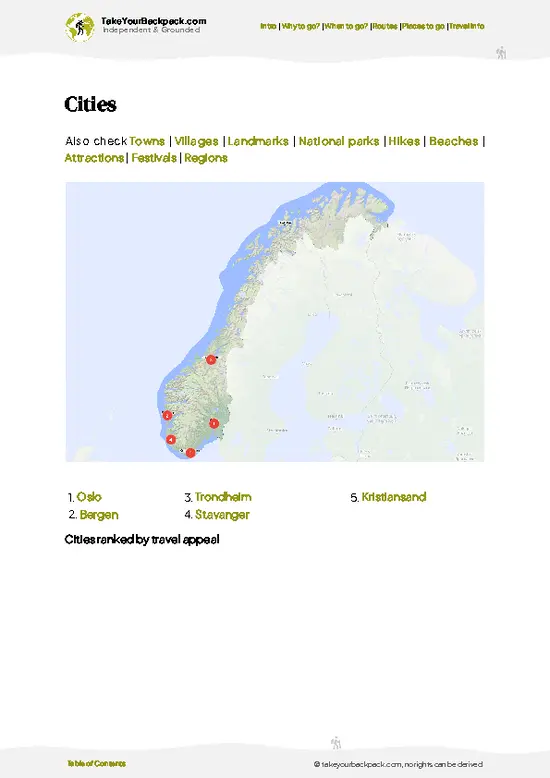
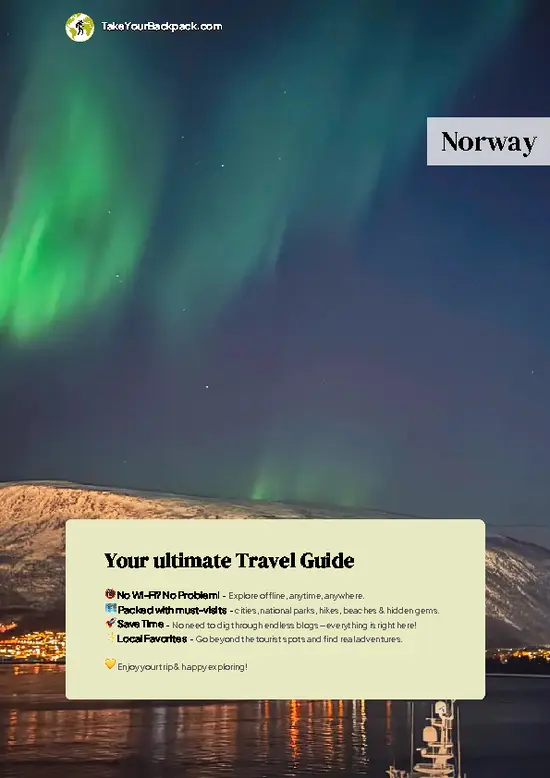
example page 0 from our offline Travel Guide for Norway
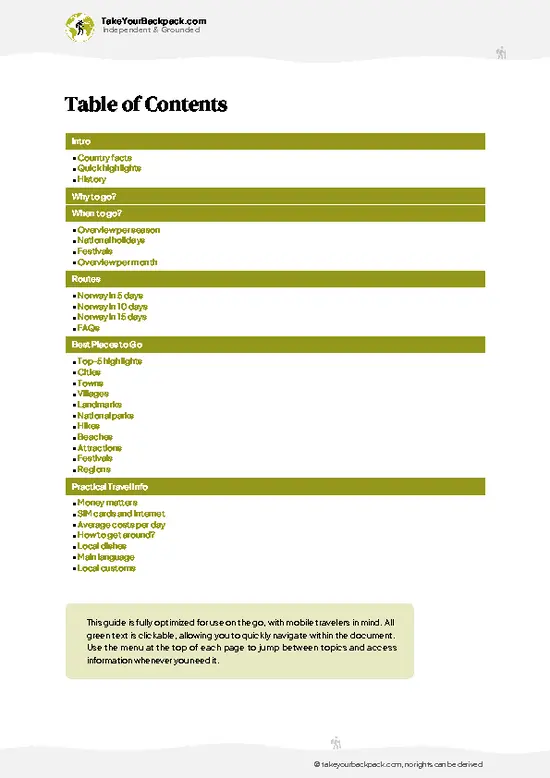
example page 1 from our offline Travel Guide for Norway
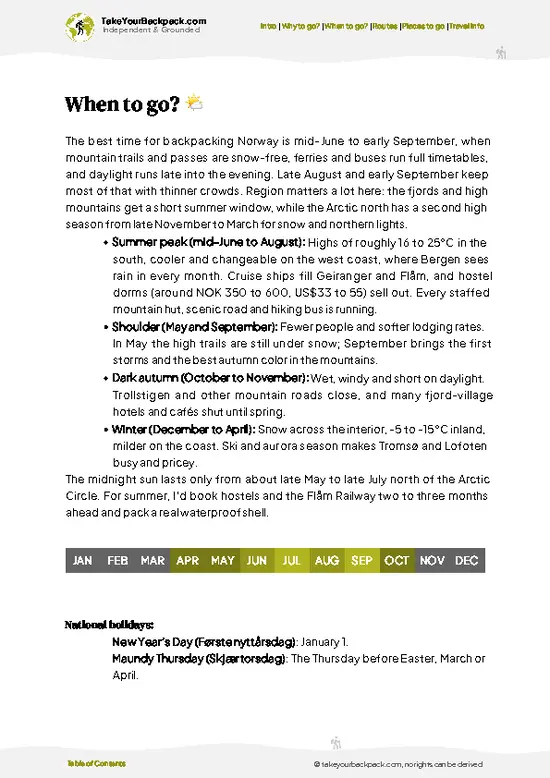
example page 2 from our offline Travel Guide for Norway
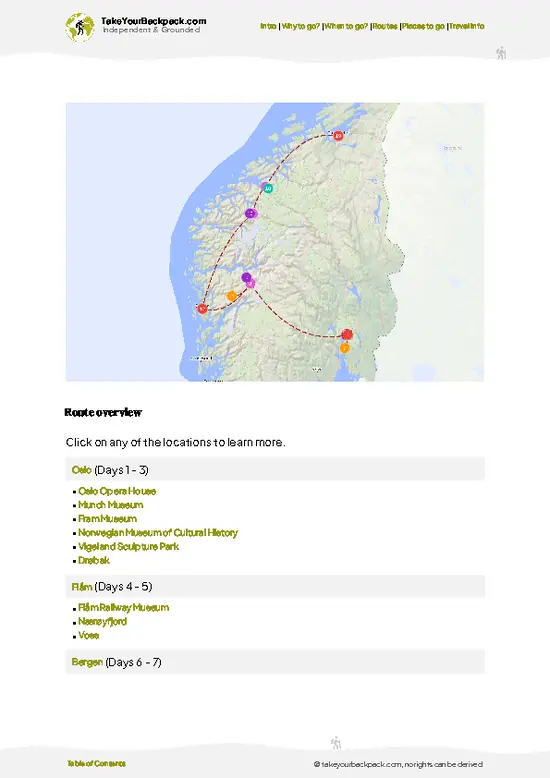
example page 3 from our offline Travel Guide for Norway
example page 4 from our offline Travel Guide for Norway
example page 5 from our offline Travel Guide for Norway
example page 6 from our offline Travel Guide for Norway
example page 7 from our offline Travel Guide for Norway
The digital guide (377 pages) contains:
✅ 101 highlights, ranked by travel appeal
✅ Optimized 5, 10 & 15-day travel routes
✅ Cities, national parks, landmarks, beaches
✅ How to get around
✅ Offline-friendly for travel without Wi-Fi
👉 Click to see all 30+ guide features

📅 Plan smarter in minutes, not weeks
✅ Month by month travel advice
✅ Festivals & national holidays
✅ Budget expectations

🗺️ Go to the right places, skip the overrated ones
✅ Honest pros & cons of destinations
✅ Top hikes, parks & viewpoints
✅ Lesser-known places most travelers miss
✅ Clear “worth it vs skip it” guidance

🛏️ Travel smoothly without rookie mistakes
✅ Best areas to stay
✅ Transport systems explained simply
✅ Common scams & safety advice
✅ SIM cards, money & practical tips

🌍 Understand the country, not just visit it
✅ Culture & traditions
✅ 52 Essential phrases & customs
✅ Festivals worth planning around
✅ Traveler-friendly historical context
✅ Insights that make places more meaningful

📱 Built for real travel conditions
✅ Fully downloadable PDF
✅ Works completely offline
✅ Optimized for phone use
✅ Useful in remote areas & buses
✅ Everything in one place
Stop searching, start planning
Get instant access to your full guide. 30‑day money-back guarantee.
+ Add another guide for just

By proceeding you agree to our terms.
Sent to your inbox immediately after payment • 100% Secure Checkout
Best Backpacking Travel Advisor 2025 tourism awardBest Backpacking
Travel Advisor
2025
What others say about Take Your Backpack Guides:
⭐⭐⭐⭐⭐
Fantastic, amazing amount of information!
⭐⭐⭐⭐⭐
My goodness this is amazing, it's what I've been looking for hats off too you!
⭐⭐⭐⭐⭐
I think this is absolutely BRILLIANT
⭐⭐⭐⭐
Very complete and informative. It's still missing places, but I gotta to commend you
⭐⭐⭐⭐⭐
This is truly amazing, thank you, can't wait to explore it with my kids!
⭐⭐⭐⭐⭐
Awesome resource, thank you!
⭐⭐⭐⭐⭐
This is amazing! Can't wait to explore the ones I haven't seen
⭐⭐⭐⭐
I love this! Well done, great idea.
⭐⭐⭐⭐⭐
Thanks for taking the time to make this gem!
⭐⭐⭐⭐⭐
This might be the best website I've ever seen.
⭐⭐⭐⭐⭐
Congratulations, and thank you so much for your work; it's incredibly valuable.
⭐⭐⭐⭐
In all seriousness I think you did a great job pointing out the important spots
⭐⭐⭐⭐⭐
10/10 very good
⭐⭐⭐⭐⭐
As someone who's only just starting to visit regularly this is awesome, thank you.
⭐⭐⭐⭐
Thank you very much! I'm going to visit my dad, it's going to be very useful!
⭐⭐⭐⭐⭐
This is really cool! We'll be travelling for the first time and this definitely come in handy.
⭐⭐⭐⭐⭐
You are now our minister of culture, congratulations 👨‍💼
⭐⭐⭐⭐⭐
Just wanted to tell you that this is a pearl! Going to follow your recommendations.
⭐⭐⭐⭐⭐
This is so cool. I'll definitely be using the resource for my travels soon.
⭐⭐⭐⭐⭐
This is very impressive! Good work.
⭐⭐⭐⭐⭐
This is an amazing and informative site. Very well done!

🛏️ Where to stay?Top Places to Consider Staying

Norway has hostels and budget beds in every major city, with dorms typically running NOK 350 to 600 (about US$33 to 56) a night, plus cheap cabins at campsites along the main touring routes. In Oslo, Sentrum around the central station puts you closest to the waterfront, museums and transport links but gets rowdy and a little rough late at night, while Grünerløkka has the best bars and cafés and a younger crowd, with a 15 to 20 minute walk to the center. In Bergen, the area around Bryggen and the fish market keeps every sight within walking distance but books out early in summer, and in Tromsø the compact city center is small and safe, with most budget beds a short walk from the harbor and the … read more 👉
Norway has hostels and budget beds in every major city, with dorms typically running NOK 350 to 600 (about US$33 to 56) a night, plus cheap cabins at campsites along the main touring routes. In Oslo, Sentrum around the central station puts you closest to the waterfront, museums and transport links but gets rowdy and a little rough late at night, while Grünerløkka has the best bars and cafés and a younger crowd, with a 15 to 20 minute walk to the center. In Bergen, the area around Bryggen and the fish market keeps every sight within walking distance but books out early in summer, and in Tromsø the compact city center is small and safe, with most budget beds a short walk from the harbor and the late-opening pubs.

If you enjoy meeting fellow travelers, consider choosing hostels with high ratings for atmosphere. On the other hand, if you prefer having your own space, a hotel might be a better option.

NorwayMore Places Across Norway

👋 Meet the founderWho’s Behind Take Your Backpack?

Johan, backpacker and founder of TakeYourBackpackHi, I’m Johan (Netherlands 🇳🇱), the creator of TakeYourBackpack. Over the past 3 decades, I’ve backpacked through 90+ countries across six continents, gaining extensive experience with independent travel, long-term trips, and overland routes.

This site is built on a combination of firsthand travel experience and carefully curated insights from other backpackers. Many guides are based on places I’ve personally visited, while others bring together tips, observations, and practical advice shared by trusted travelers I’ve met along the way.

The goal is to provide realistic, experience-driven guidance — not generic itineraries — so you can explore destinations with better context, clearer expectations, and more confidence.