×

Norway🇳🇴 | best citiesDiscover the 5 Best cities Across Norway

Norway’s cities are small by world standards, and that shapes everything. Most sit on a fjord or harbor with mountains close enough to touch, so you can smell diesel and fish on the quay and spruce on the hillside within the same hour. The south and west bring wet cobbles, wooden houses and ferry horns. The far north swings between polar night and midnight sun, with prices that sting everywhere (a beer often runs NOK 90 to 120, about US$8 to 11). Independent travelers can reach nearly all of them by train, bus or short flight, so the real choice is atmosphere versus cost: bigger harbor towns are busier and pricier, smaller ones are quieter and slower to reach.

By Johan Kruseman 🇳🇱 | Updated October 18, 2026
Explore the best towns in Norway

Why go?Why Travelers Love These Spots

Norway has no tradition of large inland metropolises. Mountains, fjords and a long coast pushed settlement to the water, so cities grew as ports and trading posts, linked by sea long before roads. The result is compact centers where you can cross town on foot in 20 minutes, with granite, timber warehouses and cold salt air close at hand. Nature is never far. Trailheads, ski slopes and swimming spots often start at the edge of a tram or bus line.

The climate sets the rules. Winter brings only a few hours of weak daylight in the north and dark, wet afternoons in the west, while summer evenings stay bright past 11 p.m. Rain is frequent on the coast, so waterproofs matter more than any city pass.

Before choosing Norway for its cities, know that the country is one of the most expensive in Europe. … read more 👉
Norway has no tradition of large inland metropolises. Mountains, fjords and a long coast pushed settlement to the water, so cities grew as ports and trading posts, linked by sea long before roads. The result is compact centers where you can cross town on foot in 20 minutes, with granite, timber warehouses and cold salt air close at hand. Nature is never far. Trailheads, ski slopes and swimming spots often start at the edge of a tram or bus line.

The climate sets the rules. Winter brings only a few hours of weak daylight in the north and dark, wet afternoons in the west, while summer evenings stay bright past 11 p.m. Rain is frequent on the coast, so waterproofs matter more than any city pass.

Before choosing Norway for its cities, know that the country is one of the most expensive in Europe. Food, alcohol and transport cost far more than in most neighbors, and tipping is minimal. Public transport is efficient, ticketing runs through apps, and cards are accepted almost everywhere, even for a coffee. Distances are long, with mountain and fjord crossings that slow every journey, so cities are best treated as bases for the landscape around them rather than as stand-alone sightseeing stops.
Evaluating the Top Choices
The list of best cities in Norway is created based on culture, vibe, attractions, transport ease, and local charm. If you feel a city is missing in this list, please let us know.

When to go?When to Plan Your Trip

Best months: Late May to early September is the best window for Norwegian cities, because daylight stretches to 17 to 20 hours in the south and nearly around the clock in the far north, and temperatures reach 15 to 24°C. Terraces fill, harbors hum with ferries and outdoor markets set up. June and August are the sweet spot, since July brings the biggest crowds and the highest hotel rates, often 20 to 40 percent above shoulder season in popular places.
Shoulder seasons: May and September are cooler, around 8 to 16°C, and lodging drops noticeably. The west coast is wettest from September to November, with rain on more than half the days in some places, so expect damp air and slick pavement. Some seasonal attractions and boat tours run reduced schedules or close before mid-September.
Winter: November … read more 👉
Best months: Late May to early September is the best window for Norwegian cities, because daylight stretches to 17 to 20 hours in the south and nearly around the clock in the far north, and temperatures reach 15 to 24°C. Terraces fill, harbors hum with ferries and outdoor markets set up. June and August are the sweet spot, since July brings the biggest crowds and the highest hotel rates, often 20 to 40 percent above shoulder season in popular places.
Shoulder seasons: May and September are cooler, around 8 to 16°C, and lodging drops noticeably. The west coast is wettest from September to November, with rain on more than half the days in some places, so expect damp air and slick pavement. Some seasonal attractions and boat tours run reduced schedules or close before mid-September.
Winter: November to March means short days, temperatures around -5 to 3°C in the south and colder inland and north, and ice on pavements. Hostel and hotel prices can be the lowest of the year outside ski towns. In the north, the dark months from late November to January bring a blue twilight rather than true night, and the northern lights season runs roughly September to March. Pack spikes or grippers for your shoes, since icy streets are the main hazard.

city hoppingSuggested Travel Strategies

Trip length and direction: A trip that combines several Norwegian cities needs 7 to 14 days, because transfers eat more time than the map suggests. The south and west group best: start in the Oslo area, cross the mountains by train toward the west coast, then continue north by coastal bus, ferry or short flight. Going south to north keeps the long, expensive legs for the end, and you can fly home from the far north on a domestic route.
Time per stop and transfers: Plan 2 to 3 nights in a larger city and 1 to 2 in a smaller one. The main east to west rail crossing takes roughly 6.5 to 7 hours, and the sea-level coastal run between western cities takes 2.5 to 4 hours by bus with ferry hops. Flights to the far north take about 1.5 to 2 hours from the south and are usually faster than any overland … read more 👉
Trip length and direction: A trip that combines several Norwegian cities needs 7 to 14 days, because transfers eat more time than the map suggests. The south and west group best: start in the Oslo area, cross the mountains by train toward the west coast, then continue north by coastal bus, ferry or short flight. Going south to north keeps the long, expensive legs for the end, and you can fly home from the far north on a domestic route.
Time per stop and transfers: Plan 2 to 3 nights in a larger city and 1 to 2 in a smaller one. The main east to west rail crossing takes roughly 6.5 to 7 hours, and the sea-level coastal run between western cities takes 2.5 to 4 hours by bus with ferry hops. Flights to the far north take about 1.5 to 2 hours from the south and are usually faster than any overland option, which would take a full day or more.
Common planning mistakes: Travelers often squeeze too many stops into a week and spend it staring through bus windows. Choose fewer bases and use day trips instead. Another mistake is booking rail and ferry tickets on the day, when cheaper advance fares are gone, so book 2 to 6 weeks ahead for summer. A third is ignoring winter schedules, as many ferries and mountain buses run less often from October to April.

The ListTop cities of Norway

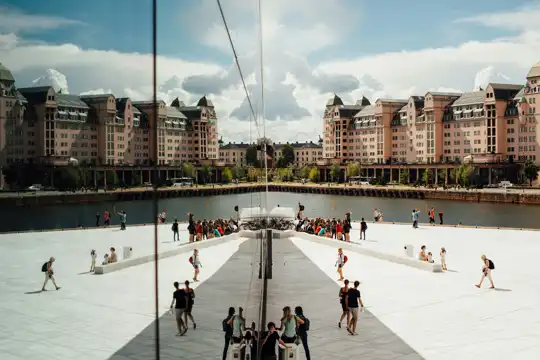
1 Oslo

fjord islands, modern architecture, sculpture parks

Navigate a city where ferries link green islands, contemporary buildings line the waterfront, and public art shapes daily urban life.

Norway - Oslo

2 Bergen

harborfront warehouses, rain-soaked alleys, mountain viewpoints

Climb steep lanes between wooden houses, watch fishing boats unload at the wharf, and take in city views from forested hillsides.

norway-city-bergen
© Google | Muhammad Shakil

3 Trondheim

riverfront warehouses, Gothic cathedral, student quarter

Cross old bridges to riverside cafés, visit a towering medieval church, and experience a youthful energy in the city’s academic heart.

4 Stavanger

white wooden houses, oil museum, street murals

Wander narrow lanes lined with preserved homes, discover Norway’s energy history, and spot bold murals tucked between local shops.

5 Kristiansand

Seaside promenade, family attractions, southern beaches

Stroll a lively waterfront, visit Norway’s largest zoo, and relax on sandy stretches that draw locals during the long summer days.

norway-city-kristiansand
© Google |
Loading the map 🌍

Expert viewExpert Commentary on cities

How many cities to visit: Three to four cities is the right number for a trip of 10 to 14 days, and two for a week. Norwegian cities are compact, so each one gives you its center in a day or two, while the real value lies in the fjords, islands and peaks beside them. Every extra stop adds a long transfer and another accommodation bill, so stretching to six cities mostly buys you more time on trains. Spending that time hiking or boating from a base gives a backpacker far more for the same money.
Choosing the kind of city: Larger harbor cities suit first-timers who want museums, nightlife and a choice of hostels, though they cost the most and fill up in July. Smaller west-coast towns trade variety for fjord access, wooden-house lanes and fresh seafood, and they save you comfort-related stress … read more 👉
How many cities to visit: Three to four cities is the right number for a trip of 10 to 14 days, and two for a week. Norwegian cities are compact, so each one gives you its center in a day or two, while the real value lies in the fjords, islands and peaks beside them. Every extra stop adds a long transfer and another accommodation bill, so stretching to six cities mostly buys you more time on trains. Spending that time hiking or boating from a base gives a backpacker far more for the same money.
Choosing the kind of city: Larger harbor cities suit first-timers who want museums, nightlife and a choice of hostels, though they cost the most and fill up in July. Smaller west-coast towns trade variety for fjord access, wooden-house lanes and fresh seafood, and they save you comfort-related stress because everything is walkable. Northern cities cost more to reach (flights from US$60 to 150 one way if booked early) but give you aurora or midnight sun, so choose them if light conditions are your priority, and skip them if you are on a tight budget. Mixing one big city with two smaller ones usually gives the best balance of time and money.
What it costs: A frugal backpacker can manage on NOK 800 to 1,200 a day (US$75 to 110) by using dorms at NOK 350 to 600, supermarket meals, tap water and free hikes. A mid-range day with a private room, a restaurant dinner and a museum runs NOK 1,800 to 2,800 (US$170 to 260). Museum entry is typically NOK 100 to 200, single city transit tickets are around NOK 40 to 45, and a dinner main in a restaurant is NOK 220 to 350. Self-catering is the largest saving, since a supermarket meal costs a third of a restaurant one. Many hostels have kitchens, so use them.
Safety and etiquette: Norwegian cities are very safe, with low violent crime, though pickpocketing happens around stations and tourist spots in summer. The bigger risks are weather: wet, icy pavements in winter and rapidly changing rain in the west, so carry a proper shell. Locals value quiet, queuing and personal space, and conversation on public transport tends to be hushed. Alcohol is sold in state-run Vinmonopolet shops with limited hours (closed Sundays), and public drinking is restricted in some areas. Tap water is excellent and free, so carry a bottle. Right of access lets you walk and camp on open land, but follow the rule of leaving no trace and keep 150 meters from homes when tenting.

✈️ The backpacker research shortcutNorway Travel Guide

An offline-friendly backpacking guide with optimized travel routes, ranked highlights, transport advice, and the best areas to stay.
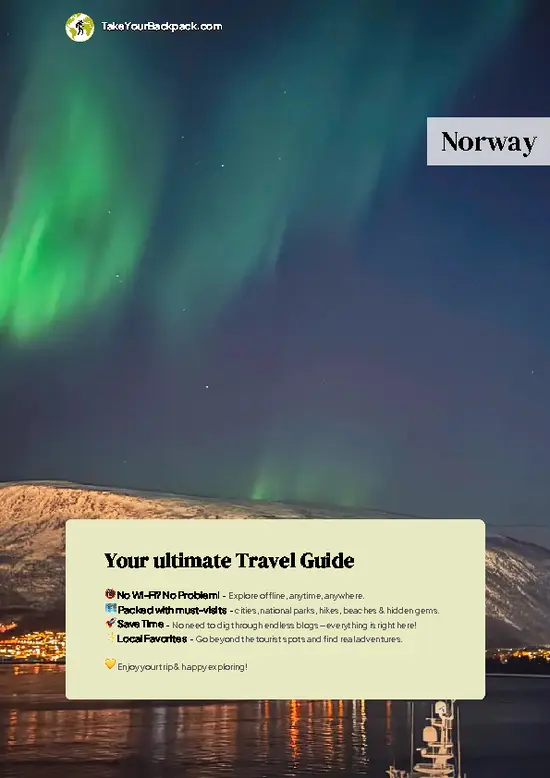
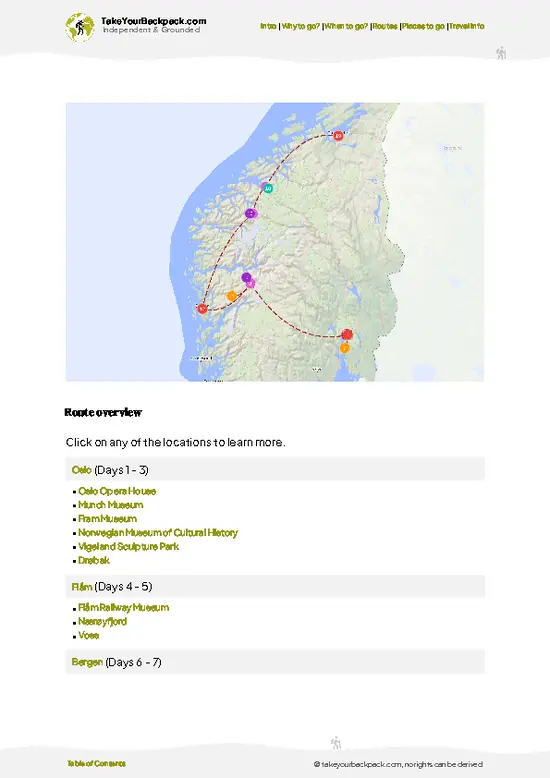
example page 0 from our offline Travel Guide for Norway
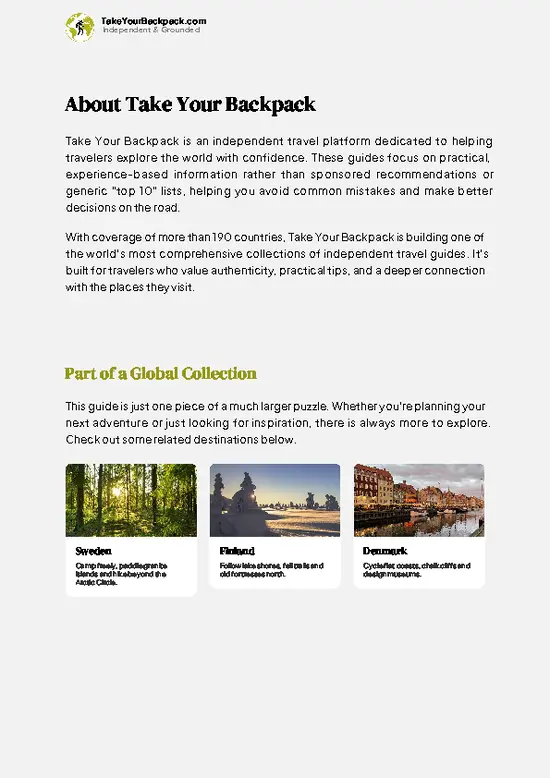
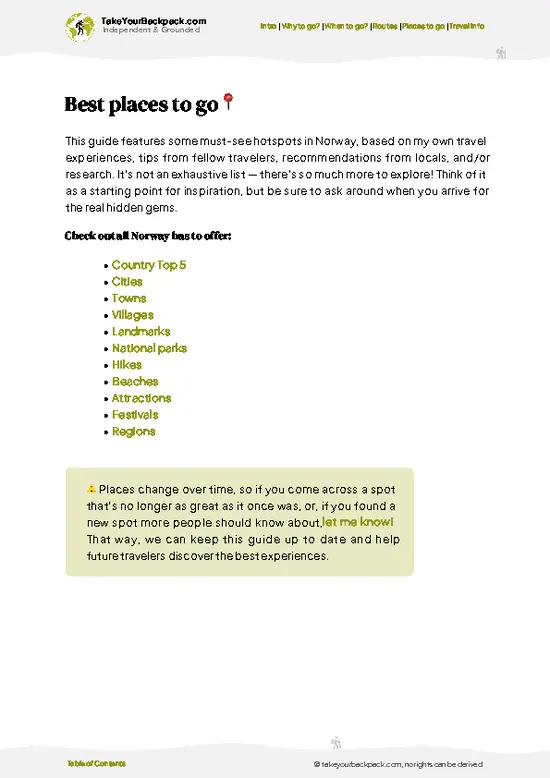
example page 1 from our offline Travel Guide for Norway
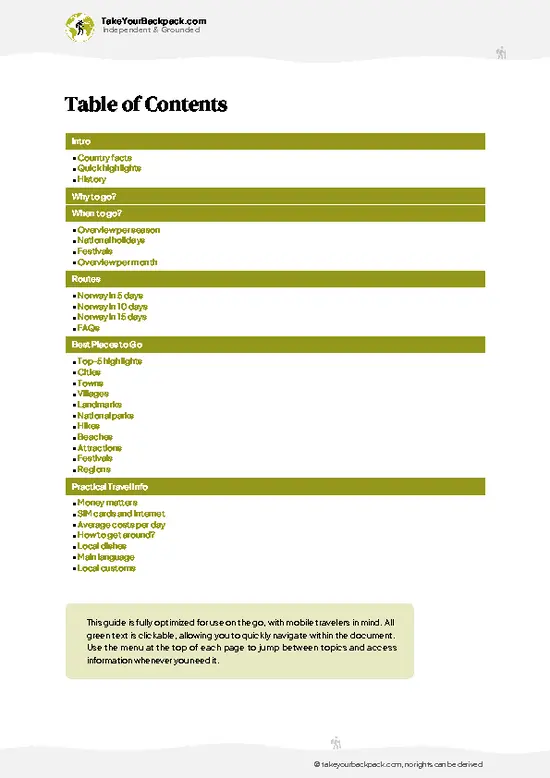
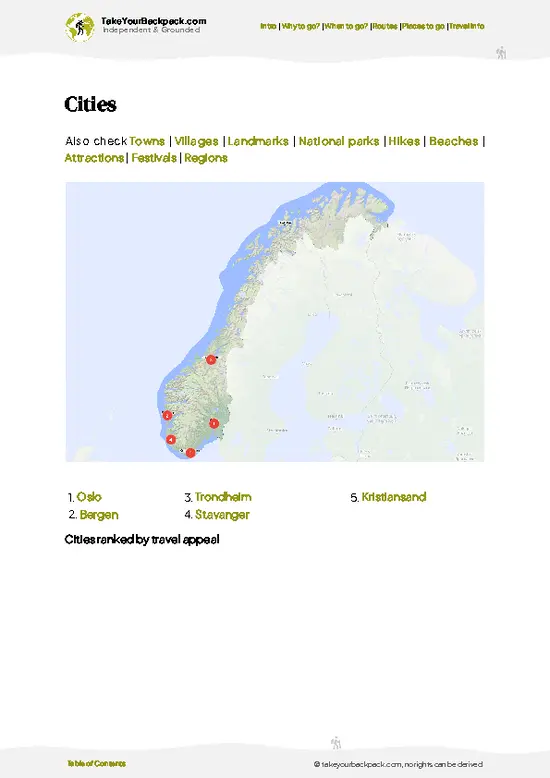
example page 2 from our offline Travel Guide for Norway
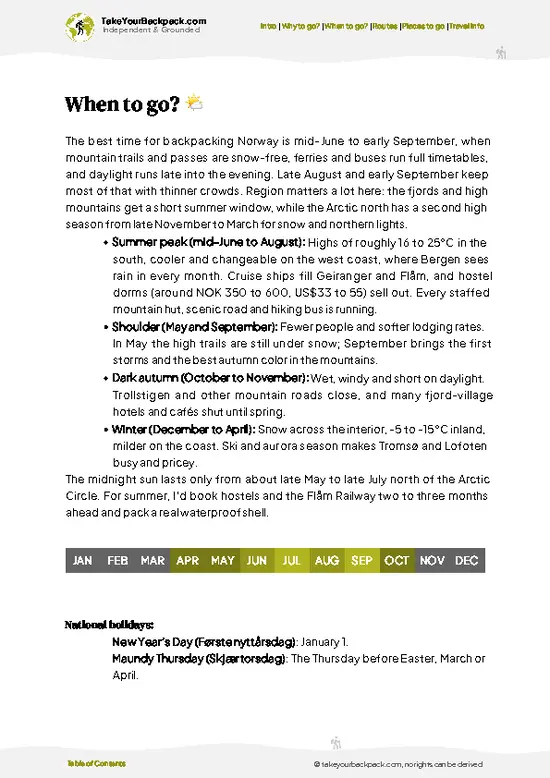
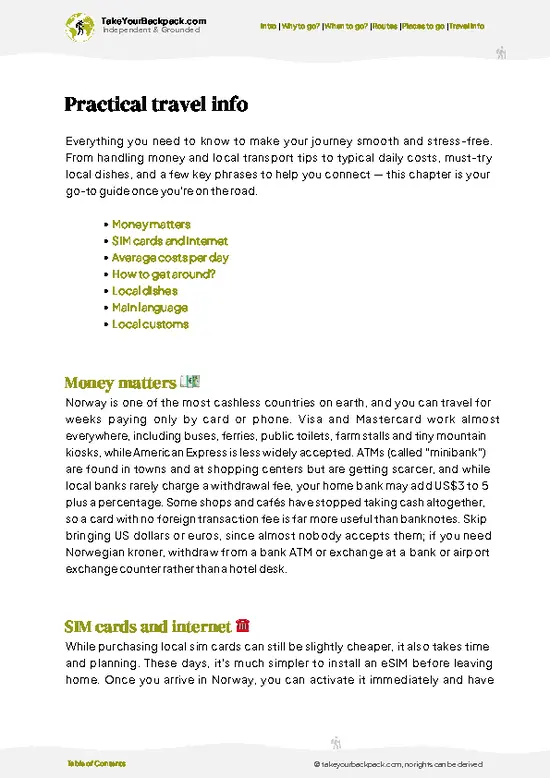
example page 3 from our offline Travel Guide for Norway
example page 4 from our offline Travel Guide for Norway
example page 5 from our offline Travel Guide for Norway
example page 6 from our offline Travel Guide for Norway
example page 7 from our offline Travel Guide for Norway
The digital guide (377 pages) contains:
✅ 101 highlights, ranked by travel appeal
✅ Optimized 5, 10 & 15-day travel routes
✅ Cities, national parks, landmarks, beaches
✅ How to get around
✅ Offline-friendly for travel without Wi-Fi
👉 Click to see all 30+ guide features

📅 Plan smarter in minutes, not weeks
✅ Month by month travel advice
✅ Festivals & national holidays
✅ Budget expectations

🗺️ Go to the right places, skip the overrated ones
✅ Honest pros & cons of destinations
✅ Top hikes, parks & viewpoints
✅ Lesser-known places most travelers miss
✅ Clear “worth it vs skip it” guidance

🛏️ Travel smoothly without rookie mistakes
✅ Best areas to stay
✅ Transport systems explained simply
✅ Common scams & safety advice
✅ SIM cards, money & practical tips

🌍 Understand the country, not just visit it
✅ Culture & traditions
✅ 52 Essential phrases & customs
✅ Festivals worth planning around
✅ Traveler-friendly historical context
✅ Insights that make places more meaningful

📱 Built for real travel conditions
✅ Fully downloadable PDF
✅ Works completely offline
✅ Optimized for phone use
✅ Useful in remote areas & buses
✅ Everything in one place
Stop searching, start planning
Get instant access to your full guide. 30‑day money-back guarantee.
+ Add another guide for just

By proceeding you agree to our terms.
Sent to your inbox immediately after payment • 100% Secure Checkout
Best Backpacking Travel Advisor 2025 tourism awardBest Backpacking
Travel Advisor
2025
What others say about Take Your Backpack Guides:
⭐⭐⭐⭐⭐
Fantastic, amazing amount of information!
⭐⭐⭐⭐⭐
My goodness this is amazing, it's what I've been looking for hats off too you!
⭐⭐⭐⭐⭐
I think this is absolutely BRILLIANT
⭐⭐⭐⭐
Very complete and informative. It's still missing places, but I gotta to commend you
⭐⭐⭐⭐⭐
This is truly amazing, thank you, can't wait to explore it with my kids!
⭐⭐⭐⭐⭐
Awesome resource, thank you!
⭐⭐⭐⭐⭐
This is amazing! Can't wait to explore the ones I haven't seen
⭐⭐⭐⭐
I love this! Well done, great idea.
⭐⭐⭐⭐⭐
Thanks for taking the time to make this gem!
⭐⭐⭐⭐⭐
This might be the best website I've ever seen.
⭐⭐⭐⭐⭐
Congratulations, and thank you so much for your work; it's incredibly valuable.
⭐⭐⭐⭐
In all seriousness I think you did a great job pointing out the important spots
⭐⭐⭐⭐⭐
10/10 very good
⭐⭐⭐⭐⭐
As someone who's only just starting to visit regularly this is awesome, thank you.
⭐⭐⭐⭐
Thank you very much! I'm going to visit my dad, it's going to be very useful!
⭐⭐⭐⭐⭐
This is really cool! We'll be travelling for the first time and this definitely come in handy.
⭐⭐⭐⭐⭐
You are now our minister of culture, congratulations 👨‍💼
⭐⭐⭐⭐⭐
Just wanted to tell you that this is a pearl! Going to follow your recommendations.
⭐⭐⭐⭐⭐
This is so cool. I'll definitely be using the resource for my travels soon.
⭐⭐⭐⭐⭐
This is very impressive! Good work.
⭐⭐⭐⭐⭐
This is an amazing and informative site. Very well done!

🛏️ Where to stay?Where to Stay in Norway

Norway has hostels and budget beds in every major city, with dorms typically running NOK 350 to 600 (about US$33 to 56) a night, plus cheap cabins at campsites along the main touring routes. In Oslo, Sentrum around the central station puts you closest to the waterfront, museums and transport links but gets rowdy and a little rough late at night, while Grünerløkka has the best bars and cafés and a younger crowd, with a 15 to 20 minute walk to the center. In Bergen, the area around Bryggen and the fish market keeps every sight within walking distance but books out early in summer, and in Tromsø the compact city center is small and safe, with most budget beds a short walk from the harbor and the … read more 👉
Norway has hostels and budget beds in every major city, with dorms typically running NOK 350 to 600 (about US$33 to 56) a night, plus cheap cabins at campsites along the main touring routes. In Oslo, Sentrum around the central station puts you closest to the waterfront, museums and transport links but gets rowdy and a little rough late at night, while Grünerløkka has the best bars and cafés and a younger crowd, with a 15 to 20 minute walk to the center. In Bergen, the area around Bryggen and the fish market keeps every sight within walking distance but books out early in summer, and in Tromsø the compact city center is small and safe, with most budget beds a short walk from the harbor and the late-opening pubs.

If you enjoy meeting fellow travelers, consider choosing hostels with high ratings for atmosphere. On the other hand, if you prefer having your own space, a hotel might be a better option.

NorwayMore of Norway

👋 Meet the founderWho’s Behind Take Your Backpack?

Johan, backpacker and founder of TakeYourBackpackHi, I’m Johan (Netherlands 🇳🇱), the creator of TakeYourBackpack. Over the past 3 decades, I’ve backpacked through 90+ countries across six continents, gaining extensive experience with independent travel, long-term trips, and overland routes.

This site is built on a combination of firsthand travel experience and carefully curated insights from other backpackers. Many guides are based on places I’ve personally visited, while others bring together tips, observations, and practical advice shared by trusted travelers I’ve met along the way.

The goal is to provide realistic, experience-driven guidance — not generic itineraries — so you can explore destinations with better context, clearer expectations, and more confidence.