Yes, Singapore is one of the easiest countries on earth to backpack independently, even if it’s your first trip. English is everywhere (signs, menus, transport, hostels), the city is compact, and the public transport system is idiot-proof in the best way. You tap in with a contactless card, follow clear color-coded lines, and you’re rarely more than a 10–15 minute walk from a station or bus stop.
For budget travelers, the main challenge is cost, not logistics. Dorm beds are more expensive than in Southeast Asia’s usual backpacker hubs, and alcohol is pricey, so you save money by treating Singapore as a short, dense stop rather than a long, slow stay. Eat at hawker centers instead of restaurants, use tap water (it’s safe to drink) instead of buying bottles, and walk between nearby neighborhoods instead of hopping in taxis.
You don’t need tours for most sights: you can DIY everything from Chinatown and Little India to the Marina Bay area with a map and a transit card. The city is safe to walk at night, solo travel is normal, and there’s almost always Wi‑Fi in malls and hostels. If you’re used to chaotic bus stations and vague directions, Singapore will feel like backpacking on “easy mode,” which makes it a great first landing spot in Southeast Asia.
For most backpackers, 2–4 full days is the sweet spot.
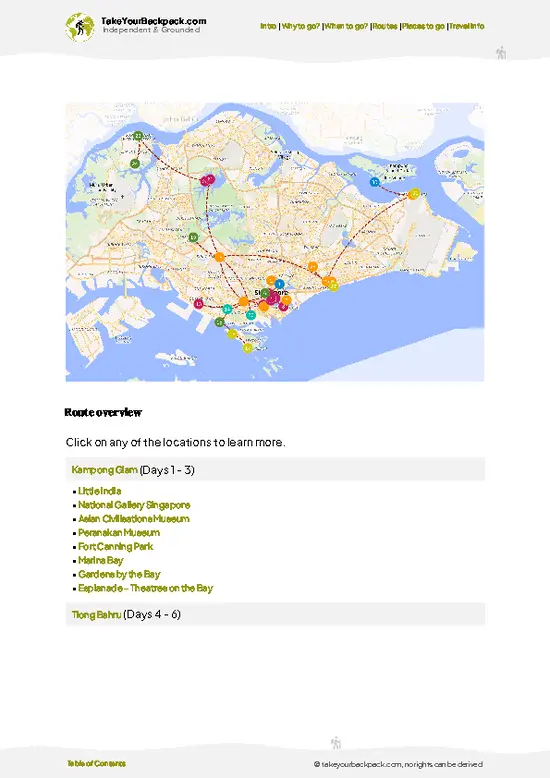
If you’re on a tight budget and schedule, 2 days is enough to hit the greatest hits without rushing yourself into exhaustion. Day 1: Marina Bay Sands area (Merlion, waterfront, Gardens by the Bay), then evening at a hawker center and maybe a cheap drink in Clarke Quay or a rooftop with a happy hour. Day 2: cultural neighborhoods (Chinatown, Little India, Kampong Glam) plus a night walk through the Supertree Grove light show.
If you can spare 3–4 days, you get to slow down and actually feel the city instead of just ticking boxes. Add: a half-day on Pulau Ubin for a taste of old-school kampong life and cycling, a few hours wandering the Botanic Gardens, and more time to graze through different hawker centers (Maxwell, Lau Pa Sat, Tiong Bahru, Old Airport Road). This is where Singapore stops feeling like a layover and starts feeling like a real stop on your route.
More than 4–5 days only makes sense if you’re working remotely, visiting friends, or you really love cities and food. For a classic Southeast Asia backpacking loop, think of Singapore as a concentrated city break: short, intense, and very worth it if you plan your days around cheap eats and free or low-cost sights.
You can and absolutely should get around Singapore without a car. A car here is expensive, unnecessary, and a headache for a backpacker.
The MRT (metro) and buses cover almost everywhere you’ll want to go: airport, hostels, Marina Bay, Chinatown, Little India, Kampong Glam, Sentosa gateway, Botanic Gardens, and most residential areas. Trains are frequent, air‑conditioned, and clearly signed in English. Buses fill in the gaps and are also easy to use once you get the hang of the routes.
For payment, you don’t need a special tourist card if you already have a contactless bank card or phone wallet; just tap in and out. If you’re staying a few days and riding a lot, a stored‑value card (like EZ‑Link) or a tourist pass can shave a bit off your costs and simplify things.
Walking is underrated here: many neighborhoods are compact and pedestrian‑friendly, and you can chain together Marina Bay, Kampong Glam, and parts of Bugis on foot. When you’re wiped out or coming back late, ride‑hailing apps and taxis are safe and reliable, but use them as a backup, not your default.
Between the MRT, buses, and your own feet, you’ll move faster and cheaper than anyone stuck in traffic with a rental car.
For a budget traveler, the must‑visits are the places that give you maximum sense of Singapore’s character without draining your wallet.
1. Gardens by the Bay (outdoor areas + Supertree Grove)The outdoor gardens and Supertree Grove are free, and they’re one of the most distinctive cityscapes on the planet. Go late afternoon, wander the grounds, then stay for the evening light show. Skip the pricey domes if you’re counting coins; the free areas already feel otherworldly.
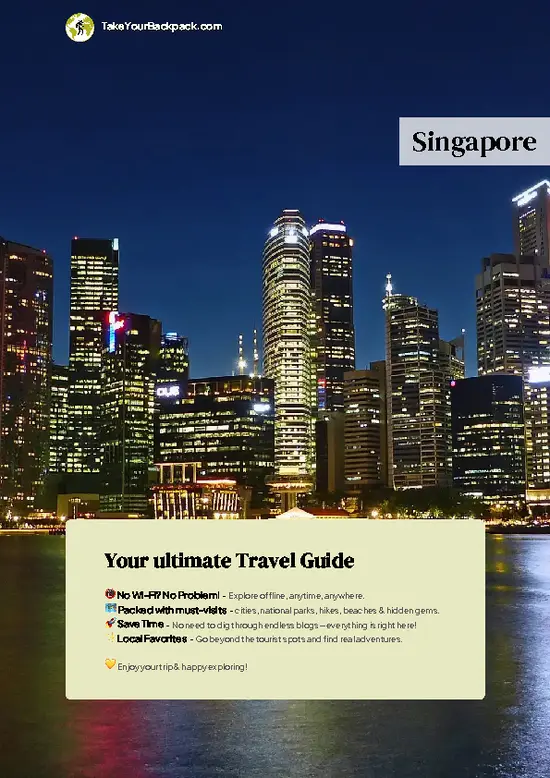
2. Marina Bay waterfrontWalk the loop: Merlion Park, the Helix Bridge, the skyline views, and the Marina Bay Sands building looming over everything. It’s all walkable and free, and it gives you that “this is Singapore” postcard view in one go. Go at dusk to watch the city light up.
3. Hawker centersThis is where you actually taste Singapore without wrecking your budget. Maxwell Food Centre, Lau Pa Sat, Chinatown Complex, Tiong Bahru Market, Old Airport Road Food Centre—pick a couple and treat them like your canteen. Try chicken rice, laksa, roti prata, nasi lemak, and kopi or teh. You learn more about the country at a plastic table than in most museums.
4. Chinatown, Little India, and Kampong GlamThese three neighborhoods show you the Chinese, Indian, and Malay/Arab roots of the city. Wander temples and mosques, snack your way through side streets, and soak up the contrast between old shophouses and modern towers. They’re all easy to reach by MRT and perfect for low‑budget, high‑impact exploring.
5. Singapore Botanic GardensA huge, green escape that’s free to enter and easy to reach by MRT. Great for a morning walk or picnic when the heat is still manageable. If you’re into plants, the National Orchid Garden is a small paid add‑on that’s worth it for many travelers, but the main park alone is already a win.
6. Pulau Ubin (if you have an extra half‑day)A short bumboat ride from Changi Point Ferry Terminal drops you into a much slower, more rural side of Singapore. Rent a bike, ride quiet roads, and see mangroves and old kampong houses. It’s one of the few places where Singapore feels properly wild, and it’s still relatively cheap if you keep food simple.
If you’re short on time or cash, skip anything that eats hours and dollars without adding much to your understanding of Singapore.
1. Expensive rooftop bars and the Marina Bay Sands infinity poolThe pool is only for hotel guests, and staying there will nuke a backpacker budget. Rooftop bars with cover charges and pricey cocktails are fun but not essential. You can get great skyline views from free or cheaper spots (like walking around Marina Bay or using public viewpoints in malls and public spaces).
2. Full‑on Sentosa theme‑park daySentosa is packed with paid attractions: Universal Studios, pricey beach clubs, indoor skydiving, and so on. If you’re tight on time or money, skip the full theme‑park experience. At most, you can do a quick, cheap visit to the public beach if you really want sand, but remember you’re in one of Asia’s best food cities—your time is usually better spent eating and exploring neighborhoods.
3. Overpriced river cruisesBoat rides along the Singapore River are pleasant but not essential. You can walk the same route along Clarke Quay, Boat Quay, and Marina Bay for free, stop for a hawker meal, and still get the same city views.
4. Multiple malls and generic shoppingOrchard Road and endless malls can swallow hours, and most of what you see you can buy cheaper elsewhere in Southeast Asia. If you’re not hunting for something specific, limit yourself to using malls for air‑con breaks, food courts, and Wi‑Fi, not as a main activity.
5. Too many paid museums in one short visitSingapore has some excellent museums, but if you’re only in town for 2–3 days, you don’t need to hit all of them. Pick one that matches your interests (for example, the National Museum or Asian Civilisations Museum) and skip the rest. Your time is usually better spent outside, walking different neighborhoods and hawker centers.
6. Big bar crawls and heavy nightlifeAlcohol is one of the fastest ways to torch your budget here. If you’re short on time, trade the big night out for a single drink with a view or skip booze entirely and do a night walk through Marina Bay and the Supertree Grove instead. You’ll see more of the city and wake up with more cash and more energy for the next day.