×

Switzerland🇨🇭 | best beachesThe Must-See 5 beaches in Switzerland

Switzerland may not be the first country that comes to mind when you think of beaches, but its lakes and rivers offer stunning alternatives that cater to diverse travel styles. The regional variations are striking; from the bustling shores of Lake Geneva to the serene banks of Lake Lucerne, each spot has its own vibe. Seasonal changes play a crucial role, with summer attracting crowds eager to swim and sunbathe, while off-peak months provide a quieter, more reflective experience. Choosing the right beach impacts your budget, safety, and cultural immersion, making it essential for backpackers and independent travelers to understand these nuances for a smoother journey.

By Johan Kruseman 🇳🇱 | Updated June 5, 2026
Explore the best attractions in Switzerland

Why go?Why Travelers Love These Spots

Switzerland’s beaches are a fascinating paradox. Nestled among the Alps, they offer a unique blend of freshwater experiences that differ significantly from coastal destinations in other countries. The geographic positioning means that while you won’t find saltwater shores, the lakes—like Lake Geneva and Lake Lucerne—provide stunning backdrops and crystal-clear waters, ideal for swimming and relaxation.

However, the seasonal conditions play a crucial role in your beach experience. Summer months attract crowds, especially in July and August, when the weather is at its warmest. This peak season can lead to busy shores, making it essential to plan visits during early mornings or late afternoons for a more serene atmosphere. Conversely, visiting in late spring or early autumn can offer milder read more 👉
Switzerland’s beaches are a fascinating paradox. Nestled among the Alps, they offer a unique blend of freshwater experiences that differ significantly from coastal destinations in other countries. The geographic positioning means that while you won’t find saltwater shores, the lakes—like Lake Geneva and Lake Lucerne—provide stunning backdrops and crystal-clear waters, ideal for swimming and relaxation.

However, the seasonal conditions play a crucial role in your beach experience. Summer months attract crowds, especially in July and August, when the weather is at its warmest. This peak season can lead to busy shores, making it essential to plan visits during early mornings or late afternoons for a more serene atmosphere. Conversely, visiting in late spring or early autumn can offer milder weather and fewer tourists, but swimming conditions may be less inviting.

Accessibility is another factor to consider. Many beaches are easily reachable via public transport, yet some require a bit of hiking or a longer drive, which can enhance the immersive experience. The trade-off here is between convenience and the depth of exploration; the more remote locations often reward those willing to invest time with stunning, less-traveled spots.

Culturally, Switzerland’s lakeside beaches reflect a blend of local traditions and modern leisure, making them a unique aspect of the country’s identity. Understanding these dynamics allows travelers to navigate their options more effectively, ensuring a fulfilling beach experience in this landlocked nation.
Evaluating the Top Choices
The list of best beaches in Switzerland is created based on beauty, vibe, water quality, activities, and surrounding scenery. If you feel a beach is missing in this list, please let us know.

When to go?Optimal Periods for Travel

Switzerland’s beach season is primarily dictated by its alpine climate, which means that summer is the prime time for beach visits. Typically, the best months for enjoying the lakes and rivers are from late June to early September. During this period, temperatures rise, and the water warms up enough for swimming, with clarity peaking in July and August.

Shoulder seasons—late May to early June and September—offer a different experience. While the weather can still be pleasant, the water may be cooler, and swimming conditions can vary. Crowds are significantly lighter, making it easier to find a peaceful spot. However, some facilities may not be fully operational, and water clarity can be less predictable.

Peak periods coincide with school holidays, particularly in July and August. Expect … read more 👉
Switzerland’s beach season is primarily dictated by its alpine climate, which means that summer is the prime time for beach visits. Typically, the best months for enjoying the lakes and rivers are from late June to early September. During this period, temperatures rise, and the water warms up enough for swimming, with clarity peaking in July and August.

Shoulder seasons—late May to early June and September—offer a different experience. While the weather can still be pleasant, the water may be cooler, and swimming conditions can vary. Crowds are significantly lighter, making it easier to find a peaceful spot. However, some facilities may not be fully operational, and water clarity can be less predictable.

Peak periods coincide with school holidays, particularly in July and August. Expect higher prices for accommodations and more crowded beaches. This is when the sunbathers and families flock to the shores, making it essential to plan ahead if visiting during these months.

Seasonal constraints also include the risk of sudden weather changes, even in summer. Rain can disrupt plans, especially in the mountains. Understanding these patterns allows for smarter travel choices, ensuring a more enjoyable beach experience in Switzerland.

beach hoppingSuggested Travel Strategies

Switzerland’s beaches offer a unique blend of stunning lakeside views and mountain backdrops. To maximize your experience, start by clustering your beach visits regionally. The Lake Geneva area is a prime starting point, with its accessible beaches like Montreux and Évian. From there, head east towards Lake Zurich, where you can enjoy the lively atmosphere of the city’s lakeside parks.

Timing is crucial. Early mornings are ideal for a quieter experience, especially in popular spots. Aim for about two to three hours at each beach to soak in the atmosphere, swim, or enjoy local snacks. This pacing allows for a leisurely exploration without feeling rushed.

Common pitfalls include underestimating travel times between lakes. Switzerland’s efficient public transport can be a double-edged sword; … read more 👉
Switzerland’s beaches offer a unique blend of stunning lakeside views and mountain backdrops. To maximize your experience, start by clustering your beach visits regionally. The Lake Geneva area is a prime starting point, with its accessible beaches like Montreux and Évian. From there, head east towards Lake Zurich, where you can enjoy the lively atmosphere of the city’s lakeside parks.

Timing is crucial. Early mornings are ideal for a quieter experience, especially in popular spots. Aim for about two to three hours at each beach to soak in the atmosphere, swim, or enjoy local snacks. This pacing allows for a leisurely exploration without feeling rushed.

Common pitfalls include underestimating travel times between lakes. Switzerland’s efficient public transport can be a double-edged sword; while trains are fast, they may not always connect directly to beach access points. Always check local transport schedules to avoid long waits.

Consider trade-offs carefully. Prioritizing speed may lead to missing out on hidden gems, while focusing on depth can stretch your itinerary. Balancing comfort and budget is essential; some beaches may require entry fees or amenities that can add up. Flexibility in your plans allows for spontaneous discoveries, making the journey as rewarding as the destinations.

The ListMust-Visit beaches in Switzerland

1 Lake Geneva Beach

urban lakefront, mountain backdrop, promenade

Swim with views of distant Alps, relax on grassy banks, and watch city life blend with the open water along the lively shoreline.

switzerland-beach-lake-geneva-beach
© Google |

2 Montreux Beach

flower gardens, jazz history, lakeside walkways

Stroll past manicured gardens and music landmarks, then cool off in the lake where the shoreline is shaped by culture and scenery.

3 Strandbad Zürich

city swimming, wooden docks, social scene

Join locals for a swim from floating platforms, sunbathe on lawns, and experience Zürich’s relaxed outdoor lifestyle at the water’s edge.

switzerland-beach-strandbad-zurich
© Google | George Kontogouris

4 Lido di Lugano

southern vibe, palm trees, swimming pools

Relax under palms, alternate between lake and pool, and enjoy a mild climate that feels distinctly Mediterranean in Switzerland.

5 Lac de Taney

alpine lake, forest trails, remote access

Hike through dense woods to reach a quiet mountain lake, where clear water and rugged peaks create a tranquil, secluded atmosphere.

switzerland-beach-lac-de-taney
© Google | Christoph Eschmann
Loading the map 🌍

Expert viewInsights from Locals and Experts

Coastline Flow
Switzerland’s beaches are not your typical sandy shores; they’re often found along the edges of stunning lakes and rivers. The flow of these coastlines varies dramatically, from the expansive shores of Lake Geneva to the more intimate coves of Lake Lucerne. Understanding this geography is crucial. The lakes are often surrounded by mountains, which can create microclimates. This means that while one beach might be basking in sun, another just a few kilometers away could be shrouded in clouds.

When planning your beach visits, consider the time of day. Early mornings are usually quieter, allowing you to enjoy the serene beauty without the hustle. As the day progresses, especially on weekends, crowds can swell, particularly at popular spots. If you’re looking for a more relaxed … read more 👉
Coastline Flow
Switzerland’s beaches are not your typical sandy shores; they’re often found along the edges of stunning lakes and rivers. The flow of these coastlines varies dramatically, from the expansive shores of Lake Geneva to the more intimate coves of Lake Lucerne. Understanding this geography is crucial. The lakes are often surrounded by mountains, which can create microclimates. This means that while one beach might be basking in sun, another just a few kilometers away could be shrouded in clouds.

When planning your beach visits, consider the time of day. Early mornings are usually quieter, allowing you to enjoy the serene beauty without the hustle. As the day progresses, especially on weekends, crowds can swell, particularly at popular spots. If you’re looking for a more relaxed experience, aim for weekdays or off-peak hours.

Seasonal Conditions
Switzerland’s beach season is surprisingly short, typically peaking from late May to early September. However, the weather can be unpredictable. A sunny forecast can quickly turn into rain, especially in the mountains. Always check local conditions before heading out.

In the summer, the water temperature can be quite inviting, but early in the season, it might be brisk. If you’re sensitive to cold, plan your swims for mid-summer. Conversely, if you enjoy a cooler dip, early June can be refreshing, albeit less crowded.

Access Points
Getting to these beaches can be a game of logistics. Many are accessible via public transport, which is efficient but can require some planning. Trains and boats often connect major lakes, but schedules can vary. If you’re relying on public transport, familiarize yourself with the timetable and consider downloading local apps for real-time updates.

For those with a car, parking can be a mixed bag. Some beaches have ample parking, while others might require a bit of a walk. Factor in the time to find parking when planning your day.

Crowd Density
Understanding crowd density is key to maximizing your beach experience. Popular beaches can feel like a festival, while lesser-known spots offer tranquility. If you’re after a lively atmosphere, head to the more famous beaches, but be prepared for noise and activity.

On the flip side, if you crave solitude, seek out smaller, less accessible beaches. These often require a bit of hiking or a longer drive, but the reward is a peaceful retreat. Just remember that with fewer people comes less infrastructure; amenities like restrooms and food options may be limited.

Balancing Relaxation vs. Travel Speed
Finding the right balance between relaxation and travel speed is essential. If you’re hopping between beaches, allow for downtime. Rushing from one spot to another can lead to stress, negating the very relaxation you seek.

Consider spending a full day at one beach to soak in the atmosphere, rather than trying to cram multiple locations into a single outing. This approach not only enhances your experience but also allows you to engage with the local culture.

Safety & Cultural Considerations
Switzerland is generally safe, but it’s wise to be aware of local customs. Many beaches have designated swimming areas, and respecting these boundaries is crucial for your safety. Additionally, some areas may have specific rules regarding noise levels or alcohol consumption.

Culturally, the Swiss value cleanliness and respect for nature. Always clean up after yourself, and if you’re enjoying a picnic, leave no trace behind. This respect extends to the local wildlife as well; avoid feeding animals or disturbing their habitats.

In summary, aim to visit around three to five beaches during your stay, allowing for a mix of experiences. With careful planning and an understanding of the local systems, you can unlock a rewarding beach experience in Switzerland that balances adventure with relaxation.

✈️ The backpacker research shortcutSwitzerland Travel Guide

An offline-friendly backpacking guide with optimized travel routes, ranked highlights, transport advice, and the best areas to stay.
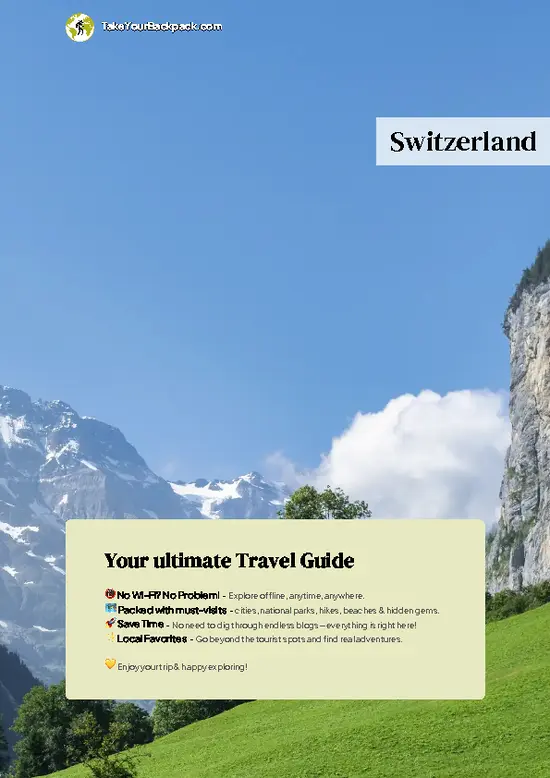
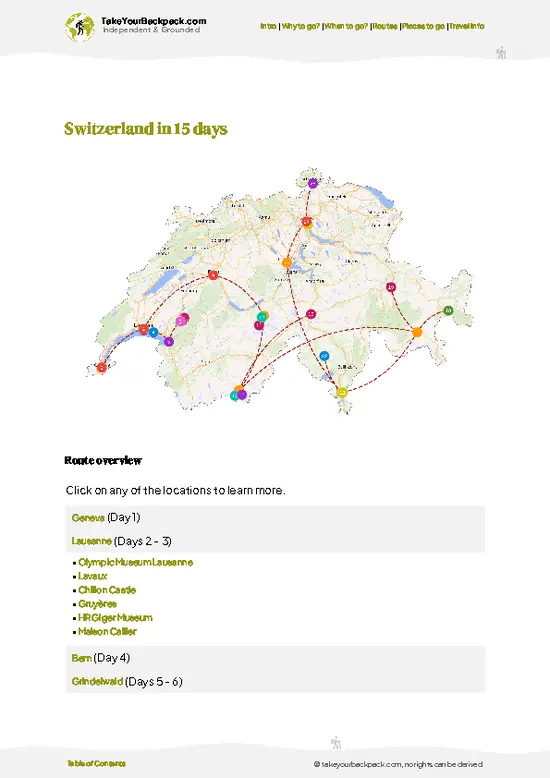
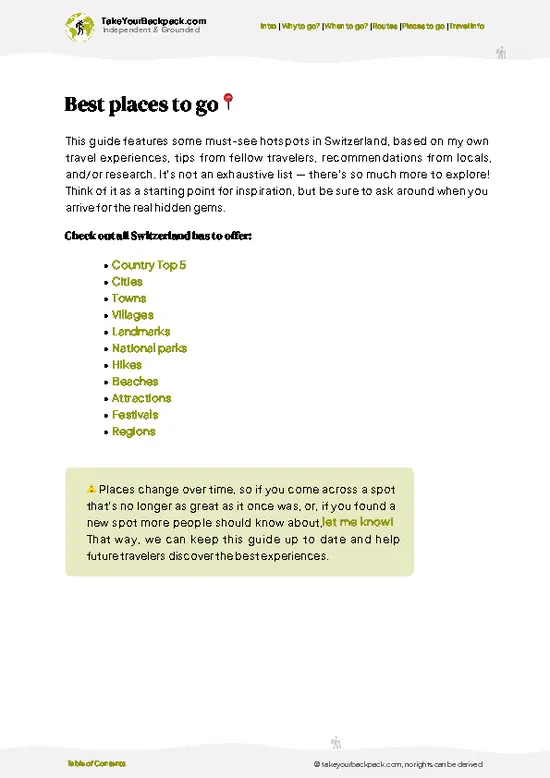
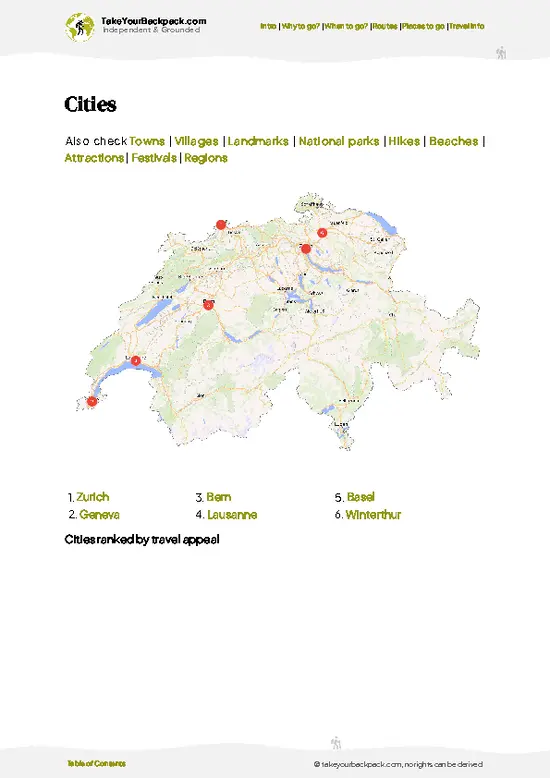
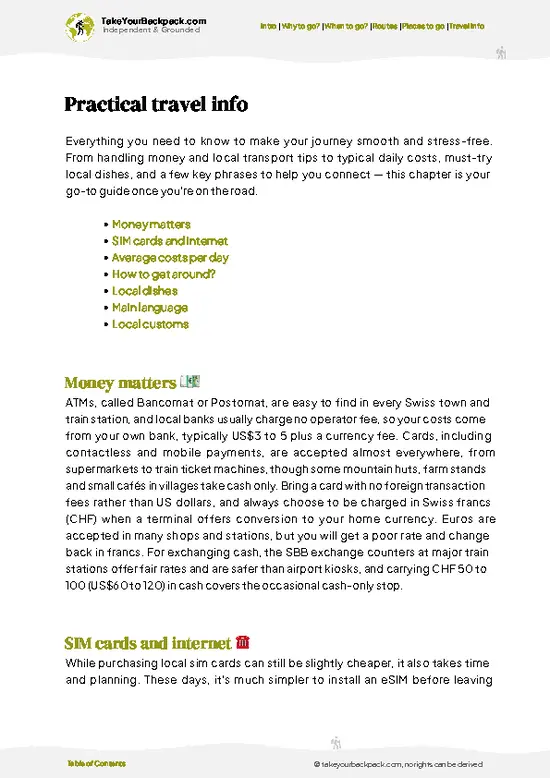
example page 0 from our offline Travel Guide for Switzerland
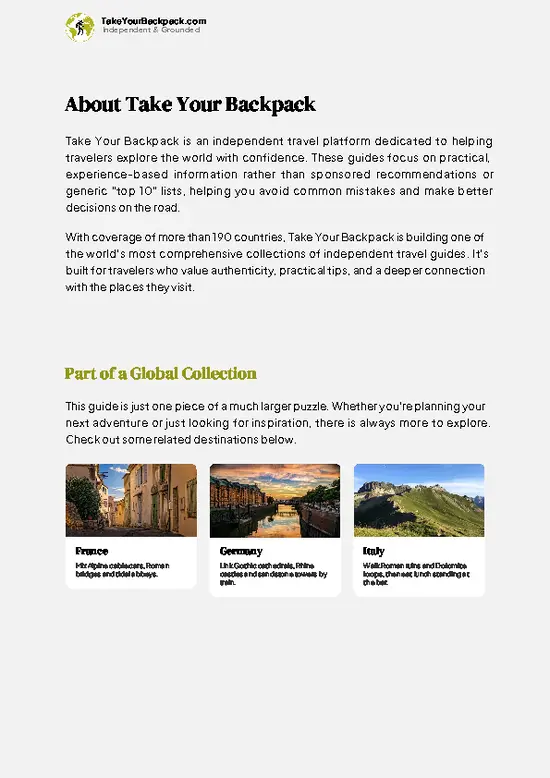
example page 1 from our offline Travel Guide for Switzerland
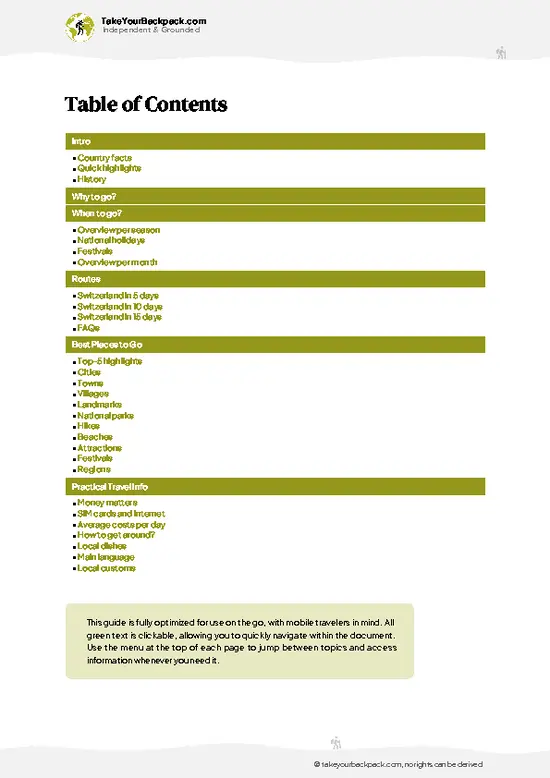
example page 2 from our offline Travel Guide for Switzerland
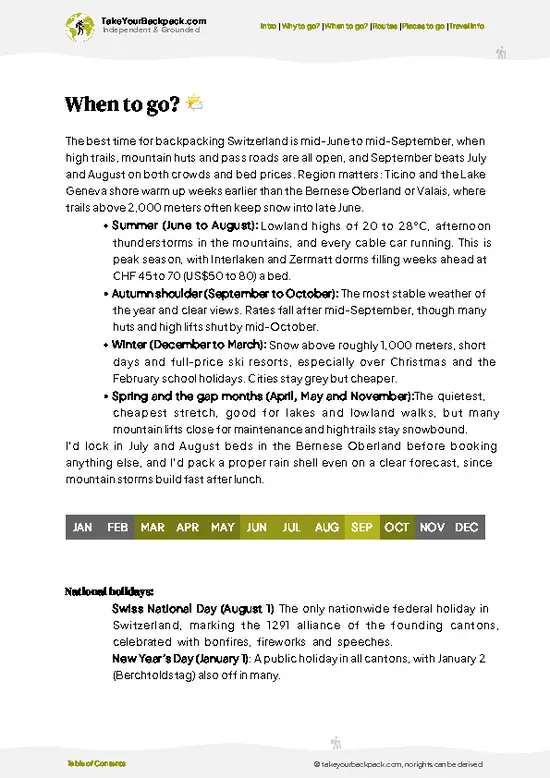
example page 3 from our offline Travel Guide for Switzerland
example page 4 from our offline Travel Guide for Switzerland
example page 5 from our offline Travel Guide for Switzerland
example page 6 from our offline Travel Guide for Switzerland
example page 7 from our offline Travel Guide for Switzerland
The digital guide (449 pages) contains:
121 highlights, ranked by travel appeal
Optimized 5, 10 & 15-day travel routes
Cities, national parks, landmarks, beaches
How to get around
Offline-friendly for travel without Wi-Fi
👉 Click to see all 30+ guide features

📅 Plan smarter in minutes, not weeks
Month by month travel advice
Festivals & national holidays
Budget expectations

🗺️ Go to the right places, skip the overrated ones
Honest pros & cons of destinations
Top hikes, parks & viewpoints
Lesser-known places most travelers miss
Clear “worth it vs skip it” guidance

🛏️ Travel smoothly without rookie mistakes
Best areas to stay
Transport systems explained simply
Common scams & safety advice
SIM cards, money & practical tips

🌍 Understand the country, not just visit it
Culture & traditions
52 Essential phrases & customs
Festivals worth planning around
Traveler-friendly historical context
Insights that make places more meaningful

📱 Built for real travel conditions
Fully downloadable PDF
Works completely offline
Optimized for phone use
Useful in remote areas & buses
Everything in one place
Save weeks of stressful planning
Get instant access to your full guide. 30‑day money-back guarantee.


By proceeding you agree to our terms.
Sent to your inbox immediately after payment • 100% Secure Checkout
Best Backpacking Travel Advisor 2025 tourism awardBest Backpacking
Travel Advisor
2025
What others say about Take Your Backpack Guides:
⭐⭐⭐⭐⭐
Fantastic, amazing amount of information!
⭐⭐⭐⭐⭐
My goodness this is amazing, it's what I've been looking for hats off too you!
⭐⭐⭐⭐⭐
I think this is absolutely BRILLIANT
⭐⭐⭐⭐
Very complete and informative. It's still missing places, but I gotta to commend you
⭐⭐⭐⭐⭐
This is truly amazing, thank you, can't wait to explore it with my kids!
⭐⭐⭐⭐⭐
Awesome resource, thank you!
⭐⭐⭐⭐⭐
This is amazing! Can't wait to explore the ones I haven't seen
⭐⭐⭐⭐
I love this! Well done, great idea.
⭐⭐⭐⭐⭐
Thanks for taking the time to make this gem!
⭐⭐⭐⭐⭐
This might be the best website I've ever seen.
⭐⭐⭐⭐⭐
Congratulations, and thank you so much for your work; it's incredibly valuable.
⭐⭐⭐⭐
In all seriousness I think you did a great job pointing out the important spots
⭐⭐⭐⭐⭐
10/10 very good
⭐⭐⭐⭐⭐
As someone who's only just starting to visit regularly this is awesome, thank you.
⭐⭐⭐⭐
Thank you very much! I'm going to visit my dad, it's going to be very useful!
⭐⭐⭐⭐⭐
This is really cool! We'll be travelling for the first time and this definitely come in handy.
⭐⭐⭐⭐⭐
You are now our minister of culture, congratulations 👨‍💼
⭐⭐⭐⭐⭐
Just wanted to tell you that this is a pearl! Going to follow your recommendations.
⭐⭐⭐⭐⭐
This is so cool. I'll definitely be using the resource for my travels soon.
⭐⭐⭐⭐⭐
This is very impressive! Good work.
⭐⭐⭐⭐⭐
This is an amazing and informative site. Very well done!

🛏️ Where to stay?Best Places to Stay in Switzerland

Yes; hostels and budget accommodation are common in Switzerland, concentrated in city centres and tourist hubs such as Zurich (Old Town / Kreis 1, Langstrasse), Geneva (Old Town, Plainpalais), Lucerne (Old Town / near the train station), Interlaken (West, Ost, Matten), Bern (Old Town, Länggasse) and Basel (Old Town, St. Johann).
Old Towns and station areas put you closest to highlights and transport but can be busier and pricier; Langstrasse and Interlaken West offer cheaper beds and nightlife at the cost of more noise; suburbs and neighbourhoods like Länggasse or station suburbs are quieter, cheaper and safer for early mountain departures; mountain villages have fewer budget beds and higher … read more 👉
Yes; hostels and budget accommodation are common in Switzerland, concentrated in city centres and tourist hubs such as Zurich (Old Town / Kreis 1, Langstrasse), Geneva (Old Town, Plainpalais), Lucerne (Old Town / near the train station), Interlaken (West, Ost, Matten), Bern (Old Town, Länggasse) and Basel (Old Town, St. Johann).
Old Towns and station areas put you closest to highlights and transport but can be busier and pricier; Langstrasse and Interlaken West offer cheaper beds and nightlife at the cost of more noise; suburbs and neighbourhoods like Länggasse or station suburbs are quieter, cheaper and safer for early mountain departures; mountain villages have fewer budget beds and higher prices, so book early and factor in extra travel time.

If you enjoy meeting fellow travelers, consider choosing hostels with high ratings for atmosphere. On the other hand, if you prefer having your own space, a hotel might be a better option.

SwitzerlandExplore Switzerland

👋 Meet the founderWho’s Behind Take Your Backpack?

Johan, backpacker and founder of TakeYourBackpackHi, I’m Johan (Netherlands 🇳🇱), the creator of TakeYourBackpack. Over the past decade, I’ve backpacked through 80+ countries across six continents, gaining extensive experience with independent travel, long-term trips, and overland routes.

This site is built on a combination of firsthand travel experience and carefully curated insights from other backpackers. Many guides are based on places I’ve personally visited, while others bring together tips, observations, and practical advice shared by trusted travelers I’ve met along the way.

The goal is to provide realistic, experience-driven guidance — not generic itineraries — so you can explore destinations with better context, clearer expectations, and more confidence.

Get full country guide •
Instant download • 121 highlights • Full Offline guide