×

Switzerland🇨🇭 | best attractionsThe Must-See 10 attractions in Switzerland

Switzerland’s attractions are defined by a precise interplay of geography, culture, and seasonality that shapes every backpacking itinerary. From the alpine peaks of the Bernese Oberland to the urban sophistication of Zurich, each region offers distinct experiences that influence your travel style, budget, and pace. Understanding this system means recognizing how winter transforms mountain villages into ski havens while summer opens trails and lakes for independent exploration. Choosing the right attraction here isn’t just about ticking sights off a list—it directly affects your vibe, safety, and immersion. Mastering these nuances lets you navigate Switzerland’s diverse offerings with confidence and efficiency, turning logistics into a strategic advantage for any backpacker.

By Johan Kruseman 🇳🇱 | Updated September 5, 2026
Explore the best festivals in Switzerland

Why go?Why Travelers Love These Spots

Switzerland’s attractions stand apart because they are deeply intertwined with its unique geography and infrastructure, creating a travel experience where natural grandeur and cultural precision coexist. The country’s compact size and efficient transport network mean that travelers face a constant trade-off between depth of exploration and breadth of experience. You can cover multiple regions in a day, but that often comes at the cost of immersive time in any single place. This system rewards strategic planning: prioritizing fewer sites allows for richer engagement, while hopping around maximizes variety but dilutes the experience.

The alpine landscape shapes much of what Switzerland offers, making it a prime destination for outdoor and scenic attractions. However, this also means that accessibility … read more 👉
Switzerland’s attractions stand apart because they are deeply intertwined with its unique geography and infrastructure, creating a travel experience where natural grandeur and cultural precision coexist. The country’s compact size and efficient transport network mean that travelers face a constant trade-off between depth of exploration and breadth of experience. You can cover multiple regions in a day, but that often comes at the cost of immersive time in any single place. This system rewards strategic planning: prioritizing fewer sites allows for richer engagement, while hopping around maximizes variety but dilutes the experience.

The alpine landscape shapes much of what Switzerland offers, making it a prime destination for outdoor and scenic attractions. However, this also means that accessibility can be seasonal and weather-dependent. Winter snows transform valleys into ski havens but can limit access to high-altitude trails or remote villages. Conversely, summer opens up hiking and lake activities but may bring crowds and higher prices. Understanding these climatic constraints is crucial to aligning expectations with reality.

Culturally, Switzerland’s multilingual regions and historical neutrality foster a diverse yet orderly environment. This translates into attractions that are well-maintained and visitor-friendly but sometimes lack the spontaneous charm found in less regulated destinations. The trade-off between accessibility and authenticity is subtle but present: Swiss attractions often excel in comfort and clarity, which can smooth the journey but may reduce the sense of discovery for travelers seeking raw, off-the-beaten-path encounters. Recognizing these dynamics helps travelers approach Swiss attractions not just as sites to check off but as parts of a finely tuned system where every choice shapes the quality of the experience.
Evaluating the Top Choices
The list of best attractions in Switzerland is created based on cultural significance or entertainment value. If you feel a attraction is missing in this list, please let us know.

When to go?Optimal Periods for Travel

Seasonal Rhythms Shape Your Swiss Experience

Switzerland’s attractions operate on a clear seasonal clock, driven by its alpine geography and temperate climate zones. Winter transforms much of the country into a snow-covered playground, ideal for skiing, snowboarding, and winter festivals. Expect cold temperatures, often below freezing, with reliable snow at higher elevations. This season peaks during the colder months, drawing crowds to winter sports hubs and pushing prices upward. The trade-off here is clear: prime snow conditions come with busy resorts and premium rates.

Spring and autumn act as transitional windows, often overlooked but strategically valuable. These shoulder seasons bring milder weather and fewer tourists. However, spring can still hold onto residual snow in the mountains, … read more 👉

Seasonal Rhythms Shape Your Swiss Experience

Switzerland’s attractions operate on a clear seasonal clock, driven by its alpine geography and temperate climate zones. Winter transforms much of the country into a snow-covered playground, ideal for skiing, snowboarding, and winter festivals. Expect cold temperatures, often below freezing, with reliable snow at higher elevations. This season peaks during the colder months, drawing crowds to winter sports hubs and pushing prices upward. The trade-off here is clear: prime snow conditions come with busy resorts and premium rates.

Spring and autumn act as transitional windows, often overlooked but strategically valuable. These shoulder seasons bring milder weather and fewer tourists. However, spring can still hold onto residual snow in the mountains, limiting some high-altitude activities, while autumn offers crisp air and vibrant foliage but shorter daylight hours. Costs tend to drop, and crowds thin, making these periods ideal for travelers prioritizing budget and tranquility over full access to all attractions.

Summer opens the door to hiking, lake activities, and open-air cultural events. Temperatures rise comfortably, rarely becoming oppressive, and the alpine meadows bloom. This season attracts the highest visitor numbers, especially in well-known regions, which can mean crowded trails and booked accommodations. Yet, the extended daylight and broad accessibility to attractions make summer the most versatile time to explore.

Understanding these patterns lets you align your visit with your priorities—whether that’s chasing powder, avoiding crowds, or maximizing outdoor access. Each season’s constraints and perks form a predictable system, turning your planning into a strategic advantage rather than a guessing game.

attraction hoppingSuggested Travel Strategies

Regional Clusters and Directional Flow

Switzerland’s attractions naturally group into distinct regions—Alpine peaks, lakeside towns, urban centers, and cultural valleys. The smartest approach is to cluster stops geographically, moving logically from one region to the next rather than zigzagging across the map. For example, start in the central plateau with cities like Zurich or Bern, then head south into the Alps, and finally swing west or east depending on your interests. This directional flow minimizes backtracking and wasted travel time, turning transit into a seamless part of the experience rather than a chore.

Timing and Pacing

Expect to spend at least half a day in major cities to absorb museums, markets, and architecture without rushing. Mountain villages and lakeside spots often … read more 👉

Regional Clusters and Directional Flow

Switzerland’s attractions naturally group into distinct regions—Alpine peaks, lakeside towns, urban centers, and cultural valleys. The smartest approach is to cluster stops geographically, moving logically from one region to the next rather than zigzagging across the map. For example, start in the central plateau with cities like Zurich or Bern, then head south into the Alps, and finally swing west or east depending on your interests. This directional flow minimizes backtracking and wasted travel time, turning transit into a seamless part of the experience rather than a chore.

Timing and Pacing

Expect to spend at least half a day in major cities to absorb museums, markets, and architecture without rushing. Mountain villages and lakeside spots often reward a full day, especially if hiking or boat rides are involved. Alpine summit visits typically require a full day due to travel and acclimatization. Trying to cram multiple categories—urban, nature, cultural—in one day usually dilutes the experience. Realistic pacing means accepting that fewer, well-chosen stops yield more satisfaction than a checklist mentality.

Common Pitfalls and Trade-offs

A frequent mistake is overloading the itinerary with iconic sites, ignoring travel time and local rhythms. Switzerland’s efficient trains tempt travelers to pack in too many stops, but speed often sacrifices depth. Budget constraints push some toward cheaper accommodations far from attractions, increasing daily transit and fatigue. Conversely, splurging on central lodgings can save time and energy, allowing for richer experiences. Balancing effort and reward means prioritizing quality over quantity and building in flexibility to linger where the vibe clicks.

Strategic Flexibility

The system rewards those who plan a core route but leave room for spontaneous detours or rest. Weather shifts can alter mountain access, and local festivals or markets can add unexpected value. Understanding the country’s compact scale and reliable transport lets travelers treat logistics as a puzzle to solve, not a barrier. Mastering this flow transforms a multi-stop trip into a coherent journey where every move feels intentional and every stop earns its place.

The ListMust-Visit attractions in Switzerland

1 Jungfraujoch – Top of Europe

high-altitude station, glacier views, ice tunnels

Ascend by cogwheel train to a snowy plateau for panoramic vistas, year-round snow activities, and access to the Aletsch Glacier.

2 Matterhorn Glacier Paradise

cable car ascent, glacier palace, 360-degree platform

Ride to Europe’s highest cable car station for sweeping alpine views, ice sculptures, and access to year-round snow sports.

3 GlacierExpress

slow train, Oberalp Pass, scenic valleys

Cross deep gorges and high passes on a day-long rail journey connecting Zermatt and St. Moritz, with uninterrupted mountain views.

4 BerninaExpress

alpine rail journey, panoramic windows, UNESCO route

Travel across viaducts and glaciers on a scenic train that links northern Italy and Switzerland through dramatic mountain landscapes.

5 Swiss Museum of Transport

historic vehicles, interactive simulators, aviation hall

Explore the evolution of Swiss mobility through hands-on exhibits covering trains, planes, automobiles, and communication technology.

6 Maison Cailler Chocolate Factory

chocolate tasting, interactive tour, production line

Follow the journey from cocoa bean to finished chocolate, sampling fresh confections and learning about Swiss chocolate-making traditions.

7 Ballenberg Open-Air Museum

historic farmhouses, rural crafts, alpine livestock

Wander through centuries-old buildings and observe traditional skills in a landscape where rural life and mountain scenery intersect.

8 Fondation Beyeler

modern art, Renzo Piano architecture, sculpture garden

View works by major artists in a light-filled museum set beside tranquil gardens and reflecting pools on the city’s edge.

9 Olympic Museum Lausanne

sports memorabilia, interactive exhibits, lakeside setting

Trace the history of the Olympic Games through multimedia displays and artifacts, with views over Lake Geneva from the museum grounds.

10 Kunsthaus Zürich

Swiss masters, contemporary collections, rotating exhibitions

Browse a wide range of artworks from medieval to modern, with a focus on Swiss artists and regularly changing displays.

11 Paul Klee Center

avant-garde art, wave-shaped building, thematic galleries

Engage with the life and work of Paul Klee in a museum designed to reflect his creativity, featuring rotating exhibitions and workshops.

12 Basel Zoo

urban wildlife, rare species, conservation focus

See animals from diverse habitats in thoughtfully designed enclosures, with opportunities to learn about breeding programs and ecological initiatives.

13 Technorama Swiss Science Center

hands-on experiments, physics demos, science playground

Interact with hundreds of scientific exhibits designed for all ages, encouraging discovery through play and experimentation.

14 Rheinslucht

river gorge, white limestone cliffs, hiking trails

Hike along dramatic canyon paths or view the Rhine’s turquoise waters from above, with access by train or foot.

15 HR Giger Museum

surreal art, Alien designs, gothic interiors

Experience the unsettling world of HR Giger through original paintings, sculptures, and film props in a medieval château setting.

Think you know Switzerland?

Prove you’re a true local — uncover 5 lesser-known attractions in Switzerland that locals tend to keep to themselves.
Loading the map 🌍

Expert viewInsights from Locals and Experts

Expert Commentary


Switzerland’s appeal lies in its concentrated density of attractions, but that density is also its puzzle. The country isn’t about ticking off dozens of sites in a frantic sprint; it’s about choosing a handful of experiences that resonate deeply and then mastering the logistics to extract maximum value. I’d advise aiming for around three to five major attractions during a typical trip. This range balances immersion with the reality of travel time and the country’s unique geography.

Switzerland’s topography is a defining factor in planning. Mountains, lakes, and valleys carve the landscape into distinct regions, each with its own pace and character. This means travel between attractions often involves more than just distance—it’s about elevation changes, weather variability, … read more 👉

Expert Commentary


Switzerland’s appeal lies in its concentrated density of attractions, but that density is also its puzzle. The country isn’t about ticking off dozens of sites in a frantic sprint; it’s about choosing a handful of experiences that resonate deeply and then mastering the logistics to extract maximum value. I’d advise aiming for around three to five major attractions during a typical trip. This range balances immersion with the reality of travel time and the country’s unique geography.

Switzerland’s topography is a defining factor in planning. Mountains, lakes, and valleys carve the landscape into distinct regions, each with its own pace and character. This means travel between attractions often involves more than just distance—it’s about elevation changes, weather variability, and transport schedules. The Swiss rail and bus networks are famously punctual and extensive, but they operate on a system that favors regional hubs over direct point-to-point connections. This means you’ll often need to route through a central node, adding time but also offering a chance to experience local culture in transit. The trade-off here is between convenience and depth: fewer, well-chosen stops let you savor the atmosphere; trying to cram in too many will leave you exhausted and skimming the surface.

Budget-wise, Switzerland demands respect. It’s not a place to chase bargains blindly. Instead, think in terms of value per experience. Public transport passes can be a game-changer if you plan to move frequently, but they require upfront investment and a clear itinerary to justify the cost. Otherwise, individual tickets or regional passes might be more economical. Accommodation follows a similar logic: staying near transport hubs or within walking distance of your chosen attractions saves time and taxi fares, but often at a premium. The key is to weigh the cost of convenience against the time lost in transit. Sometimes spending more on a well-located hotel pays off in hours gained for exploration.

Time management in Switzerland is a strategic game. Weather can shift rapidly, especially in alpine areas, so flexibility is your ally. Morning fog or afternoon storms can close mountain passes or cable cars, turning a planned highlight into a waiting game. Build buffer time into your schedule and prioritize attractions that offer alternatives or indoor options nearby. This approach reduces the risk of wasted days and keeps your momentum. Also, consider the season: winter transforms the landscape and the type of attractions accessible, while summer opens trails and lakeside activities but brings crowds. Understanding this rhythm helps you pick the right time to visit certain regions or plan your days around local events and market days, which can add unexpected layers to your experience.

Cultural nuances also shape how you approach attractions. Switzerland’s multilingual regions mean signage, announcements, and local interactions vary widely. Knowing a few key phrases in German, French, or Italian depending on your region can smooth encounters and unlock insider tips. The Swiss value punctuality and order, so arriving early or on time for tours, trains, or cable cars isn’t just polite—it’s essential. This respect for structure extends to hiking and outdoor activities: trails are well-marked but expect to follow strict rules about waste disposal, wildlife protection, and trail etiquette. Ignoring these can not only spoil your experience but also impact local communities and ecosystems.

Safety in Switzerland is generally high, but the mountain environment demands respect. Weather changes, altitude, and physical exertion require preparation. Don’t underestimate the effort needed for alpine hikes or high-altitude viewpoints. Even well-marked paths can become challenging, and rescue services, while excellent, are not a substitute for personal responsibility. Carry appropriate gear, check local conditions daily, and be honest about your fitness level. This mindset turns potential hazards into manageable challenges and keeps your trip on track.

In essence, mastering Switzerland’s attractions is about embracing its system: a blend of natural complexity, cultural precision, and infrastructural efficiency. When you plan with these patterns in mind, you don’t just visit—you navigate with confidence, turning logistics into a satisfying part of the adventure rather than a hurdle. This approach transforms a checklist into a curated journey, where each stop is a deliberate choice, and every transition a chance to engage with the country’s layered character.

✈️ The backpacker research shortcutSwitzerland Travel Guide

An offline-friendly backpacking guide with optimized travel routes, ranked highlights, transport advice, and the best areas to stay.
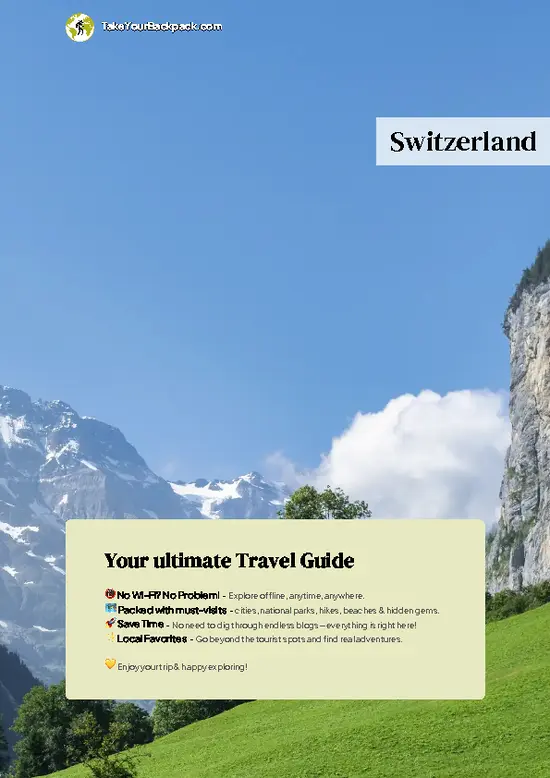
example page 0 from our offline Travel Guide for Switzerland
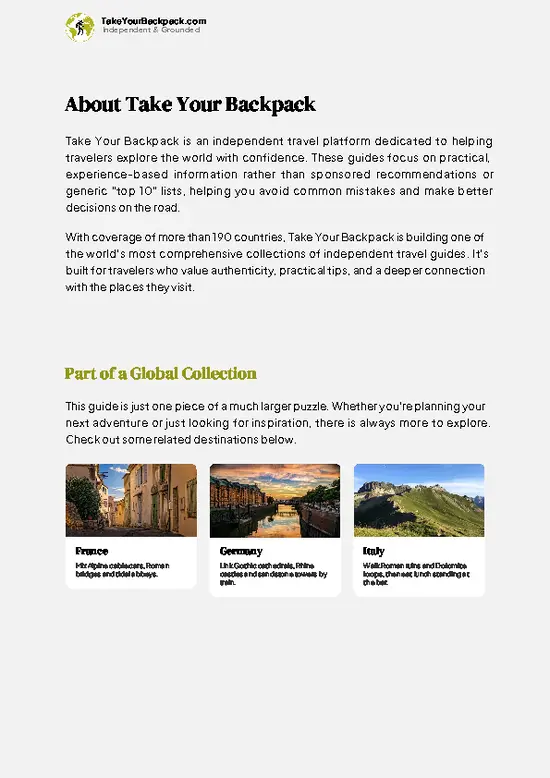
example page 1 from our offline Travel Guide for Switzerland
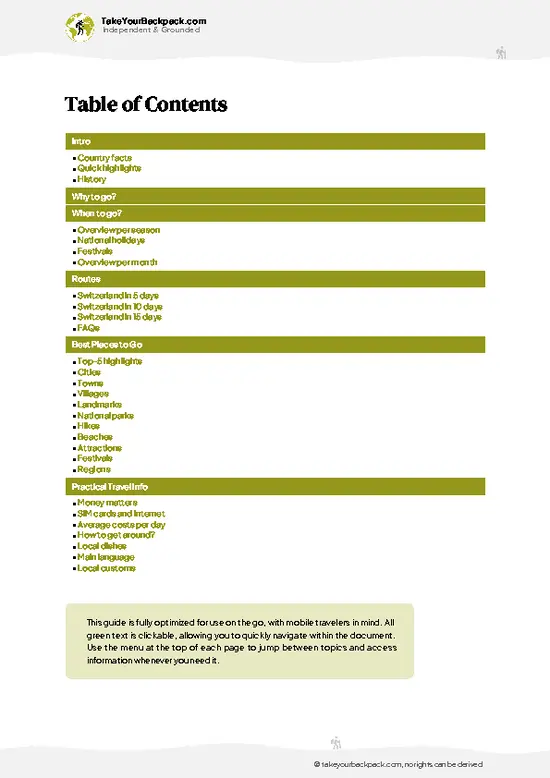
example page 2 from our offline Travel Guide for Switzerland
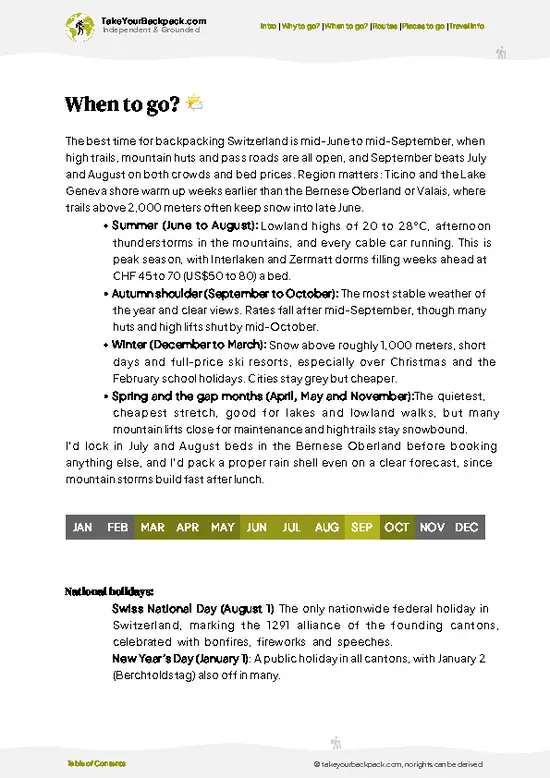
example page 3 from our offline Travel Guide for Switzerland
example page 4 from our offline Travel Guide for Switzerland
example page 5 from our offline Travel Guide for Switzerland
example page 6 from our offline Travel Guide for Switzerland
example page 7 from our offline Travel Guide for Switzerland
The digital guide (430 pages) contains:
118 highlights, ranked by travel appeal
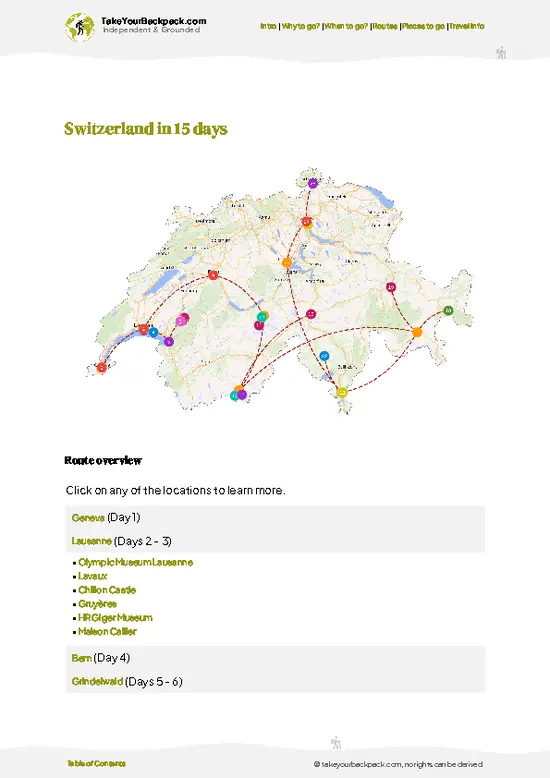
Optimized 5, 10 & 15-day travel routes
Cities, national parks, landmarks, beaches
How to get around
Offline-friendly for travel without Wi-Fi
👉 Click to see all 30+ guide features

📅 Plan smarter in minutes, not weeks
Month by month travel advice
Festivals & national holidays
Budget expectations

🗺️ Go to the right places, skip the overrated ones
Honest pros & cons of destinations
Top hikes, parks & viewpoints
Lesser-known places most travelers miss
Clear “worth it vs skip it” guidance

🛏️ Travel smoothly without rookie mistakes
Best areas to stay
Transport systems explained simply
Common scams & safety advice
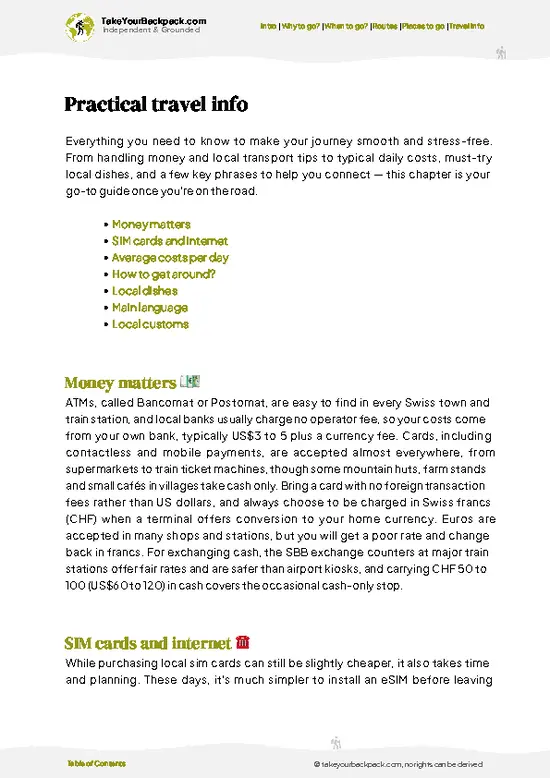
SIM cards, money & practical tips

🌍 Understand the country, not just visit it
Culture & traditions
52 Essential phrases & customs
Festivals worth planning around
Traveler-friendly historical context
Insights that make places more meaningful

📱 Built for real travel conditions
Fully downloadable PDF
Works completely offline
Optimized for phone use
Useful in remote areas & buses
Everything in one place
Save weeks of stressful planning
Get instant access to your full guide. 30‑day money-back guarantee.
+ Add another guide for just US$7.80

By proceeding you agree to our terms.
Sent to your inbox immediately after payment • 100% Secure Checkout
Best Backpacking Travel Advisor 2025 tourism awardBest Backpacking
Travel Advisor
2025
What others say about Take Your Backpack Guides:
⭐⭐⭐⭐⭐
Fantastic, amazing amount of information!
⭐⭐⭐⭐⭐
My goodness this is amazing, it's what I've been looking for hats off too you!
⭐⭐⭐⭐⭐
I think this is absolutely BRILLIANT
⭐⭐⭐⭐
Very complete and informative. It's still missing places, but I gotta to commend you
⭐⭐⭐⭐⭐
This is truly amazing, thank you, can't wait to explore it with my kids!
⭐⭐⭐⭐⭐
Awesome resource, thank you!
⭐⭐⭐⭐⭐
This is amazing! Can't wait to explore the ones I haven't seen
⭐⭐⭐⭐
I love this! Well done, great idea.
⭐⭐⭐⭐⭐
Thanks for taking the time to make this gem!
⭐⭐⭐⭐⭐
This might be the best website I've ever seen.
⭐⭐⭐⭐⭐
Congratulations, and thank you so much for your work; it's incredibly valuable.
⭐⭐⭐⭐
In all seriousness I think you did a great job pointing out the important spots
⭐⭐⭐⭐⭐
10/10 very good
⭐⭐⭐⭐⭐
As someone who's only just starting to visit regularly this is awesome, thank you.
⭐⭐⭐⭐
Thank you very much! I'm going to visit my dad, it's going to be very useful!
⭐⭐⭐⭐⭐
This is really cool! We'll be travelling for the first time and this definitely come in handy.
⭐⭐⭐⭐⭐
You are now our minister of culture, congratulations 👨‍💼
⭐⭐⭐⭐⭐
Just wanted to tell you that this is a pearl! Going to follow your recommendations.
⭐⭐⭐⭐⭐
This is so cool. I'll definitely be using the resource for my travels soon.
⭐⭐⭐⭐⭐
This is very impressive! Good work.
⭐⭐⭐⭐⭐
This is an amazing and informative site. Very well done!

🛏️ Where to stay?Top Areas to Stay

Yes; hostels and budget accommodation are common in Switzerland, concentrated in city centres and tourist hubs such as Zurich (Old Town / Kreis 1, Langstrasse), Geneva (Old Town, Plainpalais), Lucerne (Old Town / near the train station), Interlaken (West, Ost, Matten), Bern (Old Town, Länggasse) and Basel (Old Town, St. Johann).
Old Towns and station areas put you closest to highlights and transport but can be busier and pricier; Langstrasse and Interlaken West offer cheaper beds and nightlife at the cost of more noise; suburbs and neighbourhoods like Länggasse or station suburbs are quieter, cheaper and safer for early mountain departures; mountain villages have fewer budget beds and higher … read more 👉
Yes; hostels and budget accommodation are common in Switzerland, concentrated in city centres and tourist hubs such as Zurich (Old Town / Kreis 1, Langstrasse), Geneva (Old Town, Plainpalais), Lucerne (Old Town / near the train station), Interlaken (West, Ost, Matten), Bern (Old Town, Länggasse) and Basel (Old Town, St. Johann).
Old Towns and station areas put you closest to highlights and transport but can be busier and pricier; Langstrasse and Interlaken West offer cheaper beds and nightlife at the cost of more noise; suburbs and neighbourhoods like Länggasse or station suburbs are quieter, cheaper and safer for early mountain departures; mountain villages have fewer budget beds and higher prices, so book early and factor in extra travel time.

If you enjoy meeting fellow travelers, consider choosing hostels with high ratings for atmosphere. On the other hand, if you prefer having your own space, a hotel might be a better option.

SwitzerlandDiscover the Country

👋 Meet the founderWho’s Behind Take Your Backpack?

Johan, backpacker and founder of TakeYourBackpackHi, I’m Johan (Netherlands 🇳🇱), the creator of TakeYourBackpack. Over the past decade, I’ve backpacked through 80+ countries across six continents, gaining extensive experience with independent travel, long-term trips, and overland routes.

This site is built on a combination of firsthand travel experience and carefully curated insights from other backpackers. Many guides are based on places I’ve personally visited, while others bring together tips, observations, and practical advice shared by trusted travelers I’ve met along the way.

The goal is to provide realistic, experience-driven guidance — not generic itineraries — so you can explore destinations with better context, clearer expectations, and more confidence.

Get full country guide •
Instant download • 118 highlights • Full Offline guide