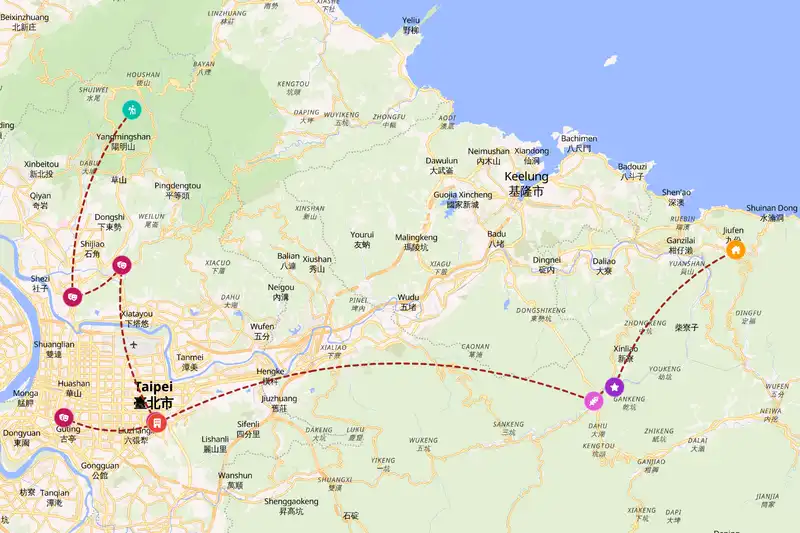
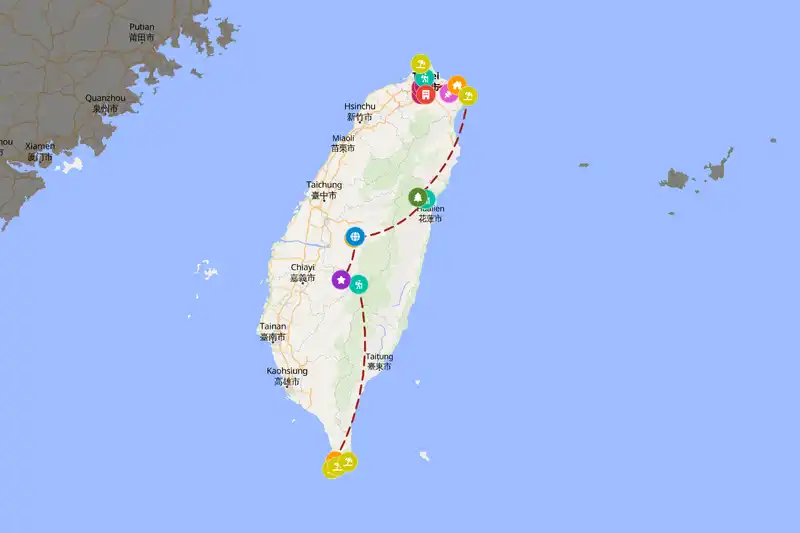
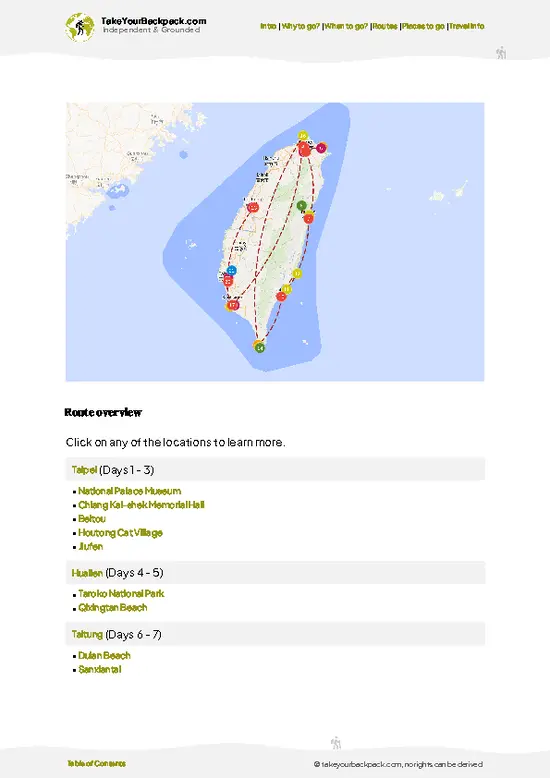
This ten-day Taiwan route is for travelers who want the west of the island in one clean line, from the capital through the central mountains to the warm south. The pace is moderate, with two nights in most places and one short, chilly night at altitude. You’ll ride the High Speed Rail, regional buses into the mountains, the Alishan Forest Railway, TRA trains between southern cities, and the Kaohsiung MRT.
Days 1-2: Taipei
This version of
Taipei leans on the older west side and late-night food. Go to
Lungshan Temple of Manka in Wanhua at around 7 am, when locals pray before work, incense hangs in the courtyard and people drop crescent-shaped wooden blocks to ask the gods questions. Spend the afternoon in the east of the city and ride to the
Taipei 101 Observatory on the 89th floor at dusk. Finish at
Raohe Street Night Market, one long, narrow lane by Songshan station; join the queue for black-pepper buns baked in a clay oven right by the temple gate.
Days 3-4: Sun Moon Lake
Take the HSR to …
read more 👉This ten-day Taiwan route is for travelers who want the west of the island in one clean line, from the capital through the central mountains to the warm south. The pace is moderate, with two nights in most places and one short, chilly night at altitude. You’ll ride the High Speed Rail, regional buses into the mountains, the Alishan Forest Railway, TRA trains between southern cities, and the Kaohsiung MRT.
Days 1-2: Taipei
This version of Taipei leans on the older west side and late-night food. Go to Lungshan Temple of Manka in Wanhua at around 7 am, when locals pray before work, incense hangs in the courtyard and people drop crescent-shaped wooden blocks to ask the gods questions. Spend the afternoon in the east of the city and ride to the Taipei 101 Observatory on the 89th floor at dusk. Finish at Raohe Street Night Market, one long, narrow lane by Songshan station; join the queue for black-pepper buns baked in a clay oven right by the temple gate.Days 3-4: Sun Moon Lake
Take the HSR to Taichung (about an hour) and transfer straight onto the bus at the station; the ride up to Sun Moon Lake takes 1.5 to 2 hours. Two nights here let you catch the lake at dawn, when mist sits on the water before the tour boats start. Rent a bike for the lakeside cycle path, buy a ferry pass to hop between Shuishe, Ita Thao and Xuanguang Temple, and eat grilled fish from the Thao stalls in Ita Thao.Days 5-6: Alishan and the Forest Railway
A direct bus runs from Sun Moon Lake to Alishan in about 3.5 hours, only a few times a day, so reserve a seat. Sleep in the village at around 2,200 meters and pack a warm layer even in summer. Before dawn, the small train to Zhushan carries you up for sunrise over a sea of clouds, then the trails of the Alishan National Scenic Area wind through red cypresses over a thousand years old. On day six, ride the Alishan Forest Railway down to Chiayi, a narrow-gauge line that switchbacks through tea and bamboo for about 2.5 hours; seats need booking well ahead. A short train then delivers you to Tainan by evening.Days 7-8: Tainan
Tainan is the city to eat your way through, with beef soup at dawn, milkfish congee and tiny bowls of danzai noodles. Ride a bus or rented bike out to Tainan’s Anping Fort, the brick remains of the Dutch Fort Zeelandia, and walk the old alleys around it. On day eight, check out and stop at the Chimei Museum near Baoan station on the way south, a palace-like building with European paintings, arms and armor, and one of the world’s largest violin collections.Days 9-10: Kaohsiung
In Kaohsiung, wander Pier-2 Art Center, a row of harbor warehouses turned galleries, with murals and big sculptures along the light rail line. On day nine, ride a bus from Zuoying HSR station (40 to 50 minutes) to the Fo Guang Shan Buddha Museum, free to enter, where a giant bronze Buddha sits at the end of a long avenue of pagodas. On day ten, fly out of Kaohsiung or ride the HSR back north.
If you can spare half a day between Taichung and Chiayi, detour to Lukang, an old port town of narrow brick lanes and tiny temples where artisans still carve and paint by hand.
 Best Backpacking