×

Tunisia🇹🇳 | best hikesDiscover the 6 Best hikes Across Tunisia

Tunisia offers a diverse range of hikes that cater to every backpacker’s taste, from coastal paths to mountainous trails. The difficulty of these hikes varies significantly, influenced by altitude and terrain. In the north, the scenery is lush and green, while the south presents arid landscapes that can be both stunning and challenging.

Timing is crucial; summer heat can be punishing, making spring and fall ideal for exploration. Choosing the right hike not only shapes your vibe but also affects your budget and safety. Opt for well-trodden paths if you’re new to independent travel, as they offer better infrastructure and cultural immersion. Each trail tells a story, and understanding these nuances will elevate your Tunisian adventure.

By Johan Kruseman 🇳🇱 | Updated June 13, 2026
Explore the best beaches in Tunisia

Why go?What Makes Them Special

Hiking in Tunisia offers a unique blend of terrain variety that’s hard to find elsewhere. From the rugged Atlas Mountains to the sweeping Sahara Desert, the landscape is a patchwork of experiences. This diversity means hikers can choose from steep ascents that reward with breathtaking views or gentle trails that meander through olive groves and ancient ruins.

However, the altitude can be a double-edged sword. Higher trails may promise stunning panoramas, but they also come with increased difficulty and the risk of altitude sickness. The trail infrastructure varies significantly; some paths are well-marked and maintained, while others are less traveled and require a bit of navigation savvy.

Timing is crucial. The climate can swing from blistering heat in summer to chilly nights in winter, … read more 👉
Hiking in Tunisia offers a unique blend of terrain variety that’s hard to find elsewhere. From the rugged Atlas Mountains to the sweeping Sahara Desert, the landscape is a patchwork of experiences. This diversity means hikers can choose from steep ascents that reward with breathtaking views or gentle trails that meander through olive groves and ancient ruins.

However, the altitude can be a double-edged sword. Higher trails may promise stunning panoramas, but they also come with increased difficulty and the risk of altitude sickness. The trail infrastructure varies significantly; some paths are well-marked and maintained, while others are less traveled and require a bit of navigation savvy.

Timing is crucial. The climate can swing from blistering heat in summer to chilly nights in winter, making spring and fall the ideal seasons for hiking. But be prepared for crowds during peak times, as Tunisia’s beauty attracts both locals and tourists.

Travelers should weigh the trade-offs between accessibility and immersive experiences. While some hikes are easily reachable, they may lack the depth of exploration found in more remote areas. Ultimately, the magic of hiking in Tunisia lies in its ability to surprise, challenge, and connect you to a land steeped in history and culture.
Evaluating the Top Choices
The list of best hikes in Tunisia is created based on scenery, challenge, trail quality, landmarks, and overall enjoyment. If you feel a hike is missing in this list, please let us know.

When to go?Timing Your Visit for the Best Experience

Weather Conditions

In Tunisia, the hiking experience is heavily influenced by the seasons. Summers can be brutal, with temperatures soaring, especially in the interior regions. Expect to sweat buckets and possibly question your life choices. The heat can make trails less accessible, and hydration becomes a top priority.

Optimal Months

The best months for hiking generally fall between late fall and early spring. During this period, temperatures are milder, making it easier to tackle those trails without feeling like you’re in a sauna. Daylight hours are also generous enough to allow for longer hikes without the risk of stumbling back in the dark.

Shoulder Seasons

Visiting during the shoulder seasons can be a mixed bag. Early spring and late fall offer fewer crowds and lower costs, but … read more 👉

Weather Conditions

In Tunisia, the hiking experience is heavily influenced by the seasons. Summers can be brutal, with temperatures soaring, especially in the interior regions. Expect to sweat buckets and possibly question your life choices. The heat can make trails less accessible, and hydration becomes a top priority.

Optimal Months

The best months for hiking generally fall between late fall and early spring. During this period, temperatures are milder, making it easier to tackle those trails without feeling like you’re in a sauna. Daylight hours are also generous enough to allow for longer hikes without the risk of stumbling back in the dark.

Shoulder Seasons

Visiting during the shoulder seasons can be a mixed bag. Early spring and late fall offer fewer crowds and lower costs, but weather can be unpredictable. Rainfall is more common, which can turn trails into muddy messes. Still, the landscapes can be stunning, with blooming flora in spring or vibrant autumn colors.

Peak Periods

Peak tourist seasons can lead to crowded trails and inflated prices. While the scenery may be at its best, the experience can feel less authentic. Balancing safety with scenic reward is crucial; choose your timing wisely to avoid the throngs while still enjoying the natural beauty Tunisia has to offer.

hike hoppingSuggested Travel Strategies

General Routing Logic

Start by clustering hikes regionally. The north offers lush landscapes, while the south showcases stark desert beauty. Begin in the north, tackling trails like those in the Kroumirie Mountains, then head south to the Chott el Jerid. This route allows for a natural progression from greenery to arid terrain, minimizing backtracking and maximizing scenic variety.

Typical Time Needed

Allocate at least two days for each major hiking area. This gives time for recovery and exploration. A day hike can be done in about 5-7 hours, but factor in time for meals, rest, and the inevitable photo ops. Rushing through can lead to exhaustion and missed experiences.

Common Planning Mistakes

Many travelers underestimate the physical demands of hiking in Tunisia. Don’t cram too many … read more 👉

General Routing Logic

Start by clustering hikes regionally. The north offers lush landscapes, while the south showcases stark desert beauty. Begin in the north, tackling trails like those in the Kroumirie Mountains, then head south to the Chott el Jerid. This route allows for a natural progression from greenery to arid terrain, minimizing backtracking and maximizing scenic variety.

Typical Time Needed

Allocate at least two days for each major hiking area. This gives time for recovery and exploration. A day hike can be done in about 5-7 hours, but factor in time for meals, rest, and the inevitable photo ops. Rushing through can lead to exhaustion and missed experiences.

Common Planning Mistakes

Many travelers underestimate the physical demands of hiking in Tunisia. Don’t cram too many hikes into a short timeframe. The allure of Instagram-worthy views can lead to a packed schedule that leaves little room for recovery. Prioritize quality over quantity; a slower pace often reveals the true essence of a place.

Trade-offs and Constraints

Consider the balance between speed and depth of experience. A quick trip may save money but can lead to fatigue and superficial encounters. Embrace flexibility; sometimes the best moments happen when plans go awry. Ultimately, the effort put into planning will yield richer rewards on the trails.

The ListTop hikes of Tunisia

1 Jugurtha Tableland

sheer limestone cliffs, panoramic plateau, Berber fortifications

Ascend to a windswept plateau where ancient stone walls and sweeping views reveal the region’s layered history and dramatic geology.

2 Ksar Ghilane to Douz Trek

Saharan dunes, desert oases, camel caravan routes

Traverse shifting sands and palm-fringed springs, following age-old caravan paths through the heart of Tunisia’s southern desert expanse.

3 Matmata to Tamezret Trail

troglodyte dwellings, arid hills, Berber villages

Walk between earth-sheltered homes and rugged hills, encountering traditional architecture and the quiet rhythms of rural Berber life.

4 Sidi Bou Said Coastal Walk

Mediterranean cliffs, blue-and-white architecture, seaside gardens

Follow cliffside paths above the sea, passing painted houses and terraced gardens with views that shift from village lanes to open water.

5 Le Cap Bon

vineyard slopes, wildflower meadows, Roman ruins

Wander through rolling hills dotted with ancient sites and seasonal blooms, where agricultural landscapes meet traces of Tunisia’s past.

6 Chott el Jerid Salt Flats Walk

mirage-filled salt pans, cracked earth, endless horizon

Cross a surreal landscape of blinding white salt, where mirages shimmer and the silence of the flats stretches to the horizon.

Loading the map 🌍

Expert viewInsights from Locals and Experts

Trail Logistics


Tunisia offers a range of hikes that can make your legs scream and your heart sing. You’ll want to tackle at least three to five trails to get a real feel for the country’s diverse landscapes. Each hike presents its own set of challenges and rewards, so don’t just pick the ones that look good on Instagram. Trust me, the real magic often lies in the less-photogenic corners.

Expect to spend anywhere from a couple of hours to a full day on the trails. Some routes can be deceptively short but will have you gasping for air as you navigate steep ascents. The terrain varies from rocky paths to soft sand, so your footwear choice can make or break your experience. A solid pair of hiking boots is a must; flip-flops are for the beach, not the backcountry.

Altitude & Recovery


Altitude … read more 👉

Trail Logistics


Tunisia offers a range of hikes that can make your legs scream and your heart sing. You’ll want to tackle at least three to five trails to get a real feel for the country’s diverse landscapes. Each hike presents its own set of challenges and rewards, so don’t just pick the ones that look good on Instagram. Trust me, the real magic often lies in the less-photogenic corners.

Expect to spend anywhere from a couple of hours to a full day on the trails. Some routes can be deceptively short but will have you gasping for air as you navigate steep ascents. The terrain varies from rocky paths to soft sand, so your footwear choice can make or break your experience. A solid pair of hiking boots is a must; flip-flops are for the beach, not the backcountry.

Altitude & Recovery


Altitude isn’t a major concern in Tunisia, but some hikes do take you up into the hills, where the air gets thinner and your lungs might protest. If you’re not acclimatized, take it slow. Listen to your body. You’ll want to pace yourself, especially if you’re planning to tackle multiple hikes in a short span. Recovery is key; don’t underestimate the power of a good meal and hydration. Local cuisine is hearty and filling, perfect for replenishing those calories you burned while sweating like a sinner in church.

Difficulty & Pacing


Difficulty levels can be all over the place. Some trails are family-friendly, while others will have you questioning your life choices. Always check trail ratings and reviews before you head out. A hike labeled “moderate” might feel like a death march if you’re not prepared.

Plan your pacing accordingly. If you’re with a group, factor in everyone’s fitness levels. It’s not a race, and the last thing you want is to leave someone behind, gasping for breath and cursing your name. Take breaks, enjoy the views, and maybe even snap a few candid shots of your friends struggling to catch their breath.

Planning & Prioritizing


When planning your hikes, consider the regional variations. The north is lush and green, while the south is more arid and rugged. This affects not only the scenery but also the trail conditions. Some areas may have better infrastructure, like marked paths and rest areas, while others might feel like you’re wandering into the wild west.

Budget-wise, you’ll find that hiking in Tunisia is generally affordable. However, don’t forget to account for transportation costs to get to the trailheads. Local taxis can be a mixed bag; sometimes they’re reliable, other times you might feel like you’re playing a game of roulette.

Safety & Cultural Considerations


Safety is paramount. Always inform someone of your hiking plans, especially if you’re venturing into less-traveled areas. Carry a basic first-aid kit, and don’t forget sunscreen; the sun can be relentless, even in the cooler months.

Culturally, be respectful of local customs. Tunisia is a melting pot of influences, and while the hiking community is generally welcoming, it’s wise to be aware of your surroundings and dress modestly, especially in rural areas.

In the end, the grind of planning and the occasional logistical hiccup are all part of the adventure. Embrace the absurdities, laugh at the mishaps, and remember: the trails are waiting, and they have stories to tell.

✈️ The backpacker research shortcutTunisia Travel Guide

An offline-friendly backpacking guide with optimized travel routes, ranked highlights, transport advice, and the best areas to stay.
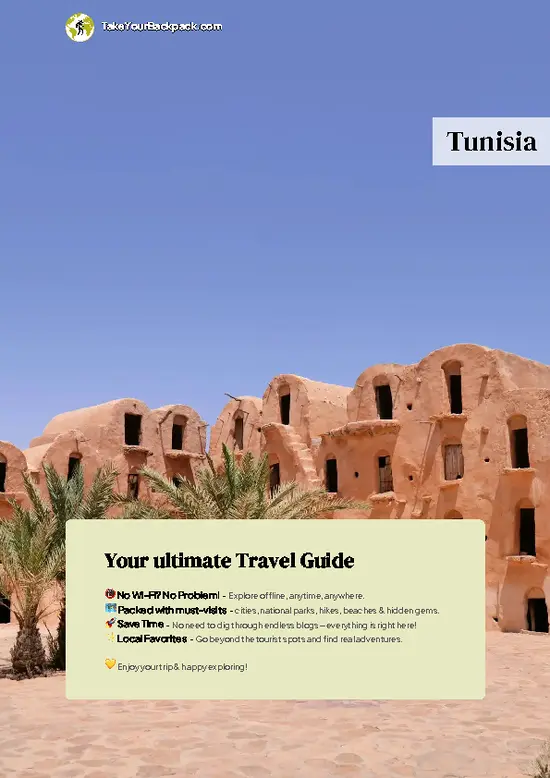
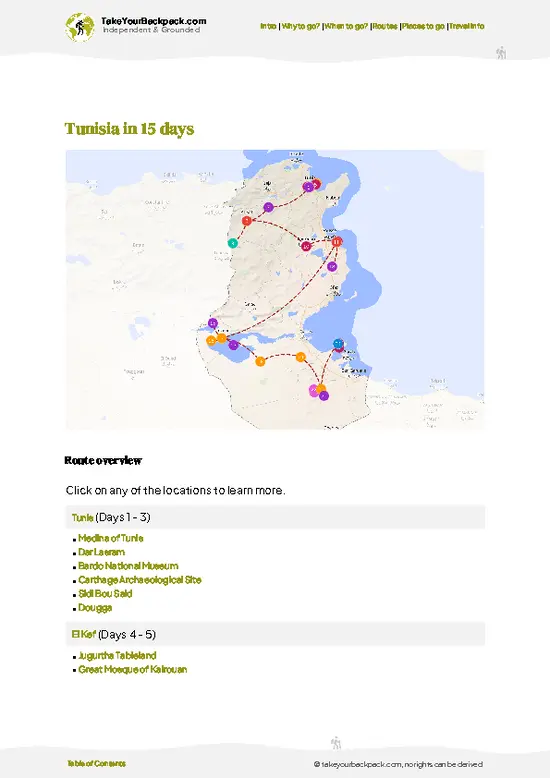
example page 0 from our offline Travel Guide for Tunisia
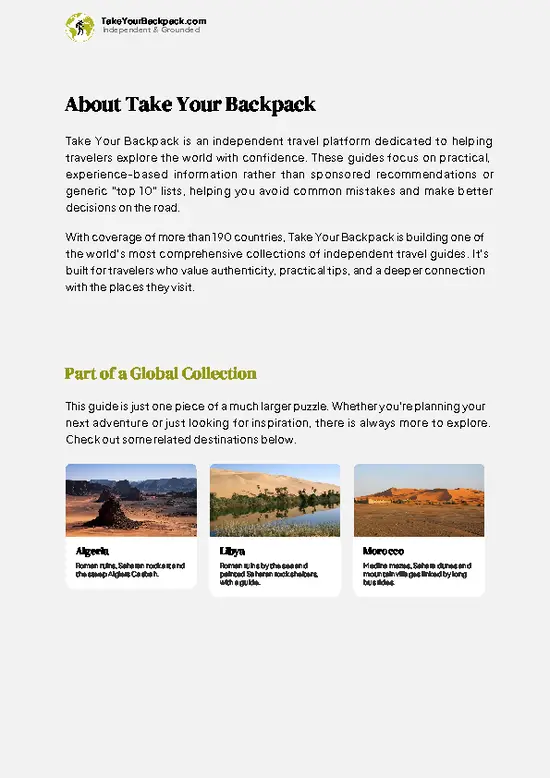
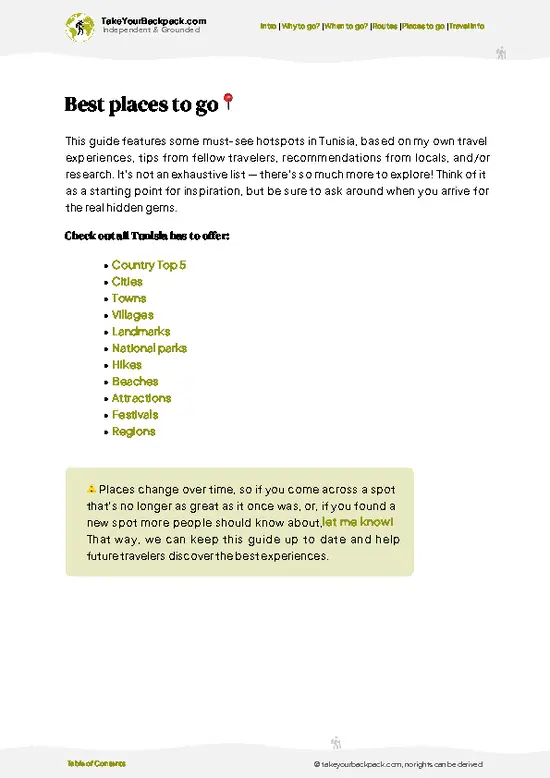
example page 1 from our offline Travel Guide for Tunisia
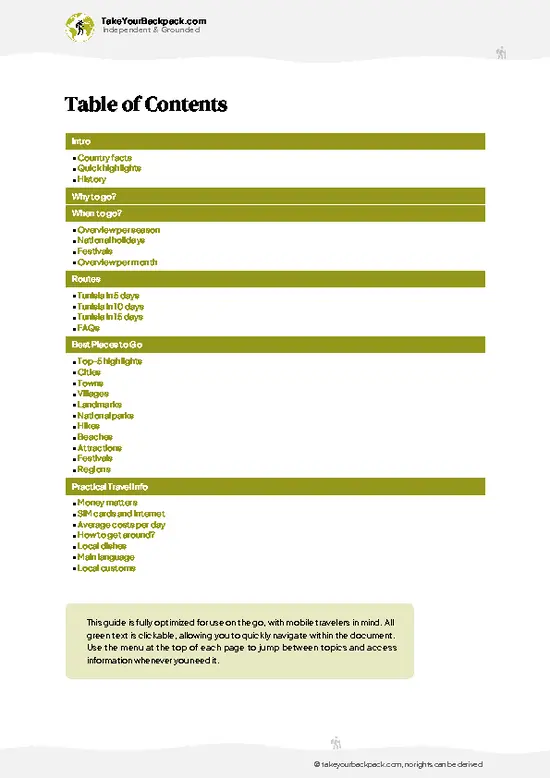
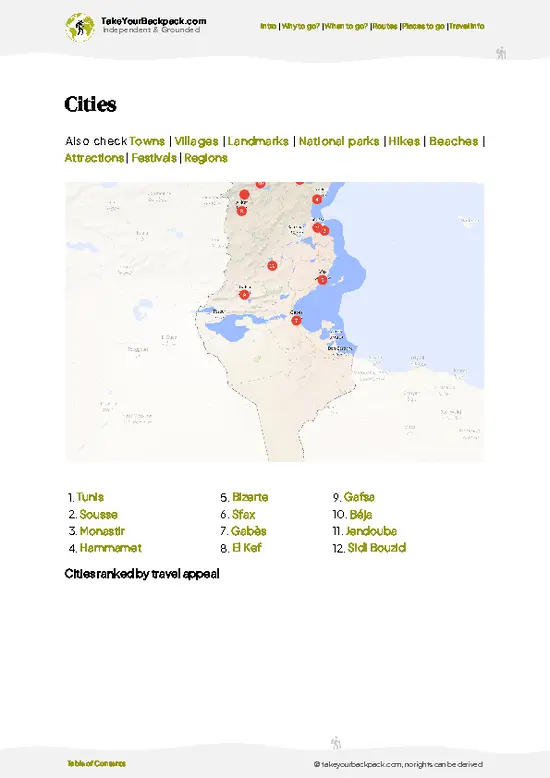
example page 2 from our offline Travel Guide for Tunisia
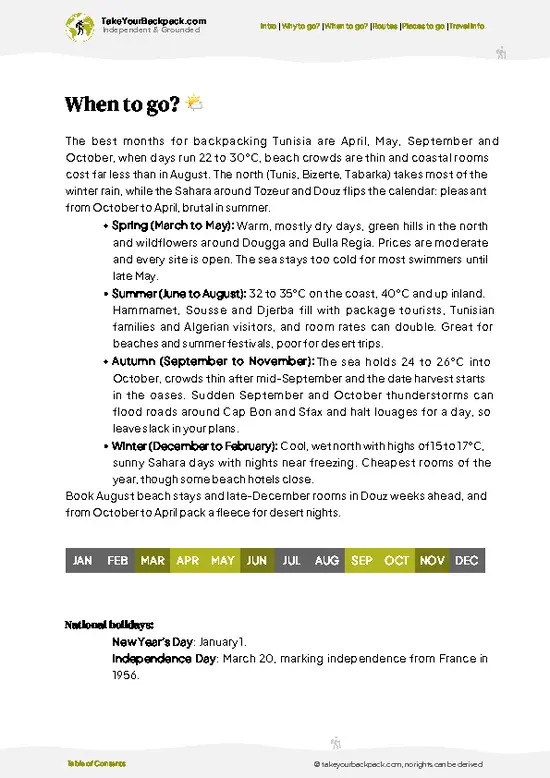
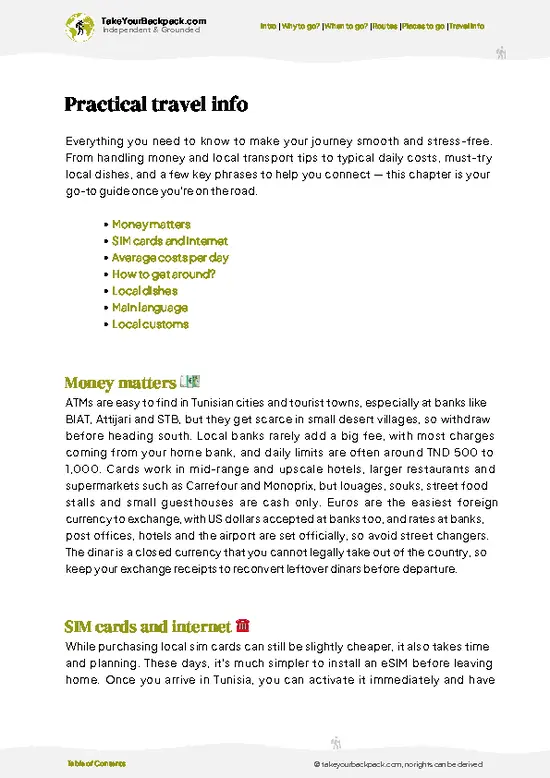
example page 3 from our offline Travel Guide for Tunisia
example page 4 from our offline Travel Guide for Tunisia
example page 5 from our offline Travel Guide for Tunisia
example page 6 from our offline Travel Guide for Tunisia
example page 7 from our offline Travel Guide for Tunisia
The digital guide (372 pages) contains:
97 highlights, ranked by travel appeal
Optimized 5, 10 & 15-day travel routes
Cities, national parks, landmarks, beaches
How to get around
Offline-friendly for travel without Wi-Fi
👉 Click to see all 30+ guide features

📅 Plan smarter in minutes, not weeks
Month by month travel advice
Festivals & national holidays
Budget expectations

🗺️ Go to the right places, skip the overrated ones
Honest pros & cons of destinations
Top hikes, parks & viewpoints
Lesser-known places most travelers miss
Clear “worth it vs skip it” guidance

🛏️ Travel smoothly without rookie mistakes
Best areas to stay
Transport systems explained simply
Common scams & safety advice
SIM cards, money & practical tips

🌍 Understand the country, not just visit it
Culture & traditions
52 Essential phrases & customs
Festivals worth planning around
Traveler-friendly historical context
Insights that make places more meaningful

📱 Built for real travel conditions
Fully downloadable PDF
Works completely offline
Optimized for phone use
Useful in remote areas & buses
Everything in one place
Save weeks of stressful planning
Get instant access to your full guide. 30‑day money-back guarantee.


By proceeding you agree to our terms.
Sent to your inbox immediately after payment • 100% Secure Checkout
Best Backpacking Travel Advisor 2025 tourism awardBest Backpacking
Travel Advisor
2025
What others say about Take Your Backpack Guides:
⭐⭐⭐⭐⭐
Fantastic, amazing amount of information!
⭐⭐⭐⭐⭐
My goodness this is amazing, it's what I've been looking for hats off too you!
⭐⭐⭐⭐⭐
I think this is absolutely BRILLIANT
⭐⭐⭐⭐
Very complete and informative. It's still missing places, but I gotta to commend you
⭐⭐⭐⭐⭐
This is truly amazing, thank you, can't wait to explore it with my kids!
⭐⭐⭐⭐⭐
Awesome resource, thank you!
⭐⭐⭐⭐⭐
This is amazing! Can't wait to explore the ones I haven't seen
⭐⭐⭐⭐
I love this! Well done, great idea.
⭐⭐⭐⭐⭐
Thanks for taking the time to make this gem!
⭐⭐⭐⭐⭐
This might be the best website I've ever seen.
⭐⭐⭐⭐⭐
Congratulations, and thank you so much for your work; it's incredibly valuable.
⭐⭐⭐⭐
In all seriousness I think you did a great job pointing out the important spots
⭐⭐⭐⭐⭐
10/10 very good
⭐⭐⭐⭐⭐
As someone who's only just starting to visit regularly this is awesome, thank you.
⭐⭐⭐⭐
Thank you very much! I'm going to visit my dad, it's going to be very useful!
⭐⭐⭐⭐⭐
This is really cool! We'll be travelling for the first time and this definitely come in handy.
⭐⭐⭐⭐⭐
You are now our minister of culture, congratulations 👨‍💼
⭐⭐⭐⭐⭐
Just wanted to tell you that this is a pearl! Going to follow your recommendations.
⭐⭐⭐⭐⭐
This is so cool. I'll definitely be using the resource for my travels soon.
⭐⭐⭐⭐⭐
This is very impressive! Good work.
⭐⭐⭐⭐⭐
This is an amazing and informative site. Very well done!

🛏️ Where to stay?Where to Stay in Tunisia

Yes — hostels and budget accommodation are widely available in Tunisia, concentrated in Tunis (Medina and Ville Nouvelle), Sousse (Medina and waterfront), Hammamet, Djerba, with smaller backpacker options in Tozeur and Kairouan.
Medina areas put you within historic highlights and cheap local food but expect narrow streets, basic rooms and limited nightlife; Ville Nouvelle and Sousse waterfront offer easier transport, more social hostels and livelier evenings at slightly higher rates; Hammamet and Djerba are quieter beach bases with seasonal service drops and fewer cheap beds outside high season.
Budget places usually mean communal bathrooms, simple cleaning standards and crowded summer months, … read more 👉
Yes — hostels and budget accommodation are widely available in Tunisia, concentrated in Tunis (Medina and Ville Nouvelle), Sousse (Medina and waterfront), Hammamet, Djerba, with smaller backpacker options in Tozeur and Kairouan.
Medina areas put you within historic highlights and cheap local food but expect narrow streets, basic rooms and limited nightlife; Ville Nouvelle and Sousse waterfront offer easier transport, more social hostels and livelier evenings at slightly higher rates; Hammamet and Djerba are quieter beach bases with seasonal service drops and fewer cheap beds outside high season.
Budget places usually mean communal bathrooms, simple cleaning standards and crowded summer months, so book early in peak season, carry cash, and bring a light sleeping liner and mosquito protection to avoid common small-trip mistakes.

If you enjoy meeting fellow travelers, consider choosing hostels with high ratings for atmosphere. On the other hand, if you prefer having your own space, a hotel might be a better option.

TunisiaMore of Tunisia

👋 Meet the founderWho’s Behind Take Your Backpack?

Johan, backpacker and founder of TakeYourBackpackHi, I’m Johan (Netherlands 🇳🇱), the creator of TakeYourBackpack. Over the past decade, I’ve backpacked through 80+ countries across six continents, gaining extensive experience with independent travel, long-term trips, and overland routes.

This site is built on a combination of firsthand travel experience and carefully curated insights from other backpackers. Many guides are based on places I’ve personally visited, while others bring together tips, observations, and practical advice shared by trusted travelers I’ve met along the way.

The goal is to provide realistic, experience-driven guidance — not generic itineraries — so you can explore destinations with better context, clearer expectations, and more confidence.

Get full Tunisia guide •
Instant download • 97 highlights • Full Offline guide