×

Argentina🇦🇷 | best beachesEssential 7 beaches to Explore in Argentina

Beaches in Argentina are mostly cold-water, wind-exposed, long and flat, and they work as domestic holiday resorts rather than tropical escapes. If you want turquoise water and 28°C swimming, skip the country. If you want wide Atlantic sand, Argentine summer culture and cheap food, it delivers.

The Buenos Aires province coast is the mainstream choice: big resort towns, rented beach tents, packed sand in January and lots of buses from the capital. It is easy and sociable, but crowded and priced up in peak weeks. The forested dune towns further north are calmer and more expensive. Patagonia is a different proposition. Water is colder, wind is strong and the draw is sea lions, whales and huge tides, with far fewer people. Las Grutas is the exception, with the country’s warmest sea water and a lively summer scene. River beaches in Entre Ríos and Corrientes suit swimmers who want warm water and a low budget.

For backpacking or independent travel, the coast is easiest in the Buenos Aires region, where long-distance buses are frequent. Patagonian beaches need more distance and more time. The bigger the town, the easier the logistics, and the more you pay for a bed in summer.

By Johan Kruseman 🇳🇱 | Updated October 20, 2026
Explore the best attractions in Argentina

Why go?Why These beach Stand Out

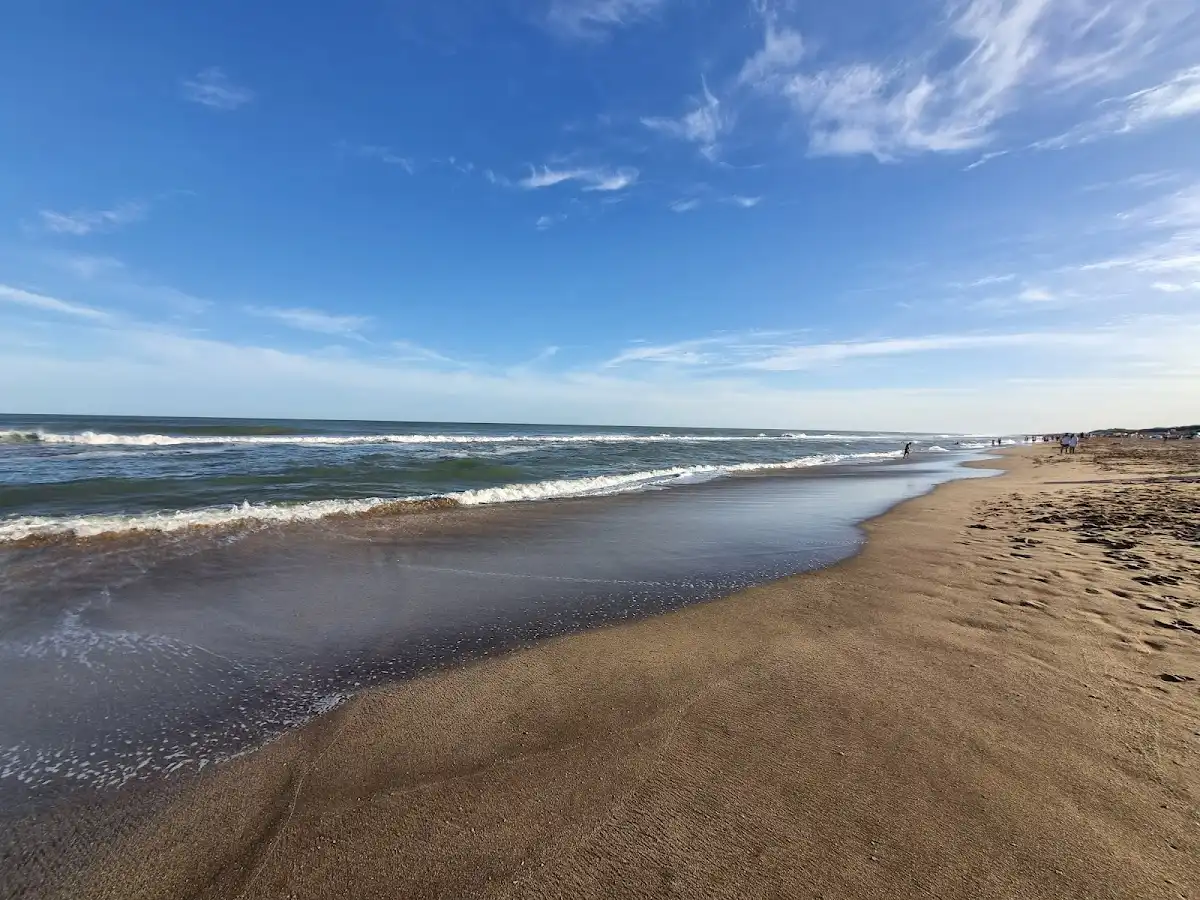
Argentina is a country with a beach culture, not a beach destination in the Caribbean sense. That distinction decides whether the trip works. The country stretches roughly 4,700 km from north to south, but its Atlantic coast is washed by the cold Malvinas (Falklands) Current in the south and meets warmer Brazil Current water only in the north. Sea temperatures in the main resort areas stay roughly 17 to 22°C even in peak summer, and in Patagonia they are often below 15°C. Swimming is possible and popular, but it is brisk.

What the country does well is scale and social life. Argentines take long summer holidays, mostly in January and February, and the coast is built around that rhythm: wide public sand, rented beach tents and sunshades by the day, mobile vendors, restaurants on the sand, and … read more 👉
Argentina is a country with a beach culture, not a beach destination in the Caribbean sense. That distinction decides whether the trip works. The country stretches roughly 4,700 km from north to south, but its Atlantic coast is washed by the cold Malvinas (Falklands) Current in the south and meets warmer Brazil Current water only in the north. Sea temperatures in the main resort areas stay roughly 17 to 22°C even in peak summer, and in Patagonia they are often below 15°C. Swimming is possible and popular, but it is brisk.

What the country does well is scale and social life. Argentines take long summer holidays, mostly in January and February, and the coast is built around that rhythm: wide public sand, rented beach tents and sunshades by the day, mobile vendors, restaurants on the sand, and a late-night town atmosphere. Package-holiday culture grew with the railways and then the car, so many resorts date from the early and mid twentieth century and feel like fading seaside towns with real local character. Expect mate thermoses, football on the sand and dinner after 9 p.m.

Geography shapes the rest. The coast is mostly low, sandy and open, so wind is a constant, and sunny days can feel cool in the shade. Patagonia adds dramatic cliffs, giant tides and wildlife, but the water is for looking at, not for lounging in. Tropical-style snorkeling, coral and clear water are not on offer on the ocean side. Inland, the Paraná and Uruguay rivers have sandy river beaches that suit hot weather and warm swimming.

Before choosing Argentina for beaches, know three things. First, seasonality is sharp: many coastal towns are close to empty in winter, and several services shut. Second, prices jump in January for beds and beach tents, so a shoulder-season visit saves real money. Third, access matters: the beaches near Buenos Aires are easy, while Patagonian stretches demand long distances and often a rental car or an organized tour. Treat the beach as part of a wider Argentine trip, not the single reason to come.
Behind the Scenes of Selection
The list of best beaches in Argentina is created based on beauty, vibe, water quality, activities, and surrounding scenery. If you feel a beach is missing in this list, please let us know.

When to go?Timing Your Visit for the Best Experience

Best months and why: The best months for beaches in Argentina are December to February, when air temperatures on the Buenos Aires coast reach 25 to 30°C and the sea is at its warmest, roughly 18 to 22°C. January is the hottest and busiest, with the highest prices and the most people. Early to mid December and late February to early March give almost the same weather with noticeably fewer people.

Shoulder seasons: March is the best-value month on the Atlantic coast of Buenos Aires province. Days are often 22 to 26°C, tent rentals and dorm beds drop, and the towns still run normal hours. The sea cools quickly through the month. November is workable but windy, with water around 14 to 16°C and many beach services only partly open. April brings 17 to 21°C air and mostly closed beach facilities, … read more 👉
Best months and why: The best months for beaches in Argentina are December to February, when air temperatures on the Buenos Aires coast reach 25 to 30°C and the sea is at its warmest, roughly 18 to 22°C. January is the hottest and busiest, with the highest prices and the most people. Early to mid December and late February to early March give almost the same weather with noticeably fewer people.

Shoulder seasons: March is the best-value month on the Atlantic coast of Buenos Aires province. Days are often 22 to 26°C, tent rentals and dorm beds drop, and the towns still run normal hours. The sea cools quickly through the month. November is workable but windy, with water around 14 to 16°C and many beach services only partly open. April brings 17 to 21°C air and mostly closed beach facilities, so it is not worth the trip for sunbathing.

Peak periods: Argentine school holidays drive the calendar. Expect the heaviest demand from late December to the end of February, with the first and third weeks of January the most crowded. Accommodation prices in resort towns commonly run 30 to 100 percent above shoulder-season rates, and many hostels and hotels require minimum stays around New Year. Easter week and the July winter break are also busy in some towns, but not for swimming. A beach holiday then is for walking and quiet.

Regional differences: Patagonia works on its own schedule. Summer air temperatures of 18 to 25°C are pleasant, but wind is strong, the sea stays cold, and nights are cool. Las Grutas is the exception, with a busy summer season and the warmest water in Patagonia, though tides can pull the sea far out. Marine wildlife viewing peaks outside swimming season in some areas, so a winter or spring visit can suit wildlife more than beach time. Tierra del Fuego is not a swimming destination at any time of year.

In the northeast, river beaches in Entre Ríos and Corrientes are best from November to March, when air is hot at 28 to 35°C, though thunderstorms are common in summer. Rainfall on the Buenos Aires coast is spread through the year, with brief summer storms more likely than long wet spells. Winter, June to August, is a bad choice for beaches: 8 to 15°C days, wind and many closures.

beach hoppingSuggested Travel Strategies

How many days to plan: A trip combining several beaches in Argentina needs 10 to 14 days if you want to link the Buenos Aires coast with Patagonia, or 5 to 7 days if you stay on the Atlantic coast of Buenos Aires province. Argentina is huge, so the biggest planning decision is how much of it to try.

Which regions pair well: The Buenos Aires province coast clusters naturally. Towns sit within 30 to 150 km of each other along Route 11 and Route 2, and buses connect them every few hours in summer. Plan 2 to 3 nights at a bigger resort town and 1 to 2 nights at smaller ones. Patagonian beaches pair with each other, around Puerto Madryn and the Río Negro coast, and need 2 to 4 nights per base because distances are large and wildlife trips take most of a day. River beaches in the northeast are … read more 👉
How many days to plan: A trip combining several beaches in Argentina needs 10 to 14 days if you want to link the Buenos Aires coast with Patagonia, or 5 to 7 days if you stay on the Atlantic coast of Buenos Aires province. Argentina is huge, so the biggest planning decision is how much of it to try.

Which regions pair well: The Buenos Aires province coast clusters naturally. Towns sit within 30 to 150 km of each other along Route 11 and Route 2, and buses connect them every few hours in summer. Plan 2 to 3 nights at a bigger resort town and 1 to 2 nights at smaller ones. Patagonian beaches pair with each other, around Puerto Madryn and the Río Negro coast, and need 2 to 4 nights per base because distances are large and wildlife trips take most of a day. River beaches in the northeast are a separate trip and do not combine sensibly with the Atlantic coast.

Direction of travel: Start in Buenos Aires and go south along the Atlantic, then fly to Patagonia. The bus from the capital to the main Buenos Aires coast resorts takes roughly 4 to 6 hours, and Mar del Plata is the main transport hub for the south of the province. From there, Puerto Madryn is more than 1,000 km away by road, 15 to 20 hours by bus, so flying from Buenos Aires is usually 2 hours and often worth the extra cost. Between Patagonian stops, plan 4 to 6 hours by road, and check bus frequency because services can be limited outside summer.

Common planning mistakes: The first is trying to cover both the Buenos Aires coast and Patagonia in under a week. You will spend more time on overnight buses than on sand, and the beach time is the point. Choose one region. The second is treating a map distance as an hour count. A 300 km leg can take 5 hours with stops, and Patagonian roads have fewer buses. Build in a buffer day.

The third is booking beach towns in January without checking minimum stays and transport. Reserve beds and bus seats a few weeks ahead for peak weeks, or travel in March instead. The fourth is scheduling a swim-focused stop in Patagonia outside summer. Instead, base wildlife and walking days there, and keep swimming for the warmer Atlantic stops.

The ListTop beaches of Argentina

1 Las Grutas

Low-tide sea caves, warm gulf water, cliff-path sunsets, seafood stalls

Time your walk with the tide tables to slip into exposed rock corridors, then finish at the cliff path above the gulf.

2 Mar de las Pampas

Forest boardwalks, dune sunsets, horseback on sand, hostel asados

Follow shaded wooden walkways through pine and eucalyptus until the trees open onto sand, then ride horses or watch local surfers work the break.

argentina-beach-mar-de-las-pampas
© Google |

3 Playa Escondida

Official nudist beach, heated pool, cliffs and dunes, day-use balneario

Spend a full day at a fenced Atlantic balneario where swimsuits are optional, with a heated pool, shaded gazebos and cliff-backed sand.

4 Playa Unión

River-mouth surf, Commerson’s dolphins, pier at dusk, grilled merluza

Board a small boat to spot black-and-white Commerson’s dolphins, surf the river-mouth break, and eat grilled whitefish near the waterfront.

argentina-beach-playa-union
© Google |

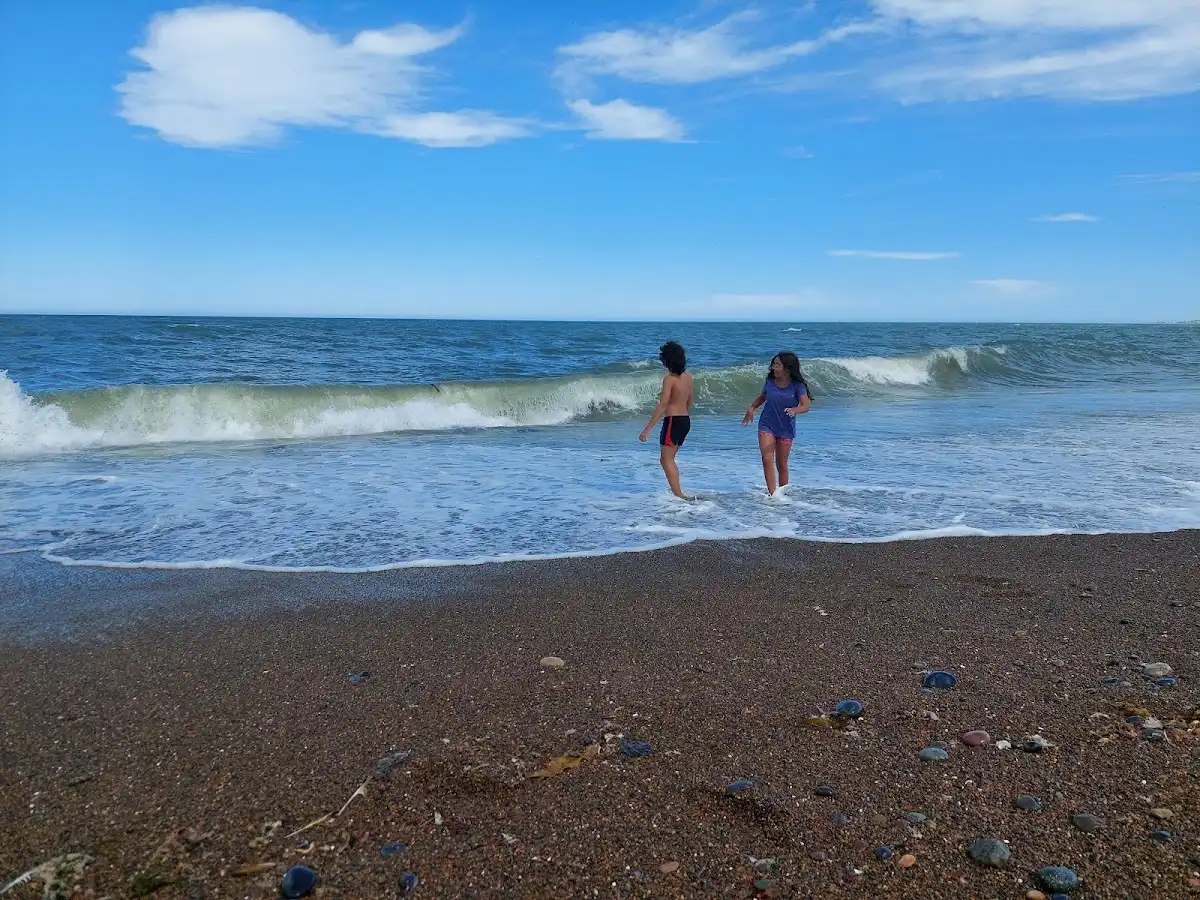
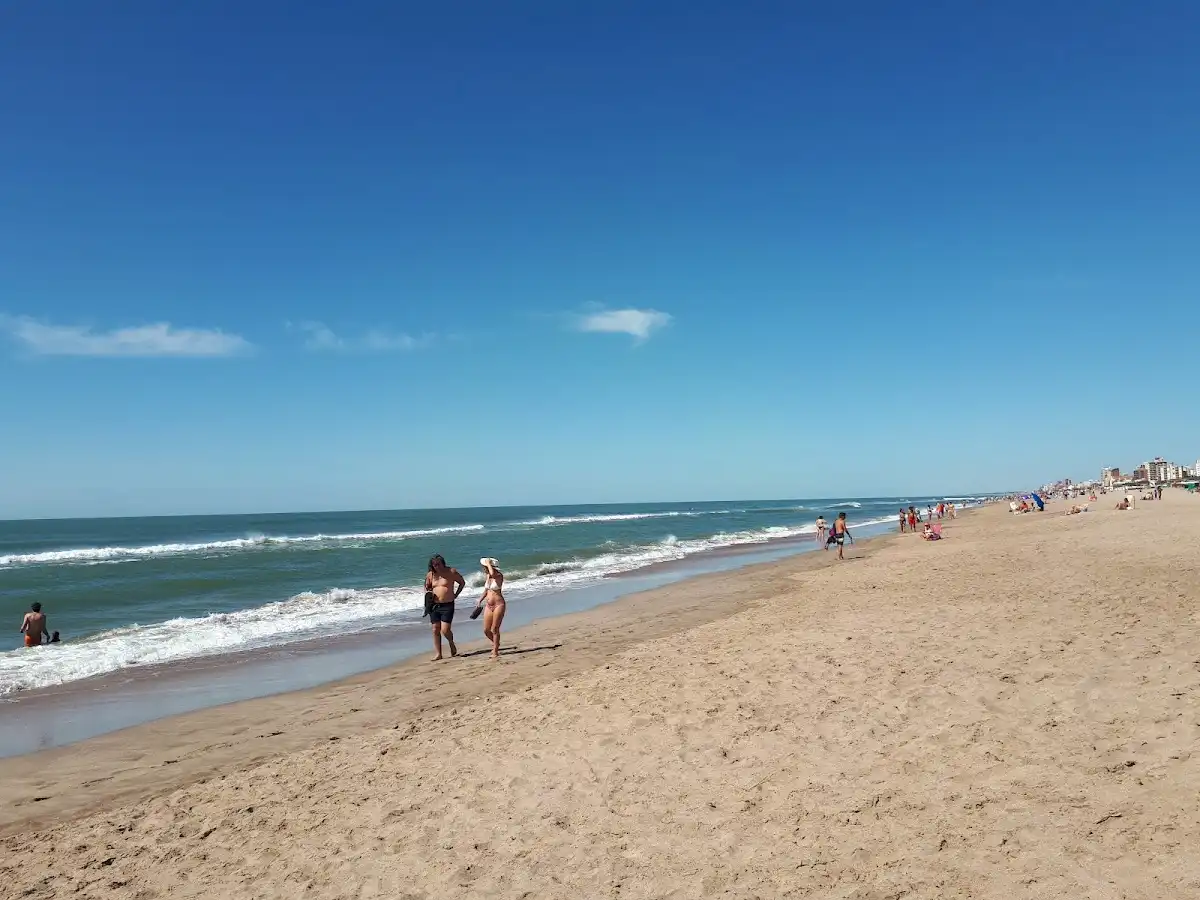
6 Playa del Norte

Blue Flag sand, pine dunes, beginner waves, sunrise kiosks

Walk the firm waterline at low tide, rent a board for gentle Atlantic breaks, and cut back through pine-shaded dune paths.

argentina-beach-playa-del-norte
© Google |

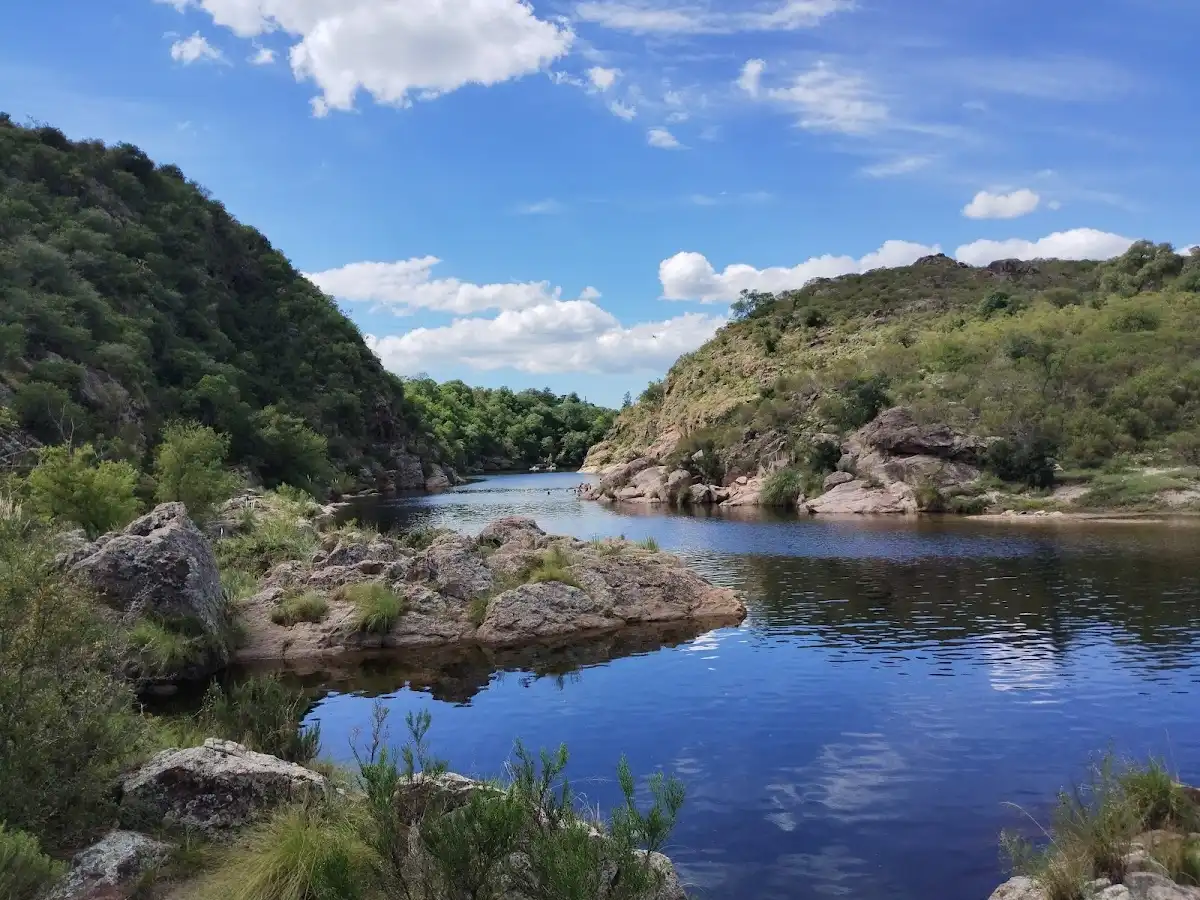
7 Playa de los Hippies

Granite slabs, cold river pools, 15-minute rocky walk

Hike a rocky path down to clear Río San Antonio pools, then dry off on warm granite slabs beneath green Córdoba hills.

argentina-beach-playa-de-los-hippies
© Google |
Loading the map 🌍

Expert viewTips and Advice from Travelers

How many beaches to visit: Two or three. That is the number I would advise, and the reason is geography. Argentina stretches more than 3,000 km from top to bottom, its good sand is scattered along a coastline where the water temperature swings from warm to near-Antarctic, and every extra beach adds a long bus ride that eats a full day. A fourth beach rarely adds anything the first three did not already give you, while it costs you 8 to 18 hours of seat time and one more night of accommodation. Skip the idea of collecting beaches like stamps. Pick one kind, add a second only if it gives you something different, and spend the saved days somewhere Argentina does better, such as mountains, wine country or the cities.

Three stops is the ceiling for a trip of two to three weeks. Under ten days, choose … read more 👉
How many beaches to visit: Two or three. That is the number I would advise, and the reason is geography. Argentina stretches more than 3,000 km from top to bottom, its good sand is scattered along a coastline where the water temperature swings from warm to near-Antarctic, and every extra beach adds a long bus ride that eats a full day. A fourth beach rarely adds anything the first three did not already give you, while it costs you 8 to 18 hours of seat time and one more night of accommodation. Skip the idea of collecting beaches like stamps. Pick one kind, add a second only if it gives you something different, and spend the saved days somewhere Argentina does better, such as mountains, wine country or the cities.

Three stops is the ceiling for a trip of two to three weeks. Under ten days, choose one. Beaches here are a bonus on a wider journey, not the reason most backpackers cross the country, and treating them that way keeps your budget and your sanity intact.

Which kind suits which traveler: Argentine beaches fall into four kinds, and they reward very different trips. The Atlantic resort coast of Buenos Aires province is where Argentines go: wide sand, rows of rented tents, beach bars, loud nightlife, and prices that jump in peak summer. It costs the most in money and comfort (crowds, noise, reserved sunbed zones) but the least in time, because it is the easiest to reach from the capital. For a social traveler who wants parties and meets locals easily, it gives the most. For anyone who hates crowds, it is not worth the time in January.

The Patagonian coast is for wildlife and space, not swimming. The water is cold (often 10 to 16°C even in summer), the wind is constant, and the beach is a place to watch sea lions, penguins and whales from shore. It costs the most in time and transport, because distances are huge and buses are slow, but it gives the most memorable experience per day. A backpacker who wants to swim should not detour here.

River beaches along the Paraná and Uruguay rivers in Entre Ríos and Corrientes are calm, free or nearly free, and warm from November to March. They are modest in scale and light on infrastructure, and they suit a traveler who wants a lazy, cheap afternoon on the way to somewhere else. Lake beaches in the Andean lakes and Córdoba’s reservoirs are the cheapest and quietest option, though the water is cold in the south and the sand is often gravel. Treat them as a pleasant stop, not a destination.

What it costs: Budget US$35 to 60 a day on the Atlantic coast in peak season, which covers a hostel dorm bed (US$15 to 30 in January and February, roughly half that in shoulder months), two cheap meals and a grocery run. Off-season the same trip drops to US$25 to 40 a day. Patagonian coast days run US$40 to 70, mostly because lodging is scarce and tours are the main expense. Expect to pay US$60 to 120 for a guided wildlife or boat outing, and reserve or park entry fees of roughly US$15 to 35 for foreigners, higher than what locals pay.

Public beaches are free by law. What costs money is the comfort layer: a rented tent or parasol with chairs runs about US$10 to 40 a day in peak season on the Atlantic coast, and it is the single expense I would skip. Bring a cheap towel and a sun shelter, or sit on the free sand, and you save a few hundred dollars over a month. Beachside restaurants charge a premium of 30 to 50 percent over streets two blocks inland, so eat there once for the view and buy the rest from bakeries and supermarkets.

Long-distance buses between coastal areas cost roughly US$20 to 60 per leg depending on distance, and the semi-cama seat (a wider reclining seat) is worth the small upgrade on rides over six hours. Prices are quoted in pesos and shift quickly, so check current rates before you commit, and carry some cash because small beach businesses prefer it.

Safety and local habits: The biggest risk is the sea itself. Many Atlantic beaches have strong currents and rip tides, and lifeguards work only in season, usually from December to March and within marked sections. Swim near a guard post and obey the flags. Outside those months, treat the water as unsupervised. In Patagonia, cold water and sudden waves make swimming dangerous for anyone not prepared, and sea lions on the sand should be left alone and watched from a distance.

Sun at these latitudes is stronger than many travelers expect, especially on the exposed Atlantic sand, so apply sunscreen often and carry water. On crowded beaches, petty theft happens: never leave a phone or wallet on a towel while you swim, and take turns watching bags if you are in a group.

Local habits are easy to adopt. Argentines bring a thermos and mate to the beach, and sharing it is a social gesture, so accept it if offered and pass it back without comment. Meals run late, with dinner after 9 pm even on the coast, and beaches fill in the afternoon, not at dawn. Topless sunbathing is uncommon, so follow what locals around you do. Rental tents are reserved by the season, so book ahead in January if you want a spot.

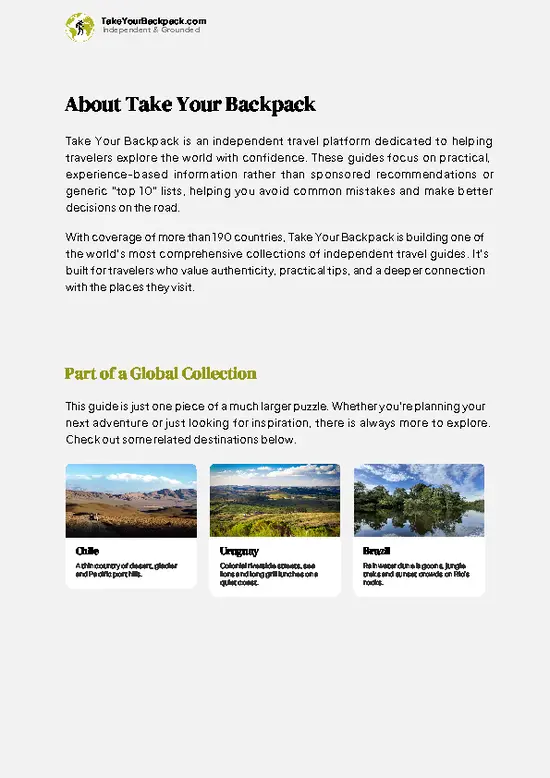
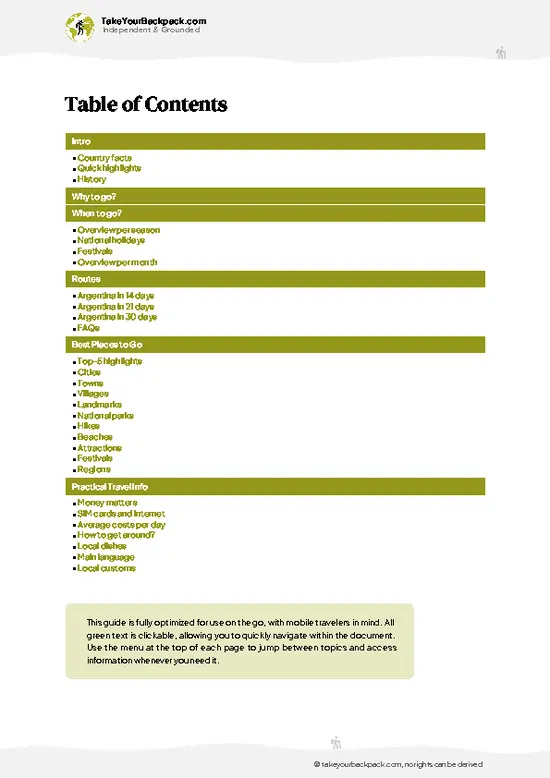
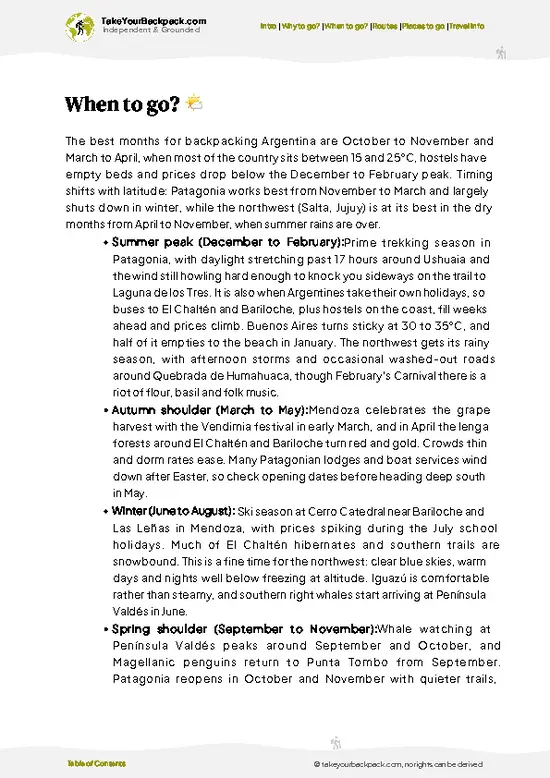
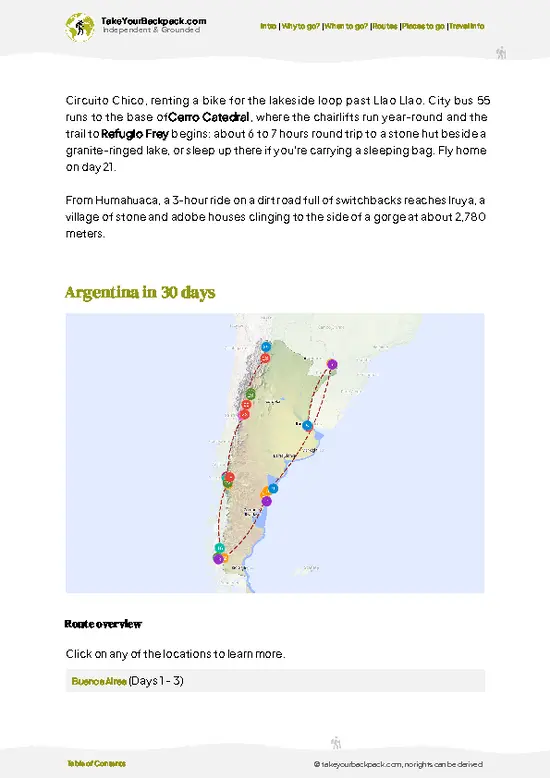
✈️ The backpacker research shortcutArgentina Travel Guide

An offline-friendly backpacking guide with optimized travel routes, ranked highlights, transport advice, and the best areas to stay.
example page 0 from our offline Travel Guide for Argentina
example page 1 from our offline Travel Guide for Argentina
example page 2 from our offline Travel Guide for Argentina
example page 3 from our offline Travel Guide for Argentina
example page 4 from our offline Travel Guide for Argentina
example page 5 from our offline Travel Guide for Argentina
example page 6 from our offline Travel Guide for Argentina
example page 7 from our offline Travel Guide for Argentina
The digital guide (393 pages) contains:
✅ 131 highlights, ranked by travel appeal
✅ Optimized 14, 21 & 30-day travel routes
✅ Cities, national parks, landmarks, beaches
✅ How to get around
✅ Offline-friendly for travel without Wi-Fi
👉 Click to see all 30+ guide features

📅 Plan smarter in minutes, not weeks
✅ Month by month travel advice
✅ Festivals & national holidays
✅ Budget expectations

🗺️ Go to the right places, skip the overrated ones
✅ Honest pros & cons of destinations
✅ Top hikes, parks & viewpoints
✅ Lesser-known places most travelers miss
✅ Clear “worth it vs skip it” guidance

🛏️ Travel smoothly without rookie mistakes
✅ Best areas to stay
✅ Transport systems explained simply
✅ Common scams & safety advice
✅ SIM cards, money & practical tips

🌍 Understand the country, not just visit it
✅ Culture & traditions
✅ 52 Essential phrases & customs
✅ Festivals worth planning around
✅ Traveler-friendly historical context
✅ Insights that make places more meaningful

📱 Built for real travel conditions
✅ Fully downloadable PDF
✅ Works completely offline
✅ Optimized for phone use
✅ Useful in remote areas & buses
✅ Everything in one place
Stop searching, start planning
Get instant access to your full guide. 30‑day money-back guarantee.
+ Add another guide for just

By proceeding you agree to our terms.
Sent to your inbox immediately after payment • 100% Secure Checkout
Best Backpacking Travel Advisor 2025 tourism awardBest Backpacking
Travel Advisor
2025
What others say about Take Your Backpack Guides:
⭐⭐⭐⭐⭐
Fantastic, amazing amount of information!
⭐⭐⭐⭐⭐
My goodness this is amazing, it's what I've been looking for hats off too you!
⭐⭐⭐⭐⭐
I think this is absolutely BRILLIANT
⭐⭐⭐⭐
Very complete and informative. It's still missing places, but I gotta to commend you
⭐⭐⭐⭐⭐
This is truly amazing, thank you, can't wait to explore it with my kids!
⭐⭐⭐⭐⭐
Awesome resource, thank you!
⭐⭐⭐⭐⭐
This is amazing! Can't wait to explore the ones I haven't seen
⭐⭐⭐⭐
I love this! Well done, great idea.
⭐⭐⭐⭐⭐
Thanks for taking the time to make this gem!
⭐⭐⭐⭐⭐
This might be the best website I've ever seen.
⭐⭐⭐⭐⭐
Congratulations, and thank you so much for your work; it's incredibly valuable.
⭐⭐⭐⭐
In all seriousness I think you did a great job pointing out the important spots
⭐⭐⭐⭐⭐
10/10 very good
⭐⭐⭐⭐⭐
As someone who's only just starting to visit regularly this is awesome, thank you.
⭐⭐⭐⭐
Thank you very much! I'm going to visit my dad, it's going to be very useful!
⭐⭐⭐⭐⭐
This is really cool! We'll be travelling for the first time and this definitely come in handy.
⭐⭐⭐⭐⭐
You are now our minister of culture, congratulations 👨‍💼
⭐⭐⭐⭐⭐
Just wanted to tell you that this is a pearl! Going to follow your recommendations.
⭐⭐⭐⭐⭐
This is so cool. I'll definitely be using the resource for my travels soon.
⭐⭐⭐⭐⭐
This is very impressive! Good work.
⭐⭐⭐⭐⭐
This is an amazing and informative site. Very well done!

🛏️ Where to stay?Top Areas to Stay

Argentina has plenty of hostels and budget guesthouses, with dorm beds typically around US$12 to 25 a night and the widest choice in Buenos Aires, Mendoza, Salta and Bariloche. In Buenos Aires, Palermo has the most options, leafy streets, the best bars and clubs, and feels safe late at night, but it sits a 20 to 30 minute subway ride from the historic center. San Telmo is cheaper and closer to the old city and the Sunday market, though its quieter blocks get sketchy after dark, while Recoleta is the calm, safe pick with fewer hostels and slightly higher prices.

If you enjoy meeting fellow travelers, consider choosing hostels with high ratings for atmosphere. On the other hand, if you prefer having … read more 👉
Argentina has plenty of hostels and budget guesthouses, with dorm beds typically around US$12 to 25 a night and the widest choice in Buenos Aires, Mendoza, Salta and Bariloche. In Buenos Aires, Palermo has the most options, leafy streets, the best bars and clubs, and feels safe late at night, but it sits a 20 to 30 minute subway ride from the historic center. San Telmo is cheaper and closer to the old city and the Sunday market, though its quieter blocks get sketchy after dark, while Recoleta is the calm, safe pick with fewer hostels and slightly higher prices.

If you enjoy meeting fellow travelers, consider choosing hostels with high ratings for atmosphere. On the other hand, if you prefer having your own space, a hotel might be a better option.

ArgentinaDiscover the Country

👋 Meet the founderWho’s Behind Take Your Backpack?

Johan, backpacker and founder of TakeYourBackpackHi, I’m Johan (Netherlands 🇳🇱), the creator of TakeYourBackpack. Over the past 3 decades, I’ve backpacked through 90+ countries across six continents, gaining extensive experience with independent travel, long-term trips, and overland routes.

This site is built on a combination of firsthand travel experience and carefully curated insights from other backpackers. Many guides are based on places I’ve personally visited, while others bring together tips, observations, and practical advice shared by trusted travelers I’ve met along the way.

The goal is to provide realistic, experience-driven guidance — not generic itineraries — so you can explore destinations with better context, clearer expectations, and more confidence.