×

Argentina🇦🇷 | best hikesEssential 9 hikes to Explore in Argentina

Hiking in Argentina means choosing between two very different countries. Patagonia in the south and the Andes along the western border deliver the big names: granite spires, glaciers, and multi-day treks with refugios. The north-west offers high-desert canyons and colored hills at altitude, and the Andean foothills around Mendoza and the central sierras sit in between. Atmosphere changes with each region. Patagonia is organized, busy in summer, and priced for it, with park fees and refugio beds that can run well past what you pay elsewhere in the country. The north-west is quieter, cheaper, and rougher on logistics, with long bus rides and few formal trails. The Mendoza area is the easiest to reach, with plenty of day routes from town.

For backpacking and independent travel, the best value is a mix. Pick one Patagonian base for a signature trek, then add cheaper, quieter walking in the north or the central Andes. Skip the idea of hiking everywhere. Distances are huge, and a trail that looks close on a map can cost you a full day on a bus. Most routes are well marked in the national parks and loosely marked outside them, so match your choice to your navigation skills and how much comfort you want.

By Johan Kruseman 🇳🇱 | Updated October 20, 2026
Explore the best beaches in Argentina

Why go?Why These hike Stand Out

Argentina suits hiking because it stretches over roughly 3,700 kilometers from the subtropics to the edge of Antarctica, and the Andes run its whole western flank. That gives you glaciers, steppe, desert canyons, cloud forest, and 6,000-meter peaks inside one country, all reachable by a single bus network and a single currency. Few places let you swap climates this easily.

The national park system is the second reason. Argentina set aside parks early, and the best-known ones have marked trails, ranger posts, campsites, and in some areas staffed refugios. Patagonia in particular has the infrastructure of a mature trekking destination: supermarkets in gateway towns, gear rental, and guides on call. That makes it a good place for a first multi-day trek.

The weak point is distance and cost. … read more 👉
Argentina suits hiking because it stretches over roughly 3,700 kilometers from the subtropics to the edge of Antarctica, and the Andes run its whole western flank. That gives you glaciers, steppe, desert canyons, cloud forest, and 6,000-meter peaks inside one country, all reachable by a single bus network and a single currency. Few places let you swap climates this easily.

The national park system is the second reason. Argentina set aside parks early, and the best-known ones have marked trails, ranger posts, campsites, and in some areas staffed refugios. Patagonia in particular has the infrastructure of a mature trekking destination: supermarkets in gateway towns, gear rental, and guides on call. That makes it a good place for a first multi-day trek.

The weak point is distance and cost. Argentina is enormous, and the best hiking areas sit far apart. Domestic flights and long-haul buses eat budget and time, and the Patagonian parks charge foreign visitors considerably more than locals. Prices also swing with the exchange rate and inflation, so check current park fees and refugio rates before you commit. Cash in US dollars or euros is often changed on informal markets at better rates than ATMs give, though ATM and card options have improved, so look up the current situation before you arrive.

Before choosing Argentina, know the weather risk. Patagonian wind is strong enough to stop walking on exposed ridges, and storms can arrive within an hour. Altitude in the north-west and the high Andes causes headaches and slowed pace for the first days. Trails there are often unmarked, and rescue is slow.

There are also access rules to plan around. Some popular treks need advance reservations for campsites or refugios in high season, and some routes require a registration or a guide. Not every spectacular area is worth a long detour. If you only have a couple of weeks, one well-chosen region will give you better hiking than a rushed tour of five.
Evaluating the Top Choices
The list of best hikes in Argentina is created based on scenery, challenge, trail quality, landmarks, and overall enjoyment. If you feel a hike is missing in this list, please let us know.

When to go?Timing Your Visit for the Best Experience

Best months by region: The best months for hiking in Argentina are November to March in Patagonia, because daylight lasts up to 16 or 17 hours and trails, refugios, and ferries are all open. Summer temperatures in Patagonia range roughly from 5 to 20°C in daytime, but the wind is the real factor, and rain or snow can arrive in any month. For the north-west and the high Andes, the dry season from April to October gives clear skies and stable trails, though nights at altitude drop below freezing.

Shoulder seasons: March and April are the sweet spot in Patagonia. Crowds thin, fall colors turn the beech forests red and gold, and prices ease. Some refugios and transport services begin to close from around mid-April, so confirm before you go. October and early November bring melting snow and unfinished … read more 👉
Best months by region: The best months for hiking in Argentina are November to March in Patagonia, because daylight lasts up to 16 or 17 hours and trails, refugios, and ferries are all open. Summer temperatures in Patagonia range roughly from 5 to 20°C in daytime, but the wind is the real factor, and rain or snow can arrive in any month. For the north-west and the high Andes, the dry season from April to October gives clear skies and stable trails, though nights at altitude drop below freezing.

Shoulder seasons: March and April are the sweet spot in Patagonia. Crowds thin, fall colors turn the beech forests red and gold, and prices ease. Some refugios and transport services begin to close from around mid-April, so confirm before you go. October and early November bring melting snow and unfinished seasons, and higher passes may remain blocked. In the Mendoza region, spring (September to November) and fall (March to May) are the comfortable times for walking at mid-elevation, with daytime temperatures often between 15 and 25°C.

Peak periods and prices: January and February are the peak in Patagonia, and also the most expensive. Argentine school holidays fill campsites and refugios, and popular treks require booking weeks or months ahead. Accommodation in gateway towns can cost 30 to 60 percent more than in shoulder months. The north-west is not tied to the same calendar, so July can be busy there for domestic holidays, while January and February bring heavy afternoon rain in the subtropical zones and flooded access roads.

Times to avoid: Winter in Patagonia, from June to August, is not worth planning a hiking trip around. Days are short, many trails are snowed in, and most services shut. Summer in the north-west and the high desert brings afternoon thunderstorms and road washouts, and it is the wrong season for canyon or valley routes. High-altitude peaks in the central Andes are mostly climbable from December to March, and winter conditions there require mountaineering skills and equipment.

hike hoppingSuggested Travel Strategies

How many days to plan: A trip combining several hikes in Argentina needs 14 to 28 days, because the regions are far apart and each major trek takes 3 to 6 days on its own. Anything shorter forces you into flights and rushed bus days, and you spend more time moving than walking.

Which regions cluster: Patagonia clusters best. The southern Andes towns, the Chilean-border parks, and the Fitz Roy area connect by roads and flights through El Calafate, Ushuaia, and Bariloche. Allow 3 to 5 days per stop. The north-west clusters around Salta and Jujuy, where buses link the canyons, valleys, and high-desert towns in 3 to 6 hours. Mendoza is a separate base and works well as a quick add-on, with 2 to 4 days enough for the high Andes day routes.

Direction of travel: Fly into Buenos Aires, then head … read more 👉
How many days to plan: A trip combining several hikes in Argentina needs 14 to 28 days, because the regions are far apart and each major trek takes 3 to 6 days on its own. Anything shorter forces you into flights and rushed bus days, and you spend more time moving than walking.

Which regions cluster: Patagonia clusters best. The southern Andes towns, the Chilean-border parks, and the Fitz Roy area connect by roads and flights through El Calafate, Ushuaia, and Bariloche. Allow 3 to 5 days per stop. The north-west clusters around Salta and Jujuy, where buses link the canyons, valleys, and high-desert towns in 3 to 6 hours. Mendoza is a separate base and works well as a quick add-on, with 2 to 4 days enough for the high Andes day routes.

Direction of travel: Fly into Buenos Aires, then head north first in the shoulder season, when the north-west is dry and the altitude acclimatization helps later. Finish in Patagonia in the summer months. Going south to north is also reasonable if you start in November, but the high-altitude north-west is better saved for later in the trip, once your body has had time to adjust. Between regions, domestic flights are the practical choice. Buenos Aires to El Calafate takes about 3 hours in the air, while the same trip overland takes 30 to 40 hours. Salta to Mendoza by bus takes around 18 hours, and Mendoza to Bariloche about 18 to 20 hours.

Planning mistakes: The most common mistake is overloading. Travelers add a fifth region because it looks close on the map, then lose two days to a long bus. Pick two or three regions and stay put. A second mistake is skipping booking in January and February, when campsites and refugios fill. Reserve first, then build the rest around those dates. A third is ignoring weather buffers. Wind and storms cancel ferries, flights, and trail days, so leave at least one spare day in each Patagonian stop. Finally, do not hike at altitude on your first day in the north-west. Spend a day or two in Salta or Jujuy first, then go higher.

The ListTop hikes of Argentina

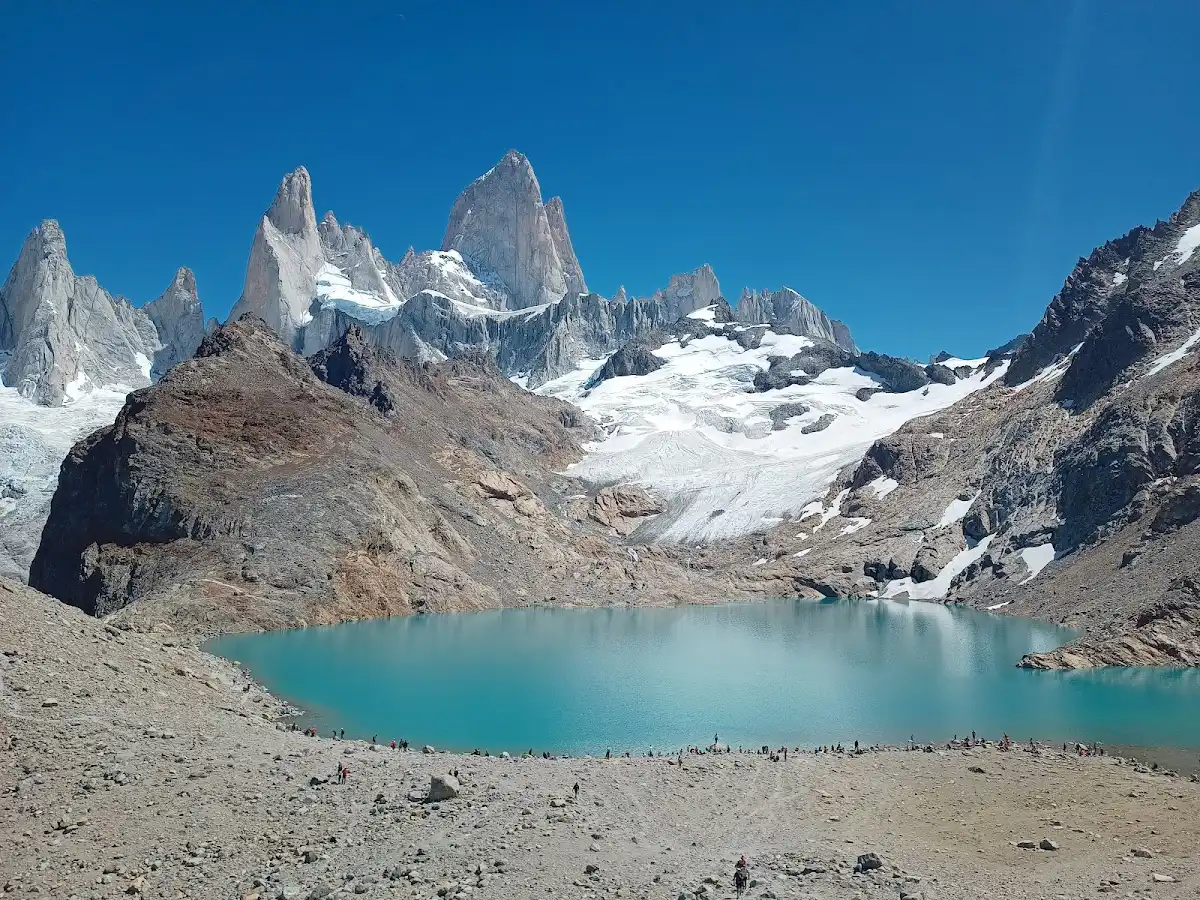
1 Laguna de los Tres

Steep final kilometer, glacial lake, Poincenot camp, 20 km round trip

Grind up a scree-covered last kilometer to a lake directly under Fitz Roy, with dawn camping as the way to beat wind and crowds.

argentina-hike-laguna-de-los-tres
© Google |

2 Laguna Torre

Mirador Maestri, Cerro Torre spire, floating icebergs, 18 km round trip

Hike through lenga forest and open moraine to a lake dotted with icebergs, facing a spire that often vanishes behind cloud.

argentina-hike-laguna-torre
© Google |

3 Aconcagua

Puente del Inca trailhead, mule-supported trek, Plaza de Mulas, 4,300 meters

Trek seven days up the Horcones Valley to a working base camp beneath the highest peak outside Asia, with time built in for acclimatizing.

argentina-hike-aconcagua
© Google | Daniel Spada

4 Refugio Frey

Laguna Tonchek, climbers' hut, Frey Needles, Villa Catedral start

Climb through quiet beech forest to a mountain hut on a turquoise lake, ringed by granite towers and the climbers who scale them.

argentina-hike-refugio-frey
© Google |

5 Paso de las Nubes

Tronador glaciers, cloud-level pass, two-day traverse, alerce forest

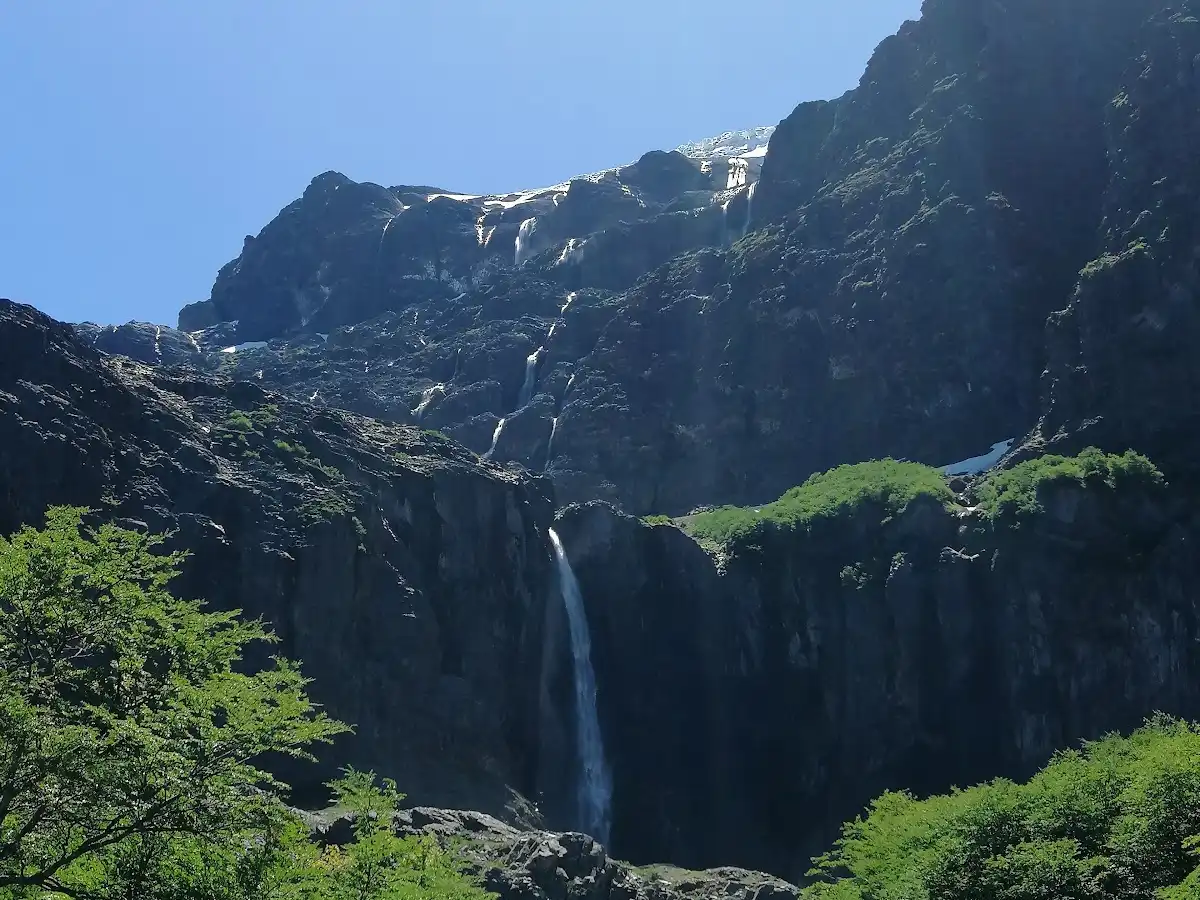
Cross a high saddle beneath Tronador’s calving ice, overnight at Refugio Rocca, then follow the Río Alerce through old forest to Puerto Frías.

argentina-hike-paso-de-las-nubes
© Google |

6 Cerro Tronador

Black Glacier, ice-fall thunder, lenga forest, Refugio Otto Meiling

Follow a moderate trail from Bariloche's park to hanging glaciers and a debris-darkened ice tongue, with cracking ice echoing across the valley.

argentina-hike-cerro-tronador
© Google |

7 Cerro Champaquí

Córdoba high point, grass-and-scrub ridges, 2,790 meters, condor thermals

Climb through open pastureland and a shallow river crossing to a summit cross with views over the Sierras Grandes and toward San Luis.

argentina-hike-cerro-champaqui
© Google |

8 Los Gigantes

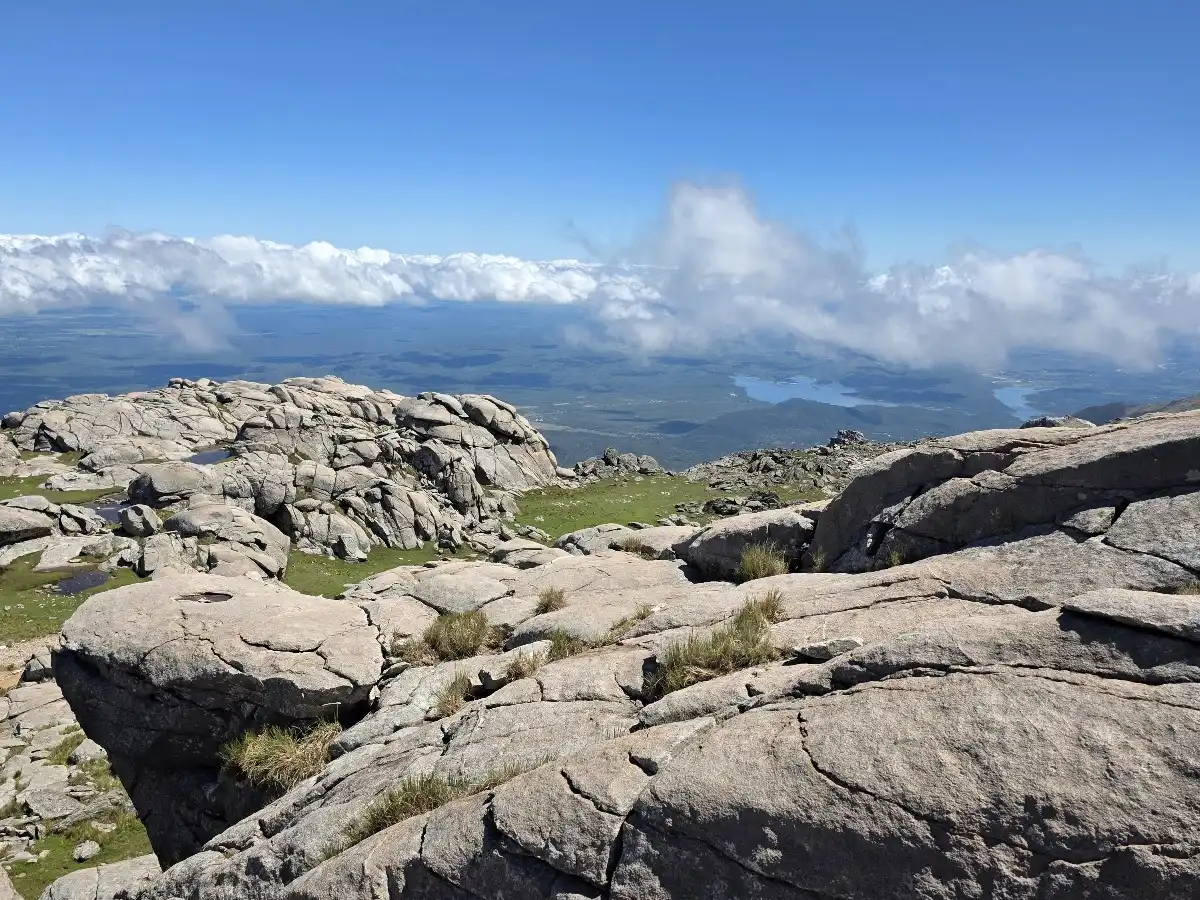
Boulder fields, wind-carved granite, summit panorama, Sierras Grandes ridges

Scramble across weathered granite slabs toward a high point where condors glide at eye level and ridgelines fade into haze.

argentina-hike-los-gigantes
© Google | Giuliana Belli

9 Cerro Uritorco

Capilla del Monte, 1,979-meter summit, balanced granite, false summit

Gain steady elevation on a rocky half-day route past stacked boulders and a creek crossing to views over the Punilla Valley.

Loading the map 🌍

Expert viewTips and Advice from Travelers

How many hikes to do: Plan three to five multi-day or major day hikes in a two to four week trip, and no more. Argentina rewards depth over volume, because every serious trail area costs a travel day or two to reach. One Patagonian trek of 3 to 5 days, one or two shorter walks in the north-west or Mendoza area, and a handful of easy day routes fill a month comfortably. Beyond that, you spend more on buses than on trails, and fatigue starts to cost you good weather days.

Which kind to prioritize: If you want the most dramatic mountains and have the budget, Patagonia is worth the splurge. It has the best infrastructure, the best signage, and the most reliable trail conditions. If money is tight, the north-west gives you more for less: lodging and food are cheaper, crowds are thin, and the landscapes … read more 👉
How many hikes to do: Plan three to five multi-day or major day hikes in a two to four week trip, and no more. Argentina rewards depth over volume, because every serious trail area costs a travel day or two to reach. One Patagonian trek of 3 to 5 days, one or two shorter walks in the north-west or Mendoza area, and a handful of easy day routes fill a month comfortably. Beyond that, you spend more on buses than on trails, and fatigue starts to cost you good weather days.

Which kind to prioritize: If you want the most dramatic mountains and have the budget, Patagonia is worth the splurge. It has the best infrastructure, the best signage, and the most reliable trail conditions. If money is tight, the north-west gives you more for less: lodging and food are cheaper, crowds are thin, and the landscapes of color-banded canyons and high desert are unlike anything else in South America. The trade-off is rougher logistics, fewer marked trails, and longer transfers. Mendoza and the central Andes suit travelers with limited time, since most routes start within a couple of hours of a city with hostels and restaurants. For a first big trek, pick Patagonia. For a second, go north. Skip any region that needs a long detour for a single short walk.

What it costs: Budget US$40 to 70 a day for independent backpacking outside Patagonia, covering a dorm bed or simple room, supermarket food, and local buses. In Patagonia, expect US$70 to 130 a day in summer, because lodging, groceries, and transfers all run higher. Park entry fees for foreigners in the major Patagonian parks run roughly US$20 to 45 per visit, and they change often, so check before you go. Campsites cost about US$5 to 25 a night, while refugio beds with meals can cost US$40 to 100 or more. A guide for a day route typically costs US$80 to 200 for a small group, and multi-day guided treks cost considerably more. Gear rental in gateway towns runs about US$5 to 15 a day for a tent, sleeping bag, or poles. Camping with your own gear and cooking for yourself is the best value, because it cuts the daily cost nearly in half compared with refugios. Guided hikes are worth the money only where the route is unmarked, glaciated, or requires permits. For marked national park trails, guides are not worth the time or cost.

Transport adds up. A domestic flight between regions often costs US$80 to 250, and long bus rides run US$30 to 90 depending on distance. Buses are cheaper but eat a day. If the trip is shorter than three weeks, one flight is usually the better use of your money than a second 20-hour bus.

Safety on the trail: The main hazards are weather, altitude, and isolation. In Patagonia, gusts can knock you off your feet on exposed ridges, and temperatures drop fast when rain turns to sleet. Carry a windproof shell, a warm layer, and a spare day of food. Check the park office forecast each morning and turn around when rangers advise it. In the north-west and the high Andes, altitude sickness is common above 3,000 meters. Spend at least two nights at moderate elevation before going higher, drink plenty of water, and descend if headaches or nausea worsen. Many trails there are not clearly marked and have no phone signal, so carry an offline map and tell your lodging where you are going.

Register at ranger stations where required. Many parks ask you to sign in and out, and some routes require registration or a guide. Water in the high Andes is generally fine to filter, but livestock graze in many valleys, so treat it. Fire rules are strict in Patagonia, and open fires are banned in most areas because of the wildfire risk, so bring a stove.

Cultural considerations: Argentines are friendly and relaxed about time, but dinner starts late, often after 9 pm, and shops close for a long midday break in smaller towns. Carry some cash in pesos for rural areas, since card machines are unreliable at remote lodges and campsites. Currency rules and exchange rates change often, so check them close to your departure. Greet people with a handshake or a single cheek kiss, and take the time to say hello at a refugio or homestay, since hosts value it. In indigenous communities of the north-west, ask before photographing people and respect any local access fees for land crossings. Pack out all trash, because few remote areas have collection.

✈️ The backpacker research shortcutArgentina Travel Guide

An offline-friendly backpacking guide with optimized travel routes, ranked highlights, transport advice, and the best areas to stay.
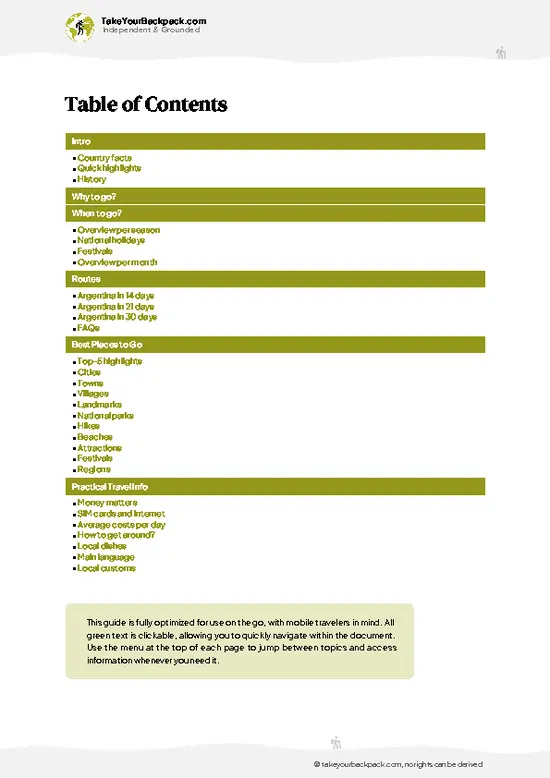
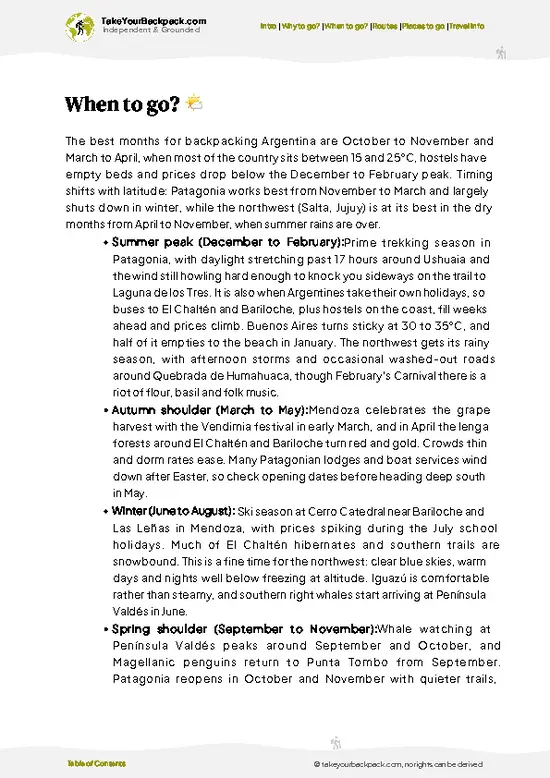
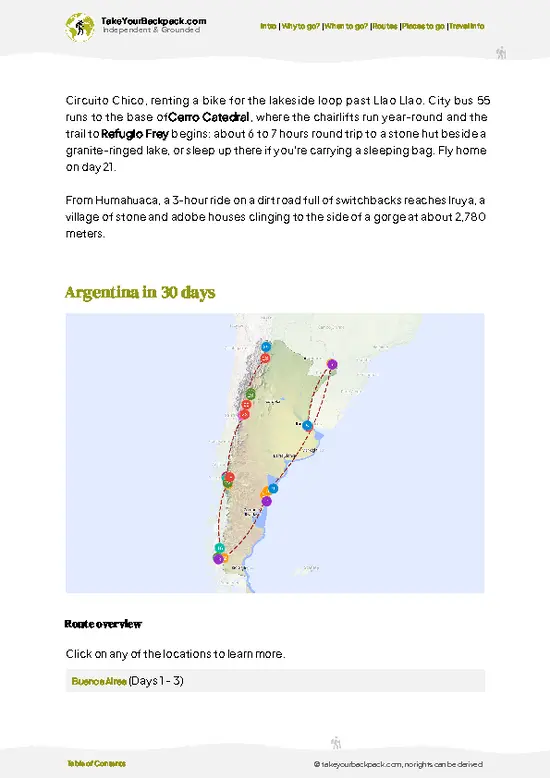
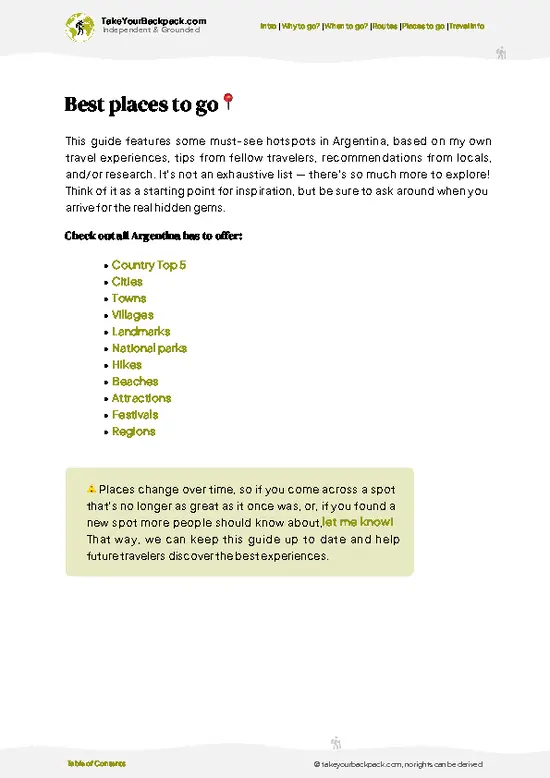
example page 0 from our offline Travel Guide for Argentina
example page 1 from our offline Travel Guide for Argentina
example page 2 from our offline Travel Guide for Argentina
example page 3 from our offline Travel Guide for Argentina
example page 4 from our offline Travel Guide for Argentina
example page 5 from our offline Travel Guide for Argentina
example page 6 from our offline Travel Guide for Argentina
example page 7 from our offline Travel Guide for Argentina
The digital guide (393 pages) contains:
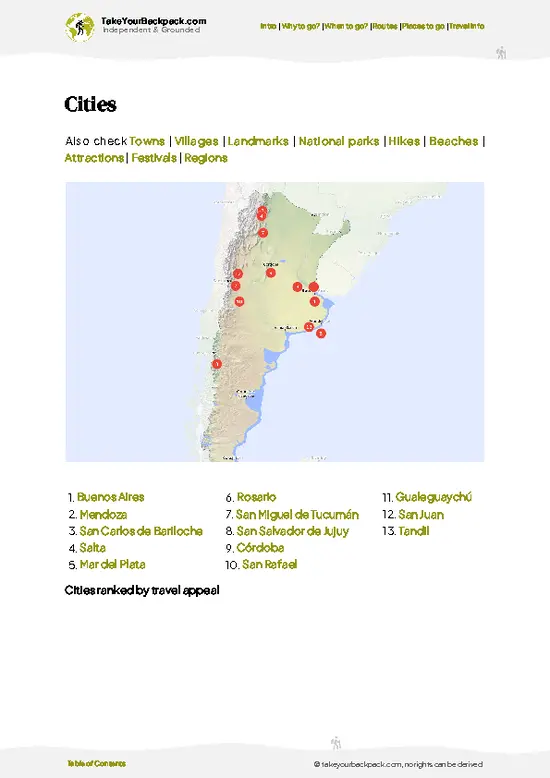
✅ 131 highlights, ranked by travel appeal
✅ Optimized 14, 21 & 30-day travel routes
✅ Cities, national parks, landmarks, beaches
✅ How to get around
✅ Offline-friendly for travel without Wi-Fi
👉 Click to see all 30+ guide features

📅 Plan smarter in minutes, not weeks
✅ Month by month travel advice
✅ Festivals & national holidays
✅ Budget expectations

🗺️ Go to the right places, skip the overrated ones
✅ Honest pros & cons of destinations
✅ Top hikes, parks & viewpoints
✅ Lesser-known places most travelers miss
✅ Clear “worth it vs skip it” guidance

🛏️ Travel smoothly without rookie mistakes
✅ Best areas to stay
✅ Transport systems explained simply
✅ Common scams & safety advice
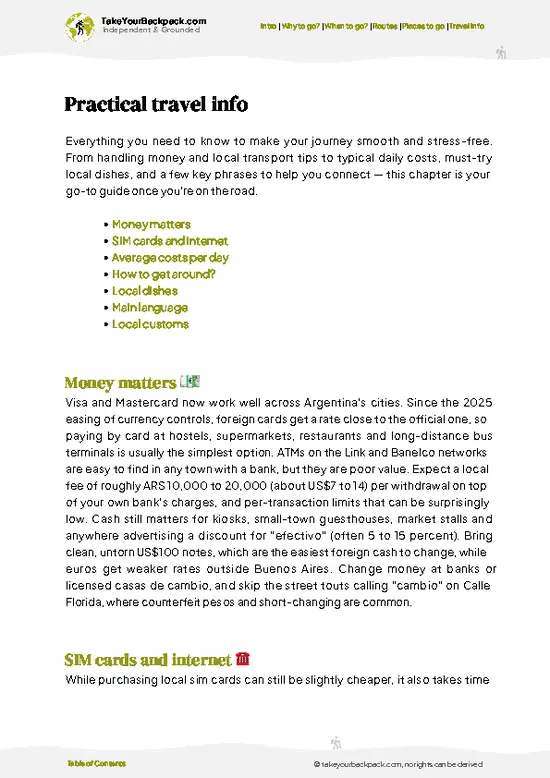
✅ SIM cards, money & practical tips

🌍 Understand the country, not just visit it
✅ Culture & traditions
✅ 52 Essential phrases & customs
✅ Festivals worth planning around
✅ Traveler-friendly historical context
✅ Insights that make places more meaningful

📱 Built for real travel conditions
✅ Fully downloadable PDF
✅ Works completely offline
✅ Optimized for phone use
✅ Useful in remote areas & buses
✅ Everything in one place
Stop searching, start planning
Get instant access to your full guide. 30‑day money-back guarantee.
+ Add another guide for just

By proceeding you agree to our terms.
Sent to your inbox immediately after payment • 100% Secure Checkout
Best Backpacking Travel Advisor 2025 tourism awardBest Backpacking
Travel Advisor
2025
What others say about Take Your Backpack Guides:
⭐⭐⭐⭐⭐
Fantastic, amazing amount of information!
⭐⭐⭐⭐⭐
My goodness this is amazing, it's what I've been looking for hats off too you!
⭐⭐⭐⭐⭐
I think this is absolutely BRILLIANT
⭐⭐⭐⭐
Very complete and informative. It's still missing places, but I gotta to commend you
⭐⭐⭐⭐⭐
This is truly amazing, thank you, can't wait to explore it with my kids!
⭐⭐⭐⭐⭐
Awesome resource, thank you!
⭐⭐⭐⭐⭐
This is amazing! Can't wait to explore the ones I haven't seen
⭐⭐⭐⭐
I love this! Well done, great idea.
⭐⭐⭐⭐⭐
Thanks for taking the time to make this gem!
⭐⭐⭐⭐⭐
This might be the best website I've ever seen.
⭐⭐⭐⭐⭐
Congratulations, and thank you so much for your work; it's incredibly valuable.
⭐⭐⭐⭐
In all seriousness I think you did a great job pointing out the important spots
⭐⭐⭐⭐⭐
10/10 very good
⭐⭐⭐⭐⭐
As someone who's only just starting to visit regularly this is awesome, thank you.
⭐⭐⭐⭐
Thank you very much! I'm going to visit my dad, it's going to be very useful!
⭐⭐⭐⭐⭐
This is really cool! We'll be travelling for the first time and this definitely come in handy.
⭐⭐⭐⭐⭐
You are now our minister of culture, congratulations 👨‍💼
⭐⭐⭐⭐⭐
Just wanted to tell you that this is a pearl! Going to follow your recommendations.
⭐⭐⭐⭐⭐
This is so cool. I'll definitely be using the resource for my travels soon.
⭐⭐⭐⭐⭐
This is very impressive! Good work.
⭐⭐⭐⭐⭐
This is an amazing and informative site. Very well done!

🛏️ Where to stay?Where to Base Yourself

Argentina has plenty of hostels and budget guesthouses, with dorm beds typically around US$12 to 25 a night and the widest choice in Buenos Aires, Mendoza, Salta and Bariloche. In Buenos Aires, Palermo has the most options, leafy streets, the best bars and clubs, and feels safe late at night, but it sits a 20 to 30 minute subway ride from the historic center. San Telmo is cheaper and closer to the old city and the Sunday market, though its quieter blocks get sketchy after dark, while Recoleta is the calm, safe pick with fewer hostels and slightly higher prices.

If you enjoy meeting fellow travelers, consider choosing hostels with high ratings for atmosphere. On the other hand, if you prefer having … read more 👉
Argentina has plenty of hostels and budget guesthouses, with dorm beds typically around US$12 to 25 a night and the widest choice in Buenos Aires, Mendoza, Salta and Bariloche. In Buenos Aires, Palermo has the most options, leafy streets, the best bars and clubs, and feels safe late at night, but it sits a 20 to 30 minute subway ride from the historic center. San Telmo is cheaper and closer to the old city and the Sunday market, though its quieter blocks get sketchy after dark, while Recoleta is the calm, safe pick with fewer hostels and slightly higher prices.

If you enjoy meeting fellow travelers, consider choosing hostels with high ratings for atmosphere. On the other hand, if you prefer having your own space, a hotel might be a better option.

ArgentinaExpand Your Journey

👋 Meet the founderWho’s Behind Take Your Backpack?

Johan, backpacker and founder of TakeYourBackpackHi, I’m Johan (Netherlands 🇳🇱), the creator of TakeYourBackpack. Over the past 3 decades, I’ve backpacked through 90+ countries across six continents, gaining extensive experience with independent travel, long-term trips, and overland routes.

This site is built on a combination of firsthand travel experience and carefully curated insights from other backpackers. Many guides are based on places I’ve personally visited, while others bring together tips, observations, and practical advice shared by trusted travelers I’ve met along the way.

The goal is to provide realistic, experience-driven guidance — not generic itineraries — so you can explore destinations with better context, clearer expectations, and more confidence.