×

Australia🇦🇺 | best townsWhere to Find the 10 Best towns in Australia

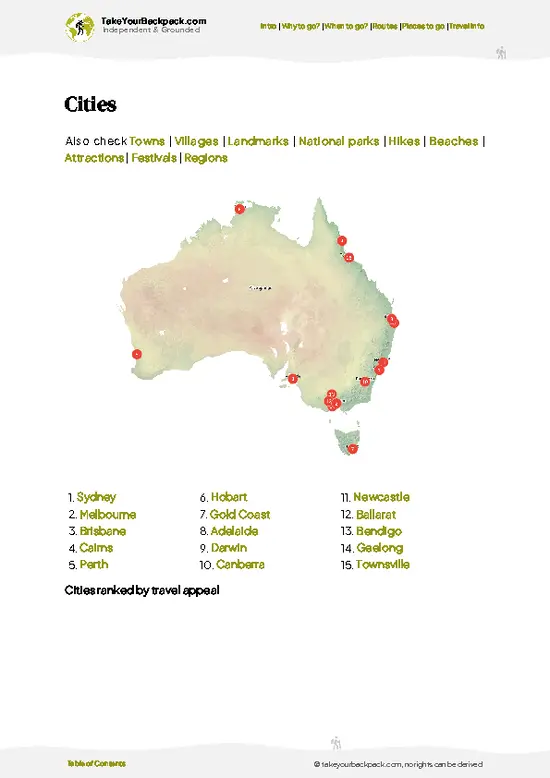
Australia is a country where “the next town” can be 40 kilometers away or a full day’s drive, and the map will not warn you which. Towns here fall into a few distinct types. East coast beach towns are the easiest to reach, with frequent buses and trains, plenty of hostels and crowds that swell every school holiday. Outback settlements flip the deal: red dirt, enormous distances, a pub that doubles as the town square and fuel prices that make you reconsider your life choices. Tropical north towns run on wet and dry seasons, and some simply go quiet for months. In the southwest and Tasmania, wine, forests and cooler air set a slower rhythm, and prices climb in the polished spots. Inland historic gold and farming towns in Victoria and New South Wales are cheaper, quieter and often a short regional train ride from a capital. Backpacking independently works well here because hostels, working-holiday networks and campgrounds are everywhere, but transport is the real variable. Coastal strips are simple without a car; the interior mostly isn’t. Pick the kind first, then the dot on the map, and you will spend more time in places and less in a driver’s seat staring at a kangaroo.

By Johan Kruseman 🇳🇱 | Updated October 18, 2026
Explore the best villages in Australia

Why go?Understanding Their Importance

Australia is unusual for towns because almost everything was built around a single constraint: distance. The country is roughly the size of the contiguous United States, yet most people live in a ribbon of cities along the southeast and east coasts. Between those clusters, towns exist because of a reason, not by accident: a gold rush, a port, a rail junction, a sheep station, a mine or a river crossing. That gives them a clear character, and it means you can often read a town’s history from the main street, with its wide verandah pubs, grand banks built on gold money and war memorials that outnumber traffic lights.

Climate does the rest of the sorting. The tropical north has wet and dry seasons rather than the four seasons northern travelers expect, the center is arid, the south is temperate … read more 👉
Australia is unusual for towns because almost everything was built around a single constraint: distance. The country is roughly the size of the contiguous United States, yet most people live in a ribbon of cities along the southeast and east coasts. Between those clusters, towns exist because of a reason, not by accident: a gold rush, a port, a rail junction, a sheep station, a mine or a river crossing. That gives them a clear character, and it means you can often read a town’s history from the main street, with its wide verandah pubs, grand banks built on gold money and war memorials that outnumber traffic lights.

Climate does the rest of the sorting. The tropical north has wet and dry seasons rather than the four seasons northern travelers expect, the center is arid, the south is temperate and Tasmania is cool and damp. A town that is delightful in one season can be shut, sweltering or flooded in another, which is why choosing by season matters more here than almost anywhere.

Infrastructure is strong on the coast and thin inland. Long-distance coaches, regional trains and domestic flights link the main hubs, but many of the most distinctive places sit well off those lines. A rental car or campervan is the default solution, and it changes the budget, because fuel, insurance and one-way fees add up quickly. Distances also fool people: a stretch that looks like a short hop on a map can mean four to eight hours of driving.

Culture is the other thing to know. Australian towns tend to be relaxed, direct and friendly, with pub culture, outdoor living and a habit of closing early. Many kitchens stop serving by 8 or 9 pm, and small-town shops can shut on Sunday afternoons. Indigenous history runs far deeper than the colonial main streets suggest, and in many regions Aboriginal and Torres Strait Islander communities offer cultural tours worth booking.

So the honest pitch is this: Australia rewards travelers who accept that the journey between towns is part of the product, and who plan around heat, remoteness and the occasional creature with opinions about the road.
Evaluating the Top Choices
The list of best towns in Australia is created based on charm, local culture, atmosphere, hidden gems, and visitor appeal. If you feel a town is missing in this list, please let us know.

When to go?Optimal Periods for Travel

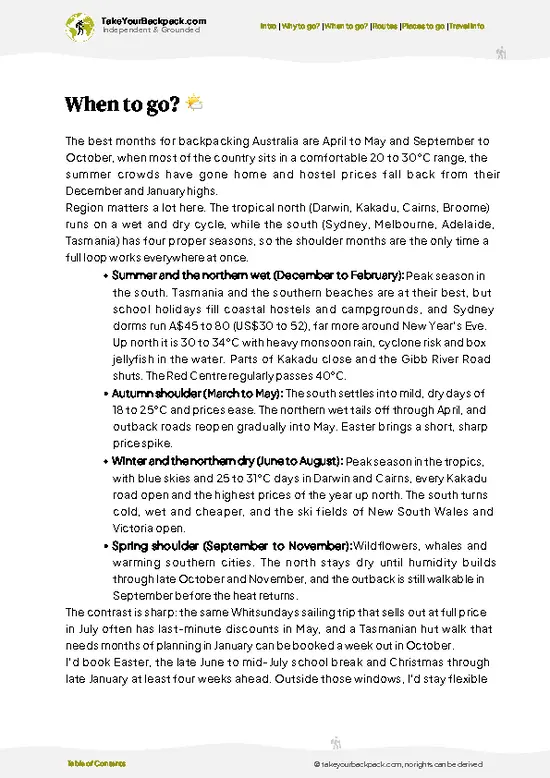
Best months for towns in Australia: The best overall window is April to May and September to November, when most of the country sits between roughly 18 and 28°C and the extremes of summer heat and winter chill are mostly absent. Autumn and spring suit coastal, inland and southern towns alike, with fewer flies, calmer seas and accommodation prices well below the December peak.

Region by region: Seasons flip for northern-hemisphere visitors, so summer is December to February. In the tropical north (Cairns, Darwin and surroundings), the dry season from May to October brings 25 to 31°C days and low humidity. The wet season from November to April means heavy rain, humidity above 80 percent, flooding that can cut roads and, along the coast, stinger season with marine jellyfish, so swimming is limited … read more 👉
Best months for towns in Australia: The best overall window is April to May and September to November, when most of the country sits between roughly 18 and 28°C and the extremes of summer heat and winter chill are mostly absent. Autumn and spring suit coastal, inland and southern towns alike, with fewer flies, calmer seas and accommodation prices well below the December peak.

Region by region: Seasons flip for northern-hemisphere visitors, so summer is December to February. In the tropical north (Cairns, Darwin and surroundings), the dry season from May to October brings 25 to 31°C days and low humidity. The wet season from November to April means heavy rain, humidity above 80 percent, flooding that can cut roads and, along the coast, stinger season with marine jellyfish, so swimming is limited to netted areas. Some tour operators and remote camps close or scale back.

The Outback and Red Centre are best from May to September, when days sit around 20 to 27°C and nights can drop near freezing. In summer, 40°C is routine and sometimes 45°C, and driving long distances becomes risky.

The southeast (Victoria, southern New South Wales, Tasmania) is at its best from late October to April for outdoor wandering, with Tasmania typically peaking in January and February at 20 to 24°C. Winter is cold and wet, though historic and wine towns still work for fireplaces and long lunches. The southwest of Western Australia is dry and warm from November to April, and its wildflower season runs roughly August to October.

Peak periods and prices: Peaks matter. School holidays (mid-December to late January, plus Easter and shorter breaks in April, July and September to October) push beach and coastal prices up by 30 to 100 percent, and many places require minimum stays. Dorm beds in popular spots might cost A$40 to 60 in peak weeks against A$30 to 45 in shoulder season, with private rooms and campsites moving more sharply. Christmas and New Year are the most expensive and the most crowded, and booking ahead saves real money.

In the shoulder months, you get easier parking, open tour slots and locals who have the time to talk. Winter on the east coast, from June to August, is mild in the north and ideal for whale watching, which makes it a quiet-season bargain if you can tolerate a cool swim.

town hoppingHow to Combine towns Into One Trip

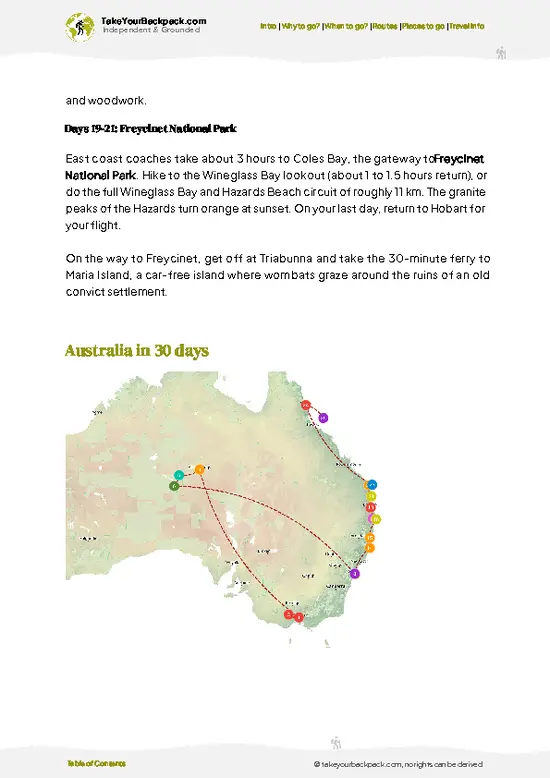
How many days to plan: A trip combining several towns in Australia needs two to four weeks, and a month is the point where it stops feeling like a sprint. Australia’s scale is the problem: Sydney to Cairns is about 2,400 kilometers by road, Melbourne to Perth about 3,400, and Adelaide to Darwin around 3,000. Trying to fit it all into ten days gives you a lot of airport carpet.

Which regions pair well: Think in clusters. The southeast loop links Melbourne, regional Victoria, Canberra, Sydney and the New South Wales coast, with trains, coaches and drives of 1.5 to 9 hours between stops. The east coast run from Sydney north to Cairns runs by bus, rail or car, with long legs of 6 to 12 hours, and flights shorten the biggest gaps. Tasmania pairs with Melbourne by a one-hour flight or the overnight … read more 👉
How many days to plan: A trip combining several towns in Australia needs two to four weeks, and a month is the point where it stops feeling like a sprint. Australia’s scale is the problem: Sydney to Cairns is about 2,400 kilometers by road, Melbourne to Perth about 3,400, and Adelaide to Darwin around 3,000. Trying to fit it all into ten days gives you a lot of airport carpet.

Which regions pair well: Think in clusters. The southeast loop links Melbourne, regional Victoria, Canberra, Sydney and the New South Wales coast, with trains, coaches and drives of 1.5 to 9 hours between stops. The east coast run from Sydney north to Cairns runs by bus, rail or car, with long legs of 6 to 12 hours, and flights shorten the biggest gaps. Tasmania pairs with Melbourne by a one-hour flight or the overnight ferry from Melbourne to Devonport, and works best alone for 5 to 8 days. Western Australia is its own universe; Perth and the southwest fit together nicely, while the far north of the state needs flights or serious driving. The Red Centre connects via Alice Springs or Uluru airports and suits a short, separate leg.

Direction depends on season. Go north in winter and south in summer, which keeps you out of tropical wet-season humidity and Outback heat. Many travelers fly into Sydney or Melbourne and out of Cairns or Darwin, avoiding costly backtracking. One-way car rental fees can reach A$200 to 500 or more on long routes, so compare them with flights, which often cost A$100 to 250 when booked ahead.

Time per stop: Allow two to three nights in most towns, so you have one full day on the ground and a half day either side. Remote or activity-heavy places, like those needing boat trips or national park entry, deserve three to four nights. One-night stays only make sense for road-trip breaks, ideally after no more than four to five hours of driving.

Common planning mistakes: The usual error is underestimating distance. A map makes Australia look like a compact postcard, and then you spend a day at a petrol station where the only snack is a pie warmer. Cap travel days at five to six hours and put one lighter day between long legs. Another error is booking every bed in advance, which removes the flexibility that makes Australia fun; reserve peak-season stays and leave shoulder weeks loose. Finally, many travelers forget that buses to smaller places may run only a few times a week, so check timetables before committing.

The ListThe Best towns of Australia

1 Noosa

Coastal national park, First Point surf, river paddling, Sunday market

Hike the headland track past koalas to Hells Gate, take a beginner surf lesson at the point, and breakfast at the Sunday market.

2 Margaret River

Caves Road cellar doors, chocolate samples, brewery paddles, riverside trail

Pick a few wineries on Caves Road, taste chocolate and craft beer, and follow the short riverside trail to get your bearings.

3 Airlie Beach

Free saltwater lagoon, sailing departures, Shute Harbour Road hostels

Swim the free lagoon, stroll the boardwalk to the marina, then pick a sailing trip to the Whitsunday islands before the evening crowd decides for you.

4 Fremantle

Convict prison, Victorian markets, fishing harbor, craft beer

Tour the convict-built prison, graze through the weekend market hall, and finish with fish and chips above the working boat harbor.

australia-city-fremantle
© Google |

5 Alice Springs

Red Centre gateway, Telegraph Station, MacDonnell Ranges, Aboriginal art

Visit the Desert Park, the 1872 Telegraph Station and Aboriginal art galleries, then watch the ranges turn color from Anzac Hill at sunset.

6 Esperance

Lucky Bay roos, Frenchman Peak, Great Ocean Drive, remote south coast

Drive to Cape Le Grand for white sand and kangaroos, climb a granite dome, and loop the coast at sunset.

australia-city-esperance
© Google |

7 Katoomba

Three Sisters, Giant Stairway, cliff railway, train-town hostels

Watch morning light on the sandstone Sisters, descend nearly 900 steps into rainforest, and ride a steep railway back up the valley.

australia-city-katoomba
© Google |

8 Port Macquarie

Koala hospital, painted breakwall, headland coves, rainforest boardwalk

Watch koalas recover at the hospital, follow the coastal path between surf coves, and read the painted rocks along the breakwall.

9 Hervey Bay

Humpback season, Urangan Pier, esplanade cycling, K’gari gateway

Cruise out for humpbacks between July and October, then ride the flat esplanade and walk the long pier as the sun drops.

australia-city-hervey-bay
© Google |

10 Yamba

Clarence River mouth, Angourie surf reserve, fish co-op prawns, quarry pool

Jump into the freshwater quarry pool, watch longboarders at the point break, and buy prawns from trawlers at the co-op wharf.

11 Port Fairy

Whitewashed cottages, Griffiths Island lighthouse, working wharf, Moyne River

Cross the causeway to a lighthouse and muttonbird colony, then wander the wharf where fishing boats and seal tours depart.

12 Albany

Anzac convoy history, whaling station, King George Sound lookouts

Trace the 1914 Anzac departure at Mount Clarence, tour a former whaling station, and climb the headland lookouts over the sound at sunrise.

australia-city-albany
© Google |

13 Bellingen

Bellinger River, Hyde Street shops, monthly market

Browse independent shops along Hyde Street, swim at quiet riverbank spots, and time your visit for the third-Saturday market in Bellingen Park.

14 Maleny

Blackall Range cafés, rainforest reserve, dairy tastings, farmers market

Walk boardwalks through subtropical rainforest, sample local cheese, and spend a slow morning among bookshops and bakeries on the main street.

15 Warrnambool

Southern right whale calving, shipwreck village, Lady Bay breakwater, Great Ocean Road end

Watch calving whales from the Logans Beach platform between June and September, then tour the recreated 1870s port and its evening show.

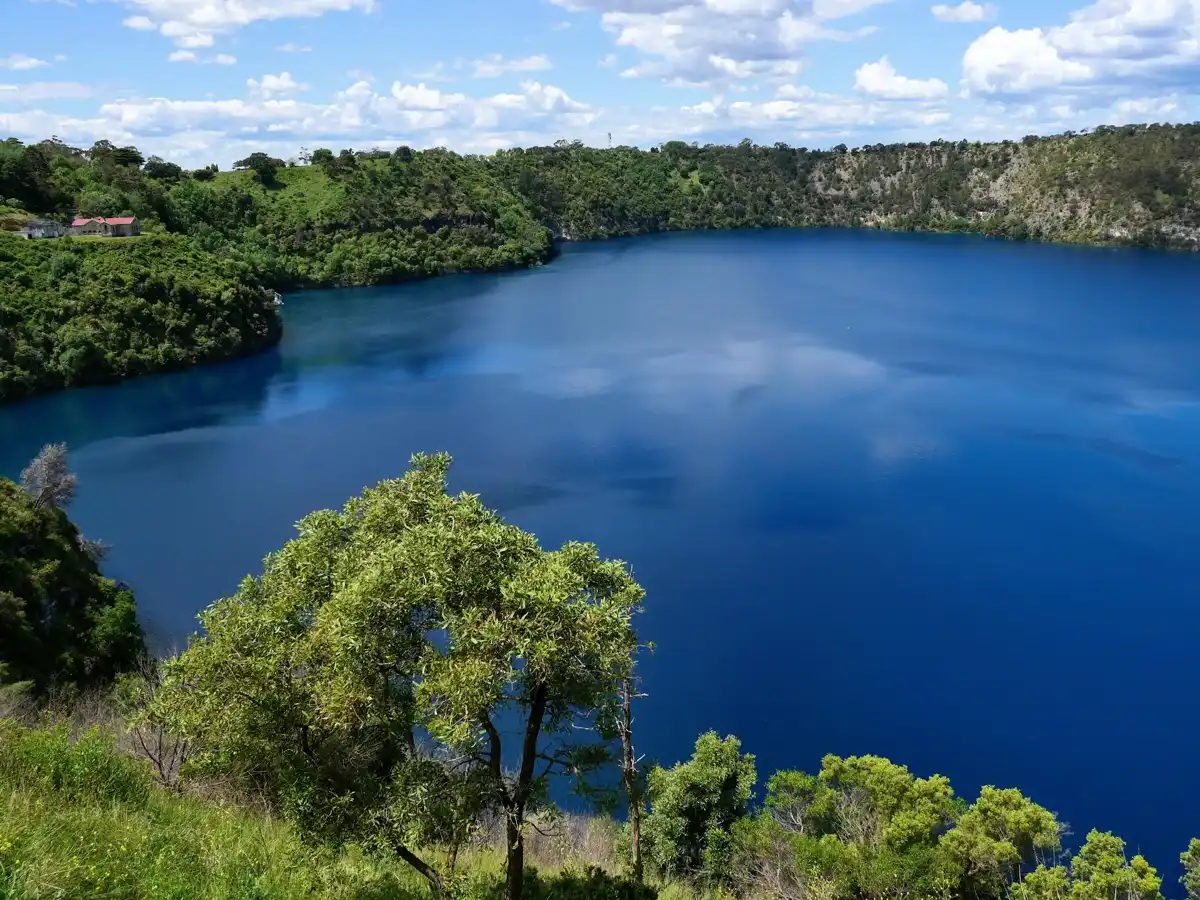
16 Mount Gambier

Cobalt crater lake, sinkhole garden, volcanic caves, Limestone Coast

Circle the Blue Lake rim in summer color, descend into a terraced sinkhole garden, and return at dusk when possums emerge.

australia-city-mount-gambier
© Google | Jim Eggleston

17 Coffs Harbour

Timber jetty, Muttonbird Island, banana kitsch, rainforest garden

Stroll the 1892 jetty, climb the breakwall to a seabird headland, and cool off in the botanic garden's rainforest trails.

18 Victor Harbor

Granite Island causeway, Clydesdale tram, penguin dusk tours, Encounter Bay whales

Cross the causeway on foot or by horse-drawn tram, join a dusk penguin tour, and scan Encounter Bay for southern right whales.

19 Burnie

Penguin breakwater, Emu Bay foreshore, Tasmanian art

Walk the Bass Strait foreshore, tour the waterfront craft museum, and wait at dusk for little penguins to come ashore at the breakwater.

20 Devonport

Ferry arrival, Mersey Bluff, Bass Strait history

Step off the Bass Strait ferry and walk the Bluff's lighthouse loop, then browse Aboriginal rock engravings and a small maritime museum.

21 Orange

Mount Canobolas, cool-climate wine, orchard country, monthly market

Drive to the extinct volcano's summit lookout, tour cellar doors among the orchards, and pair a flat white with local apple cake.

22 Batemans Bay

Clyde River oysters, kangaroo beach, supply stop

Eat fresh estuary oysters by the water, paddle past mangroves, and drive to Pebbly Beach where eastern greys lounge on the sand.

23 Tamworth

Big Golden Guitar, Hands of Fame, Peel Valley views, January festival

Photograph the 12-meter guitar, match your hands to country stars' cement prints, and watch sunset over the Peel Valley from Oxley Lookout.

24 Mildura

Murray paddle steamers, Langtree Avenue dining, Chaffey legacy, farm work

Cruise the Murray on a historic steamer, walk to the lock at sunset, and sample regional olives and wine along the restaurant strip.

Think you know Australia?

Prove you’re a true local — uncover 14 lesser-known towns in Australia that locals tend to keep to themselves.
Loading the map 🌍

Expert viewPro Tips for Exploring the Best

How many towns to visit: I advise six to eight towns on a trip of three to four weeks, and fewer if you are on a shorter trip. The reasoning is simple: every transfer eats most of a day, and a town needs at least two nights to show you anything beyond the main street and a flat white. Fewer stops usually give you the best value, because the cheapest day in Australia is one where you stay put and don’t pay for fuel, a coach ticket or another check-in fee.

Which kind to prioritize: Match the type to your travel style. If you want company, cheap dorms and easy transport, coastal towns give a backpacker the most: hostels are plentiful, beaches are free and you can reach them without a car. If you want atmosphere and space, historic inland and wine-region towns cost less in time than the Outback … read more 👉
How many towns to visit: I advise six to eight towns on a trip of three to four weeks, and fewer if you are on a shorter trip. The reasoning is simple: every transfer eats most of a day, and a town needs at least two nights to show you anything beyond the main street and a flat white. Fewer stops usually give you the best value, because the cheapest day in Australia is one where you stay put and don’t pay for fuel, a coach ticket or another check-in fee.

Which kind to prioritize: Match the type to your travel style. If you want company, cheap dorms and easy transport, coastal towns give a backpacker the most: hostels are plentiful, beaches are free and you can reach them without a car. If you want atmosphere and space, historic inland and wine-region towns cost less in time than the Outback and less in money than coastal peak season, since rooms are often A$30 to 50 in a dorm and A$90 to 150 for a private room with character. If you want the landscape that makes Australia feel different from everywhere else, an Outback town is worth the splurge, but only if you can afford the time and the transport. Tours and fuel are costly, and the comfort drop is real, with heat, flies and long drives. For most travelers, one Outback stop is plenty. Tropical north towns suit divers, snorkelers and wildlife seekers, but only in the dry season, when you get the most for your money.

What it costs: Plan on A$90 to 150 a day (about US$60 to 100) if you use hostels, cook half your meals and use public transport. Mid-range travel with a private room and a car runs A$200 to 350 a day. Dorm beds usually cost A$30 to 60, a pub meal A$20 to 35, a coffee A$4.50 to 6 and a supermarket dinner A$8 to 15. Remote places add a premium to everything, including groceries, which can run 20 to 40 percent higher than in the cities.

Per-visit costs add up too. Expect A$0 to 25 for national park entry in some states (many parks charge a vehicle fee, and Northern Territory and Queensland parks vary), A$100 to 250 for a reef or wildlife day trip, and A$150 to 400 for guided Outback or Indigenous cultural tours. Coach fares between regional hubs usually run A$30 to 120. A camper or rental car costs A$50 to 150 a day before fuel, and you should assume A$1.80 to 2.30 a liter, higher in remote areas. If you are traveling in a group of three or four, a car often beats coaches on price.

What to watch out for: Safety here is mostly about nature and distance, not crime. Carry far more water than you think you need (at least 4 liters per person per day in the Outback), tell someone your route and don’t drive at dusk or dawn, when kangaroos are active and a collision can write off a car. Mobile coverage disappears quickly outside towns. In tropical waters, swim only in netted or patrolled areas, as crocodiles and marine stingers are not decorative. On beaches, swim between the red and yellow flags; rips cause most surf rescues. Sun is another threat, and a hat plus SPF 50 is not optional. Reapply it, even when the sky looks overcast.

Culturally, Australians are informal, direct and a little sarcastic, and teasing is usually a sign of acceptance. Tipping is not expected. Drinking is a big part of town life, but alcohol rules are strict: many Indigenous communities and some towns have alcohol restrictions, and permits are needed to enter certain Aboriginal lands. Respect signs that close sacred sites, and don’t climb Uluru, which has been closed to climbing since 2019. Ask before photographing people, especially in Indigenous communities. Bring cash for the odd small place, though card payments are nearly universal.

The trade-off that matters most: If forced to choose, I’d put money into transport flexibility and a decent sleep rather than extra stops. A reliable car, or well-timed flights for the long gaps, lets you stay where you like and leave when the place stops surprising you. Save by cooking, camping now and then and traveling in the shoulder season, rather than by cutting nights in the places you came for.


✈️ The backpacker research shortcutAustralia Travel Guide

An offline-friendly backpacking guide with optimized travel routes, ranked highlights, transport advice, and the best areas to stay.
example page 0 from our offline Travel Guide for Australia
example page 1 from our offline Travel Guide for Australia
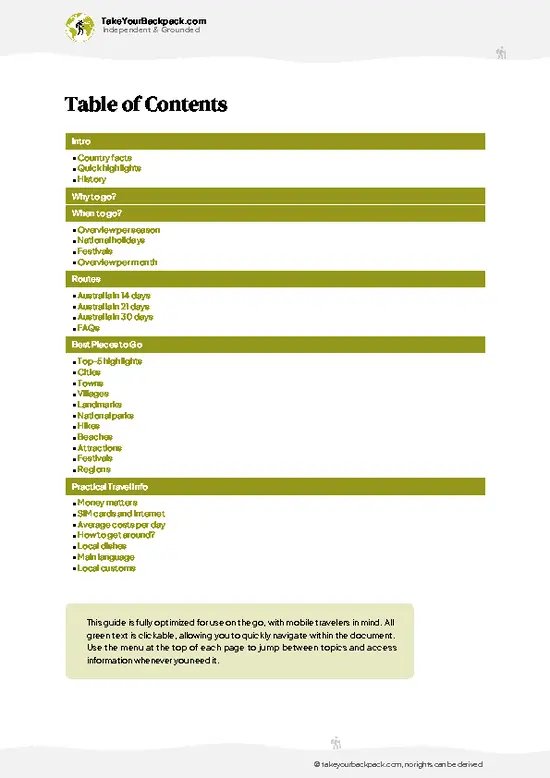
example page 2 from our offline Travel Guide for Australia
example page 3 from our offline Travel Guide for Australia
example page 4 from our offline Travel Guide for Australia
example page 5 from our offline Travel Guide for Australia
example page 6 from our offline Travel Guide for Australia
example page 7 from our offline Travel Guide for Australia
The digital guide (414 pages) contains:
✅ 143 highlights, ranked by travel appeal
✅ Optimized 14, 21 & 30-day travel routes
✅ Cities, national parks, landmarks, beaches
✅ How to get around
✅ Offline-friendly for travel without Wi-Fi
👉 Click to see all 30+ guide features

📅 Plan smarter in minutes, not weeks
✅ Month by month travel advice
✅ Festivals & national holidays
✅ Budget expectations

🗺️ Go to the right places, skip the overrated ones
✅ Honest pros & cons of destinations
✅ Top hikes, parks & viewpoints
✅ Lesser-known places most travelers miss
✅ Clear “worth it vs skip it” guidance

🛏️ Travel smoothly without rookie mistakes
✅ Best areas to stay
✅ Transport systems explained simply
✅ Common scams & safety advice
✅ SIM cards, money & practical tips

🌍 Understand the country, not just visit it
✅ Culture & traditions
✅ Local customs
✅ Festivals worth planning around
✅ Traveler-friendly historical context
✅ Insights that make places more meaningful

📱 Built for real travel conditions
✅ Fully downloadable PDF
✅ Works completely offline
✅ Optimized for phone use
✅ Useful in remote areas & buses
✅ Everything in one place
Stop searching, start planning
Get instant access to your full guide. 30‑day money-back guarantee.
+ Add another guide for just

By proceeding you agree to our terms.
Sent to your inbox immediately after payment • 100% Secure Checkout
Best Backpacking Travel Advisor 2025 tourism awardBest Backpacking
Travel Advisor
2025
What others say about Take Your Backpack Guides:
⭐⭐⭐⭐⭐
Fantastic, amazing amount of information!
⭐⭐⭐⭐⭐
My goodness this is amazing, it's what I've been looking for hats off too you!
⭐⭐⭐⭐⭐
I think this is absolutely BRILLIANT
⭐⭐⭐⭐
Very complete and informative. It's still missing places, but I gotta to commend you
⭐⭐⭐⭐⭐
This is truly amazing, thank you, can't wait to explore it with my kids!
⭐⭐⭐⭐⭐
Awesome resource, thank you!
⭐⭐⭐⭐⭐
This is amazing! Can't wait to explore the ones I haven't seen
⭐⭐⭐⭐
I love this! Well done, great idea.
⭐⭐⭐⭐⭐
Thanks for taking the time to make this gem!
⭐⭐⭐⭐⭐
This might be the best website I've ever seen.
⭐⭐⭐⭐⭐
Congratulations, and thank you so much for your work; it's incredibly valuable.
⭐⭐⭐⭐
In all seriousness I think you did a great job pointing out the important spots
⭐⭐⭐⭐⭐
10/10 very good
⭐⭐⭐⭐⭐
As someone who's only just starting to visit regularly this is awesome, thank you.
⭐⭐⭐⭐
Thank you very much! I'm going to visit my dad, it's going to be very useful!
⭐⭐⭐⭐⭐
This is really cool! We'll be travelling for the first time and this definitely come in handy.
⭐⭐⭐⭐⭐
You are now our minister of culture, congratulations 👨‍💼
⭐⭐⭐⭐⭐
Just wanted to tell you that this is a pearl! Going to follow your recommendations.
⭐⭐⭐⭐⭐
This is so cool. I'll definitely be using the resource for my travels soon.
⭐⭐⭐⭐⭐
This is very impressive! Good work.
⭐⭐⭐⭐⭐
This is an amazing and informative site. Very well done!

🛏️ Where to stay?Best Places to Stay in Australia

Australia has hostels in every major city and backpacker hub, with dorm beds typically A$35 to 60 (US$23 to 39) a night and private doubles from about A$100 (US$65). In Sydney, Kings Cross and Potts Point put you a short train ride from the CBD and in the middle of late-night bars, though the main strip gets rowdy after dark, while Bondi and Coogee trade a 30 to 45 minute bus ride for sand at your doorstep and a beach-party crowd. In Melbourne, the CBD is the most central base for trams and laneway food, St Kilda mixes a seafront with a lively and occasionally rough-edged nightlife, and Brisbane splits between Fortitude Valley (club central, loud on weekends) and quieter South Brisbane, within … read more 👉
Australia has hostels in every major city and backpacker hub, with dorm beds typically A$35 to 60 (US$23 to 39) a night and private doubles from about A$100 (US$65). In Sydney, Kings Cross and Potts Point put you a short train ride from the CBD and in the middle of late-night bars, though the main strip gets rowdy after dark, while Bondi and Coogee trade a 30 to 45 minute bus ride for sand at your doorstep and a beach-party crowd. In Melbourne, the CBD is the most central base for trams and laneway food, St Kilda mixes a seafront with a lively and occasionally rough-edged nightlife, and Brisbane splits between Fortitude Valley (club central, loud on weekends) and quieter South Brisbane, within walking distance of South Bank and the museums.

If you enjoy meeting fellow travelers, consider choosing hostels with high ratings for atmosphere. On the other hand, if you prefer having your own space, a hotel might be a better option.

AustraliaExplore Australia

👋 Meet the founderWho’s Behind Take Your Backpack?

Johan, backpacker and founder of TakeYourBackpackHi, I’m Johan (Netherlands 🇳🇱), the creator of TakeYourBackpack. Over the past 3 decades, I’ve backpacked through 90+ countries across six continents, gaining extensive experience with independent travel, long-term trips, and overland routes.

This site is built on a combination of firsthand travel experience and carefully curated insights from other backpackers. Many guides are based on places I’ve personally visited, while others bring together tips, observations, and practical advice shared by trusted travelers I’ve met along the way.

The goal is to provide realistic, experience-driven guidance — not generic itineraries — so you can explore destinations with better context, clearer expectations, and more confidence.