×

Benin🇧🇯 | best beachesEssential 5 beaches to Explore in Benin

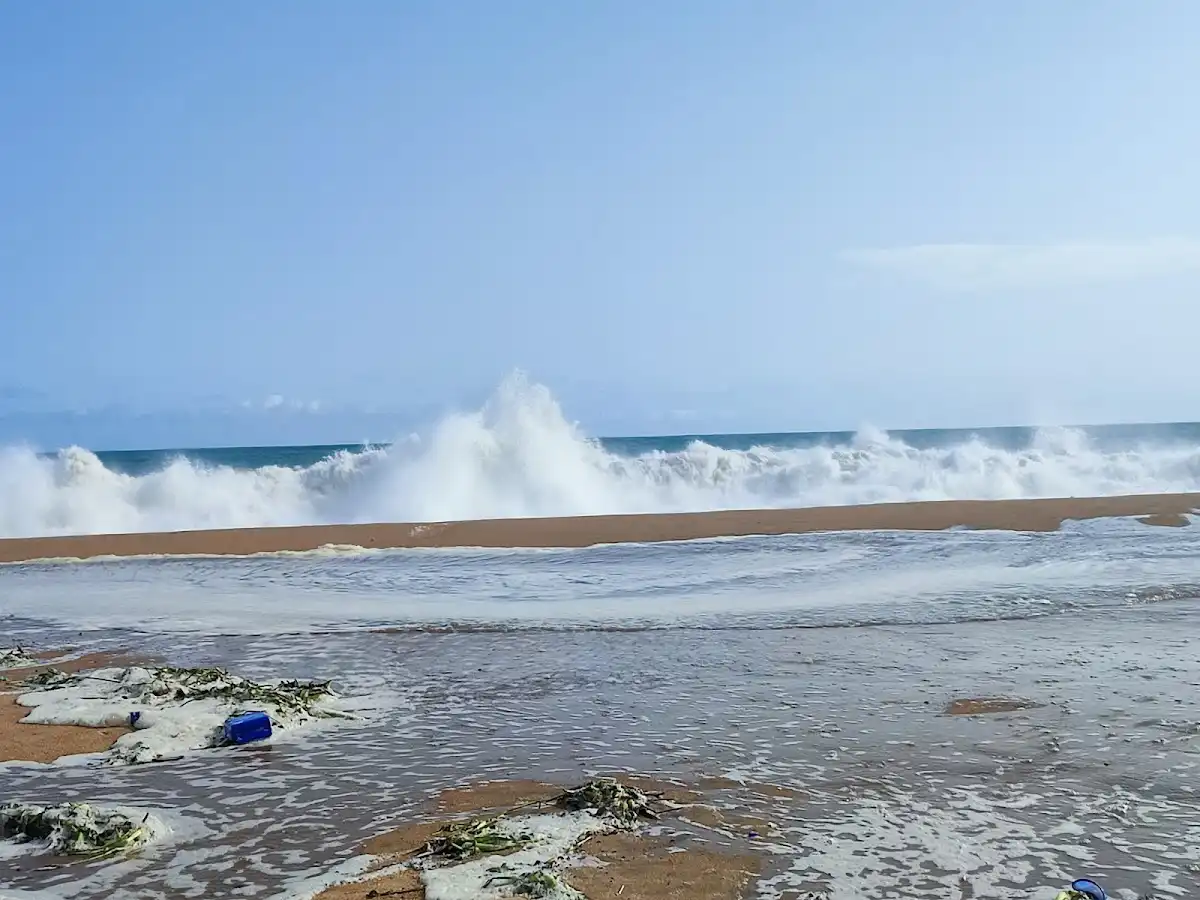
Benin’s coast is a single 110-kilometer ribbon of Atlantic sand between Togo and Nigeria, and it is wild in the literal sense: grey-gold beach, coconut palms leaning in the harmonattan haze, and surf that thumps hard enough to feel in your chest. Swimming is rarely safe. Expect fishermen hauling nets at dawn, smoke from fish-smoking ovens, and cheap, simple guesthouses rather than resorts. The west, near Ouidah and Grand-Popo, is quiet and easy to reach by shared taxi. Cotonou’s beaches are louder and pricier, and the east is rougher. Independent travelers who like space over comfort will do best here.

By Johan Kruseman 🇳🇱 | Updated October 23, 2026
Explore the best attractions in Benin

Why go?Why These beach Stand Out

Benin is a poor fit for the classic beach holiday and an excellent one for a working, living coastline. The whole shore faces open Atlantic with no reefs or headlands, so the surf is heavy and the rip currents are strong. Swimming is the exception, not the plan. What you get instead is a beach that belongs to the people who use it: pirogues dragged over wet sand, women sorting catch under tin shade, drums and smoke drifting from nearby villages.

History runs through the sand. This was the old Slave Coast, and the shoreline carries memorials and Vodun shrines that give the walking a weight you won’t find on Thai or Mexican sands. Vodun is an official religion here, so ceremonies and sacred sites sit close to the water, and respect matters.

Geography shapes the logistics. A thin strip of sand … read more 👉
Benin is a poor fit for the classic beach holiday and an excellent one for a working, living coastline. The whole shore faces open Atlantic with no reefs or headlands, so the surf is heavy and the rip currents are strong. Swimming is the exception, not the plan. What you get instead is a beach that belongs to the people who use it: pirogues dragged over wet sand, women sorting catch under tin shade, drums and smoke drifting from nearby villages.

History runs through the sand. This was the old Slave Coast, and the shoreline carries memorials and Vodun shrines that give the walking a weight you won’t find on Thai or Mexican sands. Vodun is an official religion here, so ceremonies and sacred sites sit close to the water, and respect matters.

Geography shapes the logistics. A thin strip of sand backs onto lagoons and coconut groves, so the coast is a flat, humid, lightly developed corridor with one main road. Infrastructure is modest: few signs, patchy electricity in remote stretches, and cash-only almost everywhere. Travelers should come for atmosphere, culture and quiet, with realistic expectations about swimming, shade and polish.
How the List Was Created
The list of best beaches in Benin is created based on beauty, vibe, water quality, activities, and surrounding scenery. If you feel a beach is missing in this list, please let us know.

When to go?Best Time to Visit Benin for beaches

Best months for the coast: The best months are November to March, when the dry season brings little rain, bright sun and temperatures around 27 to 32°C, with ocean breezes softening the humidity. From December to February the harmattan wind carries dust from the Sahara, which turns the sky milky and the sunsets copper but can cut visibility and dry your throat. Nights stay warm, rarely below 22°C.
Shoulder and rainy seasons: April to July is the main rainy season in the south, with heavy afternoon downpours, 28 to 31°C and very high humidity. Cotonou can receive well over 100 mm in June alone, roads to smaller coastal villages turn muddy, and the sea is at its roughest. A short rainy spell returns in September and October, with a drier gap in August. These shoulder months are quieter and sleeping … read more 👉
Best months for the coast: The best months are November to March, when the dry season brings little rain, bright sun and temperatures around 27 to 32°C, with ocean breezes softening the humidity. From December to February the harmattan wind carries dust from the Sahara, which turns the sky milky and the sunsets copper but can cut visibility and dry your throat. Nights stay warm, rarely below 22°C.
Shoulder and rainy seasons: April to July is the main rainy season in the south, with heavy afternoon downpours, 28 to 31°C and very high humidity. Cotonou can receive well over 100 mm in June alone, roads to smaller coastal villages turn muddy, and the sea is at its roughest. A short rainy spell returns in September and October, with a drier gap in August. These shoulder months are quieter and sleeping cheaper, though sand can be soaked and skies grey for days.
Crowds and prices: Benin has no true beach high season, so prices move little. Rooms may rise modestly around Christmas, New Year and local festival dates such as the national Vodun Day on January 10, when Ouidah fills with visitors and beds get scarce. Book ahead then, and expect to pay a few thousand CFA francs extra.

beach hoppingHow to Combine beaches Into One Trip

How long to allow: A trip linking several beaches in Benin needs 4 to 7 days, because the coast is short but the roads are slow. The sensible direction is west to east or the reverse along one line, with Cotonou as the transport hub, rather than zigzagging. Grand-Popo and Ouidah sit to the west, Cotonou in the middle, and the quieter eastern shore toward Porto-Novo and the Nigerian border.
Time per stop and travel times: Give each stop one to two nights. Beach time here means long walks, slow meals, and watching nets come in, so a single afternoon feels rushed. Cotonou to Ouidah takes about 1 to 1.5 hours by shared taxi or minibus, and Ouidah to Grand-Popo roughly 45 minutes to 1 hour. Cotonou to Porto-Novo is about 45 minutes to 1.5 hours depending on traffic. Traffic around Cotonou, packed … read more 👉
How long to allow: A trip linking several beaches in Benin needs 4 to 7 days, because the coast is short but the roads are slow. The sensible direction is west to east or the reverse along one line, with Cotonou as the transport hub, rather than zigzagging. Grand-Popo and Ouidah sit to the west, Cotonou in the middle, and the quieter eastern shore toward Porto-Novo and the Nigerian border.
Time per stop and travel times: Give each stop one to two nights. Beach time here means long walks, slow meals, and watching nets come in, so a single afternoon feels rushed. Cotonou to Ouidah takes about 1 to 1.5 hours by shared taxi or minibus, and Ouidah to Grand-Popo roughly 45 minutes to 1 hour. Cotonou to Porto-Novo is about 45 minutes to 1.5 hours depending on traffic. Traffic around Cotonou, packed with zemidjan motorbike taxis and exhaust fumes, can double any estimate at rush hour.
Common planning mistakes: The biggest error is cramming three coastal bases into two days, which leaves you in dusty vehicles rather than on sand. Travelers also arrive on market days or festival weekends without booking, or leave departure until late afternoon, when shared taxis fill slowly and dusk comes by 6 p.m. Leave early, carry small CFA notes, and treat Cotonou as the pivot point instead of an overnight stop each time.

The ListMust-Visit beaches in Benin

1 Grand-Popo Beach

Bouche du Roy sandbar, Mono River, mangroves, starry nights

Stand on a narrow spit with surf on one side and calm river on the other, then paddle through mangroves by pirogue.

2 Fidjrossè Beach

Hand-hauled nets, Sunday football, Cotonou shore, beach bars

Catch fishermen pulling long nets in rhythm at the water’s edge, then settle into a plastic chair for a grilled fish and a cold beer.

benin-beach-fidjrosse-beach
© Google |

3 Ouidah Beach

Door of No Return, Route des Esclaves, Vodun festival, painted pirogues

Follow the old slave trail down to a concrete arch facing the ocean, and time the visit for drumming on Vodun Day.

4 Avlékété Beach

Dark sand, coconut palms, pirogue landings, lagoon-side lanes

Walk a quiet stretch of dark sand, watch crews haul in pirogues and nets, then eat charcoal-grilled fish with pepper sauce.

benin-beach-avlekete-beach
© Google |

5 Togbin Beach

Beach paillotes, weekend crowds, horse rides, lobster grills

Escape Cotonou for a day of grilled seafood in thatched huts, weekend football on the sand and short horseback rides beside the surf.

Loading the map 🌍

Expert viewExpert Commentary on beaches

How many beaches to visit: I advise two or three beaches in total. The coast is one long strip with similar sand and surf, so a fourth stop adds repetition rather than variety. Each place needs a slow day to make sense, and the shared taxi hours add up. Two beaches give you contrast, such as a quiet palm-lined stretch against a livelier urban shore, and you get the salt wind, the fish smoke and the rhythm of the pirogues without feeling rushed.
Choosing between kinds of beach: For solitude and culture, favor the quieter western shore, where villages meet the sand and shrines sit among the palms. For food, nightlife and easy connections, choose an urban beach, where grilled fish, cold Beninoise beer and loud music fill the evening. Budget travelers do best with simple guesthouses near the sand, … read more 👉
How many beaches to visit: I advise two or three beaches in total. The coast is one long strip with similar sand and surf, so a fourth stop adds repetition rather than variety. Each place needs a slow day to make sense, and the shared taxi hours add up. Two beaches give you contrast, such as a quiet palm-lined stretch against a livelier urban shore, and you get the salt wind, the fish smoke and the rhythm of the pirogues without feeling rushed.
Choosing between kinds of beach: For solitude and culture, favor the quieter western shore, where villages meet the sand and shrines sit among the palms. For food, nightlife and easy connections, choose an urban beach, where grilled fish, cold Beninoise beer and loud music fill the evening. Budget travelers do best with simple guesthouses near the sand, while those who want a pool and shade can pay more for a lodge with a garden. You get the beach you pay attention to: rough and elemental, or social and warm.
What it costs: Expect US$25 to 45 a day (roughly 15,000 to 27,000 CFA francs) with a guesthouse room at 8,000 to 20,000 CFA, grilled fish with sides at 2,000 to 5,000 CFA, and zemidjan rides at 300 to 1,500 CFA. Most beaches have no formal entry fee, though some resorts charge day-use of about 3,000 to 10,000 CFA. A local guide for a village walk or shrine visit usually costs 3,000 to 10,000 CFA. Carry cash, since cards and ATMs are unreliable outside Cotonou, and the cooked fish at the end of the day is worth every franc.
Safety and cultural points: Do not swim in heavy surf: rip currents are strong and lifeguards are rare. Wade only where locals are swimming, and stay knee-deep when unsure. Keep valuables out of sight, avoid walking empty stretches at dusk, and go with a companion after dark. Always ask before photographing fishermen, women at smoking ovens, or anything near Vodun shrines, where a small offering or tip is courteous. Dress modestly away from hotel pools, since a swimsuit on a village beach draws attention. Greet people first, and the stretch opens up: you get invited to watch the nets haul in.

✈️ The backpacker research shortcutBenin Travel Guide

An offline-friendly backpacking guide with optimized travel routes, ranked highlights, transport advice, and the best areas to stay.
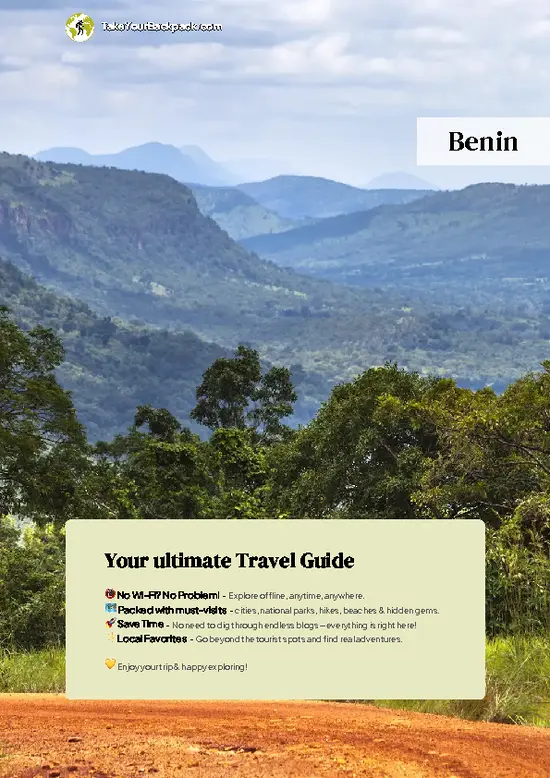
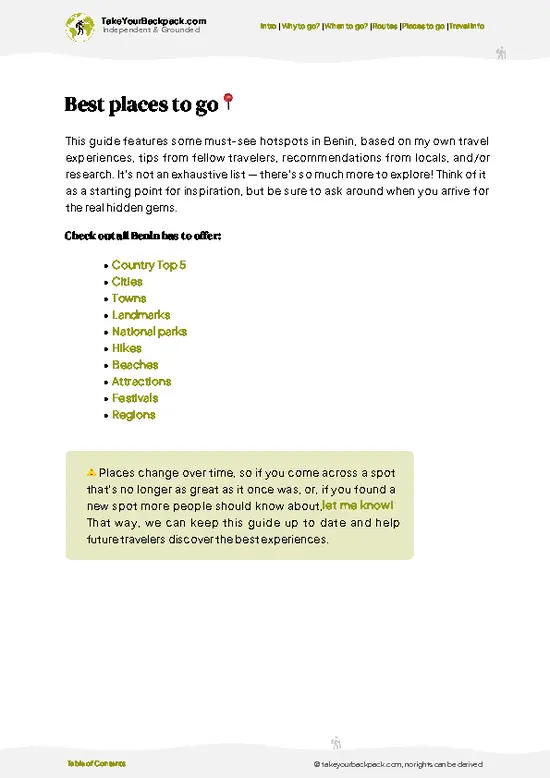
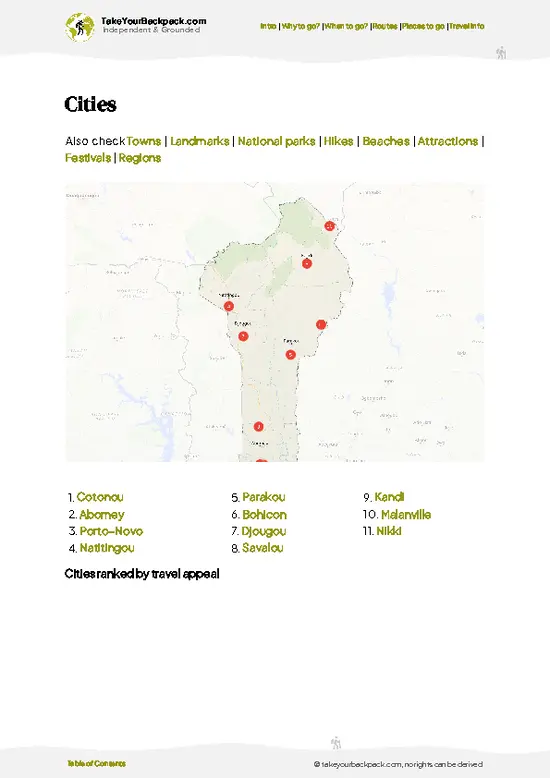
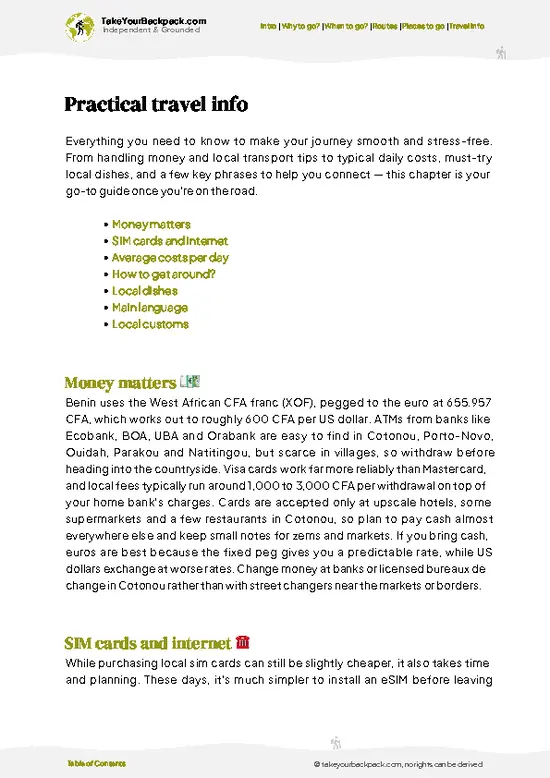
example page 0 from our offline Travel Guide for Benin
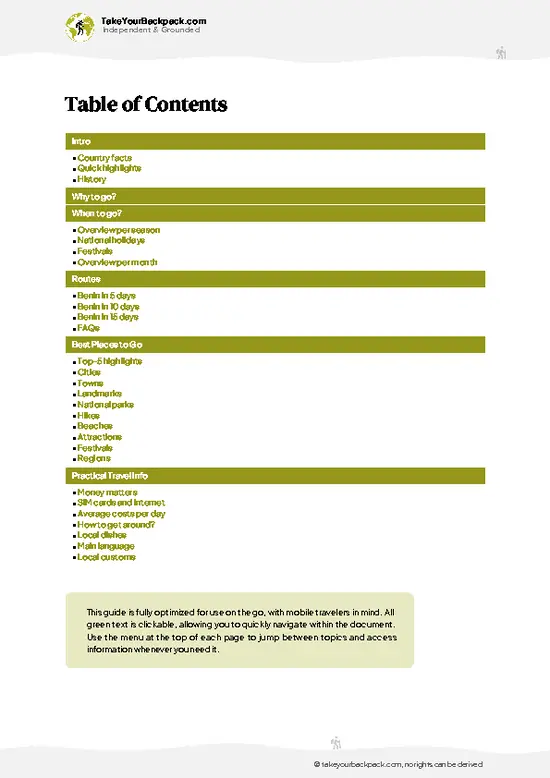
example page 1 from our offline Travel Guide for Benin
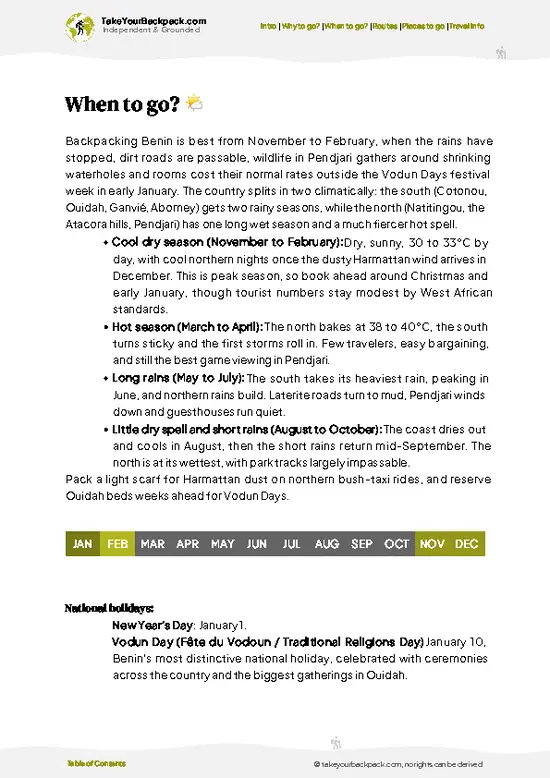
example page 2 from our offline Travel Guide for Benin
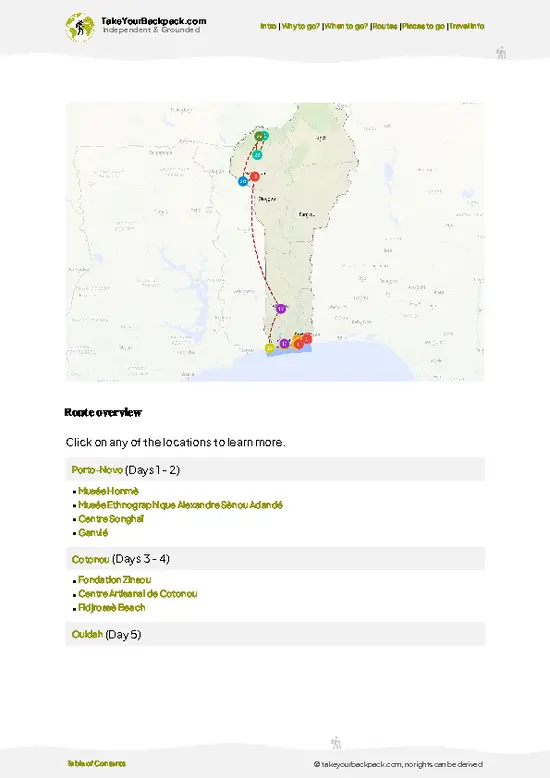
example page 3 from our offline Travel Guide for Benin
example page 4 from our offline Travel Guide for Benin
example page 5 from our offline Travel Guide for Benin
example page 6 from our offline Travel Guide for Benin
example page 7 from our offline Travel Guide for Benin
The digital guide (213 pages) contains:
✅ 48 highlights, ranked by travel appeal
✅ Optimized 5, 10 & 15-day travel routes
✅ Cities, national parks, landmarks, beaches
✅ How to get around
✅ Offline-friendly for travel without Wi-Fi
👉 Click to see all 30+ guide features

📅 Plan smarter in minutes, not weeks
✅ Month by month travel advice
✅ Festivals & national holidays
✅ Budget expectations

🗺️ Go to the right places, skip the overrated ones
✅ Honest pros & cons of destinations
✅ Top hikes, parks & viewpoints
✅ Lesser-known places most travelers miss
✅ Clear “worth it vs skip it” guidance

🛏️ Travel smoothly without rookie mistakes
✅ Best areas to stay
✅ Transport systems explained simply
✅ Common scams & safety advice
✅ SIM cards, money & practical tips

🌍 Understand the country, not just visit it
✅ Culture & traditions
✅ 52 Essential phrases & customs
✅ Festivals worth planning around
✅ Traveler-friendly historical context
✅ Insights that make places more meaningful

📱 Built for real travel conditions
✅ Fully downloadable PDF
✅ Works completely offline
✅ Optimized for phone use
✅ Useful in remote areas & buses
✅ Everything in one place
Stop searching, start planning
Get instant access to your full guide. 30‑day money-back guarantee.
+ Add another guide for just

By proceeding you agree to our terms.
Sent to your inbox immediately after payment • 100% Secure Checkout
Best Backpacking Travel Advisor 2025 tourism awardBest Backpacking
Travel Advisor
2025
What others say about Take Your Backpack Guides:
⭐⭐⭐⭐⭐
Fantastic, amazing amount of information!
⭐⭐⭐⭐⭐
My goodness this is amazing, it's what I've been looking for hats off too you!
⭐⭐⭐⭐⭐
I think this is absolutely BRILLIANT
⭐⭐⭐⭐
Very complete and informative. It's still missing places, but I gotta to commend you
⭐⭐⭐⭐⭐
This is truly amazing, thank you, can't wait to explore it with my kids!
⭐⭐⭐⭐⭐
Awesome resource, thank you!
⭐⭐⭐⭐⭐
This is amazing! Can't wait to explore the ones I haven't seen
⭐⭐⭐⭐
I love this! Well done, great idea.
⭐⭐⭐⭐⭐
Thanks for taking the time to make this gem!
⭐⭐⭐⭐⭐
This might be the best website I've ever seen.
⭐⭐⭐⭐⭐
Congratulations, and thank you so much for your work; it's incredibly valuable.
⭐⭐⭐⭐
In all seriousness I think you did a great job pointing out the important spots
⭐⭐⭐⭐⭐
10/10 very good
⭐⭐⭐⭐⭐
As someone who's only just starting to visit regularly this is awesome, thank you.
⭐⭐⭐⭐
Thank you very much! I'm going to visit my dad, it's going to be very useful!
⭐⭐⭐⭐⭐
This is really cool! We'll be travelling for the first time and this definitely come in handy.
⭐⭐⭐⭐⭐
You are now our minister of culture, congratulations 👨‍💼
⭐⭐⭐⭐⭐
Just wanted to tell you that this is a pearl! Going to follow your recommendations.
⭐⭐⭐⭐⭐
This is so cool. I'll definitely be using the resource for my travels soon.
⭐⭐⭐⭐⭐
This is very impressive! Good work.
⭐⭐⭐⭐⭐
This is an amazing and informative site. Very well done!

🛏️ Where to stay?Best Places to Stay in Benin

Benin has only a handful of true backpacker hostels, but simple guesthouses (auberges) and basic hotels are easy to find, with fan rooms at roughly 8,000 to 15,000 CFA (US$13 to 25) and air-conditioned doubles at 15,000 to 25,000 CFA (US$25 to 42). In Cotonou, Haie Vive has the most choice plus the best restaurants and bars, though prices run higher, while Ganhi puts you close to banks and the Dantokpa market but goes quiet after dark. Fidjrossè is a calmer beach-side option that gets lively on weekends. Beyond the capital, Ouidah and Grand-Popo offer relaxed, cheap beach lodges with little nightlife, and Abomey has basic rooms within walking distance of the royal palaces.

If you enjoy meeting … read more 👉
Benin has only a handful of true backpacker hostels, but simple guesthouses (auberges) and basic hotels are easy to find, with fan rooms at roughly 8,000 to 15,000 CFA (US$13 to 25) and air-conditioned doubles at 15,000 to 25,000 CFA (US$25 to 42). In Cotonou, Haie Vive has the most choice plus the best restaurants and bars, though prices run higher, while Ganhi puts you close to banks and the Dantokpa market but goes quiet after dark. Fidjrossè is a calmer beach-side option that gets lively on weekends. Beyond the capital, Ouidah and Grand-Popo offer relaxed, cheap beach lodges with little nightlife, and Abomey has basic rooms within walking distance of the royal palaces.

If you enjoy meeting fellow travelers, consider choosing hostels with high ratings for atmosphere. On the other hand, if you prefer having your own space, a hotel might be a better option.

BeninExplore Benin

👋 Meet the founderWho’s Behind Take Your Backpack?

Johan, backpacker and founder of TakeYourBackpackHi, I’m Johan (Netherlands 🇳🇱), the creator of TakeYourBackpack. Over the past 3 decades, I’ve backpacked through 90+ countries across six continents, gaining extensive experience with independent travel, long-term trips, and overland routes.

This site is built on a combination of firsthand travel experience and carefully curated insights from other backpackers. Many guides are based on places I’ve personally visited, while others bring together tips, observations, and practical advice shared by trusted travelers I’ve met along the way.

The goal is to provide realistic, experience-driven guidance — not generic itineraries — so you can explore destinations with better context, clearer expectations, and more confidence.