×

Bulgaria🇧🇬 | best villagesYour Guide to the 8 Best villages in Bulgaria

Bulgaria has roughly 4,000 villages, and a good share of them are quietly emptying out, which is why you may find a 300-year-old stone house for the price of a used Fiat. The Balkan Mountains and Rhodope range deliver slate roofs, cobbled lanes and goat-bell soundtracks. The Black Sea coast and the Danube plain are flatter, hotter and much emptier of visitors. Roads are fine, buses are not always. Rhodope and Rila villages cost little but reward a rental car, while Renaissance-era showpieces near Veliko Tarnovo draw tour groups. For independent travelers, the real choice is atmosphere versus convenience, and Bulgaria rarely lets you have both before lunch.

By Johan Kruseman 🇳🇱 | Updated October 18, 2026
Explore the best landmarks in Bulgaria

Why go?Understanding Their Importance

Bulgaria’s villages look the way they do because of a long, awkward history. Under Ottoman rule, Christian communities often built discreetly, tucking churches low and houses tight behind high stone walls, and the mountains gave them somewhere to hide. Then came the National Revival of the 18th and 19th centuries, when prosperous craftsmen and merchants financed the ornate wooden-bay-window houses you still see. Add the communist-era migration to cities, and many villages froze in place rather than being rebuilt, which is why so much survives.

Geography does the rest. Mountains cover a large part of the country, so villages cluster in distinct regions with their own architecture, dialects and food, from Rhodope smoky stews to Danube-plain wine cellars.

Before choosing Bulgaria for villages, … read more 👉
Bulgaria’s villages look the way they do because of a long, awkward history. Under Ottoman rule, Christian communities often built discreetly, tucking churches low and houses tight behind high stone walls, and the mountains gave them somewhere to hide. Then came the National Revival of the 18th and 19th centuries, when prosperous craftsmen and merchants financed the ornate wooden-bay-window houses you still see. Add the communist-era migration to cities, and many villages froze in place rather than being rebuilt, which is why so much survives.

Geography does the rest. Mountains cover a large part of the country, so villages cluster in distinct regions with their own architecture, dialects and food, from Rhodope smoky stews to Danube-plain wine cellars.

Before choosing Bulgaria for villages, know that public transport to them is thin. Many are served by one or two buses a day, or none on Sundays. English is limited outside tourist spots, though a smile and a phone translator go far. Some villages are half-abandoned, with a bakery that closes at noon and a café that may not exist. That is the appeal, and the logistics. Cash is still common. Plan accordingly, and bring a snack.
Evaluating the Top Choices
The list of best villages in Bulgaria is created based on authenticity, scenic beauty, community spirit, traditions, and overall character. If you feel a village is missing in this list, please let us know.

When to go?When to Plan Your Trip

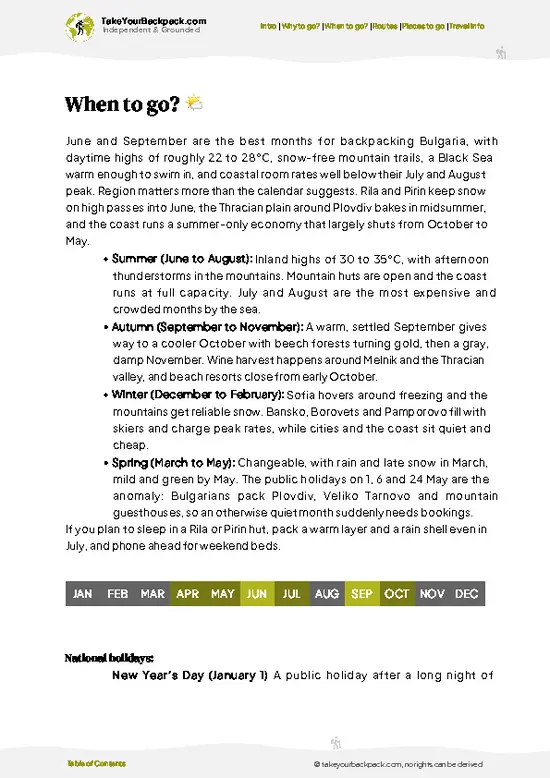
Best Months: May to June and September to early October are the best months for villages in Bulgaria, because daytime temperatures sit around 18 to 27°C, trails are dry enough to walk, and the cherry, grape and walnut seasons keep things interesting. Rain is highest in May and June (roughly 60 to 80 mm a month in the mountains), but it tends to arrive as short afternoon bursts, which suits a long lunch.
Shoulder Seasons and Summer: April and late October are quieter and cheaper, with guesthouses often 10 to 25 percent below summer rates, though mountain mornings can drop near freezing and some family-run places close. July and August push the Danube plain and southern valleys past 32°C, sometimes 35°C, while higher Rhodope and Rila villages stay a comfortable 22 to 28°C. Prices rise modestly … read more 👉
Best Months: May to June and September to early October are the best months for villages in Bulgaria, because daytime temperatures sit around 18 to 27°C, trails are dry enough to walk, and the cherry, grape and walnut seasons keep things interesting. Rain is highest in May and June (roughly 60 to 80 mm a month in the mountains), but it tends to arrive as short afternoon bursts, which suits a long lunch.
Shoulder Seasons and Summer: April and late October are quieter and cheaper, with guesthouses often 10 to 25 percent below summer rates, though mountain mornings can drop near freezing and some family-run places close. July and August push the Danube plain and southern valleys past 32°C, sometimes 35°C, while higher Rhodope and Rila villages stay a comfortable 22 to 28°C. Prices rise modestly in August, mostly near the coast and in well-known Revival towns.
Winter: December to February brings snow to the mountains, often 30 to 100 cm at altitude, and temperatures of -10 to 2°C. Villages look lovely under it, yet minor roads can be icy and buses less reliable. Ski areas near the Rila and Pirin ranges fill up at weekends and in the New Year period, so book ahead. Elsewhere, you may have the whole street to yourself, plus a stove-warmed room.

village hoppingTips for Visiting Multiple Destinations

How Many Days: A trip combining several villages in Bulgaria needs 7 to 12 days, because each region is a separate mountain or valley system rather than a neighbor on the next block.
Which Regions Group Well: Three clusters work: the central Balkan foothills around Veliko Tarnovo and Gabrovo, the Rhodope in the south, and the Rila and Pirin foothills in the southwest. A sensible direction is to start in Sofia, the main transport hub, head east or north through the central Balkan, then loop south to Plovdiv and onward into the Rhodope. Sofia to Veliko Tarnovo takes about 3 to 3.5 hours by bus. Plovdiv to the central Rhodope takes roughly 1.5 to 3 hours depending on the stop.
Time Per Stop: Allow one to two nights for most villages, since an afternoon covers the lanes, a church and a meal. Staying … read more 👉
How Many Days: A trip combining several villages in Bulgaria needs 7 to 12 days, because each region is a separate mountain or valley system rather than a neighbor on the next block.
Which Regions Group Well: Three clusters work: the central Balkan foothills around Veliko Tarnovo and Gabrovo, the Rhodope in the south, and the Rila and Pirin foothills in the southwest. A sensible direction is to start in Sofia, the main transport hub, head east or north through the central Balkan, then loop south to Plovdiv and onward into the Rhodope. Sofia to Veliko Tarnovo takes about 3 to 3.5 hours by bus. Plovdiv to the central Rhodope takes roughly 1.5 to 3 hours depending on the stop.
Time Per Stop: Allow one to two nights for most villages, since an afternoon covers the lanes, a church and a meal. Staying three nights makes sense only if you plan hikes. Between regions, budget half a day, because bus connections are sparse.
Common Planning Mistakes: The classic error is stacking a different village every day. Rural buses may run once or twice daily and not at all on Sundays, so you spend more time at stations than on cobbles. Choose one base per region and take short trips from it. The second error is ignoring distances on a map. A 60 km mountain road can take two hours. Pad every transfer, and rent a car for the Rhodope if you value your schedule.

The ListMust-Visit villages in Bulgaria

1 Melnik

sandstone cliffs, wine cellars, stone mansions

Sip local reds beneath dramatic rock formations and explore winding streets lined with centuries-old merchant homes.

2 Shiroka Laka

Rhodope architecture, stone bridges, folk singing

Experience the rhythms of mountain life in a village known for its music, distinctive houses, and tranquil river setting.

bulgaria-city-shiroka-laka
© Google | Zlatin Iliev

3 Zheravna

wooden houses, open-air museum, chestnut groves

Step into a preserved past among timbered homes and leafy lanes, where time slows and craftsmanship is everywhere.

bulgaria-city-zheravna
© Google | Savina Petrova

4 Apriltsi

Mountain meadows, chalet stays, wildlife watching

Stay in family-run lodges, wake to mountain silence, and spot deer or eagles in the meadows surrounding this small Balkan town.

bulgaria-city-apriltsi
© Google |

5 Dobrinishte

thermal springs, Pirin access, local taverns

Soak in mineral pools after hiking rugged peaks, then sample homemade fare in family-run mehanas at the edge of the mountains.

bulgaria-city-dobrinishte
© Google |

6 Ahtopol

Black Sea coast, fishing harbor, whitewashed houses

Wake to sea breezes and watch boats return with the day’s catch, then wander quiet lanes above rocky shores.

bulgaria-city-ahtopol
© Google |

7 Kamen Bryag

rocky terraces, sunrise vantage, wild steppe

Wake early for sunrise over rugged rocks, listen to the wind in open grassland, and find solitude away from crowds.

8 Borovets

alpine forest, ski slopes, mountain lodges

Wake early to catch the first lift, then unwind among pine woods and rustic chalets, with easy access to Rila’s high trails.

Loading the map 🌍

Expert viewInsights from Locals and Experts

How Many Villages to Visit: Six to eight villages across a 10-day trip is the number I advise, because it leaves time to actually sit in a square, eat slowly and absorb the quiet. Pack in twelve and you collect photos of identical stone walls while eating gas-station sandwiches. Going below four means you miss how different the regions are, from Rhodope stonework to Danube-plain wine cellars.
Which Kind to Prioritize: For the most reward, put working villages first: places where people still farm, bake bread and run a single café. They cost the least, usually US$25 to 35 a day including food, and give you conversations with locals. Preserved Revival showpieces cost more in time and money, with crowds in summer, but they photograph beautifully, so pick two at most. Mountain villages suit hikers, … read more 👉
How Many Villages to Visit: Six to eight villages across a 10-day trip is the number I advise, because it leaves time to actually sit in a square, eat slowly and absorb the quiet. Pack in twelve and you collect photos of identical stone walls while eating gas-station sandwiches. Going below four means you miss how different the regions are, from Rhodope stonework to Danube-plain wine cellars.
Which Kind to Prioritize: For the most reward, put working villages first: places where people still farm, bake bread and run a single café. They cost the least, usually US$25 to 35 a day including food, and give you conversations with locals. Preserved Revival showpieces cost more in time and money, with crowds in summer, but they photograph beautifully, so pick two at most. Mountain villages suit hikers, and need a car or a patient relationship with a bus timetable. Skip any place that exists mainly as a souvenir stand. If you are short on time and money, choose the working village, since a family guesthouse with dinner included beats a themed restaurant in both price and flavor.
What It Costs: Budget US$25 to 40 a day on a backpacker’s plan. Guesthouse rooms run roughly 40 to 90 BGN (US$22 to 50) for a double, and dorm beds, where they exist, cost 20 to 35 BGN. A hearty meal costs 12 to 25 BGN. Entry fees to village museums and churches are usually 3 to 10 BGN, guides 20 to 60 BGN for a short walk, and local buses 5 to 20 BGN per leg. A rental car costs about US$25 to 45 a day plus fuel, and pays for itself if you reach three or more remote stops.
Safety and Cultural Notes: Rural Bulgaria is very safe, and the main hazards are stray dogs on village outskirts, icy mountain roads in winter and mountain weather that changes within an hour. Carry cash, since many village shops and guesthouses do not take cards. Greet people with a polite “dobar den”. Note that a head shake means yes and a nod means no, a fact that has ruined many perfectly good ordering attempts. Dress modestly in churches and monasteries, ask before photographing people, and accept an offered glass of rakia graciously, even if you only sip. Hosts often press food on guests, so arrive hungry.

✈️ The backpacker research shortcutBulgaria Travel Guide

An offline-friendly backpacking guide with optimized travel routes, ranked highlights, transport advice, and the best areas to stay.
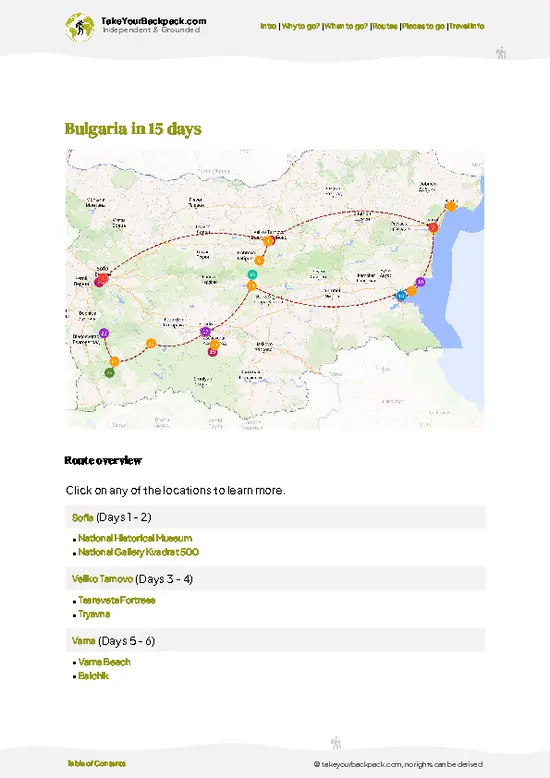
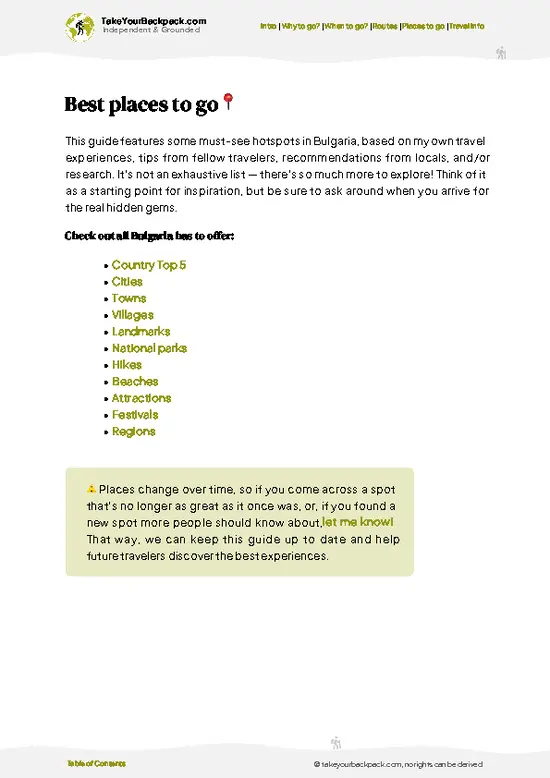
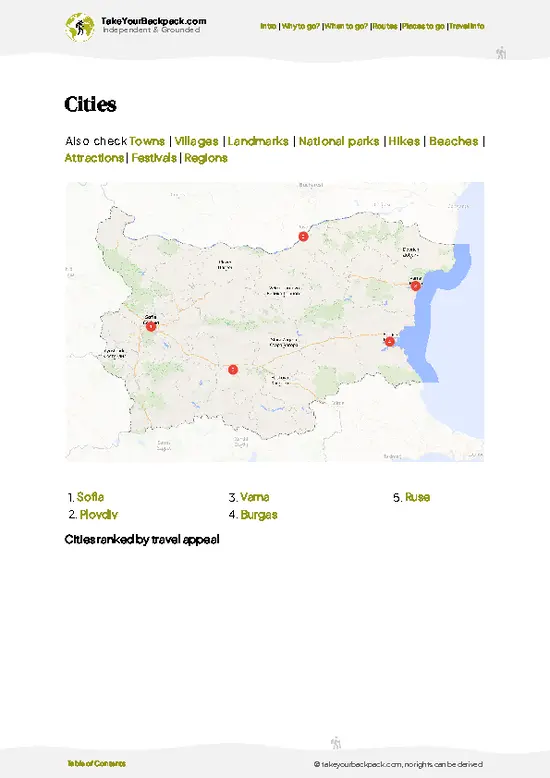
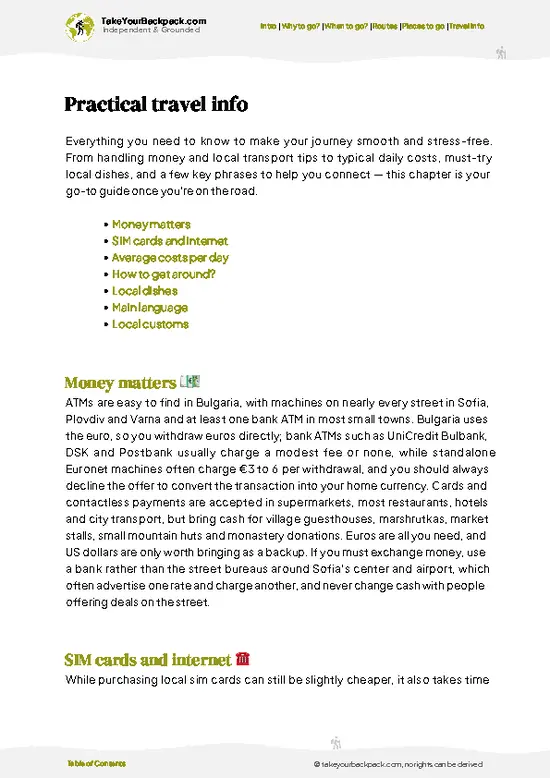
example page 0 from our offline Travel Guide for Bulgaria
example page 1 from our offline Travel Guide for Bulgaria
example page 2 from our offline Travel Guide for Bulgaria
example page 3 from our offline Travel Guide for Bulgaria
example page 4 from our offline Travel Guide for Bulgaria
example page 5 from our offline Travel Guide for Bulgaria
example page 6 from our offline Travel Guide for Bulgaria
example page 7 from our offline Travel Guide for Bulgaria
The digital guide (349 pages) contains:
✅ 92 highlights, ranked by travel appeal
✅ Optimized 5, 10 & 15-day travel routes
✅ Cities, national parks, landmarks, beaches
✅ How to get around
✅ Offline-friendly for travel without Wi-Fi
👉 Click to see all 30+ guide features

📅 Plan smarter in minutes, not weeks
✅ Month by month travel advice
✅ Festivals & national holidays
✅ Budget expectations

🗺️ Go to the right places, skip the overrated ones
✅ Honest pros & cons of destinations
✅ Top hikes, parks & viewpoints
✅ Lesser-known places most travelers miss
✅ Clear “worth it vs skip it” guidance

🛏️ Travel smoothly without rookie mistakes
✅ Best areas to stay
✅ Transport systems explained simply
✅ Common scams & safety advice
✅ SIM cards, money & practical tips

🌍 Understand the country, not just visit it
✅ Culture & traditions
✅ 52 Essential phrases & customs
✅ Festivals worth planning around
✅ Traveler-friendly historical context
✅ Insights that make places more meaningful

📱 Built for real travel conditions
✅ Fully downloadable PDF
✅ Works completely offline
✅ Optimized for phone use
✅ Useful in remote areas & buses
✅ Everything in one place
Stop searching, start planning
Get instant access to your full guide. 30‑day money-back guarantee.
+ Add another guide for just

By proceeding you agree to our terms.
Sent to your inbox immediately after payment • 100% Secure Checkout
Best Backpacking Travel Advisor 2025 tourism awardBest Backpacking
Travel Advisor
2025
What others say about Take Your Backpack Guides:
⭐⭐⭐⭐⭐
Fantastic, amazing amount of information!
⭐⭐⭐⭐⭐
My goodness this is amazing, it's what I've been looking for hats off too you!
⭐⭐⭐⭐⭐
I think this is absolutely BRILLIANT
⭐⭐⭐⭐
Very complete and informative. It's still missing places, but I gotta to commend you
⭐⭐⭐⭐⭐
This is truly amazing, thank you, can't wait to explore it with my kids!
⭐⭐⭐⭐⭐
Awesome resource, thank you!
⭐⭐⭐⭐⭐
This is amazing! Can't wait to explore the ones I haven't seen
⭐⭐⭐⭐
I love this! Well done, great idea.
⭐⭐⭐⭐⭐
Thanks for taking the time to make this gem!
⭐⭐⭐⭐⭐
This might be the best website I've ever seen.
⭐⭐⭐⭐⭐
Congratulations, and thank you so much for your work; it's incredibly valuable.
⭐⭐⭐⭐
In all seriousness I think you did a great job pointing out the important spots
⭐⭐⭐⭐⭐
10/10 very good
⭐⭐⭐⭐⭐
As someone who's only just starting to visit regularly this is awesome, thank you.
⭐⭐⭐⭐
Thank you very much! I'm going to visit my dad, it's going to be very useful!
⭐⭐⭐⭐⭐
This is really cool! We'll be travelling for the first time and this definitely come in handy.
⭐⭐⭐⭐⭐
You are now our minister of culture, congratulations 👨‍💼
⭐⭐⭐⭐⭐
Just wanted to tell you that this is a pearl! Going to follow your recommendations.
⭐⭐⭐⭐⭐
This is so cool. I'll definitely be using the resource for my travels soon.
⭐⭐⭐⭐⭐
This is very impressive! Good work.
⭐⭐⭐⭐⭐
This is an amazing and informative site. Very well done!

🛏️ Where to stay?Top Areas to Stay

Bulgaria has plenty of hostels and budget guesthouses, with dorm beds typically running €10 to 20 a night and private doubles from about €30 to 50. In Sofia, the streets around Vitosha Boulevard and Serdika put you within walking distance of the main sights, metro lines and bars, though weekend nights get loud, while Plovdiv splits between the cobbled Old Town (quiet, atmospheric, hilly) and the Kapana district (craft beer, late cafés, more noise). In Veliko Tarnovo, the Old Town along Gurko and Samovodska streets gives you cliffside views and a calm, safe base, and in Varna the center near the Sea Garden keeps you close to the beach and summer nightlife, at peak-season prices.

If you enjoy meeting … read more 👉
Bulgaria has plenty of hostels and budget guesthouses, with dorm beds typically running €10 to 20 a night and private doubles from about €30 to 50. In Sofia, the streets around Vitosha Boulevard and Serdika put you within walking distance of the main sights, metro lines and bars, though weekend nights get loud, while Plovdiv splits between the cobbled Old Town (quiet, atmospheric, hilly) and the Kapana district (craft beer, late cafés, more noise). In Veliko Tarnovo, the Old Town along Gurko and Samovodska streets gives you cliffside views and a calm, safe base, and in Varna the center near the Sea Garden keeps you close to the beach and summer nightlife, at peak-season prices.

If you enjoy meeting fellow travelers, consider choosing hostels with high ratings for atmosphere. On the other hand, if you prefer having your own space, a hotel might be a better option.

BulgariaDiscover the Country

👋 Meet the founderWho’s Behind Take Your Backpack?

Johan, backpacker and founder of TakeYourBackpackHi, I’m Johan (Netherlands 🇳🇱), the creator of TakeYourBackpack. Over the past 3 decades, I’ve backpacked through 90+ countries across six continents, gaining extensive experience with independent travel, long-term trips, and overland routes.

This site is built on a combination of firsthand travel experience and carefully curated insights from other backpackers. Many guides are based on places I’ve personally visited, while others bring together tips, observations, and practical advice shared by trusted travelers I’ve met along the way.

The goal is to provide realistic, experience-driven guidance — not generic itineraries — so you can explore destinations with better context, clearer expectations, and more confidence.