Short version: Equatorial Guinea is one of Central Africa’s harder countries to backpack independently, but not impossible if you’re patient, organized, and comfortable with uncertainty.
The main challenges for backpackers are bureaucracy, language, and low tourism infrastructure. Visas can be tricky depending on your passport, registration rules change, and officials may not always know what to do with an obvious backpacker. You want printed copies of your hotel bookings, passport, onward ticket, and a calm, polite attitude at every checkpoint.
Spanish is the working language. Outside Malabo and Bata, English is rare. If you can handle basic Spanish (booking rooms, asking prices, explaining your route), your life gets much easier. Without it, you’ll rely heavily on gestures and patience.
Tourism infrastructure is thin. There are very few hostels, almost no classic backpacker hangouts, and budget accommodation is usually basic guesthouses used by local workers. You’ll often pay mid-range prices for lower comfort than in Southeast Asia or Latin America. Booking ahead for the first nights in each city is smart, especially in Malabo and Bata.
Security-wise, it’s not a high-crime free‑for‑all, but it’s also not a place to wander around snapping photos of government buildings, ports, or checkpoints. The country is sensitive about photography; when in doubt, don’t shoot, or ask clearly first. Keep your phone and camera low‑key.
Independent backpacking here is best for travelers who already have some Africa experience, are okay with plans changing, and care more about raw, real‑life travel than easy social scenes. If this is your first trip outside Europe or North America, it’s a steep learning curve, but still doable if you prepare hard and move slowly.
For most backpackers, 7–14 days is the sweet spot, depending on how deep you want to go and how much bureaucracy you’re willing to wrestle with.
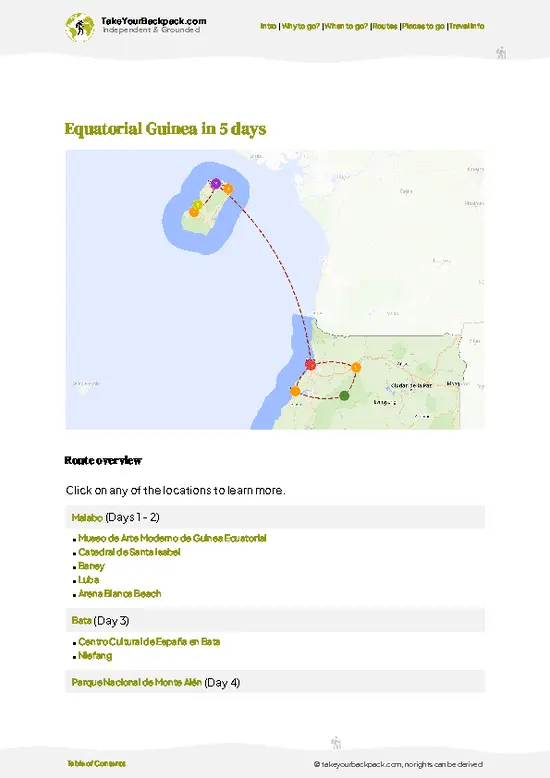
If you only have 4–5 days, focus on Malabo and nearby nature:
- Day 1–2: Malabo city, markets, waterfront, feel out the rhythm.
- Day 3–4: Day trips or an overnight into Bioko’s interior (Moka area, waterfalls, crater lakes) if logistics and weather cooperate.
This is enough to say you’ve been, but you’ll only scratch the surface.
With 7–10 days, you can do a more balanced loop:
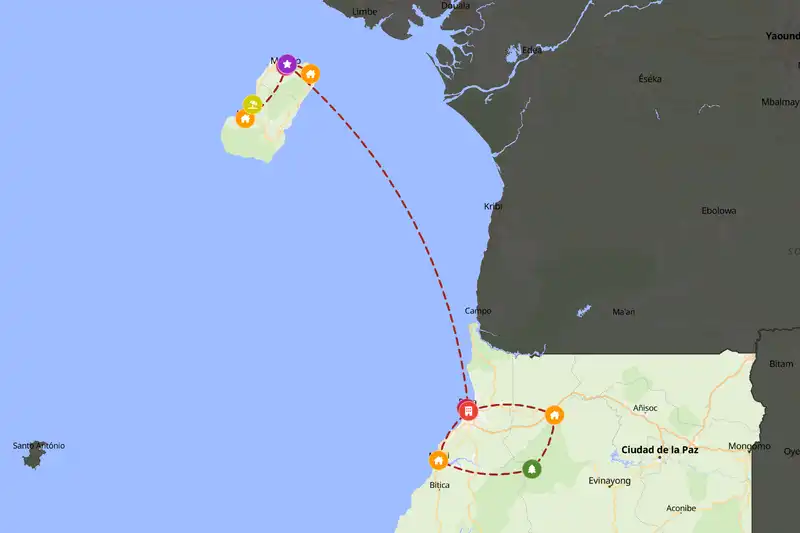
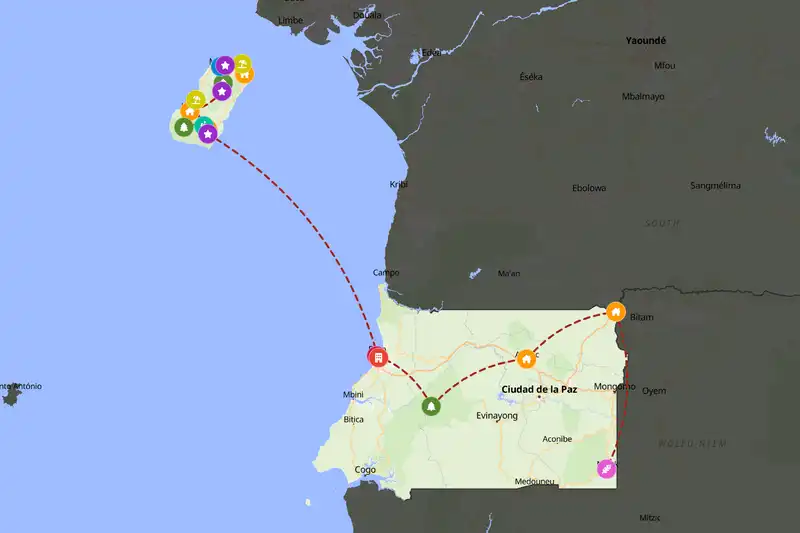
- 3–4 days on Bioko Island (Malabo + highlands).
- 3–4 days on the mainland around Bata and one inland town or park, if transport lines up.
This timeframe lets you adapt to delays, deal with checkpoints, and still enjoy the place instead of sprinting.
With 2 weeks, you can travel at a relaxed pace:
- 4–5 days Bioko Island (Malabo, Moka, maybe a coastal village).
- 6–7 days mainland: Bata plus one or two smaller towns, maybe a national park area if you can arrange guides and permits.
More than 2 weeks only makes sense if you’re really into slow travel, birding, or research, or if you’re combining Equatorial Guinea with neighboring countries and using it as a base. Because costs are relatively high for what you get, most budget travelers are better off keeping it to 1–2 weeks and putting extra time into cheaper, easier countries nearby.
You can technically get around without your own car, but it’s not as smooth as in classic backpacker regions, and you’ll need to be flexible.
Inside cities like Malabo and Bata, you’ll rely on:
- Shared taxis: Cheap and common, but you need basic Spanish and a rough idea of prices. Always agree on the fare before getting in.
- Moto-taxis (in some areas): Fast and cheap, but bring a buff or scarf for dust and be picky about drivers; helmets are not guaranteed.
Between cities and towns, options exist but are inconsistent:
- Minibuses and shared cars: These run between major points (e.g., Malabo–Moka on Bioko, Bata–interior towns on the mainland). They usually leave when full, not on a fixed schedule, so start early in the day.
- Domestic flights: Sometimes used between Malabo and Bata or other points, but they’re not budget-friendly and schedules can change.
- Ferries/boats: There have been services between Bioko and the mainland, but they’re not always frequent, and safety standards vary.
Travel without a car means:
- You must build in buffer days for delays and cancellations.
- You’ll often arrive late or tired, so pre-booking at least the first night’s accommodation in each town is smart.
- Reaching remote beaches, villages, or trailheads can be difficult or impossible without arranging a private car or moto.
For a pure backpacker trip, it’s realistic to rely on public and shared transport for a Bioko-focused itinerary and one or two mainland hops. If you want to chase remote national parks or tiny coastal villages, you either pay for private transport, hitch rides with locals (only when it feels safe and appropriate), or accept that some spots are out of reach.
For a budget traveler, the must‑visits are the places where you can actually feel the country without needing a private driver or a luxury budget.
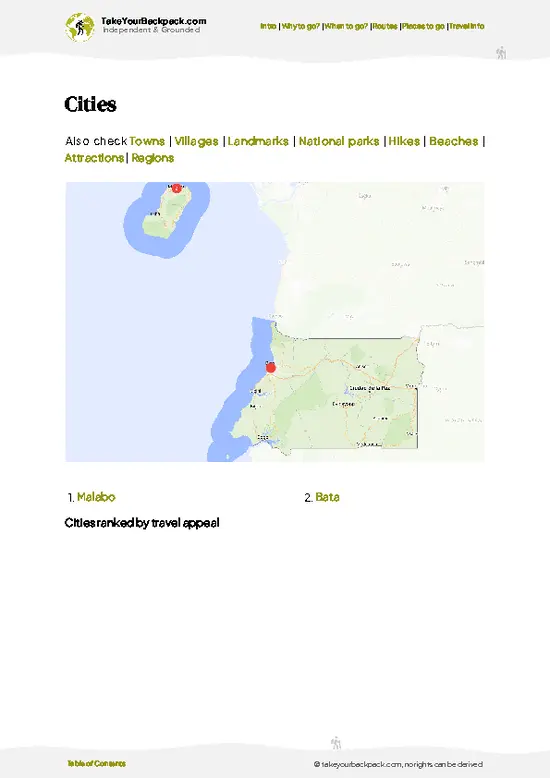
1. Malabo (Bioko Island)
This is your entry point and cultural anchor. The city mixes colonial architecture, modern government buildings, and everyday street life. Walk the central streets, hit the markets, and spend time on the waterfront in the late afternoon when the heat eases and people are out. It’s also where you’ll find the most accommodation options and basic services.
2. Bioko Island interior (around Moka and the highlands)
If you only leave the city once, do it here. The interior of Bioko is cooler, greener, and feels like a different country from Malabo. Think cloud forest, waterfalls, crater lakes, and small villages. You’ll likely need to arrange transport from Malabo (shared taxis or a hired car), but once there, you can do day hikes, short walks, and village wandering. This is where the country really shows its natural side.
3. Bata (mainland)
Bata is the mainland’s main city and a good base if you’re crossing to or from neighboring countries. It has a more rough‑and‑ready feel than Malabo, with busy streets, local eateries, and a working‑city vibe. For backpackers, it’s useful for logistics, people‑watching, and getting a sense of mainland life.
4. A mainland interior town or forest area (if logistics allow)
If you have time and can line up transport, spending a couple of days in a smaller inland town or near a forested area gives you a look at rural life: slower pace, roadside bars, and red‑earth roads. True national park visits (like Monte Alén) are logistically and financially heavier, but even just skirting the edges of forest zones can be rewarding for birdlife and atmosphere.
If you’re short on cash and time, a strong itinerary is: Malabo (city) + Bioko interior + a quick hop to Bata and back. That gives you both island and mainland flavor without drowning in transport costs.
If you’re tight on time or money, skip anything that demands heavy logistics or high fees for a relatively small payoff.
1. Deep, remote national park expeditions
Places like Monte Alén and other interior parks are legendary on paper, but for a backpacker they often mean expensive guides, tricky permits, unreliable transport, and no guarantee of seeing much wildlife. If you’re not a hardcore birder or researcher, your time is usually better spent in easier‑to‑reach forest and highland areas on Bioko or near more accessible mainland towns.
2. Over‑ambitious multi‑town mainland circuits
Trying to hit a long list of mainland towns in a week (Bata plus several interior stops) is a recipe for spending your whole trip in shared taxis and at checkpoints. Pick one inland area at most, or even just stick to Bata if your schedule is tight.
3. Chasing every beach
Equatorial Guinea has plenty of coastline, but not every beach is easy to reach or worth the transport cost for a quick dip. If you’ve already got good beach time in other West or Central African countries, prioritize Bioko’s highlands or cultural time in Malabo and Bata instead of burning days on hard‑to‑reach stretches of sand.
4. High‑end resorts and expat bars
They can be fun if you’re craving a break, but they eat your budget fast and don’t tell you much about the country. One drink or one sunset visit is enough; you don’t need to base your whole stay there.
5. Over‑photographing official or sensitive areas
It’s not exactly a place, but it’s something to skip: don’t waste time and stress trying to sneak photos of government buildings, checkpoints, ports, or military sites. It can cause trouble and adds zero value to your trip. Focus your lens on markets, landscapes, and everyday street life where it’s clearly okay or where you’ve asked first.
If you’re on a tight schedule, a lean, smart plan is: Malabo + Bioko interior + (optionally) Bata. Skip deep‑interior expeditions, complex park logistics, and long mainland detours unless you have both time and money to burn.