×
Faroe Islands🇫🇴 | 5 days itinerary

How to Spend 5 Days in Faroe Islands

By Johan Kruseman 🇳🇱 | Updated May 3, 2026
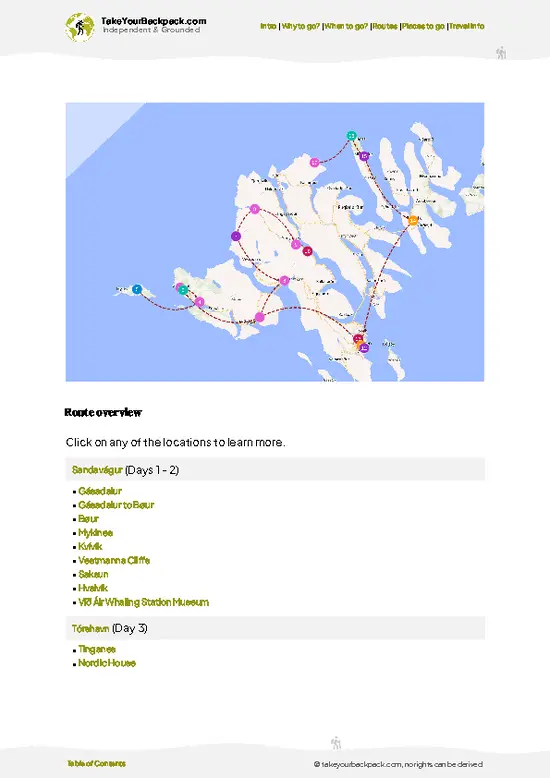
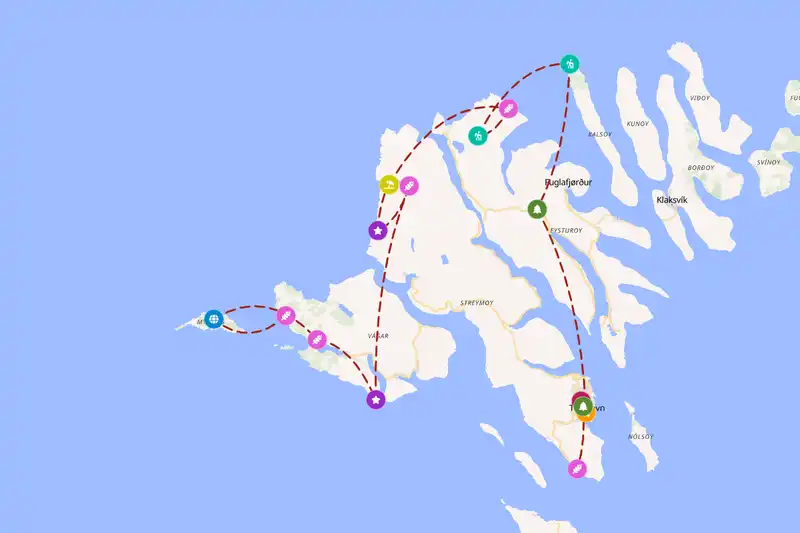
This 5-day route is for travelers who want to go beyond the postcard shots and actually feel how the Faroes fit together, moving at a steady but not rushed pace using a rental car, inter-island tunnels, and one boat trip. You’ll loop through the capital, Vágar, Eysturoy, and the northern islands, mixing famous viewpoints with smaller villages and a couple of deeper-cut stops that reward curiosity.

Day 1: Tórshavn’s old quarter and cultural core

Start in Tórshavn, which makes logistics easy and gives you a soft landing into Faroese life. Spend your first hours wandering the narrow lanes of Tinganes, where turf-roofed government buildings and wooden houses lean over the harbor and you can literally see how politics, fishing, and daily life share the same few streets. From there, walk up to the Nordic House in the Faroe Islands to get a feel for contemporary Faroese culture through design, exhibitions, and performance spaces, then continue to Listasavn Føroya to see how local artists have been … read more 👉
This 5-day route is for travelers who want to go beyond the postcard shots and actually feel how the Faroes fit together, moving at a steady but not rushed pace using a rental car, inter-island tunnels, and one boat trip. You’ll loop through the capital, Vágar, Eysturoy, and the northern islands, mixing famous viewpoints with smaller villages and a couple of deeper-cut stops that reward curiosity.

Day 1: Tórshavn’s old quarter and cultural core

Start in Tórshavn, which makes logistics easy and gives you a soft landing into Faroese life. Spend your first hours wandering the narrow lanes of Tinganes, where turf-roofed government buildings and wooden houses lean over the harbor and you can literally see how politics, fishing, and daily life share the same few streets. From there, walk up to the Nordic House in the Faroe Islands to get a feel for contemporary Faroese culture through design, exhibitions, and performance spaces, then continue to Listasavn Føroya to see how local artists have been wrestling with this weather and light for generations. If you have time, swing by the National Theatre of the Faroe Islands area to round out your sense of how a tiny nation keeps its language and stories alive, then settle in for a second night in Tórshavn so you’re not repacking immediately.

Day 2: West to Vágar - lakes, cliffs, and classic viewpoints

On day two, drive through the tunnel to Vágar for a full day of big landscapes. Start with the hike toward Bøsdalafossur Waterfall, where the lake edges feel almost unreal as they drop toward the ocean and you can walk along the cliffs with the sound of surf far below. After the hike, roll into Sandavágur for a pause and a look at Sandavágur Beach, which gives you a softer shoreline and a sense of how people actually live with this weather. In the afternoon, continue to Gásadalur for the iconic waterfall pouring into the sea, then either hike or drive along the coast toward Bøur, whose turf roofs and views toward sea stacks feel like a movie set that forgot to pack the tourists. Overnight on Vágar or back in Tórshavn depending on your accommodation style, but keep the evening free to simply watch the light change over the water instead of squeezing in more driving.

Day 3: Eysturoy’s heights and gorge-side calm

Day three takes you to Eysturoy for a mix of mountain and village time. Aim for a morning ascent of Slættaratindur if the weather is cooperative; the climb is steep but straightforward in good conditions, and from the top you can see how the islands knit together in every direction. After the hike, drive the scenic roads deeper into Eysturoy, using pullouts to take in the fjords rather than racing from point to point. Your goal for the afternoon is Gjógv, where a natural gorge slices into the coastline and the village clings to the slopes above; walking the clifftops here gives you a quieter, more contemplative version of Faroese coastal drama. Overnight either in or near Gjógv, or loop back toward Tórshavn if you prefer a single base, but avoid stacking another long drive on top of the hiking day so your legs and brain can catch up.

Day 4: Northern islands - Klaksvík, lighthouse ridges, and sea cliffs

On day four, head through the subsea tunnels toward the northern islands, using Klaksvík as your anchor. From here, take the boat to Mykines if conditions and schedules line up, giving you a day on an island that feels like a world of its own, with cliffs, birdlife, and a sense of isolation that’s hard to find elsewhere; even a few hours here will reset your sense of scale. Back in the north, carve out time for the hike to Kallur Lighthouse, where the ridge paths and drop-away cliffs give you that classic Faroese “walking on the edge of the world” feeling, and then return to Klaksvík for the night so you’re not driving long distances in the dark. If you prefer a boat-based day instead of hiking, you can swap in a trip to the Vestmanna Cliffs, where sea caves and bird cliffs show you the islands from water level and give your legs a break while your eyes stay busy.

Day 5: Streymoy’s villages, waterfalls, and quieter corners

For your final day, loop back toward Streymoy and slow the pace down to let the trip sink in. Start with a visit to Saksun, where turf-roofed houses sit above a tidal lagoon that feels like a natural amphitheater, then walk down to Saksun Beach at low tide if conditions allow to feel the scale of the cliffs from the sand. Continue along the coast to Tjørnuvík and its black Tjørnuvík Beach, where you can watch waves roll in with the Risin og Kellingin sea stacks on the horizon, then swing by Fossá Waterfall on your way back south to stand at the base of one of the islands’ most photogenic cascades. If you have a bit of time left before your final night in Tórshavn, detour through Kirkjubø for a sense of medieval Faroese history or pause in Viðarlundin í Sørvágur for a gentler, tree-sheltered walk that contrasts nicely with all the bare rock and wind you’ve been living in for days.

As a last quiet flourish, slip away one evening to the tiny village of Velbastaður on Streymoy’s west coast, where you can watch the sun sink behind distant islands with almost no one else around and feel like you’ve been let in on a local secret.
Loading the map 🌍
film
0
0
0a
Tórshavn
Pawel Fukowski
film
1
1
1a
Nordic House in the Faroe Islands
film
2
2
2a
National Theatre of the Faroe Islands
film
3
3
3a
Bøsdalafossur Waterfall
Ralph Laforge
film
4
4
4a
Sandavágur Beach
film
5
5
5a
Gásadalur
Running Out Of Countries
film
6
6
6a
Bøur
Spencer Q
film
7
7
7a
Slættaratindur
Kateřina Zajíčková
film
8
8
8a
Eysturoy
New Roads
film
9
9
9a
Gjógv
Saeed Ullah
film
10
10
10a
Klaksvík
Lukmic Reloaded
film
11
11
11a
Kallur Lighthouse
Jarek
film
12
12
12a
Saksun
János Palotás
film
13
13
13a
Saksun Beach
film
14
14
14a
Tjørnuvík
Gerhard Bechtold
film
15
15
15a
Tjørnuvík Beach
film
16
16
16a
Fossá Waterfall
Jw Liang
film
17
17
17a
Kirkjubø

✈️ The backpacker research shortcutFaroe Islands Travel Guide

An offline-friendly backpacking guide with optimized travel routes, ranked highlights, transport advice, and the best areas to stay.
example page 0 from our offline Travel Guide for Faroe Islandsexample page 1 from our offline Travel Guide for Faroe Islandsexample page 2 from our offline Travel Guide for Faroe Islandsexample page 3 from our offline Travel Guide for Faroe Islandsexample page 4 from our offline Travel Guide for Faroe Islandsexample page 5 from our offline Travel Guide for Faroe Islands
The digital guide (149 pages) contains:
41 highlights, ranked by travel appeal
Optimized 2, 3 & 5-day travel routes
Best neighborhoods to stay
How to get around
Offline-friendly for travel without Wi-Fi
👉 See all 30+ guide features

📅 Plan smarter in minutes, not weeks
Month by month travel advice
Festivals & national holidays
Budget expectations

🗺️ Go to the right places, skip the overrated ones
Honest pros & cons of destinations
Top hikes, parks & viewpoints
Lesser-known places most travelers miss
Clear “worth it vs skip it” guidance

🛏️ Travel smoothly without rookie mistakes
Best areas to stay
Transport systems explained simply
Common scams & safety advice
SIM cards, money & practical tips

🌍 Understand the country, not just visit it
Culture & traditions
52 Essential phrases & customs
Festivals worth planning around
Traveler-friendly historical context
Insights that make places more meaningful

📱 Built for real travel conditions
Fully downloadable PDF
Works completely offline
Optimized for phone use
Useful in remote areas & buses
Everything in one place
Save weeks of stressful planning
Get instant access to the full guide directly. 30-day money-back guarantee.


Sent to your inbox immediately after payment • 100% Secure Checkout
Best Backpacking Travel Advisor 2025 tourism awardBest Backpacking
Travel Advisor
2025
What others say about Take Your Backpack Guides:
⭐⭐⭐⭐⭐
Fantastic, amazing amount of information!
⭐⭐⭐⭐⭐
My goodness this is amazing, it's what I've been looking for hats off too you!
⭐⭐⭐⭐⭐
I think this is absolutely BRILLIANT
⭐⭐⭐⭐
Very complete and informative. It's still missing places, but I gotta to commend you
⭐⭐⭐⭐⭐
This is truly amazing, thank you, can't wait to explore it with my kids!
⭐⭐⭐⭐⭐
Awesome resource, thank you!
⭐⭐⭐⭐⭐
This is amazing! Can't wait to explore the ones I haven't seen
⭐⭐⭐⭐
I love this! Well done, great idea.
⭐⭐⭐⭐⭐
Thanks for taking the time to make this gem!
⭐⭐⭐⭐⭐
This might be the best website I've ever seen.
⭐⭐⭐⭐⭐
Congratulations, and thank you so much for your work; it's incredibly valuable.
⭐⭐⭐⭐
In all seriousness I think you did a great job pointing out the important spots
⭐⭐⭐⭐⭐
10/10 very good
⭐⭐⭐⭐⭐
As someone who's only just starting to visit regularly this is awesome, thank you.
⭐⭐⭐⭐
Thank you very much! I'm going to visit my dad, it's going to be very useful!
⭐⭐⭐⭐⭐
This is really cool! We'll be travelling for the first time and this definitely come in handy.
⭐⭐⭐⭐⭐
You are now our minister of culture, congratulations 👨‍💼
⭐⭐⭐⭐⭐
Just wanted to tell you that this is a pearl! Going to follow your recommendations.
⭐⭐⭐⭐⭐
This is so cool. I'll definitely be using the resource for my travels soon.
⭐⭐⭐⭐⭐
This is very impressive! Good work.
⭐⭐⭐⭐⭐
This is an amazing and informative site. Very well done!

🧭 RouteAlternative Routes

Travel Faroe Islands your way — from a quick highlights trip to a slow-paced adventure.

🙋 FAQBackpacking FAQ

Short answer: yes, but it’s more like trekking in a remote national park than backpacking through a city network. The Faroe Islands are safe, locals are friendly, and English is widely spoken, so you can absolutely travel independently without a tour. The catch is logistics: weather is wild, public transport is limited, and some famous hikes now require paid local guides or pre-booked time slots. For a budget traveler, the biggest challenge isn’t safety or navigation, it’s cost and planning.

Independent backpacking works best if you treat the islands as a base-and-spoke trip. Pick 1–2 bases (usually Tórshavn plus maybe Vágar or Klaksvík) and day-trip out, instead of changing accommodation every night. Wild camping is not generally allowed, and much of the land is private, so you can’t just pitch a tent anywhere like in parts of Scandinavia. Use campsites, hostels, and simple guesthouses, and book early in high season to avoid getting stuck with only expensive hotels.

Trails are often unmarked or only lightly marked, fog can roll in fast, and cliffs are no joke. You need offline maps, a realistic sense of your hiking ability, and a willingness to turn back if conditions change. If you’re used to backpacking in well-signed Alpine or US national park trails, dial your confidence down one notch and your caution up one notch.

Bottom line: independent backpacking is very doable if you’re comfortable with rough weather, flexible plans, and a bit of route-finding. It’s not the place to improvise everything on arrival; the more you pre-plan buses, ferries, and key hikes, the more money and stress you save.
For a budget backpacker, 5–7 days is the sweet spot: enough to see the headline landscapes without paying for a long stay in an expensive destination. If you’re extremely tight on time and money, 3–4 days can still work if you focus on one or two islands and skip long detours.

Rough breakdown:

- 3–4 days: Base in Tórshavn or Vágar. Hit Sørvágsvatn (the “lake above the ocean”), Gásadalur, a day exploring Tórshavn and Kirkjubøur, plus one extra day for either Streymoy villages (Saksun, Tjørnuvík) or a quick Norðoyggjar (Klaksvík area) run. This is a “greatest hits” sprint.

- 5–7 days: Ideal for most backpackers. You can do the above plus a full day on Kalsoy (Kallur lighthouse), more time in the northern islands, and a flexible weather day to swap hikes if conditions are bad. This length lets you ride buses and ferries instead of feeling forced to rent a car.

- 8–10 days: Worth it if you’re a hiking addict or photographer and want to slow down, repeat favorite spots in different light, or add more remote islands like Suðuroy or Sandoy. At this point, you’re paying a premium for extra days, so it only makes sense if you’ll actually use them for long hikes and not just sit in cafés hiding from the rain.

Because weather can shut down hikes or views quickly, build at least one “buffer” day into any itinerary over 4 days. Think of it as a flex day you can move around to chase clear skies or calmer wind, instead of a fixed sightseeing day.
You can get around without a car, but you need to think like a local commuter, not a spontaneous tourist. The bus and ferry network is reliable by island standards, but routes are limited, and schedules thin out on weekends and evenings. For a budget traveler, this is actually good news: the public transport system is far cheaper than renting a car, and there are travel cards that make it even more affordable.

How it works in practice:

- Buses: Inter-city buses connect Tórshavn with Vágar (airport), Klaksvík, and many villages. They’re clean, safe, and usually on time. The downside is frequency: often just a handful of departures per day, so you plan your hikes around bus times.

- Ferries: Some islands (like Kalsoy and Suðuroy) are reached by car ferries. Foot passengers are cheap, and you can walk or bus on the other side. In high season, ferries can be busy, but as a walk-on passenger you’re usually fine if you arrive early.

- Tunnel buses: Undersea tunnels link several islands. Buses use them, so you don’t need a car to benefit.

- Hitchhiking: Common and generally safe, especially in rural areas where everyone knows everyone. It’s a useful backup if you mis-time a bus, but don’t rely on it as your only plan, especially late in the day.

The main limitation is reaching trailheads and timing your return. Some hikes line up well with bus stops; others require long road walks or expensive taxis if you miss the last bus. For a car-free trip, prioritize hikes and villages that sit on bus routes (like Gásadalur, Tjørnuvík, and many Kalsoy spots) and avoid itineraries that require hopping between multiple remote valleys in one day.

If you’re disciplined with schedules and okay with early starts and early finishes, traveling without a car is absolutely workable and much cheaper. If you want total spontaneity and late-night freedom, a car wins but will hammer your budget.
For a backpacker watching both time and money, these are the places that give you the most “this is why I came to the Faroes” feeling per euro and per hour of effort:

1. Vágar Island
- Sørvágsvatn / Trælanípa: The famous “optical illusion” lake hanging above the ocean. It’s now a paid, managed hike, but still worth it once. Go early or late to dodge crowds.
- Gásadalur: Classic waterfall dropping into the sea, plus a good sense of how isolated Faroese villages used to be. Easy to reach by bus from the airport/Tórshavn.

2. Tórshavn & Kirkjubøur
- Tórshavn: Compact capital with turf-roofed houses, harborside walks, and cheap-ish supermarkets for self-catering. It’s your best base for buses and ferries.
- Kirkjubøur: Short bus ride from Tórshavn. Old church ruins, traditional wooden houses, and a strong sense of history without needing a guide or big budget.

3. Northern Streymoy
- Saksun: A small village in a dramatic amphitheater of mountains and tidal lagoon. Access rules and fees have changed over time, but the setting is powerful even from the road.
- Tjørnuvík: End-of-the-road village with a black-sand beach and views toward the sea stacks Risin og Kellingin. Good bus-accessible taste of “edge of the world” scenery.

4. Kalsoy (especially Kallur Lighthouse)
- Kalsoy: Reached by ferry from Klaksvík. The hike to Kallur lighthouse is one of the most iconic ridge walks in the islands, with cliffs dropping on both sides. Weather can make or break it, so keep your schedule flexible.

5. Norðoyggjar (Klaksvík and surroundings)
- Klaksvík: Second city, good as a cheaper base than Tórshavn sometimes, with access to Kalsoy and other northern islands. Great for feeling everyday Faroese life, not just postcard villages.

If you have extra time and budget, Suðuroy and Sandoy are fantastic for quieter, less touristed landscapes, but for a first-timer on a budget, the list above delivers the strongest mix of scenery, culture, and accessibility.
If you’re short on time or cash, skip anything that eats hours and money without giving you a new type of experience. The Faroe Islands repeat their strengths: cliffs, tiny villages, moody weather. You don’t need to chase every version of the same thing.

Here’s what a budget backpacker can reasonably skip or downgrade:

1. Multiple paid or heavily regulated “Instagram hikes” in one trip
If you’ve done Sørvágsvatn/Trælanípa and Kallur lighthouse, you’ve already hit two of the most dramatic viewpoints. Paying for several more guided or fee-heavy hikes that offer similar cliff views is often not worth it on a tight budget.

2. Expensive fine-dining experiences
The high-end food scene is interesting, but it’s brutally expensive. If you’re counting coins, stick to supermarkets, bakeries, and simple cafés. You’re here for landscapes; you don’t need a tasting menu to understand the islands.

3. Long detours to remote islands just to “collect” them
Islands like Suðuroy or the smaller outer islands are great if you have 8–10 days and love slow travel. With 3–5 days, the long ferry rides and extra nights of accommodation don’t pay off as much compared to spending that time hiking around Vágar, Streymoy, and the northern islands.

4. Trying to see every village on Streymoy and Eysturoy
Many villages share a similar feel: turf roofs, steep hills, sea views. Pick a few with strong scenery and bus access (Saksun, Tjørnuvík, maybe Gjógv if logistics work) and skip the urge to tick off every dot on the map.

5. Over-scheduling museums and indoor attractions
A quick pass through the main museum in Tórshavn or a church in Kirkjubøur is worthwhile, but stacking your days with multiple small museums adds cost and cuts into your best-weather windows for hiking. Use good weather for trails and viewpoints; save indoor stuff for truly foul days.

If you’re really squeezed, the core you should protect is: 1–2 big hikes (Sørvágsvatn and/or Kallur), one or two classic villages (Gásadalur, Tjørnuvík, Saksun), and at least half a day wandering Tórshavn. Everything else is optional layering, not essential backbone.

🇫🇴 Faroe IslandsMore of Faroe Islands

Ready to build a truly unique trip? Predefined routes are perfect for first-time visitors, but there is so much more to discover. Whether you are chasing a city trip, pristine national parks, local food scenes, or quiet beaches, pick a category to design your own path.