×

Germany🇩🇪 | best festivalsThe 10 Top festivals in Germany

Festivals in Germany split into three broad types: huge beer-and-fairground events, small regional wine and village fests, and music or arts gatherings that run from big-name open-airs to club-driven city weekends. The differences follow geography. Bavaria and the south run on beer-hall tradition, so expect long communal tables, packed trains and accommodation that sells out months ahead. The Rhine and Moselle valleys favor wine fests in small towns, where entry is often free and a glass costs about €4 to 6. Berlin and the east lean toward electronic music and street culture, with lower prices and looser crowds. Because Germany’s rail network links nearly every host town, independent travelers can reach most events without a car. Cost depends on the type: tented beer festivals add up fast, while village fests stay cheap. Match the type to your budget and tolerance for crowds before choosing dates.

By Johan Kruseman 🇳🇱 | Updated October 19, 2026
Explore the best regions in Germany

Why go?Key Factors That Shape the Experience

Germany suits festivals because local identity is still strongly regional. The country was a patchwork of kingdoms, duchies and free cities until 1871, and each kept its own dialect, food, patron saints and drinking customs. Those differences survive as annual events tied to a harvest, a guild or a church calendar, so a festival in the Rhineland feels nothing like one in Saxony or Bavaria. Brewing law and wine geography reinforce this: beer dominates the south and east, while wine rules the river valleys of the southwest.

Infrastructure is the second reason. Deutsche Bahn, regional day tickets and dense local bus links mean even small festival towns are reachable without a car, and large events add extra trains and shuttle services. Organization is dependable. Opening hours, security checks … read more 👉
Germany suits festivals because local identity is still strongly regional. The country was a patchwork of kingdoms, duchies and free cities until 1871, and each kept its own dialect, food, patron saints and drinking customs. Those differences survive as annual events tied to a harvest, a guild or a church calendar, so a festival in the Rhineland feels nothing like one in Saxony or Bavaria. Brewing law and wine geography reinforce this: beer dominates the south and east, while wine rules the river valleys of the southwest.

Infrastructure is the second reason. Deutsche Bahn, regional day tickets and dense local bus links mean even small festival towns are reachable without a car, and large events add extra trains and shuttle services. Organization is dependable. Opening hours, security checks and cleanup are run to strict schedules, which makes events easier for first-timers than in many countries.

There are limits. The festival season is short and weather-dependent, because most events are outdoors and cluster between late spring and early autumn. Winter offers a different format, mostly Christmas markets and carnival-style events, rather than a lesser version of summer. Popular events also run on advance booking: beds in host cities fill early and prices rise sharply for a few nights.

Before choosing Germany, know that cash is still common at smaller fests, that most stalls charge a refundable deposit on glasses and mugs, and that Sunday and holiday closures affect shops even when a festival is running. Quiet hours also apply in residential areas, so late-night noise stops earlier than many visitors expect. Plan around these rules and the country rewards you with events that are well run, regionally distinct and easy to reach.
How the List Was Created
The list of best festivals in Germany is created based on energy, traditions, crowd experience, activities, and overall excitement. If you feel a festival is missing in this list, please let us know.

When to go?Optimal Periods for Travel

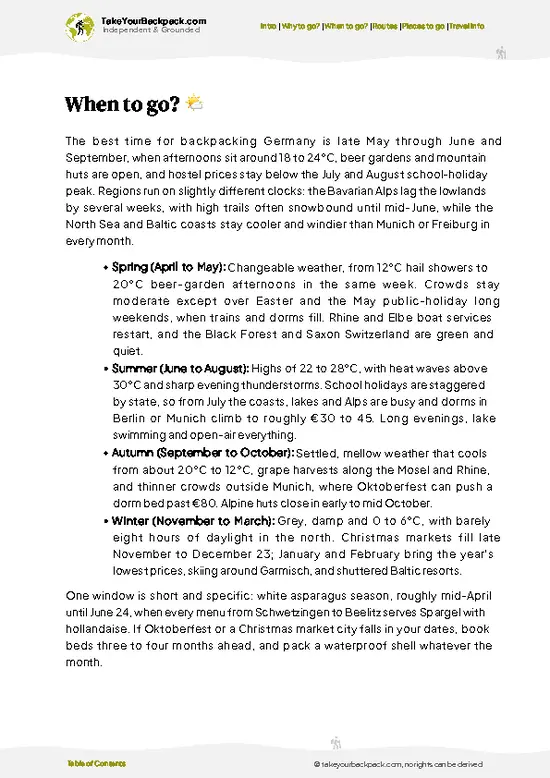
Best months: The best months for festivals in Germany are May to September, because the outdoor calendar peaks then and daytime highs sit around 18 to 26°C. Late spring brings long evenings and fewer crowds. July and August are warmest and sometimes hit 30 to 35°C during heat waves, but they also bring the heaviest thunderstorm risk, with monthly rainfall around 70 to 90 mm across much of the country.

Shoulder seasons: April and October are the shoulder months. Temperatures drop to 8 to 15°C, nights get close to freezing, and open-air programs thin out. Some of the best beer and wine fests happen at this edge, though. Early autumn is harvest time, so the Rhine, Moselle and Franconia wine regions are at their busiest and most atmospheric from September into October. Large tented events in … read more 👉
Best months: The best months for festivals in Germany are May to September, because the outdoor calendar peaks then and daytime highs sit around 18 to 26°C. Late spring brings long evenings and fewer crowds. July and August are warmest and sometimes hit 30 to 35°C during heat waves, but they also bring the heaviest thunderstorm risk, with monthly rainfall around 70 to 90 mm across much of the country.

Shoulder seasons: April and October are the shoulder months. Temperatures drop to 8 to 15°C, nights get close to freezing, and open-air programs thin out. Some of the best beer and wine fests happen at this edge, though. Early autumn is harvest time, so the Rhine, Moselle and Franconia wine regions are at their busiest and most atmospheric from September into October. Large tented events in the south run into early October, and clear, crisp days are common.

Winter and prices: From November to March the format changes. Daytime temperatures are around 0 to 5°C, days are short, and the focus moves to Christmas markets from late November to December 23 and carnival season in the Rhineland, which peaks in February or March. Accommodation in Cologne, Düsseldorf and Mainz can double during carnival.

Prices swing most around the big dates. In Munich and other major host cities, hostel dorm beds that cost €25 to 40 normally can reach €60 to 100 or more during peak festival nights, and booking three to six months ahead matters. Outside those dates, rates are far lower, particularly in the east, such as Leipzig and Dresden. Midweek visits cost less and reduce crowding. Shops close on Sundays and public holidays, so stock up on food beforehand.

festival hoppingSuggested Travel Strategies

Trip length: A trip combining several festivals in Germany needs 10 to 16 days, which gives each stop breathing room and absorbs delays. Fewer than ten forces long travel days, and beyond sixteen the festival calendar rarely adds anything new.

Which regions group well: Germany’s rail network runs on north-south corridors and hubs, so the clusters follow them. Munich links to Nuremberg and the Bavarian Alps in the south. Frankfurt is the hub for the Rhine, Moselle and Rheingau wine area. Cologne and Düsseldorf cluster in the west. Berlin, Leipzig and Dresden form an eastern group, with Berlin to Leipzig about 1 hour 15 minutes on the fast train. A sensible direction is north to south or the reverse, rather than zigzagging, since the fastest services follow those lines. Starting in Berlin and … read more 👉
Trip length: A trip combining several festivals in Germany needs 10 to 16 days, which gives each stop breathing room and absorbs delays. Fewer than ten forces long travel days, and beyond sixteen the festival calendar rarely adds anything new.

Which regions group well: Germany’s rail network runs on north-south corridors and hubs, so the clusters follow them. Munich links to Nuremberg and the Bavarian Alps in the south. Frankfurt is the hub for the Rhine, Moselle and Rheingau wine area. Cologne and Düsseldorf cluster in the west. Berlin, Leipzig and Dresden form an eastern group, with Berlin to Leipzig about 1 hour 15 minutes on the fast train. A sensible direction is north to south or the reverse, rather than zigzagging, since the fastest services follow those lines. Starting in Berlin and ending in Munich lets you finish with the larger, pricier events when you know the system.

Time per stop and transfers: Allow 2 to 4 nights per hub. Smaller wine towns need only one or two, and a day trip from a hub often works better than moving your bags. Typical transfers are Berlin to Munich around 4 hours by fast train, Frankfurt to Munich about 3 hours 15 minutes, Cologne to Frankfurt about 1 hour, and Cologne to Berlin around 4 hours.

Planning mistakes: The most common error is packing in too many stops by assuming short distances mean easy days. Delays and crowded trains during festival weekends eat hours, so leave a buffer day before any event you cannot miss. Another is booking beds late: split-city stays far from the venue cost more than one early booking. Travelers also buy point-to-point tickets at the station. Book Sparpreis fares early or use regional day passes, and reserve seats on festival weekends, when trains fill.

The ListThe Best festivals of Germany

1 Oktoberfest

beer tents, Bavarian dress, fairground rides

Sit at communal tables, sample regional brews, and take in the spectacle of Munich’s massive folk festival with locals and visitors alike.

2 Christmas Markets

wooden stalls, mulled wine, festive crafts

Browse handcrafted gifts and seasonal treats in illuminated town squares, surrounded by the scents and sounds of winter festivities.

3 Berlin International Film Festival

red carpet, international cinema, film premieres

Watch new films debut alongside directors and actors, with screenings and industry events drawing global attention to Berlin.

4 Karneval

costume parades, street parties, Rhineland customs

Take part in days of masked revelry, satirical floats, and music as cities embrace pre-Lenten traditions with public celebrations.

5 Wacken Open Air

metal bands, rural village, camping fields

Immerse yourself in a legendary gathering of metal fans, with nonstop music and camaraderie in the fields outside Wacken.

6 Karneval der Kulturen

multicultural parade, world music, street food

Celebrate Berlin’s diversity with processions, dance performances, and culinary specialties representing dozens of international communities.

7 Wave-Gotik-Treffen

gothic fashion, dark music, Leipzig venues

Encounter a global subculture through concerts, markets, and themed gatherings that transform Leipzig into a hub for alternative art.

8 Kiel Week

sailing regattas, harbor concerts, Baltic coast

Watch world-class sailing, join waterfront festivities, and explore maritime culture during one of Europe’s largest open-air events.

9 Reeperbahn Festival

live music, club venues, St. Pauli district

Catch emerging artists and established acts in intimate settings across Hamburg’s nightlife hub, with a focus on discovery and diversity.

10 Fusion Festival

electronic music, lakeside camping, alternative culture

Dance through the night at a non-commercial festival known for its creative installations, communal spirit, and eclectic lineups.

11 Bachfest Leipzig

classical concerts, historic churches, Bach tributes

Attend performances by renowned ensembles in Leipzig’s storied venues, immersing yourself in the legacy of Johann Sebastian Bach.

12 Cannstatter Volksfest

Swabian food, festival halls, autumn fair

Taste regional dishes, enjoy live bands, and explore a sprawling fairground atmosphere unique to Stuttgart’s fall celebration.

13 Tollwood Festival

eco market, world music, Munich tents

Browse sustainable goods, catch international performances, and sample organic food at a festival blending culture and environmental focus.

14 Documenta

contemporary art, Kassel venues, global exhibitions

View installations and conceptual works from international artists, with exhibitions spread across museums and public spaces.

15 Japan-Tag Düsseldorf

Japanese culture, cosplay, fireworks display

Enjoy martial arts, street food, and traditional performances, culminating in a large-scale fireworks show along the Rhine.

16 Bardentreffen Nuremberg

folk music, street stages, global performers

Experience a citywide gathering where musicians from around the world fill Nuremberg’s old town with diverse acoustic sounds.

17 Rheingauer Weinwoche

wine tastings, vineyard stalls, regional producers

Sample local vintages, meet winemakers, and enjoy relaxed evenings in open-air settings along Wiesbaden’s historic streets.

18 Zwiebelmarkt Weimar

onion braids, folk stalls, Thuringian specialties

Wander through Weimar’s old town as locals celebrate the harvest with food, crafts, and a market centered on the humble onion.

19 Drachenstich

medieval reenactment, dragon play, town spectacle

Watch a centuries-old legend unfold with costumed performances, fire effects, and community participation in a Bavarian setting.

20 Berlin Pride

parade floats, LGBTQ+ community, rainbow celebrations

Celebrate diversity with colorful processions, parties, and advocacy events that transform Berlin’s streets into a space for visibility.

21 International Short Film Festival Oberhausen

short films, experimental cinema, filmmaker forums

Discover innovative storytelling and visual art at screenings that highlight emerging talent and boundary-pushing film techniques.

22 Mainzer Johannisnacht

book market, riverbank festivities, literary readings

Join crowds along the Rhine for open-air book stalls, author events, and late-night celebrations honoring Johannes Gutenberg.

23 Open Ohr

youth activism, open-air debates, Mainz citadel

Join crowds of young people discussing politics, music, and social issues in a festival that transforms historic ramparts into a lively forum.

24 Rave the Planet

Berlin street parade, electronic music, dancefloats

Experience Berlin’s pulse as thousands gather for a day of nonstop beats, creative costumes, and a citywide celebration of electronic culture.

Think you know Germany?

Prove you’re a true local — uncover 14 lesser-known festivals in Germany that locals tend to keep to themselves.
Loading the map 🌍

Expert viewExpert Commentary on festivals

How many to attend: Plan for two to four festivals in a trip of two weeks or more. Each major event takes a full day to enjoy and half a day to recover, and Germany’s fair-style events are built around long sessions. More than four tends to blur together and drains the budget, since beds and drinks cost most during peak dates. Two well-chosen events with free days between them leave room to see the places that host them.

Choosing a kind: Match the type to your style. If you have a tight budget, favor village wine fests and city street events, where entry is usually free and food and drink cost less. If you want atmosphere and crowds, a large beer event gives it, but it asks for early booking and a higher spend. Music lovers should choose between big open-airs, which charge €150 to 300 for … read more 👉
How many to attend: Plan for two to four festivals in a trip of two weeks or more. Each major event takes a full day to enjoy and half a day to recover, and Germany’s fair-style events are built around long sessions. More than four tends to blur together and drains the budget, since beds and drinks cost most during peak dates. Two well-chosen events with free days between them leave room to see the places that host them.

Choosing a kind: Match the type to your style. If you have a tight budget, favor village wine fests and city street events, where entry is usually free and food and drink cost less. If you want atmosphere and crowds, a large beer event gives it, but it asks for early booking and a higher spend. Music lovers should choose between big open-airs, which charge €150 to 300 for multi-day tickets and often need camping, and club-based city events, which cost less and ask for little planning. Travelers who prefer calm should pick weekday daytime visits, when seating is easy and families outnumber partiers.

Budget: A realistic budget is US$70 to 110 a day (about €65 to 100) in festival season, covering a dorm bed, local transport and meals. A beer festival day typically adds €50 to 90, since a liter of beer costs about €12 to 15 at the largest events and a half chicken or similar meal runs €15 to 25. Wine fests are cheaper at €25 to 45 for a day of tasting and food. Music festival tickets are the main cost, plus €10 to 20 for a camping spot where offered. Regional trains with day tickets cost roughly €15 to 50, depending on the area. Many rides to festival towns are cheaper with the Deutschlandticket, a monthly pass around €58 that covers regional services nationwide, and it pays off if you travel a lot in one month.

Cash and deposits: Smaller stalls often take only cash, so carry €50 to 100 from an ATM in advance, because machines on site charge fees and queue. Most drink vendors add a deposit of €2 to 5 on mugs or cups, and you get it back only by returning them, so do not walk off with them.

Safety: Germany is among the safer places for festivals, and security is visible, with bag checks at large venues and size limits on bags. Pickpocketing is the main risk in crowded tents and on packed trains, so use a front pocket or a zipped cross-body bag. Drink limits come from the setting: strong beer and long sessions make it easy to overdo it, so eat early and alternate with water, which you can ask for free or buy cheaply. Rules are strict about intoxication at the door and on trains.

Cultural etiquette: Seating is often shared at long tables, so ask before sitting and greet the table. Clinking glasses with eye contact is expected, and tipping about 5 to 10 percent by rounding up is normal. Many traditional events have dress customs, but costumes are optional and a plain outfit raises no eyebrows. Respect quiet hours, and note that smoking rules differ by venue. Public drinking is legal, but glass bottles are banned at many events, and littering fines apply.

Booking: Reserve beds as soon as you fix dates, and choose free-cancellation rates where available. Tickets to music festivals sell out in months. Buy only from the official site, since resale scams are a known problem. Table reservations in beer tents usually require group bookings, so solo travelers are better off arriving early in the day, when seating is open to walk-ins.

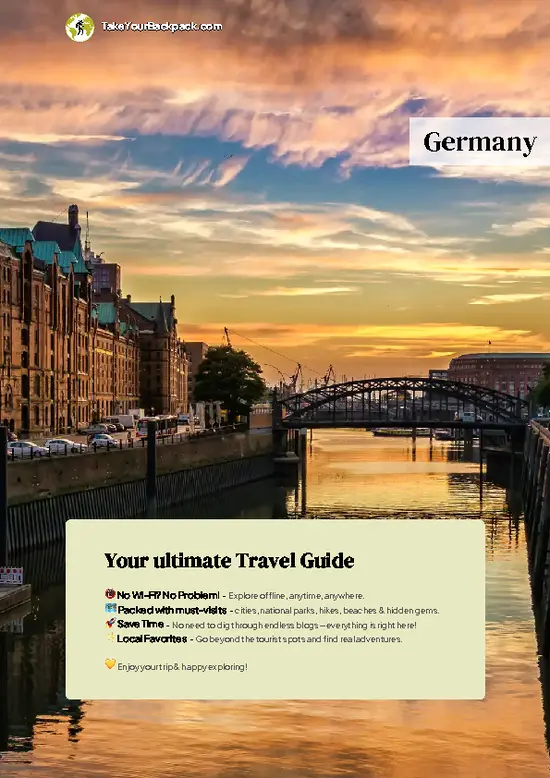
✈️ The backpacker research shortcutGermany Travel Guide

An offline-friendly backpacking guide with optimized travel routes, ranked highlights, transport advice, and the best areas to stay.
example page 0 from our offline Travel Guide for Germany
example page 1 from our offline Travel Guide for Germany
example page 2 from our offline Travel Guide for Germany
example page 3 from our offline Travel Guide for Germany
example page 4 from our offline Travel Guide for Germany
example page 5 from our offline Travel Guide for Germany
example page 6 from our offline Travel Guide for Germany
example page 7 from our offline Travel Guide for Germany
The digital guide (502 pages) contains:
✅ 135 highlights, ranked by travel appeal
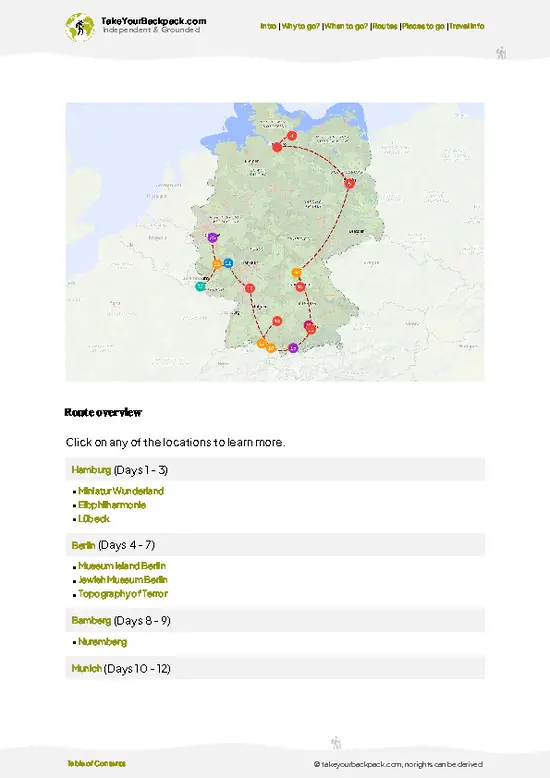
✅ Optimized 7, 14 & 21-day travel routes
✅ Cities, national parks, landmarks, beaches
✅ How to get around
✅ Offline-friendly for travel without Wi-Fi
👉 Click to see all 30+ guide features

📅 Plan smarter in minutes, not weeks
✅ Month by month travel advice
✅ Festivals & national holidays
✅ Budget expectations

🗺️ Go to the right places, skip the overrated ones
✅ Honest pros & cons of destinations
✅ Top hikes, parks & viewpoints
✅ Lesser-known places most travelers miss
✅ Clear “worth it vs skip it” guidance

🛏️ Travel smoothly without rookie mistakes
✅ Best areas to stay
✅ Transport systems explained simply
✅ Common scams & safety advice
✅ SIM cards, money & practical tips

🌍 Understand the country, not just visit it
✅ Culture & traditions
✅ 52 Essential phrases & customs
✅ Festivals worth planning around
✅ Traveler-friendly historical context
✅ Insights that make places more meaningful

📱 Built for real travel conditions
✅ Fully downloadable PDF
✅ Works completely offline
✅ Optimized for phone use
✅ Useful in remote areas & buses
✅ Everything in one place
Stop searching, start planning
Get instant access to your full guide. 30‑day money-back guarantee.
+ Add another guide for just

By proceeding you agree to our terms.
Sent to your inbox immediately after payment • 100% Secure Checkout
Best Backpacking Travel Advisor 2025 tourism awardBest Backpacking
Travel Advisor
2025
What others say about Take Your Backpack Guides:
⭐⭐⭐⭐⭐
Fantastic, amazing amount of information!
⭐⭐⭐⭐⭐
My goodness this is amazing, it's what I've been looking for hats off too you!
⭐⭐⭐⭐⭐
I think this is absolutely BRILLIANT
⭐⭐⭐⭐
Very complete and informative. It's still missing places, but I gotta to commend you
⭐⭐⭐⭐⭐
This is truly amazing, thank you, can't wait to explore it with my kids!
⭐⭐⭐⭐⭐
Awesome resource, thank you!
⭐⭐⭐⭐⭐
This is amazing! Can't wait to explore the ones I haven't seen
⭐⭐⭐⭐
I love this! Well done, great idea.
⭐⭐⭐⭐⭐
Thanks for taking the time to make this gem!
⭐⭐⭐⭐⭐
This might be the best website I've ever seen.
⭐⭐⭐⭐⭐
Congratulations, and thank you so much for your work; it's incredibly valuable.
⭐⭐⭐⭐
In all seriousness I think you did a great job pointing out the important spots
⭐⭐⭐⭐⭐
10/10 very good
⭐⭐⭐⭐⭐
As someone who's only just starting to visit regularly this is awesome, thank you.
⭐⭐⭐⭐
Thank you very much! I'm going to visit my dad, it's going to be very useful!
⭐⭐⭐⭐⭐
This is really cool! We'll be travelling for the first time and this definitely come in handy.
⭐⭐⭐⭐⭐
You are now our minister of culture, congratulations 👨‍💼
⭐⭐⭐⭐⭐
Just wanted to tell you that this is a pearl! Going to follow your recommendations.
⭐⭐⭐⭐⭐
This is so cool. I'll definitely be using the resource for my travels soon.
⭐⭐⭐⭐⭐
This is very impressive! Good work.
⭐⭐⭐⭐⭐
This is an amazing and informative site. Very well done!

🛏️ Where to stay?Best Places to Stay in Germany

Germany has a dense hostel network, with dorm beds typically running €20 to €40 a night and private rooms in budget guesthouses from about €60, though prices jump sharply in Munich during Oktoberfest and around big trade fairs. In Berlin, Friedrichshain and Kreuzberg put you next to the best bars and clubs but get loud on weekends, while Mitte is quieter, pricier and within walking distance of most sights. In Munich, the streets around the main station in Ludwigsvorstadt hold the most budget beds and the best transport links but feel a bit gritty at night, and in Hamburg, St. Pauli is cheap and lively near the Reeperbahn, while St. Georg is central but rough in parts after dark.

If you enjoy … read more 👉
Germany has a dense hostel network, with dorm beds typically running €20 to €40 a night and private rooms in budget guesthouses from about €60, though prices jump sharply in Munich during Oktoberfest and around big trade fairs. In Berlin, Friedrichshain and Kreuzberg put you next to the best bars and clubs but get loud on weekends, while Mitte is quieter, pricier and within walking distance of most sights. In Munich, the streets around the main station in Ludwigsvorstadt hold the most budget beds and the best transport links but feel a bit gritty at night, and in Hamburg, St. Pauli is cheap and lively near the Reeperbahn, while St. Georg is central but rough in parts after dark.

If you enjoy meeting fellow travelers, consider choosing hostels with high ratings for atmosphere. On the other hand, if you prefer having your own space, a hotel might be a better option.

GermanyExplore Germany

👋 Meet the founderWho’s Behind Take Your Backpack?

Johan, backpacker and founder of TakeYourBackpackHi, I’m Johan (Netherlands 🇳🇱), the creator of TakeYourBackpack. Over the past 3 decades, I’ve backpacked through 90+ countries across six continents, gaining extensive experience with independent travel, long-term trips, and overland routes.

This site is built on a combination of firsthand travel experience and carefully curated insights from other backpackers. Many guides are based on places I’ve personally visited, while others bring together tips, observations, and practical advice shared by trusted travelers I’ve met along the way.

The goal is to provide realistic, experience-driven guidance — not generic itineraries — so you can explore destinations with better context, clearer expectations, and more confidence.