Short version: Guinea is doable to backpack independently if you already have some West Africa experience or you’re patient and flexible. It’s not an ideal first-country for brand‑new travelers.
The good news: people are generally welcoming, costs are low, and there’s very little mass tourism, so you get real daily life instead of a curated show. You can move around with shared taxis and minibuses, find cheap guesthouses in most towns, and eat at street stalls for a few dollars.
The hard parts: infrastructure is rough. Roads can be brutal, especially in the rainy season (roughly May–October). Power cuts are normal, running water isn’t guaranteed, and schedules are more of a suggestion than a promise. French is extremely useful; outside Conakry and a few hubs, English won’t get you far. You need to be okay with delays, dust, and plans changing.
Safety is mostly about petty theft, bad roads, and occasional political tension. Keep travel days flexible, avoid moving at night, and ask locals or guesthouse staff about current no‑go areas before long bus rides. ATMs exist in bigger towns but can be unreliable, so carry backup cash in euros or dollars.
If you’ve traveled in places like Sierra Leone, Guinea-Bissau, or rural parts of Ghana, Guinea will feel like a logical next step. If your comfort zone is Europe hostels and Southeast Asia night buses, you can still do it, but you’ll enjoy it more if you treat Guinea as an adventure, not a checklist country.
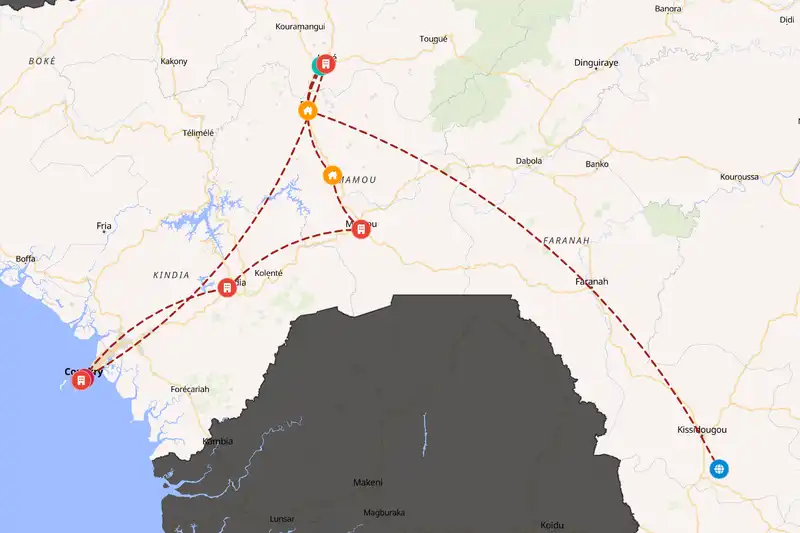
For a tight backpacker trip that still feels worthwhile, aim for 10–14 days. That gives you time to see more than Conakry without spending your whole trip in transit.
Rough breakdowns that actually work on the ground:
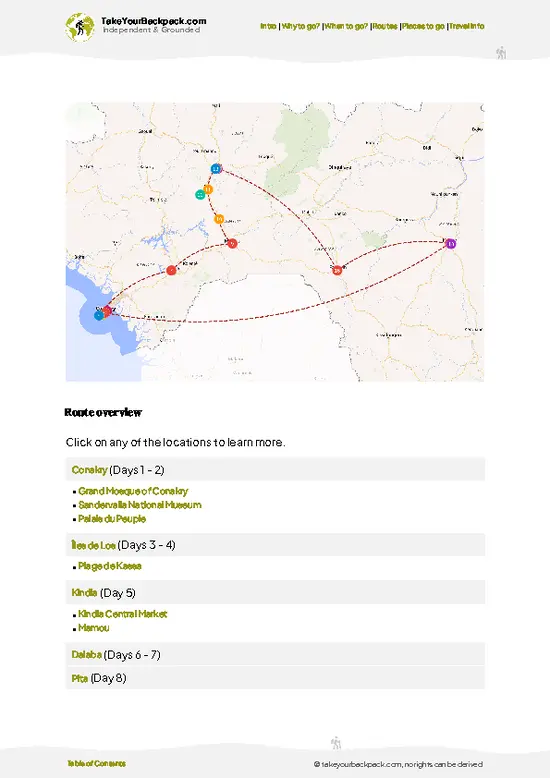
7–10 days (fast but feasible)- 1–2 days: Conakry and Îles de Los (quick city intro + beach/island decompression).
- 3–4 days: Fouta Djallon (base in Labé or Dalaba; day hikes to waterfalls and villages).
- 2–3 days: Extra time in Fouta or a quick hop to Kindia/Télimélé area for more nature.
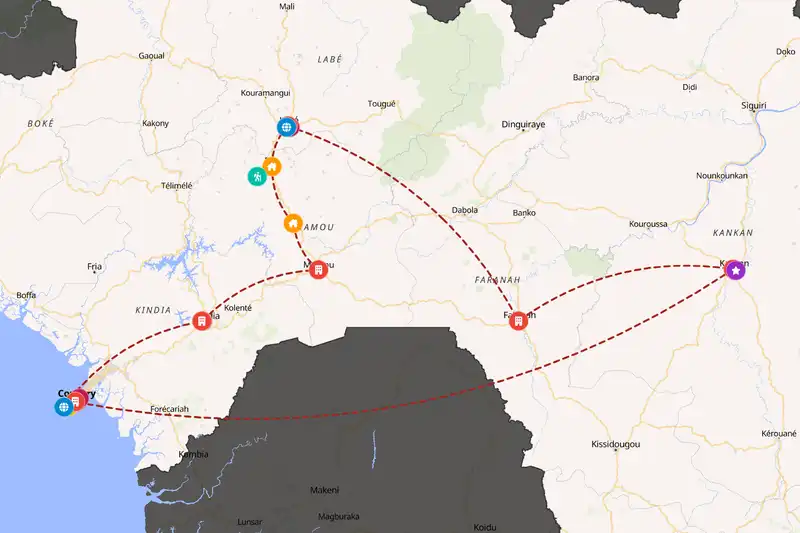
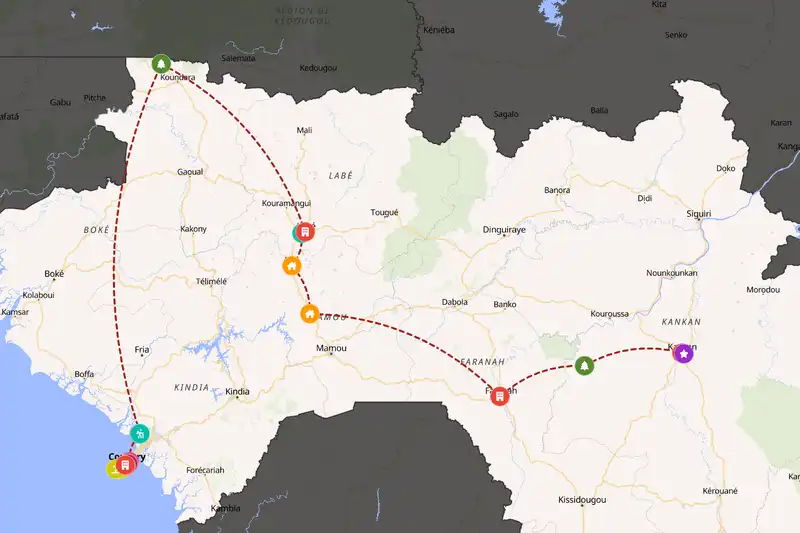
2–3 weeks (sweet spot for backpackers)- 2–3 days: Conakry + Îles de Los.
- 6–8 days: Fouta Djallon (multi‑day treks, homestays, more remote waterfalls and canyons).
- 4–6 days: Forested Guinea around Nzérékoré (sacred forests, mask traditions, more humid, green landscapes).
- 2–3 days: Buffer for slow transport, breakdowns, or a bonus stop like Kindia.
1 month+- You can start traveling slower: stay longer in villages, do multi‑day hikes without rushing back, and explore less‑visited corners like the far east around Kankan and Siguiri.
Because transport is slow and weather can wreck roads, always build in at least 1–2 buffer days. If you only have a week, focus on Conakry + Îles de Los + a slice of Fouta Djallon and accept that you’re getting a sampler, not the full spread.
Yes, you can get around Guinea without your own car, but you trade money savings for time and comfort.
How people actually move:-
Shared taxis (taxis-brousse): Old sedans crammed with people and luggage, running fixed routes between towns. They leave when full, not on a timetable. Cheap, slow, and very common.
-
Minibuses and bush vans: Used on busier routes. Slightly more space, same idea: they depart when full. Expect frequent stops and long loading times.
-
Motos (motorbike taxis): Essential in smaller towns and for the last stretch to villages, waterfalls, and trailheads. Negotiate the price before hopping on and wear a helmet if you can get one.
-
City taxis in Conakry: Shared or private. Shared taxis run set routes and are very cheap but crowded; private hires cost more but are still reasonable if you split with other travelers.
What this means for you:- You can reach all the main backpacker areas (Conakry, Labé, Dalaba, Pita, Kindia, Nzérékoré) by public transport.
- Getting to specific waterfalls, viewpoints, or remote villages usually requires a moto or arranging a local guide with a vehicle.
- Travel days are long. A 200 km trip can easily eat most of a day once you factor in waiting, loading, and bad roads.
If you’re short on time and have some budget, occasionally hiring a private car for a day (through a guesthouse or local contact) for side trips can save you a lot of frustration. If you’re on a strict budget and long, dusty days don’t scare you, the shared taxis and motos will get you where you need to go.
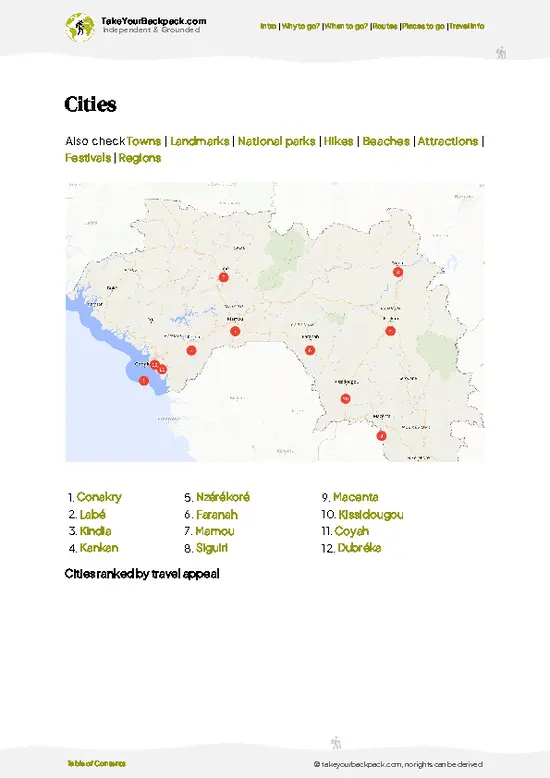
For a first-time backpacker trip to Guinea, these are the places that earn their bus rides:1. Fouta Djallon Highlands (Labé, Dalaba, Pita area)This is the heart of a good Guinea trip. Cool climate, rolling plateaus, deep valleys, and a ridiculous number of waterfalls. You can do day hikes from towns or multi‑day treks between villages. Homestays and simple guesthouses make it easy to keep costs low while actually meeting people instead of just passing through.
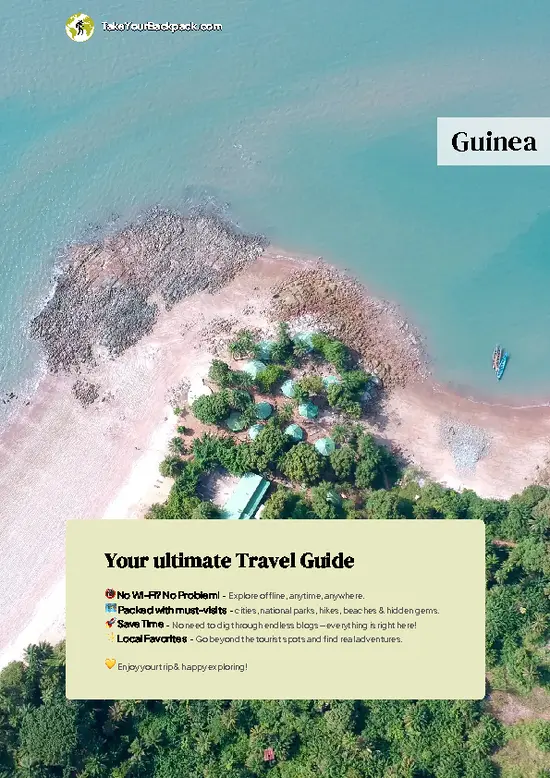
2. Îles de Los (off Conakry)Quick boat ride from Conakry, and suddenly you’re on sandy beaches with simple guesthouses and grilled fish for dinner. It’s the easiest place in the country to just exhale, swim, and reset after chaotic bus rides. Great first or last stop.
3. Forested Guinea (around Nzérékoré)If you have time to push south, this region feels different from the rest of the country: denser forests, more humidity, and strong mask and initiation traditions. You can visit sacred forests, small villages, and local markets that see almost no foreign visitors. It’s more effort to reach, but it gives you a deeper sense of how varied Guinea actually is.
4. Kindia and surroundingsCloser to Conakry than Fouta or Nzérékoré, Kindia is a good compromise if you’re short on time. You get hills, waterfalls, and rural scenery without committing to a multi‑day bus odyssey. It’s not as dramatic as Fouta, but it’s a solid nature hit.
5. Conakry (1–2 days, max)Not a classic tourist city, but it’s your entry/exit point and worth a short look. Street food, markets, and the general controlled chaos of a West African capital are part of the experience. Use it to sort SIM cards, cash, and onward transport, then escape to the highlands or islands.
If you’re short on time or patience for long, rough rides, it’s completely fine to be selective. Guinea rewards depth more than breadth.
1. Deep interior towns just to “tick them off”Places like Kankan or Siguiri can be interesting if you have a specific reason (history, personal connections, research), but for most backpackers they’re long, hot detours without standout sights. If you only have 1–2 weeks, put that time into Fouta Djallon or the islands instead.
2. Trying to see all of Guinea in one tripThe country is big, the roads are slow, and you’ll burn days just sitting in shared taxis. It’s better to choose two regions (for example, Conakry + Îles de Los + Fouta Djallon, or Conakry + Kindia + Forested Guinea) and actually enjoy them instead of racing around.
3. Extended time in ConakryUse Conakry as a logistics base and a short intro to urban life, not the main event. After 1–2 days, the traffic, noise, and heat start to outweigh the rewards for most budget travelers. Move on to the highlands or islands as soon as your errands are done.
4. Overly remote waterfalls or villages if you’re on a tight scheduleIn Fouta Djallon and Forested Guinea, there’s always “one more” waterfall or village that’s another half‑day of motos and walking away. If you’re short on time, stick to a few well‑placed bases (Labé, Dalaba, Pita, Nzérékoré) and do day trips instead of chasing every far‑flung spot.
5. Cross‑country overland marathonsIf your trip is short, avoid planning routes that zigzag the entire country (for example, Conakry → Nzérékoré → Kankan → Labé in one loop). You’ll spend more time in transit than actually being anywhere. Pick a logical line or a simple out‑and‑back and save the rest for another trip.