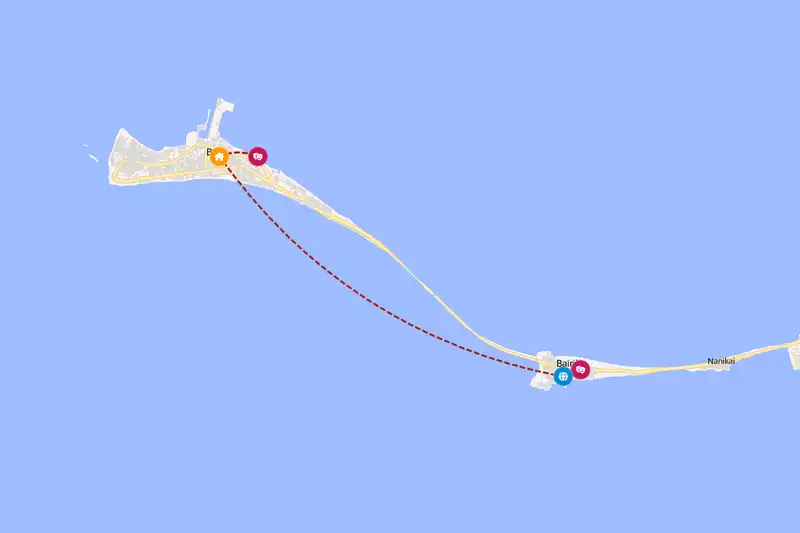
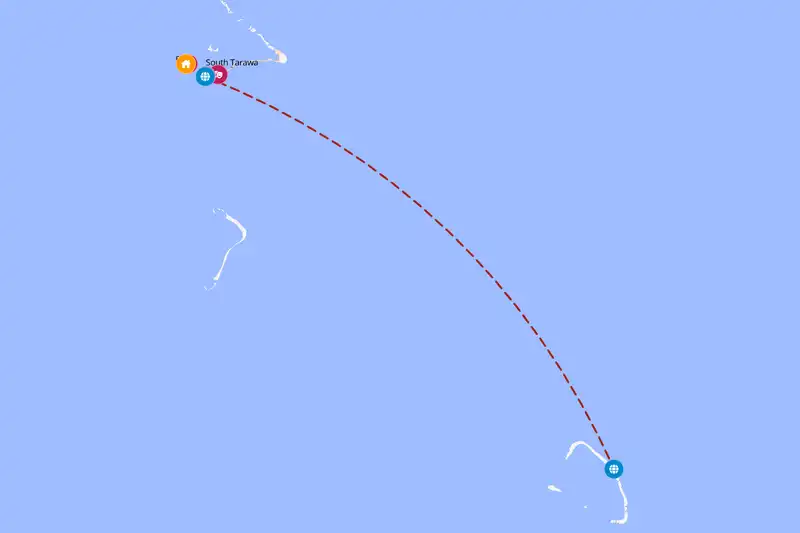
Yes, Kiribati is doable on your own, but it takes planning because flights are few and outer-island lodging is basic and often booked by phone or through the tourism office.
On
South Tarawa you can manage solo with minibuses (about A$1 to 3 a ride) and guesthouses at roughly A$60 to 150 a night. Outer atolls such as
Abemama or
North Tarawa mean simple island lodges at about A$40 to 100 with meals, arranged a few days ahead. International flights land at Bonriki only two or three times a week, so your trip length is set by the schedule. Bring cash in Australian dollars, since cards rarely work outside a few Tarawa businesses.
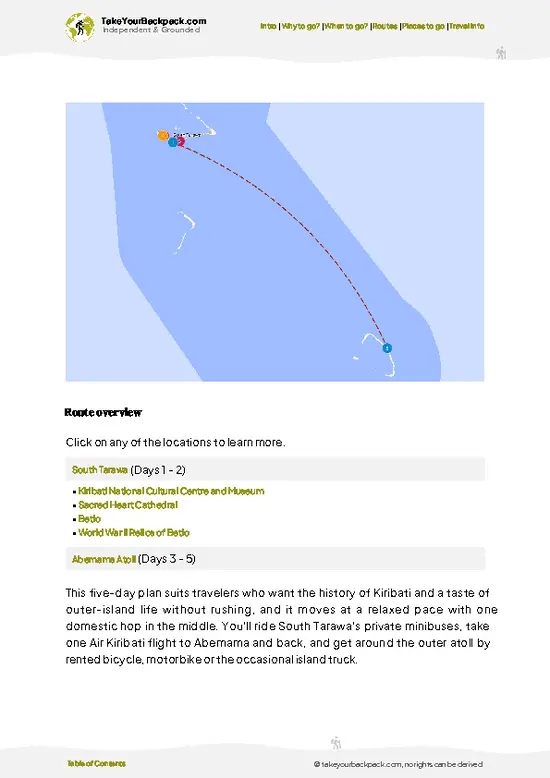
Five to seven days is a good length for Kiribati if you base the trip on Tarawa, mostly because international flights run only two or three times a week.
Two days covers the
Betio WWII sites and the national museum on
South Tarawa. Add two nights in
North Tarawa for village life, or three nights on
Abemama, a 40 to 50 minute domestic flight away.
Kiritimati Island is a separate trip roughly 3,300 kilometers east, reached by a weekly Fiji Airways flight from Nadi or Honolulu, so plan a full week there, usually for bonefishing and birdlife.
Yes, you can travel around Kiribati without a car, and most visitors do.
On
South Tarawa, privately run minibuses shuttle the single road from
Bonriki to
Betio all day, costing about A$1 to 3 per ride, with the full length taking roughly an hour in traffic.
North Tarawa is reached by small boat or by wading reef channels at low tide from Buota, and there are almost no vehicles once you arrive. Outer atolls like
Abemama need an Air Kiribati flight, after which you rent a bicycle or motorbike from your lodge for around A$10 to 30 a day.
In Kiribati, the
World War II Relics of Betio are the one site nearly every visitor should see, followed by the car-free villages of
North Tarawa.
Betio holds Japanese coastal guns, the command bunker and reef wrecks from the 1943 Battle of Tarawa, all walkable in half a day if you time it with low tide. The
Kiribati National Cultural Centre and Museum in Bikenibeu needs about an hour. For island life, spend two nights near
Buariki in the north or three on
Abemama, 40 to 50 minutes by plane.
Kiritimati Island is the pick for anglers and birders, but it needs its own week.
If time is short in Kiribati, skip the remote atolls and Kiritimati and stay on Tarawa.
The
Phoenix Islands Protected Area has no regular tourist access, so it isn’t realistic for a normal itinerary.
Kiritimati Island sits about 3,300 kilometers from Tarawa with a weekly flight, so it can’t be added to a short trip. Southern atolls such as
Beru,
Onotoa or
Tabiteuea South depend on infrequent Air Kiribati flights and can strand you for days. With only two or three days, focus on
Betio, the museum in Bikenibeu and, if the tides suit, one or two nights in
North Tarawa.
Yes, our itinerary-planner does exactly that. Set your trip length in days, give your interests and travel style, optionally give start- and end location and/or some mandatory stops you would like to include and the itinerary planner creates your personalized routes for Kiribati in seconds. Try it out!
Try the itinerary plannerv2.webp)



 Best Backpacking