×

Malaysia🇲🇾 | best villagesBest villages in Malaysia

Villages in Malaysia come in three flavors, and picking the wrong one is how you end up in a kampung where the only nightlife is a gecko. Peninsular Malaysia has Malay kampung life on stilted wooden houses, cheap, quiet and easy by bus. Borneo’s longhouse communities in Sarawak and Sabah cost more and need boats, 4WD or a guide. Highland and coastal outposts sit in between, with tea-hill cool and island ferries. Independent travelers can reach most of them without a tour, but Borneo punishes loose planning. Crowds stay thin almost everywhere, apart from a few island jetties.

By Johan Kruseman 🇳🇱 | Updated October 18, 2026
Explore the best landmarks in Malaysia

Why go?Understanding Their Importance

Malaysia suits village travel because three cultures built settlements here side by side: Malay kampungs on stilts, Chinese fishing and tin-mining hamlets, and Indigenous communities in the Borneo and peninsular interior. Trade routes along the Strait of Malacca, Dutch, Portuguese and British rule, and a tropical rainforest geography layered on top, so a single day can move from a wooden mosque to a clan temple to a longhouse veranda. Food is the shortcut to all of it, and a village stall often serves a dish the nearest city has already forgotten.

Infrastructure is the quiet advantage. Paved roads reach most peninsular villages, buses and the Grab app cover more ground than you would expect, and a homestay is usually a phone call away. That makes Malaysia far easier than neighboring countries … read more 👉
Malaysia suits village travel because three cultures built settlements here side by side: Malay kampungs on stilts, Chinese fishing and tin-mining hamlets, and Indigenous communities in the Borneo and peninsular interior. Trade routes along the Strait of Malacca, Dutch, Portuguese and British rule, and a tropical rainforest geography layered on top, so a single day can move from a wooden mosque to a clan temple to a longhouse veranda. Food is the shortcut to all of it, and a village stall often serves a dish the nearest city has already forgotten.

Infrastructure is the quiet advantage. Paved roads reach most peninsular villages, buses and the Grab app cover more ground than you would expect, and a homestay is usually a phone call away. That makes Malaysia far easier than neighboring countries where a village means a day on a muddy track. In Sabah and Sarawak, though, rivers, flights and rough roads set the pace, and distances look short on a map but are not.

Know before choosing: the climate is hot and humid year-round, so afternoon rain is a given and not a surprise. Islam is the majority religion on the peninsula, so modest dress, shoes off at doors and the right hand for giving and eating are standard. Many villages sit beside sleepy highways, and public transport can thin out after dark. Plan for slow days, because the country rewards lingering more than ticking boxes.
Behind the Scenes of Selection
The list of best villages in Malaysia is created based on authenticity, scenic beauty, community spirit, traditions, and overall character. If you feel a village is missing in this list, please let us know.

When to go?Seasonal Guide to Visiting

Best months by region: The best months for villages in Malaysia are March to September on the west coast of the peninsula and May to September for most of Borneo, when rain is lighter and roads and river routes stay passable. Temperatures sit at 24 to 33°C in the lowlands almost year-round, and cooler highland villages run 15 to 25°C. Rain falls in short, loud afternoon bursts that cancel nothing except your laundry plan.
Monsoon and shoulder seasons: The northeast monsoon from November to February drenches the east coast, with Terengganu, Kelantan and east-coast Pahang seeing monthly rainfall of 300 to 600 mm. Many island ferries stop and some guesthouses close entirely from roughly November to March. Sarawak and Sabah are also wetter then, and rivers can run too high for longhouse boat trips. … read more 👉
Best months by region: The best months for villages in Malaysia are March to September on the west coast of the peninsula and May to September for most of Borneo, when rain is lighter and roads and river routes stay passable. Temperatures sit at 24 to 33°C in the lowlands almost year-round, and cooler highland villages run 15 to 25°C. Rain falls in short, loud afternoon bursts that cancel nothing except your laundry plan.
Monsoon and shoulder seasons: The northeast monsoon from November to February drenches the east coast, with Terengganu, Kelantan and east-coast Pahang seeing monthly rainfall of 300 to 600 mm. Many island ferries stop and some guesthouses close entirely from roughly November to March. Sarawak and Sabah are also wetter then, and rivers can run too high for longhouse boat trips. The shoulder months of March, April and October are a decent bet, with fewer visitors and softer prices.
Peak periods and prices: School holidays in late May to June, December and the Chinese New Year week push domestic travel up sharply. Rooms in popular spots can climb 30 to 100 percent, and buses sell out. Hari Raya Aidilfitri empties cities as everyone heads to their home kampung, which is lovely to witness and miserable to book. Book transport a week ahead in those windows.

village hoppingHow to Combine villages Into One Trip

How long to allow: A trip combining several villages in Malaysia needs 10 to 16 days, and more if Borneo is included. Peninsular stops cluster well along the west side, between Kuala Lumpur, Ipoh and Penang, with highland detours from there. The east coast works as a separate loop via Kota Bharu or Kuala Terengganu. Borneo is a different trip entirely, flown into Kuching, Kota Kinabalu or Sandakan, with flights from KL taking 2 to 2.5 hours.
Direction and pacing: Travel north to south or the reverse along the west coast, because buses and trains between KL, Ipoh and Penang run every hour or so, with journeys of 2.5 to 5 hours. Crossing between west and east coasts takes 5 to 8 hours by road over mountain routes. Give each peninsular stop 1 to 2 nights, and Borneo river or longhouse stays 2 … read more 👉
How long to allow: A trip combining several villages in Malaysia needs 10 to 16 days, and more if Borneo is included. Peninsular stops cluster well along the west side, between Kuala Lumpur, Ipoh and Penang, with highland detours from there. The east coast works as a separate loop via Kota Bharu or Kuala Terengganu. Borneo is a different trip entirely, flown into Kuching, Kota Kinabalu or Sandakan, with flights from KL taking 2 to 2.5 hours.
Direction and pacing: Travel north to south or the reverse along the west coast, because buses and trains between KL, Ipoh and Penang run every hour or so, with journeys of 2.5 to 5 hours. Crossing between west and east coasts takes 5 to 8 hours by road over mountain routes. Give each peninsular stop 1 to 2 nights, and Borneo river or longhouse stays 2 to 3 nights, since transfers can eat half a day each way.
Planning mistakes: The classic error is stacking five stops in five days and spending the trip on a bus seat the size of a tray table. Pick two or three bases and day-trip around them. Another is mixing monsoon-hit coasts with a rigid schedule, so keep the east coast flexible. The last is assuming Borneo distances resemble the peninsula. A 100 km hop there can take four hours, so add buffer days before any flight home.

The ListMust-Visit villages in Malaysia

1 Bario

Kelabit Highlands, rice terraces, longhouse communities

Hike through cool highland air, meet Kelabit families in traditional longhouses, and watch rice fields stretch into misty mountain horizons.

malaysia-city-bario
© Google |
Loading the map 🌍

Expert viewInsights from Locals and Experts

How many villages to visit: Plan on four to six villages in a two-week trip. Fewer than four and you miss the contrast between Malay, Chinese and Indigenous communities. More than six and each becomes a photo stop with a bus timetable attached. Giving each place at least one night is where the time pays off, because evenings are when people sit out, cook and talk.
Which kind suits which traveler: If money is tight, peninsular kampung and fishing villages give a backpacker the most. They cost little, need no guide, and a homestay with meals runs about US$15 to 30 (RM65 to 130) a night. Longhouse stays in Borneo cost more in money and time, often US$30 to 60 a person once boat transfer and guide are added, but they are the most distinctive and the hardest to replicate elsewhere. Highland villages … read more 👉
How many villages to visit: Plan on four to six villages in a two-week trip. Fewer than four and you miss the contrast between Malay, Chinese and Indigenous communities. More than six and each becomes a photo stop with a bus timetable attached. Giving each place at least one night is where the time pays off, because evenings are when people sit out, cook and talk.
Which kind suits which traveler: If money is tight, peninsular kampung and fishing villages give a backpacker the most. They cost little, need no guide, and a homestay with meals runs about US$15 to 30 (RM65 to 130) a night. Longhouse stays in Borneo cost more in money and time, often US$30 to 60 a person once boat transfer and guide are added, but they are the most distinctive and the hardest to replicate elsewhere. Highland villages are comfortable and cool, though costlier on rooms, at roughly US$20 to 45. Island communities are the weakest value in peak months because ferries and beds both climb.
Budget per day and per visit: Expect US$25 to 45 a day on the peninsula with homestays, local food and buses. In Borneo, budget US$50 to 90 a day, since river transfers, permits and guides are priced per group. Entry to most villages is free, although a homestay may ask for a small cultural fee of RM10 to 50 (US$2 to 11). Bring small bills, because card machines rarely reach the village shop.
Safety and cultural considerations: Malaysia is generally safe, and villages are friendlier than most city districts. The main risks are practical: river conditions, unmarked motorbike roads at night and afternoon storms. Dress modestly, covering shoulders and knees, especially in Muslim-majority areas. Remove shoes before entering any house. Ask before photographing people, ceremonies or the inside of a longhouse. In a longhouse, bring a gift of fruit, rice or sugar for the headman, never alcohol unless the host raises it. Hosts will feed you more than you can finish, and a polite second helping is part of the deal. Pack insect repellent, since dengue mosquitoes are active in daytime, and carry a bit of cash for emergencies when the nearest ATM sits 30 km away.

✈️ The backpacker research shortcutMalaysia Travel Guide

An offline-friendly backpacking guide with optimized travel routes, ranked highlights, transport advice, and the best areas to stay.
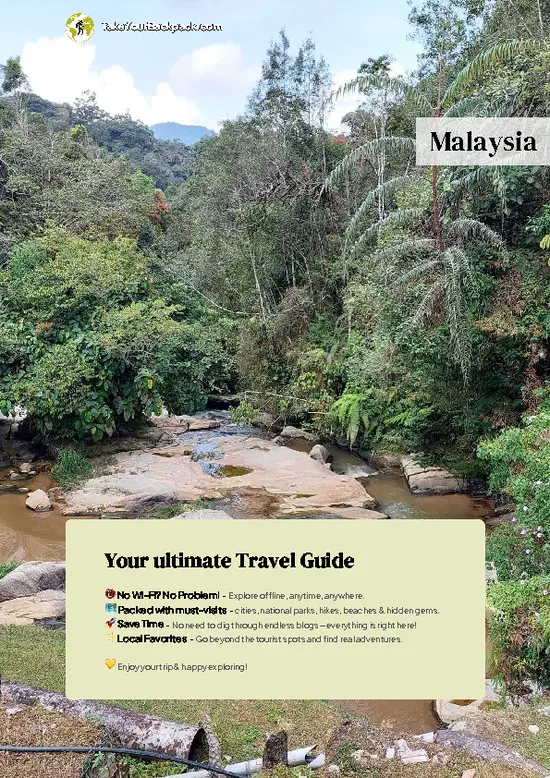
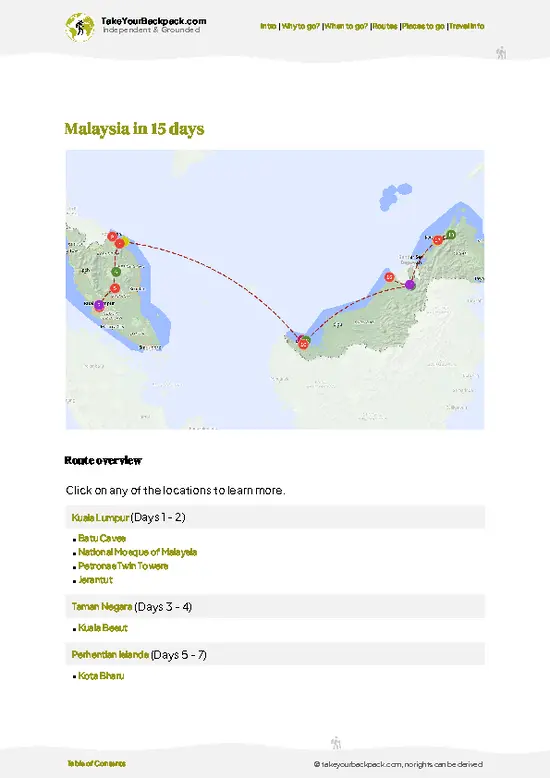
example page 0 from our offline Travel Guide for Malaysia
example page 1 from our offline Travel Guide for Malaysia
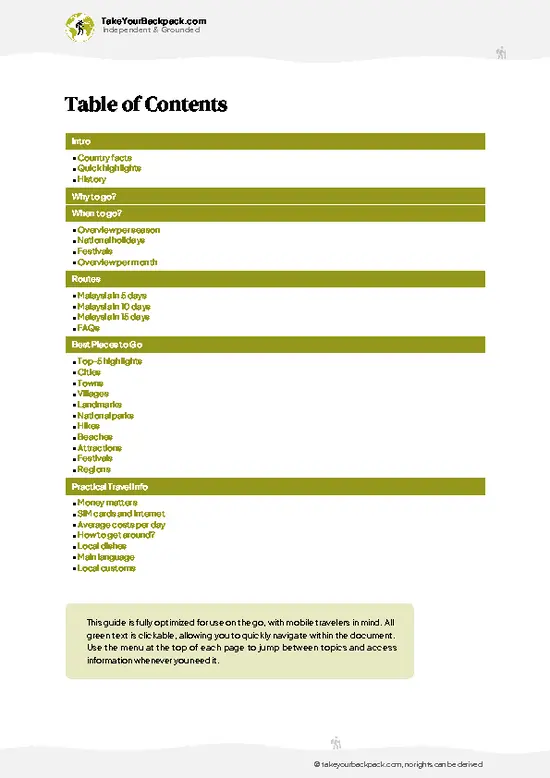
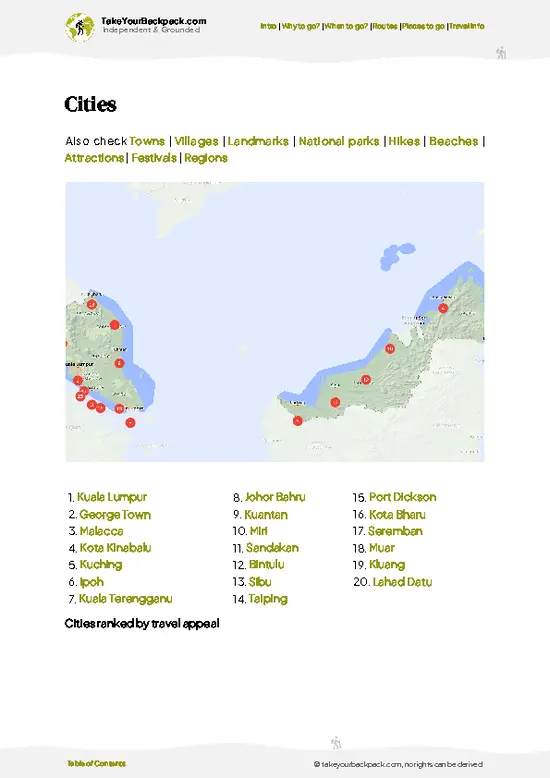
example page 2 from our offline Travel Guide for Malaysia
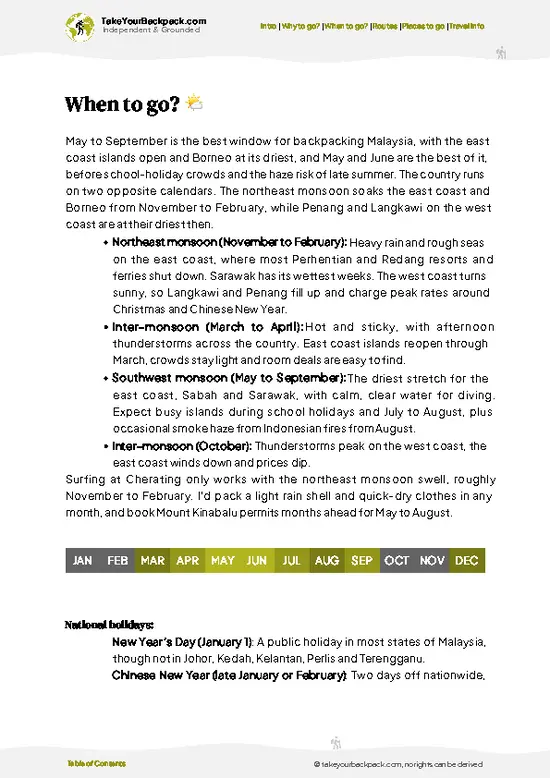
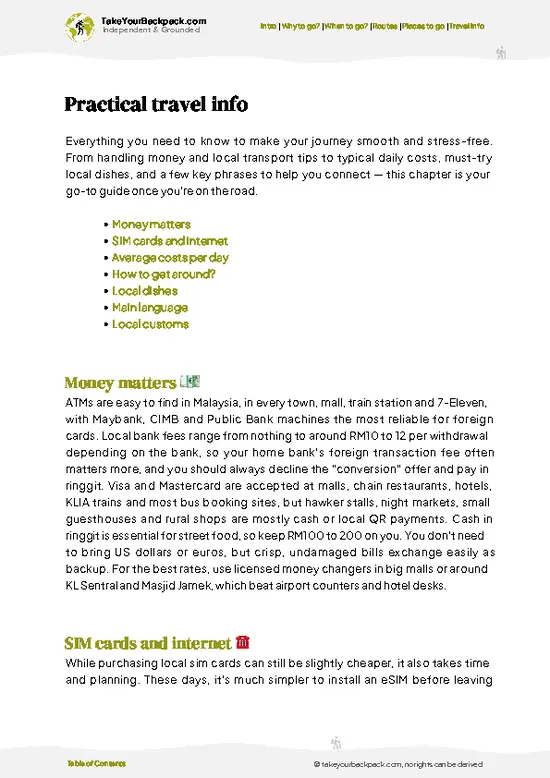
example page 3 from our offline Travel Guide for Malaysia
example page 4 from our offline Travel Guide for Malaysia
example page 5 from our offline Travel Guide for Malaysia
example page 6 from our offline Travel Guide for Malaysia
example page 7 from our offline Travel Guide for Malaysia
The digital guide (400 pages) contains:
✅ 106 highlights, ranked by travel appeal
✅ Optimized 5, 10 & 15-day travel routes
✅ Cities, national parks, landmarks, beaches
✅ How to get around
✅ Offline-friendly for travel without Wi-Fi
👉 Click to see all 30+ guide features

📅 Plan smarter in minutes, not weeks
✅ Month by month travel advice
✅ Festivals & national holidays
✅ Budget expectations

🗺️ Go to the right places, skip the overrated ones
✅ Honest pros & cons of destinations
✅ Top hikes, parks & viewpoints
✅ Lesser-known places most travelers miss
✅ Clear “worth it vs skip it” guidance

🛏️ Travel smoothly without rookie mistakes
✅ Best areas to stay
✅ Transport systems explained simply
✅ Common scams & safety advice
✅ SIM cards, money & practical tips

🌍 Understand the country, not just visit it
✅ Culture & traditions
✅ 52 Essential phrases & customs
✅ Festivals worth planning around
✅ Traveler-friendly historical context
✅ Insights that make places more meaningful

📱 Built for real travel conditions
✅ Fully downloadable PDF
✅ Works completely offline
✅ Optimized for phone use
✅ Useful in remote areas & buses
✅ Everything in one place
Stop searching, start planning
Get instant access to your full guide. 30‑day money-back guarantee.
+ Add another guide for just

By proceeding you agree to our terms.
Sent to your inbox immediately after payment • 100% Secure Checkout
Best Backpacking Travel Advisor 2025 tourism awardBest Backpacking
Travel Advisor
2025
What others say about Take Your Backpack Guides:
⭐⭐⭐⭐⭐
Fantastic, amazing amount of information!
⭐⭐⭐⭐⭐
My goodness this is amazing, it's what I've been looking for hats off too you!
⭐⭐⭐⭐⭐
I think this is absolutely BRILLIANT
⭐⭐⭐⭐
Very complete and informative. It's still missing places, but I gotta to commend you
⭐⭐⭐⭐⭐
This is truly amazing, thank you, can't wait to explore it with my kids!
⭐⭐⭐⭐⭐
Awesome resource, thank you!
⭐⭐⭐⭐⭐
This is amazing! Can't wait to explore the ones I haven't seen
⭐⭐⭐⭐
I love this! Well done, great idea.
⭐⭐⭐⭐⭐
Thanks for taking the time to make this gem!
⭐⭐⭐⭐⭐
This might be the best website I've ever seen.
⭐⭐⭐⭐⭐
Congratulations, and thank you so much for your work; it's incredibly valuable.
⭐⭐⭐⭐
In all seriousness I think you did a great job pointing out the important spots
⭐⭐⭐⭐⭐
10/10 very good
⭐⭐⭐⭐⭐
As someone who's only just starting to visit regularly this is awesome, thank you.
⭐⭐⭐⭐
Thank you very much! I'm going to visit my dad, it's going to be very useful!
⭐⭐⭐⭐⭐
This is really cool! We'll be travelling for the first time and this definitely come in handy.
⭐⭐⭐⭐⭐
You are now our minister of culture, congratulations 👨‍💼
⭐⭐⭐⭐⭐
Just wanted to tell you that this is a pearl! Going to follow your recommendations.
⭐⭐⭐⭐⭐
This is so cool. I'll definitely be using the resource for my travels soon.
⭐⭐⭐⭐⭐
This is very impressive! Good work.
⭐⭐⭐⭐⭐
This is an amazing and informative site. Very well done!

🛏️ Where to stay?Best Places to Stay in Malaysia

Malaysia has plenty of hostels and budget guesthouses, with dorm beds typically running RM30 to 70 (about US$7 to 16) and basic private rooms from around RM80 (US$18). In Kuala Lumpur, Chinatown around Petaling Street is the cheapest central base and sits a short walk from Pasar Seni and Merdeka Square, though some older buildings feel worn, while Bukit Bintang puts you next to Jalan Alor’s night food stalls and the city’s best nightlife at the cost of street noise until late. In George Town on Penang, the hostels cluster around Chulia Street and Love Lane, steps from the heritage core and backpacker bars, and in Melaka the area around Jonker Street keeps you close to the old town but gets crowded … read more 👉
Malaysia has plenty of hostels and budget guesthouses, with dorm beds typically running RM30 to 70 (about US$7 to 16) and basic private rooms from around RM80 (US$18). In Kuala Lumpur, Chinatown around Petaling Street is the cheapest central base and sits a short walk from Pasar Seni and Merdeka Square, though some older buildings feel worn, while Bukit Bintang puts you next to Jalan Alor’s night food stalls and the city’s best nightlife at the cost of street noise until late. In George Town on Penang, the hostels cluster around Chulia Street and Love Lane, steps from the heritage core and backpacker bars, and in Melaka the area around Jonker Street keeps you close to the old town but gets crowded and loud during the weekend night market.

If you enjoy meeting fellow travelers, consider choosing hostels with high ratings for atmosphere. On the other hand, if you prefer having your own space, a hotel might be a better option.

MalaysiaExplore Malaysia

👋 Meet the founderWho’s Behind Take Your Backpack?

Johan, backpacker and founder of TakeYourBackpackHi, I’m Johan (Netherlands 🇳🇱), the creator of TakeYourBackpack. Over the past 3 decades, I’ve backpacked through 90+ countries across six continents, gaining extensive experience with independent travel, long-term trips, and overland routes.

This site is built on a combination of firsthand travel experience and carefully curated insights from other backpackers. Many guides are based on places I’ve personally visited, while others bring together tips, observations, and practical advice shared by trusted travelers I’ve met along the way.

The goal is to provide realistic, experience-driven guidance — not generic itineraries — so you can explore destinations with better context, clearer expectations, and more confidence.