Short answer: yes, Puerto Rico is very doable to backpack on your own, especially if you’re comfortable with basic Spanish and loose plans. It’s technically domestic travel from the U.S., so no passport for U.S. citizens, no roaming surprises on most U.S. phone plans, and you can use dollars everywhere. That alone removes a ton of friction for first-time backpackers.
Hostels exist but are concentrated in San Juan, Rincon, and a few surf/party pockets, so you’ll mix hostels with cheap guesthouses, Airbnbs, and camping if you want to keep costs low. You won’t find Southeast Asia–level dorm density, but you can absolutely string together a budget route if you’re flexible with locations and don’t mind basic rooms.
Safety-wise, it’s similar to a mid-range Latin American city: normal street smarts, avoid flashing gear, don’t wander drunk down dark alleys, and be extra aware in parts of San Juan at night. Outside the cities, it feels more small-town and relaxed. People are generally friendly and used to visitors, and a few words of Spanish go a long way in getting help, rides, and local tips.
The main challenge for independent backpackers is transport between towns and nature spots, not bureaucracy or safety. If you’re okay with a mix of public vans, occasional taxis, and maybe hitchhiking in rural areas (if that’s in your comfort zone), you’ll be fine. If you want to hit lots of scattered beaches and waterfalls on a tight schedule, renting a car becomes the game-changer.
Overall: easy for a first-timer who’s willing to improvise, and fun for a veteran who likes to chase surf, hikes, and local food without overplanning.
If you only have 3–4 days, focus hard: base yourself in San Juan, do Old San Juan + a beach day + one day trip (El Yunque or a bioluminescent bay). It’ll feel rushed, but you’ll still get a taste of history, rainforest, and coastline.
7 days is the sweet spot for a first backpacking trip. With a week you can:
- Spend 2–3 nights in San Juan (Old San Juan, Santurce street art, cheap local food, beach time).
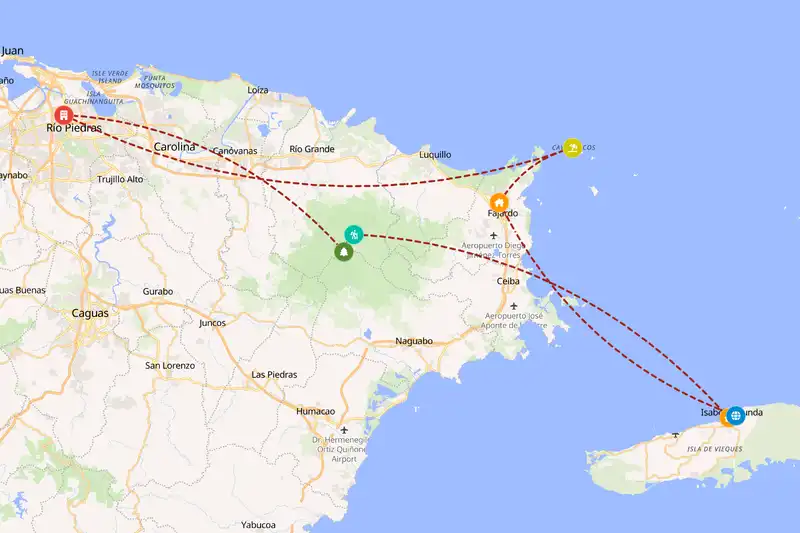
- Add 2–3 nights on the east (Luquillo/Fajardo) for El Yunque and a bio bay.
- Use the remaining days for either Vieques/Culebra (if ferries cooperate) or swing west to Rincon for surf and sunsets.
10–14 days lets you slow down and actually live a bit. You can:
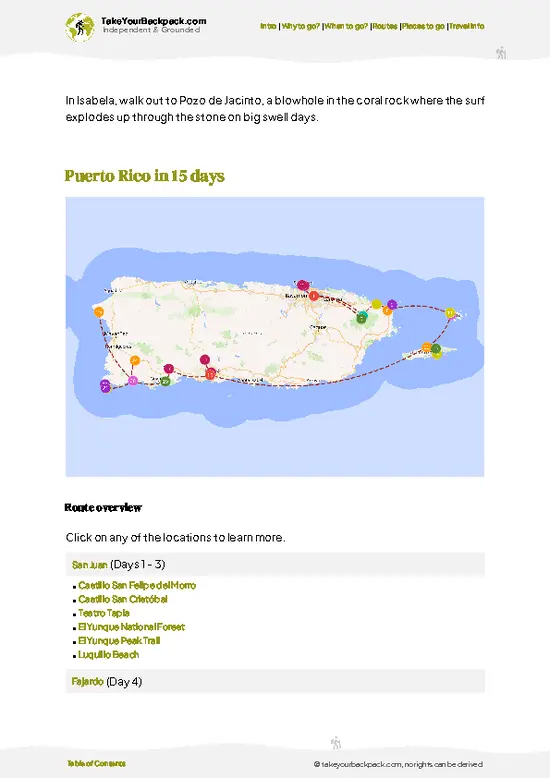
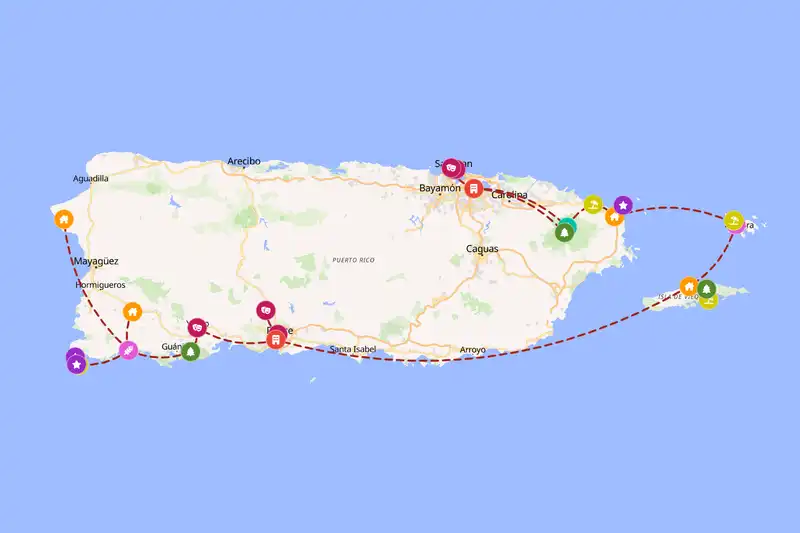
- Do a full loop: San Juan → east coast → Vieques or Culebra → south (Ponce area) → west (Rincon/Aguadilla) → north coast → back to San Juan.
- Add more hikes, waterfalls, and random roadside food stops instead of sprinting between “must-sees.”
If you’re a long-term backpacker, 3–4 weeks is enough to dig into local scenes: surf for a week in Rincon, volunteer or work remotely in San Juan, then hop around smaller towns and lesser-known beaches. The island isn’t huge, but buses and shared rides are slow, so extra time buys you freedom from rushing.
If you’re short on time, it’s better to do one region well than to try to “do the whole island.” Puerto Rico rewards lingering in a few spots more than box-ticking every corner.
You can get around Puerto Rico without a car, but it requires patience, flexibility, and a backpacker mindset. If you want maximum freedom to chase random beaches and waterfalls on your own schedule, a rental car is by far the easiest. If you’re on a tight budget or don’t want to drive, you can still make it work with a mix of options.
In and around San Juan, you’re fine without a car. There are city buses, ride-shares, and walkable neighborhoods (Old San Juan, Condado, parts of Santurce). You can base yourself there and use tours or shuttles for day trips to El Yunque or a bio bay.
Between major towns, public transport exists but isn’t backpacker-smooth. There are públicos (shared vans) and some regional buses, but schedules can be irregular and often not posted clearly. They’re cheap, but you trade money for time and uncertainty. This works best if you’re not on a tight schedule and are okay with waiting and asking locals for the latest info.
For specific activities like El Yunque, bio bay tours, or island ferries (Vieques/Culebra), many operators include transport from common hubs (San Juan, Fajardo area) for an extra fee. That’s more expensive than DIY with a car, but it’s the simplest way to hit big sights without driving.
Hitchhiking is possible in rural areas and among surfers or locals going to the same beaches, but you should treat it as a backup, not a plan. Always trust your gut, avoid hitching at night, and keep your pack manageable so you’re not a burden.
If you absolutely don’t want to drive, build your route around San Juan + one or two well-connected bases (like Luquillo/Fajardo and maybe Rincon) and rely on a mix of shuttles, tours, and shared rides instead of trying to reach every remote corner.
For a budget traveler, “must-visit” means places that give you a lot of experience for the money and effort.
Old San Juan: Cobblestone streets, forts, colorful buildings, cheap bakeries, and free views. You can walk everywhere, hit both main forts on one ticket, and snack your way through panaderías and street food. It’s touristy but still has real character if you wander beyond the cruise-ship streets.
El Yunque National Forest: The rainforest is a big reason to come. You get lush trails, waterfalls, swimming holes, and mountain views. Go early to avoid crowds and heat. If you don’t have a car, join a small-group tour from San Juan or stay in Luquillo/Fajardo and link up with local operators.
A bioluminescent bay: This is one of those rare things that actually lives up to the hype when conditions are good. Mosquito Bay (Vieques) is the brightest, but Fajardo and La Parguera are easier to reach. Kayak tours are the budget-friendly option; glass-bottom kayaks cost more but aren’t essential.
Rincon and the west coast: Surf, sunsets, and a laid-back vibe. Even if you don’t surf, you can swim, snorkel, or just watch the pros from the beach. It’s a great place to slow down, cook your own meals in a hostel kitchen, and live cheaply for a few days.
Luquillo kiosks and beaches: Rows of food stalls serving everything from cheap fried snacks to full seafood plates, right by the water. It’s an easy way to try local food without fancy-restaurant prices, and you can roll straight onto the sand afterward.
One of the smaller islands (Vieques or Culebra): If your schedule and budget allow, at least one is worth the effort. Culebra is famous for Flamenco Beach and good snorkeling; Vieques has wilder beaches and the top-tier bio bay. Ferries can be chaotic, so build in buffer time and avoid cutting it close with flights.
If you’re into culture and history, add Ponce or a smaller inland town for plazas, street life, and a different feel from San Juan. They’re not as visually dramatic as the coast, but they’re where you feel everyday Puerto Rican life.
If you’re short on time or money, skip anything that eats a full day without adding something unique to your trip.
You can skip trying to “do the whole island” in a loop. Driving or busing all the way around just to say you did it wastes time you could spend actually enjoying a couple of regions. Pick either an east-focused or west-focused trip and accept that you’ll leave something for next time.
Skip multiple bio bay tours. Do one good bioluminescent bay and call it done; they’re cool, but the experience is similar enough that a second tour is usually not worth the extra cash and late-night logistics.
If you’re not a hardcore beach person, skip chasing every famous beach name. Flamenco, a good west-coast beach, and maybe one or two near San Juan are plenty. The difference between “top 5” and “top 15” beaches is mostly bragging rights, not experience.
You can also skip long, expensive resort zones if you’re backpacking. Walking through once is enough to see the contrast; staying there usually means higher prices, fewer local food options, and less character than a simple guesthouse in a regular neighborhood.
If you’re tight on days, skip deep interior detours unless you have a specific goal (canyoning, a particular cave, or a festival). The central mountains are beautiful, but they’re slower to reach and explore. For a first short trip, you’ll get more value from the coast + Old San Juan + one rainforest day.
Finally, skip overstuffed day plans that cram in three far-apart sights. Puerto Rico looks small on the map, but traffic and winding roads slow everything down. Two well-enjoyed stops beat four rushed photo ops every time, especially on a backpacker budget.