×

Austria🇦🇹 | best townsExplore the 10 Best towns in Austria

Towns in Austria follow the terrain. In the Alpine west and south (Tyrol, Vorarlberg, Salzburg Land, Carinthia), towns sit in valleys, so atmosphere is mountain-driven, prices climb in ski and lake resorts, and crowds peak in winter and midsummer. In the Danube and eastern lowlands, towns are older trade and wine centers with lower costs and thinner crowds. The Styrian south is quieter and cheaper still. Because rail and Postbus services radiate from valley floors, independent travel works well, but remote side valleys need planning. Choose by what you want: peaks, history, or value.

By Johan Kruseman 🇳🇱 | Updated October 19, 2026
Explore the best villages in Austria

Why go?Understanding Their Importance

Austria suits towns because history and geography shaped them in the same way. The Habsburg Empire left a dense network of administrative, church and trading centers, so even small places have a walkable core of arcaded squares, parish churches and a fortress or castle above. The Alps then split the country into valleys, which kept each town distinct in dialect, food and architecture instead of blending into one national type.

The second advantage is infrastructure. Austria’s rail network (ÖBB) and regional buses reach most towns, timetables are reliable, and regional day and state tickets keep local transport affordable. Towns are compact, clean and generally easy to get around on foot.

Before choosing Austria, know the limits. It is a high-cost country by Central European standards, especially … read more 👉
Austria suits towns because history and geography shaped them in the same way. The Habsburg Empire left a dense network of administrative, church and trading centers, so even small places have a walkable core of arcaded squares, parish churches and a fortress or castle above. The Alps then split the country into valleys, which kept each town distinct in dialect, food and architecture instead of blending into one national type.

The second advantage is infrastructure. Austria’s rail network (ÖBB) and regional buses reach most towns, timetables are reliable, and regional day and state tickets keep local transport affordable. Towns are compact, clean and generally easy to get around on foot.

Before choosing Austria, know the limits. It is a high-cost country by Central European standards, especially in Tyrol, Salzburg and lakeside resorts, where accommodation prices follow the ski and summer seasons. Many small towns have limited evening life, with kitchens closing early and shops shut on Sundays. Winter closures affect attractions in high valleys. Austria rewards travelers who like order, scenery and architecture over nightlife, and it works best when you match region to interest rather than treating all towns as interchangeable.
Behind the Scenes of Selection
The list of best towns in Austria is created based on charm, local culture, atmosphere, hidden gems, and visitor appeal. If you feel a town is missing in this list, please let us know.

When to go?Seasonal Guide to Visiting

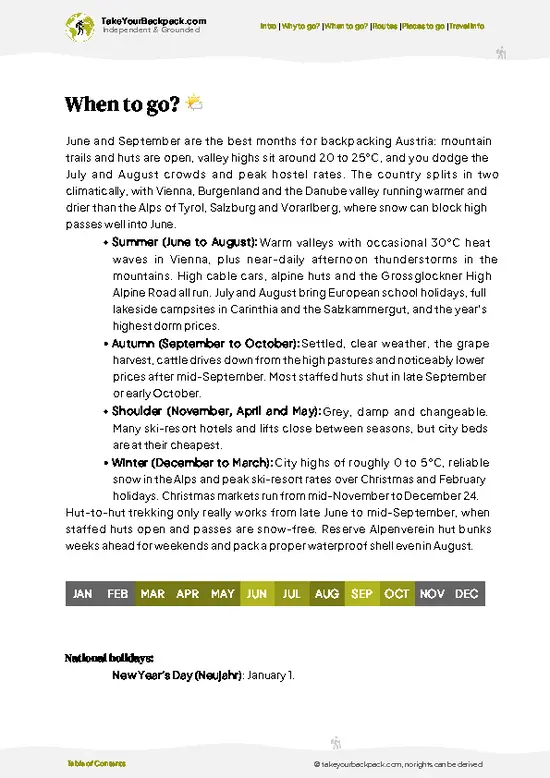
Best months for Austrian towns: June to September is the best window for most towns, with daytime highs of about 20 to 27°C, long daylight and all attractions, lifts and lake facilities open. The cause is the Alpine climate: summers are warm but afternoon thunderstorms are common in the mountains, with July and August the wettest months in many western valleys, often 100 to 200 mm.
Shoulder seasons: May and late September to October bring 10 to 20°C, lower accommodation prices (often 15 to 30 percent below July and August) and fewer visitors. Autumn is dry and clear in the east and south, including the wine and Danube areas, but some mountain cable cars and high-valley restaurants close between seasons, usually from late October to early December and again in spring.
Winter and peak periods: … read more 👉
Best months for Austrian towns: June to September is the best window for most towns, with daytime highs of about 20 to 27°C, long daylight and all attractions, lifts and lake facilities open. The cause is the Alpine climate: summers are warm but afternoon thunderstorms are common in the mountains, with July and August the wettest months in many western valleys, often 100 to 200 mm.
Shoulder seasons: May and late September to October bring 10 to 20°C, lower accommodation prices (often 15 to 30 percent below July and August) and fewer visitors. Autumn is dry and clear in the east and south, including the wine and Danube areas, but some mountain cable cars and high-valley restaurants close between seasons, usually from late October to early December and again in spring.
Winter and peak periods: December to March is ski season in Tyrol, Vorarlberg and Salzburg Land, with valley temperatures around -8 to 2°C and snow reliable above roughly 1,000 meters. Resort prices peak at Christmas, New Year and February school holidays, when rooms can cost double. Cities and lowland towns stay open year-round, and Christmas markets run from mid-November to December 24. Vienna and the east are colder and grayer than the Alps in January, but cheaper.

town hoppingOptimizing Your Multi-Stop Itinerary

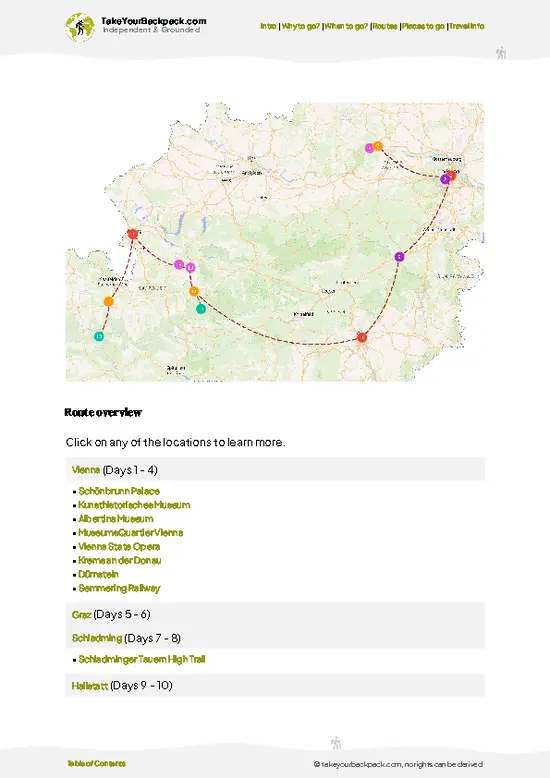
How many days to combine towns: A trip linking several Austrian towns needs 7 to 14 days, because distances are short but valleys force detours. Allow 2 nights per stop for towns with a main sight and nearby hiking, and 1 night only for pass-through stops.
Regions and direction: Group by region. The Danube and Vienna corridor in the east links well with the Wachau and Styria by direct rail. The Salzburg and Salzkammergut area clusters with Upper Austria. Tyrol and Vorarlberg cluster around the Arlberg line and Innsbruck. A west-to-east or east-to-west sweep along the main Westbahn line from Vienna through Linz and Salzburg to Innsbruck (about 4 hours Salzburg to Innsbruck, 2.5 hours Vienna to Linz) avoids backtracking. Carinthia and Styria in the south connect via Graz or Villach, with slower … read more 👉
How many days to combine towns: A trip linking several Austrian towns needs 7 to 14 days, because distances are short but valleys force detours. Allow 2 nights per stop for towns with a main sight and nearby hiking, and 1 night only for pass-through stops.
Regions and direction: Group by region. The Danube and Vienna corridor in the east links well with the Wachau and Styria by direct rail. The Salzburg and Salzkammergut area clusters with Upper Austria. Tyrol and Vorarlberg cluster around the Arlberg line and Innsbruck. A west-to-east or east-to-west sweep along the main Westbahn line from Vienna through Linz and Salzburg to Innsbruck (about 4 hours Salzburg to Innsbruck, 2.5 hours Vienna to Linz) avoids backtracking. Carinthia and Styria in the south connect via Graz or Villach, with slower regional trains, so treat them as a separate loop.
Planning mistakes: Travelers often underestimate mountain transfers. A 100 km hop across the Alps by bus can take 3 to 4 hours, not 1.5. Plan these as half-day moves. Another common error is packing too many stops into a week, which leaves only hours in each place. Choose two regions and add depth instead. Check Sunday and holiday timetables, which run reduced service in rural areas, and book mountain-pass buses ahead in summer.

The ListThe Best towns of Austria

1 Zell am See

alpine lake, glacier access, lakeside promenade

Swim or skate on a clear lake, reach snowy peaks year-round, and enjoy mountain views from a lively waterfront path.

austria-city-zell-am-see
© Google | Hb Hb

2 Bad Gastein

Belle Époque hotels, thermal waterfalls, high-altitude hiking

Stay in grand hotels, bathe in mineral-rich waters, and hike trails that start right from the steep valley’s edge.

3 St. Wolfgang

pilgrimage church, lakeside hotels, Schafberg railway

Ride a historic cog railway, visit a renowned church, and watch ferries cross the lake from bustling waterfront terraces.

austria-city-st-wolfgang
© Google | Sebastiaan Terlouw

4 Schladming

ski pistes, Planai mountain, alpine sports events

Ski or bike on well-known slopes, attend international competitions, and enjoy mountain scenery year-round.

5 Seefeld in Tirol

cross-country trails, Olympic legacy, plateau meadows

Ski or hike across open meadows, experience winter sports history, and enjoy panoramic views from a sunny plateau.

6 Alpbach

wooden chalets, flower balconies, mountain conferences

Stay in traditional timber houses, see summer blooms on every balcony, and attend international forums in a compact alpine village.

7 Bad Ischl

imperial villa, spa traditions, Salzkammergut gateway

Tour a former royal retreat, soak in historic baths, and use the town as a starting point for exploring lakes and mountains.

austria-city-bad-ischl
© Google |

8 Kufstein

fortress tower, Inn river, Tyrolean folk music

Climb to a hilltop fortress, listen for the world’s largest open-air organ, and watch river traffic pass below.

9 Bregenz

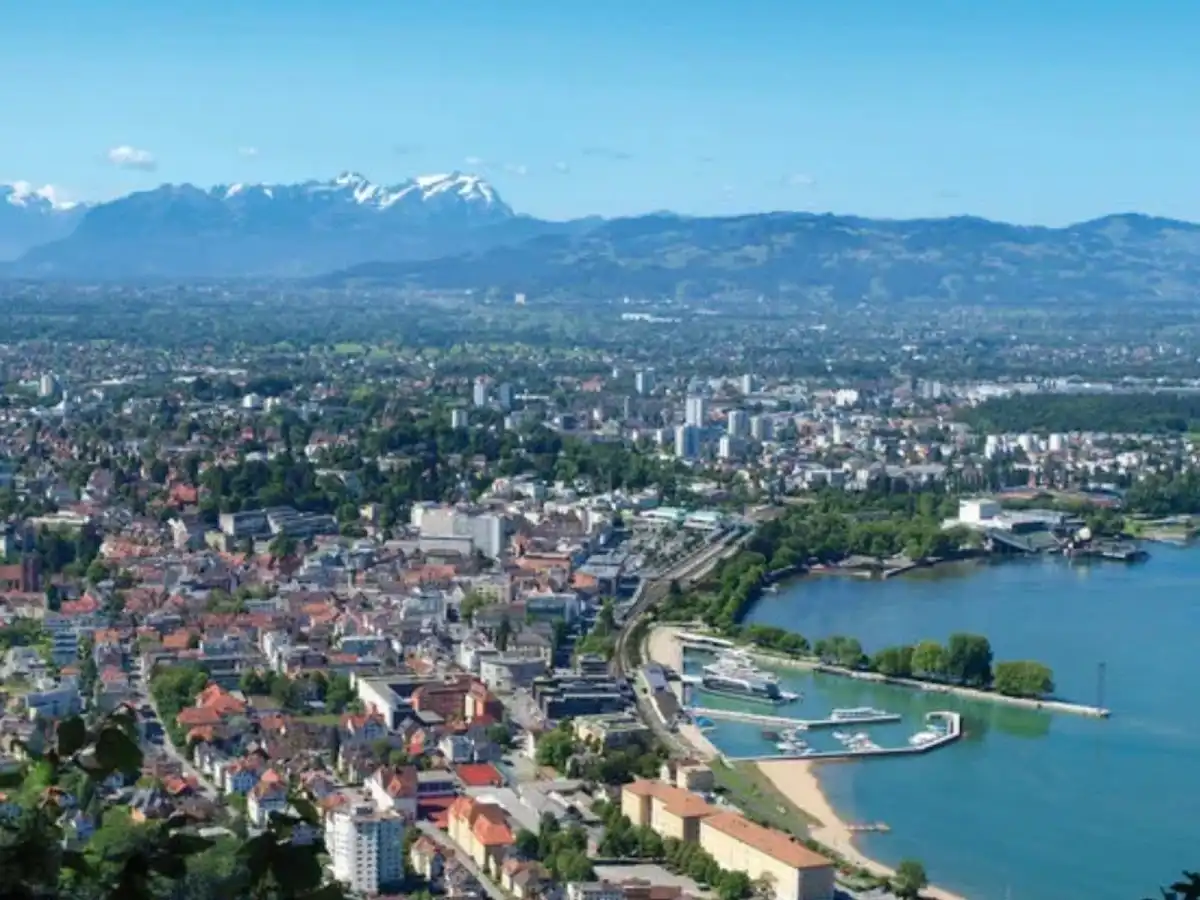
Lake Constance stage, modern art museum, lakeside cycling

Attend open-air performances, view contemporary exhibitions, and cycle along the lake’s edge with views into Switzerland and Germany.

austria-city-bregenz
© Google |

10 Villach

thermal baths, Drau riverfront, Carinthian festivals

Soak in warm mineral pools, join local celebrations, and follow riverside trails through a town shaped by cross-border influences.

austria-city-villach
© Google |

11 Gmunden

Traunsee lakeshore, ceramic workshops, lakeside promenade

Stroll along the water’s edge, discover traditional ceramics, and watch daily life unfold beside the mountain-framed lake.

austria-city-gmunden
© Google | Maryam Marefat

12 Krems an der Donau

Wachau vineyards, medieval alleys, art museums

Sample regional wines, wander through narrow lanes, and encounter contemporary art in a town shaped by centuries of trade.

13 Mariazell

pilgrimage basilica, alpine foothills, religious festivals

Experience a spiritual center where pilgrims gather, mountain air refreshes, and religious traditions shape the town’s rhythm.

austria-city-mariazell
© Google | Stanislav Bradáč

14 Steyr

river confluence, iron industry, Renaissance townhouses

See two rivers meet, trace the legacy of metalworking, and admire pastel facades lining a broad, historic square.

15 Feldkirch

medieval arcades, Schattenburg castle, border proximity

Walk cobbled streets beneath arcades, tour a hilltop castle, and notice the blend of cultures near the Liechtenstein border.

16 Leoben

university campus, mining museum, Mur river bridges

Cross the river on footbridges, visit a mining museum, and notice student life in a town known for engineering and industry.

17 Eisenstadt

Esterházy Palace, Haydn connections, Burgenland vineyards

Tour a stately palace, attend classical concerts, and sample local wines in a town shaped by aristocratic and musical traditions.

18 Bludenz

chocolate factory, alpine valleys, railway crossroads

Visit a working chocolate plant, set out for mountain hikes, and use the town as a base for exploring Vorarlberg’s valleys.

19 Dornbirn

market squares, industrial heritage, Rappenloch gorge

Browse weekly markets, explore old textile mills, and hike into a dramatic gorge just minutes from the town center.

20 Mödling

vineyard hills, Biedermeier lanes, Vienna woods edge

Walk leafy lanes, sip wine from hillside taverns, and access forest trails just beyond the southern edge of Vienna.

21 Tulln an der Donau

Danube gardens, Roman museum, art installations

Wander riverside parks, view Roman artifacts, and encounter outdoor sculptures in a town known for horticultural displays.

22 Kremsmünster

Benedictine abbey, astronomical tower, monastic gardens

Visit a centuries-old abbey, climb a historic observatory, and stroll through peaceful gardens tended by monks.

23 Murau

timber rafting, brewery tours, Mur river

Tour a local brewery, watch timber float down the river, and explore a town shaped by centuries of wood trade.

Think you know Austria?

Prove you’re a true local — uncover 13 lesser-known towns in Austria that locals tend to keep to themselves.
Loading the map 🌍

Expert viewInsights from Locals and Experts

How many towns to visit: I advise four to six towns on a trip of one to two weeks. Austrian travel days are slow once you leave the main rail line, and each town rewards a night or two to see it after day-trippers leave. More than that, and you spend the trip with luggage on platforms.
Choosing kinds of towns: Prioritize by style. Hikers and skiers should favor Alpine valley towns, since lifts, trailheads and guest cards are all there, though costs are highest. History and architecture fans get more value from old Danube, salt and trading towns, where sights are compact and prices lower. Budget travelers should lean on eastern and southern towns, which are quieter and noticeably cheaper than Tyrol. Mix one Alpine base with two or three lower-cost towns to keep the average down.
What it costs: … read more 👉
How many towns to visit: I advise four to six towns on a trip of one to two weeks. Austrian travel days are slow once you leave the main rail line, and each town rewards a night or two to see it after day-trippers leave. More than that, and you spend the trip with luggage on platforms.
Choosing kinds of towns: Prioritize by style. Hikers and skiers should favor Alpine valley towns, since lifts, trailheads and guest cards are all there, though costs are highest. History and architecture fans get more value from old Danube, salt and trading towns, where sights are compact and prices lower. Budget travelers should lean on eastern and southern towns, which are quieter and noticeably cheaper than Tyrol. Mix one Alpine base with two or three lower-cost towns to keep the average down.
What it costs: Expect US$65 to 110 a day (about €60 to 100) for independent travelers. Dorm beds run roughly €28 to 50 in cities and resort towns, with summer and ski weeks at the top end. Simple double rooms cost €80 to 150. Bakery lunches, supermarket meals (Billa, Spar, Hofer) and Gasthaus daily menus at €11 to 16 keep food around €20 to 30 a day. Castle and fortress entry usually runs €10 to 20, museums €8 to 16, and cable cars €25 to 50 return. Regional day tickets and rail passes pay off only on long hops, as local fares between nearby towns are often €5 to 15. Many Alpine areas issue a guest card at your accommodation, which can include free local buses and discounts, so ask when checking in. Pay a small tourist tax of about €1 to 4 a night, often not included in the posted price.
Safety and cultural points: Austria is very safe, with petty theft limited to busy stations and tourist sites. The real risks are mountain-related. Weather turns fast above the tree line, so check forecasts, carry layers and turn back early. Sundays and public holidays shut most shops, so buy food on Saturday. Greet shopkeepers with “Grüß Gott” or “Guten Tag”, keep noise down in quiet residential areas after 10 pm, and tip by rounding up around 5 to 10 percent, handed over when paying rather than left on the table. Cash is still widely preferred in small guesthouses and huts, so carry some euros.

✈️ The backpacker research shortcutAustria Travel Guide

An offline-friendly backpacking guide with optimized travel routes, ranked highlights, transport advice, and the best areas to stay.
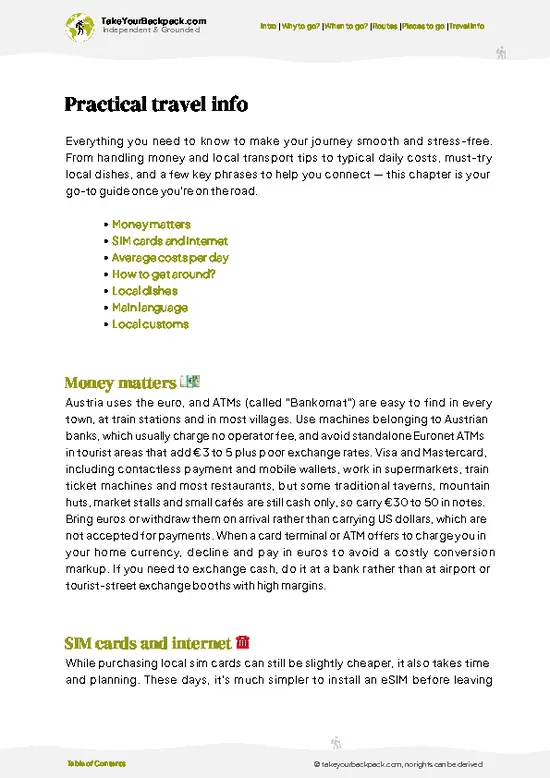
example page 0 from our offline Travel Guide for Austria
example page 1 from our offline Travel Guide for Austria
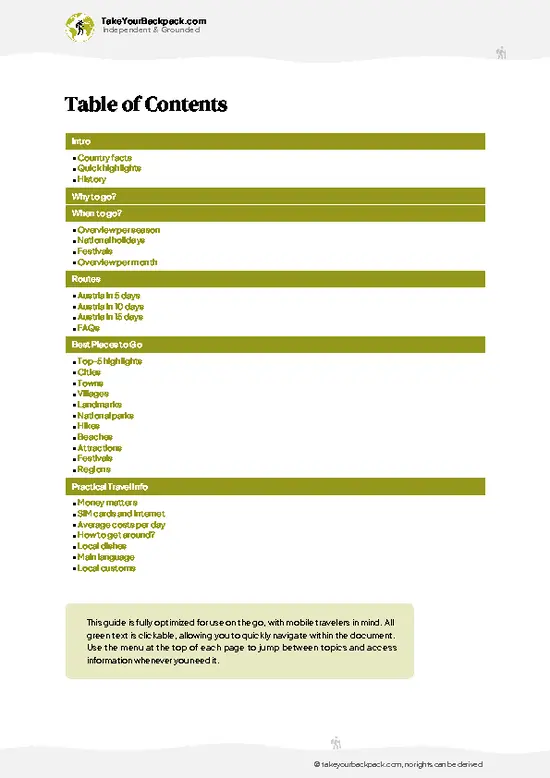
example page 2 from our offline Travel Guide for Austria
example page 3 from our offline Travel Guide for Austria
example page 4 from our offline Travel Guide for Austria
example page 5 from our offline Travel Guide for Austria
example page 6 from our offline Travel Guide for Austria
example page 7 from our offline Travel Guide for Austria
The digital guide (354 pages) contains:
✅ 90 highlights, ranked by travel appeal
✅ Optimized 5, 10 & 15-day travel routes
✅ Cities, national parks, landmarks, beaches
✅ How to get around
✅ Offline-friendly for travel without Wi-Fi
👉 Click to see all 30+ guide features

📅 Plan smarter in minutes, not weeks
✅ Month by month travel advice
✅ Festivals & national holidays
✅ Budget expectations

🗺️ Go to the right places, skip the overrated ones
✅ Honest pros & cons of destinations
✅ Top hikes, parks & viewpoints
✅ Lesser-known places most travelers miss
✅ Clear “worth it vs skip it” guidance

🛏️ Travel smoothly without rookie mistakes
✅ Best areas to stay
✅ Transport systems explained simply
✅ Common scams & safety advice
✅ SIM cards, money & practical tips

🌍 Understand the country, not just visit it
✅ Culture & traditions
✅ 52 Essential phrases & customs
✅ Festivals worth planning around
✅ Traveler-friendly historical context
✅ Insights that make places more meaningful

📱 Built for real travel conditions
✅ Fully downloadable PDF
✅ Works completely offline
✅ Optimized for phone use
✅ Useful in remote areas & buses
✅ Everything in one place
Stop searching, start planning
Get instant access to your full guide. 30‑day money-back guarantee.
+ Add another guide for just

By proceeding you agree to our terms.
Sent to your inbox immediately after payment • 100% Secure Checkout
Best Backpacking Travel Advisor 2025 tourism awardBest Backpacking
Travel Advisor
2025
What others say about Take Your Backpack Guides:
⭐⭐⭐⭐⭐
Fantastic, amazing amount of information!
⭐⭐⭐⭐⭐
My goodness this is amazing, it's what I've been looking for hats off too you!
⭐⭐⭐⭐⭐
I think this is absolutely BRILLIANT
⭐⭐⭐⭐
Very complete and informative. It's still missing places, but I gotta to commend you
⭐⭐⭐⭐⭐
This is truly amazing, thank you, can't wait to explore it with my kids!
⭐⭐⭐⭐⭐
Awesome resource, thank you!
⭐⭐⭐⭐⭐
This is amazing! Can't wait to explore the ones I haven't seen
⭐⭐⭐⭐
I love this! Well done, great idea.
⭐⭐⭐⭐⭐
Thanks for taking the time to make this gem!
⭐⭐⭐⭐⭐
This might be the best website I've ever seen.
⭐⭐⭐⭐⭐
Congratulations, and thank you so much for your work; it's incredibly valuable.
⭐⭐⭐⭐
In all seriousness I think you did a great job pointing out the important spots
⭐⭐⭐⭐⭐
10/10 very good
⭐⭐⭐⭐⭐
As someone who's only just starting to visit regularly this is awesome, thank you.
⭐⭐⭐⭐
Thank you very much! I'm going to visit my dad, it's going to be very useful!
⭐⭐⭐⭐⭐
This is really cool! We'll be travelling for the first time and this definitely come in handy.
⭐⭐⭐⭐⭐
You are now our minister of culture, congratulations 👨‍💼
⭐⭐⭐⭐⭐
Just wanted to tell you that this is a pearl! Going to follow your recommendations.
⭐⭐⭐⭐⭐
This is so cool. I'll definitely be using the resource for my travels soon.
⭐⭐⭐⭐⭐
This is very impressive! Good work.
⭐⭐⭐⭐⭐
This is an amazing and informative site. Very well done!

🛏️ Where to stay?Best Places to Stay in Austria

Hostels are plentiful in Austria, with dorm beds typically running €25 to €45 a night and the widest choice in Vienna, Salzburg, Innsbruck and Graz, plus youth hostels and budget guesthouses in smaller towns and alpine resorts. In Vienna, Neubau and Mariahilf near Westbahnhof put you in walking distance of the MuseumsQuartier and plenty of bars, while Favoriten around the Hauptbahnhof is cheaper and has excellent transport links but little character after dark; Leopoldstadt sits between the two, close to the Prater and the center but quieter at night. In Salzburg, beds near the station in Elisabeth-Vorstadt cost noticeably less than anything in the Altstadt (a 15 to 20 minute walk away), and … read more 👉
Hostels are plentiful in Austria, with dorm beds typically running €25 to €45 a night and the widest choice in Vienna, Salzburg, Innsbruck and Graz, plus youth hostels and budget guesthouses in smaller towns and alpine resorts. In Vienna, Neubau and Mariahilf near Westbahnhof put you in walking distance of the MuseumsQuartier and plenty of bars, while Favoriten around the Hauptbahnhof is cheaper and has excellent transport links but little character after dark; Leopoldstadt sits between the two, close to the Prater and the center but quieter at night. In Salzburg, beds near the station in Elisabeth-Vorstadt cost noticeably less than anything in the Altstadt (a 15 to 20 minute walk away), and in Innsbruck the area around the main station keeps you close to the old town and the Nordkette cable car.

If you enjoy meeting fellow travelers, consider choosing hostels with high ratings for atmosphere. On the other hand, if you prefer having your own space, a hotel might be a better option.

AustriaExplore Austria

👋 Meet the founderWho’s Behind Take Your Backpack?

Johan, backpacker and founder of TakeYourBackpackHi, I’m Johan (Netherlands 🇳🇱), the creator of TakeYourBackpack. Over the past 3 decades, I’ve backpacked through 90+ countries across six continents, gaining extensive experience with independent travel, long-term trips, and overland routes.

This site is built on a combination of firsthand travel experience and carefully curated insights from other backpackers. Many guides are based on places I’ve personally visited, while others bring together tips, observations, and practical advice shared by trusted travelers I’ve met along the way.

The goal is to provide realistic, experience-driven guidance — not generic itineraries — so you can explore destinations with better context, clearer expectations, and more confidence.