×

Madagascar🇲🇬 | best regionsExplore the 6 Best regions in Madagascar

Madagascar splits into regions that feel like separate countries, and the differences shape every day of a trip. The central highlands smell of wood smoke and wet red clay, with cool nights and rice terraces stepped up the hillsides. The west is dry, dusty and baobab-dotted, with sand tracks and heat that flattens the afternoon. The east coast is humid rainforest, loud with frogs after dark. The south is spiny desert, and the north brings volcanic rock and quiet bays. Costs, crowds and comfort shift with each. Roads are slow, so a region reachable on paved highway costs far less than one needing a 4x4 or a boat. Independent backpacking works well in the highlands and along the main routes, while remote regions often mean booking a driver or joining a group. Pick by the kind of travel you want, not by the map.

By Johan Kruseman 🇳🇱 | Updated October 19, 2026
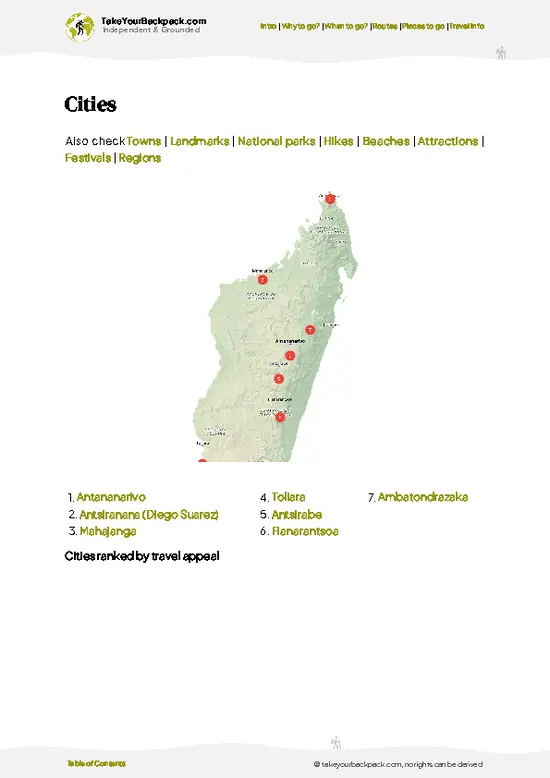
Explore the best cities in Madagascar

Why go?Key Factors That Shape the Experience

Madagascar is an island roughly the size of France that split from the African mainland about 160 million years ago and from India about 88 million years ago. That isolation produced an ecology found nowhere else, and it also produced regions that differ sharply in climate, landscape and culture. A trade wind brings rain to the east coast, a mountainous spine holds back the clouds, and the west and south sit in a rain shadow. You can pass from dripping rainforest to cracked dry earth within a day or two of travel.

People differ too. Malagasy communities across the island have their own customs, and many follow fady, local taboos that can govern what you wear, point at, touch or bring into certain places. Your guide will explain them, and following them is simply good manners.

The hard part … read more 👉
Madagascar is an island roughly the size of France that split from the African mainland about 160 million years ago and from India about 88 million years ago. That isolation produced an ecology found nowhere else, and it also produced regions that differ sharply in climate, landscape and culture. A trade wind brings rain to the east coast, a mountainous spine holds back the clouds, and the west and south sit in a rain shadow. You can pass from dripping rainforest to cracked dry earth within a day or two of travel.

People differ too. Malagasy communities across the island have their own customs, and many follow fady, local taboos that can govern what you wear, point at, touch or bring into certain places. Your guide will explain them, and following them is simply good manners.

The hard part is infrastructure. Few roads are paved well, and distances that look short on a map can take a full day by shared taxi-brousse, the crowded minibus that leaves only when full. Rains can cut tracks entirely. Domestic flights save time but cost more and are sometimes rescheduled. Internet and cash machines thin out quickly outside towns.

Before choosing Madagascar for its regions, accept that fewer places done well beats many places rushed. Park fees and guides are compulsory in most reserves, so the cost sits in access rather than in beds and meals. In return you get wildlife, landscapes and village life with few other travelers around, and a sense of independent discovery that is hard to find elsewhere.
How the List Was Created
The list of best regions in Madagascar is created based on landscapes, local culture, attractions, vibes, and overall appeal. If you feel a region is missing in this list, please let us know.

When to go?Optimal Periods for Travel

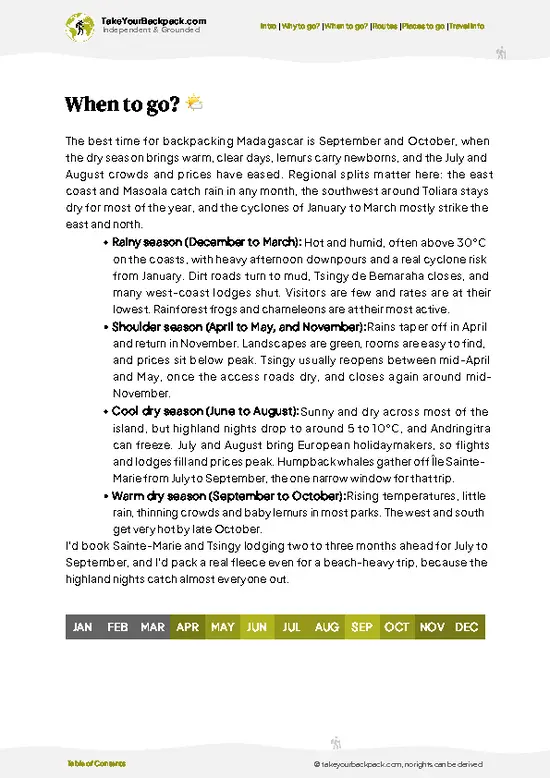
The best months: The best months for most regions are May to October, the dry season, when skies are clear, roads are firmer and wildlife is easier to spot. Days in the highlands run about 18 to 25°C, but nights near Antananarivo can drop to 5 to 10°C, so you will want a warm layer around dawn and after dark. Coastal and western areas stay warm, often 25 to 32°C, with dry, dusty air and strong sun.

Shoulder and wet seasons: April and November are good shoulder months, with fewer visitors, lower prices at some lodges and lighter rain. From December to March the wet season brings heat, humidity and cyclone risk, mostly on the east coast and the northeast. Monthly rainfall can reach 200 to 400 mm in the rainforest belt, and washed-out tracks can leave you stuck for a day or more. The far south … read more 👉
The best months: The best months for most regions are May to October, the dry season, when skies are clear, roads are firmer and wildlife is easier to spot. Days in the highlands run about 18 to 25°C, but nights near Antananarivo can drop to 5 to 10°C, so you will want a warm layer around dawn and after dark. Coastal and western areas stay warm, often 25 to 32°C, with dry, dusty air and strong sun.

Shoulder and wet seasons: April and November are good shoulder months, with fewer visitors, lower prices at some lodges and lighter rain. From December to March the wet season brings heat, humidity and cyclone risk, mostly on the east coast and the northeast. Monthly rainfall can reach 200 to 400 mm in the rainforest belt, and washed-out tracks can leave you stuck for a day or more. The far south stays much drier, with annual rainfall often under 500 mm, but the heat is fierce in summer.

Crowds and prices: July to September is peak time, when lemur-viewing areas and popular lodges fill up and prices rise by roughly 10 to 30 percent. Book flights and the best guides early. Around Christmas and New Year, local families travel, and the taxi-brousse run fuller. Whale-watching season on the east coast peaks from July to September, so beds near the water can go quickly then.

Timing by region: For the east and northeast, aim for September to November, when rain eases. For the west and south, the dry months give clearer roads and easier travel. In the highlands, you can go nearly year-round, though mud and cold nights are part of the wet months.

region hoppingPlanning Your Route Efficiently

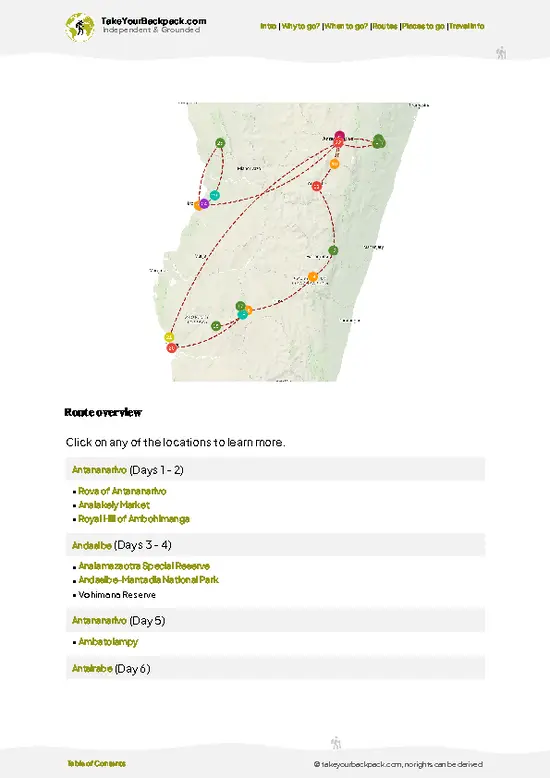
How many days to plan: A trip combining several regions in Madagascar needs 14 to 21 days at minimum, and three weeks is more realistic if you rely on road transport. The island punishes ambitious plans. Roads are slow, rain can close tracks and every transfer eats a day.

Which regions cluster: The capital and central highlands make the natural hub, because most flights and roads fan out from Antananarivo. From there, the east, the southern highlands and the west form three separate arms, and you generally travel out and return rather than loop. The south and west connect through long Route Nationale 7 and 9 journeys, while the northeast and far north are best reached by air. A sensible direction is to start with the highlands, then move toward drier regions, finishing with the coast so you … read more 👉
How many days to plan: A trip combining several regions in Madagascar needs 14 to 21 days at minimum, and three weeks is more realistic if you rely on road transport. The island punishes ambitious plans. Roads are slow, rain can close tracks and every transfer eats a day.

Which regions cluster: The capital and central highlands make the natural hub, because most flights and roads fan out from Antananarivo. From there, the east, the southern highlands and the west form three separate arms, and you generally travel out and return rather than loop. The south and west connect through long Route Nationale 7 and 9 journeys, while the northeast and far north are best reached by air. A sensible direction is to start with the highlands, then move toward drier regions, finishing with the coast so you can rest after rough roads.

Time per stop and travel time: Allow 3 to 4 nights per region so you are not spending the whole stay in transit. Distances translate poorly: Antananarivo to Antsirabe takes about 3 to 4 hours, to Andasibe about 3 to 4 hours, to Toliara a full 2 days by road, and 1 hour 15 minutes or so by air. Reserve a day of buffer after each long transfer.

Planning mistakes: The most common error is stacking too many regions into too few days, so most hours go to a cramped taxi-brousse seat. Choose two or three regions and give each real time. Another mistake is trusting road estimates, when a rainy-season track can double a journey. Build slack into flight connections, because schedules shift. Leave the first morning free on arrival, and book the final domestic flight at least a day before an international departure.

The ListThe Best regions of Madagascar

1 Nosy Be

Black lemurs, offshore islets, ylang-ylang, Ambatoloaka sunsets

Paddle to Lokobe forest for black lemurs, snorkel with turtles around small islets, and end days with grilled fish over the bay.

2 Nosy Sakatia

Lemur forest, turtle shallows, Sakalava hamlets, sand paths

Follow a guide through dry forest to brown lemurs and chameleons, then snorkel coral gardens and wander fishing hamlets at boat-return hour.

madagascar-region-nosy-sakatia
© Google |

3 Nosy Boraha

Pirate graves, humpback season, clove groves, empty beaches

Trace the island’s pirate past in Ambodifotatra, then rent a bicycle or scooter to reach quiet beaches, northern villages and whale-season boats.

madagascar-region-nosy-boraha
© Google |

4 Nosy Mitsio

Sacred lake, Antsoha fishing village, house reef, no-bank island

Walk inland with a local guide to a sacred freshwater lake, then watch pirogues land at dawn and snorkel the reef off empty beaches.

madagascar-region-nosy-mitsio
© Google |

5 Île aux Nattes

Car-free sand lanes, pirogue landing, lagoon snorkeling, wild east shore

Walk barefoot from the pirogue landing to a calm western lagoon, then cross the island at dawn to a surf-battered eastern shore.

6 Nosy Komba

Black lemurs, embroidery lane, turtle snorkeling, island summit

Feed black lemurs that climb onto shoulders, snorkel reefs where green turtles graze, and hike to a summit overlooking Nosy Be.

Loading the map 🌍

Expert viewInsights from Locals and Experts

How many regions to visit: I recommend two or three regions on a first trip, four only if you have a month. Madagascar's roads and park access eat time, so each added region costs a day or two of dusty, rattling transit. Fewer places also let you actually hear the dawn chorus of indri calls or feel the heat lift off a dry riverbed rather than glimpsing it from a window. You come home with real memories instead of a blur.

Choosing by travel style: If you want wildlife, prioritize rainforest and dry-forest regions, where guided night walks reward you with eyes glowing in torchlight. If you want landscapes and hiking, choose the highlands or limestone and canyon country, where trails are firm underfoot and views open wide. If you want beach time, pick the coast last, once your legs are tired. … read more 👉
How many regions to visit: I recommend two or three regions on a first trip, four only if you have a month. Madagascar's roads and park access eat time, so each added region costs a day or two of dusty, rattling transit. Fewer places also let you actually hear the dawn chorus of indri calls or feel the heat lift off a dry riverbed rather than glimpsing it from a window. You come home with real memories instead of a blur.

Choosing by travel style: If you want wildlife, prioritize rainforest and dry-forest regions, where guided night walks reward you with eyes glowing in torchlight. If you want landscapes and hiking, choose the highlands or limestone and canyon country, where trails are firm underfoot and views open wide. If you want beach time, pick the coast last, once your legs are tired. For culture, favor highland towns and villages, where markets smell of spices, zebu meat and fresh bread. Travelers on tight budgets do best in the highlands, where buses and food stay cheap. Remote regions suit those who can spend more.

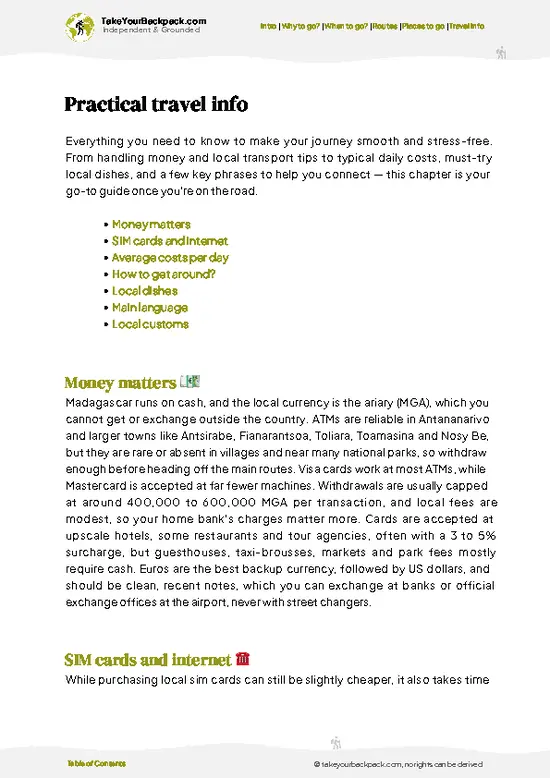
What it costs: Budget about US$25 to 45 a day if you travel by taxi-brousse, sleep in simple guesthouses (roughly US$8 to 20 a night) and eat local meals for US$2 to 5. Add park entry, which commonly runs about US$15 to 30 per park per day for foreigners, and compulsory guides at roughly US$10 to 25 per visit. Private cars with drivers cost about US$50 to 90 a day, and domestic flights US$100 to 250 each way. A realistic total for three weeks is US$1,000 to 1,800 without flights, higher with private transport. Carry plenty of cash in ariary, as cards and cash machines are patchy outside larger towns.

Safety and local etiquette: Petty theft happens in busy markets and bus stations, so keep valuables out of sight and avoid walking alone at night in cities. Road accidents are the greater danger, so avoid night driving and choose reputable drivers. Bring a head torch, rain jacket and sturdy shoes, and treat water before drinking. Malaria is present in many lowland areas, so take advice before you go.

Respect fady. Ask your guide before photographing people, entering sacred forests or tombs, or pointing with a finger rather than a closed hand. Dress modestly in villages, greet people with a handshake or a nod, and ask before taking pictures. Small gifts for hosts and fair tips for guides are appreciated, and your visit gives you a warmer welcome in return. Bargain politely, never aggressively, and carry small notes, as change is often scarce.

✈️ The backpacker research shortcutMadagascar Travel Guide

An offline-friendly backpacking guide with optimized travel routes, ranked highlights, transport advice, and the best areas to stay.
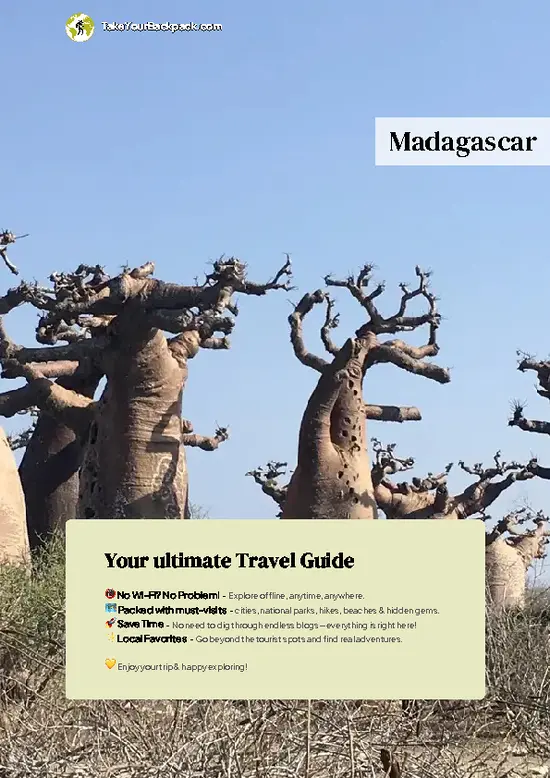
example page 0 from our offline Travel Guide for Madagascar
example page 1 from our offline Travel Guide for Madagascar
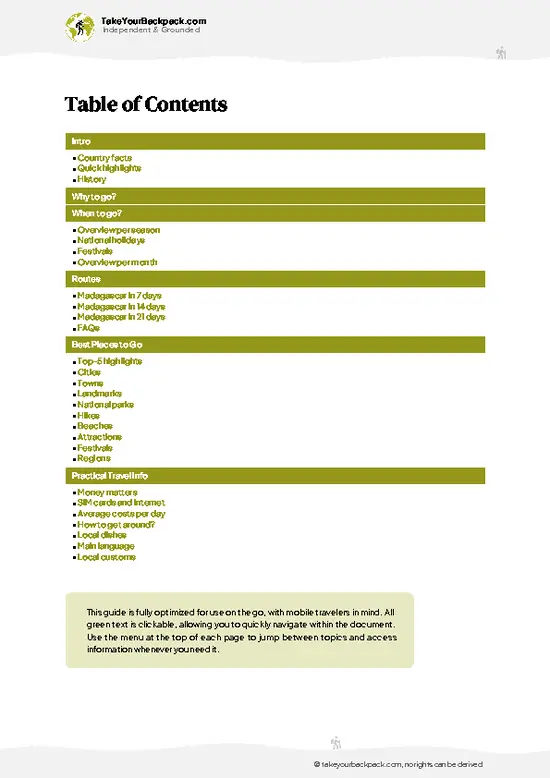
example page 2 from our offline Travel Guide for Madagascar
example page 3 from our offline Travel Guide for Madagascar
example page 4 from our offline Travel Guide for Madagascar
example page 5 from our offline Travel Guide for Madagascar
example page 6 from our offline Travel Guide for Madagascar
example page 7 from our offline Travel Guide for Madagascar
The digital guide (301 pages) contains:
✅ 96 highlights, ranked by travel appeal
✅ Optimized 7, 14 & 21-day travel routes
✅ Cities, national parks, landmarks, beaches
✅ How to get around
✅ Offline-friendly for travel without Wi-Fi
👉 Click to see all 30+ guide features

📅 Plan smarter in minutes, not weeks
✅ Month by month travel advice
✅ Festivals & national holidays
✅ Budget expectations

🗺️ Go to the right places, skip the overrated ones
✅ Honest pros & cons of destinations
✅ Top hikes, parks & viewpoints
✅ Lesser-known places most travelers miss
✅ Clear “worth it vs skip it” guidance

🛏️ Travel smoothly without rookie mistakes
✅ Best areas to stay
✅ Transport systems explained simply
✅ Common scams & safety advice
✅ SIM cards, money & practical tips

🌍 Understand the country, not just visit it
✅ Culture & traditions
✅ 52 Essential phrases & customs
✅ Festivals worth planning around
✅ Traveler-friendly historical context
✅ Insights that make places more meaningful

📱 Built for real travel conditions
✅ Fully downloadable PDF
✅ Works completely offline
✅ Optimized for phone use
✅ Useful in remote areas & buses
✅ Everything in one place
Stop searching, start planning
Get instant access to your full guide. 30‑day money-back guarantee.
+ Add another guide for just

By proceeding you agree to our terms.
Sent to your inbox immediately after payment • 100% Secure Checkout
Best Backpacking Travel Advisor 2025 tourism awardBest Backpacking
Travel Advisor
2025
What others say about Take Your Backpack Guides:
⭐⭐⭐⭐⭐
Fantastic, amazing amount of information!
⭐⭐⭐⭐⭐
My goodness this is amazing, it's what I've been looking for hats off too you!
⭐⭐⭐⭐⭐
I think this is absolutely BRILLIANT
⭐⭐⭐⭐
Very complete and informative. It's still missing places, but I gotta to commend you
⭐⭐⭐⭐⭐
This is truly amazing, thank you, can't wait to explore it with my kids!
⭐⭐⭐⭐⭐
Awesome resource, thank you!
⭐⭐⭐⭐⭐
This is amazing! Can't wait to explore the ones I haven't seen
⭐⭐⭐⭐
I love this! Well done, great idea.
⭐⭐⭐⭐⭐
Thanks for taking the time to make this gem!
⭐⭐⭐⭐⭐
This might be the best website I've ever seen.
⭐⭐⭐⭐⭐
Congratulations, and thank you so much for your work; it's incredibly valuable.
⭐⭐⭐⭐
In all seriousness I think you did a great job pointing out the important spots
⭐⭐⭐⭐⭐
10/10 very good
⭐⭐⭐⭐⭐
As someone who's only just starting to visit regularly this is awesome, thank you.
⭐⭐⭐⭐
Thank you very much! I'm going to visit my dad, it's going to be very useful!
⭐⭐⭐⭐⭐
This is really cool! We'll be travelling for the first time and this definitely come in handy.
⭐⭐⭐⭐⭐
You are now our minister of culture, congratulations 👨‍💼
⭐⭐⭐⭐⭐
Just wanted to tell you that this is a pearl! Going to follow your recommendations.
⭐⭐⭐⭐⭐
This is so cool. I'll definitely be using the resource for my travels soon.
⭐⭐⭐⭐⭐
This is very impressive! Good work.
⭐⭐⭐⭐⭐
This is an amazing and informative site. Very well done!

🛏️ Where to stay?Accommodation Highlights

Dorm-style hostels are rare in Madagascar, but budget guesthouses and simple hotels with private rooms from roughly 40,000 to 110,000 ariary (US$9 to 25) a night are easy to find in every town on the main tourist routes. In Antananarivo, Isoraka has the densest cluster of traveler-friendly guesthouses within walking distance of restaurants and bars, the Haute-Ville (upper town) is quieter with city views but involves steep climbs, and Analakely puts you beside the market and taxi-be hubs at the cost of noise and pickpockets, especially after dark. On the coast, Ambatoloaka on Nosy Be is the liveliest and most convenient base for nightlife, while Ivato, next to the airport, is a dull but practical … read more 👉
Dorm-style hostels are rare in Madagascar, but budget guesthouses and simple hotels with private rooms from roughly 40,000 to 110,000 ariary (US$9 to 25) a night are easy to find in every town on the main tourist routes. In Antananarivo, Isoraka has the densest cluster of traveler-friendly guesthouses within walking distance of restaurants and bars, the Haute-Ville (upper town) is quieter with city views but involves steep climbs, and Analakely puts you beside the market and taxi-be hubs at the cost of noise and pickpockets, especially after dark. On the coast, Ambatoloaka on Nosy Be is the liveliest and most convenient base for nightlife, while Ivato, next to the airport, is a dull but practical choice for one night before or after a flight.

If you enjoy meeting fellow travelers, consider choosing hostels with high ratings for atmosphere. On the other hand, if you prefer having your own space, a hotel might be a better option.

MadagascarSee More of Madagascar

👋 Meet the founderWho’s Behind Take Your Backpack?

Johan, backpacker and founder of TakeYourBackpackHi, I’m Johan (Netherlands 🇳🇱), the creator of TakeYourBackpack. Over the past 3 decades, I’ve backpacked through 90+ countries across six continents, gaining extensive experience with independent travel, long-term trips, and overland routes.

This site is built on a combination of firsthand travel experience and carefully curated insights from other backpackers. Many guides are based on places I’ve personally visited, while others bring together tips, observations, and practical advice shared by trusted travelers I’ve met along the way.

The goal is to provide realistic, experience-driven guidance — not generic itineraries — so you can explore destinations with better context, clearer expectations, and more confidence.