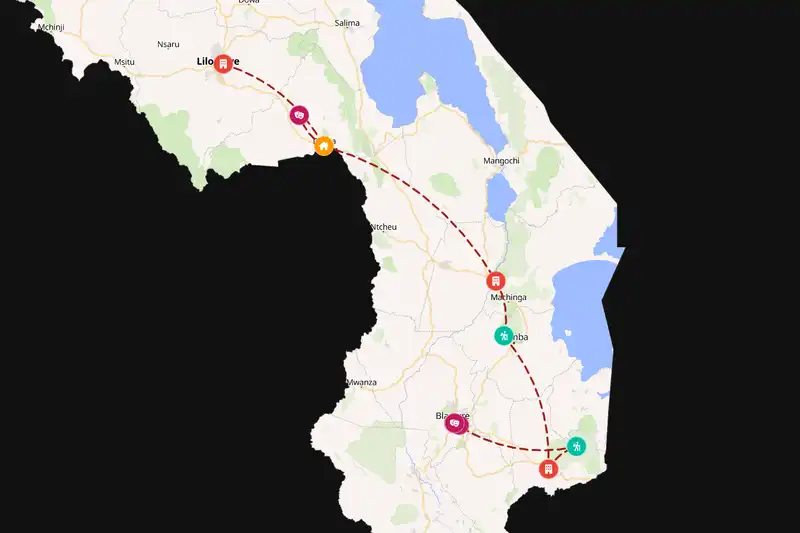
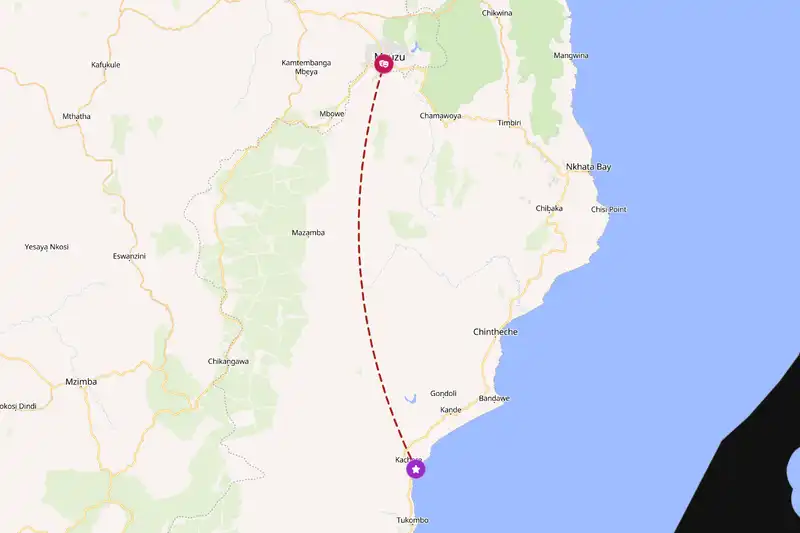
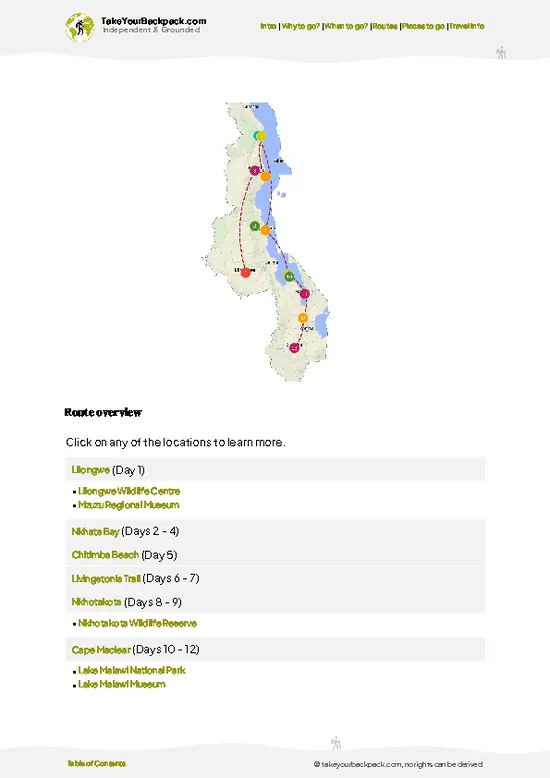
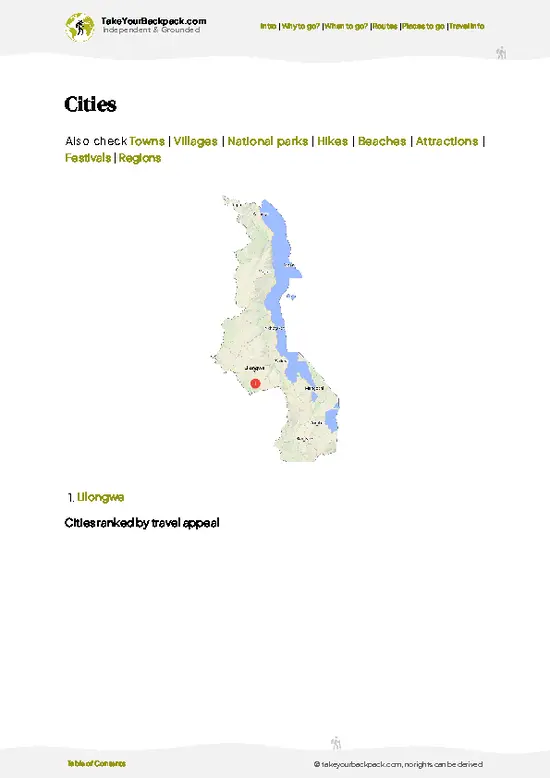
This fifteen-day loop through Malawi is for travelers who want both ends of the lake and are happy to earn them on public transport. The pace is relaxed overall, with a few long road days balanced by three-night stays. You will use long-distance coaches between Lilongwe and Mzuzu, minibuses along the M1 and M5, a pickup or motorbike taxi for the last stretch to Cape Maclear, and an optional transfer into Nkhotakota Wildlife Reserve.
Day 1: Lilongwe
Spend your arrival day gently. The
Lilongwe Wildlife Centre sits in a strip of woodland near Old Town and runs guided walks past rescued animals, with a clear explanation of the wildlife trafficking problem in the region. It is the right first lesson for the parks you will see later. Stock up on kwacha and snacks here, because cash machines thin out quickly in the north.
Days 2-4: Mzuzu and Nkhata Bay
Day 2 is a big one: 5 to 6 hours by coach to Mzuzu. Stretch your legs at the
Mzuzu Regional Museum, a small collection on the northern peoples, then …
read more 👉This fifteen-day loop through Malawi is for travelers who want both ends of the lake and are happy to earn them on public transport. The pace is relaxed overall, with a few long road days balanced by three-night stays. You will use long-distance coaches between Lilongwe and Mzuzu, minibuses along the M1 and M5, a pickup or motorbike taxi for the last stretch to Cape Maclear, and an optional transfer into Nkhotakota Wildlife Reserve.
Day 1: Lilongwe
Spend your arrival day gently. The Lilongwe Wildlife Centre sits in a strip of woodland near Old Town and runs guided walks past rescued animals, with a clear explanation of the wildlife trafficking problem in the region. It is the right first lesson for the parks you will see later. Stock up on kwacha and snacks here, because cash machines thin out quickly in the north.Days 2-4: Mzuzu and Nkhata Bay
Day 2 is a big one: 5 to 6 hours by coach to Mzuzu. Stretch your legs at the Mzuzu Regional Museum, a small collection on the northern peoples, then take a minibus for the final hour down to Nkhata Bay. The harbor town is built around small coves where hostels sit on rock terraces above clear water. Two full days here are for kayaking along the shore, swimming off the rocks, and eating fried chambo at the market. The Nkhata Bay Cultural Museum fills a lazy morning.Days 5-7: Chitimba Beach and the Livingstonia Trail
Head back through Mzuzu and down the escarpment road to Chitimba Beach, 3 to 4 hours in total, where the lake gets wide and the mountains rise straight behind the sand. Sleep one night at the beach, then start early on the Livingstonia Trail, a steep climb of 3 to 5 hours on footpaths that cut across the hairpin road. Two nights on top give you time for Manchewe Falls, about 125 meters high, and the old Scottish mission buildings, with views back over the lake from the escarpment lodges.Days 8-9: Nkhotakota and Nkhotakota Wildlife Reserve
The second long day follows a rest-heavy stretch: down to Mzuzu, then south on the M5 lakeshore road to Nkhotakota, a full day of 8 to 10 hours by minibus. The town was a center of the nineteenth-century slave trade, and the tree where Livingstone met the local ruler Jumbe still stands. Use your full day for Nkhotakota Wildlife Reserve, where African Parks moved hundreds of elephants in the 2010s. Arrange the transfer through your lodge, since no public transport runs inside.Days 10-12: Cape Maclear and Lake Malawi National Park
Ride south via Salima and Monkey Bay to Cape Maclear, a full day of 6 to 7 hours that ends with the final pickup or motorbike ride to the beach. Three nights fit the water in Lake Malawi National Park: snorkeling among cichlids at Otter Point, a boat trip to Thumbi West Island, and long evenings watching fishing boats come in.Days 13-14: Mangochi and Liwonde
On the way inland, stop in Mangochi for the Lake Malawi Museum, which covers the lake’s fish, the colonial steamers and the Yao communities of the south shore. Continue to Liwonde, 1.5 to 2 hours further, and spend the next day on a boat safari along the Shire River, where hippos and elephants share the banks with crocodiles.Day 15: Blantyre
A 2 to 3 hour minibus takes you to Blantyre. Visit Mandala House, Malawi’s oldest building, dating from the 1880s, before flying out from Chileka or taking the coach back to Lilongwe.
If you can spare two extra days, catch a boat from Nkhata Bay to Ruarwe, a roadless village on the northern shore where the hills drop straight into the lake.v2.webp)
 Best Backpacking