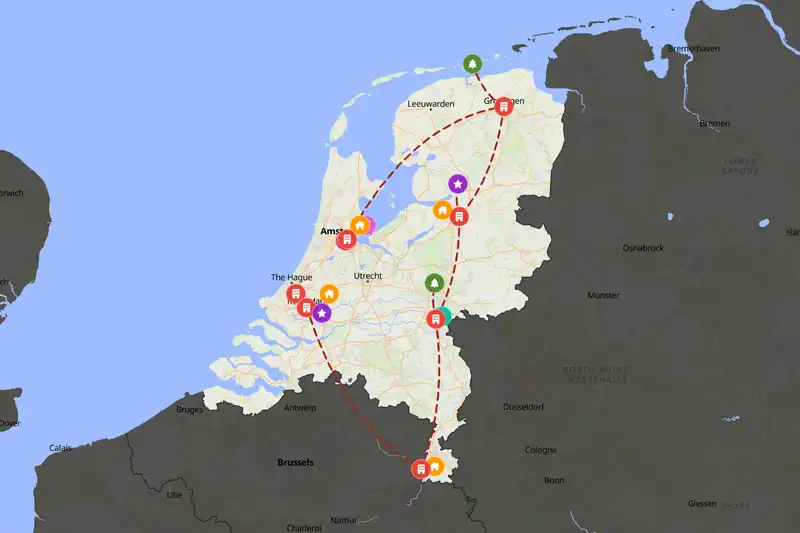
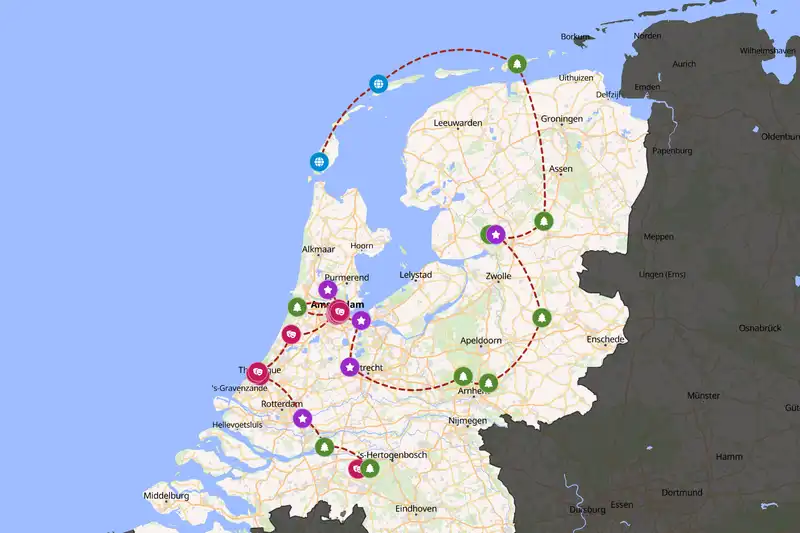
Yes, the Netherlands is one of the easiest countries in Europe to backpack on your own, even if it’s your first trip. English is widely spoken, trains run like clockwork, and cities are compact and walkable. You can land in Amsterdam with no bookings and still figure things out on the fly, but you’ll save money and stress by reserving hostels in advance, especially on weekends and during tulip season (roughly April) and big events like King’s Day (27 April).
For budget travelers, the main challenge isn’t logistics, it’s cost. Accommodation and eating out are pricey compared to Eastern or Southern Europe. You keep costs down by:
- Sleeping in hostel dorms or camping (Dutch campgrounds are clean and well-organized).
- Using supermarkets (Albert Heijn, Jumbo, Lidl) for picnic-style meals.
- Taking advantage of free or cheap activities: walking canal belts, street markets, free viewpoints, city parks, and self-guided walking routes.
Safety-wise, it’s very comfortable for solo travelers, including solo women. Petty theft exists around major stations and tourist zones, so treat your bag like you would in any big European city: money belt or inner pocket for passport/cards, and don’t leave your daypack unattended in bars or on trains. Biking is a huge part of Dutch life, but if you’re not confident on a bike, you can still get around fine on foot and public transport. If you do rent a bike, learn the basic rules: stay in the bike lane, signal with your hands, and never walk or stand in the bike lane unless you want to be yelled at in three languages.
In short: extremely easy to backpack independently, but plan a bit more tightly than in cheaper countries so you don’t accidentally burn your budget on last-minute beds and restaurant meals.
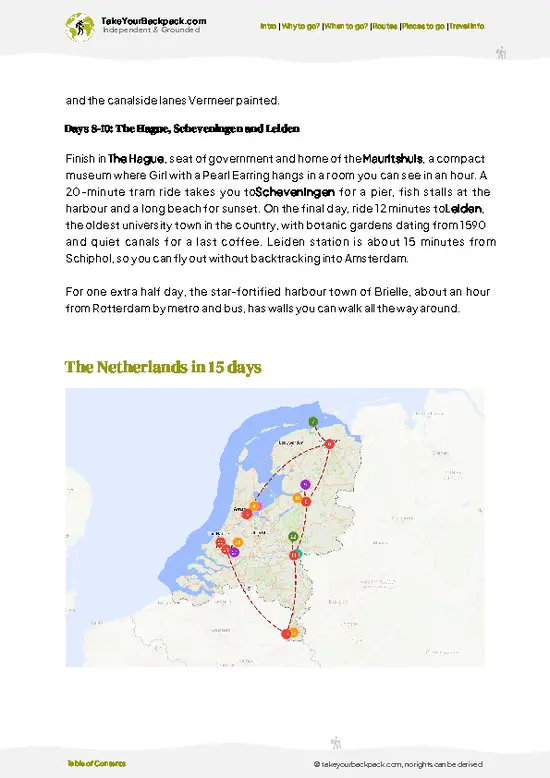
For a budget backpacker, the sweet spot is 5–10 days, depending on how deep you want to go and how fast you like to move.
Rough breakdowns that actually work in real life:
- 3–4 days (quick hit): Focus on Amsterdam plus one side trip.
Day 1–2: Amsterdam (canals, Jordaan, free walking tour, museums if you care).
Day 3–4: Day trips to either Zaanse Schans (windmills, touristy but easy) or Utrecht/Rotterdam for a more local city vibe.
- 5–7 days (classic first trip): You see more than just Amsterdam without rushing.
2–3 days: Amsterdam.
1 day: Utrecht (compact, student-heavy, cheaper than Amsterdam).
1 day: Rotterdam or The Hague + Scheveningen beach (if the weather is decent).
1–2 days: Smaller town or countryside base like Haarlem, Leiden, or a Frisian island if you want something quieter.
- 8–10 days (slow and satisfying): You can mix cities, coast, and countryside.
3 days: Amsterdam.
2 days: Utrecht or Rotterdam as a base.
2–3 days: North or east (Groningen, Zwolle, Deventer, or national parks like Hoge Veluwe).
More than 10 days only makes sense if you’re really into cycling, art, or slow travel and want to use the Netherlands as a base between other countries. Less than 3 days is possible, but you’ll mostly see Amsterdam’s tourist core and spend a lot of money for not much depth.
If you’re on a long Europe trip, 5–7 days is usually the best balance: enough to feel the country’s rhythm without eating too much of your Schengen time or budget.
You can absolutely get around the Netherlands without a car; in fact, a car is usually a liability. Public transport is dense, reliable, and easy to use, and Dutch cities are built for bikes and trains, not for drivers.
Key tools and habits that keep it cheap and simple:
- Trains: Connect almost every city you’ll want to visit. Intercity trains are fast and frequent; Sprinter trains stop at smaller stations. You don’t need reservations for regular domestic trains, just a ticket or travel card.
- Buses and trams: Fill in the gaps inside cities and to smaller towns. They’re clean, safe, and run late enough for most backpacker schedules.
- OV-chipkaart / contactless: You can tap in and out with a travel card or a contactless bank card at gates and card readers. Always tap in and out, or you’ll be charged a penalty fare.
- Bikes: In many towns, renting a bike for a day is cheaper and more fun than buying multiple tram tickets. Use it for short distances and exploring the countryside. Lock it with two locks; bike theft is common.
When a car might make sense: if you’re traveling as a group of 3–4 and want to hit very rural areas, remote campsites, or do a road trip that includes neighboring countries. Even then, factor in parking fees, narrow streets, and the stress of driving in bike-heavy cities.
For a solo or duo backpacker, the best combo is: trains between cities, walking and trams in town, and occasional bike rentals. You’ll spend more time exploring and less time hunting for parking or arguing with GPS.
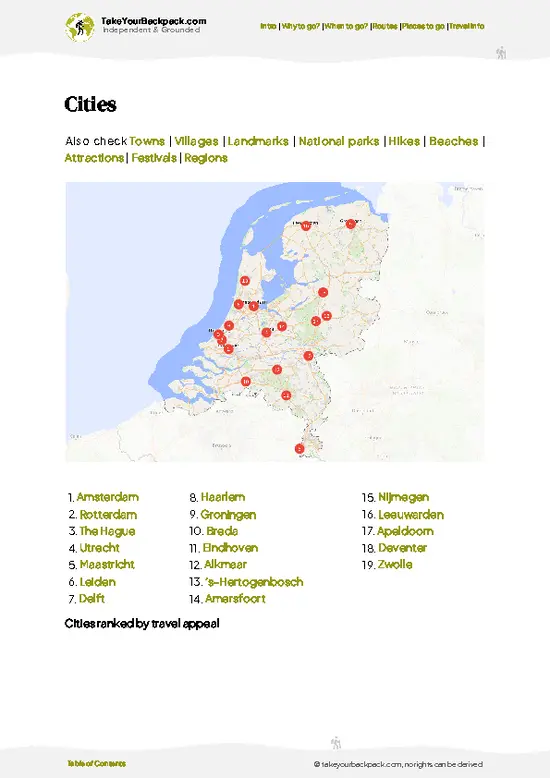
For a budget traveler, “must-visit” means places that give you a strong sense of Dutch life without draining your wallet or your patience. These are the ones that consistently deliver:
1. Amsterdam (but not just the red-light clichés)
- Why: Canal belts, gabled houses, world-class museums, and people-watching from bridges and parks.
- Budget angle: Free walking tours (tip-based), wandering Jordaan, Vondelpark picnics, ferry to Amsterdam-Noord for skyline views, street markets like Albert Cuyp.
2. Utrecht
- Why: Feels like a smaller, more relaxed Amsterdam with canals and a big student population.
- Budget angle: Cheaper hostels and food, climb or at least hang around Dom Tower area, sit along the Oudegracht canals, explore side streets and cafes instead of paying for big-ticket attractions.
3. Rotterdam
- Why: Modern architecture, big port city energy, and a very different feel from Amsterdam.
- Budget angle: Walk the Erasmus Bridge, check out the cube houses from outside, browse Markthal, street art hunting, cheap eats from diverse immigrant-run spots.
4. Haarlem or Leiden (pick one if short on time)
- Haarlem: Close to Amsterdam, classic Dutch streets, good base for the coast.
- Leiden: University town with canals and a more local feel.
- Budget angle: Use either as a cheaper base than Amsterdam, do day trips to the beach or nearby towns, wander old streets and canals for free.
5. The Hague + Scheveningen beach (in decent weather)
- Why: Political capital, mix of city and sea.
- Budget angle: Free beach access, long coastal walks, people-watching on the promenade, cheap snacks from supermarkets instead of pricey beachfront restaurants.
6. A taste of countryside or small-town life
- Options: Zaanse Schans (windmills, very touristy but easy), Marken/Volendam (also touristy), or less-hyped towns like Deventer, Zwolle, or Groningen.
- Budget angle: Use trains to reach one smaller town, walk everywhere, and enjoy the slower pace without paying for tours.
If you have 5–7 days, a strong route is: Amsterdam + Utrecht + either Rotterdam or Haarlem/Leiden, plus one countryside or coastal day trip.
If you’re short on time or cash, skip anything that eats hours or euros without giving you a deeper feel for the country.
Things you can skip or downgrade without much regret:
1. Overpriced canal cruises in Amsterdam
- The canals are great, but you can experience them by walking or sitting on bridges and quays for free. If you really want a boat, pick a simple, no-frills option; avoid expensive dinner cruises.
2. Multiple big-ticket museums in one trip
- Rijksmuseum, Van Gogh Museum, Anne Frank House, and others add up fast. If you’re on a tight budget or schedule, pick one or two that genuinely matter to you and skip the rest. Use the saved time to wander neighborhoods.
3. Zaanse Schans, Marken, and Volendam all in one go
- These “traditional” villages are heavily geared toward tour buses. Doing all of them is repetitive. If you’re short on time, pick just one or skip entirely and visit a less touristy town like Haarlem, Leiden, or Deventer instead.
4. Long detours just for tulip fields (outside tulip season)
- If it’s not roughly April, the fields are mostly green or bare. Don’t burn a day chasing Instagram shots that don’t exist. Even in season, you don’t need to pay for expensive tours; a simple train + bike rental around the bulb region is enough if you have time.
5. Expensive coffees, snacks, and meals in the most touristy zones
- Around Dam Square, the Red Light District, and right next to major sights, prices jump and quality often drops. Walk 5–10 minutes away for cheaper, better food. You’re not missing “the real Netherlands” by skipping tourist-trap restaurants.
6. Trying to see the entire country in 3 days
- Racing to tick off Amsterdam, Rotterdam, The Hague, Giethoorn, Zaanse Schans, and tulip fields in a long weekend just means you see train stations and spend a lot of money. If time is tight, focus on 1–2 cities and one day trip.
If you have to be ruthless: prioritize Amsterdam plus one other city (Utrecht, Rotterdam, or Haarlem/Leiden), skip the overhyped village circuit, and limit yourself to one or two paid attractions. You’ll save money, move less, and actually feel the place instead of just collecting photos.