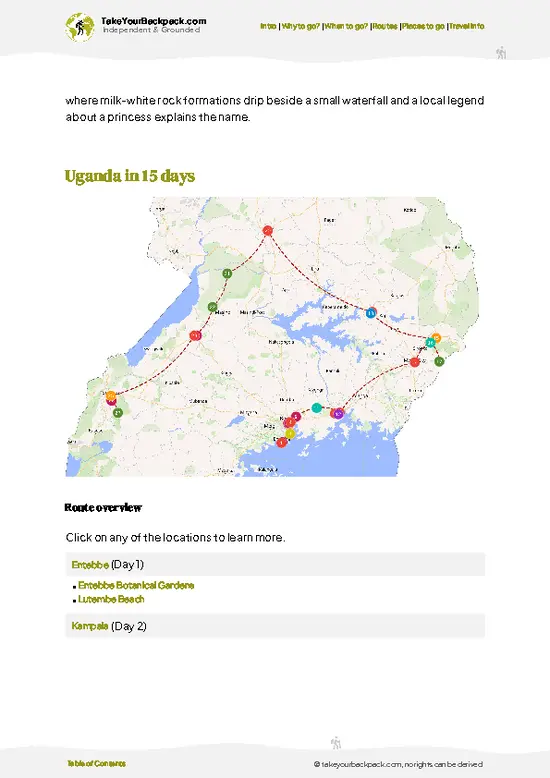
This ten-day route is for first-time safari travelers in Uganda who want gorillas, chimps and open savanna in one trip without rushing. It runs at a moderate pace through the southwest, with two nights at most stops and no back-to-back long travel days. You’ll use long-distance buses from Kampala, boda-bodas for the final kilometers, dugout canoes on Lake Bunyonyi and a hired car with driver for the Bwindi to Queen Elizabeth stretch, where public transport is thin.
Day 1: Kampala
Use your arrival day in
Kampala to adjust, buy a local SIM card and change money. In the evening, head to the
Ndere Cultural Centre, where the resident troupe performs dances from across the country’s regions on several evenings a week, including Kiganda hip-shaking and Karamojong leaping. It’s the easiest way to understand Uganda’s ethnic diversity before heading out of the capital.
Day 2: Lake Mburo
Take a bus toward Mbarara, get off at the Sanga junction and ride a boda into
Lake Mburo National Park, about 4 hours …
read more 👉This ten-day route is for first-time safari travelers in Uganda who want gorillas, chimps and open savanna in one trip without rushing. It runs at a moderate pace through the southwest, with two nights at most stops and no back-to-back long travel days. You’ll use long-distance buses from Kampala, boda-bodas for the final kilometers, dugout canoes on Lake Bunyonyi and a hired car with driver for the Bwindi to Queen Elizabeth stretch, where public transport is thin.
Day 1: Kampala
Use your arrival day in Kampala to adjust, buy a local SIM card and change money. In the evening, head to the Ndere Cultural Centre, where the resident troupe performs dances from across the country’s regions on several evenings a week, including Kiganda hip-shaking and Karamojong leaping. It’s the easiest way to understand Uganda’s ethnic diversity before heading out of the capital.Day 2: Lake Mburo
Take a bus toward Mbarara, get off at the Sanga junction and ride a boda into Lake Mburo National Park, about 4 hours from Kampala. It’s the only park on this route where you can walk among zebra, eland and buffalo with a ranger, and a boat trip on the lake brings you close to hippos and fish eagles. One night is enough.Days 3-4: Kabale and Lake Bunyonyi
A 3-hour bus ride via Mbarara gets you to Kabale, and Lake Bunyonyi is only about 9 kilometers further. Sleep at the lake and spend day four on the Lake Bunyonyi Hiking Trails, walking terraced ridges between farming villages, then paddle a dugout canoe past Akampene, the tiny “Punishment Island” with a dark local history. At about 1,950 meters, evenings get cold, and the lake is free of bilharzia, so swimming is allowed.Days 5-6: Bwindi
Hire a driver for the 3 to 4-hour dirt road to Buhoma in Bwindi Impenetrable National Park. Gorilla permits cost US$800 and sell out months ahead, so book before you book flights. The trek can take anywhere from 1 to 6 hours of steep, muddy hiking, and the hour with the family is worth every scratch. On the second day, join the Batwa Cultural Experience, led by members of the forest people who were evicted when the park was created, who show hunting techniques and plant medicine.Days 7-8: Queen Elizabeth
Drive north to Ishasha, the southern sector of Queen Elizabeth National Park, where lions lounge in fig trees during the hot hours, then continue to the Mweya peninsula. Day eight is for the Kazinga Channel boat trip, two hours along banks crowded with elephants, buffalo, hippos and huge flocks of pelicans.Days 9-10: Fort Portal and Kibale
Leave early for Kibale Forest National Park, about 2.5 hours north, in time for an afternoon chimpanzee trek with a permit of around US$250. Sleep in Fort Portal, a cool tea town of crater lakes, then catch a bus back to Kampala on day ten, 5 to 6 hours.
Before leaving Fort Portal, take a boda to the Amabeere ga Nyina Mwiru caves, where milk-white rock formations drip beside a small waterfall and a local legend about a princess explains the name.v2.webp)
 Best Backpacking

