×

Brazil🇧🇷 | best hikesTop-Rated 10 hikes in Brazil

Brazil is a hiker’s paradise, offering an incredible variety of trails that cater to every backpacker’s style and budget. From the lush rainforests of the Amazon to the rugged mountains of the Serra do Mar, the country’s diverse landscapes shape the hiking experience in profound ways. Each region has its own seasonal nuances; for instance, the dry season in the Northeast is ideal for trekking, while the wet season can turn trails into muddy challenges.

Trail difficulty varies widely. Some hikes are accessible for beginners, while others demand serious stamina and experience. Understanding the altitude and daylight hours is crucial; in the Andes, for example, higher elevations can sap your energy quickly. Choosing the right hike not only affects your physical exertion but also your overall vibe. A challenging trek through the Pantanal might immerse you in wildlife, while a coastal hike in Rio de Janeiro offers stunning views and cultural encounters.

Budget considerations are also key. Some trails require permits or guided tours, which can add up. Independent travel is often the best way to explore, but be mindful of safety and recovery needs. The right hike can transform your trip, making it an adventure that resonates long after you return home.

By Johan Kruseman 🇳🇱 | Updated June 10, 2026
Explore the best beaches in Brazil

Why go?Key Factors That Shape the Experience

Hiking in Brazil is not just about putting one foot in front of the other; it’s a deep dive into a land of stunning diversity. The country boasts a range of terrains, from the rugged mountains of the Serra do Mar to the lush rainforests of the Amazon. This variety means that hikers can experience everything from steep ascents to gentle strolls, each offering its own unique rewards. However, this diversity comes with its own set of challenges.

Altitude plays a significant role in the hiking experience. In regions like the Chapada Diamantina, elevation can reach over 2,000 meters, presenting a physical challenge that rewards those who push through with breathtaking views. Yet, altitude can also lead to altitude sickness for the unprepared. Understanding your own limits is crucial.

The trail read more 👉
Hiking in Brazil is not just about putting one foot in front of the other; it’s a deep dive into a land of stunning diversity. The country boasts a range of terrains, from the rugged mountains of the Serra do Mar to the lush rainforests of the Amazon. This variety means that hikers can experience everything from steep ascents to gentle strolls, each offering its own unique rewards. However, this diversity comes with its own set of challenges.

Altitude plays a significant role in the hiking experience. In regions like the Chapada Diamantina, elevation can reach over 2,000 meters, presenting a physical challenge that rewards those who push through with breathtaking views. Yet, altitude can also lead to altitude sickness for the unprepared. Understanding your own limits is crucial.

The trail infrastructure in Brazil varies widely. Some areas are well-maintained, with marked paths and facilities, while others are less developed, requiring navigational skills and a sense of adventure. This inconsistency can be a double-edged sword. Well-maintained trails often mean more foot traffic, which can detract from the immersive experience. Conversely, less-traveled paths can offer solitude but may also lead to unexpected difficulties.

Logistics are another critical factor. Brazil is vast, and travel times can be deceptive. What looks like a short distance on a map can translate into hours on winding roads. This means that while some hikes are accessible, they may not allow for the depth of exploration that more remote trails offer. Planning is essential; knowing when to prioritize accessibility over immersion can save both time and energy.

Climate is a significant consideration as well. Brazil’s weather can be unpredictable, with tropical storms in the Amazon and dry spells in the highlands. The best hiking seasons vary by region, and understanding these patterns can prevent disappointment. Hiking during the rainy season may lead to muddy trails and increased risks, while the dry season can offer clearer paths but may also bring larger crowds.

In summary, hiking in Brazil is a unique experience shaped by its geographic diversity, cultural richness, and climatic variability. The trade-offs between difficulty and scenic reward, accessibility and immersion, and planning versus spontaneity are all part of the adventure. Understanding these factors will not only enhance the hiking experience but also ensure that the journey is as rewarding as the destination.
Our Approach to Ranking
The list of best hikes in Brazil is created based on scenery, challenge, trail quality, landmarks, and overall enjoyment. If you feel a hike is missing in this list, please let us know.

When to go?Seasonal Guide to Visiting

Seasonality and Hiking Conditions in Brazil


Brazil’s hiking landscape is as diverse as its geography, and understanding when to visit is crucial for maximizing both safety and enjoyment. The country experiences a range of weather patterns that can significantly affect trail conditions, accessibility, and overall hiking experiences.

Weather Patterns


In general, Brazil has a tropical climate, but it varies widely. The Amazon rainforest is humid and wet year-round, while the southern regions can experience cooler temperatures. Rainfall is a major consideration; the wet season typically runs from late spring to early autumn, bringing heavy rains that can make trails slippery and inaccessible. Conversely, the dry season offers clearer skies and more stable conditions, ideal for hiking.

Optimal

read more 👉

Seasonality and Hiking Conditions in Brazil


Brazil’s hiking landscape is as diverse as its geography, and understanding when to visit is crucial for maximizing both safety and enjoyment. The country experiences a range of weather patterns that can significantly affect trail conditions, accessibility, and overall hiking experiences.

Weather Patterns


In general, Brazil has a tropical climate, but it varies widely. The Amazon rainforest is humid and wet year-round, while the southern regions can experience cooler temperatures. Rainfall is a major consideration; the wet season typically runs from late spring to early autumn, bringing heavy rains that can make trails slippery and inaccessible. Conversely, the dry season offers clearer skies and more stable conditions, ideal for hiking.

Optimal Months


The best time for hiking is usually during the dry season, which varies by region but generally falls between May and September. During these months, trails are more manageable, and the risk of sudden downpours decreases. Daylight hours are also longer, providing ample time to explore without feeling rushed.

Shoulder Seasons


Visiting during the shoulder seasons—just before or after the peak months—can be a double-edged sword. On one hand, you may encounter fewer crowds and lower costs. On the other, weather can be unpredictable. Early spring and late autumn may still bring rain, and trails might be muddy or overgrown. Weigh the trade-offs carefully; the serenity of fewer hikers can be appealing, but it may come at the cost of optimal conditions.

Peak Periods


While peak tourist seasons can lead to crowded trails, they also coincide with the best weather. Major holidays and festivals can draw large crowds, impacting both trail access and accommodation availability. If planning around these times, be prepared for higher costs and potential logistical challenges.

Seasonal Constraints


Altitude is another factor to consider. Higher trails may be less accessible during the rainy season due to landslides or washed-out paths. Recovery needs also vary; hiking in humid conditions can be more taxing on the body, requiring adequate hydration and rest.

Understanding these seasonal dynamics is essential for planning a successful hiking trip in Brazil. Prioritize safety and comfort by choosing the right time to hit the trails, ensuring that the experience is as rewarding as the views.

hike hoppingTips for Visiting Multiple Destinations

General Routing Logic

Brazil is vast, and the best hikes are spread across diverse regions. Start by clustering hikes within the same area. For instance, the Atlantic Forest offers a series of trails that can be tackled in one go, while the rugged landscapes of Chapada Diamantina and the Amazon require separate trips. Travel direction matters too; moving from south to north or vice versa can save time and energy.

Typical Time Needed

Plan for at least three to five days per major hiking region. This allows for recovery time and exploration of nearby attractions. Each hike can range from a few hours to a full day, so factor in downtime. A common mistake is underestimating the need for rest days, especially after strenuous hikes. Your legs will thank you.

Common Planning Mistakes

One of … read more 👉

General Routing Logic

Brazil is vast, and the best hikes are spread across diverse regions. Start by clustering hikes within the same area. For instance, the Atlantic Forest offers a series of trails that can be tackled in one go, while the rugged landscapes of Chapada Diamantina and the Amazon require separate trips. Travel direction matters too; moving from south to north or vice versa can save time and energy.

Typical Time Needed

Plan for at least three to five days per major hiking region. This allows for recovery time and exploration of nearby attractions. Each hike can range from a few hours to a full day, so factor in downtime. A common mistake is underestimating the need for rest days, especially after strenuous hikes. Your legs will thank you.

Common Planning Mistakes

One of the biggest pitfalls is over-scheduling. Trying to cram too many hikes into a short timeframe can lead to burnout. Prioritize quality over quantity. Choose a few hikes that resonate with your interests and allow for deeper exploration. Another mistake is neglecting logistics. Brazil’s transportation can be unpredictable. Always check travel times between locations and allow for delays.

Trade-offs and Constraints

Speed versus depth of experience is a constant balancing act. Rushing through hikes might save time but can rob you of the rich experiences that linger in the quiet moments. Budget constraints often lead to uncomfortable accommodations or rushed transport. Invest in a few splurges—like a guided tour or a cozy lodge—to enhance your experience.

Pacing Strategies

Pacing is crucial. After a challenging hike, schedule lighter activities or rest days. This not only aids recovery but also allows for spontaneous adventures. Flexibility is key; be ready to adjust your plans based on weather or energy levels.

Optimal Sequencing of Stops

Start with easier hikes to build stamina before tackling more challenging trails. This gradual increase in difficulty helps acclimatize both body and mind. Consider the scenic rewards too; some trails offer breathtaking views that are worth the effort.

In summary, combining hikes in Brazil requires strategic planning, realistic pacing, and an understanding of the country’s diverse landscapes. Prioritize your energy and budget for the experiences that truly matter.

The ListMust-Visit hikes in Brazil

1 Vale do Pati

remote valley, rustic homestays, sandstone cliffs

Experience multi-day trekking through isolated valleys, staying with local families and exploring waterfalls and dramatic rock walls.

2 Chapada Diamantina

tabletop plateaus, waterfalls, sandstone canyons

Traverse a vast interior park marked by dramatic cliffs, hidden pools, and multi-day routes through remote valleys and high savannas.

3 Travessia Petrópolis-Teresópolis

classic traverse, high-altitude camps, mountain passes

Cross the Serra dos Órgãos range on a well-marked multi-day route, camping above the clouds and passing through diverse mountain terrain.

4 Serra dos Órgãos

vertical spires, rainforest valleys, technical traverses

Navigate a network of trails beneath towering rock formations, with options for multi-day crossings and challenging climbs.

5 Pico da Bandeira

border peak, alpine grasslands, sunrise viewpoint

Climb Brazil’s third-highest mountain, often at night, to catch sunrise above the clouds from a broad, windswept summit.

6 Pico Paraná

highest summit, exposed ridges, panoramic views

Ascend steep slopes and scramble over granite outcrops to reach the highest point in southern Brazil, with far-reaching mountain vistas.

brazil-hike-pico-parana
© Google |

7 Trilha do Ouro

historic gold route, cobblestone path, rainforest crossings

Follow an old colonial trail once used for gold transport, traversing lush forest and river crossings between mountain villages.

brazil-hike-trilha-do-ouro
© Google | Bob Ramos

8 Trilha da Pedra Bonita

urban forest, short hike, hang glider ramp

Walk a well-maintained trail in Rio’s Tijuca Forest to a broad summit, popular for city views and hang gliding takeoffs.

brazil-hike-trilha-da-pedra-bonita
© Google | Carlos Silva

9 Trilha do Corcovado

iconic peak, forested ascent, city overlook

Climb a steep, shaded path through Tijuca Forest to the base of Christ the Redeemer, with broad views over Rio de Janeiro.

10 Pedra do Sino

cloud forest, high-altitude camp, granite summit

Reach a cool, misty summit after a long forested approach, with the option to overnight at a mountain shelter near the peak.

brazil-hike-pedra-do-sino
© Google | Marcio Maia

11 Pico do Papagaio

Ilha Grande, rainforest ascent, distinctive peak

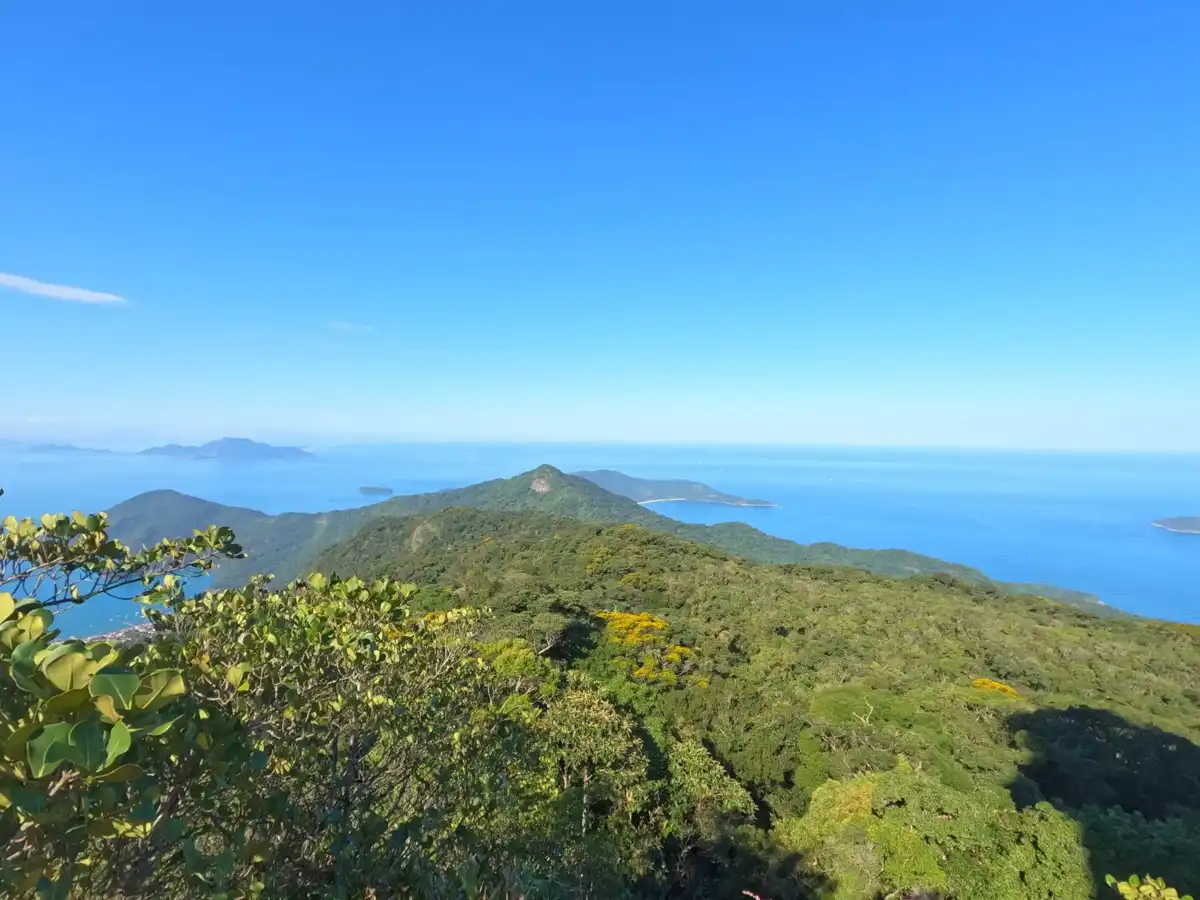
Tackle a steep, root-filled trail through Atlantic rainforest to a uniquely shaped summit with sweeping island and ocean views.

brazil-hike-pico-do-papagaio
© Google | Andy Jungl

12 Caminho do Itupava

colonial stone trail, Atlantic Forest, historic engineering

Follow a centuries-old route through dense forest, crossing mossy bridges and relics of Brazil’s early infrastructure between Curitiba and Morretes.

13 Morro do Anhangava

granite dome, technical climbs, paragliding launch

Trek up a prominent granite hill offering exposed scrambles, open summit areas, and a launch point for local paragliders.

14 Morro do Canal

rocky ascent, ladder sections, Curitiba skyline

Climb a short but challenging route featuring metal ladders and rocky steps, rewarded by sweeping views over the Paraná plateau.

15 Trilha do Pico Paraná

summit approach, forested ridges, exposed scrambling

Follow the main route to Pico Paraná’s summit, traversing dense woods and rocky sections before reaching open, wind-swept heights.

16 Vale do Travessão

Espinhaço Range, narrow canyons, quartzite formations

Walk through a striking valley carved by water, with narrow rock corridors and unique white-stone landscapes in Minas Gerais.

17 Trilha do Monte Crista

prehistoric carvings, Atlantic Forest, panoramic ridge

Ascend a forested trail to a broad ridge with ancient petroglyphs and open views over the coastal mountains of Santa Catarina.

18 Mestre Álvaro

coastal massif, Atlantic slope forest, panoramic lookout

Hike through dense forest to a prominent peak rising abruptly from the coast, offering wide views of Vitória and the surrounding lowlands.

brazil-hike-mestre-alvaro
© Google | Carlos Chaves

Think you know Brazil?

Prove you’re a true local — uncover 8 lesser-known hikes in Brazil that locals tend to keep to themselves.
Loading the map 🌍

Expert viewExpert Commentary on hikes

Trail Logistics

Brazil’s hiking scene is as diverse as its landscapes. You’ll find everything from coastal trails to mountainous treks. Expect to tackle anywhere from three to five hikes during a trip to truly appreciate the variety. Each region has its own flavor, so don’t just stick to one area. The more you explore, the richer your experience will be.

Altitude

Altitude can be a sneaky factor in Brazil. While many hikes are at sea level, some, like those in the Serra do Cipó, can push you up to 2,000 meters. If you’re not acclimatized, you might feel it. Take your time, especially on the ascents. It’s not just about reaching the summit; it’s about enjoying the journey. If you start feeling dizzy or overly fatigued, don’t hesitate to slow down or take a break. Your body will thank you. … read more 👉

Trail Logistics

Brazil’s hiking scene is as diverse as its landscapes. You’ll find everything from coastal trails to mountainous treks. Expect to tackle anywhere from three to five hikes during a trip to truly appreciate the variety. Each region has its own flavor, so don’t just stick to one area. The more you explore, the richer your experience will be.

Altitude

Altitude can be a sneaky factor in Brazil. While many hikes are at sea level, some, like those in the Serra do Cipó, can push you up to 2,000 meters. If you’re not acclimatized, you might feel it. Take your time, especially on the ascents. It’s not just about reaching the summit; it’s about enjoying the journey. If you start feeling dizzy or overly fatigued, don’t hesitate to slow down or take a break. Your body will thank you.

Recovery

Recovery is crucial. After a long day on the trails, don’t underestimate the power of rest. Brazil’s heat can be relentless, and dehydration is a real risk. Drink plenty of water, and consider electrolyte supplements if you’re sweating heavily. Stretching is also key. You might feel fine initially, but the next day could bring a world of hurt if you skip it. Listen to your body; it knows best.

Difficulty

Difficulty levels vary widely. Some trails are beginner-friendly, while others demand serious grit. Research the trail ratings before you go. A hike labeled as “moderate” in one region might be “challenging” elsewhere. If you’re unsure, opt for something easier. It’s better to enjoy a hike than to struggle through it. Remember, the goal is to have fun, not to prove a point.

Pacing

Pacing is everything. Brazilian trails can be deceptive. What looks like a short distance on a map can take longer than expected due to terrain and weather conditions. Factor in breaks for food, water, and simply soaking in the views. A good rule of thumb is to plan for about half the distance you think you can cover in a day. This way, you’ll avoid the dreaded “I should have turned back” moment.

Planning and Prioritizing

When planning your hikes, prioritize based on your interests. If you’re drawn to waterfalls, focus on trails that lead to them. If wildlife is your jam, seek out areas known for biodiversity. Brazil’s national parks often have well-marked trails, but don’t rely solely on signage. Carry a map or download offline maps to avoid getting lost. Also, consider the season. Some trails can be muddy or closed during the rainy season, so check local conditions before you set out.

Regional Variation

Each region has its own quirks. The Amazon is humid and teeming with life, but the trails can be muddy and challenging. The Pantanal offers flat, open landscapes, perfect for spotting wildlife, but you’ll need to be prepared for the heat. The coastal trails in places like Chapada Diamantina are stunning but can be crowded. Embrace the local culture; chat with fellow hikers or locals for tips. They often know the best spots and can help you avoid tourist traps.

Infrastructure and Travel Constraints

Infrastructure varies significantly. In popular areas, you’ll find decent accommodations and transport options. However, in remote regions, be prepared for limited services. Always have a backup plan. If a trail is closed or conditions are bad, know where else you can go. Public transport can be hit or miss, so consider renting a car if you’re venturing off the beaten path. It gives you the freedom to explore at your own pace.

Safety and Cultural Considerations

Safety is paramount. Always hike with a buddy, especially in remote areas. Inform someone of your plans, and carry a basic first-aid kit. Be aware of your surroundings; wildlife encounters can happen, and while most animals are more afraid of you, it’s best to keep a respectful distance. Culturally, Brazilians are generally warm and welcoming. Engage with locals, but be mindful of their customs and traditions. A little respect goes a long way.

Trade-offs and Constraints

Every hike comes with trade-offs. You might have to choose between a challenging trek with breathtaking views or an easier path that’s more accessible. Weigh your priorities. If you’re traveling with a group, consider everyone’s fitness levels and interests. Sometimes, the best memories come from the hikes that aren’t the hardest but allow for shared experiences and laughter.

In summary, Brazil’s hiking trails offer a wealth of experiences, but preparation is key. Know your limits, respect the environment, and enjoy the journey. The trails are waiting, and they promise to be worth every step.

✈️ The backpacker research shortcutBrazil Travel Guide

An offline-friendly backpacking guide with optimized travel routes, ranked highlights, transport advice, and the best areas to stay.
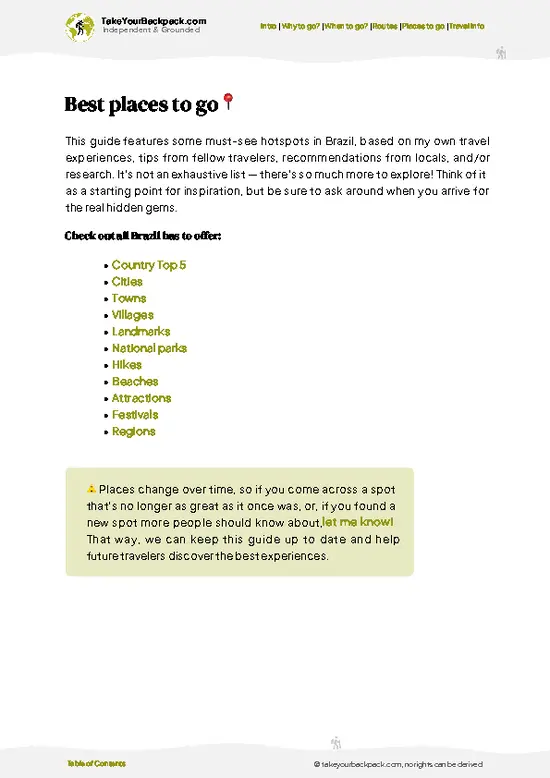
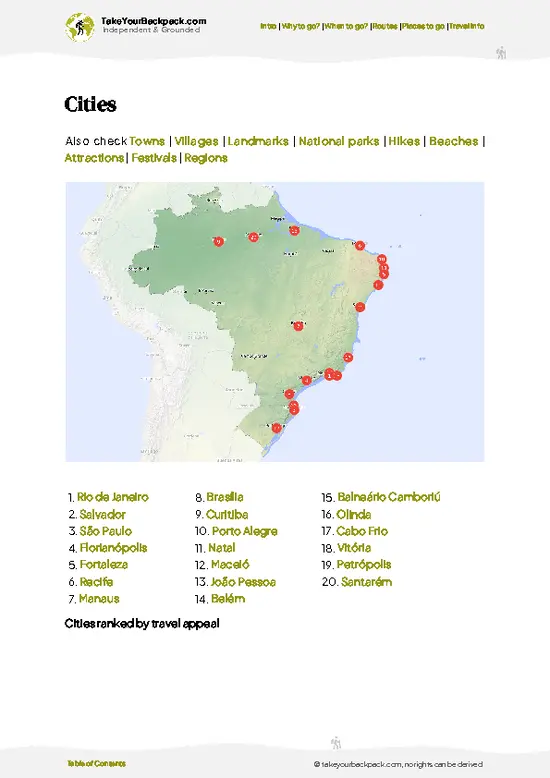
example page 0 from our offline Travel Guide for Brazilexample page 1 from our offline Travel Guide for Brazilexample page 2 from our offline Travel Guide for Brazilexample page 3 from our offline Travel Guide for Brazilexample page 4 from our offline Travel Guide for Brazilexample page 5 from our offline Travel Guide for Brazilexample page 6 from our offline Travel Guide for Brazilexample page 7 from our offline Travel Guide for Brazil
The digital guide (515 pages) contains:
152 highlights, ranked by travel appeal
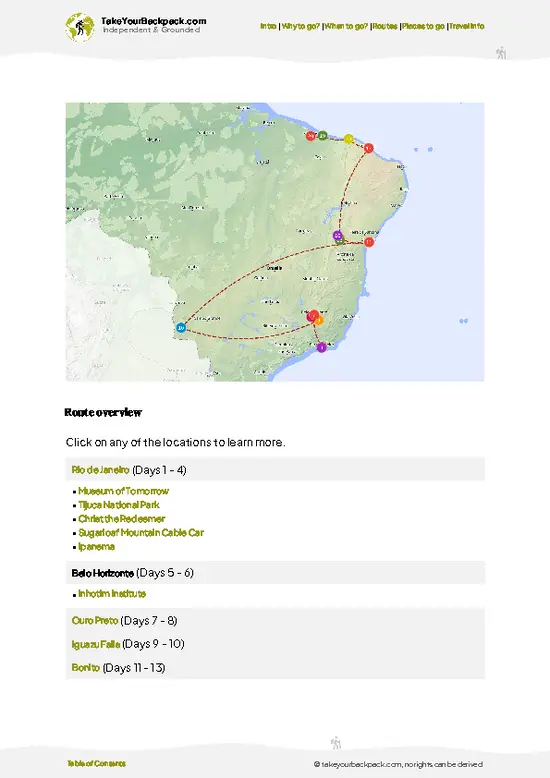
Optimized 14, 21 & 30-day travel routes
Cities, national parks, landmarks, beaches
How to get around
Offline-friendly for travel without Wi-Fi
👉 Click to see all 30+ guide features

📅 Plan smarter in minutes, not weeks
Month by month travel advice
Festivals & national holidays
Budget expectations

🗺️ Go to the right places, skip the overrated ones
Honest pros & cons of destinations
Top hikes, parks & viewpoints
Lesser-known places most travelers miss
Clear “worth it vs skip it” guidance

🛏️ Travel smoothly without rookie mistakes
Best areas to stay
Transport systems explained simply
Common scams & safety advice
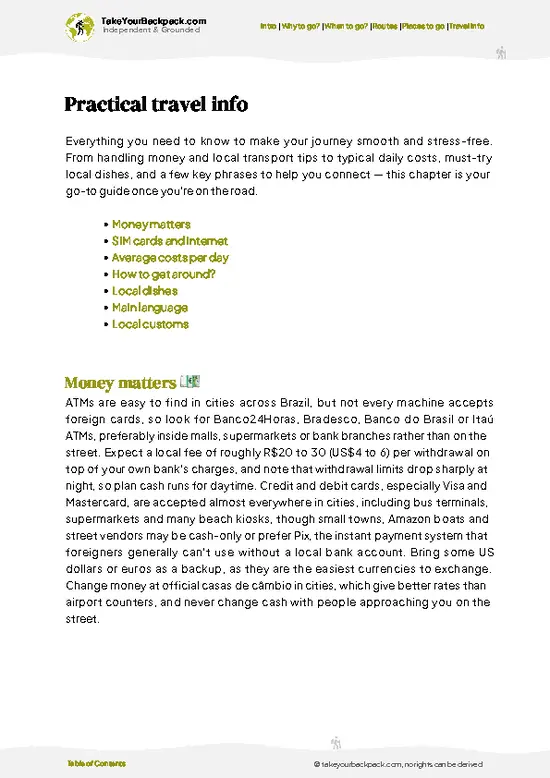
SIM cards, money & practical tips

🌍 Understand the country, not just visit it
Culture & traditions
52 Essential phrases & customs
Festivals worth planning around
Traveler-friendly historical context
Insights that make places more meaningful

📱 Built for real travel conditions
Fully downloadable PDF
Works completely offline
Optimized for phone use
Useful in remote areas & buses
Everything in one place
Save weeks of stressful planning
Get instant access to your full guide. 30‑day money-back guarantee.


By proceeding you agree to our terms.
Sent to your inbox immediately after payment • 100% Secure Checkout
Best Backpacking Travel Advisor 2025 tourism awardBest Backpacking
Travel Advisor
2025
What others say about Take Your Backpack Guides:
⭐⭐⭐⭐⭐
Fantastic, amazing amount of information!
⭐⭐⭐⭐⭐
My goodness this is amazing, it's what I've been looking for hats off too you!
⭐⭐⭐⭐⭐
I think this is absolutely BRILLIANT
⭐⭐⭐⭐
Very complete and informative. It's still missing places, but I gotta to commend you
⭐⭐⭐⭐⭐
This is truly amazing, thank you, can't wait to explore it with my kids!
⭐⭐⭐⭐⭐
Awesome resource, thank you!
⭐⭐⭐⭐⭐
This is amazing! Can't wait to explore the ones I haven't seen
⭐⭐⭐⭐
I love this! Well done, great idea.
⭐⭐⭐⭐⭐
Thanks for taking the time to make this gem!
⭐⭐⭐⭐⭐
This might be the best website I've ever seen.
⭐⭐⭐⭐⭐
Congratulations, and thank you so much for your work; it's incredibly valuable.
⭐⭐⭐⭐
In all seriousness I think you did a great job pointing out the important spots
⭐⭐⭐⭐⭐
10/10 very good
⭐⭐⭐⭐⭐
As someone who's only just starting to visit regularly this is awesome, thank you.
⭐⭐⭐⭐
Thank you very much! I'm going to visit my dad, it's going to be very useful!
⭐⭐⭐⭐⭐
This is really cool! We'll be travelling for the first time and this definitely come in handy.
⭐⭐⭐⭐⭐
You are now our minister of culture, congratulations 👨‍💼
⭐⭐⭐⭐⭐
Just wanted to tell you that this is a pearl! Going to follow your recommendations.
⭐⭐⭐⭐⭐
This is so cool. I'll definitely be using the resource for my travels soon.
⭐⭐⭐⭐⭐
This is very impressive! Good work.
⭐⭐⭐⭐⭐
This is an amazing and informative site. Very well done!

🛏️ Where to stay?Top Places to Consider Staying

Yes — hostels and budget accommodation are widespread across Brazil, concentrated in tourist neighborhoods of major cities and popular beach towns, so backpackers will find options nearly everywhere.
Big-city hubs with the most choices include Copacabana and Ipanema in Rio (direct beach access and tourist policing but crowded and pricier), Santa Teresa (charismatic, close to sights, steep streets and pickpocket risk) and Lapa (best nightlife, loud and riskier at night); in São Paulo, Centro is very cheap and central but gritty after dark while Vila Madalena offers safer nightlife at slightly higher rates; coastal towns concentrate budget stays around Pelourinho and Barra in Salvador, Lagoa read more 👉
Yes — hostels and budget accommodation are widespread across Brazil, concentrated in tourist neighborhoods of major cities and popular beach towns, so backpackers will find options nearly everywhere.
Big-city hubs with the most choices include Copacabana and Ipanema in Rio (direct beach access and tourist policing but crowded and pricier), Santa Teresa (charismatic, close to sights, steep streets and pickpocket risk) and Lapa (best nightlife, loud and riskier at night); in São Paulo, Centro is very cheap and central but gritty after dark while Vila Madalena offers safer nightlife at slightly higher rates; coastal towns concentrate budget stays around Pelourinho and Barra in Salvador, Lagoa da Conceição and central areas in Florianópolis, and beach districts in Recife and Fortaleza, each trading proximity to beaches and nightlife for variable safety and higher peak-season prices.
Expect dorms and shared bathrooms, seasonal price spikes during Carnaval and summer, limited English outside core tourist zones, use lockers, keep valuables out of sight, avoid isolated streets at night, and book ahead for high season or festival dates.

If you enjoy meeting fellow travelers, consider choosing hostels with high ratings for atmosphere. On the other hand, if you prefer having your own space, a hotel might be a better option.

BrazilMore Places Across Brazil

👋 Meet the founderWho’s Behind Take Your Backpack?

Johan, backpacker and founder of TakeYourBackpackHi, I’m Johan (Netherlands 🇳🇱), the creator of TakeYourBackpack. Over the past decade, I’ve backpacked through 80+ countries across six continents, gaining extensive experience with independent travel, long-term trips, and overland routes.

This site is built on a combination of firsthand travel experience and carefully curated insights from other backpackers. Many guides are based on places I’ve personally visited, while others bring together tips, observations, and practical advice shared by trusted travelers I’ve met along the way.

The goal is to provide realistic, experience-driven guidance — not generic itineraries — so you can explore destinations with better context, clearer expectations, and more confidence.

Get full Brazil guide •
Instant download • 152 highlights • Full Offline guide