Yes, Bulgaria is very doable as an independent backpacker, especially if you’ve already handled places like Romania, Greece, or the Balkans in general. English is common with younger people, in hostels, and around tourist sites, but less so with older folks and in small towns, so having offline maps and a translation app makes life smoother. Prices are friendly for budget travelers: hostel dorms, cheap bakeries, and supermarket picnics keep daily costs low, and you can still afford the occasional restaurant meal or museum ticket. The main learning curve is transport: bus and train schedules can be confusing, and information is not always clearly posted in English, so it helps to ask hostel staff to double-check routes and departure points. Safety-wise, Bulgaria feels relaxed: petty theft is the main concern, so use lockers in hostels, keep valuables close on buses, and avoid leaving bags unattended in train stations. As a solo traveler, you’ll find social hostels in Sofia, Plovdiv, Bansko, and Veliko Tarnovo, plus easy day hikes where you’ll meet other travelers. The country is not hyper-touristy, which means fewer scams than in Western Europe, but also fewer hand-holding services, so you need to be comfortable figuring things out on the fly. If you’re okay with slightly chaotic bus stations, Cyrillic signs, and the occasional delay, Bulgaria is one of the easier and more rewarding countries in Eastern Europe to backpack on your own.
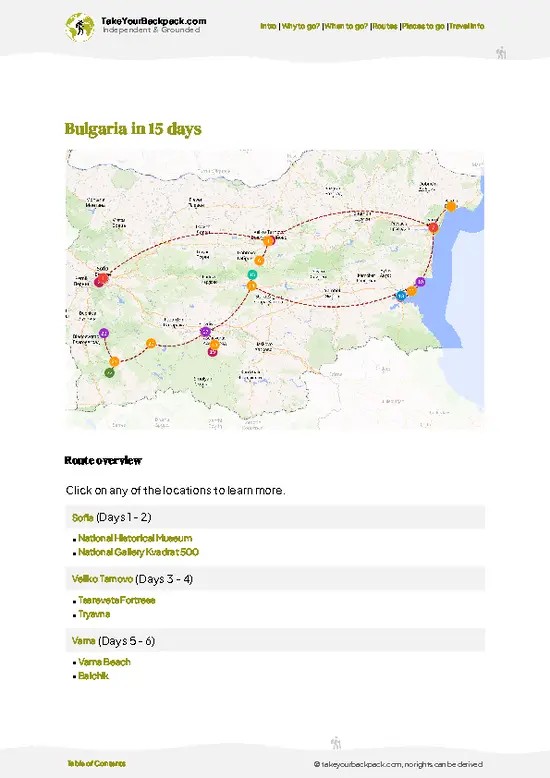
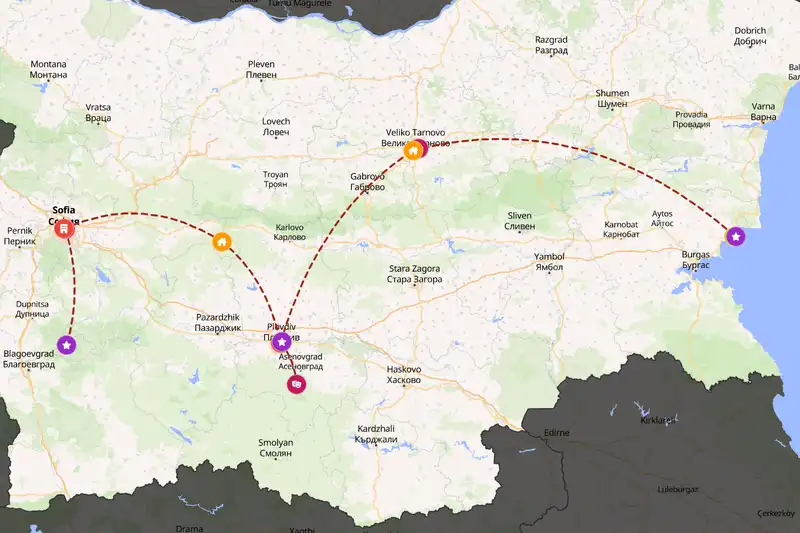
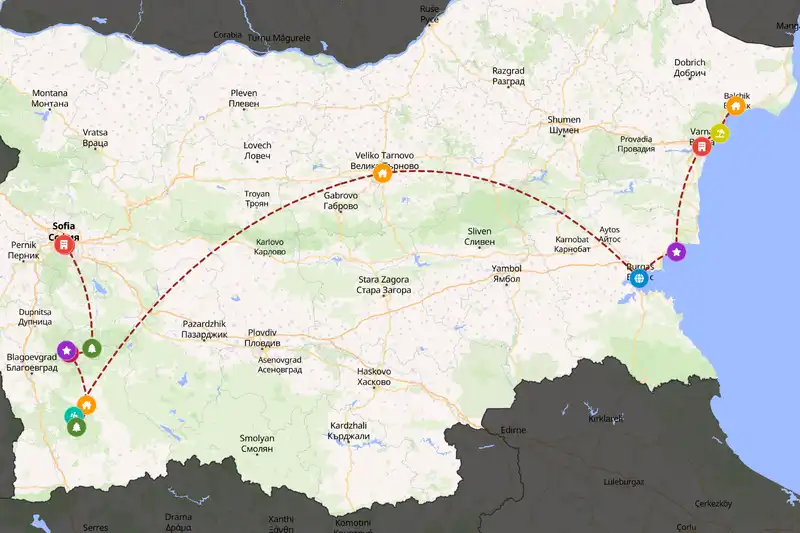
For a quick taste of Bulgaria, 5–7 days is enough to hit the big hitters without rushing yourself into exhaustion. With one week, you can do a loop like Sofia → Rila Monastery (day trip) → Plovdiv → Veliko Tarnovo, and still have time for a few walks, some café time, and a night or two out. If you want both cities and mountains, 10–14 days is the sweet spot for backpackers: you can add Bansko or the Rila Mountains for hiking, maybe a dip into the Pirin or Rhodope ranges, and still swing by the Black Sea for a couple of beach days. With two weeks, you can travel mostly by public transport without feeling like you’re living in bus stations. If you’re slow-traveling or working remotely, 3–4 weeks lets you base yourself in places like Plovdiv or Bansko, take multiple day hikes, and explore smaller towns like Koprivshtitsa or Melnik without watching the clock. Under 4 days, you should focus on Sofia plus one major side trip (Rila Monastery or Plovdiv) rather than trying to see the whole country. Bulgaria is compact, but mountain roads and slower trains mean that travel days eat more time than the map suggests, so it’s better to do fewer places well than to chase a long checklist.
You can absolutely get around Bulgaria without a car, and most backpackers do. Intercity travel is mainly by bus, with trains as a slower but sometimes more comfortable backup. Buses are usually faster and more frequent between major spots like Sofia, Plovdiv, Veliko Tarnovo, Burgas, and Varna, and tickets are cheap enough that you don’t need to obsess over saving a couple of leva. Trains are useful for certain routes (for example, Sofia–Plovdiv or Sofia–Varna), but they can be slow and occasionally delayed, so they’re better when you’re not on a tight schedule. In cities, you’ll rely on trams, buses, and the metro in Sofia, plus walking; most city centers are compact enough that you can do almost everything on foot. For mountain areas like Rila, Pirin, and the Rhodopes, public transport exists but can be limited or awkwardly timed, so you may need to combine a bus with a taxi, hitchhiking, or a guesthouse transfer to reach trailheads. Hitchhiking is relatively common in rural areas and among locals, but you should still use normal safety judgment and avoid doing it at night. If you’re short on time or heading somewhere remote, shared shuttles or organized day trips from Sofia, Plovdiv, or Bansko can be worth the extra cost. Overall, not having a car means you’ll move a bit slower and need to plan around bus times, but it doesn’t stop you from seeing the main highlights or doing serious hiking.
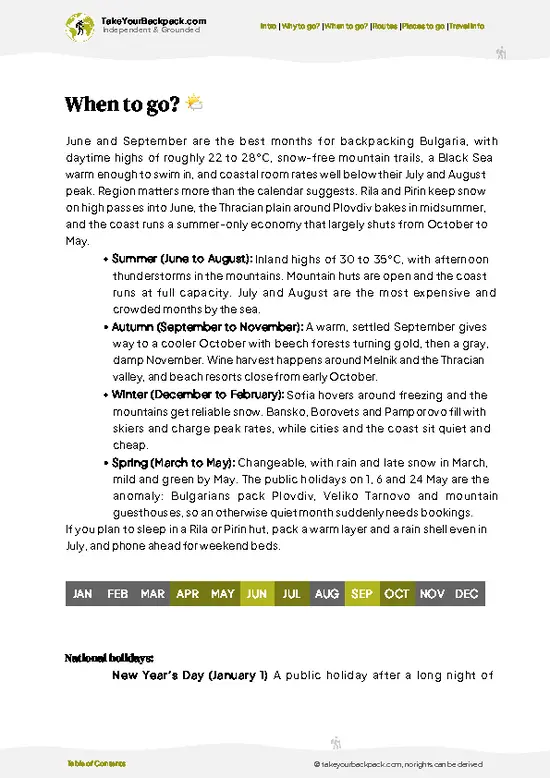
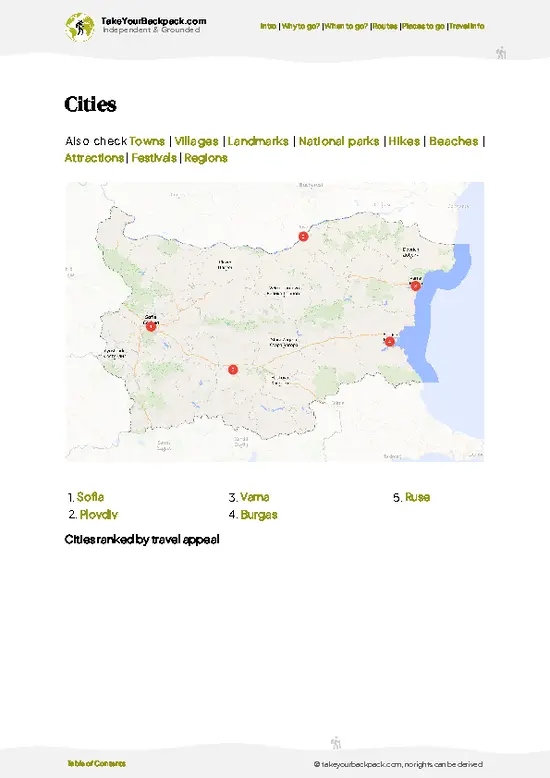
For a first-time backpacking trip, Sofia, Plovdiv, Rila Monastery, and at least one mountain base are the core must-visits. Sofia is your practical landing pad: cheap hostels, easy airport access, and enough history and nightlife to justify 1–2 days. Focus on the city center, the free walking tour, the Alexander Nevsky Cathedral area, and Vitosha Boulevard for people-watching and food. Plovdiv is where most travelers fall for Bulgaria: the Old Town’s cobbled streets and revival houses, the Roman theater, and the Kapana district with its bars and cafés make it a perfect 2–3 night stop. Rila Monastery is the country’s spiritual and visual showpiece; do it as a day trip from Sofia or as an overnight nearby if you want quiet mornings and evenings without the day-tour crowds. For mountains, Bansko is the easiest base for the Pirin range, with hostels, gear rental, and marked trails; in summer and early autumn, you can do day hikes to lakes and ridges without needing a guide if you’re reasonably experienced. If you prefer something less built-up, consider the Rila Mountains around the Seven Rila Lakes or the Rhodope Mountains near towns like Devin or Shiroka Laka. If you have extra time, Veliko Tarnovo is a strong addition: a hilltop town with a fortress, river views, and a relaxed backpacker scene that works well as a 2-night stop between Sofia and the Black Sea or Romania. For beach time, aim for Sozopol or Nessebar over the heavy party zones; they give you history, old streets, and swimmable water without feeling like a package-holiday factory.
If you’re short on time, skip the places that eat hours in transit without adding much beyond what you’ll already see. Sunny Beach and the big resort strips on the Black Sea are easy to cut: they’re built for package tourists, not backpackers looking for character, and you can get your sea fix in Sozopol or Nessebar instead. You can also skip long detours to smaller Black Sea towns if you only have a week; the coast is nice, but it’s not so unique that it should replace mountains or Plovdiv on a tight itinerary. In Sofia, you don’t need to chase every museum or outlying church; focus on the central core and Rila Monastery rather than spending days on minor sights. If you’re doing a short trip, you can safely skip second- or third-tier towns that require awkward connections, like distant villages in the northwest or far-south border areas, unless you have a specific reason to go. Many people also overcommit to seeing both Rila and Pirin and the Rhodopes in one short trip; it’s better to pick one mountain region and actually hike than to spend your time on buses between them. If you’re not a hardcore ski or spa person, you can treat places like Pamporovo or some of the more generic spa towns as optional. In general, prioritize Sofia, Plovdiv, one mountain base, and either Veliko Tarnovo or a Black Sea town; everything else is bonus content once you have more than about 10 days.