×
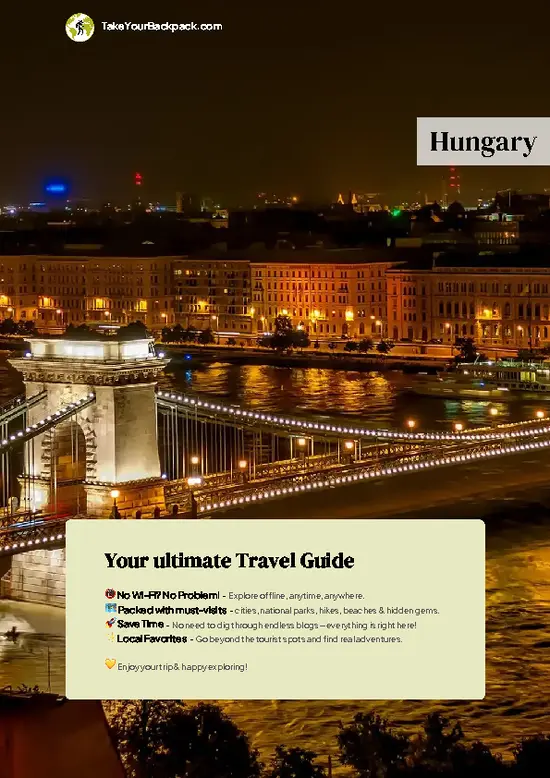
Hungary🇭🇺 | 15 days itinerary

Your 15-Day Hungary Itinerary

By Johan Kruseman 🇳🇱 | Updated May 7, 2026
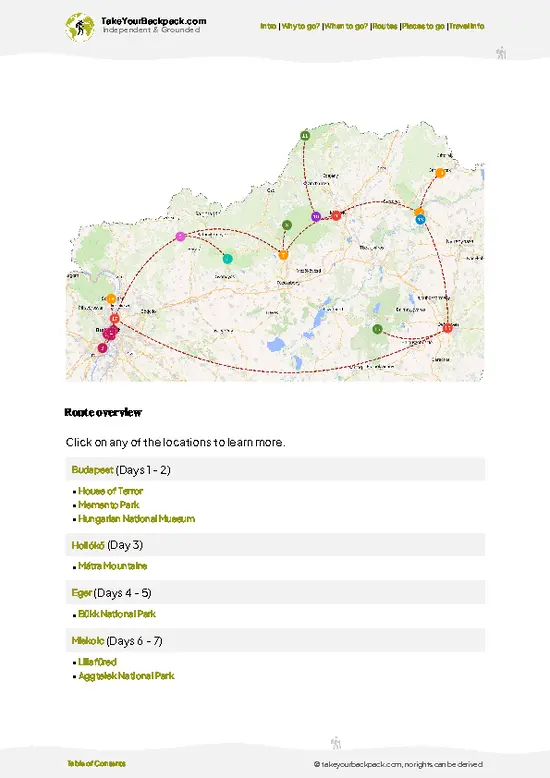
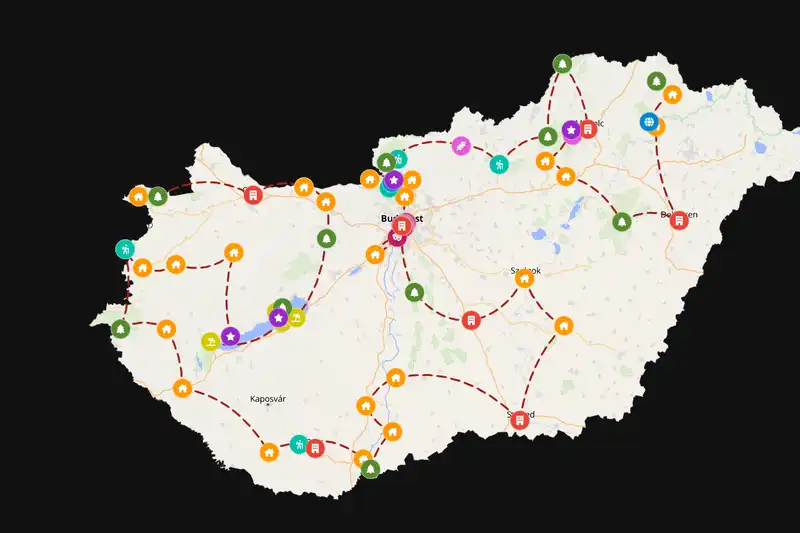
This 15-day itinerary is for travelers who want to really dig into Hungary: capital, wine regions, lake life, national parks, and a few places where you’ll mostly meet locals, all at a steady, exploratory pace using trains, regional buses, and the occasional lake ferry. You’ll move often enough to feel the country’s geography shift under your feet, but with multi-night stays and no back-to-back long hauls so you can actually breathe between journeys.

Days 1-3: Budapest Deep Dive - History, Baths, and Neighborhoods

Start with three nights in Budapest to go beyond the surface. Use one day to cover the Buda side with Buda Castle and Fisherman’s Bastion, lingering on the ramparts and side streets rather than racing between viewpoints. Dedicate another day to Pest’s core: climb St. Stephen’s Basilica, wander the Great Market Hall, and spend time at the Dohány Street Synagogue and Jewish Museum to understand the city’s Jewish heritage and the scars of the 20th century. On your third day, soak … read more 👉
This 15-day itinerary is for travelers who want to really dig into Hungary: capital, wine regions, lake life, national parks, and a few places where you’ll mostly meet locals, all at a steady, exploratory pace using trains, regional buses, and the occasional lake ferry. You’ll move often enough to feel the country’s geography shift under your feet, but with multi-night stays and no back-to-back long hauls so you can actually breathe between journeys.

Days 1-3: Budapest Deep Dive - History, Baths, and Neighborhoods

Start with three nights in Budapest to go beyond the surface. Use one day to cover the Buda side with Buda Castle and Fisherman’s Bastion, lingering on the ramparts and side streets rather than racing between viewpoints. Dedicate another day to Pest’s core: climb St. Stephen’s Basilica, wander the Great Market Hall, and spend time at the Dohány Street Synagogue and Jewish Museum to understand the city’s Jewish heritage and the scars of the 20th century. On your third day, soak at Széchenyi Thermal Bath, then add the House of Terror Museum for a sobering but important look at fascist and communist rule, and finish with an evening tour or performance at the Hungarian State Opera House to balance the heaviness with culture and beauty.

Days 4-5: Danube Bend - Szentendre, Visegrád, and Esztergom

Leave the capital by local train or boat to Szentendre, where you can slow down among galleries, cobbled streets, and riverside cafés; staying a night lets you enjoy the town after the crowds thin. The next day, continue along the Danube to Visegrád, climbing up to the citadel for sweeping river bends and a sense of medieval royal power, then move on to Esztergom to visit its monumental basilica and riverside promenades. This two-day arc along the Danube Bend gives you a compact run of small-town life, big views, and centuries of history without ever straying too far from Budapest’s orbit.

Days 6-7: Northern Hills - Eger, Bükk, and Bükkszentkereszt

Head northeast to Eger for two nights, using one day to explore its baroque center, castle, and minaret, and another to taste your way through local wines in the surrounding cellars; this is where you feel how much of Hungary’s identity is fermented in barrels. From Eger, spend a day in Bükk National Park, walking forest trails and limestone valleys that offer cooler air and a welcome break from city heat. If you want to push a bit deeper, continue on to the village of Bükkszentkereszt, tucked in the hills, where you can wander quiet streets and forest edges that show a more lived-in, everyday side of mountain life before looping back toward the plains.

Days 8-9: Tokaj and Sárospatak - Wine and Fortress Towns

Travel east into the Tokaj Wine Region, basing yourself in Tokaj for at least one night so you can walk between cellars and taste the sweet and dry wines that made this region famous; the combination of rivers, low hills, and vineyards feels very different from the Danube corridor. Use another day to visit Sárospatak, whose castle and calm streets give you a quieter, more introspective town experience; together, Tokaj and Sárospatak show how wine, trade, and borderland history have shaped this corner of the country.

Days 10-11: Great Plain - Hortobágy and Debrecen

Turn south and west toward the open landscapes of the Alföld, anchoring yourself in Debrecen for two nights as a practical base. Spend a full day in Hortobágy National Park, where flat horizons, traditional herding culture, and birdlife give you a completely different sense of space than the hills and river valleys; the Nine-Arch Bridge and csárda inns make the history of the steppe feel tangible. Use your remaining time in Debrecen to explore its central square, churches, and parks, which show you how a major regional city functions away from the tourist spotlight.

Days 12-13: Lake Balaton - Siófok, Tihany, and Balatonfüred

From the east, make your longest transfer of the trip toward Lake Balaton and settle in for two nights of lake life. Base yourself in Siófok Beach if you want a livelier scene with long promenades and easy swimming, then take a day trip by ferry or bus to Tihany, whose peninsula and abbey overlook the lake, and down to Tihany Beach for a more relaxed swim. Add Balatonfüred Beach to your loop for a classic resort-town stroll along the shore; this cluster of stops gives you three distinct flavors of Balaton without bouncing all the way around the lake. If you have extra energy, slip inland for a short walk in the Balaton Uplands to see vineyards and gentle hills above the waterline.

Days 14-15: Western Towns and Spa Pause - Sárvár and Sopron

Finish your circuit by heading toward the Austrian border, stopping first in Sárvár for its castle and spa culture, which offer a quieter, less urban soak than Budapest’s big baths. Continue on to Sopron for your final night, where medieval lanes, towers, and a mix of Hungarian and Austrian influences make for a satisfying last wander; the town’s compact center is ideal for a slow farewell walk and a final glass of local wine before you head onward or back to Budapest.

If you still have a sliver of time and curiosity, detour into the Őrség’s tiny hamlet of Ispánk, where scattered farmhouses and dark night skies give you one last, very local exhale before rejoining the main routes home.
Loading the map 🌍
film
0
0
0a
Budapest
Pixabay
film
1
1
1a
Buda Castle
film
2
2
2a
Fisherman’s Bastion
film
3
3
3a
St. Stephen’s Basilica
film
4
4
4a
Great Market Hall
film
5
5
5a
Dohány Street Synagogue and Jewish Museum
film
6
6
6a
Széchenyi Thermal Bath
film
7
7
7a
House of Terror Museum
film
8
8
8a
Hungarian State Opera House
film
9
9
9a
Szentendre
Horváth Csaba
film
10
10
10a
Visegrád
Dileep Kumar
film
11
11
11a
Esztergom
film
12
12
12a
Eger
Zsuzsa Szczepaniak
film
13
13
13a
Bükk
Éva L.
film
14
14
14a
Bükkszentkereszt
Tamas Varga
film
15
15
15a
Tokaj
film
16
16
16a
Hortobágy
film
17
17
17a
Tihany Beach
film
18
18
18a
Balatonfüred Beach
film
19
19
19a
Sopron

✈️ The backpacker research shortcutHungary Travel Guide

An offline-friendly backpacking guide with optimized travel routes, ranked highlights, transport advice, and the best areas to stay.
example page 0 from our offline Travel Guide for Hungaryexample page 1 from our offline Travel Guide for Hungaryexample page 2 from our offline Travel Guide for Hungaryexample page 3 from our offline Travel Guide for Hungaryexample page 4 from our offline Travel Guide for Hungaryexample page 5 from our offline Travel Guide for Hungary
The digital guide (299 pages) contains:
90 highlights, ranked by travel appeal
Optimized 5, 10 & 15-day travel routes
Best neighborhoods to stay
How to get around
Offline-friendly for travel without Wi-Fi
👉 See all 30+ guide features

📅 Plan smarter in minutes, not weeks
Month by month travel advice
Festivals & national holidays
Budget expectations

🗺️ Go to the right places, skip the overrated ones
Honest pros & cons of destinations
Top hikes, parks & viewpoints
Lesser-known places most travelers miss
Clear “worth it vs skip it” guidance

🛏️ Travel smoothly without rookie mistakes
Best areas to stay
Transport systems explained simply
Common scams & safety advice
SIM cards, money & practical tips

🌍 Understand the country, not just visit it
Culture & traditions
52 Essential phrases & customs
Festivals worth planning around
Traveler-friendly historical context
Insights that make places more meaningful

📱 Built for real travel conditions
Fully downloadable PDF
Works completely offline
Optimized for phone use
Useful in remote areas & buses
Everything in one place
Save weeks of stressful planning
Get instant access to the full guide directly. 30-day money-back guarantee.


Sent to your inbox immediately after payment • 100% Secure Checkout
Best Backpacking Travel Advisor 2025 tourism awardBest Backpacking
Travel Advisor
2025
What others say about Take Your Backpack Guides:
⭐⭐⭐⭐⭐
Fantastic, amazing amount of information!
⭐⭐⭐⭐⭐
My goodness this is amazing, it's what I've been looking for hats off too you!
⭐⭐⭐⭐⭐
I think this is absolutely BRILLIANT
⭐⭐⭐⭐
Very complete and informative. It's still missing places, but I gotta to commend you
⭐⭐⭐⭐⭐
This is truly amazing, thank you, can't wait to explore it with my kids!
⭐⭐⭐⭐⭐
Awesome resource, thank you!
⭐⭐⭐⭐⭐
This is amazing! Can't wait to explore the ones I haven't seen
⭐⭐⭐⭐
I love this! Well done, great idea.
⭐⭐⭐⭐⭐
Thanks for taking the time to make this gem!
⭐⭐⭐⭐⭐
This might be the best website I've ever seen.
⭐⭐⭐⭐⭐
Congratulations, and thank you so much for your work; it's incredibly valuable.
⭐⭐⭐⭐
In all seriousness I think you did a great job pointing out the important spots
⭐⭐⭐⭐⭐
10/10 very good
⭐⭐⭐⭐⭐
As someone who's only just starting to visit regularly this is awesome, thank you.
⭐⭐⭐⭐
Thank you very much! I'm going to visit my dad, it's going to be very useful!
⭐⭐⭐⭐⭐
This is really cool! We'll be travelling for the first time and this definitely come in handy.
⭐⭐⭐⭐⭐
You are now our minister of culture, congratulations 👨‍💼
⭐⭐⭐⭐⭐
Just wanted to tell you that this is a pearl! Going to follow your recommendations.
⭐⭐⭐⭐⭐
This is so cool. I'll definitely be using the resource for my travels soon.
⭐⭐⭐⭐⭐
This is very impressive! Good work.
⭐⭐⭐⭐⭐
This is an amazing and informative site. Very well done!

🧭 RouteOther Route Options

Travel Hungary your way — from a quick highlights trip to a slow-paced adventure.

🙋 FAQFAQ: Backpacking Hungary

Very. Hungary is one of the easiest countries in Central Europe to backpack on your own. English is common in cities and among younger people, trains are straightforward, and prices are still friendly compared to Western Europe. You can land in Budapest with no bookings and still find a hostel bed outside peak weekends, though reserving ahead in summer is smarter. The country feels generally safe; normal city awareness is enough: watch your pockets on trams in Budapest, keep your bag close in bars, and avoid super-drunk late-night crowds around party streets. ATMs are easy to find, card is widely accepted, and you can grab cheap bakery food or supermarket snacks almost anywhere. The main thing that can trip you up is language on smaller-town buses or train announcements, but station staff are used to confused travelers and will usually point you in the right direction. If you’ve backpacked anywhere in Europe before, Hungary will feel like a relaxed, good-value level-up, not a stress test.
If you only care about Budapest, 3 full days is the minimum to not feel rushed. You can hit Buda Castle area, thermal baths, ruin bars, and the Danube riverfront without sprinting. For a first-time backpacking trip that actually includes the rest of the country, 7–10 days is the sweet spot. With a week you can do: 3–4 days in Budapest, 1–2 days at Lake Balaton or the wine town of Eger, and 1–2 days in a smaller city like Pécs or Szeged. If you have 2 weeks, you can slow down and add hiking in the Bükk or Mátra hills, more wine regions, and a couple of lazy lake days. Under 3 days total in Hungary, just stay in Budapest and maybe add one easy day trip like Szentendre or Eger; bouncing around the country will just eat time and train money. Over a month, Hungary works well as a base: rent a room in Budapest, take cheap day trips, and use the city as a launchpad to Slovakia, Austria, or Serbia.
Yes, you can cover almost all the places backpackers care about without ever touching a steering wheel. Trains link Budapest with major cities like Debrecen, Pécs, Szeged, Győr, and Eger, plus many Lake Balaton towns. They’re cheap by Western standards, reasonably frequent, and usually on time. For smaller villages and trailheads, buses fill the gaps; they can be slower but still workable if you check schedules in advance and avoid very late arrivals. Inside Budapest, you absolutely do not want a car: the metro, trams, and buses are fast, cheap, and easy to navigate, and walking is often quicker than dealing with traffic and parking. For lakes and countryside, a bike rental can replace a car for short distances, especially around Balaton. The only time a car really helps is if you want to string together tiny villages, remote wine cellars, or very specific hiking routes in one tight weekend. For a normal budget trip, trains plus buses plus your feet are enough.
For a first or second trip, there are a few places that really earn their spot on a backpacker route. Budapest is non-negotiable: soak in a thermal bath like Széchenyi or Gellért, walk the Danube promenade at night, climb up to Fisherman’s Bastion or Gellért Hill for city views, and sample ruin bars in the Jewish Quarter if you like nightlife. Lake Balaton is the classic summer escape; for backpackers, the north shore around Badacsony and Tihany is better for hiking and wine, while the south shore (like Siófok) is more about cheap party hostels and beach bars. Eger is a great 1–2 day stop: a compact old town, a hilltop castle, and the wine cellars of the Valley of the Beautiful Woman where you can taste local reds on a backpacker budget. Pécs in the south is worth it if you have time: Mediterranean-feeling streets, early Christian tombs, and a relaxed café scene that’s ideal if you’re working on the road. If you like hiking, the Bükk or Mátra hills near Eger and Gyöngyös give you forest trails, lookout towers, and a break from city life without needing alpine-level gear. For quick day trips from Budapest, Szentendre (arty riverside town) and Visegrád (castle and Danube Bend views) are easy wins.
If you’re short on time or cash, skip anything that’s just a weaker version of something you’re already seeing. You can skip extra days in Budapest’s shopping streets and malls; one casual wander through the central pedestrian area is enough, and your time is better spent in neighborhoods like the Jewish Quarter, Újlipótváros, or along the river. If you’re not a hardcore party traveler, you can also skip multiple nights of ruin-bar hopping; do one good night out and move on rather than burning your budget on the same style of bar. Lake Balaton’s very built-up resort strips on the south shore are easy to skip if you’re not into crowded beach scenes; focus on the north shore or just do a day trip instead of a full stay. If you only have a week, you can skip far eastern cities like Debrecen and Nyíregyháza; they’re interesting if you’re slow-traveling, but they don’t add as much as Eger, Pécs, or the Danube Bend for a first-timer. You can also skip trying to see every castle ruin and every spa town; pick one or two good examples, like Eger’s castle and one major thermal bath in Budapest, instead of chasing a long list that all start to blur together.

🇭🇺 HungaryExpand Your Journey

Ready to build a truly unique trip? Predefined routes are perfect for first-time visitors, but there is so much more to discover. Whether you are chasing a city trip, pristine national parks, local food scenes, or quiet beaches, pick a category to design your own path.