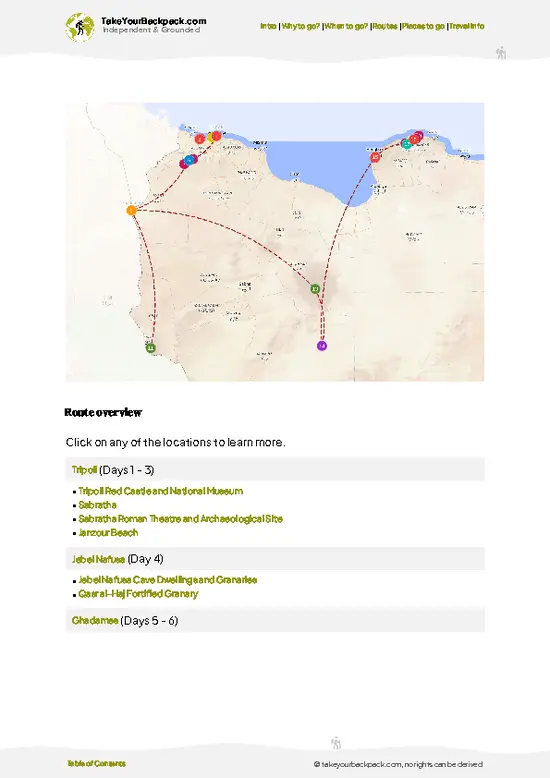
This 10-day route is for travelers who want both coast and mountains, ruins and green hills, without racing across the entire country. The pace is steady but humane, using a mix of private car or hired driver for intercity moves and short local transfers, with no back-to-back marathon drives.
Days 1-3: Tripoli, Sabratha & the Western Coast
Start in
Tripoli, using the first day to explore the medina and dive into the
Tripoli Red Castle and National Museum so the rest of the trip has context. On day two, head west along the coast to
Sabratha and spend unhurried hours at the
Sabratha Roman Theatre and Archaeological Site, letting the sea breeze and the stonework do their thing before returning to Tripoli for the night. Day three is your coastal decompression: slip out to
Janzour Beach for a swim and a slow lunch, then back to Tripoli to prep for the jump east, keeping the early part of the trip light on logistics and heavy on atmosphere.
Days 4-6: Leptis Magna & Jebel Nafusa Culture
On day four, …
read more 👉This 10-day route is for travelers who want both coast and mountains, ruins and green hills, without racing across the entire country. The pace is steady but humane, using a mix of private car or hired driver for intercity moves and short local transfers, with no back-to-back marathon drives.
Days 1-3: Tripoli, Sabratha & the Western Coast
Start in Tripoli, using the first day to explore the medina and dive into the Tripoli Red Castle and National Museum so the rest of the trip has context. On day two, head west along the coast to Sabratha and spend unhurried hours at the Sabratha Roman Theatre and Archaeological Site, letting the sea breeze and the stonework do their thing before returning to Tripoli for the night. Day three is your coastal decompression: slip out to Janzour Beach for a swim and a slow lunch, then back to Tripoli to prep for the jump east, keeping the early part of the trip light on logistics and heavy on atmosphere.Days 4-6: Leptis Magna & Jebel Nafusa Culture
On day four, move your base to Al Khums and devote the afternoon and the next full day to Leptis Magna Archaeological Site, exploring the basilica, market, and harbor area without rushing from one highlight to the next. On day six, swing inland toward the highlands of Jebel Nafusa, where cooler air and Berber heritage shift the mood from coastal to mountain. Spend your time between the Jebel Nafusa Cave Dwellings and Granaries and the fortified Qasr al-Haj Fortified Granary, using a local guide if possible so the architecture turns into stories instead of just stone, then overnight in the region to feel the slower rural rhythm.Days 7-10: Eastern Green Mountains & Ancient Cyrenaica
Fly or make a single long overland transfer to Benghazi, giving yourself an evening to walk the city and, if open and accessible, dip into the Benghazi National Museum for a different angle on Libya’s past. From there, head north into the hills of Jebel Akhdar, using Al Bayda as a practical base for exploring the green plateau and nearby canyons at a walking pace. Over the next two days, split your time between the Cyrene Archaeological Site and the coastal Apollonia Ancient Port Ruins, letting the contrast between inland sanctuary and sea-facing port sink in, then wrap up with a final night in Al Bayda or Benghazi before departure, feeling like you’ve seen both the Roman showpieces and the living landscapes that surround them.
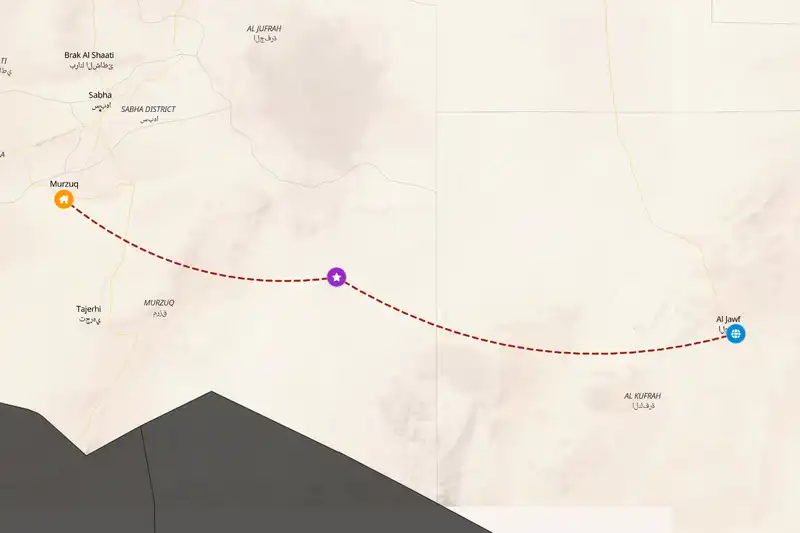
For a future deep cut once you’re hooked on Libya, pencil in a side quest to the remote desert wells around Sarir, where the emptiness of the Sahara feels almost musical in its silence.v2.webp)
 Best Backpacking