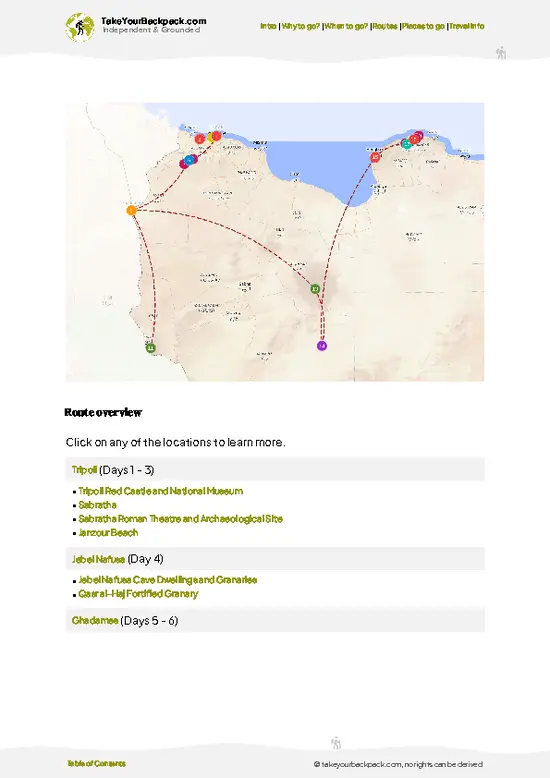
This 15-day route is for travelers who want to go all in on Libya: coast, mountains, desert, and ancient cities, with enough time to breathe between the big moves. The pace is adventurous but not punishing, combining a few long overland drives with regional flights or hired 4x4s, and deliberately spacing out the toughest travel days so you can actually enjoy where you land.
Days 1-3: Tripoli, Sabratha & Coastal Warm-Up
Begin in
Tripoli, using your first day to walk the old city and dive into the
Tripoli Red Castle and National Museum, turning the exhibits into a mental map for the rest of the journey. On day two, head west to
Sabratha for a long, easy day at the
Sabratha Roman Theatre and Archaeological Site, letting the sea-facing stage and scattered ruins ease you into the country’s Roman chapter before returning to Tripoli. Day three is for the water: spend time at
Janzour Beach to reset your body clock, then prep for the inland shift, keeping these first days focused on short transfers …
read more 👉This 15-day route is for travelers who want to go all in on Libya: coast, mountains, desert, and ancient cities, with enough time to breathe between the big moves. The pace is adventurous but not punishing, combining a few long overland drives with regional flights or hired 4x4s, and deliberately spacing out the toughest travel days so you can actually enjoy where you land.
Days 1-3: Tripoli, Sabratha & Coastal Warm-Up
Begin in Tripoli, using your first day to walk the old city and dive into the Tripoli Red Castle and National Museum, turning the exhibits into a mental map for the rest of the journey. On day two, head west to Sabratha for a long, easy day at the Sabratha Roman Theatre and Archaeological Site, letting the sea-facing stage and scattered ruins ease you into the country’s Roman chapter before returning to Tripoli. Day three is for the water: spend time at Janzour Beach to reset your body clock, then prep for the inland shift, keeping these first days focused on short transfers and big impressions.Days 4-6: Jebel Nafusa & Ghadames Desert Edge
On day four, climb into the highlands of Jebel Nafusa, exploring the Jebel Nafusa Cave Dwellings and Granaries and the fortified Qasr al-Haj Fortified Granary to see how communities once hid food and lives in the rock itself. Overnight in the region so you can catch the softer morning and evening light, then on day five continue southwest toward Ghadames, trading green hills for desert edge. Spend day six inside the maze of Ghadames Old Town, wandering shaded alleys and rooftop paths that show how people engineered comfort long before air conditioning, and let the slower pace of oasis life recalibrate your sense of time.Days 7-9: Deep Sahara - Ghat & Tadrart Acacus
From Ghadames, make the long but rewarding journey to Ghat, your launchpad for the desert’s wildest chapter. Use a 4x4 and local guides to explore the Tadrart Acacus area and the Tadrart Acacus Rock Art Sites, where wind-carved sandstone and ancient paintings share the same amphitheater of silence. Give yourself at least two full days out here so you’re not just bouncing between viewpoints; camp under the stars if conditions allow, and let the rock art, dunes, and cliffs feel like a separate world before you loop back toward the interior road network.Days 10-12: Central Desert & Volcanic Heart
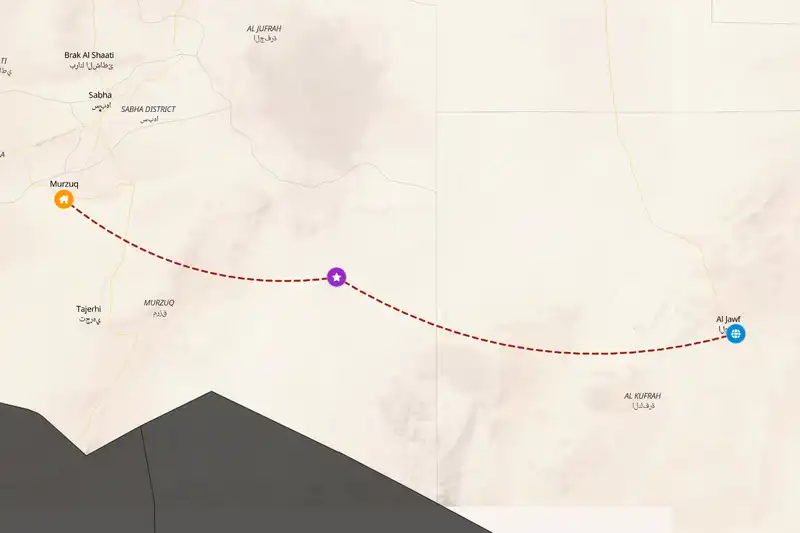
As you work your way back across the Sahara, route via Sebha as a practical stop to break the distance and reset supplies, then push on toward the black lava fields of the Al-Haruj Nature Reserve. The landscape here is harsh and lunar, a sharp contrast to the sculpted sandstone of Tadrart Acacus, and worth a full day of exploration with a capable driver so you can safely appreciate the scale. If logistics and security allow, add a long day trip or overnight detour to the crater lake of Waw an Namus, where the ring of dark volcanic rock around a bright oasis feels like someone dropped a sci-fi set into the middle of the desert, then return to Sebha or another interior hub to rest before heading for the coast again.Days 13-15: Eastern Green Mountains & Cyrenaica Classics
Fly or make a single long transfer to Benghazi, giving yourself time to walk the city and, if accessible, visit the Benghazi National Museum for a final sweep through Libya’s layered history. From there, head into the hills of Jebel Akhdar, basing in Al Bayda so you can explore the Cyrene Archaeological Site without rushing, wandering its temples and terraces with the green plateau as your backdrop. Use another day to reach the coast for the Apollonia Ancient Port Ruins and, if you want one last niche stop, the Qasr Libya Mosaic Museum, where intricate floor panels add color and detail to the grand stone narratives you’ve been walking through, then wrap up with a final night in Al Bayda or Benghazi before departure, feeling like you’ve traced Libya from sea to summit to sand and back again.
When you’re ready to chase an even stranger horizon, keep the lonely dunes of the Rebiana Sand Sea in mind, where the wind sculpts new landscapes every night and the stars feel close enough to lean on.v2.webp)
 Best Backpacking