Short answer: yes, Malaysia is one of the easiest countries in Southeast Asia to backpack independently.
English is widely spoken, especially in cities, transport hubs, and anywhere that deals with tourists. Signs are usually in both Malay and English, so navigating bus stations, trains, and menus is straightforward even if it’s your first big trip.
Accommodation is simple to sort out on the fly. You’ll find hostels and budget guesthouses in every major town and most islands, with walk‑in options outside of peak holidays (Chinese New Year, Hari Raya, school holidays). In those peak times, booking ahead is smart, especially in the Cameron Highlands, Penang, and the Perhentian Islands.
Safety-wise, Malaysia is generally calm and manageable. Petty theft exists but violent crime against travelers is rare. Normal street smarts are enough: keep valuables close on buses, avoid wandering drunk down dark alleys, and use lockers in hostels.
Costs are friendly for backpackers. Street food and local eateries (mamak stalls, kopitiams, hawker centers) are cheap and filling, and long-distance buses are good value. Alcohol is the main budget killer; if you’re counting coins, drink less or stick to supermarket beers.
Culturally, it’s a mix of Malay, Chinese, Indian, and indigenous communities, which means different customs in different areas. Dress a bit more modestly in rural and conservative areas (shoulders and knees covered), especially around mosques and small towns, but shorts and tank tops are fine on islands and in many city areas.
The only real challenge is that some national parks and islands have limited public transport schedules, so you need to pay attention to last bus/boat times. Otherwise, it’s a very beginner‑friendly country for solo and budget travelers.
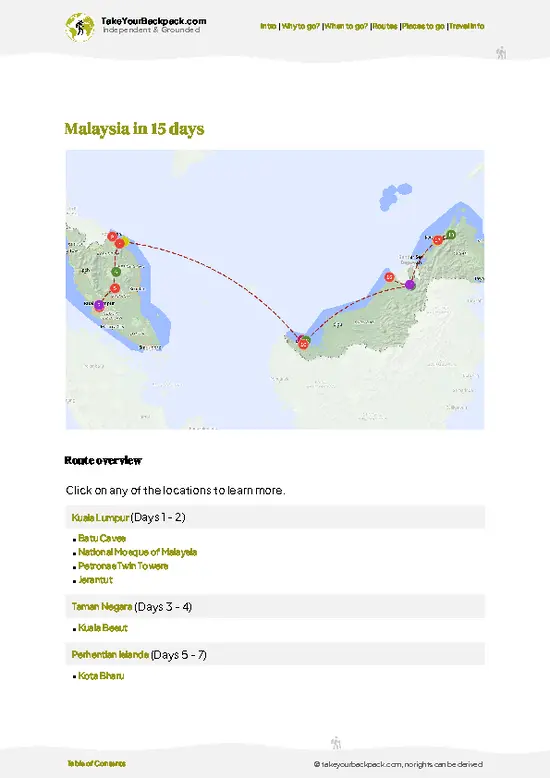
If you want a quick, high‑value taste of Malaysia, 10–14 days is enough. If you want to do both Peninsular Malaysia and a slice of Borneo without rushing, 3–4 weeks is ideal.
Rough timing guidelines for backpackers:
7 days (fast sampler)- Kuala Lumpur: 2–3 days for food, Batu Caves, and city life.
- Cameron Highlands or Taman Negara: 2–3 days for jungle or tea-plantation hikes.
- Penang (George Town): 2–3 days for street food and street art.
This is tight but works if you move every 2–3 days.
10–14 days (solid first trip)- Kuala Lumpur: 2–3 days.
- Cameron Highlands or Taman Negara: 2–3 days.
- Penang: 3 days.
- Langkawi or Perhentian Islands: 3–4 days for beaches and snorkeling.
This pace lets you eat properly, hike, and still have hammock time.
3 weeks (balanced peninsula + maybe Borneo)- Peninsular loop: KL, Cameron Highlands, Penang, Perhentians or Langkawi, plus maybe Malacca or Ipoh.
- Add 5–7 days in Borneo (Sabah): Kota Kinabalu, islands, and a river or jungle trip.
You’ll still be moving every 2–4 days, but it won’t feel like a race.
4+ weeks (slow and deep)- Time to linger in George Town, do multi‑day treks, explore more of Sabah and Sarawak, and hit lesser‑visited towns.
If you’re on a long Southeast Asia trip, I’d give Malaysia at least 2 weeks. Anything less than a week forces you to skip either the highlands/jungle or the islands, which are the parts that really show off the country’s range.
You can absolutely get around Malaysia without a car; in fact, most backpackers do exactly that.
Long-distance travel-
Buses: The backbone of budget travel. They’re cheap, frequent, and usually air‑conditioned to near‑Arctic levels, so bring a layer. Routes connect all major cities and many smaller towns.
-
Trains: Slower but comfortable and scenic on some routes. The ETS trains between KL–Ipoh–Penang (Butterworth) are especially useful.
-
Domestic flights: Handy and often cheap for long hops (e.g., KL to Borneo, or KL to Langkawi). Good for saving time if your schedule is tight.
Within cities-
KL: Excellent public transport for Southeast Asia. LRT, MRT, monorail, and commuter trains cover most areas you’ll want. You can tap in with a card or buy single tickets.
-
Penang (George Town): Walkable core, plus local buses that reach beaches and the airport.
-
Other cities: Mix of local buses, ride‑hailing, and walking.
Ride‑hailing- Apps like Grab are widely used and cheap in cities and larger towns. They’re a lifesaver at night or when you’re carrying a big pack.
Islands and remote areas-
Boats/ferries: Essential for islands like Langkawi, Perhentians, Tioman. Schedules can be limited, especially in monsoon seasons, so plan around departure times.
-
National parks: Some trailheads and remote villages may require a short taxi/Grab ride from the nearest bus or train station.
Renting a car only really makes sense if you’re traveling as a group, want to hit lots of small towns in one region, or are exploring places with weak public transport. For a solo or budget traveler, buses, trains, and ride‑hailing are more than enough.
For a first or second backpacking trip to Malaysia, these places give you the best mix of culture, food, jungle, and sea without wrecking your budget.
1. Kuala Lumpur (KL)Base camp for most trips. Great for:
- Street food and night markets.
- Batu Caves (easy half‑day trip).
- Cheap hostels and good public transport.
Treat it as your arrival/departure hub and a place to reset.
2. Penang (George Town)If you only have time for one city beyond KL, make it this one.
- Legendary street food at backpacker prices.
- Street art, old shophouses, and a walkable historic center.
- Easy day trips to Penang Hill and beaches.
It’s the kind of place you plan for 2 nights and stay for 5.
3. Cameron HighlandsCooler air, tea plantations, and mossy forest trails.
- Budget guesthouses and simple local eateries.
- Day hikes through jungle and farmland.
- A welcome break from the heat and humidity.
4. Taman Negara or another primary jungleTo feel like you’re actually in the tropics, not just in cities.
- Canopy walks, river trips, and night walks.
- Basic but atmospheric accommodation.
- Good place to see big trees, not just manicured parks.
5. East Coast Islands (Perhentian, Tioman, or similar)For budget‑friendly beaches and snorkeling.
- Perhentian Kecil: backpacker classic, simple chalets, social vibe.
- Perhentian Besar or Tioman: slightly quieter but still affordable.
- Clear water, coral, and cheap dive courses compared to many other countries.
6. Sabah (Borneo) – if you have extra timeWorth it if you can spare at least a week.
- Kota Kinabalu as a base.
- Islands just offshore for snorkeling.
- River or jungle trips for wildlife (proboscis monkeys, maybe orangutans).
If you hit KL, Penang, one highland/jungle area, and one island, you’ll get a very complete feel for Malaysia on a backpacker budget.
If you’re short on time or cash, skip anything that eats days without adding much variety. Malaysia has a lot of “nice but not essential” stops.
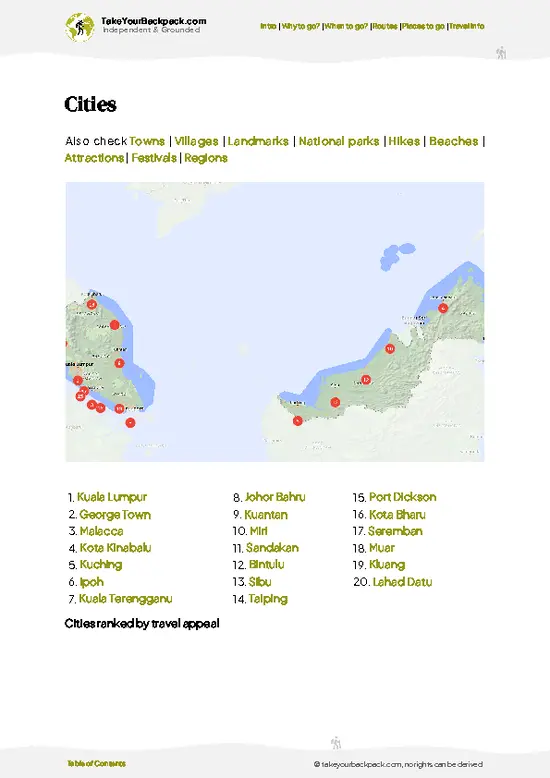
1. Extra big cities beyond KL and Penang- Places like Johor Bahru or some mid‑sized cities are fine but not must‑see for backpackers.
- If you’ve already done KL and Penang, more malls and traffic don’t add much.
2. Multiple islands that offer similar experiences- Don’t try to do Langkawi, Perhentians, Tioman, and Redang in one short trip.
- Pick
one beach base that matches your vibe (party‑ish Perhentian Kecil, more relaxed Tioman, duty‑free Langkawi) and stay longer instead of island‑hopping yourself into exhaustion and extra transport costs.
3. Overpriced touristy activities- Some packaged tours in cities (especially “city highlights” bus tours) are skippable if you’re comfortable using public transport and walking.
- High‑priced sky decks or towers can be fun, but if your budget is tight, one viewpoint is enough; you don’t need every observation deck.
4. Rushing both Peninsular Malaysia and Borneo in under 2 weeks- The flights, transfers, and short stays will burn time and money.
- If you have less than 2 weeks, focus on Peninsular Malaysia only: KL + Penang + one jungle/highland + one island.
5. Theme parks and heavy shopping- If you’re backpacking for culture, nature, and food, big theme parks and outlet malls are easy to skip.
When time is tight, prioritize: KL (as a hub), Penang, one jungle/highland area, and one island. Everything else is optional seasoning, not the main dish.