×
Nepal🇳🇵 | 10 days itinerary

How to Spend 10 Days in Nepal

By Johan Kruseman 🇳🇱 | Updated May 6, 2026
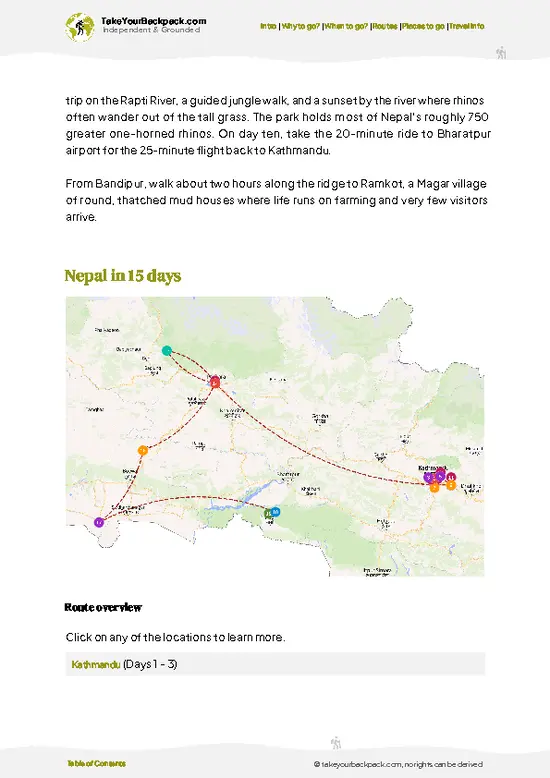
This 10-day itinerary is for travelers who want a classic Nepal combo: deep culture in the Kathmandu Valley plus lakeside downtime and short hikes around Pokhara, moving at a moderate pace with one overland bus ride and an optional domestic flight. You’ll use taxis and local buses in the valley, then a tourist bus or flight between Kathmandu and Pokhara, keeping things adventurous but not exhausting.

Days 1-3: Kathmandu Valley Classics

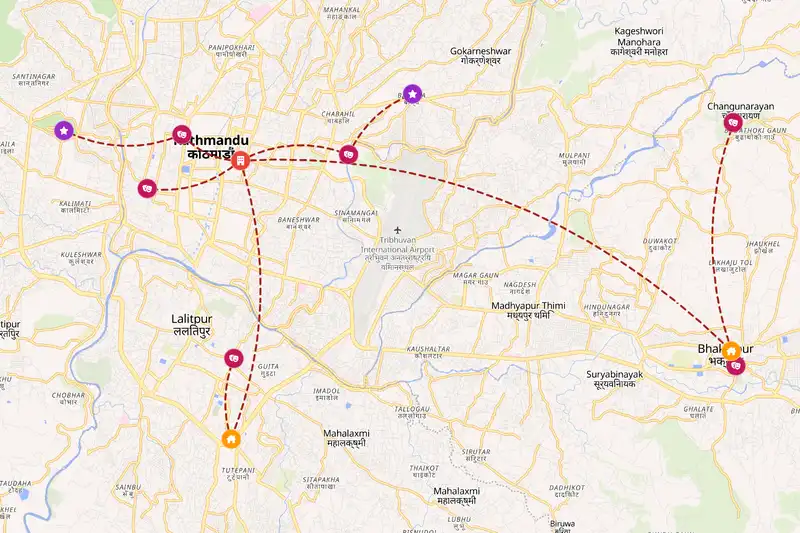
Start in Kathmandu and give yourself a full day to roam Kathmandu Durbar Square and Hanuman Dhoka Palace Museum, then climb up to Swayambhunath and the nearby Swayambhunath Temple for sunset over the city. On day two, dive into the spiritual east side with the Pashupatinath Temple Complex and Pashupathinath Temple, then unwind at Boudhanath Stupa as butter lamps flicker and the kora fills with maroon robes. Day three is for crossing into Patan to explore Patan Durbar Square and Patan Museum, soaking up Newar art and grabbing a rooftop lunch before drifting … read more 👉
This 10-day itinerary is for travelers who want a classic Nepal combo: deep culture in the Kathmandu Valley plus lakeside downtime and short hikes around Pokhara, moving at a moderate pace with one overland bus ride and an optional domestic flight. You’ll use taxis and local buses in the valley, then a tourist bus or flight between Kathmandu and Pokhara, keeping things adventurous but not exhausting.

Days 1-3: Kathmandu Valley Classics

Start in Kathmandu and give yourself a full day to roam Kathmandu Durbar Square and Hanuman Dhoka Palace Museum, then climb up to Swayambhunath and the nearby Swayambhunath Temple for sunset over the city. On day two, dive into the spiritual east side with the Pashupatinath Temple Complex and Pashupathinath Temple, then unwind at Boudhanath Stupa as butter lamps flicker and the kora fills with maroon robes. Day three is for crossing into Patan to explore Patan Durbar Square and Patan Museum, soaking up Newar art and grabbing a rooftop lunch before drifting back to Kathmandu for the night.

Days 4-5: Bhaktapur & Hilltown Escape

Shift your base to Bhaktapur and slow the pace, wandering the lanes around Bhaktapur Durbar Square, watching potters at work, and sampling the famous curd in a backstreet shop. Use the next day for a side trip to Dhulikhel, a small hill town where you can walk quiet roads, catch Himalayan views when the air is clear, and feel how quickly the valley’s chaos drops away once you’re in the hills, then return to Bhaktapur for a calm evening.

Days 6-8: Pokhara Lakeside & Short Trails

Travel overland or by air to Pokhara, trading brick courtyards for lake reflections and mountain backdrops. Spend your first day just settling in by the water and visiting the International Mountain Museum to get context on the peaks you’ve been seeing on postcards, then use the next two days for easy hikes and viewpoints around the valley, such as local ridges and village walks that give you a taste of trekking culture without committing to a full expedition, always returning to Pokhara’s lakeside cafés at night.

Days 9-10: Bandipur’s Old-World Charm & Return

On day nine, break the journey back toward Kathmandu with a stop in Bandipur, a traffic-free ridge town where stone-paved streets, old Newar houses, and wide sky views make it feel like time slowed down. After a night in Bandipur, continue your journey back toward Kathmandu or onward to your next destination, carrying a mix of city, village, and mountain memories rather than just ticking off a single highlight.
The stretch I always replay in my head from this route is sipping tea in Bandipur at dusk, watching the hills fade layer by layer while kids play cricket in the main street.
Loading the map 🌍
film
0
0
0a
Boudhanath Stupa
film
1
1
1a
Bhaktapur
film
2
2
2a
Pokhara
Sundar Baral
film
3
3
3a
Bandipur

🛏️ Where to stay?The Route Breakdown

✈️ The backpacker research shortcutNepal Travel Guide

An offline-friendly backpacking guide with optimized travel routes, ranked highlights, transport advice, and the best areas to stay.
example page 0 from our offline Travel Guide for Nepalexample page 1 from our offline Travel Guide for Nepalexample page 2 from our offline Travel Guide for Nepalexample page 3 from our offline Travel Guide for Nepalexample page 4 from our offline Travel Guide for Nepalexample page 5 from our offline Travel Guide for Nepal
The digital guide (347 pages) contains:
107 highlights, ranked by travel appeal
Optimized 5, 10 & 15-day travel routes
Best neighborhoods to stay
How to get around
Offline-friendly for travel without Wi-Fi
👉 See all 30+ guide features

📅 Plan smarter in minutes, not weeks
Month by month travel advice
Festivals & national holidays
Budget expectations

🗺️ Go to the right places, skip the overrated ones
Honest pros & cons of destinations
Top hikes, parks & viewpoints
Lesser-known places most travelers miss
Clear “worth it vs skip it” guidance

🛏️ Travel smoothly without rookie mistakes
Best areas to stay
Transport systems explained simply
Common scams & safety advice
SIM cards, money & practical tips

🌍 Understand the country, not just visit it
Culture & traditions
52 Essential phrases & customs
Festivals worth planning around
Traveler-friendly historical context
Insights that make places more meaningful

📱 Built for real travel conditions
Fully downloadable PDF
Works completely offline
Optimized for phone use
Useful in remote areas & buses
Everything in one place
Save weeks of stressful planning
Get instant access to the full guide directly. 30-day money-back guarantee.


Sent to your inbox immediately after payment • 100% Secure Checkout
Best Backpacking Travel Advisor 2025 tourism awardBest Backpacking
Travel Advisor
2025
What others say about Take Your Backpack Guides:
⭐⭐⭐⭐⭐
Fantastic, amazing amount of information!
⭐⭐⭐⭐⭐
My goodness this is amazing, it's what I've been looking for hats off too you!
⭐⭐⭐⭐⭐
I think this is absolutely BRILLIANT
⭐⭐⭐⭐
Very complete and informative. It's still missing places, but I gotta to commend you
⭐⭐⭐⭐⭐
This is truly amazing, thank you, can't wait to explore it with my kids!
⭐⭐⭐⭐⭐
Awesome resource, thank you!
⭐⭐⭐⭐⭐
This is amazing! Can't wait to explore the ones I haven't seen
⭐⭐⭐⭐
I love this! Well done, great idea.
⭐⭐⭐⭐⭐
Thanks for taking the time to make this gem!
⭐⭐⭐⭐⭐
This might be the best website I've ever seen.
⭐⭐⭐⭐⭐
Congratulations, and thank you so much for your work; it's incredibly valuable.
⭐⭐⭐⭐
In all seriousness I think you did a great job pointing out the important spots
⭐⭐⭐⭐⭐
10/10 very good
⭐⭐⭐⭐⭐
As someone who's only just starting to visit regularly this is awesome, thank you.
⭐⭐⭐⭐
Thank you very much! I'm going to visit my dad, it's going to be very useful!
⭐⭐⭐⭐⭐
This is really cool! We'll be travelling for the first time and this definitely come in handy.
⭐⭐⭐⭐⭐
You are now our minister of culture, congratulations 👨‍💼
⭐⭐⭐⭐⭐
Just wanted to tell you that this is a pearl! Going to follow your recommendations.
⭐⭐⭐⭐⭐
This is so cool. I'll definitely be using the resource for my travels soon.
⭐⭐⭐⭐⭐
This is very impressive! Good work.
⭐⭐⭐⭐⭐
This is an amazing and informative site. Very well done!

🧭 RouteGot More or Less Time?

Travel Nepal your way — from a quick highlights trip to a slow-paced adventure.

🙋 FAQCommon Questions

Short version: yes, Nepal is very doable to backpack independently, even on your first big trip, as long as you’re comfortable with a bit of chaos and basic problem-solving.

For cities and towns, it’s straightforward. Kathmandu and Pokhara are full of budget guesthouses, hostels, and family-run hotels. You can walk into most places and negotiate a room, especially outside peak trekking season (Oct–Nov, Mar–Apr). Menus are in English, most younger people speak at least basic English, and prices are usually clear.

For trekking, independent travel is possible but more regulated than it used to be. Some regions now require a licensed guide and/or a registered trekking agency (for example, many parts of the Annapurna and Everest regions have tightened rules). Other areas still allow fully independent trekking with just permits. Budget backpackers usually:
- Join a group trek through a local agency in Kathmandu or Pokhara (cheaper than booking from abroad).
- Hire a guide or porter-guide directly in town for daily rates.
- Or trek independently only in regions where it’s allowed and safe.

Trails on the classic routes (Annapurna Circuit, Annapurna Base Camp, Everest Base Camp, Langtang) are well-trodden, with teahouses every few hours. You don’t need to carry camping gear; just a sleeping bag and warm layers. You pay as you go for food and lodging, which keeps upfront costs low but requires daily budgeting.

The main challenges for independent backpackers are:
- Altitude: you must build in acclimatization days and not rush.
- Transport delays: buses can be late or canceled due to landslides, strikes, or weather.
- Seasonal extremes: monsoon (rough roads, leeches on some trails) and winter (snow, cold teahouses).

If you’re okay with rough edges—dusty streets, power cuts, squat toilets, and occasionally vague information—Nepal is one of the easiest countries in Asia to backpack without a tour, especially if you stick to the main trekking corridors and big towns.
For a first-time backpacker in Nepal, 2–4 weeks is the sweet spot. Less than 10 days and you’ll feel rushed; more than a month and you can start adding remote regions.

Rough breakdowns that work well for budget travelers:

7–10 days (tight schedule)
- Kathmandu (2–3 days): Thamel, Durbar Square, Swayambhu, Boudha, Pashupatinath.
- Pokhara (3–4 days): Lakeside, viewpoints, short day hikes.
- A short trek (3–4 days): e.g., Poon Hill or an easy Mardi Himal section.
This is enough to taste city life plus a quick trek, but you’ll be moving fast.

2 weeks (ideal minimum)
- Kathmandu Valley (3–4 days): Kathmandu + Bhaktapur or Patan.
- Pokhara (2–3 days).
- A 5–7 day trek: Poon Hill, Mardi Himal, Langtang, or a shortened Annapurna Circuit section.
This is where Nepal starts to feel relaxed instead of like a checklist.

3 weeks
- Kathmandu Valley (4–5 days total, spread out).
- Pokhara (3–4 days).
- A 10–12 day trek: classic Annapurna Circuit section, Annapurna Base Camp, or Everest Base Camp with a domestic flight.
You can add a side trip like Chitwan or Bardiya for wildlife if your budget allows.

4+ weeks
- Everything above, plus a second trek or a more remote region (Upper Mustang, Manaslu, or offbeat parts of Annapurna/Everest where regulations allow).
- More slow time in villages, language practice, or volunteering (through reputable, ethical organizations only).

If you’re on a tight budget, longer is actually better: once you’re in-country, daily costs can be very low if you eat local food, share rooms, and travel by bus. The main time constraint is how long you want to spend at altitude; trekking days add up quickly, so don’t try to cram a long trek into a short trip.
You can absolutely get around Nepal without a car; in fact, most backpackers never touch a steering wheel here.

Inside cities (Kathmandu, Pokhara, etc.)
- Walking: chaotic but doable in central areas. Sidewalks are hit-or-miss, so stay alert.
- Local buses and microbuses: very cheap, crowded, and a bit confusing at first, but great for budget travelers once you learn a few key routes.
- Taxis: widely available, especially in tourist areas. Always agree on a price or insist on the meter before you get in.
- Ride-hailing apps: sometimes available in bigger cities and can be cheaper than street taxis.

Between cities
- Tourist buses: the standard backpacker option between Kathmandu, Pokhara, Chitwan, and a few other hubs. They’re slower than you expect but more comfortable and straightforward than local buses.
- Local buses: cheaper and more adventurous, but rougher, more crowded, and less predictable. Good if you’re patient and really watching your budget.
- Shared jeeps: common on rougher routes and to trailheads. They cram people in but reach places buses can’t.
- Domestic flights: used mainly to save time or reach trekking gateways like Lukla (Everest region). They’re not budget-friendly but can turn a brutal bus ride into a 30–40 minute hop.

For trekking
- You’ll usually take a bus or jeep to the trailhead, then it’s all on foot.
- Porters and pack animals are common on major routes, but you’re not required to hire them unless regulations demand a guide.

Driving yourself is not practical for most travelers: road conditions, traffic style, and paperwork make it more stress than it’s worth. For a budget backpacker, the best combo is: walk inside towns, use tourist buses or shared jeeps between hubs, and only fly when time is more important than money.
For a budget backpacker, the must-visits in Nepal are the places that give you maximum mountain time, culture, and local flavor for the least money and hassle.

Kathmandu (especially Thamel + the old city)
- Your landing pad and gear hub. Cheap hostels, used gear shops, and endless food options.
- Key spots: Swayambhu (Monkey Temple) at sunset, Boudhanath Stupa in the evening, Pashupatinath for the cultural shock and depth, and at least one Durbar Square (Kathmandu or Patan).

Bhaktapur or Patan (Lalitpur)
- Both are easier to appreciate than central Kathmandu if you like old streets and temples without as much traffic.
- Bhaktapur is more atmospheric for wandering; Patan has a strong arts and crafts scene. Either one is worth at least a day trip.

Pokhara
- The classic backpacker base for treks. Cheaper and more relaxed than Kathmandu.
- Lakeside is touristy but convenient; you can still find budget rooms and local eateries a few streets back from the main strip.
- Great for short hikes, sunrise viewpoints, and rest days between treks.

A classic trek (pick one)
- Annapurna Circuit: best if you want variety—villages, rivers, big passes, changing landscapes. You can tailor the length by starting/ending at different roadheads.
- Annapurna Base Camp (ABC): shorter than the full Circuit, with a big payoff at the sanctuary. Good if you have 7–10 trekking days.
- Langtang: closer to Kathmandu, cheaper to reach, and still very scenic. Great if you’re short on time or money for flights.
- Everest Base Camp: more expensive (because of flights and higher prices on the trail) but iconic. Worth it if this is your dream and you can afford it.

A wildlife or lowland stop (if time and budget allow)
- Chitwan National Park: the standard choice for jungle walks, canoe trips, and a chance to see rhinos. Easy to reach by bus.
- Bardiya National Park: wilder and less visited, but farther and more time-consuming to reach.

If you have limited time or money, prioritize: Kathmandu + one valley town (Bhaktapur or Patan), Pokhara, and one solid trek. That combo gives you the core Nepal experience without spreading yourself too thin.
If you’re short on time, money, or energy, you’ll enjoy Nepal more by going deeper in a few places and skipping some of the extras that sound good on paper but don’t add much.

1. Multiple long treks in one trip
Doing Annapurna and Everest in the same short visit sounds epic but usually just means you’re tired, rushed, and broke. Pick one major trek and do it well, with proper acclimatization and rest days.

2. Too many Kathmandu Valley towns
Kathmandu, Bhaktapur, and Patan all have beautiful squares, temples, and old streets. If you’re tight on time, don’t try to do every single town and village. Choose:
- Kathmandu + Bhaktapur, or
- Kathmandu + Patan.
You can skip extra heritage towns and still get a strong sense of the valley.

3. Far-flung national parks if you’re not a hardcore wildlife person
Chitwan is enough for most backpackers. Bardiya or more remote parks take extra days of bus travel and money. If you’re not obsessed with wildlife, skip the extra parks and put that time into trekking or cultural time in the hills.

4. Overpriced adventure add-ons in Pokhara
Paragliding, zip-lines, and ultra-light flights are fun but can eat a big chunk of a backpacker budget. If you’re counting every dollar, skip the expensive adrenaline stuff and do free or cheap hikes to viewpoints instead.

5. Rushing to remote regions just for bragging rights
Places like Upper Mustang or very remote trekking areas are incredible but require special permits, guides, and more days. If you only have 1–2 weeks, skip these for now. You’ll get more value from a classic, easier-to-access trek.

6. Too many monasteries and temples in one go
Temple fatigue is real. After a few big sites (Swayambhu, Boudha, one Durbar Square), you can skip smaller, similar-feeling temples and spend that time in teahouses talking to locals or on short hikes.

The best way to “skip smart” in Nepal is to choose one main focus—usually a single trek—and build a simple frame around it: a few days in Kathmandu, a few days in Pokhara or the valley, and one wildlife or cultural side trip only if you genuinely have the time and budget.

NepalWhere to Go Next

Ready to build a truly unique trip? Predefined routes are perfect for first-time visitors, but there is so much more to discover. Whether you are chasing a city trip, pristine national parks, local food scenes, or quiet beaches, pick a category to design your own path.