Short version: you cannot backpack North Korea independently in any normal sense. Independent, unguided travel is not allowed for tourists; you must be on an approved tour with state guides who control your movements, accommodation, and most of your interactions. For a budget traveler, that means your “backpacking” is really choosing the leanest group tour you can find, then treating it like a very structured side trip from China. You cannot just show up at the border with a backpack and wander around, you cannot book your own guesthouses, and you cannot decide on the day to change cities or linger somewhere you like. You are usually with guides from morning to night, and even in your hotel you are not free to walk out and explore the neighborhood. For someone used to Southeast Asia or Latin America, this feels more like a moving classroom than a backpacking playground. The upside is that logistics are handled for you, and you don’t waste time figuring out buses or train schedules. The downside is zero spontaneity and very limited local contact. If your main joy in backpacking is freedom, street food, and random encounters, North Korea is the opposite of that. If your main goal is to see a very controlled, curated slice of a closed country and you’re okay with rules, then a tightly priced group tour can still fit into a long overland trip through East Asia.
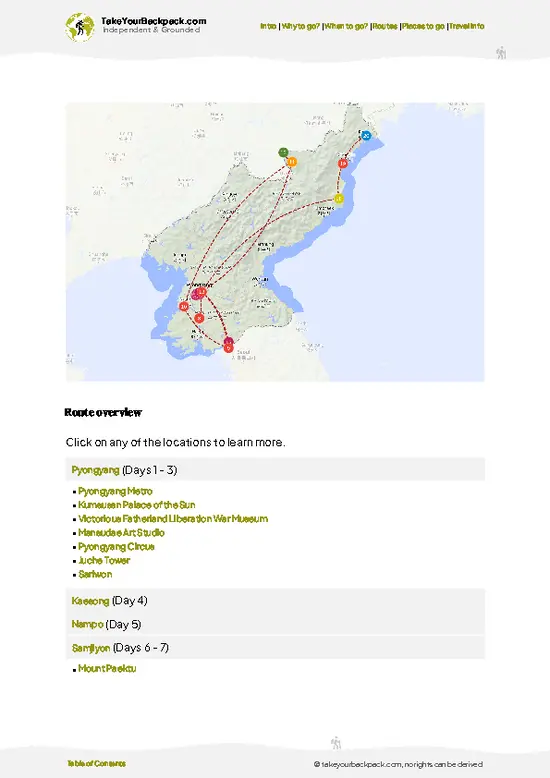
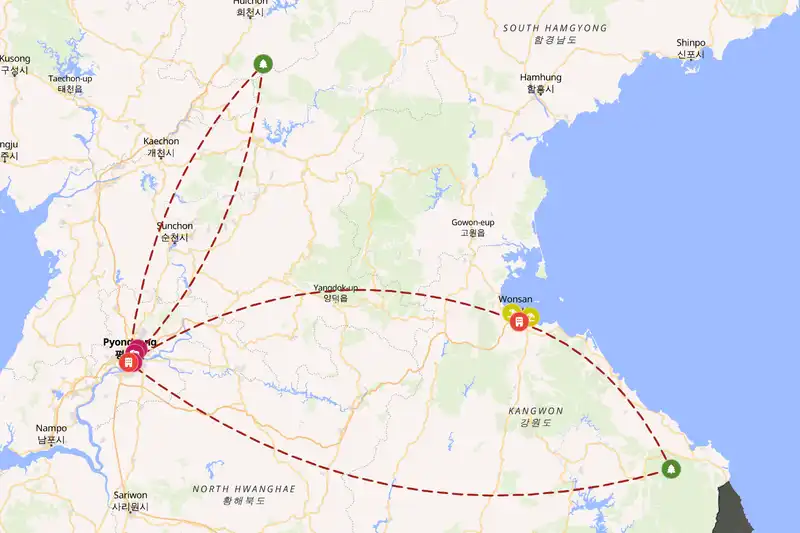
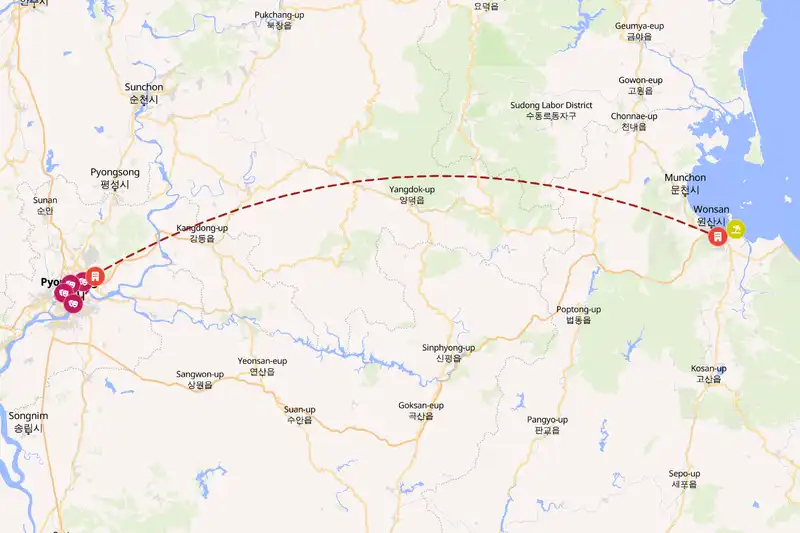
For most budget travelers, 4–6 days is the realistic sweet spot. Anything shorter than 3 full days in-country feels like a rushed checklist of monuments in Pyongyang and the DMZ, and you spend a big chunk of your money on fixed costs like visas and tour fees without much depth. Around 4 days, you can see Pyongyang, the DMZ at Panmunjom, and maybe one extra area like Kaesong or a quick side trip to a nearby site, which is enough to understand the basic rhythm of the place. If you can stretch to 5–6 days, you start to get value from the long train ride in and out, and you can add one more region such as the east coast (Wonsan) or the mountains (Mt Myohyang) without feeling like you’re just being shuttled from statue to statue. Longer trips of 7–10 days exist and are interesting for hardcore political-history nerds or photographers, but they are expensive and still heavily structured, so the marginal gain per extra day drops fast for a budget backpacker. Because you cannot self-cater or change plans on the fly, every extra day is a fixed cost, not a flexible backpacker day. If you are on a long Asia trip and watching your budget, planning North Korea as a 4–6 day side mission from China keeps it intense, manageable, and financially contained.
You will not be getting around North Korea on your own, with or without a car. All your internal transport is arranged by your tour operator and executed by state guides, usually in a private bus or minibus for your group. You cannot rent a car, you cannot legally hitchhike, and you cannot just hop on a random local bus or train to another city. In Pyongyang, you might ride the metro or a tram as part of the tour, but that is a controlled experience, not independent transport. Walking is possible only in specific, guide-approved areas, and even then you are usually in a group. From a backpacker perspective, this means you do not need to worry about navigation, fuel, or timetables, but you also lose all the fun of figuring out local transport hacks. The only real transport choice you make is how to enter and exit the country: usually train from China (cheaper, more atmospheric, and better for overlanders) or plane (faster but pricier). Once you are inside, every movement is pre-planned, and there is no such thing as getting around without a car because the concept of independent movement for tourists basically does not exist.
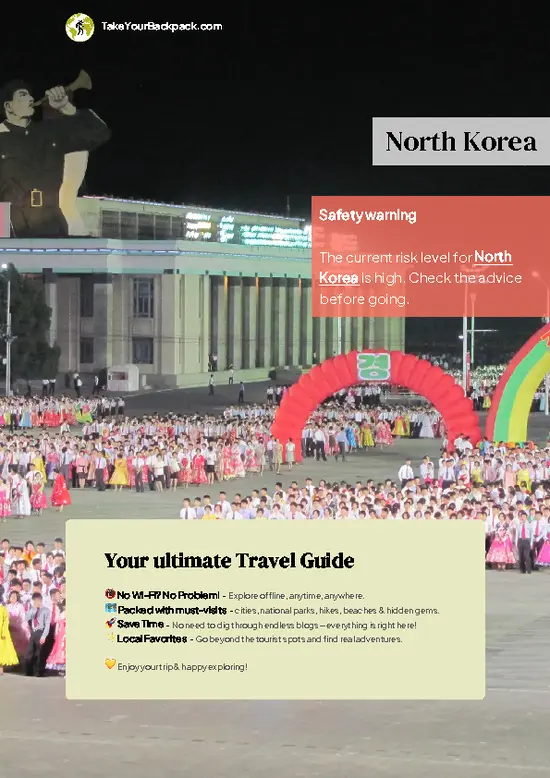
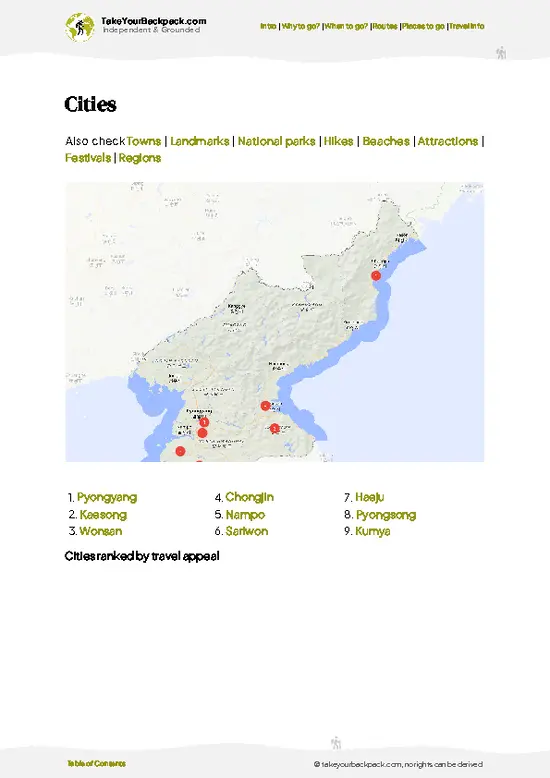
For a budget-minded backpacker who wants maximum insight per day, a few places are worth prioritizing even within the strict tour framework. Pyongyang is non-negotiable: it is the stage where the state puts on its most polished show. The Mansudae Grand Monument (the giant bronze leaders), the Juche Tower, and Kim Il Sung Square are core stops, but what really matters is seeing daily life around them: commuters on the metro, kids at parks, and the contrast between grand architecture and quiet side streets your guides allow you to walk. The DMZ at Panmunjom is another essential stop, especially if you have seen the South Korean side; the contrast in narrative, presentation, and atmosphere is one of the most revealing parts of the trip. Kaesong, near the DMZ, is worth it if your itinerary includes it, because it offers a slightly older, more low-rise cityscape and a different feel from Pyongyang’s wide boulevards. If you have an extra day or two, Mt Myohyang is a strong choice: the International Friendship Exhibition is surreal and heavy-handed, but the surrounding mountains give you rare chances for light hiking and fresh air, which matters if you are a backpacker craving some actual movement. Wonsan and the east coast can also be worthwhile if you want to see a more provincial city and the seaside, but they are more about variety than must-see sights. For a short, budget-conscious trip, the core combo that delivers the most context is Pyongyang plus the DMZ, with either Kaesong or Mt Myohyang as your one add-on if time and money allow.
If you are short on time or cash, skip anything that is just another version of what you have already seen in Pyongyang: endless additional monuments, extra museums that repeat the same narrative, and long detours to minor sites that exist mainly to fill an itinerary. You do not need multiple revolutionary museums to understand the official story; one or two carefully chosen stops will give you the message loud and clear. If your tour offers both Mt Myohyang and a more generic countryside day with limited walking, prioritize Mt Myohyang and drop the filler countryside drive, because you get more scenery and a bit of hiking for the same time investment. If you are choosing between an extended east coast loop (Wonsan and beyond) and more time in Pyongyang plus the DMZ, cut the long coastal add-ons unless you have a specific reason to see them; they add hours of bus time and cost without dramatically changing your understanding of the country. Also, do not pay extra for heavily staged “luxury” add-ons like high-end hotel bars or over-the-top performance upgrades if you are counting every dollar; the standard mass games or main performances, when available, already give you the spectacle. For a tight schedule, focus on Pyongyang, the DMZ, and one secondary region, and be ruthless about trimming repetitive propaganda stops and long, low-yield detours that eat days and money without giving you new insight.