×
North Korea🇰🇵 | 10 days itinerary

How to Spend 10 Days in North Korea

By Johan Kruseman 🇳🇱 | Updated May 2, 2026
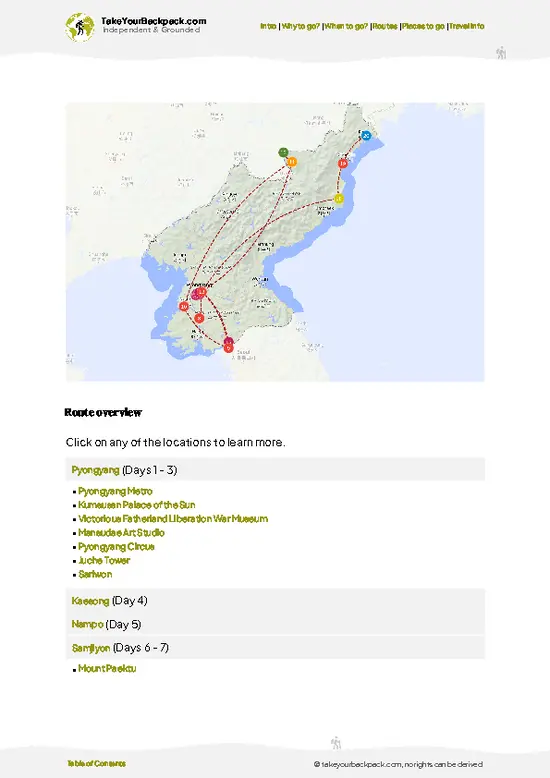
This 10-day itinerary is for travelers who want a broader North Korea experience that still feels manageable, mixing capital-city intensity with a border city, a coastal break, and a mountain escape at a moderate pace using a combination of private tour vehicles and a couple of longer overland drives. You’ll get a clear sense of how different regions fit together without chaining yourself to back-to-back marathon travel days.

Days 1-3: Capital Core - Pyongyang’s Story

Start with three nights in Pyongyang to build a solid foundation before you branch out, using day one for the big ideological anchors like the Kumsusan Palace of the Sun, Mansudae Grand Monument, and a first ride on the Pyongyang Metro so you immediately feel the city’s scale and symbolism. On day two, deepen the narrative at the Victorious Fatherland Liberation War Museum and the Arch of Triumph, then cross the river to the Juche Tower for a panoramic sense of how the city is laid out. Day three is your flex day: visit the … read more 👉
This 10-day itinerary is for travelers who want a broader North Korea experience that still feels manageable, mixing capital-city intensity with a border city, a coastal break, and a mountain escape at a moderate pace using a combination of private tour vehicles and a couple of longer overland drives. You’ll get a clear sense of how different regions fit together without chaining yourself to back-to-back marathon travel days.

Days 1-3: Capital Core - Pyongyang’s Story

Start with three nights in Pyongyang to build a solid foundation before you branch out, using day one for the big ideological anchors like the Kumsusan Palace of the Sun, Mansudae Grand Monument, and a first ride on the Pyongyang Metro so you immediately feel the city’s scale and symbolism. On day two, deepen the narrative at the Victorious Fatherland Liberation War Museum and the Arch of Triumph, then cross the river to the Juche Tower for a panoramic sense of how the city is laid out. Day three is your flex day: visit the Mangyongdae Native House of Kim Il Sung and the Korean Central History Museum to connect revolutionary myth with longer history, and, if time allows, swing by the Mansudae Art Studio to see how all of this is translated into sculpture and painting without overloading your schedule.

Days 4-5: DMZ History & Old Streets in Kaesong

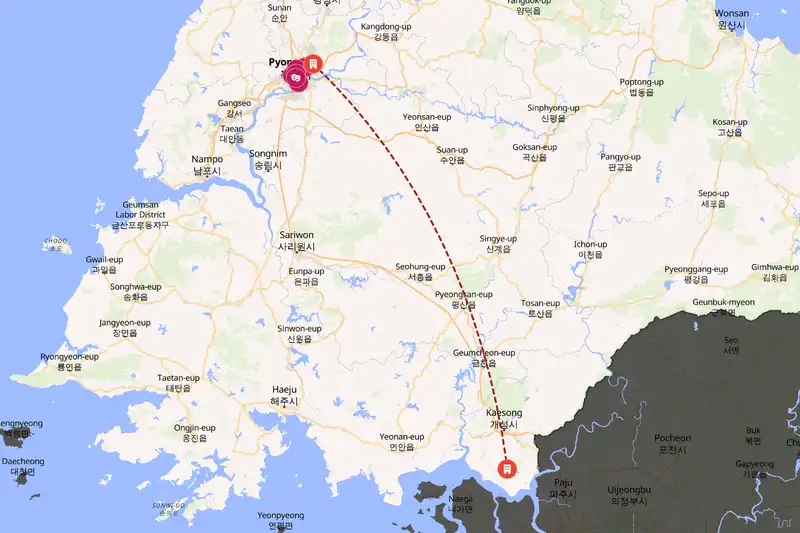
On day four, drive south to Kaesong, a smaller city with a very different feel from the capital and a base for visiting the DMZ area, which gives you a front-row seat to one of the most militarized borders on earth. Use your time in Kaesong to walk its older quarters and contrast them with Pyongyang’s wide boulevards, letting the slower pace and more compact layout act as a reset after the capital’s intensity. Day five is your main DMZ-focused day from Kaesong, with enough time left over to wander local streets and process the geopolitical weight of what you’ve just seen before heading back toward Pyongyang in the evening or the next morning, depending on your group’s energy.

Days 6-7: Coastal Air and Beach Time in Wonsan

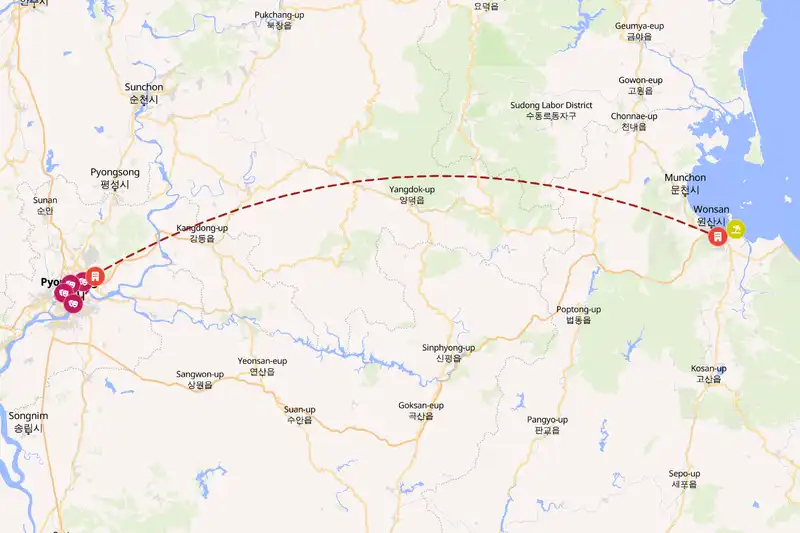
Break up the political and historical focus with a drive east to Wonsan, giving you a change of scenery and climate without crossing the entire country. Base yourself in Wonsan for two nights so you can spend a full relaxed day at Wonsan Beach, walking the waterfront, watching local life, and, if conditions allow, dipping into the water rather than just snapping a quick photo and leaving. If time and logistics line up, you can also swing by nearby Songdowon Beach for a different stretch of coast, but the key is to keep the pace easy here so the sea air actually feels like a break from the intensity of the first half of the trip.

Days 8-10: Mountain Retreat at Myohyangsan

From the coast, head inland to the Myohyangsan area for a cooler, greener finale that trades cityscapes for ridgelines and forested valleys. Spend two nights near Myohyangsan so you have one full day to hike the Myohyangsan trails at a comfortable pace, soaking up views and visiting key temples or viewpoints without racing the clock. On your final day, use the return journey toward Pyongyang as a soft landing, with time for a last city meal or a quick revisit to a favorite spot like the Pyongyang Metro or Juche Tower before departure, closing the loop between the mountains and the capital where your understanding of the country first took shape.

On this medium route, the moment that sticks with me is stepping out of the forested slopes of Myohyangsan after a morning hike and realizing how much calmer the whole trip feels once you’ve seen the country from a quiet mountain ridge instead of just from city streets and monuments.
Loading the map 🌍

🛏️ Where to stay?Route Overview

✈️ The backpacker research shortcutNorth Korea Travel Guide

An offline-friendly backpacking guide with optimized travel routes, ranked highlights, transport advice, and the best areas to stay.
example page 0 from our offline Travel Guide for North Koreaexample page 1 from our offline Travel Guide for North Koreaexample page 2 from our offline Travel Guide for North Koreaexample page 3 from our offline Travel Guide for North Koreaexample page 4 from our offline Travel Guide for North Koreaexample page 5 from our offline Travel Guide for North Korea
The digital guide (251 pages) contains:
74 highlights, ranked by travel appeal
Optimized 5, 10 & 15-day travel routes
Best neighborhoods to stay
How to get around
Offline-friendly for travel without Wi-Fi
👉 See all 30+ guide features

📅 Plan smarter in minutes, not weeks
Month by month travel advice
Festivals & national holidays
Budget expectations

🗺️ Go to the right places, skip the overrated ones
Honest pros & cons of destinations
Top hikes, parks & viewpoints
Lesser-known places most travelers miss
Clear “worth it vs skip it” guidance

🛏️ Travel smoothly without rookie mistakes
Best areas to stay
Transport systems explained simply
Common scams & safety advice
SIM cards, money & practical tips

🌍 Understand the country, not just visit it
Culture & traditions
52 Essential phrases & customs
Festivals worth planning around
Traveler-friendly historical context
Insights that make places more meaningful

📱 Built for real travel conditions
Fully downloadable PDF
Works completely offline
Optimized for phone use
Useful in remote areas & buses
Everything in one place
Save weeks of stressful planning
Get instant access to the full guide directly. 30-day money-back guarantee.


Sent to your inbox immediately after payment • 100% Secure Checkout
Best Backpacking Travel Advisor 2025 tourism awardBest Backpacking
Travel Advisor
2025
What others say about Take Your Backpack Guides:
⭐⭐⭐⭐⭐
Fantastic, amazing amount of information!
⭐⭐⭐⭐⭐
My goodness this is amazing, it's what I've been looking for hats off too you!
⭐⭐⭐⭐⭐
I think this is absolutely BRILLIANT
⭐⭐⭐⭐
Very complete and informative. It's still missing places, but I gotta to commend you
⭐⭐⭐⭐⭐
This is truly amazing, thank you, can't wait to explore it with my kids!
⭐⭐⭐⭐⭐
Awesome resource, thank you!
⭐⭐⭐⭐⭐
This is amazing! Can't wait to explore the ones I haven't seen
⭐⭐⭐⭐
I love this! Well done, great idea.
⭐⭐⭐⭐⭐
Thanks for taking the time to make this gem!
⭐⭐⭐⭐⭐
This might be the best website I've ever seen.
⭐⭐⭐⭐⭐
Congratulations, and thank you so much for your work; it's incredibly valuable.
⭐⭐⭐⭐
In all seriousness I think you did a great job pointing out the important spots
⭐⭐⭐⭐⭐
10/10 very good
⭐⭐⭐⭐⭐
As someone who's only just starting to visit regularly this is awesome, thank you.
⭐⭐⭐⭐
Thank you very much! I'm going to visit my dad, it's going to be very useful!
⭐⭐⭐⭐⭐
This is really cool! We'll be travelling for the first time and this definitely come in handy.
⭐⭐⭐⭐⭐
You are now our minister of culture, congratulations 👨‍💼
⭐⭐⭐⭐⭐
Just wanted to tell you that this is a pearl! Going to follow your recommendations.
⭐⭐⭐⭐⭐
This is so cool. I'll definitely be using the resource for my travels soon.
⭐⭐⭐⭐⭐
This is very impressive! Good work.
⭐⭐⭐⭐⭐
This is an amazing and informative site. Very well done!

🧭 RouteOther Route Options

Travel North Korea your way — from a quick highlights trip to a slow-paced adventure.

🙋 FAQFAQ: Backpacking North Korea

Short version: you cannot backpack North Korea independently in any normal sense. Independent, unguided travel is not allowed for tourists; you must be on an approved tour with state guides who control your movements, accommodation, and most of your interactions. For a budget traveler, that means your “backpacking” is really choosing the leanest group tour you can find, then treating it like a very structured side trip from China. You cannot just show up at the border with a backpack and wander around, you cannot book your own guesthouses, and you cannot decide on the day to change cities or linger somewhere you like. You are usually with guides from morning to night, and even in your hotel you are not free to walk out and explore the neighborhood. For someone used to Southeast Asia or Latin America, this feels more like a moving classroom than a backpacking playground. The upside is that logistics are handled for you, and you don’t waste time figuring out buses or train schedules. The downside is zero spontaneity and very limited local contact. If your main joy in backpacking is freedom, street food, and random encounters, North Korea is the opposite of that. If your main goal is to see a very controlled, curated slice of a closed country and you’re okay with rules, then a tightly priced group tour can still fit into a long overland trip through East Asia.
For most budget travelers, 4–6 days is the realistic sweet spot. Anything shorter than 3 full days in-country feels like a rushed checklist of monuments in Pyongyang and the DMZ, and you spend a big chunk of your money on fixed costs like visas and tour fees without much depth. Around 4 days, you can see Pyongyang, the DMZ at Panmunjom, and maybe one extra area like Kaesong or a quick side trip to a nearby site, which is enough to understand the basic rhythm of the place. If you can stretch to 5–6 days, you start to get value from the long train ride in and out, and you can add one more region such as the east coast (Wonsan) or the mountains (Mt Myohyang) without feeling like you’re just being shuttled from statue to statue. Longer trips of 7–10 days exist and are interesting for hardcore political-history nerds or photographers, but they are expensive and still heavily structured, so the marginal gain per extra day drops fast for a budget backpacker. Because you cannot self-cater or change plans on the fly, every extra day is a fixed cost, not a flexible backpacker day. If you are on a long Asia trip and watching your budget, planning North Korea as a 4–6 day side mission from China keeps it intense, manageable, and financially contained.
You will not be getting around North Korea on your own, with or without a car. All your internal transport is arranged by your tour operator and executed by state guides, usually in a private bus or minibus for your group. You cannot rent a car, you cannot legally hitchhike, and you cannot just hop on a random local bus or train to another city. In Pyongyang, you might ride the metro or a tram as part of the tour, but that is a controlled experience, not independent transport. Walking is possible only in specific, guide-approved areas, and even then you are usually in a group. From a backpacker perspective, this means you do not need to worry about navigation, fuel, or timetables, but you also lose all the fun of figuring out local transport hacks. The only real transport choice you make is how to enter and exit the country: usually train from China (cheaper, more atmospheric, and better for overlanders) or plane (faster but pricier). Once you are inside, every movement is pre-planned, and there is no such thing as getting around without a car because the concept of independent movement for tourists basically does not exist.
For a budget-minded backpacker who wants maximum insight per day, a few places are worth prioritizing even within the strict tour framework. Pyongyang is non-negotiable: it is the stage where the state puts on its most polished show. The Mansudae Grand Monument (the giant bronze leaders), the Juche Tower, and Kim Il Sung Square are core stops, but what really matters is seeing daily life around them: commuters on the metro, kids at parks, and the contrast between grand architecture and quiet side streets your guides allow you to walk. The DMZ at Panmunjom is another essential stop, especially if you have seen the South Korean side; the contrast in narrative, presentation, and atmosphere is one of the most revealing parts of the trip. Kaesong, near the DMZ, is worth it if your itinerary includes it, because it offers a slightly older, more low-rise cityscape and a different feel from Pyongyang’s wide boulevards. If you have an extra day or two, Mt Myohyang is a strong choice: the International Friendship Exhibition is surreal and heavy-handed, but the surrounding mountains give you rare chances for light hiking and fresh air, which matters if you are a backpacker craving some actual movement. Wonsan and the east coast can also be worthwhile if you want to see a more provincial city and the seaside, but they are more about variety than must-see sights. For a short, budget-conscious trip, the core combo that delivers the most context is Pyongyang plus the DMZ, with either Kaesong or Mt Myohyang as your one add-on if time and money allow.
If you are short on time or cash, skip anything that is just another version of what you have already seen in Pyongyang: endless additional monuments, extra museums that repeat the same narrative, and long detours to minor sites that exist mainly to fill an itinerary. You do not need multiple revolutionary museums to understand the official story; one or two carefully chosen stops will give you the message loud and clear. If your tour offers both Mt Myohyang and a more generic countryside day with limited walking, prioritize Mt Myohyang and drop the filler countryside drive, because you get more scenery and a bit of hiking for the same time investment. If you are choosing between an extended east coast loop (Wonsan and beyond) and more time in Pyongyang plus the DMZ, cut the long coastal add-ons unless you have a specific reason to see them; they add hours of bus time and cost without dramatically changing your understanding of the country. Also, do not pay extra for heavily staged “luxury” add-ons like high-end hotel bars or over-the-top performance upgrades if you are counting every dollar; the standard mass games or main performances, when available, already give you the spectacle. For a tight schedule, focus on Pyongyang, the DMZ, and one secondary region, and be ruthless about trimming repetitive propaganda stops and long, low-yield detours that eat days and money without giving you new insight.

🇰🇵 North KoreaExpand Your Journey

Ready to build a truly unique trip? Predefined routes are perfect for first-time visitors, but there is so much more to discover. Whether you are chasing a city trip, pristine national parks, local food scenes, or quiet beaches, pick a category to design your own path.