×
Romania🇷🇴 | 15 days itinerary

How to Spend 15 Days in Romania

By Johan Kruseman 🇳🇱 | Updated May 7, 2026
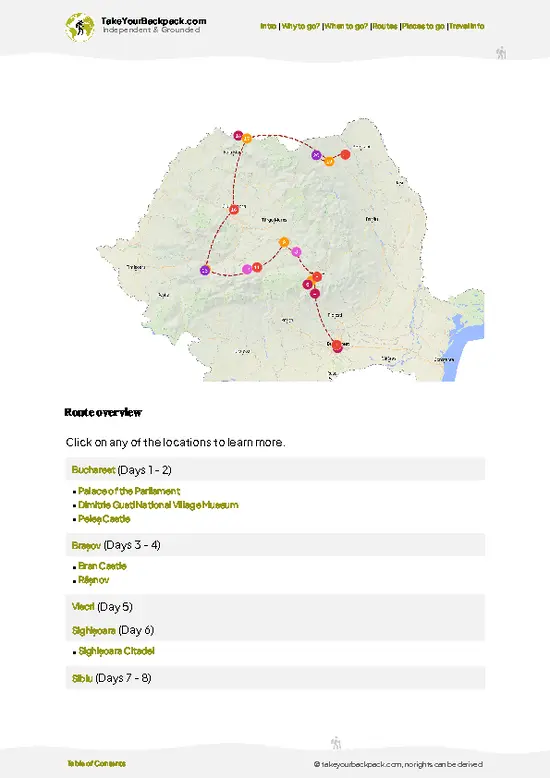
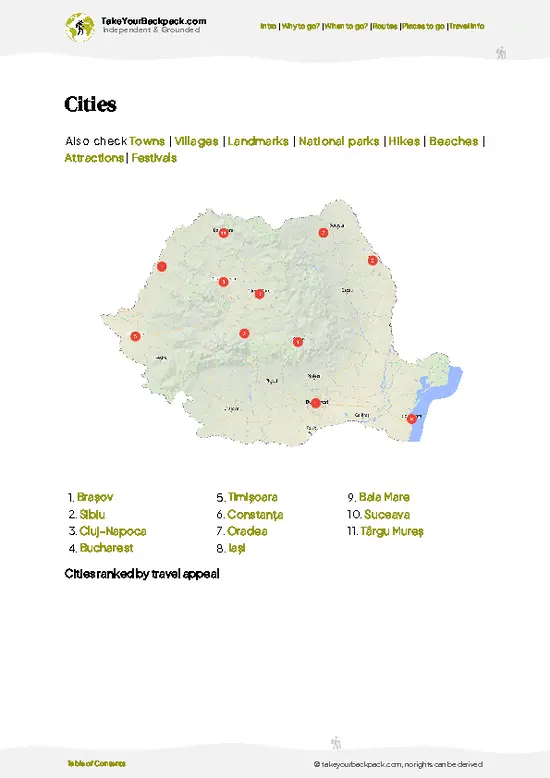
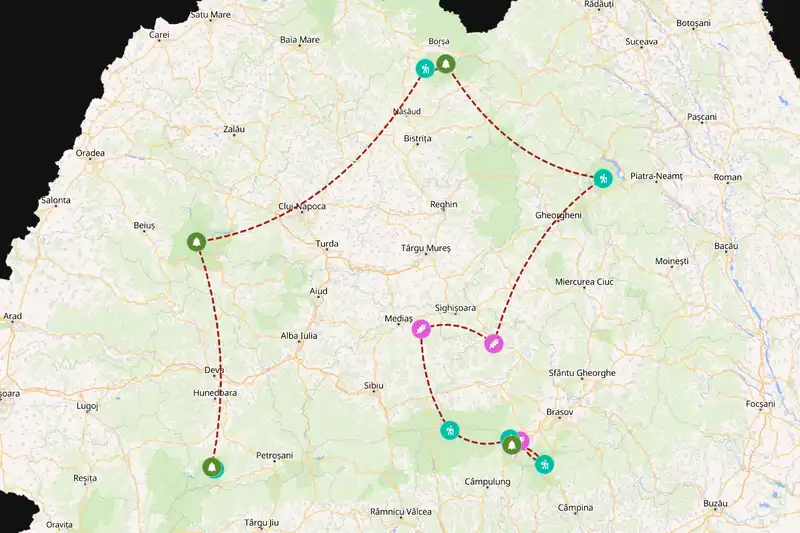
This 15-day itinerary is for travelers who want to go deep: big cities, medieval citadels, painted monasteries, wild national parks, and a taste of the Black Sea, all at a steady, exploratory pace. You’ll move mostly by train and intercity bus between major hubs like Bucharest, Brasov, Sibiu, Cluj-Napoca, and Constanța, with targeted local buses or taxis to reach villages, castles, and trailheads along the way.

Days 1-3: Bucharest & First Taste of Romania

Start with three nights in Bucharest to adjust, explore, and understand the country’s recent history before heading into the mountains. Visit the monumental Palace of the Parliament to grasp the scale of the communist era, then balance it with time at the Dimitrie Gusti National Village Museum and the Romanian Athenaeum, which together show off Romania’s rural roots and refined cultural side. With an extra day, dip into the National Museum of Art of Romania or the National Museum of the Romanian Peasant depending on whether you’re more … read more 👉
This 15-day itinerary is for travelers who want to go deep: big cities, medieval citadels, painted monasteries, wild national parks, and a taste of the Black Sea, all at a steady, exploratory pace. You’ll move mostly by train and intercity bus between major hubs like Bucharest, Brasov, Sibiu, Cluj-Napoca, and Constanța, with targeted local buses or taxis to reach villages, castles, and trailheads along the way.

Days 1-3: Bucharest & First Taste of Romania

Start with three nights in Bucharest to adjust, explore, and understand the country’s recent history before heading into the mountains. Visit the monumental Palace of the Parliament to grasp the scale of the communist era, then balance it with time at the Dimitrie Gusti National Village Museum and the Romanian Athenaeum, which together show off Romania’s rural roots and refined cultural side. With an extra day, dip into the National Museum of Art of Romania or the National Museum of the Romanian Peasant depending on whether you’re more drawn to galleries or ethnography, giving you a richer lens for everything you’ll see later in the countryside.

Days 4-6: Sinaia, Bucegi, Brasov & Bran

Ride the train north into the mountains and base yourself between Sinaia and Brasov for three nights of castles and Carpathian air. Start with Peleș Castle, whose ornate interiors and forest setting make it one of Europe’s most satisfying royal residences to actually tour, then head up into the Bucegi Mountains for a day of plateau hiking or cable-car-accessed viewpoints. Shift your base to Brasov and use it to visit Bran Castle and the nearby countryside, enjoying evenings in Brasov’s old town where you can unwind after full days without feeling like you’re in a resort bubble.

Days 7-9: Saxon Heartland - Sighișoara, Viscri & Sibiu

Travel to Sighişoara and spend a night inside or just below the Sighișoara Citadel, where narrow lanes and watchtowers make it easy to imagine the town centuries ago. From there, continue by bus or transfer to the fortified village of Viscri, giving yourself at least a half day to wander its lanes and church rather than treating it as a quick photo stop. Move on to Sibiu for two nights, exploring its old town and visiting the ASTRA National Museum Complex, which spreads traditional buildings around a forested lake and rewards slow wandering more than checklist sightseeing.

Days 10-12: High Carpathians & Corvin Castle

Use Sibiu as your springboard into the high mountains and western castles, starting with a full day trip along the Transfăgărășan Highway into the Fagaras Mountains, where you can mix short walks with big views from the road’s highest points. Then head west via bus or train toward Hunedoara, stopping in Hunedoara itself to visit Corvin Castle, a hulking Gothic fortress with drawbridges and courtyards that feels straight out of a dark fairy tale. If you have the energy and logistics line up, add a detour into Retezat National Park from the broader region, where glacial lakes and rugged peaks offer some of Romania’s most rewarding alpine hiking for those willing to commit a full day to the trails.

Days 13-15: Cluj-Napoca, Salina Turda & the Black Sea

Continue north to Cluj-Napoca, a university city with a lively cafe and bar scene that makes a great base for exploring central Romania’s more offbeat sights. Take a day trip to Salina Turda, an old salt mine turned underground attraction where you descend into vast caverns and walkways carved from salt, a surreal contrast to the castles and mountains you’ve seen so far. For your final phase, ride the train across the country to the coast and spend your last nights in Constanța, using it as a base to visit the lively resort strip of Mamaia for a swim and sunset walk; ending at the Black Sea gives your trip a literal horizon line and a softer landing after the intensity of the Carpathians and medieval towns.

If you ever want to push even further off the map, aim for the remote village of Sfântu Gheorghe in the Danube Delta, where sandy lanes and pelican-filled channels feel like a different country entirely.
Loading the map 🌍
film
0
0
0a
Bucharest
Top Boy
film
1
1
1a
National Museum of Art of Romania
film
2
2
2a
Peleș Castle
film
3
3
3a
Bucegi Mountains
film
4
4
4a
Sighişoara
film
5
5
5a
Sighișoara Citadel
film
6
6
6a
Viscri
film
7
7
7a
Sibiu
film
8
8
8a
ASTRA National Museum Complex
film
9
9
9a
Transfăgărășan Highway
film
10
10
10a
Fagaras Mountains
G.a.b. Relu B.
film
11
11
11a
Corvin Castle
Lavinia Tettamanzi
film
12
12
12a
Retezat
Parcul Național Retezat
film
13
13
13a
Cluj-Napoca
Jonathan Taviv
film
14
14
14a
Salina Turda
film
15
15
15a
Mamaia
Mihai B

✈️ The backpacker research shortcutRomania Travel Guide

An offline-friendly backpacking guide with optimized travel routes, ranked highlights, transport advice, and the best areas to stay.
example page 0 from our offline Travel Guide for Romaniaexample page 1 from our offline Travel Guide for Romaniaexample page 2 from our offline Travel Guide for Romaniaexample page 3 from our offline Travel Guide for Romaniaexample page 4 from our offline Travel Guide for Romaniaexample page 5 from our offline Travel Guide for Romania
The digital guide (321 pages) contains:
99 highlights, ranked by travel appeal
Optimized 5, 10 & 15-day travel routes
Best neighborhoods to stay
How to get around
Offline-friendly for travel without Wi-Fi
👉 See all 30+ guide features

📅 Plan smarter in minutes, not weeks
Month by month travel advice
Festivals & national holidays
Budget expectations

🗺️ Go to the right places, skip the overrated ones
Honest pros & cons of destinations
Top hikes, parks & viewpoints
Lesser-known places most travelers miss
Clear “worth it vs skip it” guidance

🛏️ Travel smoothly without rookie mistakes
Best areas to stay
Transport systems explained simply
Common scams & safety advice
SIM cards, money & practical tips

🌍 Understand the country, not just visit it
Culture & traditions
52 Essential phrases & customs
Festivals worth planning around
Traveler-friendly historical context
Insights that make places more meaningful

📱 Built for real travel conditions
Fully downloadable PDF
Works completely offline
Optimized for phone use
Useful in remote areas & buses
Everything in one place
Save weeks of stressful planning
Get instant access to the full guide directly. 30-day money-back guarantee.


Sent to your inbox immediately after payment • 100% Secure Checkout
Best Backpacking Travel Advisor 2025 tourism awardBest Backpacking
Travel Advisor
2025
What others say about Take Your Backpack Guides:
⭐⭐⭐⭐⭐
Fantastic, amazing amount of information!
⭐⭐⭐⭐⭐
My goodness this is amazing, it's what I've been looking for hats off too you!
⭐⭐⭐⭐⭐
I think this is absolutely BRILLIANT
⭐⭐⭐⭐
Very complete and informative. It's still missing places, but I gotta to commend you
⭐⭐⭐⭐⭐
This is truly amazing, thank you, can't wait to explore it with my kids!
⭐⭐⭐⭐⭐
Awesome resource, thank you!
⭐⭐⭐⭐⭐
This is amazing! Can't wait to explore the ones I haven't seen
⭐⭐⭐⭐
I love this! Well done, great idea.
⭐⭐⭐⭐⭐
Thanks for taking the time to make this gem!
⭐⭐⭐⭐⭐
This might be the best website I've ever seen.
⭐⭐⭐⭐⭐
Congratulations, and thank you so much for your work; it's incredibly valuable.
⭐⭐⭐⭐
In all seriousness I think you did a great job pointing out the important spots
⭐⭐⭐⭐⭐
10/10 very good
⭐⭐⭐⭐⭐
As someone who's only just starting to visit regularly this is awesome, thank you.
⭐⭐⭐⭐
Thank you very much! I'm going to visit my dad, it's going to be very useful!
⭐⭐⭐⭐⭐
This is really cool! We'll be travelling for the first time and this definitely come in handy.
⭐⭐⭐⭐⭐
You are now our minister of culture, congratulations 👨‍💼
⭐⭐⭐⭐⭐
Just wanted to tell you that this is a pearl! Going to follow your recommendations.
⭐⭐⭐⭐⭐
This is so cool. I'll definitely be using the resource for my travels soon.
⭐⭐⭐⭐⭐
This is very impressive! Good work.
⭐⭐⭐⭐⭐
This is an amazing and informative site. Very well done!

🧭 RouteAlternative Routes

Travel Romania your way — from a quick highlights trip to a slow-paced adventure.

🙋 FAQBackpacking FAQ

Romania is very doable to backpack independently if you’re comfortable with a bit of improvising. English is common with younger people and in cities, less so in rural areas, but you can get far with Google Translate, pointing at bus timetables, and a few key phrases (especially for numbers and directions). Hostels exist in all major cities and in some smaller hubs like Brașov, Sibiu, Cluj-Napoca, Timișoara, and Iași, plus a growing network of guesthouses and farm stays that are used to independent travelers. Costs are friendly for budget travelers: dorm beds are usually cheap, long-distance trains and buses are affordable, and food is good value if you eat where locals eat (canteens, markets, bakeries, and simple restaurants). The main challenge is that schedules can be slow and sometimes confusing, and smaller stations may not have English signage, so you need to build in buffer time and double-check which platform you need. Hiking independently is excellent in the Carpathians as long as you respect the mountains: stick to marked trails, start early, and check local advice about weather and bears. Overall, if you’ve backpacked anywhere in Eastern or Central Europe, Romania will feel familiar: a bit rough around the edges in places, but friendly, safe for most travelers, and rewarding if you’re patient.
If you only have 5–7 days, focus on one region plus Bucharest: for example, Bucharest + Brașov and Bran/Râșnov, or Bucharest + Sibiu and the surrounding villages. You’ll move slower than on Western European trains, so trying to cross the whole country in a week just means you’ll see more bus stations than mountains. With 10–14 days, you can do a classic loop that feels balanced for a backpacker: Bucharest → Brașov (for castles and day hikes) → Sibiu (for old town and countryside) → Sighișoara (for the citadel) → Cluj-Napoca (for a student city vibe and day trips) and maybe a quick hop to the Apuseni Mountains or Maramureș if you prioritize it. With 3 weeks or more, you can slow down and add real depth: several days hiking in the Făgăraș or Piatra Craiului mountains, wooden churches and village life in Maramureș, painted monasteries in Bucovina, and maybe a few days in the Danube Delta. For most budget travelers, 10–14 days is the sweet spot: long enough to see both cities and countryside without racing, short enough that you don’t burn out on transit days.
You can absolutely get around Romania without a car, but you need to plan around slower connections and sometimes awkward timetables. Trains are the backbone for budget travelers: they connect most cities and many towns, and tickets are cheap compared to Western Europe. Intercity and faster trains are worth the small extra cost on longer routes like Bucharest–Cluj or Bucharest–Timișoara. Regional trains can be very slow but are good for short hops. Buses and minibuses (maxi-taxis) fill in the gaps, especially for reaching smaller towns and some trailheads. They can be cramped and schedules may not be clearly posted online, so it helps to ask at your hostel or station the day before. For mountains, many popular hiking areas near Brașov, Sinaia, Bușteni, and Zărnești are reachable by train or bus, then on foot or by short taxi rides. Hitchhiking is relatively common among locals and backpackers on rural roads, but you should only do it if you’re already comfortable with that style of travel. Inside cities, walking and cheap public transport (trams, buses, metro in Bucharest) are usually enough; taxis and ride-hailing apps are inexpensive by European standards, but always confirm the meter or use an app to avoid surprises. The trade-off for skipping a car is time, not access: you can reach most places, just don’t stack too many long transfers back-to-back.
For a first-time backpacker in Romania, a few places punch way above their cost and effort. Bucharest is worth at least a day or two, not for the big palace alone but for the contrast between communist-era blocks, Belle Époque streets, and the bar-filled Old Town; it’s also where you’ll likely land and sort out SIM cards and cash. Brașov is the best all-round base: a medieval core, easy day trips to Bran Castle and Râșnov Fortress, and quick access to mountain trails in Piatra Craiului and the Bucegi. Sibiu is smaller but has a relaxed, lived-in feel with great squares, ‘eyelid’ rooftops, and easy access to pastoral villages and the lower Făgăraș Mountains. Sighișoara is worth at least a stopover for its hilltop citadel and cobbled streets; it’s compact, so even one night feels special. Cluj-Napoca is the student city: cafes, nightlife, and a good jumping-off point for the Apuseni Mountains or a longer route to Maramureș. If you like mountains, the Carpathians are the real star: Piatra Craiului for ridge hikes, Bucegi for cable cars plus trails, and the Făgăraș range for serious multi-day trekking if you’re experienced and properly equipped. If you have extra time and want something more rural, Maramureș (for wooden churches and slow village life) and Bucovina (for painted monasteries and rolling hills) are both worth the detour, especially if you’re into culture and photography more than nightlife.
If you’re short on time, skip anything that eats a full day of transit for just one sight. The Danube Delta is fascinating for birdlife and slow-water vibes, but it’s logistically heavy and time-consuming; if you only have a week or two and you’re not obsessed with wetlands, save it for another trip. The Black Sea resorts like Mamaia and many parts of Constanța are easy to skip unless you specifically want a beach party scene; the beaches are fine, but if you’ve seen beaches elsewhere, they’re not the best use of limited Romanian days. You can also downplay the Parliament Palace in Bucharest: it’s huge and historically interesting, but the tour can eat a big chunk of your day with security checks and waiting around; if you’re on a tight schedule, enjoy Bucharest’s neighborhoods, parks, and bars instead. If you’re not a hardcore monastery or church fan, you don’t need to see every single one; pick a few standout examples (like one or two painted monasteries in Bucovina or a couple of wooden churches in Maramureș) rather than trying to tick them all off. Finally, avoid trying to cram in both Maramureș and Bucovina on a very short trip: they’re both rewarding, but each deserves slow days, not rushed box-ticking. Focus on one region well instead of zigzagging across the map.

🇷🇴 RomaniaMore of Romania

Ready to build a truly unique trip? Predefined routes are perfect for first-time visitors, but there is so much more to discover. Whether you are chasing a city trip, pristine national parks, local food scenes, or quiet beaches, pick a category to design your own path.