Short answer: yes, Argentina is very doable to backpack independently, even on a tight budget, as long as you respect the distances and seasons.
Why it works well:
- Big backpacker network: Hostels, work exchanges, and WhatsApp/Facebook groups are common in all major stops (Buenos Aires, Mendoza, Bariloche, Salta, Córdoba, El Chaltén, Ushuaia).
- Spanish helps, but isn’t mandatory: In cities and tourist hubs you can get by with basic phrases, offline translator, and a smile. Outside that, knowing numbers, directions, and food words makes life much easier.
- Clear backpacker routes: Classic north–south routes are well-trodden, so you can copy other travelers’ itineraries on the fly.
Things that can trip you up (and how to handle them):
- Huge distances: A “quick hop” can be a 20-hour bus. Solve this by grouping regions (Northwest, Patagonia, Cuyo wine region, Buenos Aires + coast) instead of zigzagging.
- Money and payments: Card is widely accepted in cities, but always carry some cash for small towns, kiosks, and buses. Use ATMs sparingly and withdraw larger amounts to dodge repeated fees.
- Seasons: Patagonia is best roughly Nov–Mar; the Northwest is great most of the year but can be rainy in summer. If you go off-season, build in buffer days for weather.
- Safety: Street smarts are enough. In big cities, keep valuables close on buses and in stations, avoid flashing your phone, and use official taxis or rideshare at night.
If you’ve handled solo travel anywhere in Latin America or Southeast Asia, Argentina will feel very manageable. If it’s your first big trip, stick to the main route (Buenos Aires – Mendoza – Bariloche – El Chaltén/Calafate – Salta/Jujuy) and you’ll find plenty of support.
For a first backpacking trip, 3–4 weeks is the sweet spot, but you can do a solid trip in 10–14 days if you focus.
Rough timing by trip length:
- 7 days (fast and focused):
- Buenos Aires (3–4 days): Neighborhoods, food, nightlife, a quick day trip to Tigre.
- Plus either:
- Iguazú Falls (2–3 days, including travel), or
- Mendoza (3 days for wine + a mountain day trip).
- This is city + one side trip, not a full-country sampler.
- 10–14 days (good first taste):
Option A – North + city:
- Buenos Aires: 3–4 days.
- Salta & Jujuy: 6–7 days for road trips to Cafayate, Humahuaca, Purmamarca, Tilcara.
- One buffer/travel day.
Option B – Patagonia highlight:
- Buenos Aires: 2–3 days.
- El Calafate (Perito Moreno Glacier): 2–3 days.
- El Chaltén: 4–5 days for day hikes.
- 3–4 weeks (ideal backpacker loop):
- Buenos Aires: 4 days.
- Mendoza: 3–4 days.
- Bariloche or the Lakes: 4–5 days.
- El Chaltén + El Calafate: 7–8 days.
- Salta & Jujuy: 5–6 days.
- Extra buffer days for long buses and weather.
- 6–8 weeks (slow-travel dream):
- All of the above, plus Córdoba/Sierras, maybe Ushuaia, plus more offbeat spots like the Puna or lesser-known Patagonian towns.
If you’re short on time, it’s better to go deep in 2–3 regions than to try to “do Argentina.” Distances are the main constraint, not the number of sights.
You can absolutely get around Argentina without a car; most backpackers do. The trick is choosing the right mix of buses, occasional flights, and local transport.
Long-distance travel:
- Buses: The backbone of backpacking here.
- Pros: Frequent on main routes, relatively comfortable, night buses save on accommodation.
- Cons: Expensive on very long routes and can be 18–24 hours between major regions.
- When to use: Buenos Aires–Mendoza, Mendoza–Bariloche, Bariloche–El Bolsón, Salta–Jujuy, and most medium hops.
- Domestic flights:
- Worth it for huge jumps like Buenos Aires–Patagonia or Buenos Aires–Iguazú if you’re short on time.
- Budget travelers often mix one or two flights with buses to avoid burning a week on the road.
Within regions:
- Northwest (Salta/Jujuy):
- Without a car, base yourself in Salta, Tilcara, or Purmamarca and use day tours or local buses to reach Quebrada de Humahuaca, Cafayate, Salinas Grandes.
- Tours can be good value if you’re solo and short on time.
- Patagonia:
- Bariloche: Local buses reach trailheads and nearby lakes; hitchhiking is common and generally accepted among backpackers.
- El Chaltén: It’s a walking town; most trailheads start from town.
- El Calafate: Buses and tours run to Perito Moreno Glacier.
Cities and towns:
- Buenos Aires, Córdoba, Mendoza, Rosario:
- Use metro (where available), buses, and rideshare/taxis. Cheap by global standards.
- Walking is often the best way to explore central areas.
Hitchhiking:
- Common in Patagonia and some rural areas, especially among budget travelers.
- Only for those comfortable with the risk; always have a backup plan (bus schedule, extra food, warm layers).
You do not need to rent a car to have a full, rich trip. A car only becomes truly useful if you want remote spots in the Northwest or deep Patagonia and you’re traveling with friends to split costs.
If you’re backpacking on a budget, think in regions rather than individual sights. These are the places that give you the best payoff for time and money.
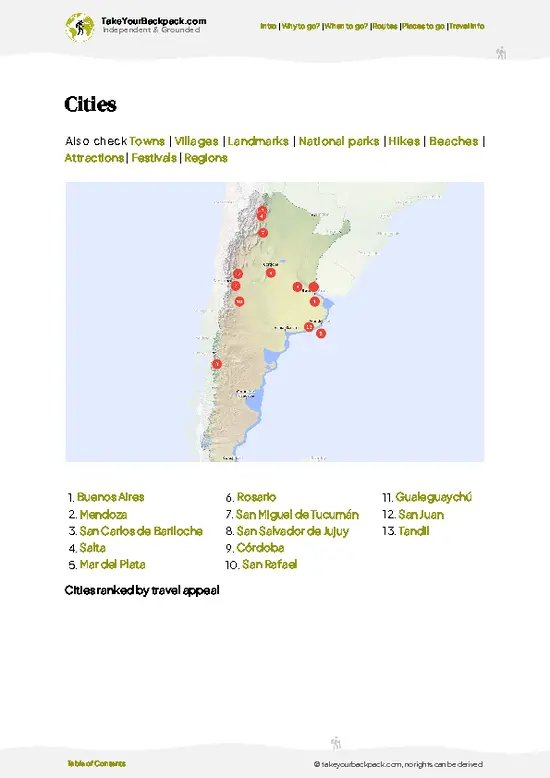
1. Buenos Aires
- Why it’s worth it: Culture, food, nightlife, and people-watching. It’s your best place for cheap empanadas, late nights, and understanding the country’s personality.
- Highlights for backpackers: San Telmo markets, La Boca (during the day), Palermo for bars and cafes, Recoleta Cemetery, river trip to Tigre.
2. Northwest: Salta & Jujuy
- Why it’s gold for budget travelers: Dramatic landscapes, colorful mountains, and small towns with cheaper prices than Patagonia.
- Base towns: Salta, Tilcara, Purmamarca.
- Key spots: Quebrada de Humahuaca, Cerro de los Siete Colores, Salinas Grandes, Cafayate’s canyons and wineries.
3. Patagonia – El Chaltén & El Calafate
- El Chaltén:
- Trekking capital with free day hikes starting from town.
- Must-do hikes: Laguna de los Tres (Fitz Roy views), Laguna Torre, Mirador de los Cóndores.
- El Calafate:
- Perito Moreno Glacier is one of the few truly world-class sights that lives up to the hype.
4. Lake District – Bariloche (and maybe El Bolsón)
- Why go: Mountains, lakes, and good infrastructure without the price tag of the far south.
- What to do: Day hikes, Circuito Chico by bike or bus, cheap camping and hostel options, craft beer and chocolate.
5. Mendoza
- Why it’s worth a stop: Wine, mountain views, and relaxed hostel culture.
- Backpacker-friendly activities: Budget wine tours by bike or bus, day trips toward the Andes, lazy asado nights in hostel courtyards.
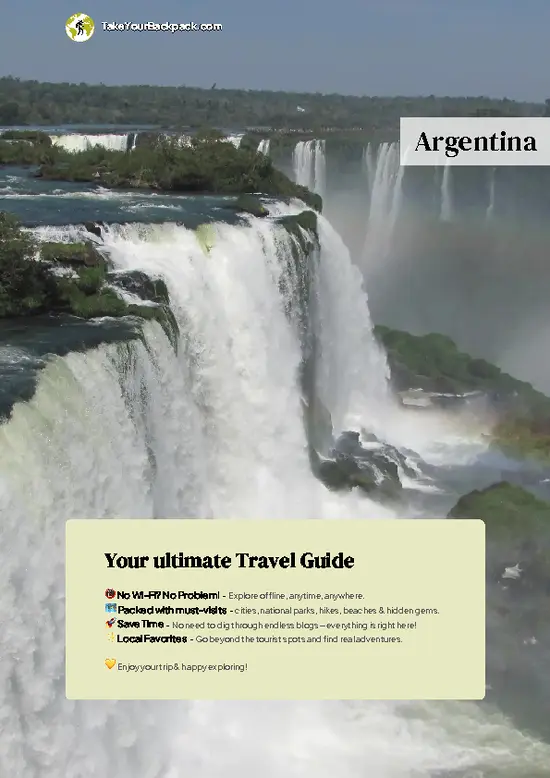
6. Iguazú Falls (if it fits your route and budget)
- It’s a detour, but the falls are on a short list of places that genuinely stand out on a global scale.
- Best for: Those who don’t mind one long bus or a flight for a big “wow” moment.
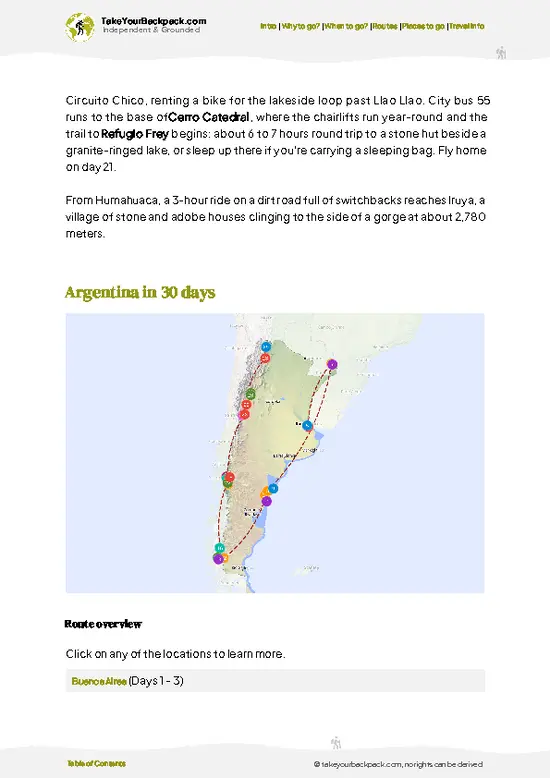
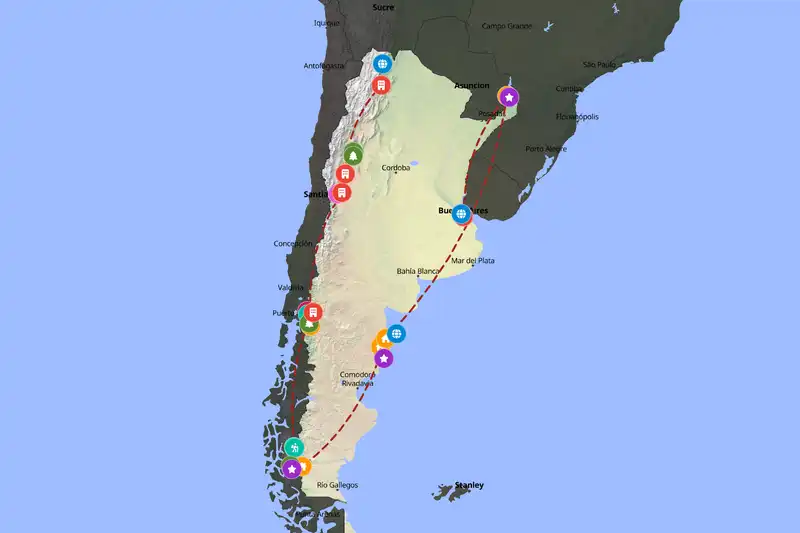
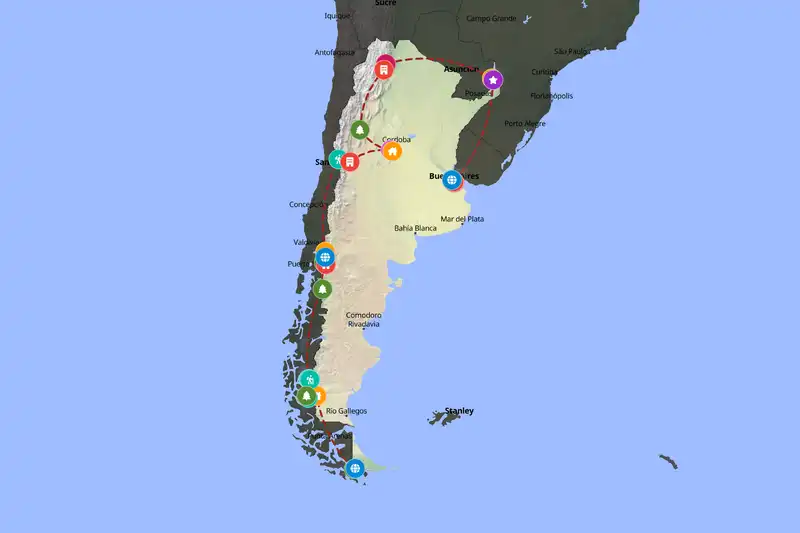
If you have 2–4 weeks, a high-value route is: Buenos Aires → Mendoza → Bariloche → El Chaltén/Calafate → Salta/Jujuy (or swap the order depending on flights).
If you’re short on time or cash, you need to be ruthless. Argentina is huge, so skipping entire regions is smarter than shaving a day off everywhere.
High-effort, skippable (for most backpackers):
1. Ushuaia and “End of the World” hype
- Why to skip: Expensive, far, and time-consuming to reach. Great if you’re into bragging rights or specific treks, but not essential for a first trip.
2. Deep Patagonia road trips (Ruta 40, Carretera Austral side trips)
- Why to skip: Require either a car, hitchhiking, or lots of patience with sparse buses. Amazing if you have 6–8 weeks, but not efficient for a 2–3 week trip.
3. Mar del Plata and much of the Atlantic coast
- Why to skip: Crowded in local holiday season, underwhelming if you’ve seen good beaches elsewhere, and not a great use of limited time.
4. Extra big cities beyond Buenos Aires (Rosario, La Plata, often Córdoba)
- Why to skip: Nice to live in, not essential to visit on a tight schedule. Córdoba is worth it mainly if you want student nightlife or as a stop between regions.
5. Overdoing day tours in the Northwest
- What to skip: Multiple similar full-day bus tours that repeat the same viewpoints.
- Better strategy: Pick 1–2 key tours (for example, Salinas Grandes and a Quebrada loop), then use local buses and your feet to explore towns like Tilcara, Purmamarca, and Humahuaca.
6. Too many wine regions
- If you’re short on time, choose either Mendoza or Cafayate, not both. Mendoza is easier to reach and more famous; Cafayate is smaller, cheaper, and pairs well with Salta.
If you only have 10–14 days, a strong “no-regrets” strategy is:
- Definitely do: Buenos Aires + either Patagonia (El Chaltén/Calafate) or the Northwest (Salta/Jujuy).
- Probably skip: Ushuaia, long coastal detours, and extra big cities that don’t add much beyond what Buenos Aires already gives you.