×
Thailand🇹🇭 | 21 days itinerary

How to Spend 21 Days in Thailand

By Johan Kruseman 🇳🇱 | Updated May 4, 2026
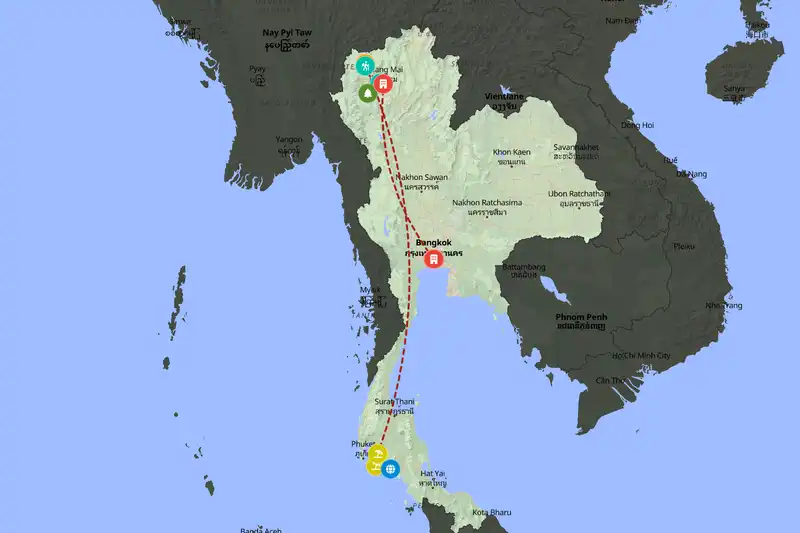
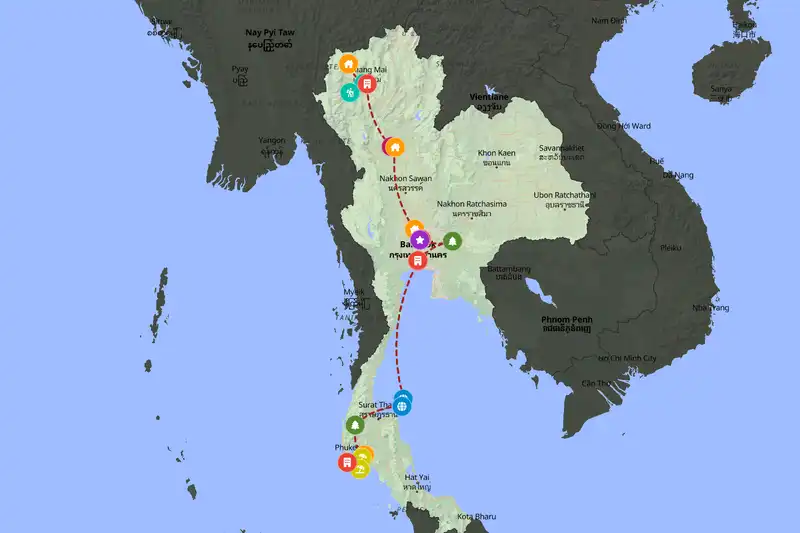
This 21-day route is for travelers who want to go deep: big cities, ancient capitals, northern mountains, national parks, and both Gulf and Andaman islands, moving at a steady but not frantic pace with a mix of trains, buses, domestic flights, and plenty of boats. It’s the kind of trip where you get the postcard hits but also have time for quieter corners and a couple of longer hikes that make Thailand feel like a whole continent in one country.

Days 1-4: Bangkok and Kanchanaburi - Royal Bangkok to River History

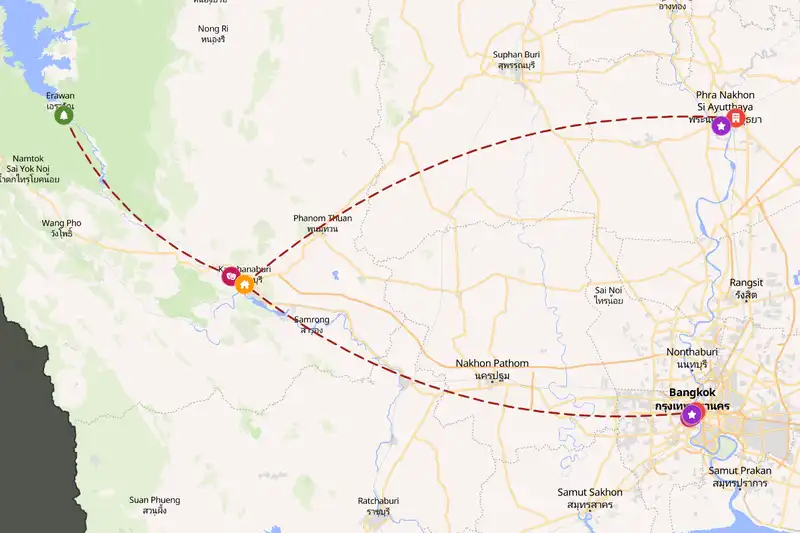
Begin in Bangkok, giving yourself two full days to work through the royal and cultural heavyweights without rushing. Spend one day between The Grand Palace, Wat Phra Kaew, and Wat Pho, then another day crossing to Wat Arun Ratchawararam and diving into either the Bangkok National Museum or the Jim Thompson House Museum for a more curated hit of history and design. On day three, head west by train or minivan to Kanchanaburi, where you can visit the Bridge on the River Kwai and JEATH read more 👉
This 21-day route is for travelers who want to go deep: big cities, ancient capitals, northern mountains, national parks, and both Gulf and Andaman islands, moving at a steady but not frantic pace with a mix of trains, buses, domestic flights, and plenty of boats. It’s the kind of trip where you get the postcard hits but also have time for quieter corners and a couple of longer hikes that make Thailand feel like a whole continent in one country.

Days 1-4: Bangkok and Kanchanaburi - Royal Bangkok to River History

Begin in Bangkok, giving yourself two full days to work through the royal and cultural heavyweights without rushing. Spend one day between The Grand Palace, Wat Phra Kaew, and Wat Pho, then another day crossing to Wat Arun Ratchawararam and diving into either the Bangkok National Museum or the Jim Thompson House Museum for a more curated hit of history and design. On day three, head west by train or minivan to Kanchanaburi, where you can visit the Bridge on the River Kwai and JEATH War Museum to understand the human cost behind the famous railway, and, if you have the emotional bandwidth, walk part of the Hellfire Pass Interpretive Centre and Memorial Walking Trail the next day before returning to town for a quiet evening by the river.

Days 5-7: Erawan and Khao Yai - Waterfalls and Wildlife

Use Kanchanaburi as your base for a day trip into Erawan, where tiered turquoise pools and short forest trails give you a softer, more playful side of western Thailand after the war sites. Afterward, loop back toward central Thailand and make your way to Khao Yai, one of the country’s flagship national parks, using a combination of train and local transfers. Spend a full day in Khao Yai looking for gibbons, hornbills, and maybe elephants with a guide, then use the evening to rest up; this stretch is about trading city noise for jungle soundtracks and giving yourself time to actually listen.

Days 8-11: Ayutthaya, Sukhothai, and Phitsanulok - Ancient Capitals and Northern Gateways

Head to Ayutthaya by train and spend a day exploring the Ayutthaya Historical Park Temples Complex and the broader Historic City of Ayutthaya, using bikes or tuk-tuks to link the main temple clusters. The next day, continue north to Phitsanulok, a practical stop that breaks up the journey and gives you a more everyday Thai city feel before you push on to Sukhothai. Base yourself in Sukhothai for two nights so you can devote a full day to the Sukhothai Historical Park Temples Complex and the Historic Town of Sukhothai, where wide moats, lotus ponds, and stone Buddhas in open fields make the ruins feel more like a lived-in landscape than a fenced-off site.

Days 12-15: Chiang Mai State and Pai - Temples, Trails, and Canyon Sunsets

Continue north to Chiang Mai, then give yourself a day to settle into the Old City and revisit or discover Wat Phra Singh Woramahawihan and Wat Chedi Luang at your own pace. Use another day to head into Doi Inthanon, walking the Kew Mae Pan Nature Trail for its cloud forest and viewpoints, and, if you want a gentler follow-up, the Pha Dok Siew Nature Trail for waterfalls and village paths that show off the softer side of the Chiang Mai state countryside. Then ride the winding road up to Pai for two nights of slower living, capping one evening with a scramble along the ridges of Pai Canyon at sunset before wandering back into town for street food and live music.

Days 16-18: Surat Thani, Koh Samui, and Mu Ko Ang Thong - Gulf Islands and Marine Park

Drop south by flight or a long overland run to Surat Thani, the main jumping-off point for the Gulf islands, then continue by ferry to Koh Samui. Use Samui as your base for a couple of nights, splitting your time between the livelier sands of Chaweng Beach and the slightly more laid-back curve of Lamai Beach, depending on how much nightlife you want. Dedicate one full day to a boat trip into Mu Ko Ang Thong, where you can kayak, climb to viewpoints, and swim in sheltered bays that feel a world away from the beach bars back on Samui, then return to shore in time for a last island dinner before shifting seasides.

Days 19-21: Krabi, Railay, and Dragon Crest - Andaman Finale

Finish on the Andaman coast by heading to Krabi, then basing yourself around Ao Nang Beach for easy access to boats and restaurants. Spend one day hopping by longtail to Railay Beach and Phra Nang Beach, where you can swim under limestone cliffs, watch climbers inch up the rock, and wander between beaches on sandy paths instead of roads. On your final full day, tackle the Dragon Crest Mountain (Khao Ngon Nak) hike for a last big view over the islands and jungle, then reward yourself with a sunset swim and a slow dinner, letting the whole three-week arc sink in before you head home.

The part of this route that I still daydream about is watching the sun drop behind the Andaman islands from the Dragon Crest viewpoint, knowing I’d walked Thailand from royal halls to jungle trails to sea cliffs in one long, satisfying sweep.
Loading the map 🌍

✈️ The backpacker research shortcutThailand Travel Guide

An offline-friendly backpacking guide with optimized travel routes, ranked highlights, transport advice, and the best areas to stay.
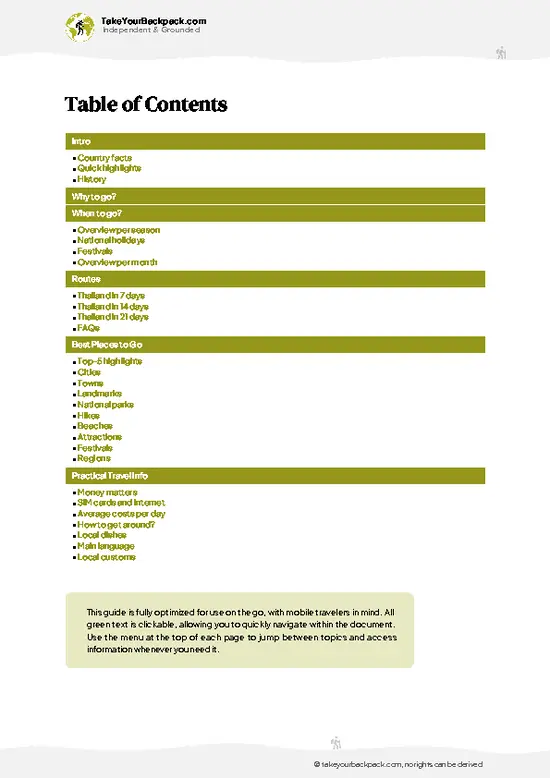
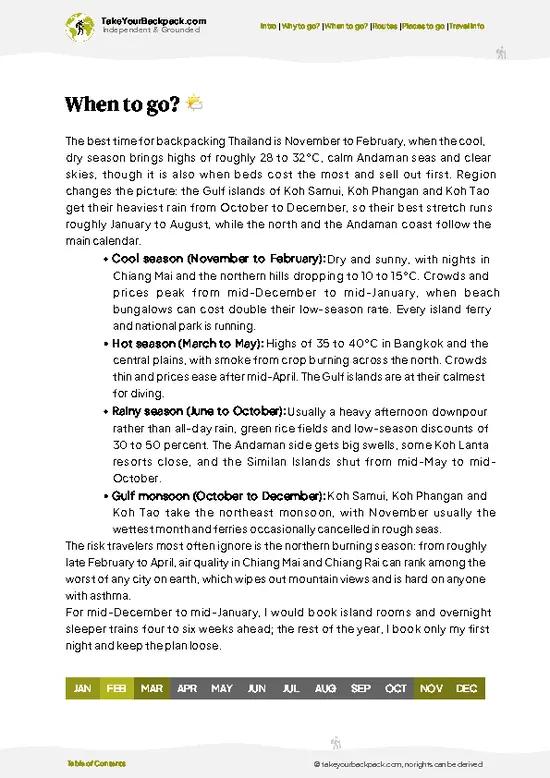
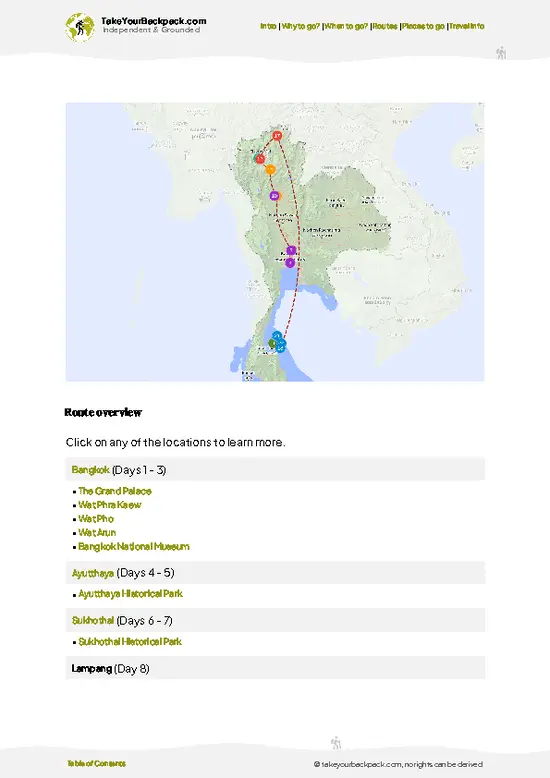
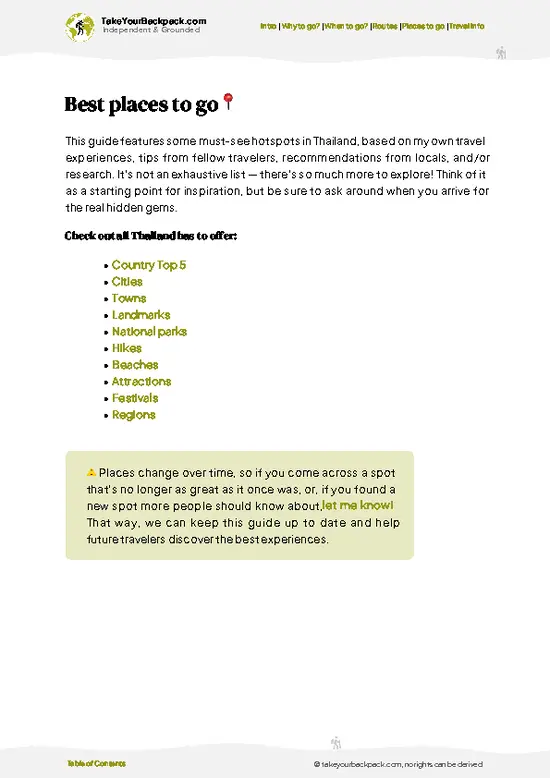
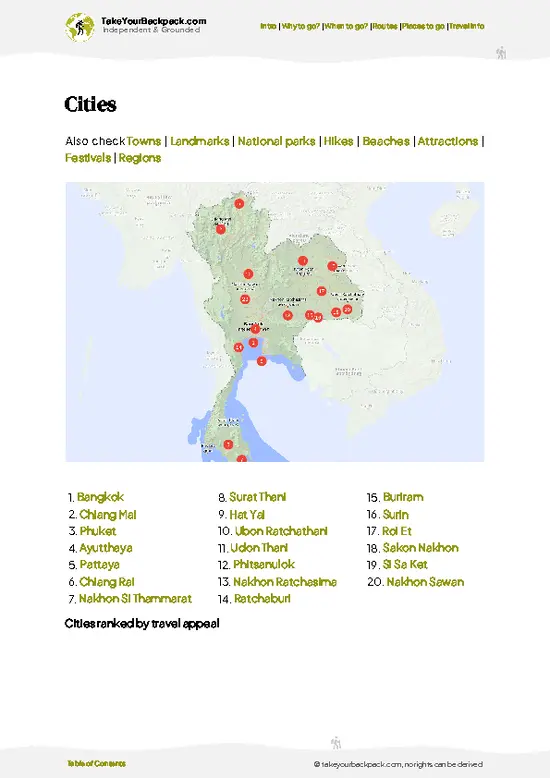
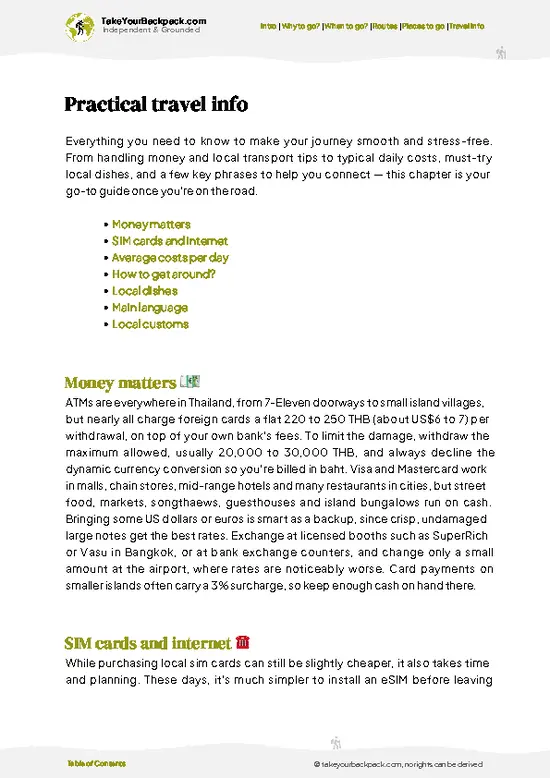
example page 0 from our offline Travel Guide for Thailandexample page 1 from our offline Travel Guide for Thailandexample page 2 from our offline Travel Guide for Thailandexample page 3 from our offline Travel Guide for Thailandexample page 4 from our offline Travel Guide for Thailandexample page 5 from our offline Travel Guide for Thailand
The digital guide (436 pages) contains:
139 highlights, ranked by travel appeal
Optimized 7, 14 & 21-day travel routes
Best neighborhoods to stay
How to get around
Offline-friendly for travel without Wi-Fi
👉 See all 30+ guide features

📅 Plan smarter in minutes, not weeks
Month by month travel advice
Festivals & national holidays
Budget expectations

🗺️ Go to the right places, skip the overrated ones
Honest pros & cons of destinations
Top hikes, parks & viewpoints
Lesser-known places most travelers miss
Clear “worth it vs skip it” guidance

🛏️ Travel smoothly without rookie mistakes
Best areas to stay
Transport systems explained simply
Common scams & safety advice
SIM cards, money & practical tips

🌍 Understand the country, not just visit it
Culture & traditions
52 Essential phrases & customs
Festivals worth planning around
Traveler-friendly historical context
Insights that make places more meaningful

📱 Built for real travel conditions
Fully downloadable PDF
Works completely offline
Optimized for phone use
Useful in remote areas & buses
Everything in one place
Save weeks of stressful planning
Get instant access to the full guide directly. 30-day money-back guarantee.


Sent to your inbox immediately after payment • 100% Secure Checkout
Best Backpacking Travel Advisor 2025 tourism awardBest Backpacking
Travel Advisor
2025
What others say about Take Your Backpack Guides:
⭐⭐⭐⭐⭐
Fantastic, amazing amount of information!
⭐⭐⭐⭐⭐
My goodness this is amazing, it's what I've been looking for hats off too you!
⭐⭐⭐⭐⭐
I think this is absolutely BRILLIANT
⭐⭐⭐⭐
Very complete and informative. It's still missing places, but I gotta to commend you
⭐⭐⭐⭐⭐
This is truly amazing, thank you, can't wait to explore it with my kids!
⭐⭐⭐⭐⭐
Awesome resource, thank you!
⭐⭐⭐⭐⭐
This is amazing! Can't wait to explore the ones I haven't seen
⭐⭐⭐⭐
I love this! Well done, great idea.
⭐⭐⭐⭐⭐
Thanks for taking the time to make this gem!
⭐⭐⭐⭐⭐
This might be the best website I've ever seen.
⭐⭐⭐⭐⭐
Congratulations, and thank you so much for your work; it's incredibly valuable.
⭐⭐⭐⭐
In all seriousness I think you did a great job pointing out the important spots
⭐⭐⭐⭐⭐
10/10 very good
⭐⭐⭐⭐⭐
As someone who's only just starting to visit regularly this is awesome, thank you.
⭐⭐⭐⭐
Thank you very much! I'm going to visit my dad, it's going to be very useful!
⭐⭐⭐⭐⭐
This is really cool! We'll be travelling for the first time and this definitely come in handy.
⭐⭐⭐⭐⭐
You are now our minister of culture, congratulations 👨‍💼
⭐⭐⭐⭐⭐
Just wanted to tell you that this is a pearl! Going to follow your recommendations.
⭐⭐⭐⭐⭐
This is so cool. I'll definitely be using the resource for my travels soon.
⭐⭐⭐⭐⭐
This is very impressive! Good work.
⭐⭐⭐⭐⭐
This is an amazing and informative site. Very well done!

🧭 RouteMore Ways to Explore

Travel Thailand your way — from a quick highlights trip to a slow-paced adventure.

🙋 FAQGood to Know

Thailand is one of the easiest countries on earth to backpack independently, especially for a first big trip. The backpacker infrastructure is so well developed that you can land with a rough idea and fill in the details as you go. Hostels, guesthouses, and cheap hotels are everywhere in the main routes: Bangkok, Chiang Mai, Pai, the islands, and the southern coasts. You can usually walk in and find a bed outside of peak holidays, and most places are used to last‑minute bookings from apps. English is widely understood in tourist areas, bus stations, and train stations, and when it is not, people are still used to pointing at maps, screenshots, and Google Translate. Street food is cheap, filling, and generally safe if you stick to busy stalls with high turnover. ATMs are common, and you can live mostly on cash with a backup card. Safety-wise, Thailand is relatively safe for solo travelers, including solo women, as long as you use basic street sense: watch your drink, avoid getting blackout drunk, and keep valuables locked in hostel lockers or a money belt on travel days. The main things that catch backpackers out are scams and overpaying. In Bangkok and major tourist zones, ignore anyone who approaches you first with a deal that sounds too smooth: tuk-tuk drivers offering a full city tour for almost nothing, gem shops, or tailor shops that pressure you. Use metered taxis or ride-hailing apps where possible, and agree on tuk-tuk prices before you get in. For tours and activities, compare prices at two or three agencies or ask your hostel which operators are reliable instead of just picking the first flyer you see. Visas are straightforward for many nationalities, with visa-exempt entries or visas on arrival, but you still need to check your specific rules and avoid overstaying, because fines and penalties are not worth the hassle. Overall, if you can handle basic logistics like booking a bus, reading a map, and keeping track of your passport, Thailand is absolutely manageable on your own and a very forgiving place to learn how to backpack.
For a first backpacking trip to Thailand, two weeks is the minimum that feels decent, three weeks is comfortable, and a month lets you slow down and actually breathe. With about 10–14 days, you can do a classic triangle: a few days in Bangkok, a night or two in Ayutthaya or Kanchanaburi for history, then either head north to Chiang Mai and Pai or south to one island area like Krabi or the Gulf islands. You will be moving often, but it is still doable on a budget with night buses or trains. With three weeks, you can combine north and south without feeling like you are in a race. A good split is roughly one week in the north (Chiang Mai, Pai, maybe Chiang Rai), one week in the south (Krabi, Railay, Koh Lanta or Koh Tao/Koh Phangan), and the remaining days for Bangkok and a side trip like Ayutthaya or Kanchanaburi. With a full month or more, you can slow travel and save money by staying longer in fewer places. Monthly room rentals or weekly hostel rates can cut costs, and you can add less-visited spots like Isaan (Nong Khai, Udon Thani, Khon Kaen), the deep south, or smaller islands. If you are extremely short on time, like 7–9 days, focus hard: pick either north or south plus Bangkok, not both. For example, Bangkok + Ayutthaya + Chiang Mai, or Bangkok + Krabi + one island. Trying to cram in both Chiang Mai and multiple islands in a week just means you will spend half your trip in transit. The key is to count travel days as real days: moving between regions usually eats half a day to a full day once you factor in check-out, transport, and check-in.
You can travel the entire classic backpacker circuit in Thailand without ever renting a car, and for budget travelers that is usually the smarter move. Long-distance travel is covered by trains, buses, and budget flights. Trains are great between major hubs like Bangkok, Ayutthaya, Lopburi, Phitsanulok, and Chiang Mai. Night trains with sleeper berths save you a night of accommodation and are more comfortable than most night buses. Buses and minivans fill in the gaps almost everywhere else: Bangkok to Kanchanaburi, Chiang Mai to Pai, Krabi to the islands, and so on. You can book tickets through your hostel, at bus stations, or via common booking apps, and prices are usually low compared to Western standards. For islands, you will use ferries and speedboats. Popular routes like Surat Thani to Koh Samui/Koh Phangan/Koh Tao or Krabi/Phuket to Koh Phi Phi and Koh Lanta run multiple times a day in high season. Combo tickets that include bus plus ferry are common and convenient, though sometimes a bit more expensive than buying separately. Within cities, you have a mix of options. In Bangkok, the BTS Skytrain and MRT subway are cheap, fast, and avoid traffic. Tuk-tuks are fun for short hops but often overpriced; always agree on a price first and be ready to walk away. Ride-hailing apps and metered taxis are usually better value for longer distances. In Chiang Mai and many smaller towns, you will see songthaews, which are shared red or yellow pickup trucks with benches in the back. These are cheap and easy once you get used to them: tell the driver your destination, agree on a price, and hop in. For rural exploring and some islands, many backpackers rent scooters. This is convenient but risky if you are not experienced. Police checks for helmets and licenses are common in tourist areas, and accidents are a major cause of injuries. If you do rent, wear a helmet, take photos of the bike, and do not ride drunk. If you are not comfortable on a scooter, stick to taxis, songthaews, and walking; you can still see plenty without driving yourself.
For a first-time backpacker trip, a few places in Thailand are worth prioritizing because they balance culture, nature, and budget-friendliness. Bangkok is non-negotiable. It is chaotic, loud, and occasionally overwhelming, but it is also where you feel the country’s energy most clearly. Spend time beyond Khao San Road: explore Chinatown’s food alleys, ride the river boats, visit the Grand Palace and Wat Pho early in the morning, and eat at busy street stalls where office workers line up. Chiang Mai in the north is the easygoing counterweight to Bangkok. It has cheap hostels, night markets, cooking classes, temples you can actually enjoy without being crushed by crowds, and a big digital nomad and backpacker scene. It is also a good base for trekking, waterfall day trips, and visiting ethical elephant sanctuaries that do not allow riding. Nearby Pai is a classic backpacker town in the hills, with a laid-back vibe, cheap bungalows, and scooter loops to hot springs, canyons, and viewpoints. It is touristy, but if you like hammocks, live music, and easy socializing, it earns its reputation. In the south, Krabi and the surrounding area are a strong choice for budget travelers. From Ao Nang or Krabi Town you can reach Railay’s cliffs and beaches by longtail boat, hop to Koh Lanta for a quieter island with affordable bungalows, or join reasonably priced boat trips to nearby islands. For divers or those who want to learn on a budget, Koh Tao is one of the cheapest places in the world to get certified, and the whole island is geared toward backpackers. If you want a party island, Koh Phangan around Full Moon or Half Moon is the classic, but even outside party dates it has good beaches and chill corners. For history and culture, Ayutthaya and Sukhothai are both worth it if you like ruins and old capitals. Ayutthaya is an easy day trip or overnight from Bangkok by train, with bikeable temple ruins. Sukhothai is more spread out and quieter, better if you have more time and want a slower, more atmospheric experience. If you have extra time and want something less tourist-heavy, consider dipping into Isaan, the northeast region. Places like Nong Khai or Udon Thani give you more local life, spicy food, and fewer backpacker clichés, though you will trade some convenience and English signage for that.
If you are short on time, skip anything that adds long travel days without giving you a clearly different experience from what you already have in your plan. The first thing many backpackers can skip is trying to do both coasts and too many islands in one short trip. You do not need Phuket, Koh Phi Phi, Koh Samui, Koh Phangan, and Koh Tao all in one go. Pick one cluster: either the Andaman side (Krabi, Railay, Koh Lanta, maybe Phi Phi as a day trip) or the Gulf side (Koh Tao, Koh Phangan, Koh Samui). Phuket is easy to skip if you are on a tight budget and not into big resorts or nightlife aimed at package tourists. It has some good corners, but for most backpackers with limited time, Krabi or Koh Lanta give you similar scenery with a more relaxed, cheaper feel. Koh Phi Phi is heavily developed and often crowded and overpriced; if you are not specifically chasing the party scene or the famous bay, you can skip staying overnight and maybe just do a day trip from Krabi or Phuket if you really want to see it. In the north, you do not need both Ayutthaya and Sukhothai if your schedule is tight. Ayutthaya is easier to reach from Bangkok and works well as a quick hit of ruins. Sukhothai is better if you have more time and are already heading north overland. Many smaller beach towns that look tempting on the map can also be skipped on a first short trip. Places like Hua Hin or Pattaya are convenient from Bangkok but are not the best use of limited days for most backpackers, especially if you are already going to better beaches further south. Within cities, you can skip overly polished shopping malls and touristy shows if your budget is tight. They eat time and money without giving you much sense of Thailand. Focus instead on markets, street food, temples, and neighborhoods you can explore on foot. Finally, do not feel pressured to chase every waterfall, every temple, and every viewpoint. After a while, they blur together. Pick a few that fit naturally into your route and skip the rest so you can actually relax, meet people, and enjoy where you are instead of just ticking boxes.

🇹🇭 ThailandDiscover the Country

Ready to build a truly unique trip? Predefined routes are perfect for first-time visitors, but there is so much more to discover. Whether you are chasing a city trip, pristine national parks, local food scenes, or quiet beaches, pick a category to design your own path.