Yes, Uruguay is one of the easiest countries in South America to backpack on your own, thanks to its small size, low crime by regional standards and frequent long-distance buses.
Most trips start in
Montevideo or
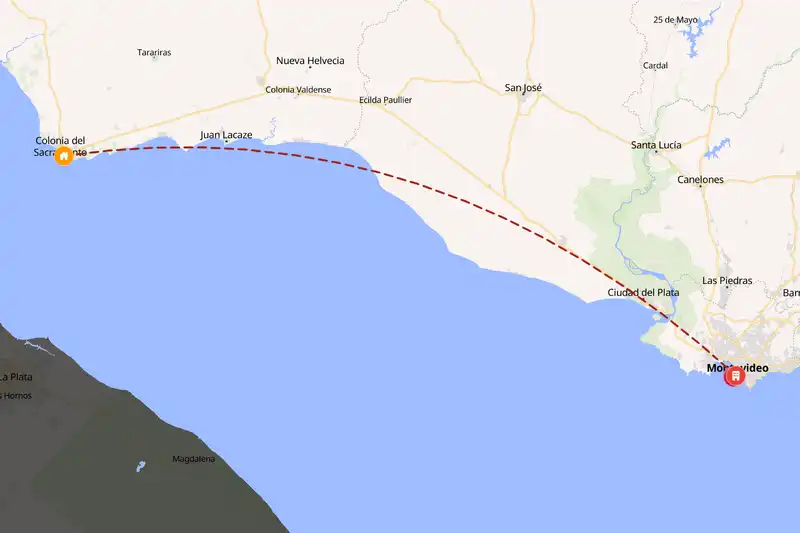
Colonia del Sacramento; buses from Montevideo’s Tres Cruces terminal reach Punta del Este in about 2 hours and Colonia in 2.5 to 3 hours. Hostel dorms cost roughly UYU 600 to 1,200 (US$15 to 30) a night, rising sharply in January in Punta del Este and Cabo Polonio. Spanish helps outside the capital, but cards are accepted almost everywhere and tap water is safe to drink.
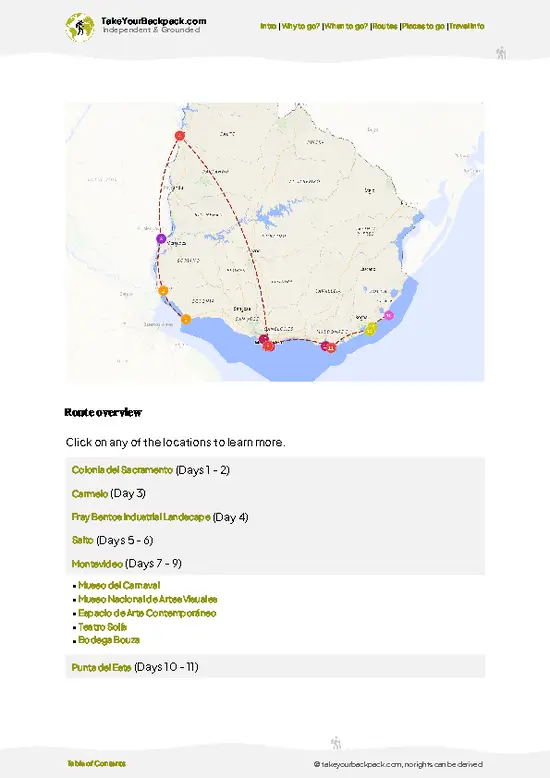
Ten days is the right length for a first trip to Uruguay, covering Montevideo, Colonia and the Atlantic coast without rushing.
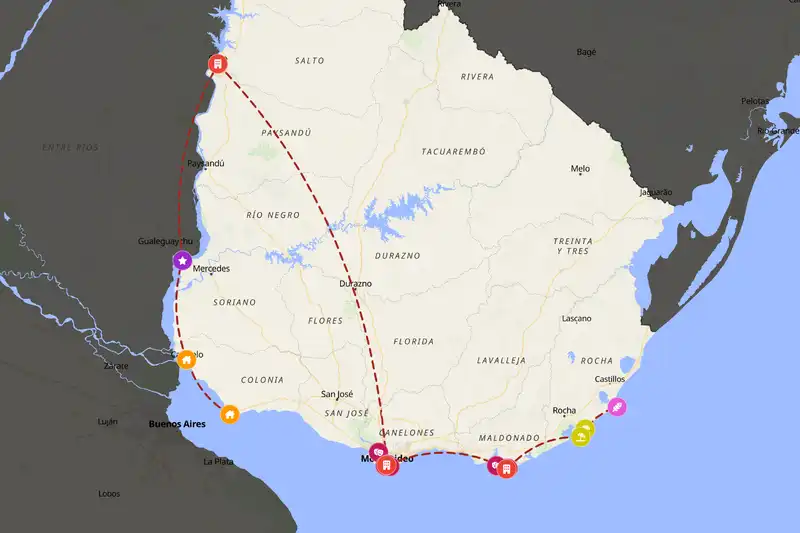
With 5 days, pair
Colonia del Sacramento and
Montevideo, two nights each. With 10 days, add the east coast: two nights each in
Punta del Este,
Cabo Polonio and
Santa Teresa, with Santa Teresa 4.5 to 5 hours by bus from the capital. With 15 days, add the Río Uruguay towns of Fray Bentos and Salto, the latter about 6.5 hours by bus from Montevideo. Colonia works as a day trip from Buenos Aires, but an overnight stay is much better.
Yes, you can see most of Uruguay without a car, because intercity buses link Montevideo with every coastal town and departmental capital.
From Tres Cruces terminal, buses reach
Colonia del Sacramento in 2.5 to 3 hours,
Punta del Este in about 2 hours, and the Cabo Polonio gate in roughly 4 to 4.5 hours, where 4x4 trucks cover the last 7 km of dunes. Most fares fall between UYU 400 and 1,600 (US$10 to 40). A car only becomes necessary for interior parks such as
Quebrada de los Cuervos and
Valle del Lunarejo, and for wineries like Bodega Garzón, where a tour or taxi is the alternative.
The must-visits in Uruguay are Colonia del Sacramento’s old town, Montevideo’s Ciudad Vieja and Teatro Solís, and the Atlantic coast from Punta del Este to Cabo Polonio.
Give
Colonia del Sacramento one or two nights so you see it after the ferry crowds leave.
Montevideo needs 2 to 3 days for the Rambla, the Mercado del Puerto and the Museo Andes 1972. Near
Punta del Este, go to Casapueblo at sunset, about 15 minutes west of town.
Cabo Polonio, with sea lions, no road and little electricity, deserves 2 nights, and
Santa Teresa near the Brazilian border adds wild beaches and cheap camping.
If you are short on time in Uruguay, skip the northern interior and the Río Uruguay towns first, since they cost long bus days for quieter sights.
Salto, Paysandú and Tacuarembó sit roughly 4.5 to 7 hours by bus from Montevideo, so they make sense only with two weeks or more.
Punta del Este can shrink to a single afternoon: Casapueblo and La Mano on Playa Brava fit into a few hours before you move east, and outside January and February many venues close. Piriápolis and Atlántida are pleasant resort towns but add little if the Rocha coast is already on your plan.
Yes, our itinerary-planner does exactly that. Set your trip length in days, give your interests and travel style, optionally give start- and end location and/or some mandatory stops you would like to include and the itinerary planner creates your personalized routes for Uruguay in seconds. Try it out!
Try the itinerary plannerv2.webp)

 Best Backpacking