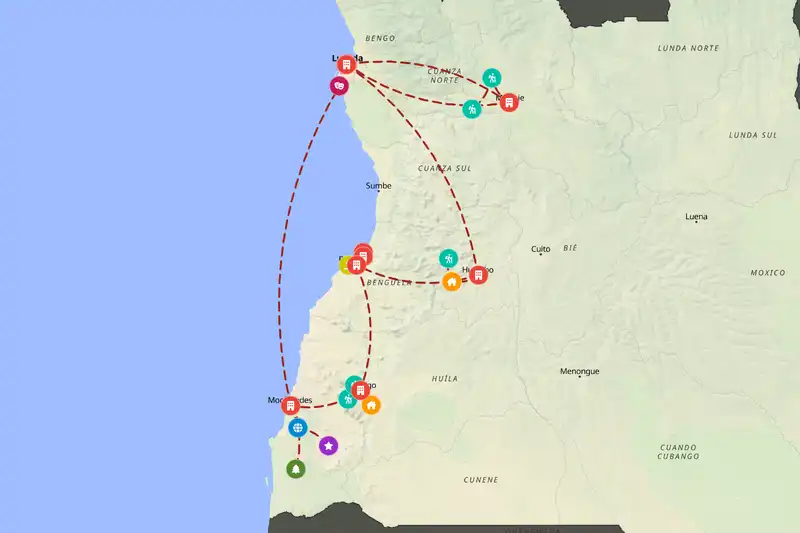
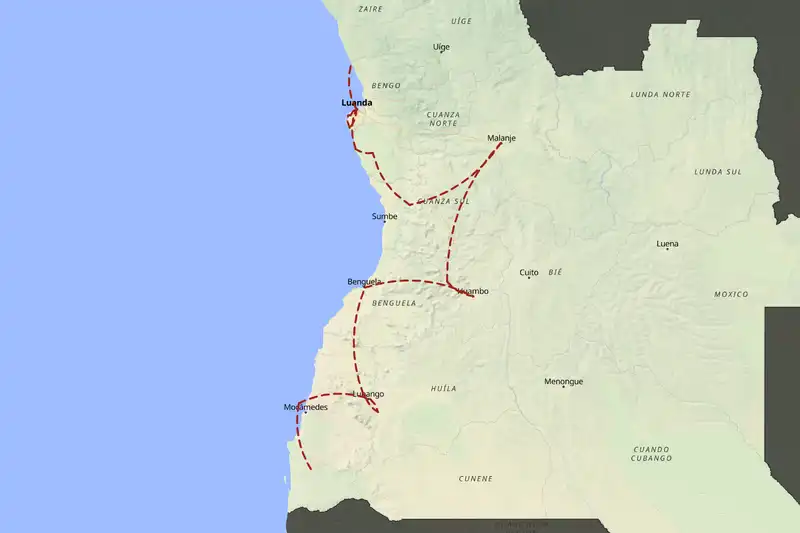
Short version: Angola is not an “easy” backpacking country, but it’s absolutely doable if you’ve already handled places like DRC, Mozambique, or rural Central America. It rewards patience and flexibility more than tight planning.
The main challenges are bureaucracy, language, and distances. Visas can be fussy, police checkpoints are common, and Portuguese is the working language almost everywhere. English is rare outside Luanda and a few business hotels, so a basic Portuguese phrase list on your phone is worth more than a fancy backpack.
Infrastructure is improving but still patchy. You won’t find a classic Southeast Asia hostel circuit. In most towns you’re looking at simple guesthouses, family-run pensões, or basic city hotels. They’re usually safe but can be overpriced for what you get, so budget travelers need to accept that Angola is more “value in experience” than “value in price.”
Independent backpacking works best if you:
- Keep your itinerary loose and build in buffer days for transport delays.
- Are comfortable with informal arrangements: shared taxis, negotiating prices, asking locals for help.
- Stay low-key at checkpoints: be polite, have your passport and visa copies handy, and avoid taking photos of government or military sites.
If this is your first time outside very organized countries, Angola will feel intense. If you already enjoy offbeat, slightly chaotic travel, it’s a challenging but very rewarding playground.
For a budget traveler, the sweet spot is 2–3 weeks. Less than 10 days and you’ll spend most of your time in transit or stuck in Luanda traffic; more than a month and costs start to bite unless you’re very disciplined.
Rough timing guidelines:
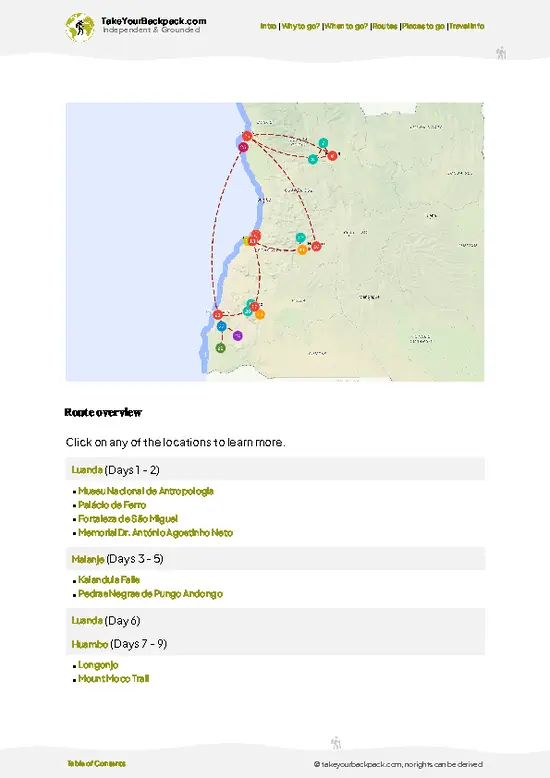
- 7–10 days: Focus on one region plus Luanda. Example: Luanda + Benguela/Lobito coast, or Luanda + Huambo highlands. You’ll get a taste, not a full picture.
- 2 weeks: Enough to combine Luanda, the coastal strip (Benguela/Lobito), and at least one inland area like Huambo or Lubango. This is the minimum for a “real” sense of the country.
- 3 weeks: Ideal for backpackers. You can move slower, chase cheaper transport, and add side trips like Serra da Leba viewpoints, Tundavala, or Kalandula Falls without rushing.
Angola is big and overland travel is slow. A bus ride that looks like 4 hours on the map can easily be 7–10 with stops and roadworks. Build in at least one buffer day per week of travel so a delayed bus or full chapa doesn’t wreck your whole route.
If you’re on a tight budget, more time helps you save money: you can wait for cheaper shared transport instead of paying for private cars, and you can shop around for better-value guesthouses instead of grabbing the first option in the dark.
You can get around Angola without your own car, but it takes patience and a bit of grit. Think “African overland style,” not “European rail pass.”
Between cities and major towns you’ll mostly use:
- Intercity buses and minibuses: Larger companies run between big hubs like Luanda, Benguela, Lubango, and Huambo. They’re usually affordable and reasonably safe, but departures can be early and tickets may sell out around holidays.
- Shared taxis (candongueiros): Vans or cars that leave when full. Cheap and common, but cramped. Great for short to medium hops between towns and villages.
Inside cities:
- Local minibuses and moto-taxis: Very cheap but chaotic. Good for short hops if you’re comfortable with basic Portuguese and crowds.
- Ride-hailing apps in Luanda (when available): Useful if you want to avoid haggling or late-night street taxis.
Trains exist on some routes (like the Benguela line), but schedules and reliability vary. If you catch one, it’s a fun, slow, very local experience, not a high-speed solution.
Travel without a car works best if you:
- Travel light enough to carry your pack comfortably through bus stations and chaotic taxi ranks.
- Start early in the day; many routes don’t run late, and you don’t want to arrive in a new town after dark hunting for a cheap room.
- Accept that sometimes paying a bit more for a semi-private ride is worth it to avoid being stranded.
If you’re extremely short on time and have some budget, mixing one or two domestic flights with buses can save days of overland slog.
For backpackers, the must-visits are the places that mix character, landscapes, and local life without demanding a luxury budget.
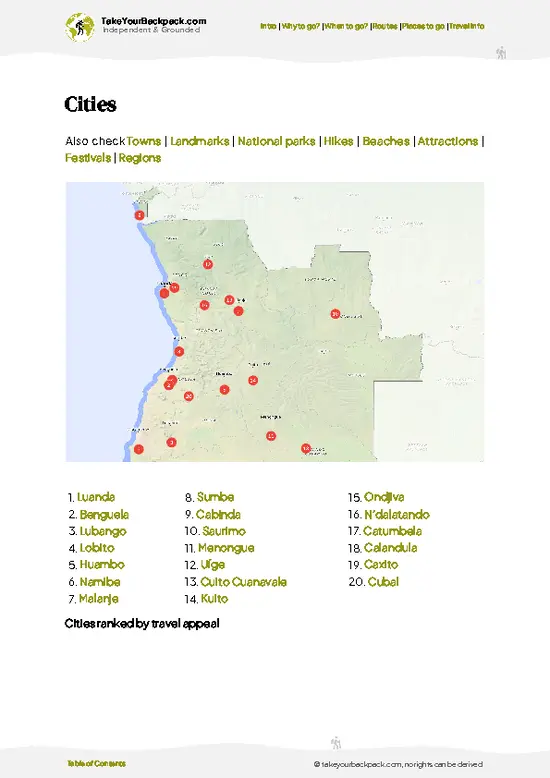
Luanda (1–3 days): Not because it’s cheap (it isn’t), but because it’s the country’s heartbeat. Walk the Marginal, explore the old fort area, check out street life and markets, and grab simple local food in no-frills eateries. Stay in a budget guesthouse in a central but safe neighborhood to cut transport costs.
Benguela and Lobito (3–4 days): This coastal duo is where Angola starts to feel relaxed. Benguela has colonial-era streets, local markets, and a slower pace; Lobito has a long peninsula with beaches and casual bars. For backpackers, this is one of the best places to linger: you can find mid-range-on-a-budget rooms, eat cheaply at local restaurants, and use chapas to move around.
Lubango and Serra da Leba / Tundavala (3–4 days): Lubango is a great base for highland scenery. The Serra da Leba road is one of the most dramatic drives in the region, and the Tundavala viewpoint gives you huge cliffs dropping to the plains. Even if you need to hire a local driver for a day, it’s one of the few “worth-the-splurge” experiences in Angola.
Kalandula Falls (2–3 days including travel): One of Africa’s more impressive waterfalls by volume, especially in the rainy season. Getting there on a budget can be a bit of a mission, but if you’re already heading inland and you like big natural sights, it’s a strong candidate. Aim to stay nearby rather than trying to rush it as a day trip from a distant city.
Huambo (2–3 days): A cooler, highland city with a more laid-back feel than Luanda. Good for seeing everyday Angolan life, trying local food, and breaking up long journeys between coast and interior.
If you’re choosing just a few: Luanda for context, Benguela/Lobito for coast and downtime, and Lubango/Serra da Leba for landscapes make a very solid first trip.
If you’re short on time or cash, skip anything that eats days of transit for a single sight or demands heavy logistics.
What many backpackers can skip:
- Deep southern desert expeditions (Namibe desert and very remote areas) if you’re on a tight budget. They’re beautiful but often require private 4x4s, guides, and fuel costs that add up fast. Great if you have money and time; skippable if you don’t.
- Long detours to very remote tribal areas. These trips can be fascinating but are often expensive, staged, or rushed when done quickly. If you only have two weeks, you’ll get more value from coast and highlands than from a forced “culture show” day trip.
- Over-ambitious cross-country loops. Trying to cram Luanda, Benguela, Lubango, Huambo, Kalandula, and the far south into 10–14 days means you’ll spend most of your time in buses. Better to cut one region and actually enjoy the others.
- High-end Luanda nightlife. Cover charges, drinks, and taxis can burn a backpacker’s weekly budget in one night. If you want a taste of the scene, pick one night and set a firm budget, or stick to more local bars and street food.
- Shopping malls and imported-chain restaurants. Prices are high and the experience is generic. For budget travelers, they’re mainly useful for ATMs and occasional Wi‑Fi, not as destinations.
If you’re really squeezed for time, a strong minimalist route is: Luanda (1–2 days) → Benguela/Lobito (3–4 days) → Lubango and Serra da Leba/Tundavala (3–4 days), and then back. That keeps travel manageable and focuses on places that deliver the most character per day and per dollar.